
Origins and Evolution of Novel Genes Aoife Mc
- Slides: 72
Origins and Evolution of Novel Genes Aoife Mc. Lysaght Trinity College Dublin
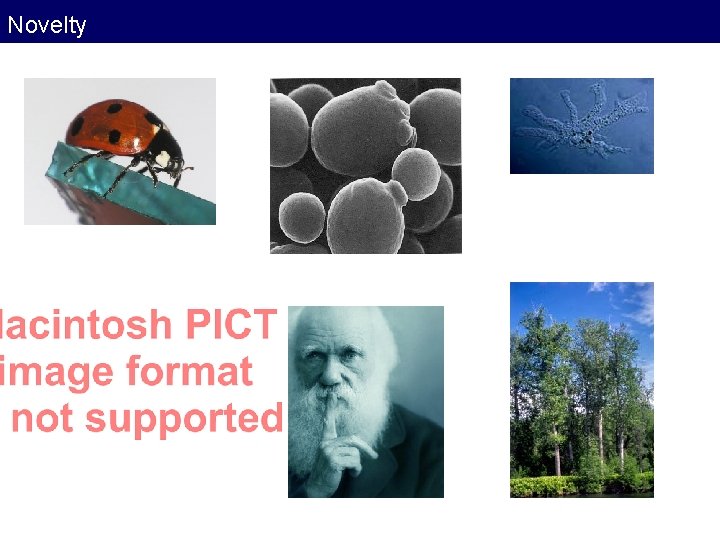
Novelty
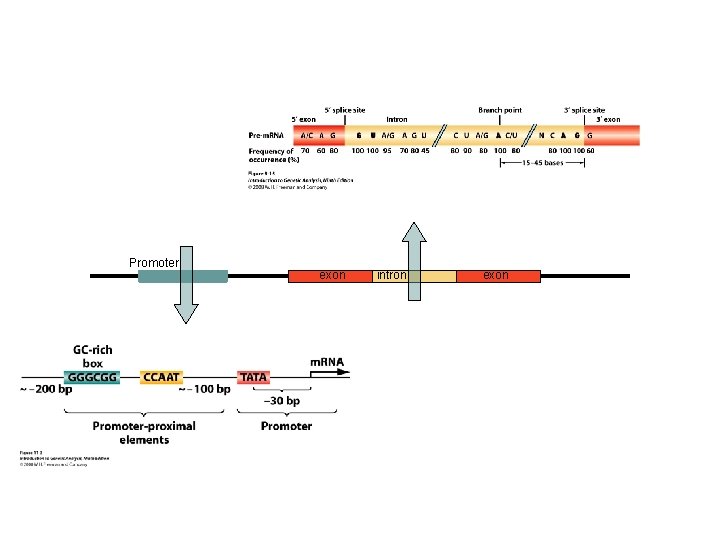
Promoter exon intron exon
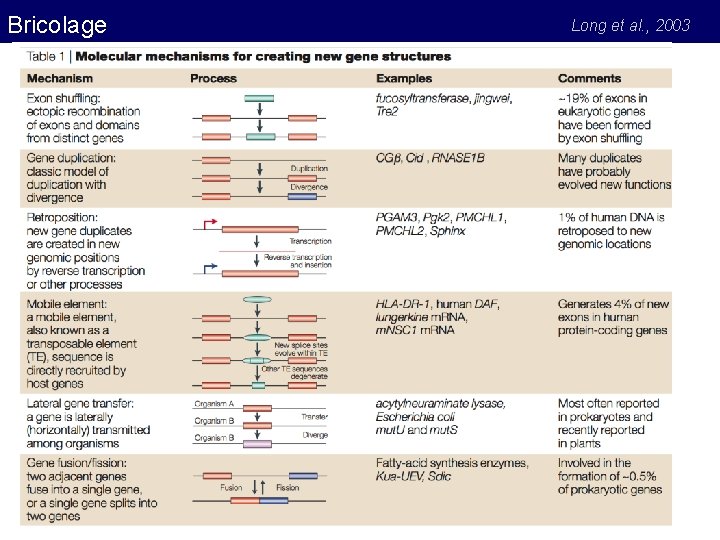
Bricolage Long et al. , 2003
Duplication 1. 2. 3. 4. 5. Polyploidy – whole genome duplication Aneuploidy – chromosomal duplication Partial chromosome duplication Gene duplication Partial gene duplication
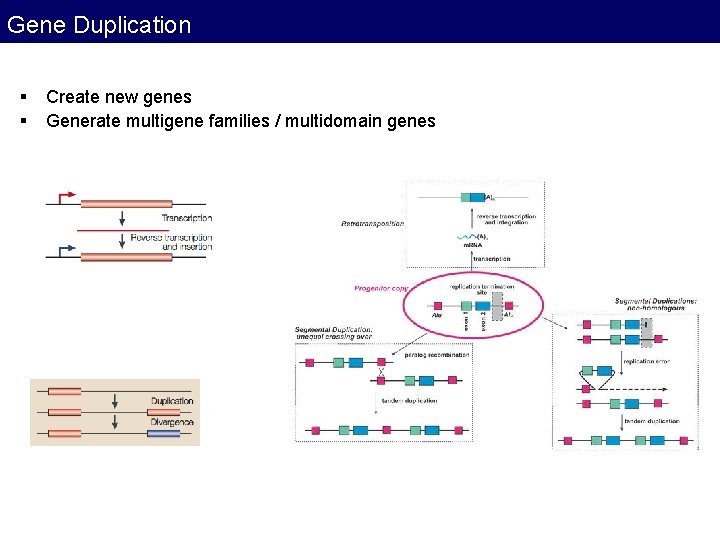
Gene Duplication § § Create new genes Generate multigene families / multidomain genes
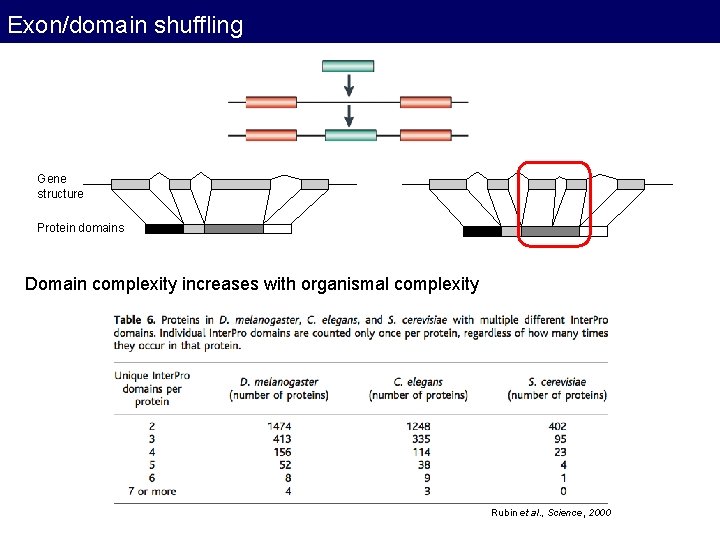
Exon/domain shuffling Gene structure Protein domains Domain complexity increases with organismal complexity Rubin et al. , Science, 2000
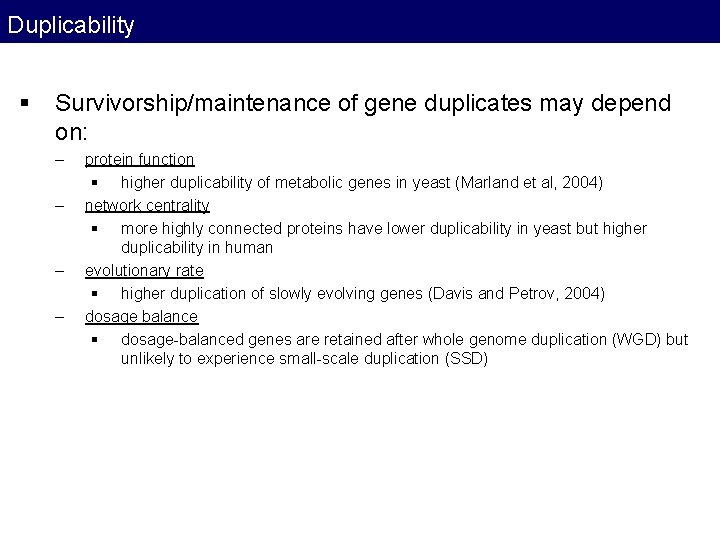
Duplicability § Survivorship/maintenance of gene duplicates may depend on: – – protein function § higher duplicability of metabolic genes in yeast (Marland et al, 2004) network centrality § more highly connected proteins have lower duplicability in yeast but higher duplicability in human evolutionary rate § higher duplication of slowly evolving genes (Davis and Petrov, 2004) dosage balance § dosage-balanced genes are retained after whole genome duplication (WGD) but unlikely to experience small-scale duplication (SSD)
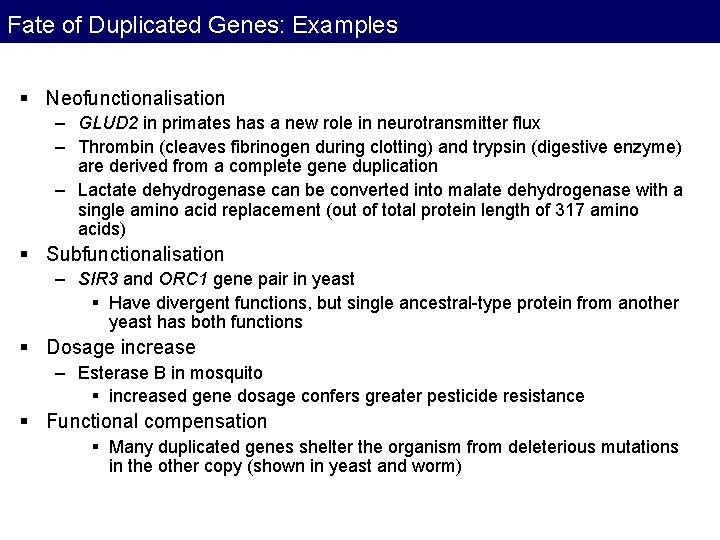
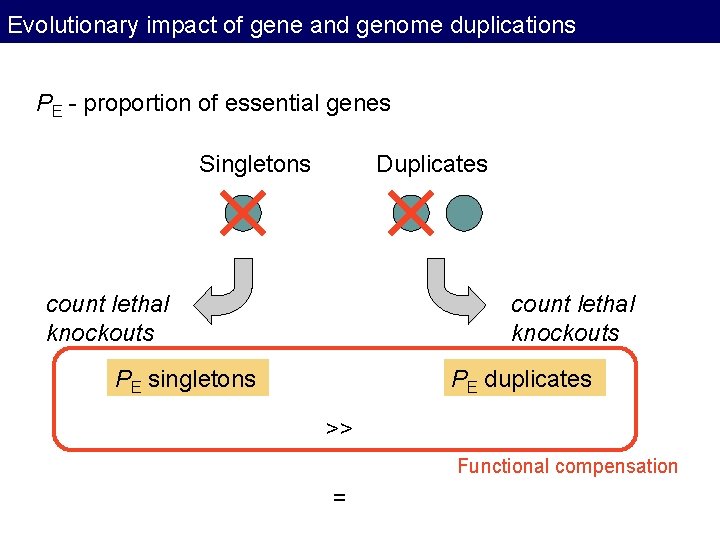
Fate of Duplicated Genes: Examples § Neofunctionalisation – GLUD 2 in primates has a new role in neurotransmitter flux – Thrombin (cleaves fibrinogen during clotting) and trypsin (digestive enzyme) are derived from a complete gene duplication – Lactate dehydrogenase can be converted into malate dehydrogenase with a single amino acid replacement (out of total protein length of 317 amino acids) § Subfunctionalisation – SIR 3 and ORC 1 gene pair in yeast § Have divergent functions, but single ancestral-type protein from another yeast has both functions § Dosage increase – Esterase B in mosquito § increased gene dosage confers greater pesticide resistance § Functional compensation § Many duplicated genes shelter the organism from deleterious mutations in the other copy (shown in yeast and worm)
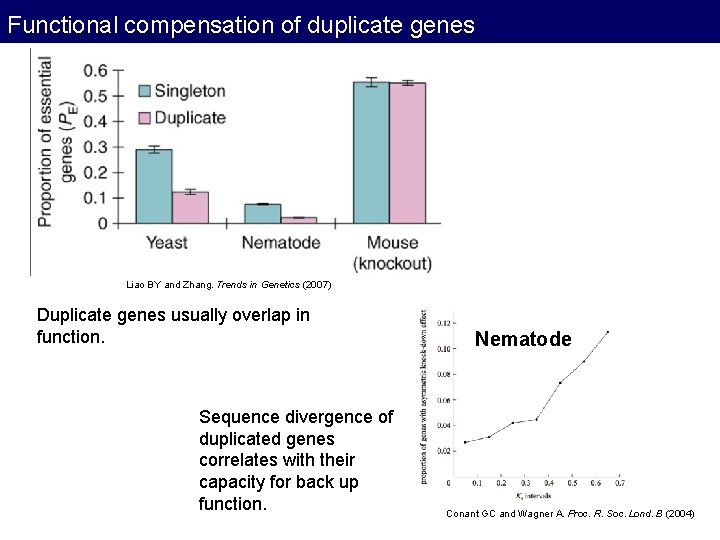
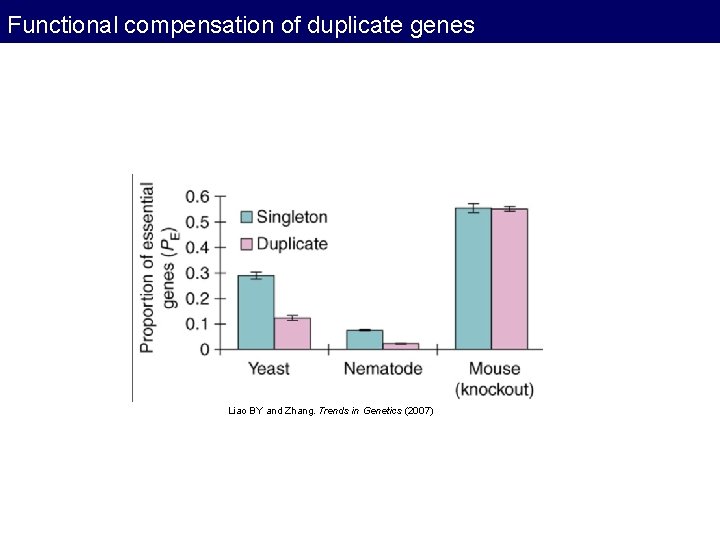
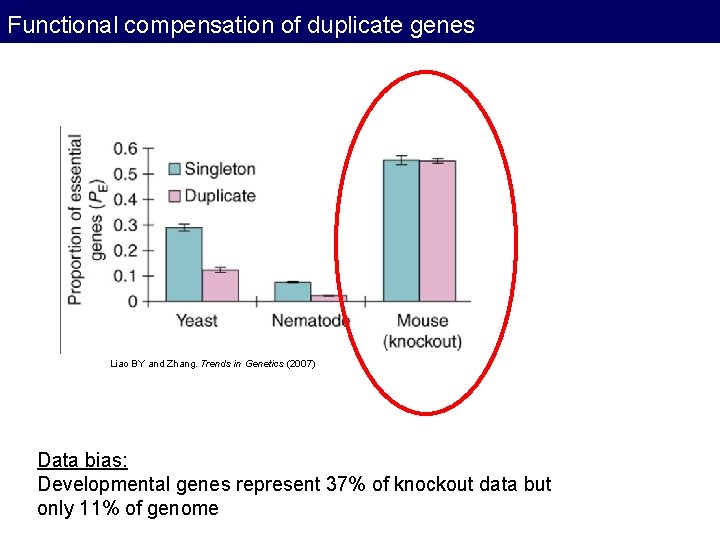
Functional compensation of duplicate genes Essentiality of duplicated Liao BY and Zhang. Trends in Genetics (2007) Duplicate genes usually overlap in function. Sequence divergence of duplicated genes correlates with their capacity for back up function. Nematode Conant GC and Wagner A. Proc. R. Soc. Lond. B (2004)
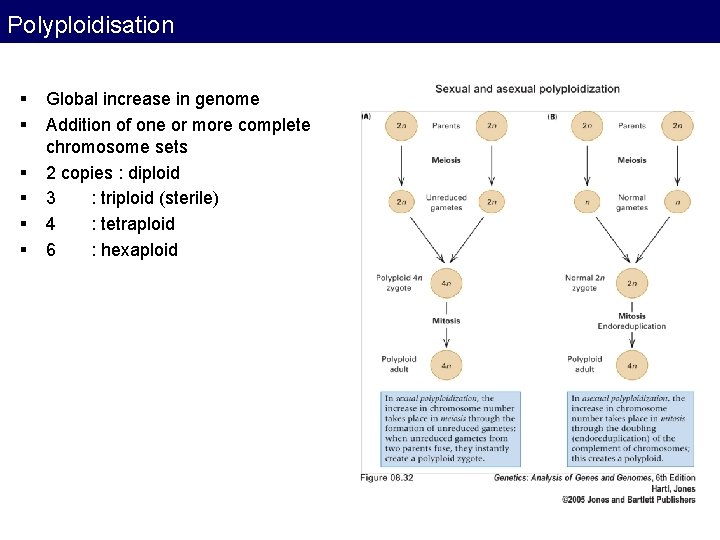
Polyploidisation § § § Global increase in genome Addition of one or more complete chromosome sets 2 copies : diploid 3 : triploid (sterile) 4 : tetraploid 6 : hexaploid
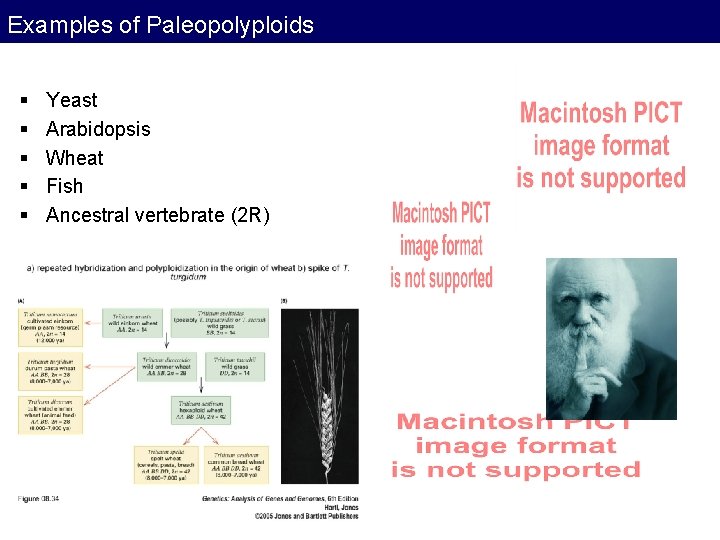
Examples of Paleopolyploids § § § Yeast Arabidopsis Wheat Fish Ancestral vertebrate (2 R)
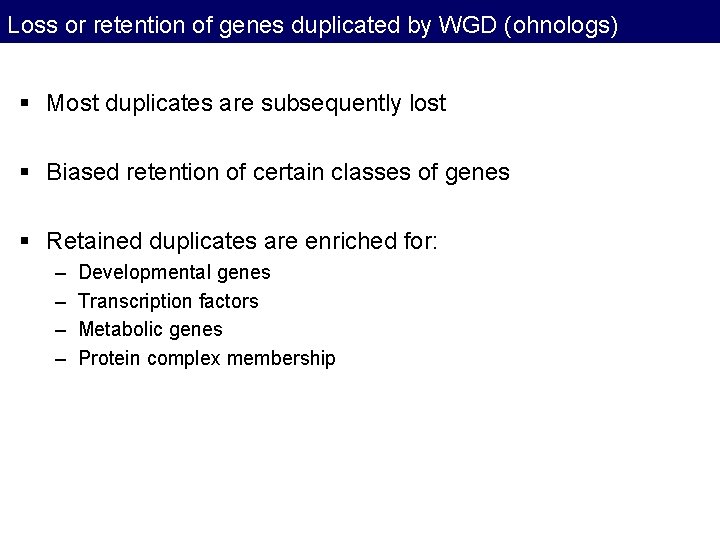
Loss or retention of genes duplicated by WGD (ohnologs) § Most duplicates are subsequently lost § Biased retention of certain classes of genes § Retained duplicates are enriched for: – – Developmental genes Transcription factors Metabolic genes Protein complex membership
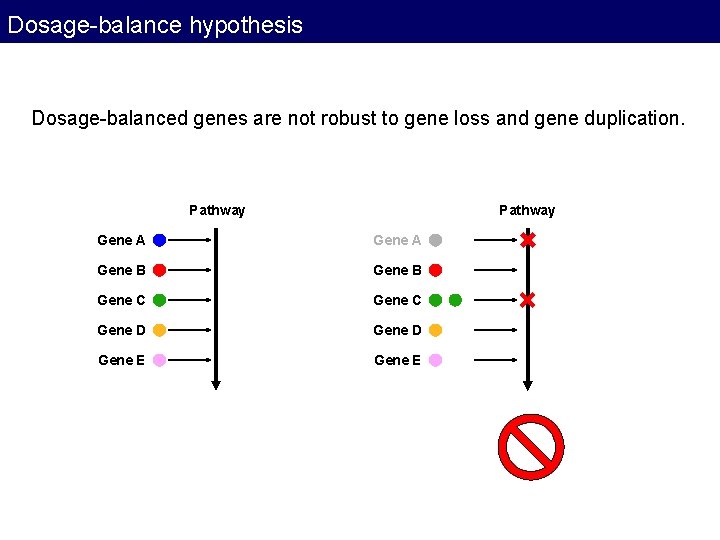
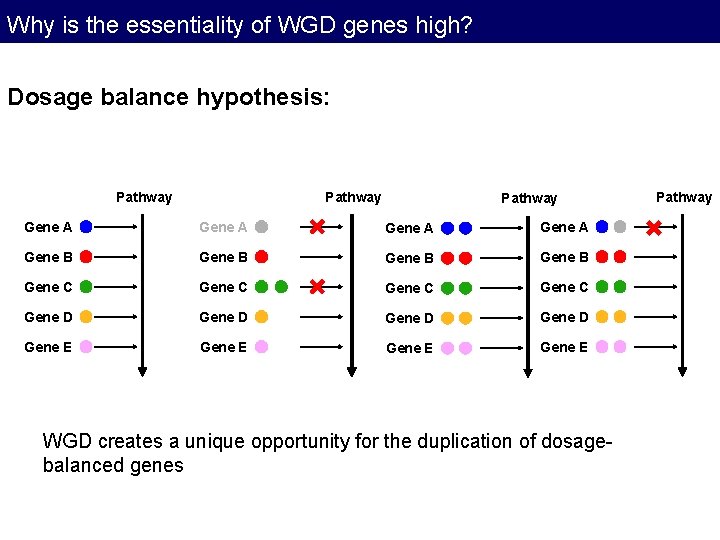
Dosage-balance hypothesis Dosage-balanced genes are not robust to gene loss and gene duplication. Pathway Gene A Gene B Gene C Gene D Gene E
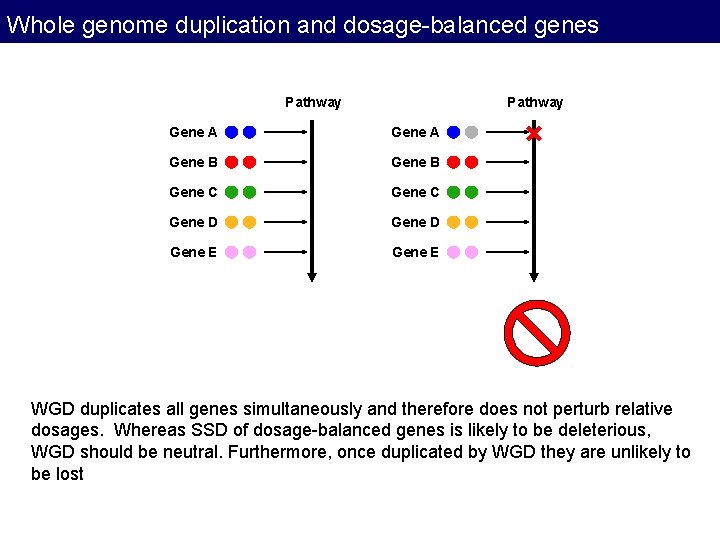
Whole genome duplication and dosage-balanced genes Pathway Gene A Gene B Gene C Gene D Gene E WGD duplicates all genes simultaneously and therefore does not perturb relative dosages. Whereas SSD of dosage-balanced genes is likely to be deleterious, WGD should be neutral. Furthermore, once duplicated by WGD they are unlikely to be lost
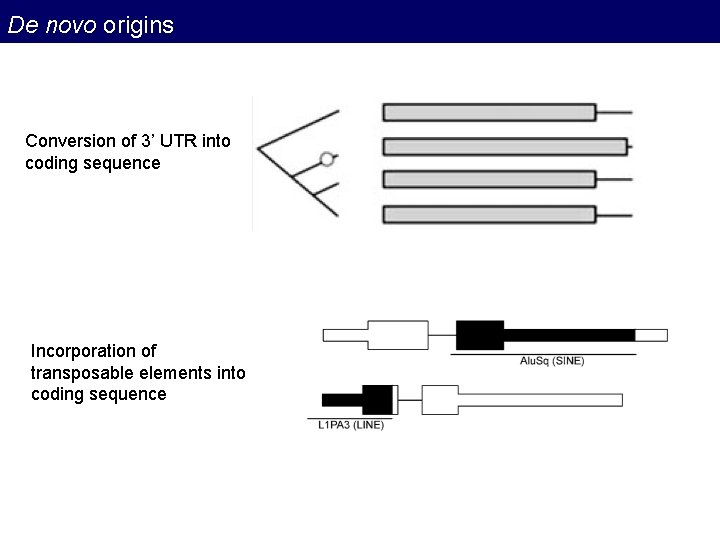
De novo origins Conversion of 3’ UTR into coding sequence Incorporation of transposable elements into coding sequence
De novo origin of whole protein-coding genes § Origin of an open reading frame (ORF) from ancestrally non-coding sequence – Single-base substitutions or small indels that remove a stop codon § Acquisition of expression activity § Considered to be very rare events
New genes in Drosophila § Levine et al. 2006, PNAS – Five de novo originated genes found in Drosophila melanogaster § Begun et al. 2007, Genetics – 11 genes that likely appeared in D. yakuba or the D. yakuba / D. erecta ancestor were identified using testis-derived ESTs § § Testis biased expression Often X-linked § Zhou et al. , 2008, Genome Research – 9 genes (some overlap with previous papers) – Estimate 12% of new genes arose de novo
New genes in Saccharomyces § Cai et al. 2008, Genetics – BSC 4 identified as a de novo gene in S. cerevisiae (132 aa) – DNA similarity but no ORF in closely-related yeasts S. paradoxus, S. mikatae and S. bayanus – Transcibed in these other yeast lineages § Origin of protein-coding gene from RNA gene – – Deletion of DUN 1 or RPN 4 is lethal if BSC 4 is also deleted Peptide. Atlas evidence supports translation Purifying selection Possibly involved in the DNA repair pathway
De novo origin of mouse-specific gene § § § Heinen et al. , 2009, Current Biology Non-coding RNA gene 3 exons, alternatively spliced Specifically expressed in post-meiotic cells of the testis Indel mutations in 5’ regulatory region Possible selective sweep
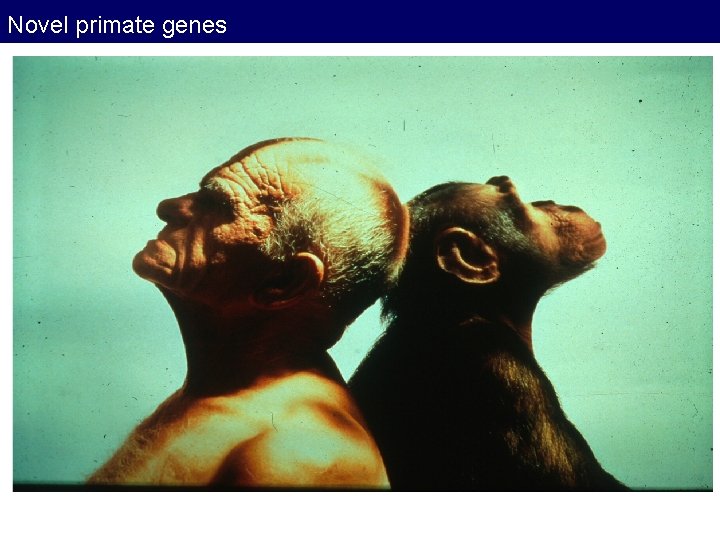
Novel primate genes
Human-Chimp Divergence § 99% identity of alignable sequence § High colinearity of gene order What is the genetic distinction? § Regulatory differences? § Differential gene duplication and loss? – 40 -45 Mb of species-specific euchromatic sequence § Unique genes?
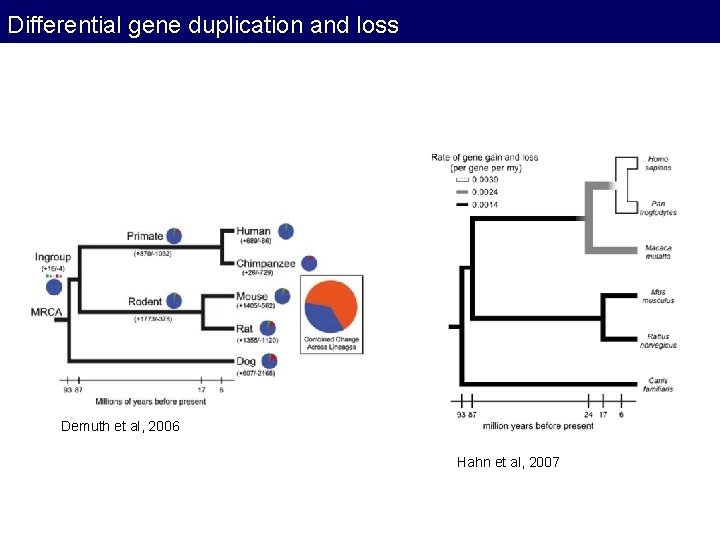
Differential gene duplication and loss Demuth et al, 2006 Hahn et al, 2007
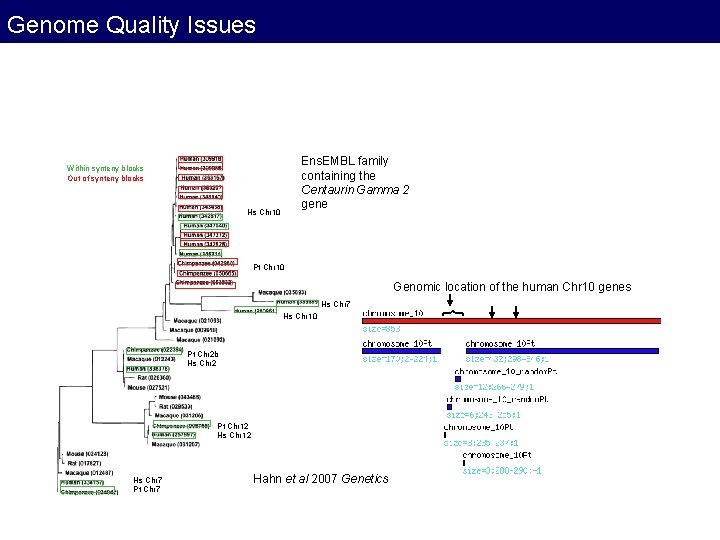
Genome Quality Issues Ens. EMBL family containing the Centaurin Gamma 2 gene Within synteny blocks Out of synteny blocks Hs Chr 10 Pt Chr 10 Genomic location of the human Chr 10 genes Pt Chr 2 b Hs Chr 2 Pt Chr 12 Hs Chr 7 Pt Chr 7 Hahn et al 2007 Genetics } Hs Chr 7 Hs Chr 10
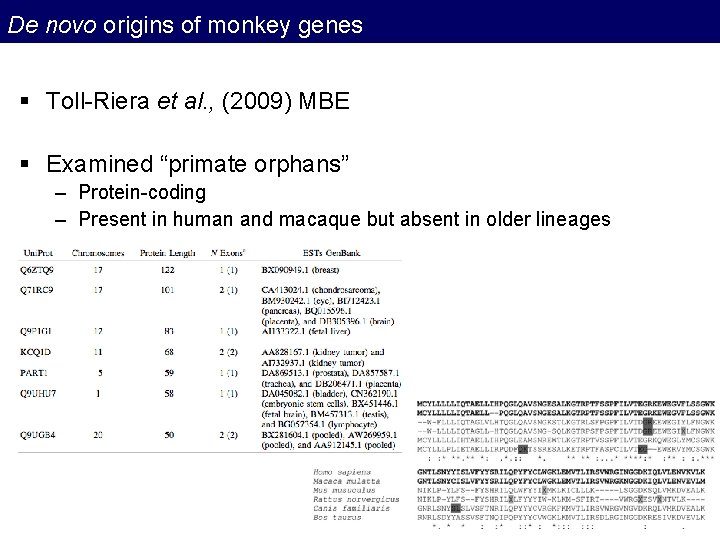
De novo origins of monkey genes § Toll-Riera et al. , (2009) MBE § Examined “primate orphans” – Protein-coding – Present in human and macaque but absent in older lineages
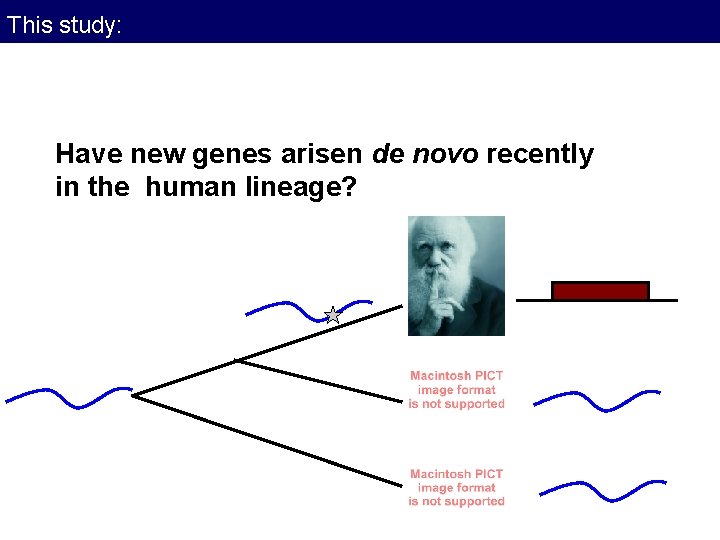
This study: Have new genes arisen de novo recently in the human lineage?
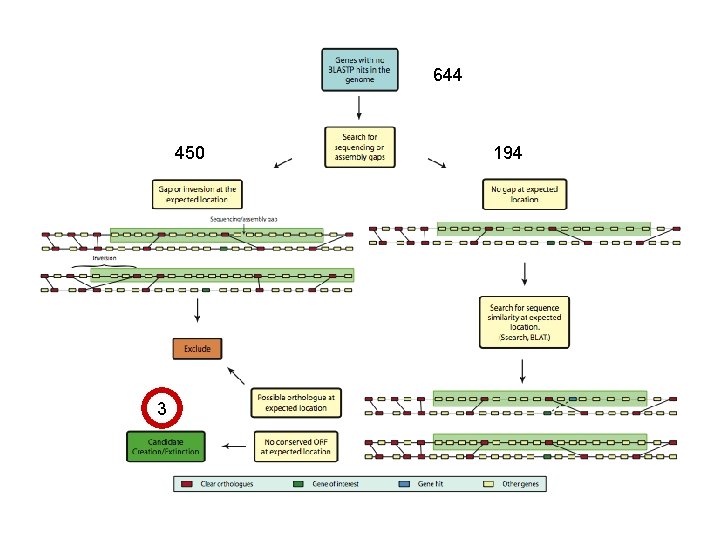
Unique human genes? § All-against-all BLASTP search identified 644 human genes with no match in the chimp genome § Candidate novel genes – examine these in great detail
Genome Quality Issues § Several spurious/trivial causes of apparent gene gain – candidate novel gene is spurious (human genome annotation error) – sequence gaps – gene is present but unsequenced – Chimp genome annotation error – gene is sequenced but unannotated
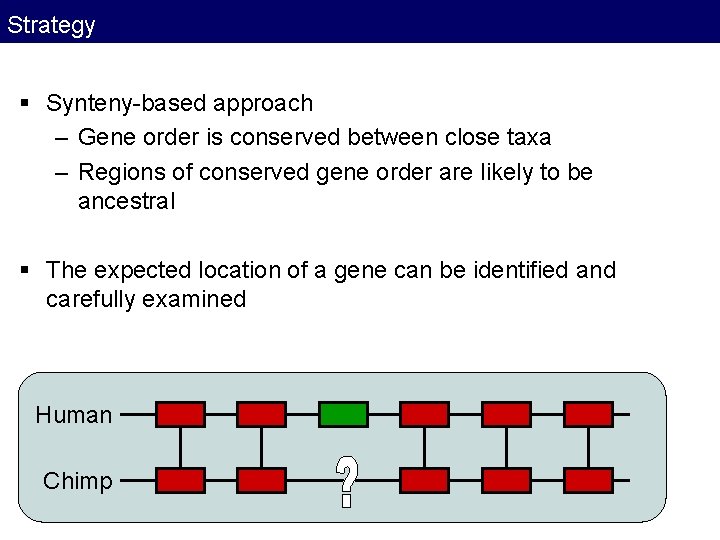
Strategy § Synteny-based approach – Gene order is conserved between close taxa – Regions of conserved gene order are likely to be ancestral § The expected location of a gene can be identified and carefully examined Human Chimp
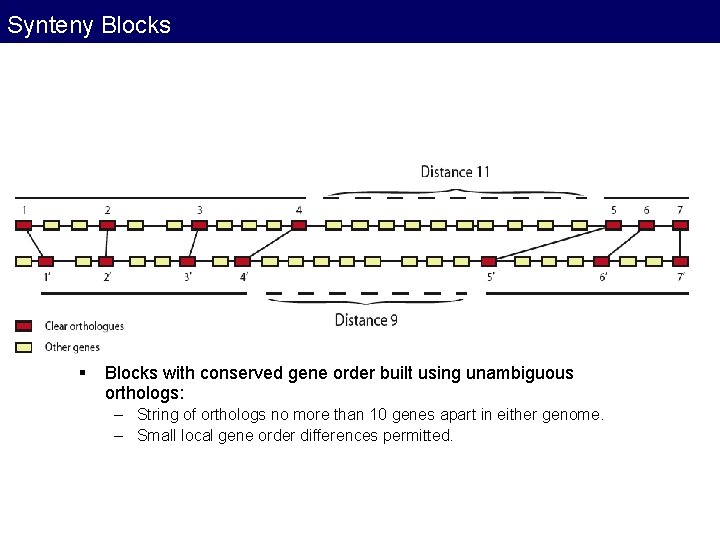
Synteny Blocks § Blocks with conserved gene order built using unambiguous orthologs: – String of orthologs no more than 10 genes apart in either genome. – Small local gene order differences permitted.
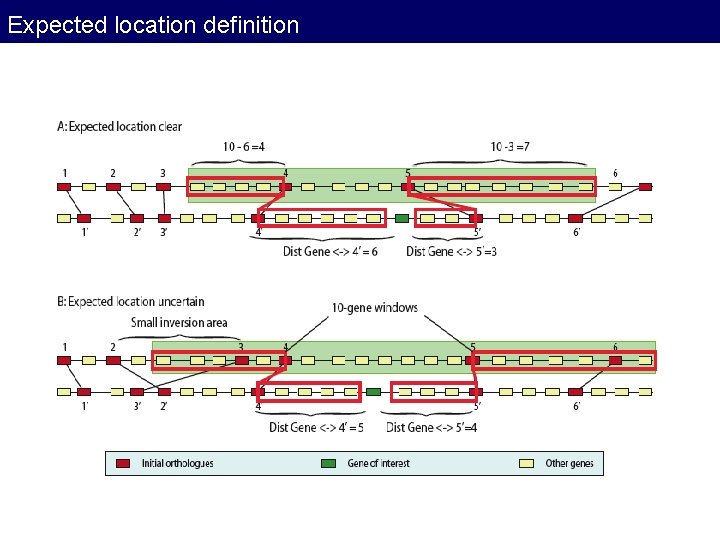
Expected location definition
644 450 3 194
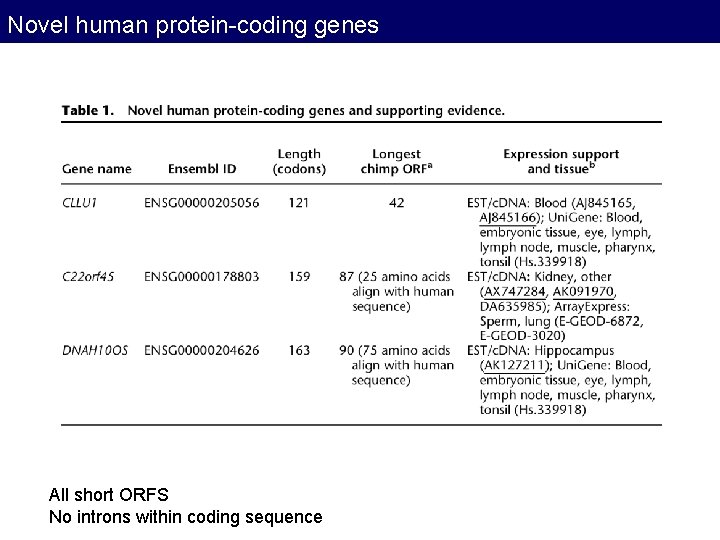
Novel human protein-coding genes All short ORFS No introns within coding sequence
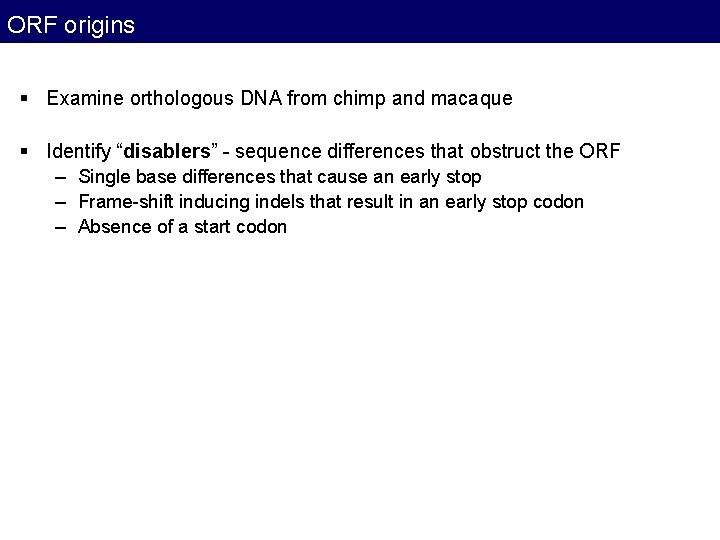
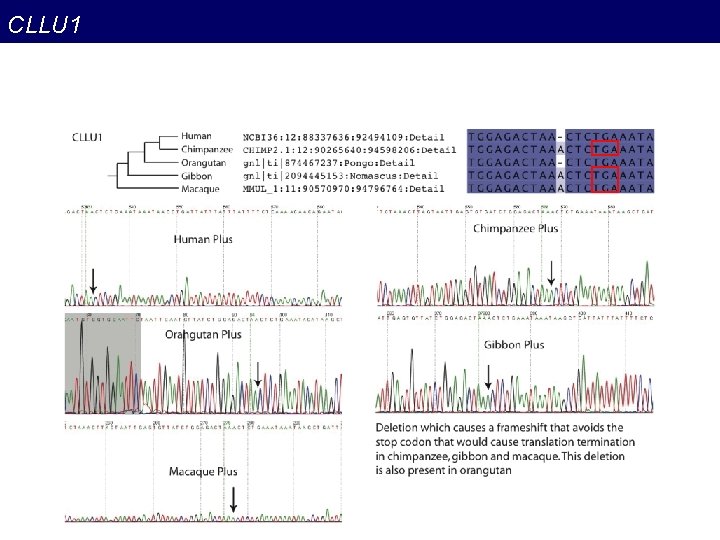
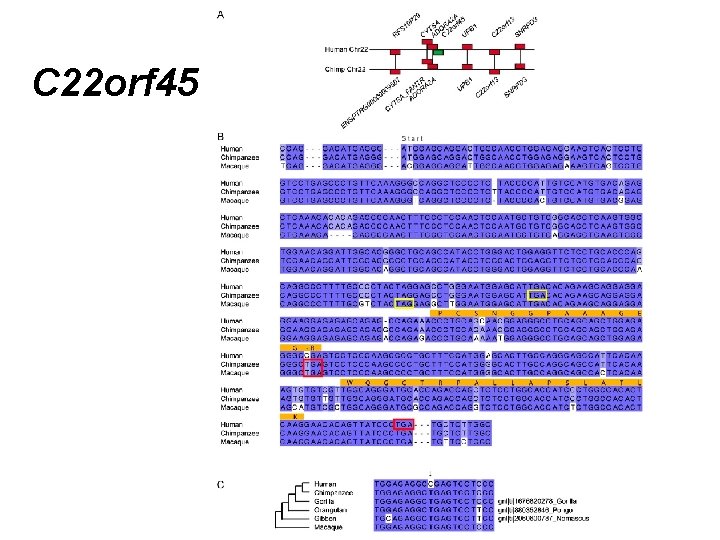
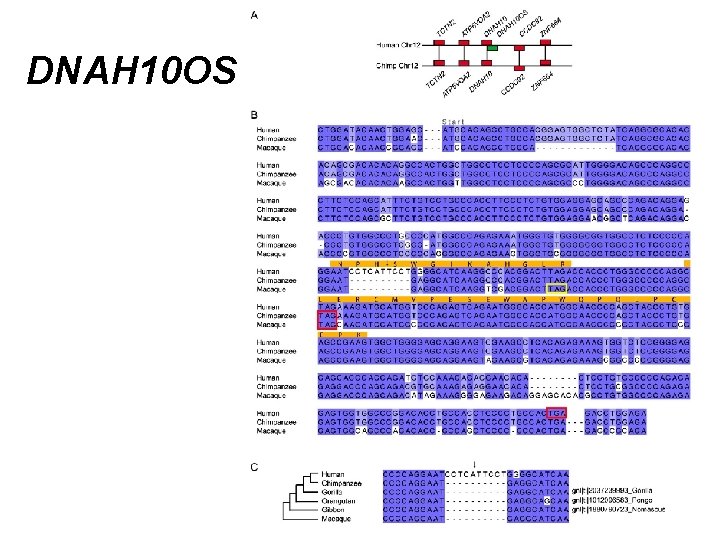
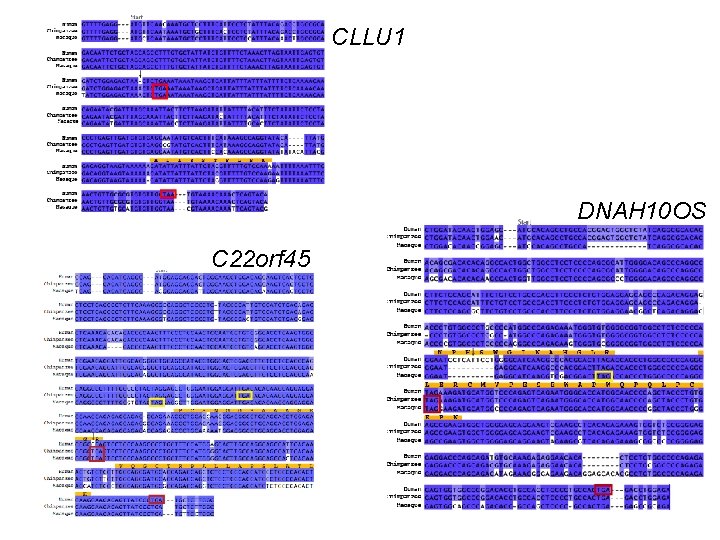
ORF origins § Examine orthologous DNA from chimp and macaque § Identify “disablers” - sequence differences that obstruct the ORF – Single base differences that cause an early stop – Frame-shift inducing indels that result in an early stop codon – Absence of a start codon
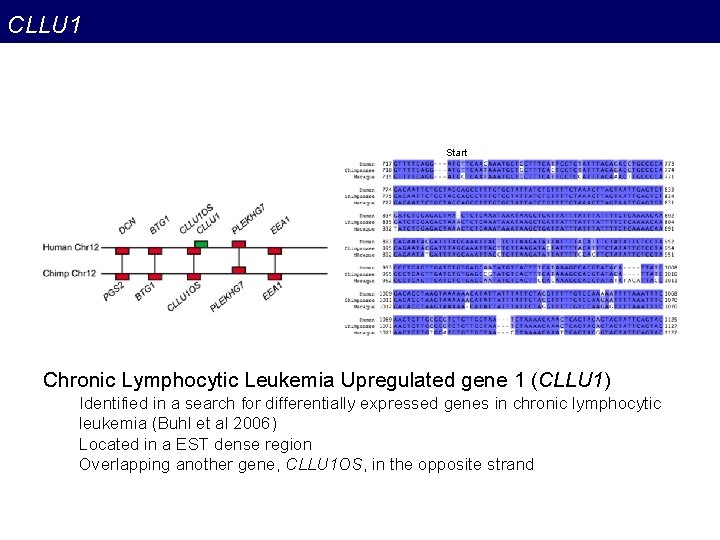
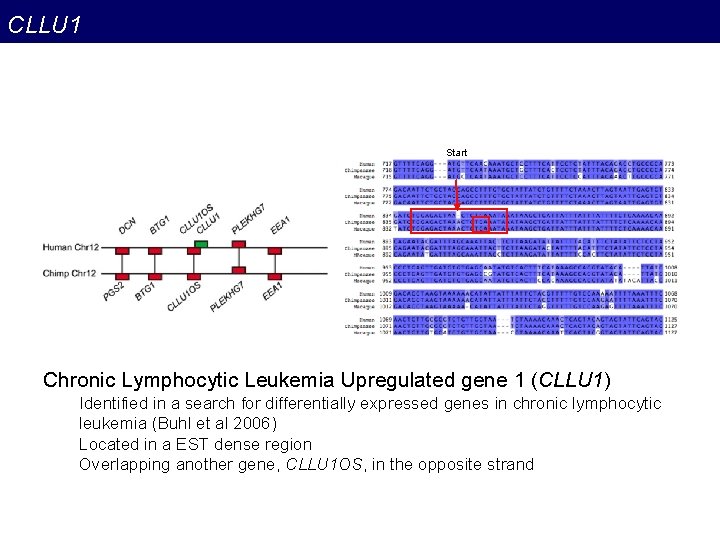
CLLU 1 Start Chronic Lymphocytic Leukemia Upregulated gene 1 (CLLU 1) Identified in a search for differentially expressed genes in chronic lymphocytic leukemia (Buhl et al 2006) Located in a EST dense region Overlapping another gene, CLLU 1 OS, in the opposite strand
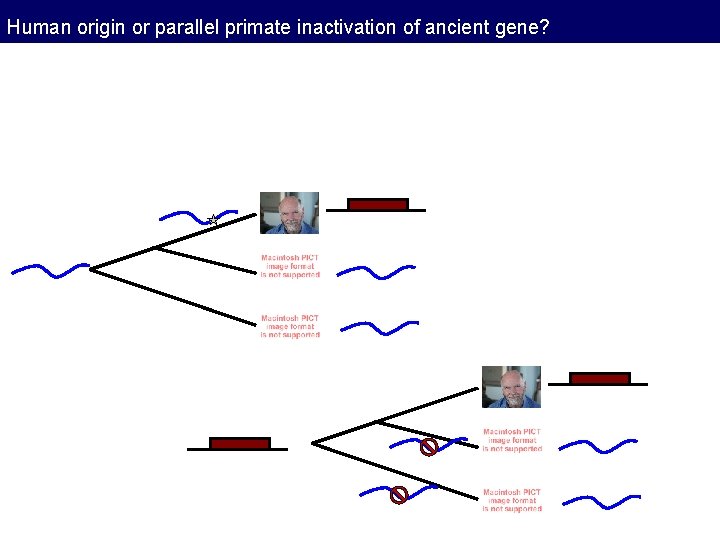
Human origin or parallel primate inactivation of ancient gene?
CLLU 1 Start Chronic Lymphocytic Leukemia Upregulated gene 1 (CLLU 1) Identified in a search for differentially expressed genes in chronic lymphocytic leukemia (Buhl et al 2006) Located in a EST dense region Overlapping another gene, CLLU 1 OS, in the opposite strand
CLLU 1
C 22 orf 45
DNAH 10 OS
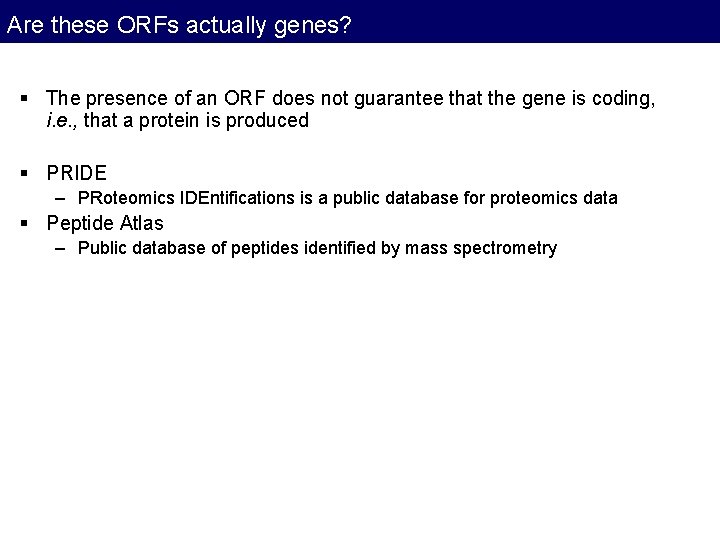
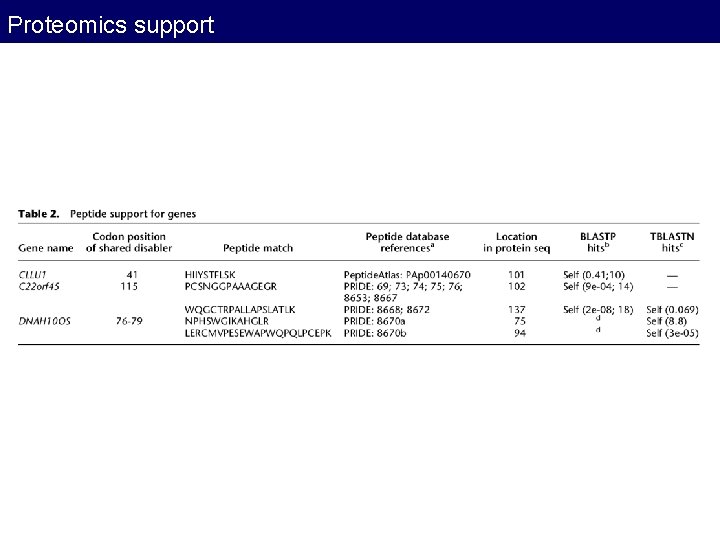
Are these ORFs actually genes? § The presence of an ORF does not guarantee that the gene is coding, i. e. , that a protein is produced § PRIDE – PRoteomics IDEntifications is a public database for proteomics data § Peptide Atlas – Public database of peptides identified by mass spectrometry
Proteomics support
CLLU 1 DNAH 10 OS C 22 orf 45
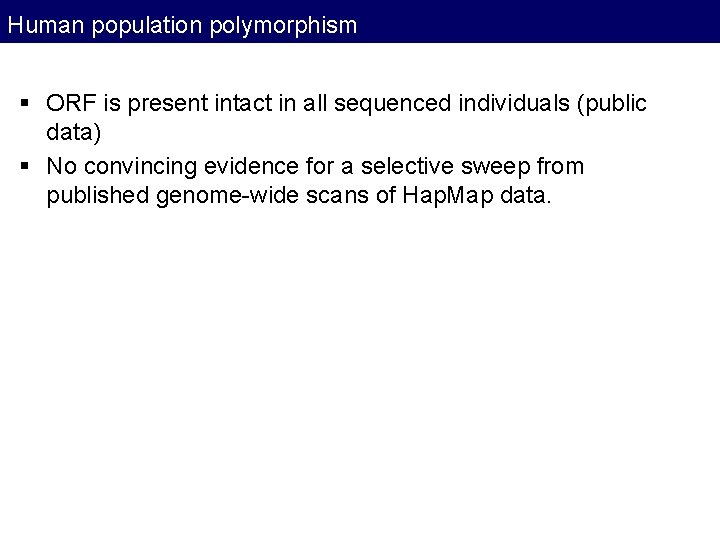
Human population polymorphism § ORF is present intact in all sequenced individuals (public data) § No convincing evidence for a selective sweep from published genome-wide scans of Hap. Map data.
How might these genes arise? § Sequence analysis traced the origin of the ORF, but these must also be expressed. § Expression of a new gene – ENCODE project indicated that much of the genome is transcribed – All three of these genes overlap other genes – CLLU 1 is in a permissive expression environment
De novo genes: Summary § 3 identified cases under strict criteria – Estimate about 18 should exist § All have evidence of transcription and translation § ORF formation allowed by human specific mutation in all cases § No “re-use” of coding sequence of previously-existing genes, but perhaps re-use of regulatory sequences.
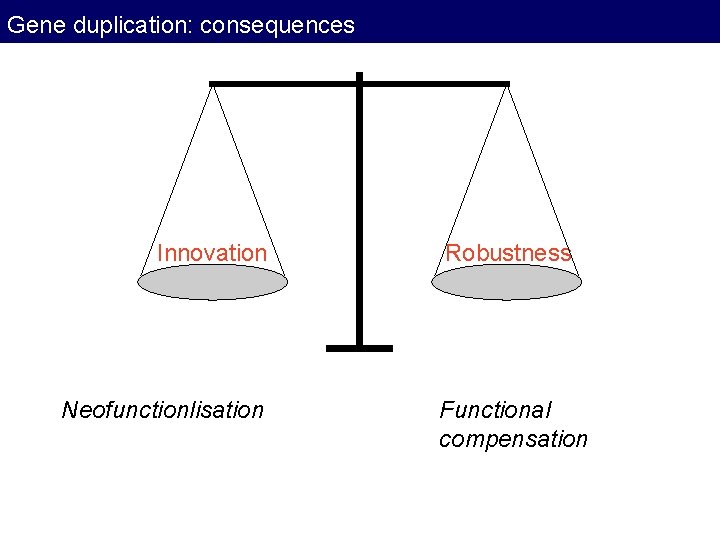
Gene duplication: consequences Innovation Neofunctionlisation Robustness Functional compensation
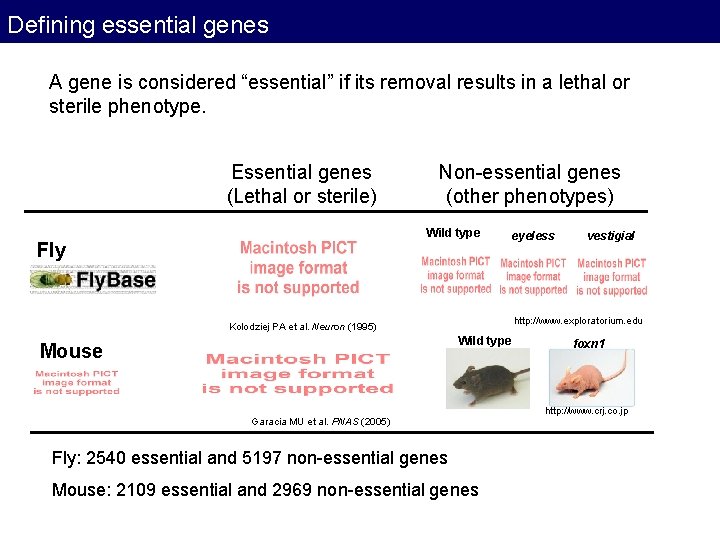
Defining essential genes A gene is considered “essential” if its removal results in a lethal or sterile phenotype. Essential genes (Lethal or sterile) Non-essential genes (other phenotypes) Wild type Fly eyeless http: //www. exploratorium. edu Kolodziej PA et al. Neuron (1995) Wild type Mouse vestigial Garacia MU et al. PNAS (2005) Fly: 2540 essential and 5197 non-essential genes Mouse: 2109 essential and 2969 non-essential genes foxn 1 http: //www. crj. co. jp
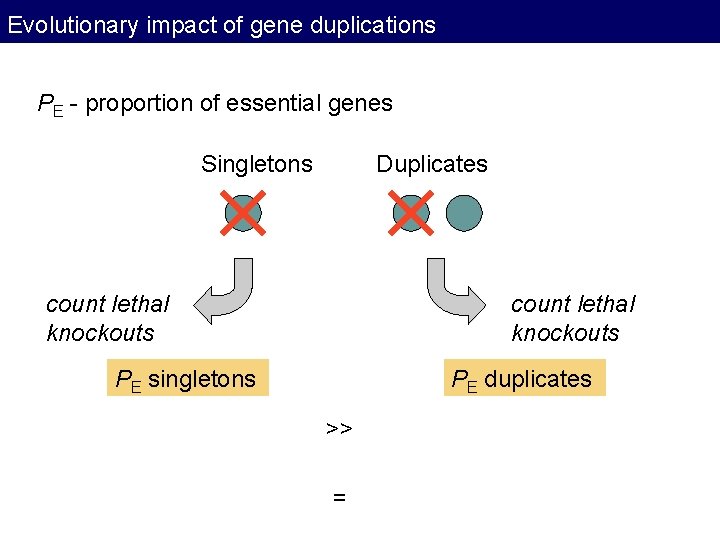
Evolutionary impact of gene duplications PE - proportion of essential genes Singletons Duplicates count lethal knockouts PE singletons PE duplicates >> =
Evolutionary impact of gene and genome duplications PE - proportion of essential genes Singletons Duplicates count lethal knockouts PE singletons PE duplicates >> Functional compensation =
Functional compensation of duplicate genes Essentiality of duplicated Liao BY and Zhang. Trends in Genetics (2007)
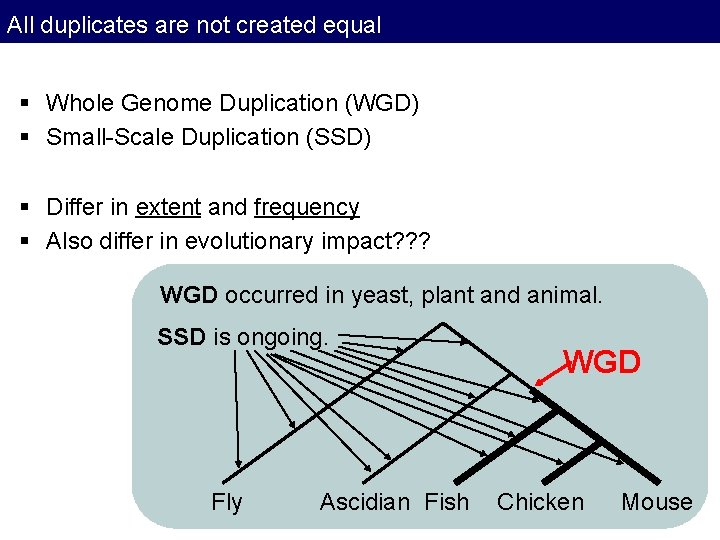
All duplicates are not created equal § Whole Genome Duplication (WGD) § Small-Scale Duplication (SSD) § Differ in extent and frequency § Also differ in evolutionary impact? ? ? WGD occurred in yeast, plant and animal. SSD is ongoing. Fly Ascidian Fish WGD Chicken Mouse
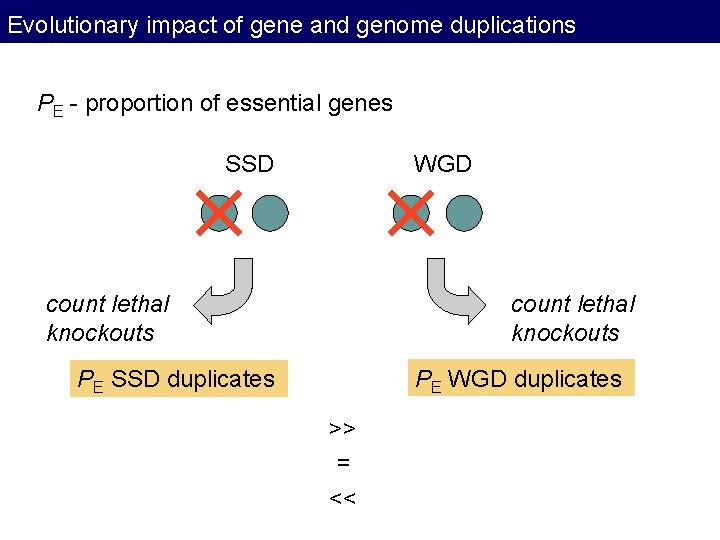
Evolutionary impact of gene and genome duplications PE - proportion of essential genes SSD WGD count lethal knockouts PE WGD duplicates PE SSD duplicates >> = <<
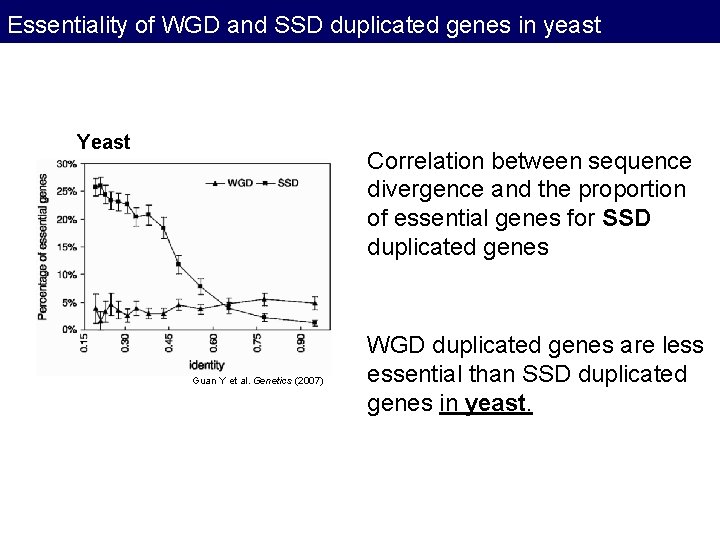
Essentiality of WGD and SSD duplicated genes in yeast Yeast Correlation between sequence divergence and the proportion of essential genes for SSD duplicated genes Guan Y et al. Genetics (2007) WGD duplicated genes are less essential than SSD duplicated genes in yeast.
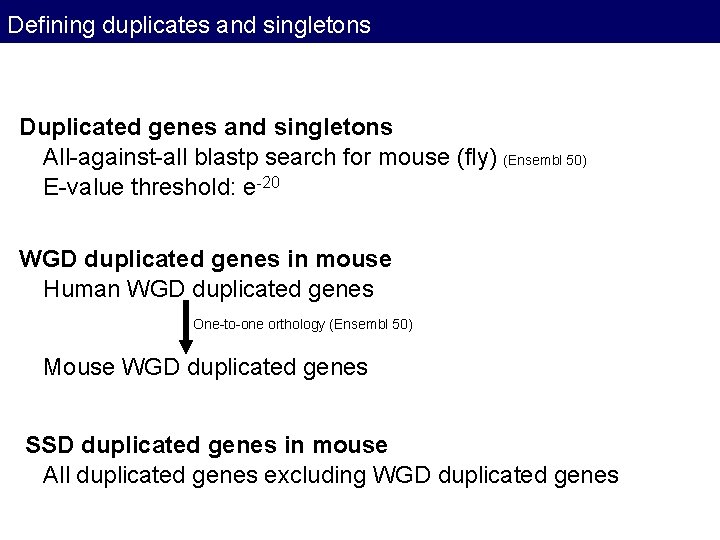
Defining duplicates and singletons Duplicated genes and singletons All-against-all blastp search for mouse (fly) (Ensembl 50) E-value threshold: e-20 WGD duplicated genes in mouse Human WGD duplicated genes One-to-one orthology (Ensembl 50) Mouse WGD duplicated genes SSD duplicated genes in mouse All duplicated genes excluding WGD duplicated genes
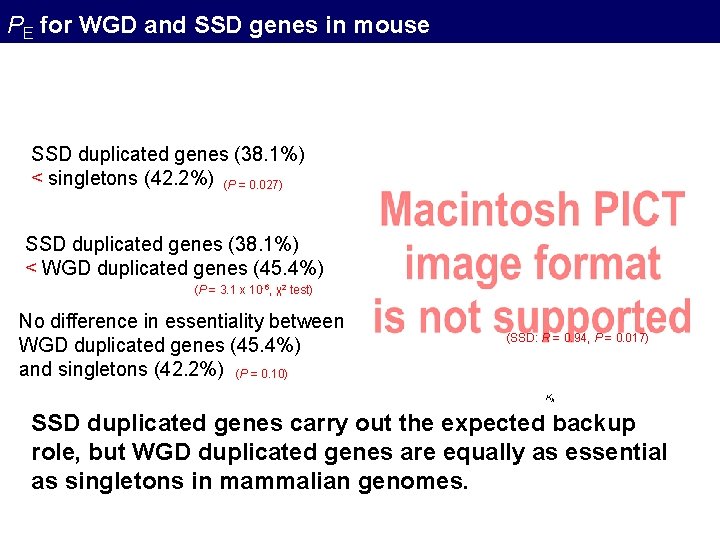
PE for WGD and SSD genes in mouse SSD duplicated genes (38. 1%) < singletons (42. 2%) (P = 0. 027) SSD duplicated genes (38. 1%) < WGD duplicated genes (45. 4%) (P = 3. 1 x 10 -6, χ2 test) No difference in essentiality between WGD duplicated genes (45. 4%) and singletons (42. 2%) (P = 0. 10) (SSD: R = 0. 94, P = 0. 017) KA SSD duplicated genes carry out the expected backup role, but WGD duplicated genes are equally as essential as singletons in mammalian genomes.
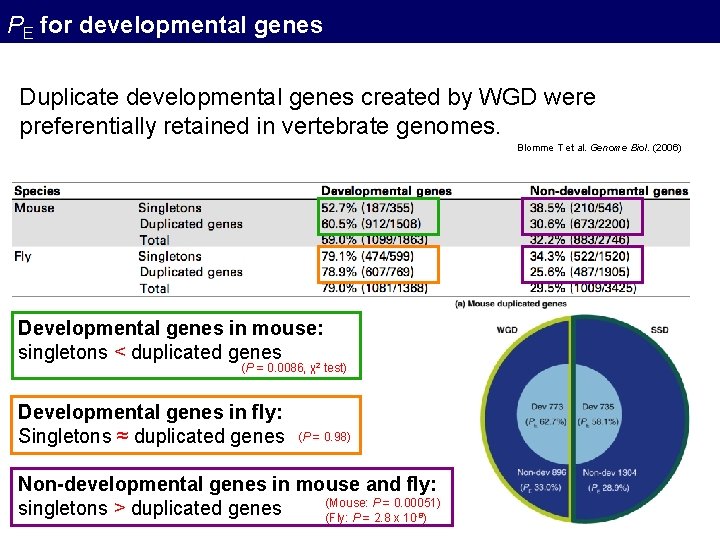
PE for developmental genes Duplicate developmental genes created by WGD were preferentially retained in vertebrate genomes. Blomme T et al. Genome Biol. (2006) Developmental genes: genes with GO: 0007525 (multicellular organismal development) or GO: 0030154 (cell differentiation) Non-developmental genes: genes with other GO ids Developmental genes in mouse: singletons < duplicated genes (P = 0. 0086, χ2 test) Developmental genes in fly: Singletons ≈ duplicated genes (P = 0. 98) Non-developmental genes in mouse and fly: (Mouse: P = 0. 00051) singletons > duplicated genes (Fly: P = 2. 8 x 10 ) -8
Functional compensation of duplicate genes Essentiality of duplicated Liao BY and Zhang. Trends in Genetics (2007) Data bias: Developmental genes represent 37% of knockout data but only 11% of genome
Why is the essentiality of WGD genes high? Dosage balance hypothesis: Pathway Gene A Gene B Gene C Gene D Gene E WGD creates a unique opportunity for the duplication of dosagebalanced genes Pathway
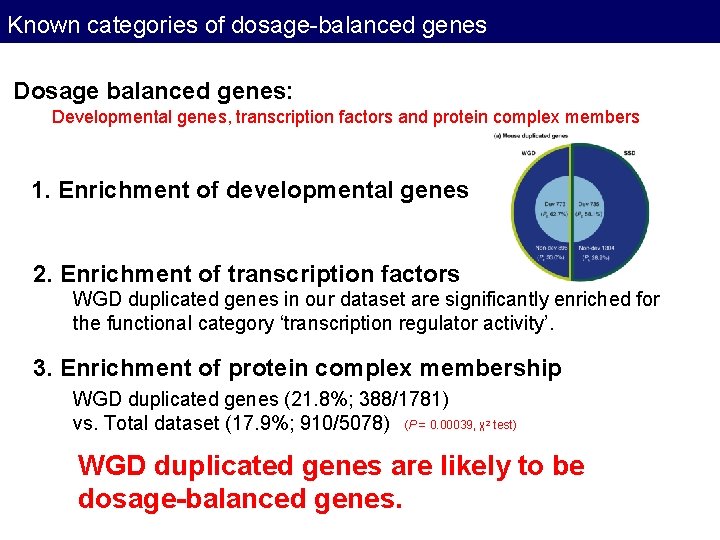
Known categories of dosage-balanced genes Dosage balanced genes: Developmental genes, transcription factors and protein complex members 1. Enrichment of developmental genes 2. Enrichment of transcription factors WGD duplicated genes in our dataset are significantly enriched for the functional category ‘transcription regulator activity’. 3. Enrichment of protein complex membership WGD duplicated genes (21. 8%; 388/1781) vs. Total dataset (17. 9%; 910/5078) (P = 0. 00039, χ 2 test) WGD duplicated genes are likely to be dosage-balanced genes.
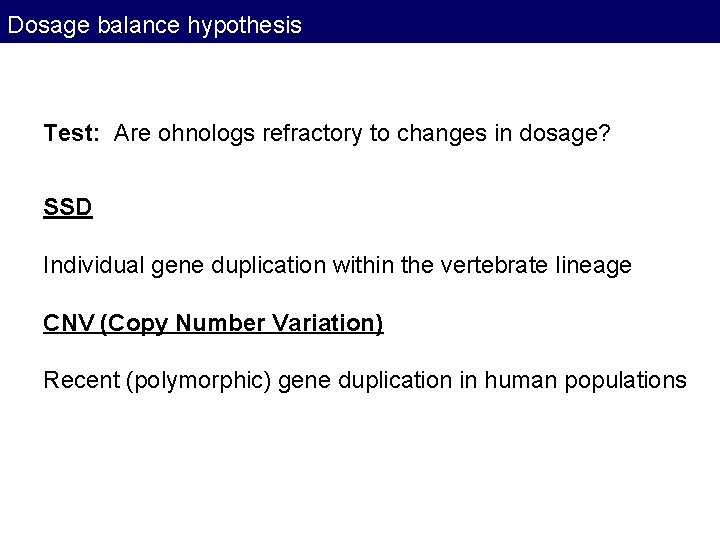
Dosage balance hypothesis Test: Are ohnologs refractory to changes in dosage? SSD Individual gene duplication within the vertebrate lineage CNV (Copy Number Variation) Recent (polymorphic) gene duplication in human populations
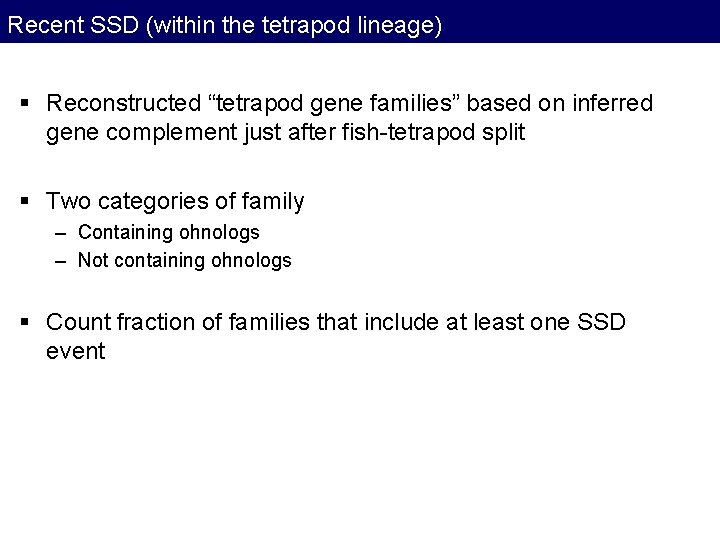
Recent SSD (within the tetrapod lineage) § Reconstructed “tetrapod gene families” based on inferred gene complement just after fish-tetrapod split § Two categories of family – Containing ohnologs – Not containing ohnologs § Count fraction of families that include at least one SSD event
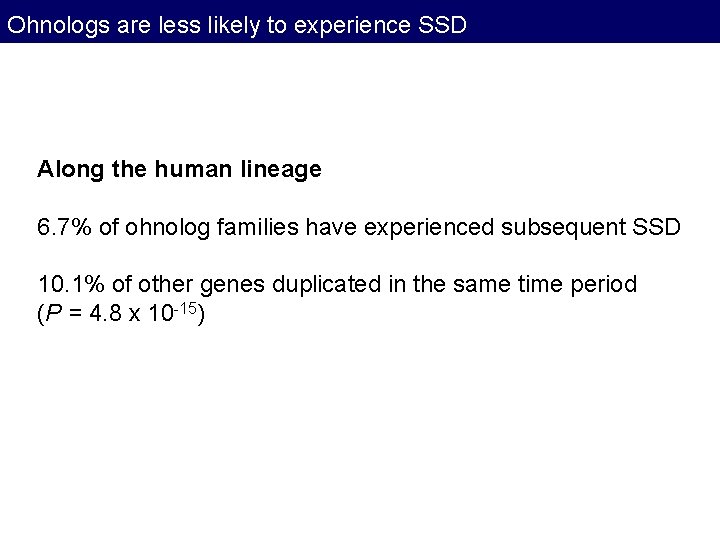
Ohnologs are less likely to experience SSD Along the human lineage 6. 7% of ohnolog families have experienced subsequent SSD 10. 1% of other genes duplicated in the same time period (P = 4. 8 x 10 -15)
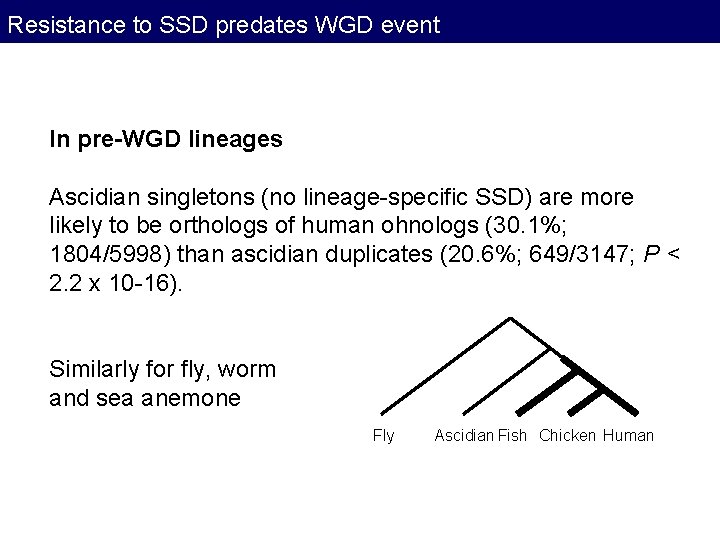
Resistance to SSD predates WGD event In pre-WGD lineages Ascidian singletons (no lineage-specific SSD) are more likely to be orthologs of human ohnologs (30. 1%; 1804/5998) than ascidian duplicates (20. 6%; 649/3147; P < 2. 2 x 10 -16). Similarly for fly, worm and sea anemone Fly Ascidian Fish Chicken Human
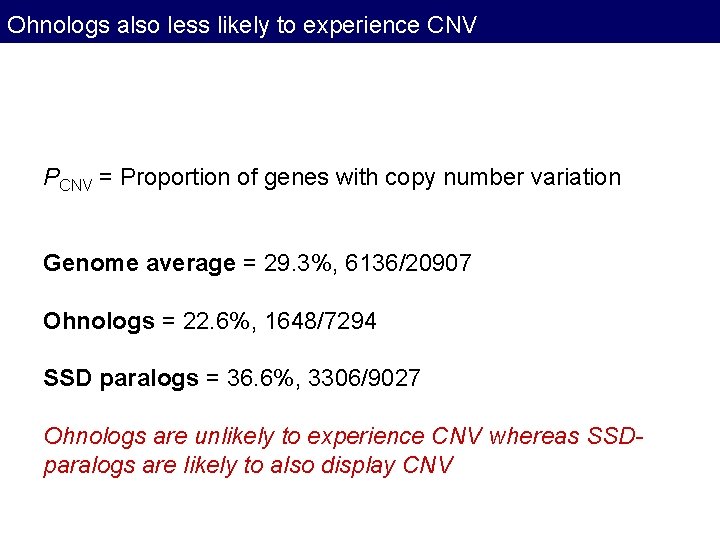
Ohnologs also less likely to experience CNV PCNV = Proportion of genes with copy number variation Genome average = 29. 3%, 6136/20907 Ohnologs = 22. 6%, 1648/7294 SSD paralogs = 36. 6%, 3306/9027 Ohnologs are unlikely to experience CNV whereas SSDparalogs are likely to also display CNV
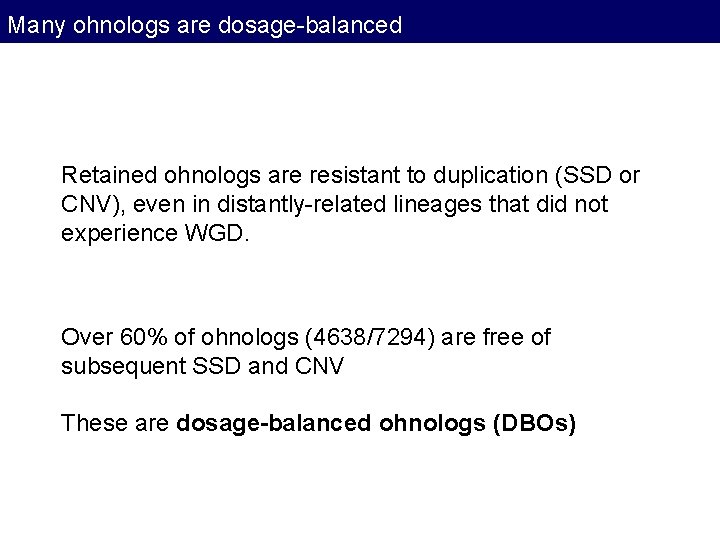
Many ohnologs are dosage-balanced Retained ohnologs are resistant to duplication (SSD or CNV), even in distantly-related lineages that did not experience WGD. Over 60% of ohnologs (4638/7294) are free of subsequent SSD and CNV These are dosage-balanced ohnologs (DBOs)
DBOs are associated with disease § Data used to search for CNV was from healthy individuals § Studies have reported a link between CNV and disease § Duplication of a DBO is expected to be deleterious and lead to disease § DBOs identified here are enriched for disease genes in OMIM (P < 2. 2 x 10 -16)
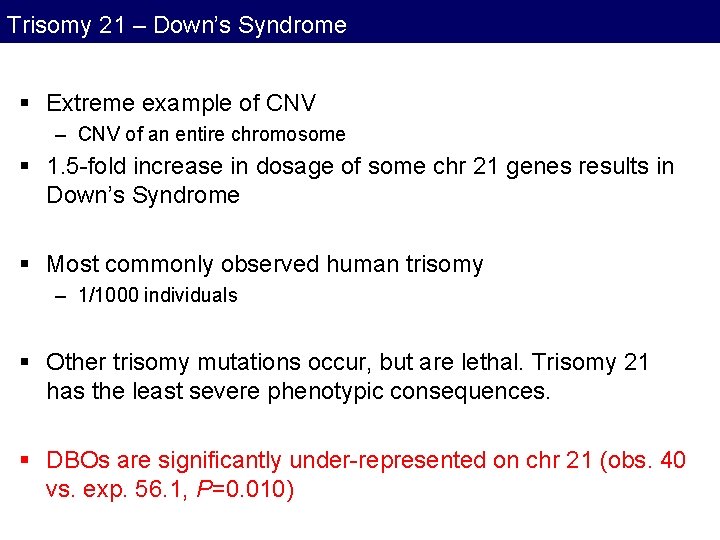
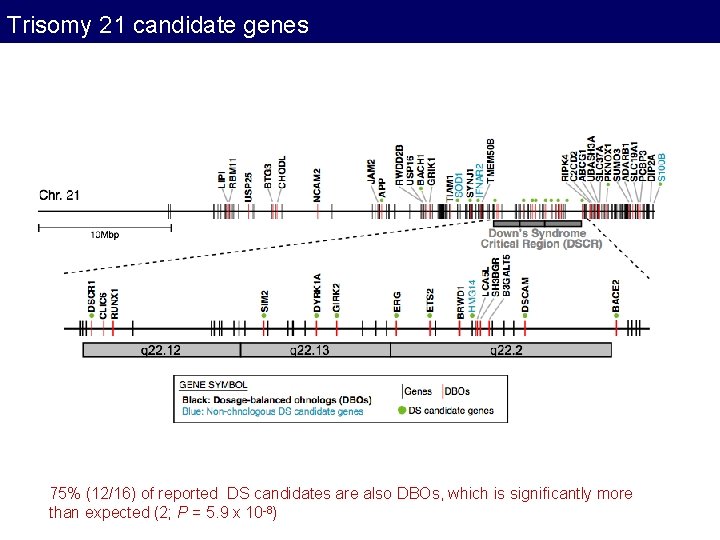
Trisomy 21 – Down’s Syndrome § Extreme example of CNV – CNV of an entire chromosome § 1. 5 -fold increase in dosage of some chr 21 genes results in Down’s Syndrome § Most commonly observed human trisomy – 1/1000 individuals § Other trisomy mutations occur, but are lethal. Trisomy 21 has the least severe phenotypic consequences. § DBOs are significantly under-represented on chr 21 (obs. 40 vs. exp. 56. 1, P=0. 010)
Trisomy 21 candidate genes 75% (12/16) of reported DS candidates are also DBOs, which is significantly more than expected (2; P = 5. 9 x 10 -8)
Conclusions: novel genes § We show the first evidence of de novo formation of unique human genes § Newly formed genes show simple ORFs § Regions/tissues with permissive expression environments may favor this process § SSD duplicated genes have a backup role for their duplicated copies in mouse and in fly. § WGD-duplicated genes do not have a backup role and have high essentiality, because of the enrichment of dosage-balanced genes. § The evolutionary profile of gene duplication and retention can suggest a role in human disease.
Acknowledgements David Gonzalez Knowles – Knowles & Mc. Lysaght, Genome Research (2009) Takashi Makino – Makino et al. , Ti. G (2009) and Makino & Mc. Lysaght PNAS (2010)
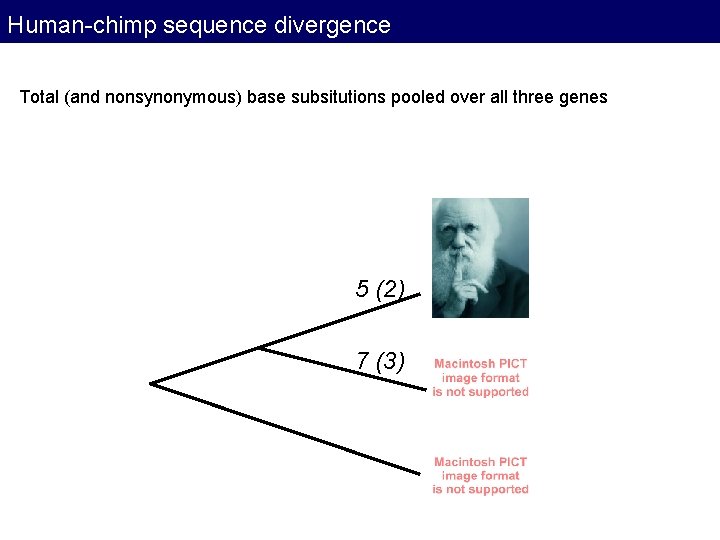
Human-chimp sequence divergence Total (and nonsynonymous) base subsitutions pooled over all three genes 5 (2) 7 (3)