
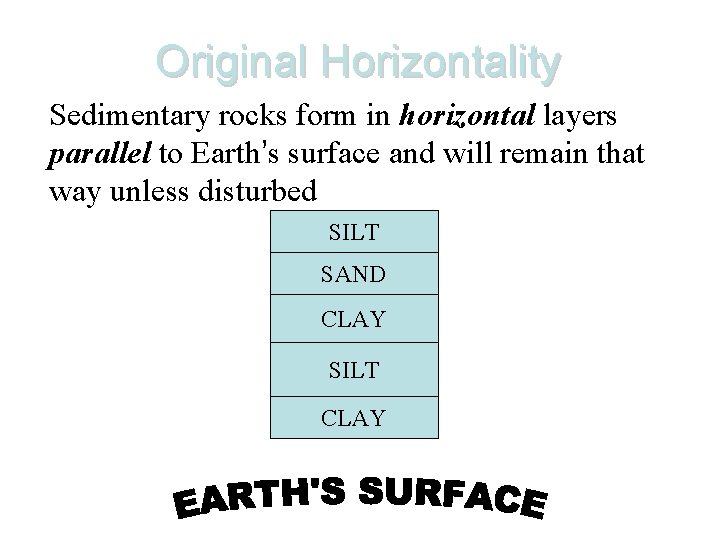
Original Horizontality Sedimentary rocks form in horizontal layers
- Slides: 37
Original Horizontality Sedimentary rocks form in horizontal layers parallel to Earth’s surface and will remain that way unless disturbed SILT SAND CLAY SILT CLAY
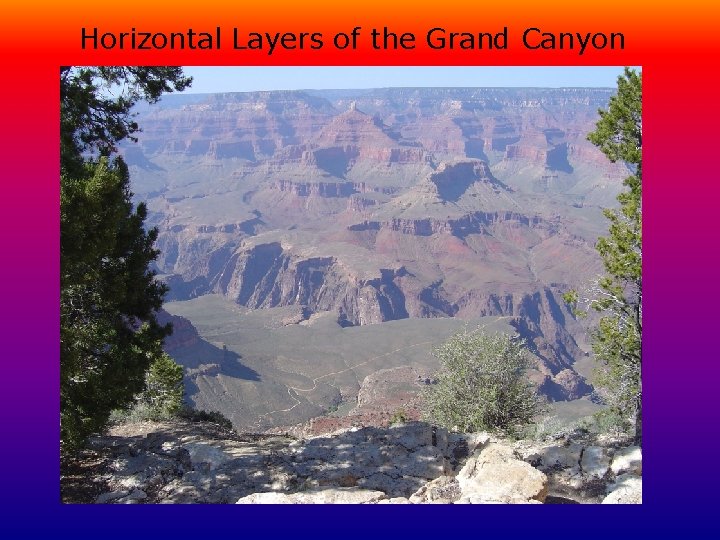
Horizontal Layers of the Grand Canyon
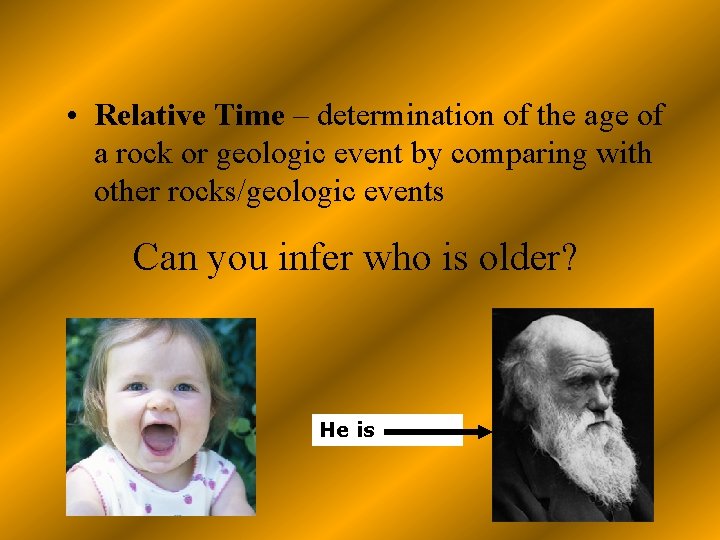
• Relative Time – determination of the age of a rock or geologic event by comparing with other rocks/geologic events Can you infer who is older? He is
3 Ways to Determine Relative Time………? Coming Right Up!!
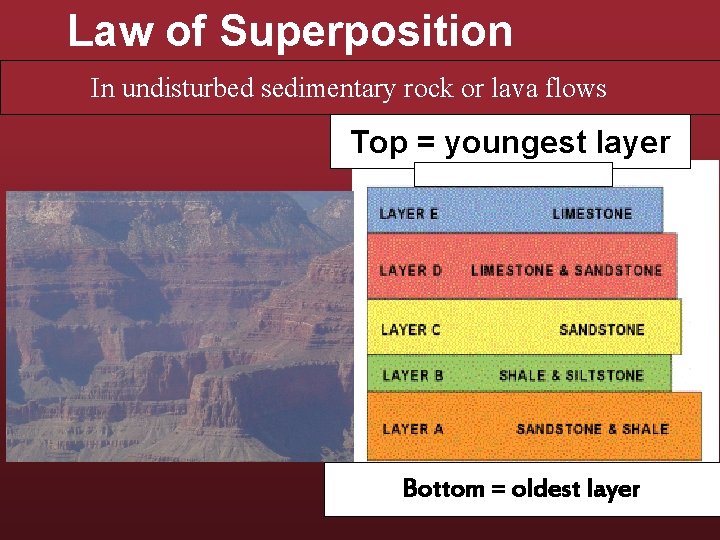
Law of Superposition In undisturbedsedimentary rock or lava flows: In undisturbed rock or lava Top = youngest layer Bottom = oldest layer
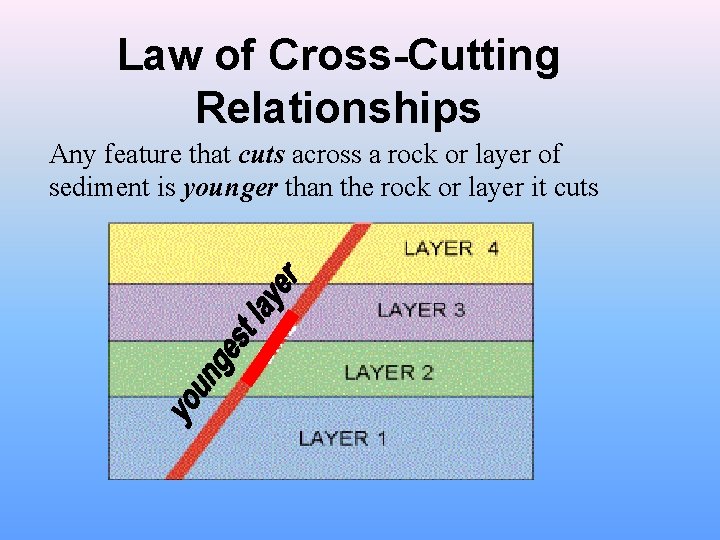
Law of Cross-Cutting Relationships Any feature that cuts across a rock or layer of sediment is younger than the rock or layer it cuts
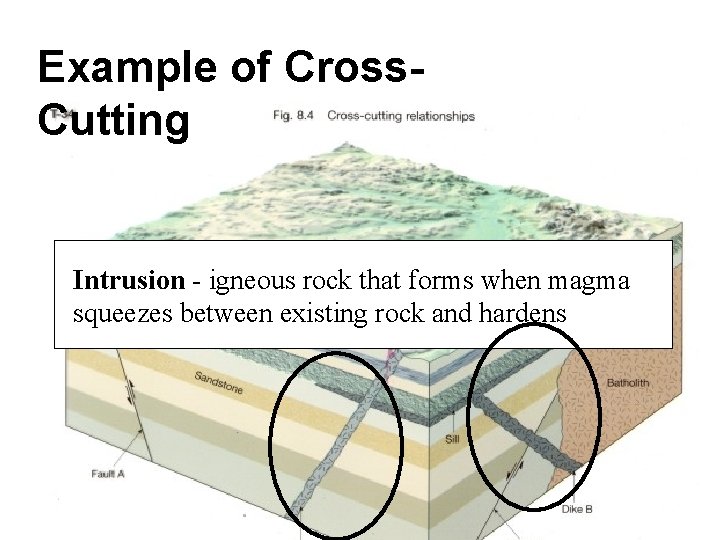
Example of Cross. Cutting Intrusion- igneousrockthatformswhenmagma squeezesbetweenexistingrockand andhardens
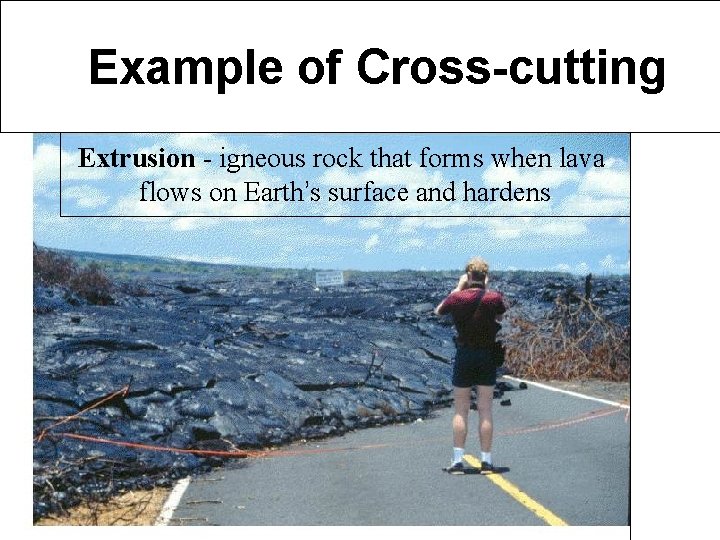
Examples of Cross-Cutting Example of Cross-cutting Extrusion - igneous rock that forms when lava flows on Earth’s surface and hardens
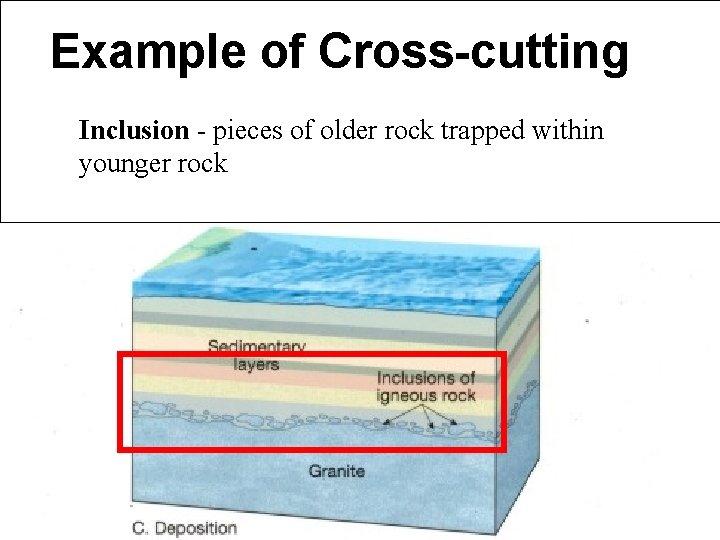
Exampleof of. Cross-cutting Inclusion - pieces of older rock trapped within younger rock
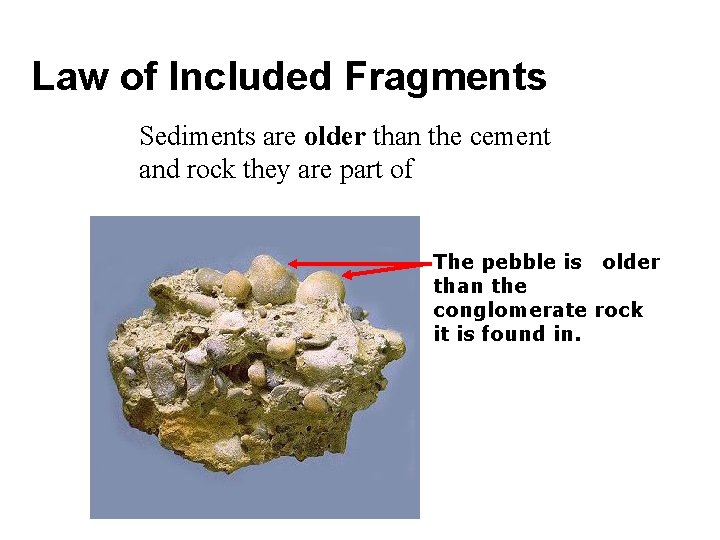
Law of Included Fragments Sediments are older than the cement and rock they are part of The pebble is older than the conglomerate rock it is found in.
However, there are exceptions to these laws…….
Exceptions to Law of Superposition Rock layers can be overturned, older layers pushed on top of younger layers THEREFORE, geologists use these clues to find the original position of rock layers…
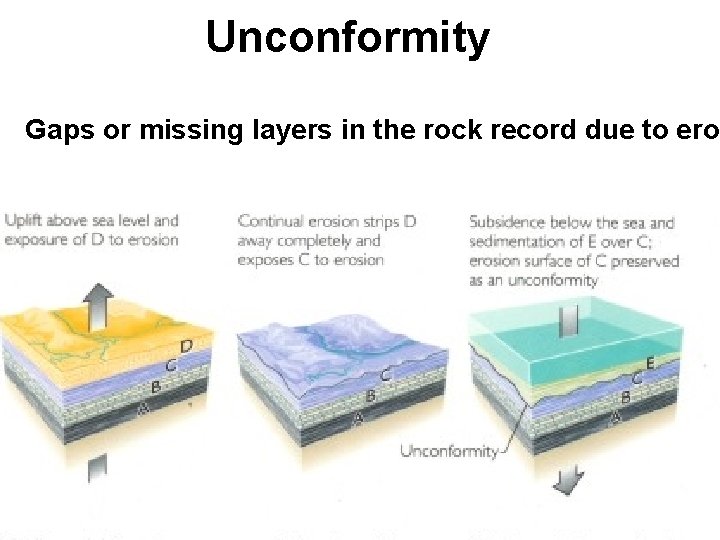
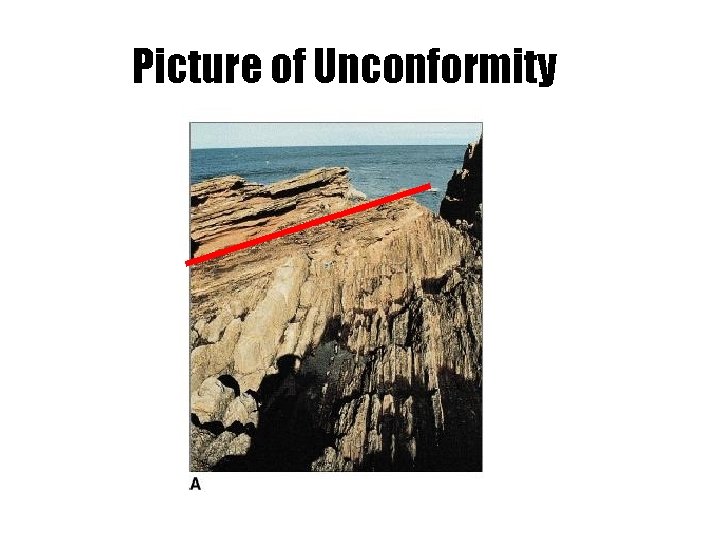
Unconformity Gaps or missing layers in the rock record due to eros Angular unconformity
Picture of Unconformity
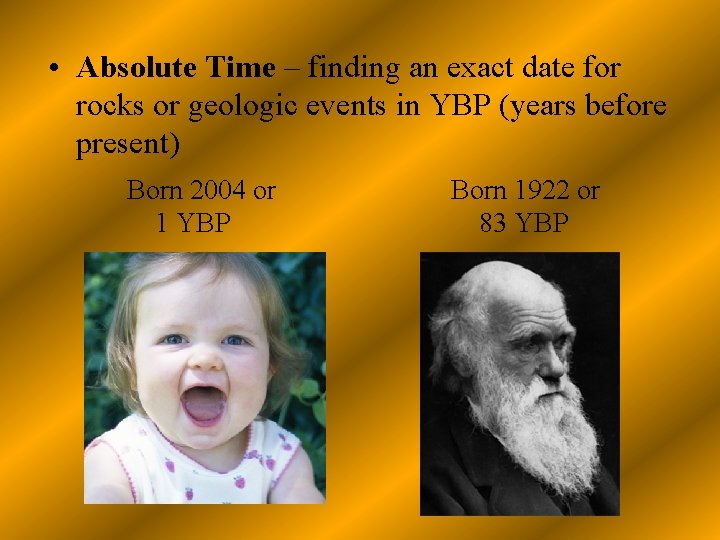
• Absolute Time – finding an exact date for rocks or geologic events in YBP (years before present) Born 2004 or 1 YBP Born 1922 or 83 YBP
How do geologists measure Absolute Time? 1. Radioactive Decay 2. Biological Clocks - Tree rings, coral growth rings, glacial lake layers of sediment
Before you measure ABSOLUTE TIME you must understand the following terms…. .
ISOTOPES - alternate forms of an element - some are RADIOACTIVE
Radioactivity release of high-energy particles from unstable atoms, maybe cancer-causing Radioactive isotope - an isotope that undergoes radioactive decay - used to determine absolute age Examples: Uranium 238 and Carbon 14
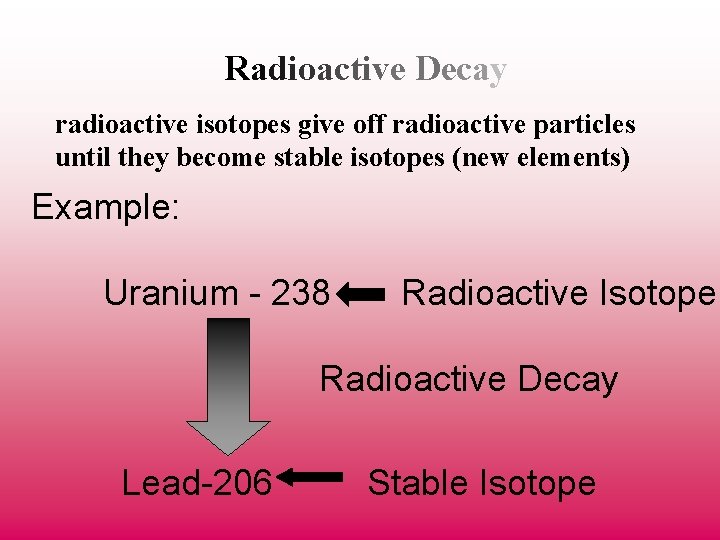
Radioactive Decay radioactive isotopes give off radioactive particles until they become stable isotopes (new elements) Example: Uranium - 238 Radioactive Isotope Radioactive Decay Lead-206 Stable Isotope
Amount of time it takes 1/2 the atoms in a given sample to go through radioactive decay is called it’s Half - Life
We can use it to find: T HE ABS O L UT E AG E OF R O C K S !!!
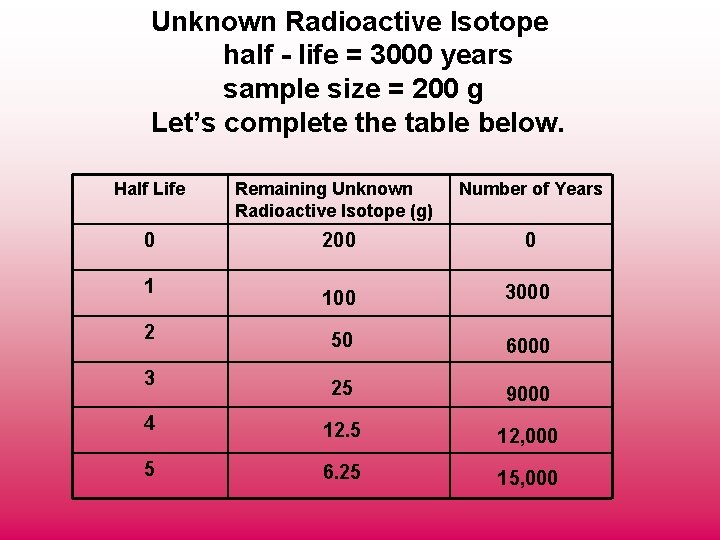
Unknown Radioactive Isotope half - life = 3000 years sample size = 200 g Let’s complete the table below. Half Life Remaining Unknown Radioactive Isotope (g) Number of Years 0 200 0 100 3000 50 6000 25 9000 4 12. 5 12, 000 5 6. 25 15, 000 1 2 3
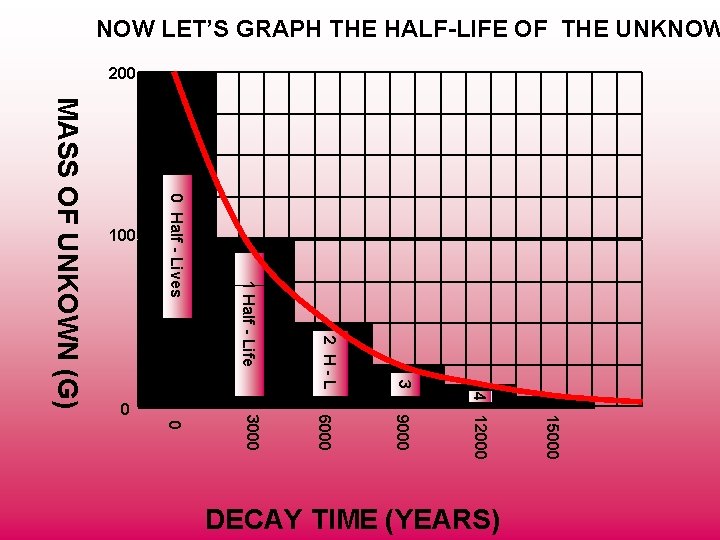
NOW LET’S GRAPH THE HALF-LIFE OF THE UNKNOW 200 3 2 H-L 1 Half - Life 0 Half - Lives DECAY TIME (YEARS) 15000 4 12000 9000 6000 0 3000 0 MASS OF UNKOWN (G) 100
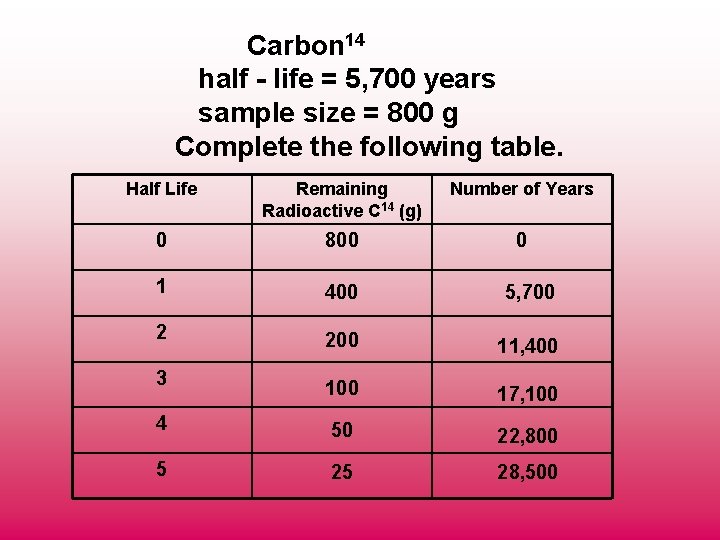
Carbon 14 half - life = 5, 700 years sample size = 800 g Complete the following table. Half Life Remaining Radioactive C 14 (g) Number of Years 0 800 0 1 400 5, 700 2 200 11, 400 17, 100 4 50 22, 800 5 25 28, 500 3
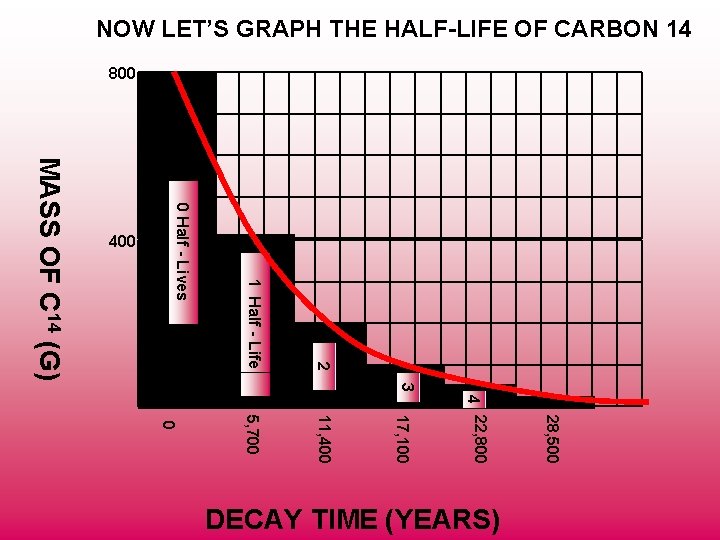
NOW LET’S GRAPH THE HALF-LIFE OF CARBON 14 800 2 1 Half - Life 0 Half - Lives MASS OF C 14 (G) 400 3 28, 500 4 22, 800 17, 100 11, 400 5, 700 0 DECAY TIME (YEARS)
Absolute Time vs. Relative Time Most geologists use relative time because it’s - less expensive - easier to do
Fossil s -the remains of plants and animals that lived in the past - mainly formed in sedimentary rock
Fossils Form in Several Ways Form in several ways 1. Original remains - unchanged remains of a plant or animal Ex. Dinosaur bones/teeth 2. Replaced remains - soft parts of original animal replaced by minerals Ex. Petrified wood
Fossils Form in Several Ways 3. Mold - fossilized shell or bone dissolves and leaves a hollow depression in a rock Ex. Ferns, leaves, or fish 4. Cast - new mineral material fills a mold Ex. Shellfish
Fossils form in Several Ways 5. Trace fossils - fossil evidence of animal movement Ex. Trails, footprints, burrows & borings
Evolution - process of change that produces new life forms over time - fossils provide evidence of evolution
Natural Selection -theory of evolution -best adapted organisms will survive in large numbers and pass on these adaptations to their offspring
Index Fossils - special fossils that give the relative age of the rocks that contain them Index fossils must: 1. Be recognizable 2. Widespread 3. Exist for a short time