
Origin of magnetic fields in terrestrial and giant



- Slides: 31
Origin of magnetic fields in terrestrial and giant planets: How important are their hosting stars? Natalia Gómez Pérez 1 & Moritz Heimpel 2 1 Department of Terrestrial Magnetism Carnegie Institution of Washington, Washington DC, USA 2 Department of Physics University of Alberta, Edmonton AB, Canada
Acknowledgements Jon Aurnou (University of California Los Angeles) Atmosphere and Magnetosphere Discipline Group of the MESSENGER Science Team Uli R. Christensen (Max Planck Institute for Solar System Research) Karl-Heinz Glassmeier (Braunschweig Technical University) Daniel Heyner (Braunschweig Technical University) • Sean C. Solomon (Carnegie Institution of Washington) Johannes Wicht
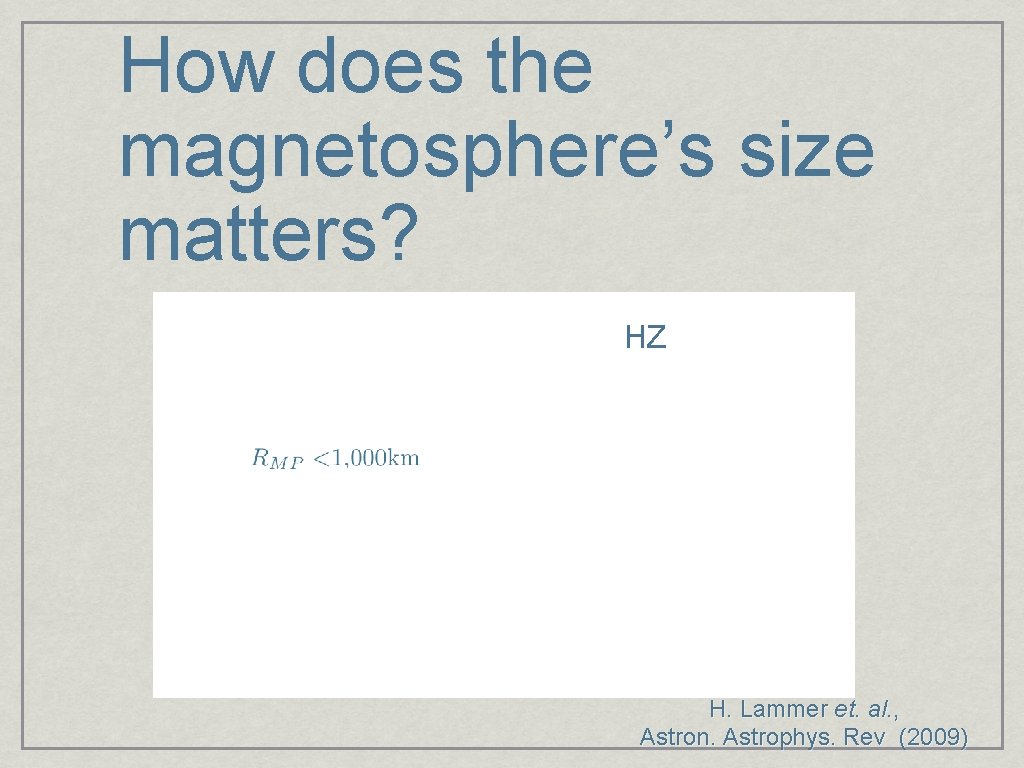
How does the magnetosphere’s size matters? HZ H. Lammer et. al. , Astron. Astrophys. Rev (2009)
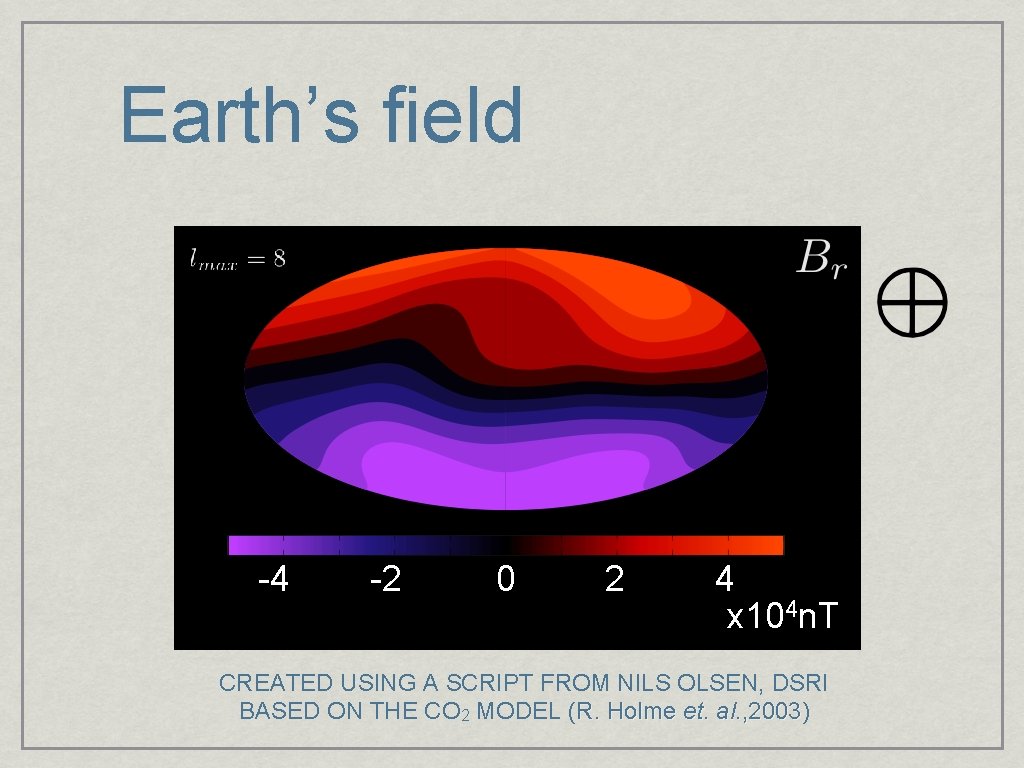
Earth’s field -4 -2 0 2 4 x 10⁴ n. T CREATED USING A SCRIPT FROM NILS OLSEN, DSRI BASED ON THE CO 2 MODEL (R. Holme et. al. , 2003) , 2003
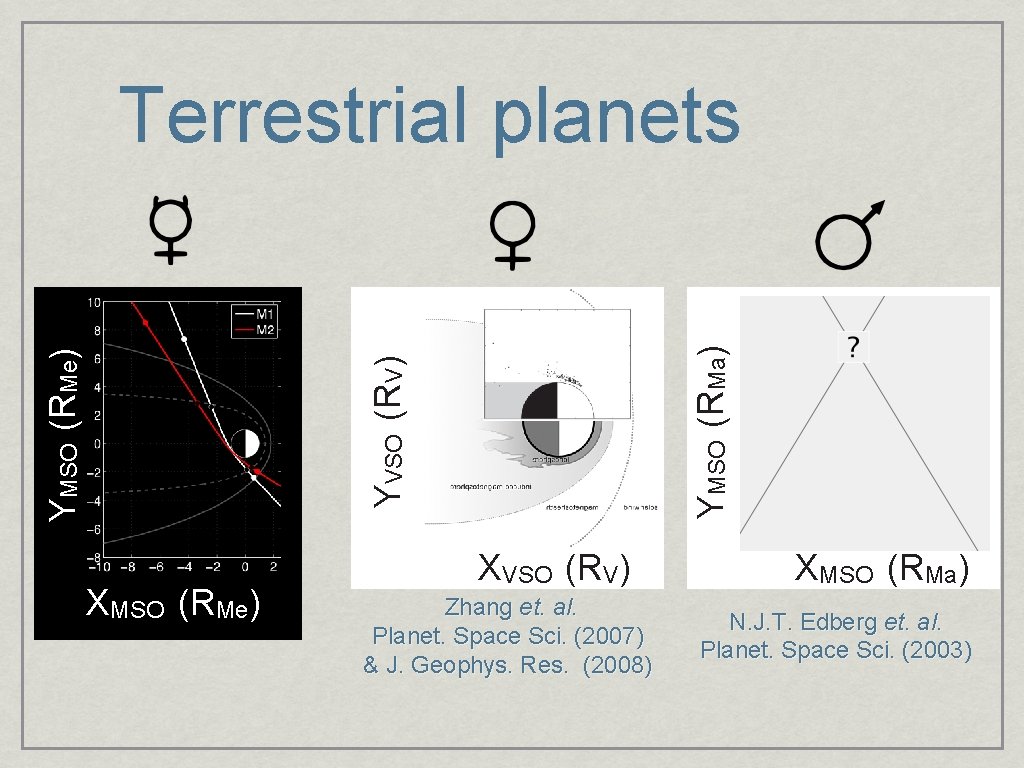
YMSO (RMa) YVSO (RV) YMSO (RMe) Terrestrial planets XMSO (RMe) XVSO (RV) Zhang et. al. Planet. Space Sci. (2007) & J. Geophys. Res. (2008) XMSO (RMa) N. J. T. Edberg et. al. Planet. Space Sci. (2003) (2003
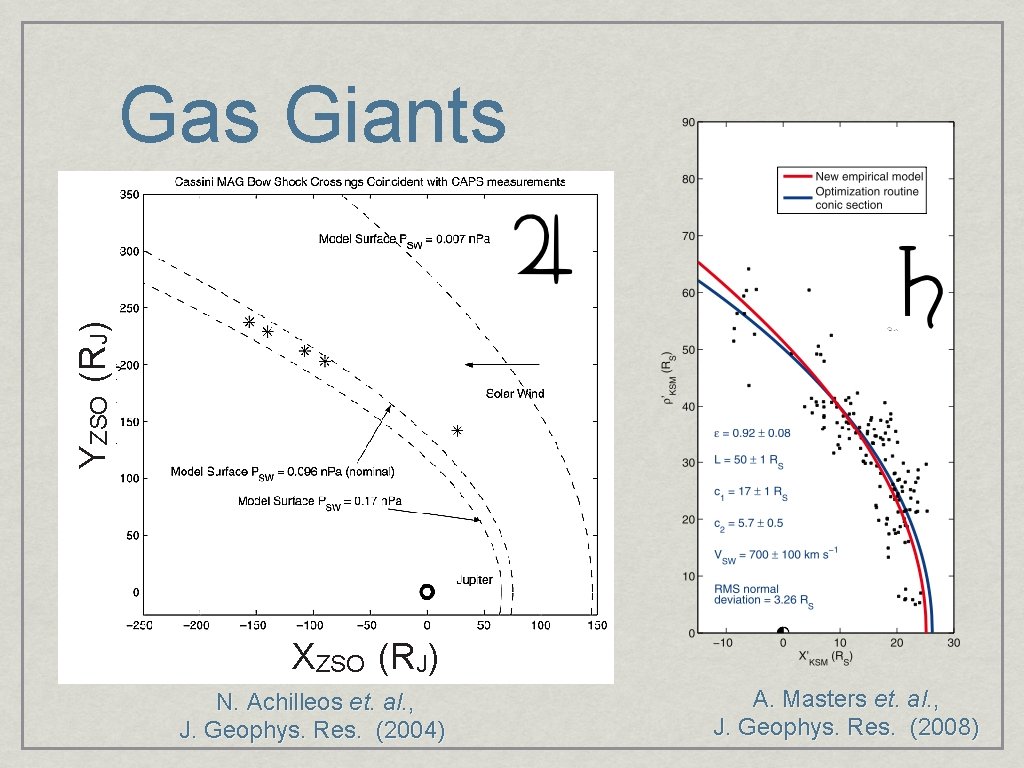
YZSO (RJ) Gas Giants XZSO (RJ) N. Achilleos et. al. , J. Geophys. Res. (2004) A. Masters et. al. , J. Geophys. Res. (2008)
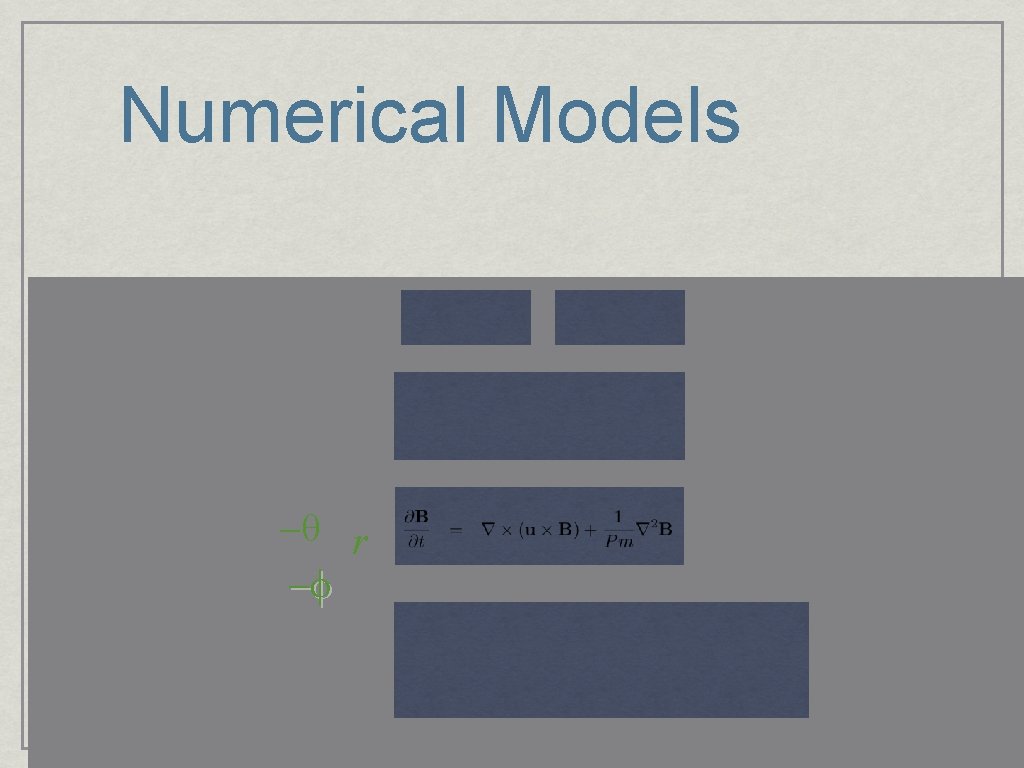
Numerical Models -θ r -ϕ
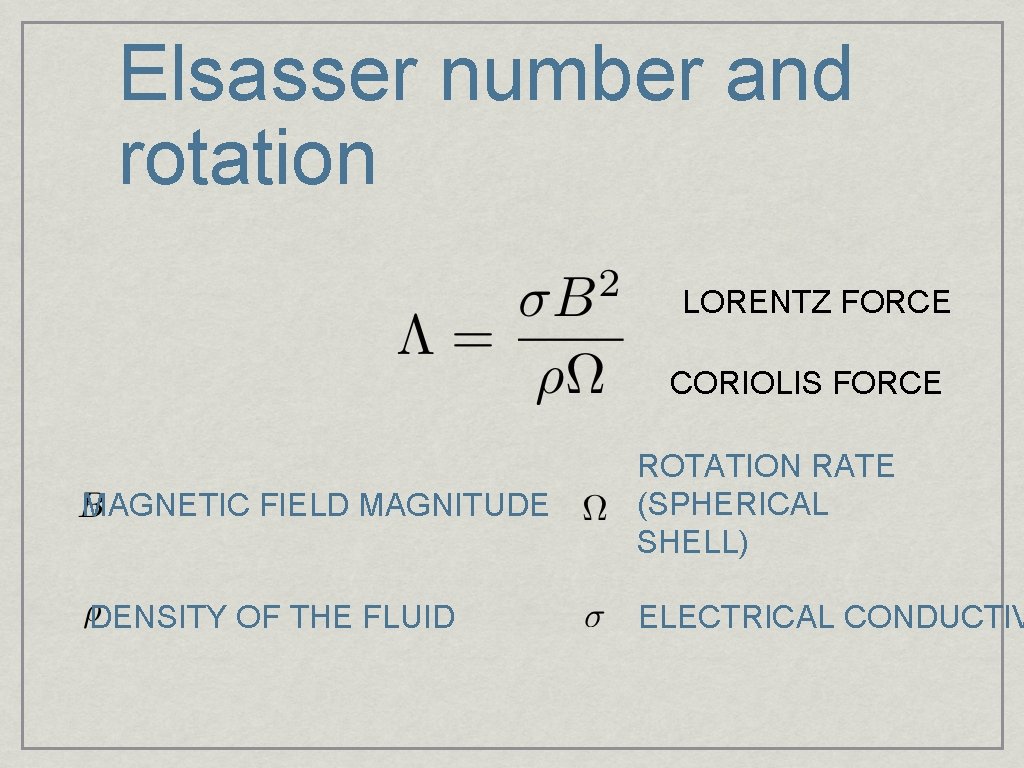
Elsasser number and rotation LORENTZ FORCE CORIOLIS FORCE MAGNETIC FIELD MAGNITUDE ROTATION RATE (SPHERICAL SHELL) DENSITY OF THE FLUID ELECTRICAL CONDUCTIV
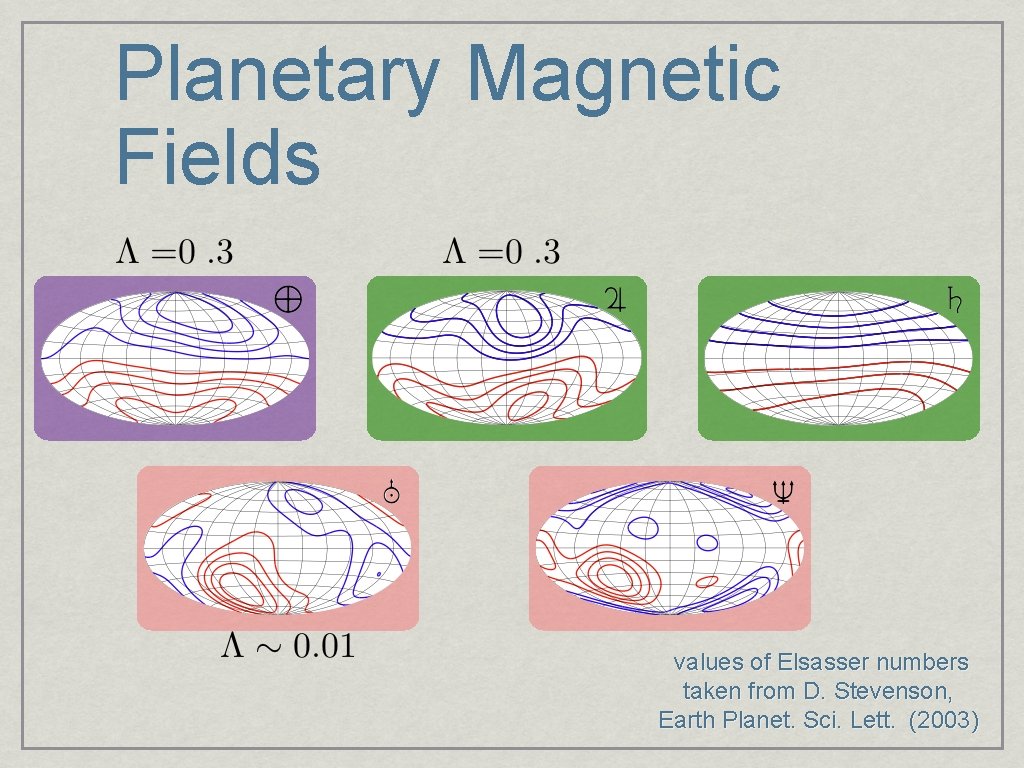
Planetary Magnetic Fields values of Elsasser numbers taken from D. Stevenson, Earth Planet. Sci. Lett. (2003)
Internal
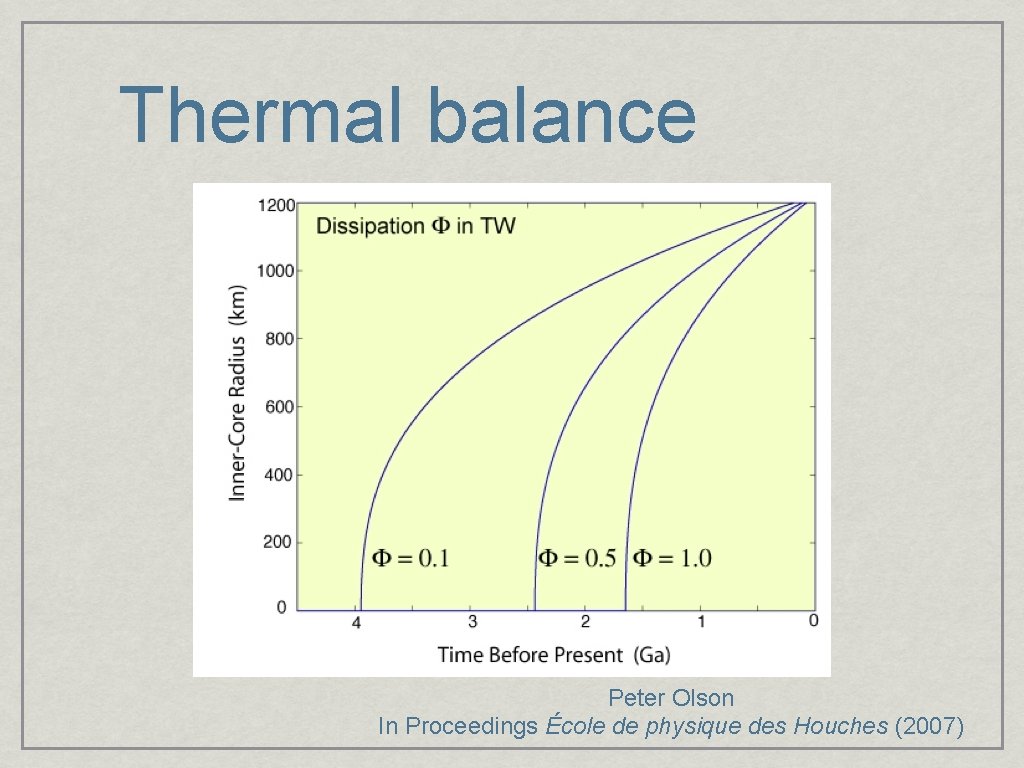
Thermal balance Peter Olson In Proceedings École de physique des Houches (2007)
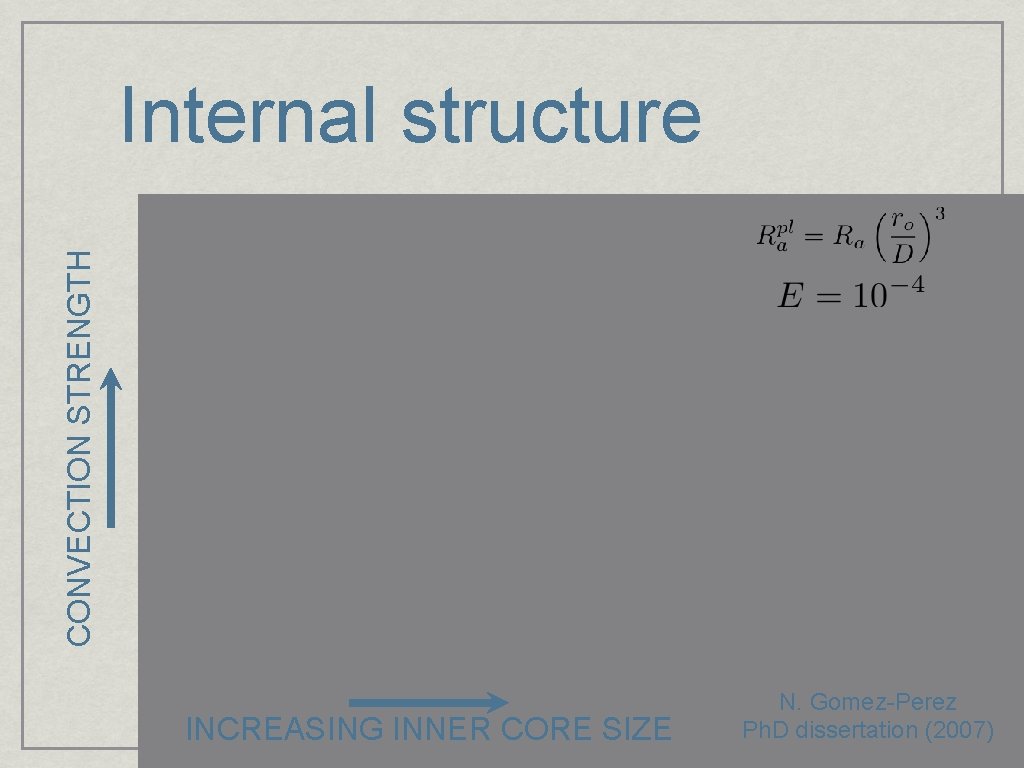
CONVECTION STRENGTH Internal structure INCREASING INNER CORE SIZE N. Gomez-Perez Ph. D dissertation (2007)
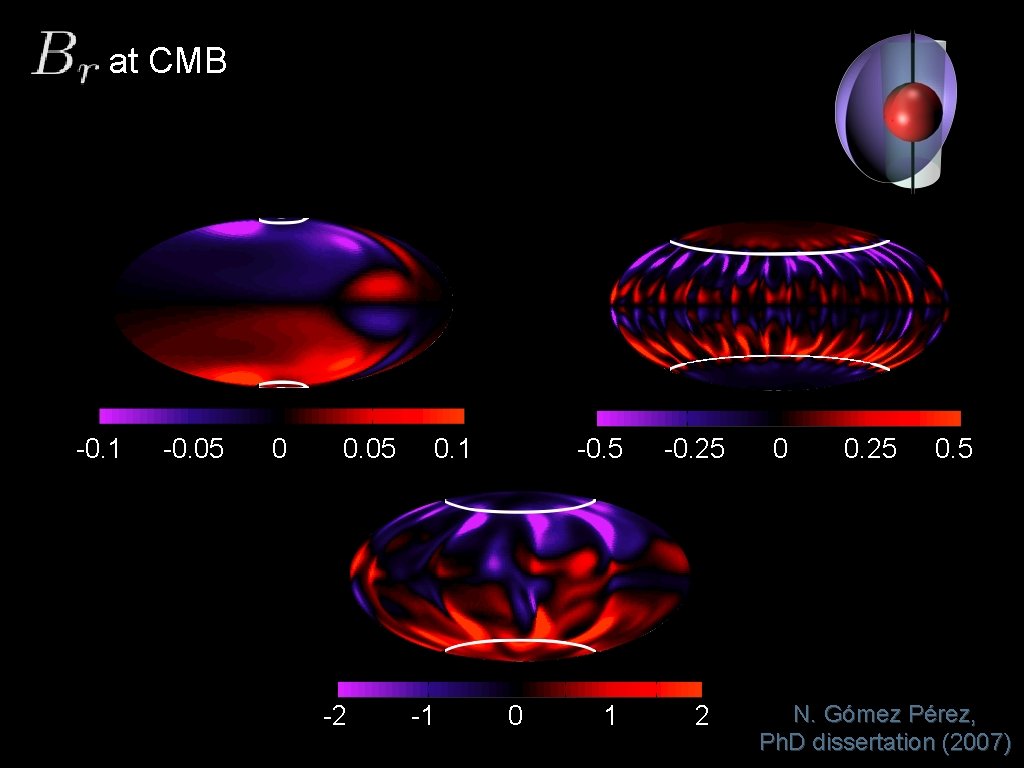
at CMB -0. 1 -0. 05 0 0. 05 -2 0. 1 -1 -0. 5 0 1 -0. 25 2 0 0. 25 0. 5 N. Gómez Pérez, Ph. D dissertation (2007)
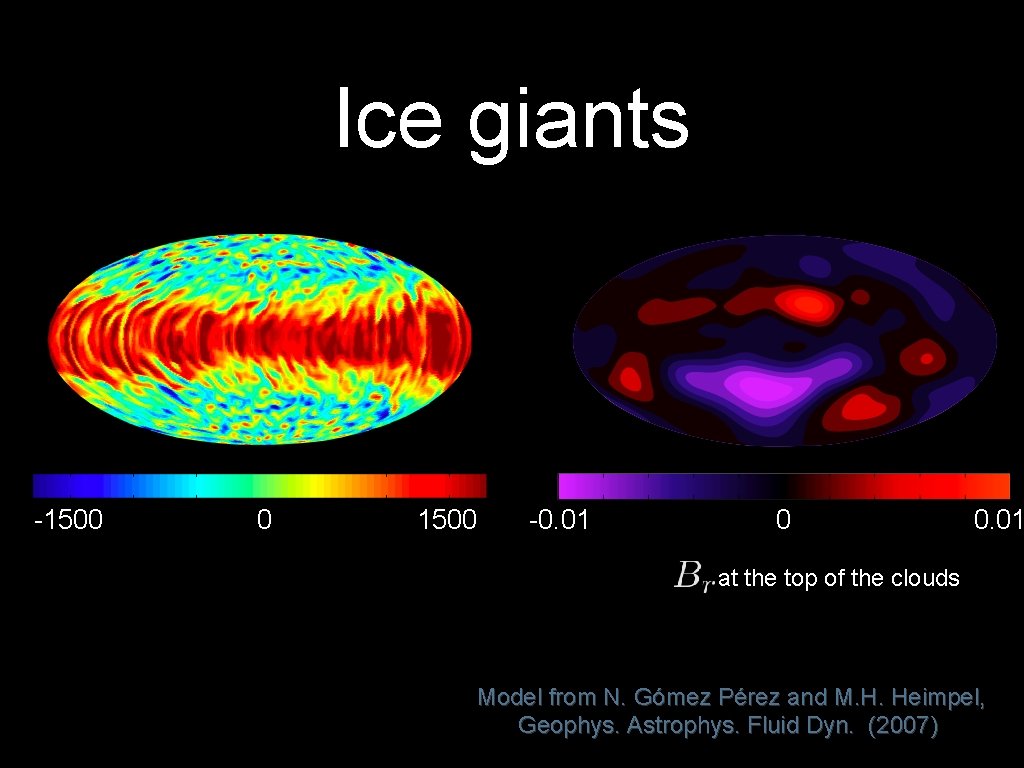
Ice giants -1500 0 1500 -0. 01 0 0. 01 at the top of the clouds Model from N. Gómez Pérez and M. H. Heimpel, Geophys. Astrophys. Fluid Dyn. (2007)
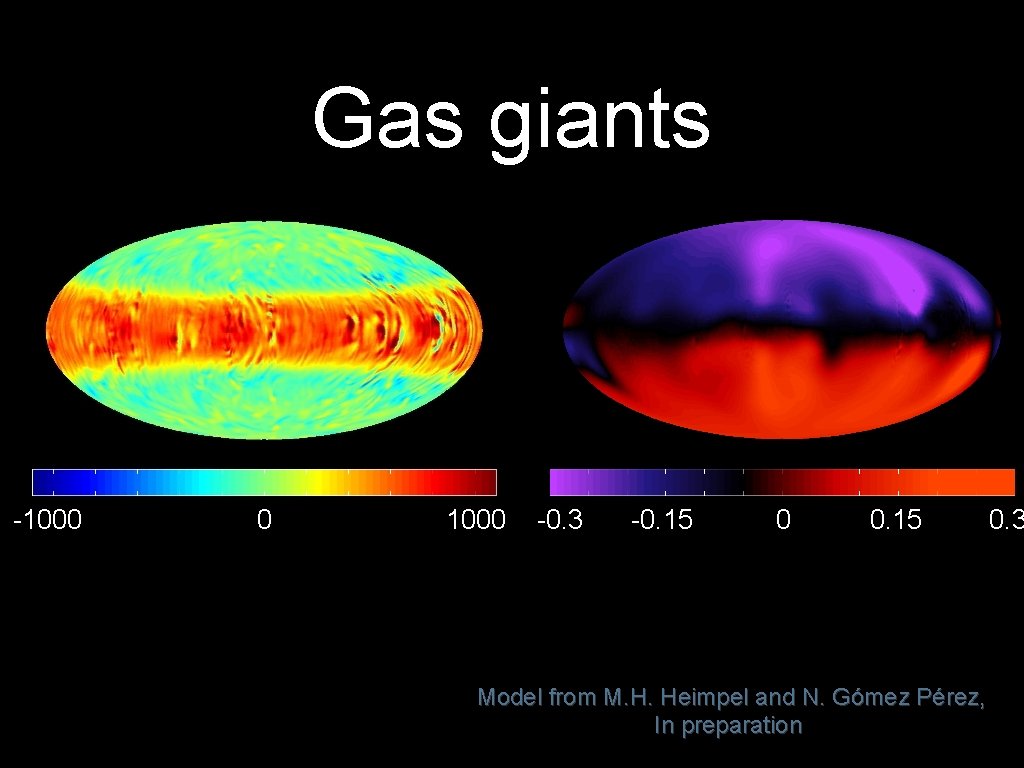
Gas giants -1000 0 1000 -0. 3 -0. 15 0 0. 15 Model from M. H. Heimpel and N. Gómez Pérez, In preparation 0. 3
External
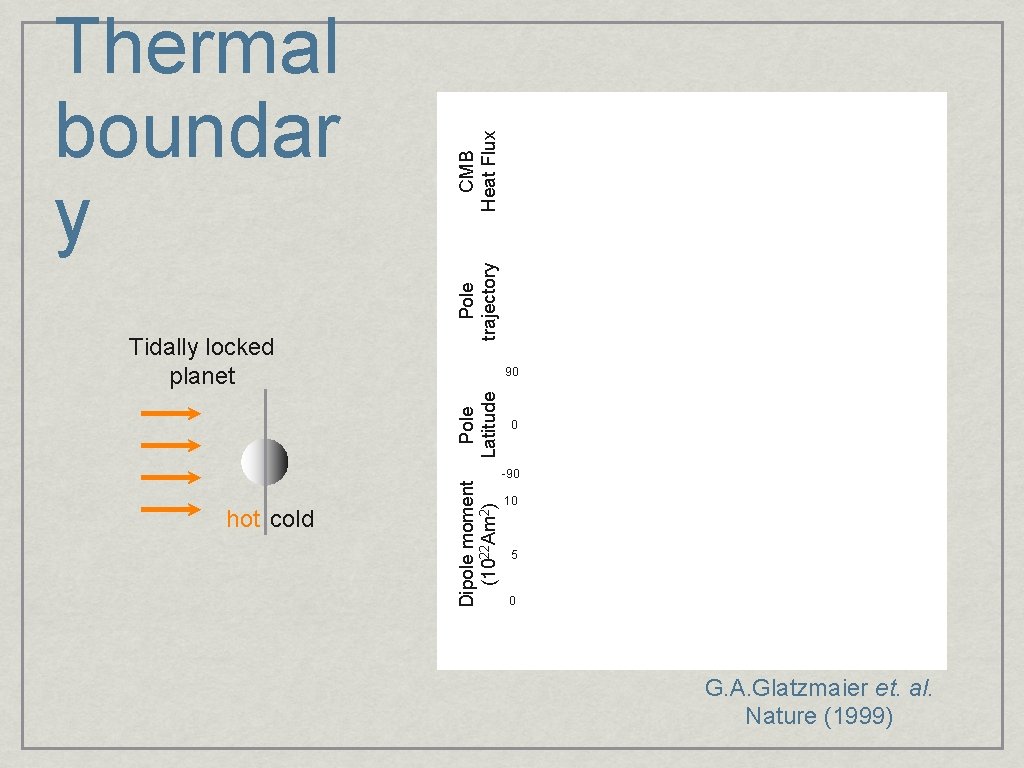
CMB Heat Flux 90 Pole Latitude Tidally locked planet Pole trajectory Thermal boundar y 0 hot cold Dipole moment (1022 Am 2) -90 10 5 0 G. A. Glatzmaier et. al. Nature (1999)
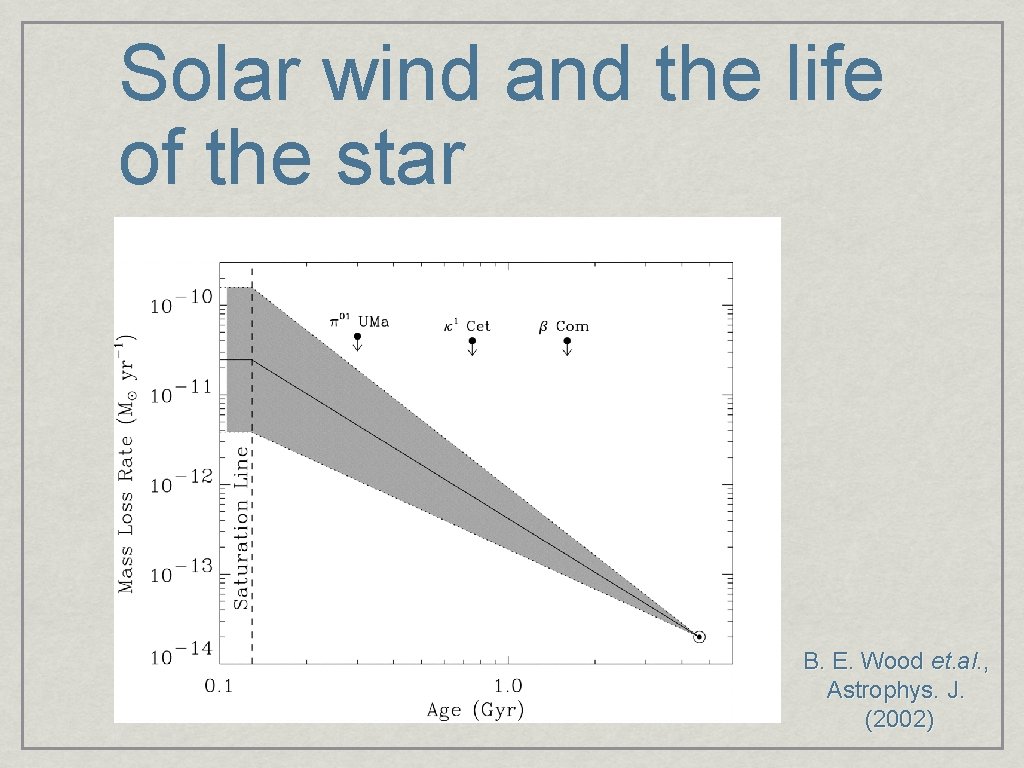
Solar wind and the life of the star B. E. Wood et. al. , Astrophys. J. (2002)
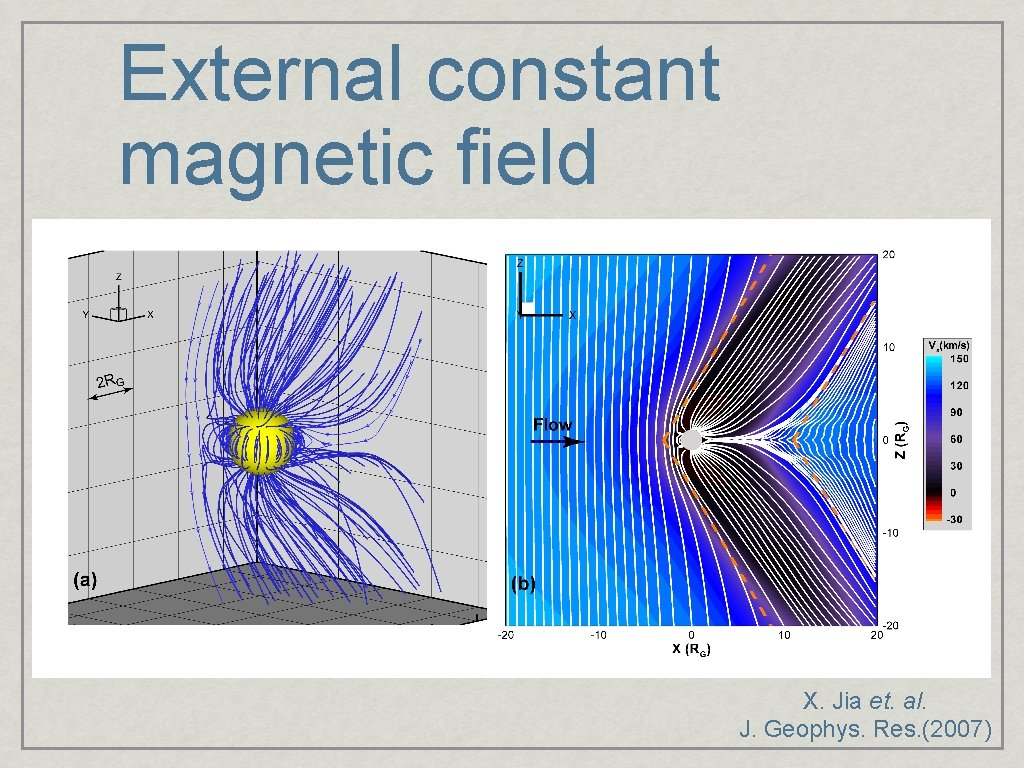
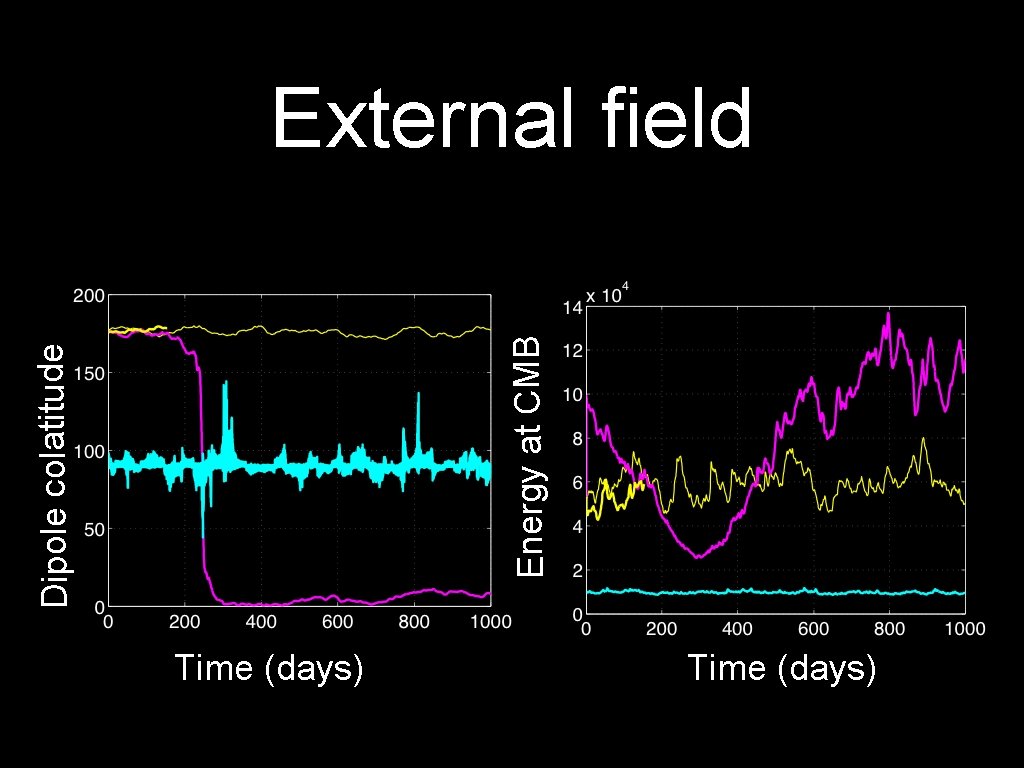
External constant magnetic field X. Jia et. al. J. Geophys. Res. (2007)
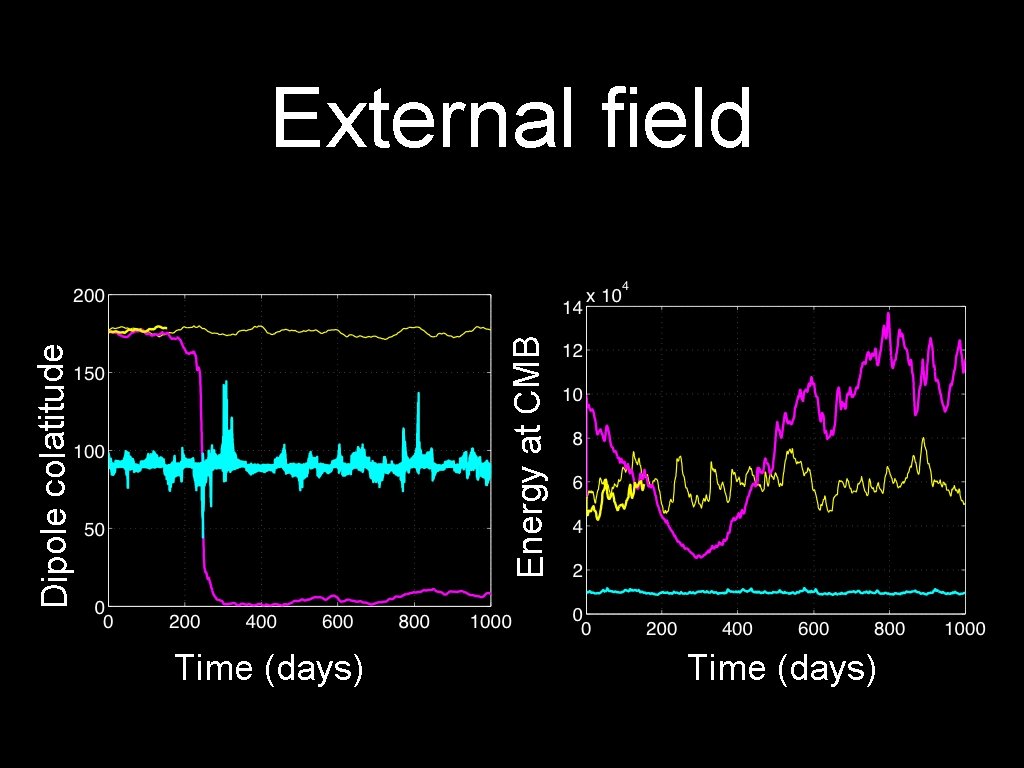
Dipole colatitude Energy at CMB External field Time (days)
Be = 0 Equatorial cut Temperature at CMB -1 -0. 5 0 0. 5 1 Be = 0. 5 Equatorial cut Temperature at CMB -1 -0. 5 0 0. 5 1
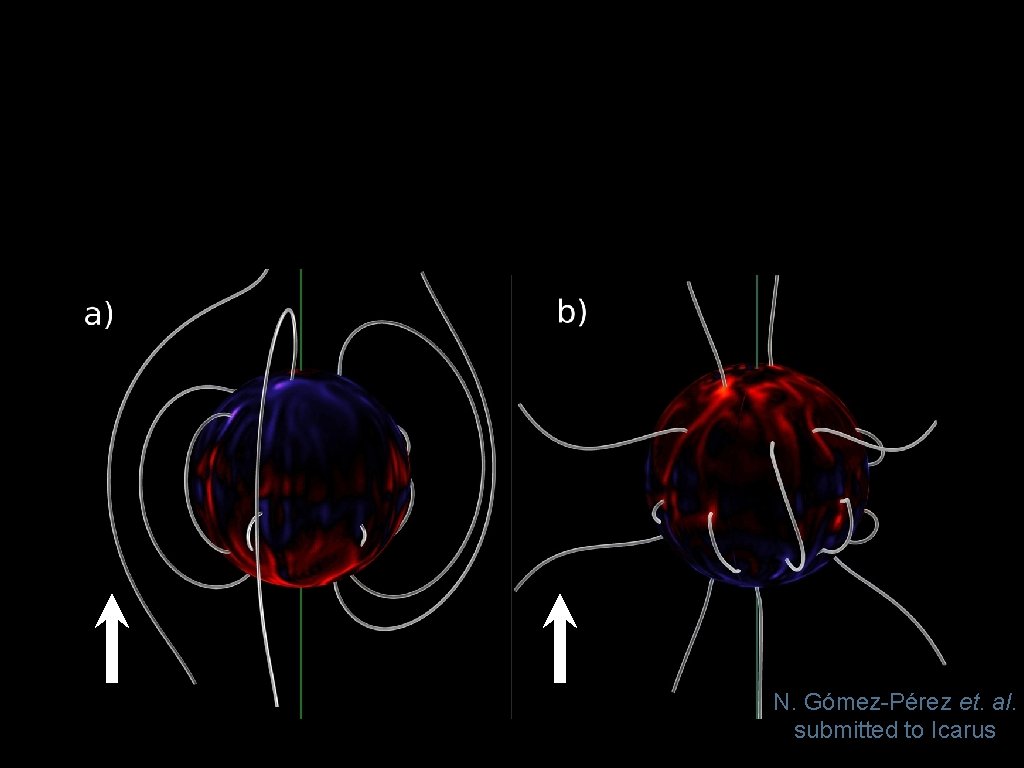
N. Gómez-Pérez et. al. submitted to Icarus
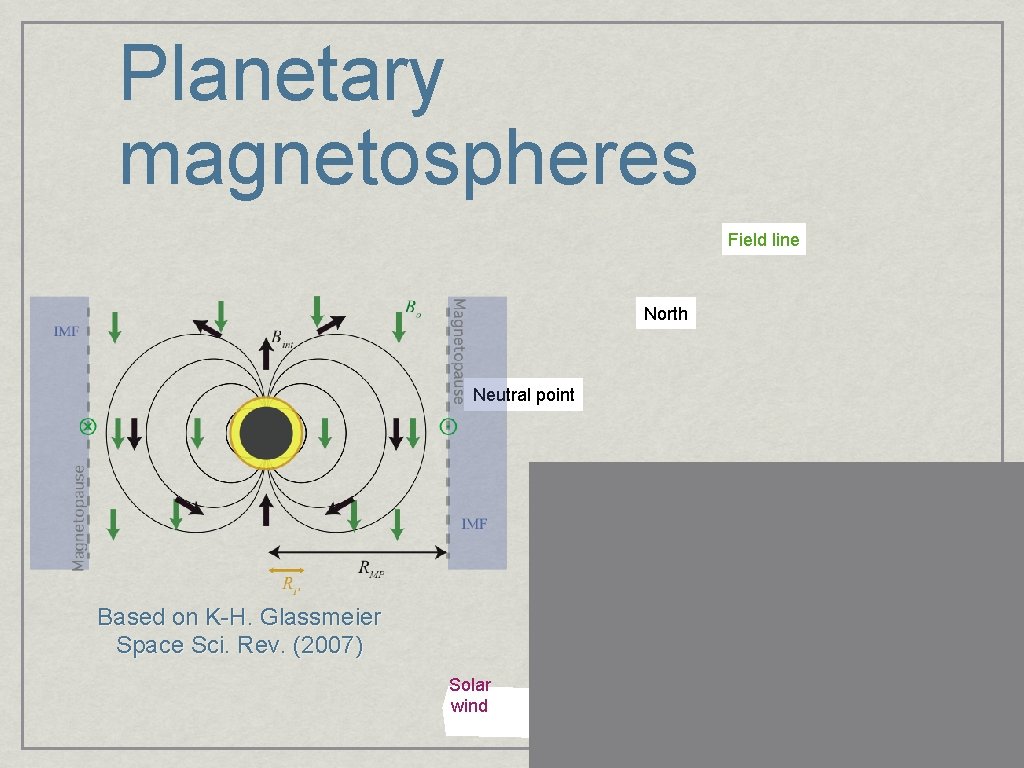
Planetary magnetospheres Field line North Neutral point Averaged over 7000 Earth years Based on K-H. Glassmeier Space Sci. Rev. (2007) electric current line dusk Solar wind motion of charges in the SW Magnetopause Adapted from Encyclopaedia Britannica
Dipole colatitude Energy at CMB External field Time (days)
North Equ. Temp. Be = 0 at CMB South North -1 -0. 5 0 0. 5 1 Be = -0. 5 sign(g 10) at CMB South -1 -0. 5 0 0. 5 1
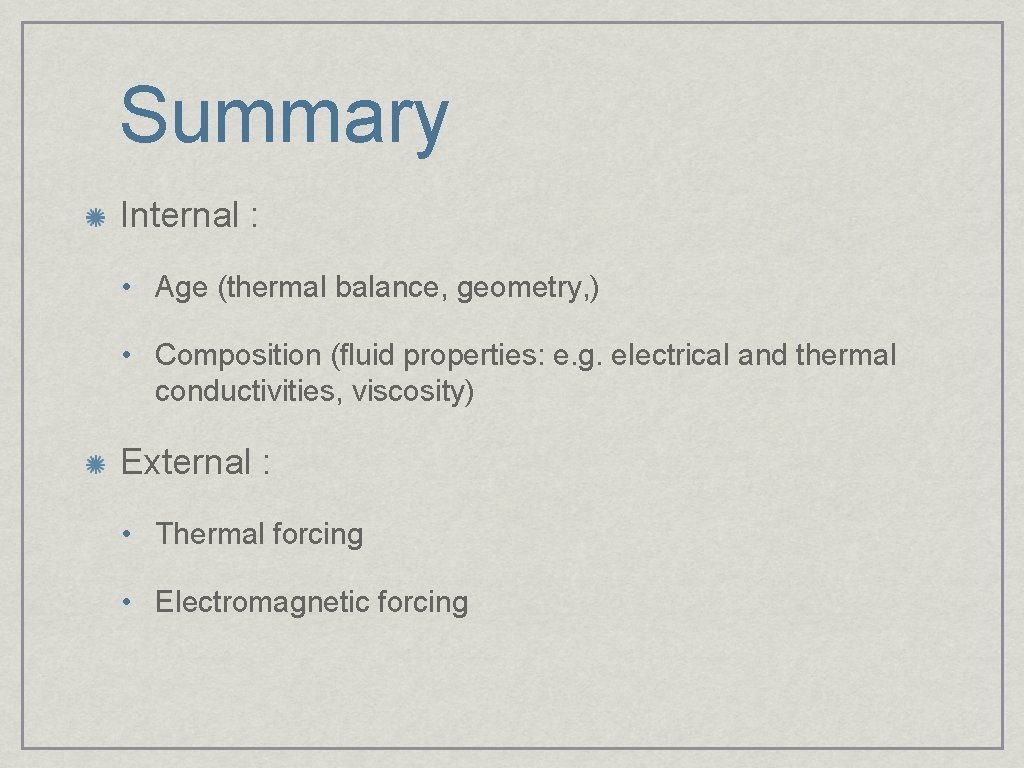
Summary Internal : • Age (thermal balance, geometry, ) • Composition (fluid properties: e. g. electrical and thermal conductivities, viscosity) External : • Thermal forcing • Electromagnetic forcing
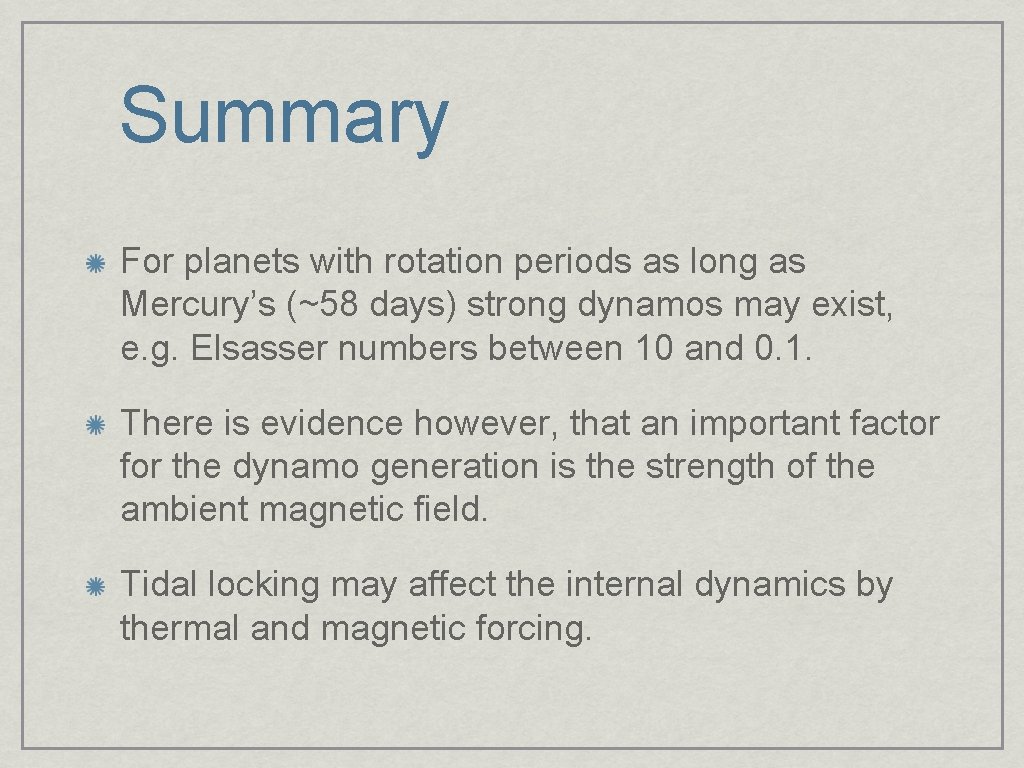
Summary For planets with rotation periods as long as Mercury’s (~58 days) strong dynamos may exist, e. g. Elsasser numbers between 10 and 0. 1. There is evidence however, that an important factor for the dynamo generation is the strength of the ambient magnetic field. Tidal locking may affect the internal dynamics by thermal and magnetic forcing.
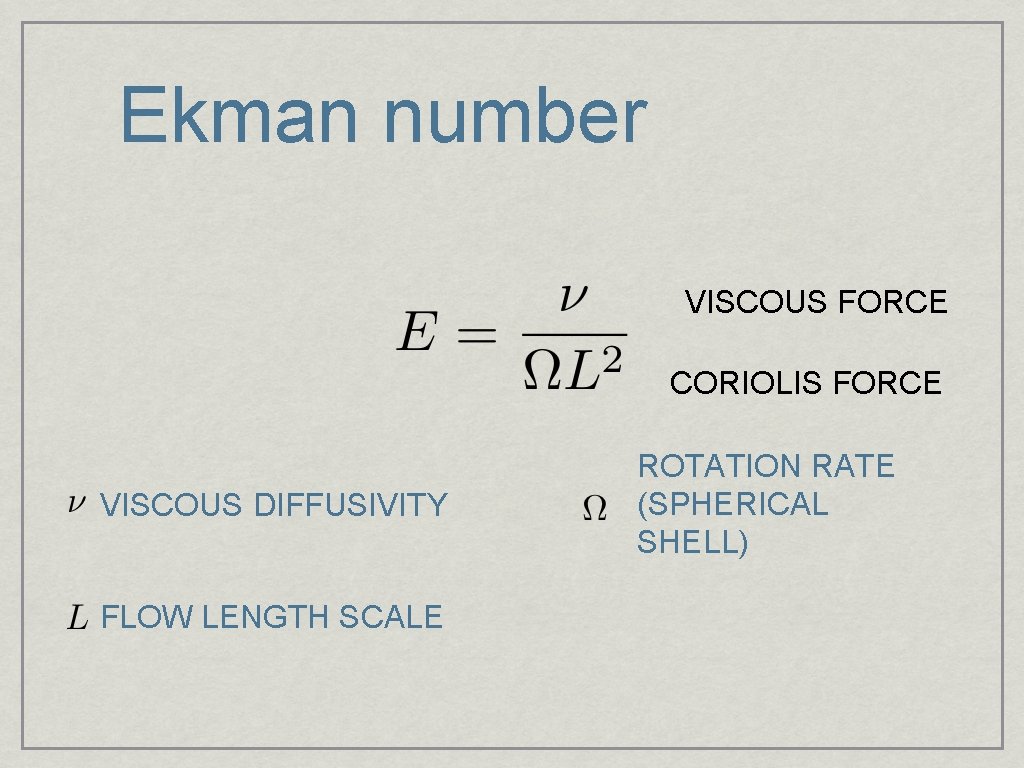
Ekman number VISCOUS FORCE CORIOLIS FORCE VISCOUS DIFFUSIVITY FLOW LENGTH SCALE ROTATION RATE (SPHERICAL SHELL)
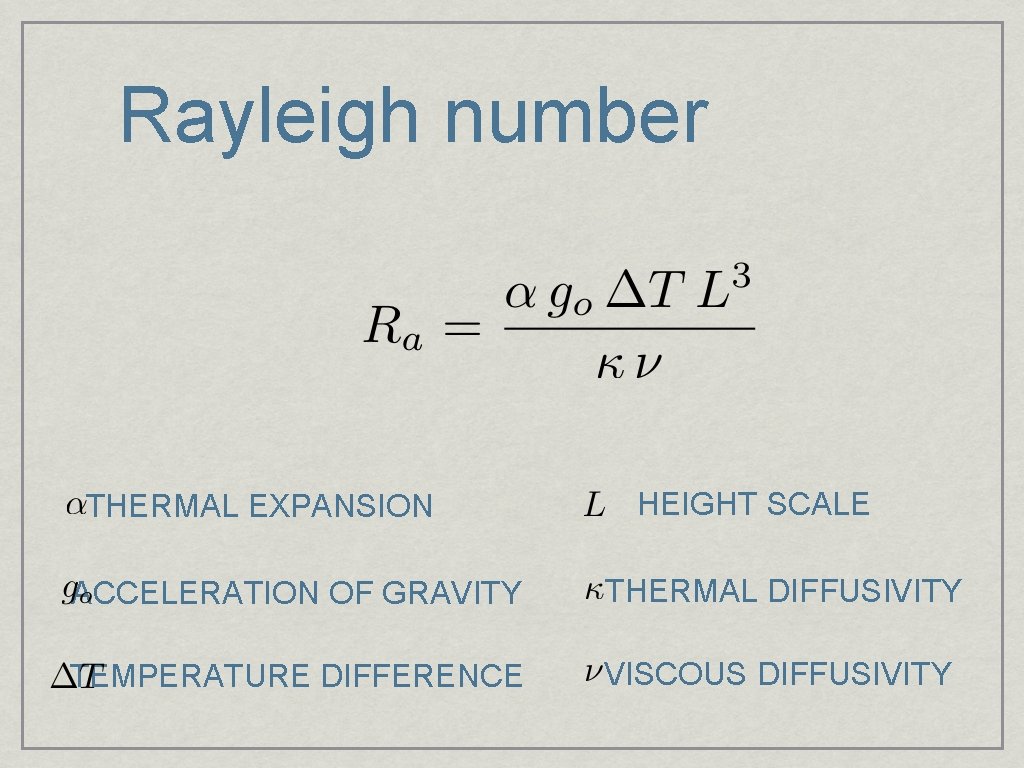
Rayleigh number THERMAL EXPANSION HEIGHT SCALE ACCELERATION OF GRAVITY THERMAL DIFFUSIVITY TEMPERATURE DIFFERENCE VISCOUS DIFFUSIVITY
Skin depth