
Origin of LifeFossil Record Human Evolution Origins of

- Slides: 47
Origin of Life/Fossil Record Human Evolution
Origins of Life arose from an abiotic environ ~4 billion years ago https: //www. youtube. com/watch? v=fg. QLyq. Wa Cb. A Life may have arisen multiple times and gone extinct before one “strain” took or only once and spread across the Earth
How Did Life Begin? • Until the 19 th century, most people thought that new members of species sprang up all the time through spontaneous generation both from nonliving matter and other, unrelated forms of life
How Did Life Begin? • Medieval beliefs reflected the concept of spontaneous generation – Maggots were thought to arise from meat – Microbes were thought to arise from broth – Mice were thought to arise from mixtures of sweaty shirts and wheat • The maggots-from-meat idea was disproved by Francesco Redi in 1668 – No maggots developed when he kept flies away from uncontaminated meat
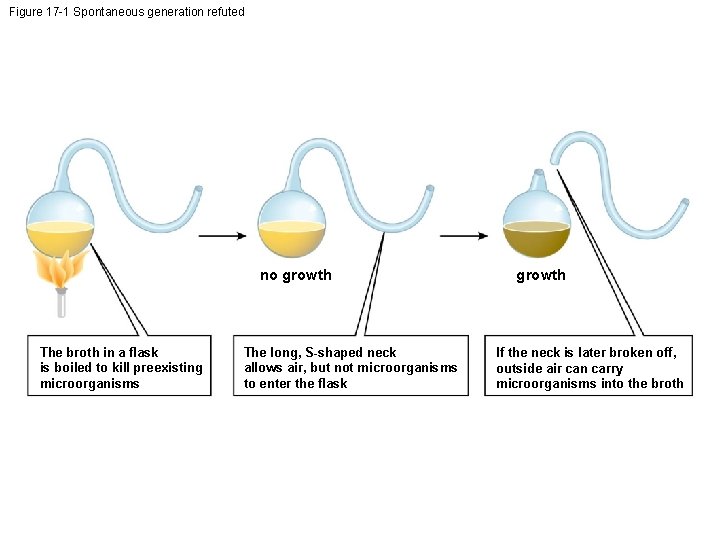
How Did Life Begin? • The broth-to-microorganism idea was disproved by Louis Pasteur and John Tyndall in the mid-1800 s – Microorganisms did not appear in sterile broth unless the broth was first exposed to existing microorganisms in the surrounding environment – Pasteur and Tyndall’s work demolished the notion of spontaneous generation
Figure 17 -1 Spontaneous generation refuted no growth The broth in a flask is boiled to kill preexisting microorganisms The long, S-shaped neck allows air, but not microorganisms to enter the flask growth If the neck is later broken off, outside air can carry microorganisms into the broth
How Did Life Begin? – Pasteur and Tyndall’s work did not address the question of how life on Earth originated in the first place
How Did Life Begin? • The first living things arose from nonliving ones – Modern scientific ideas about the origin of life began to emerge in the 1920 s • Alexander Oparin in Russia and John B. S. Haldane in England showed that spontaneous formation of the complex organic molecules necessary for life would not be permitted in today’s oxygen-rich atmosphere • Oxygen reacts readily with other molecules, disrupting chemical bonds • An oxygen-rich environment tends to keep molecules simple
How Did Life Begin? – Oparine and Haldane speculated that the atmosphere of early Earth contained little oxygen because an oxygen-rich atmosphere would not have permitted the spontaneous formation of complex organic molecules • Oxygen’s high reactivity with chemical bonds would have prevented large molecules from forming
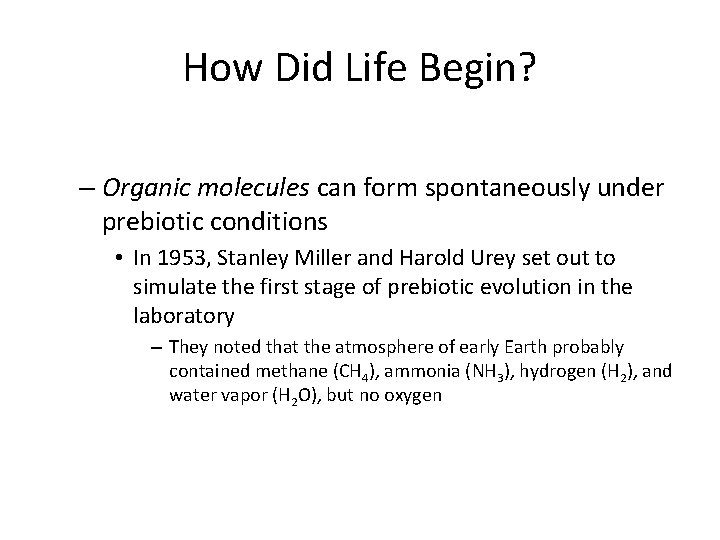
How Did Life Begin? – Organic molecules can form spontaneously under prebiotic conditions • In 1953, Stanley Miller and Harold Urey set out to simulate the first stage of prebiotic evolution in the laboratory – They noted that the atmosphere of early Earth probably contained methane (CH 4), ammonia (NH 3), hydrogen (H 2), and water vapor (H 2 O), but no oxygen
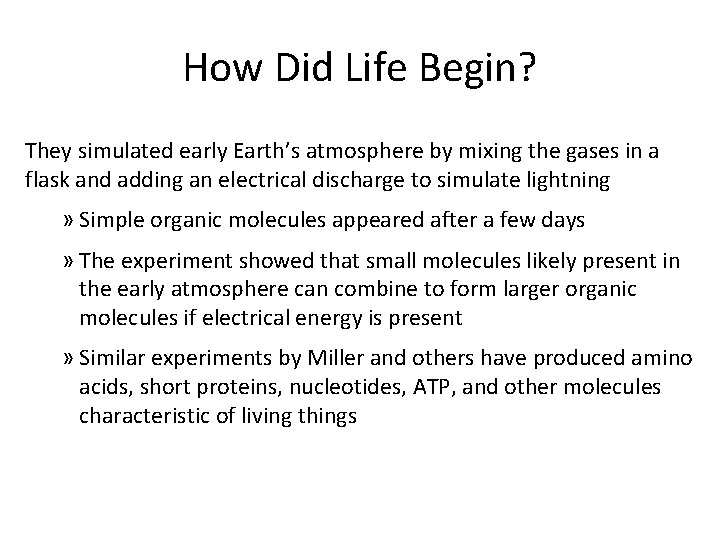
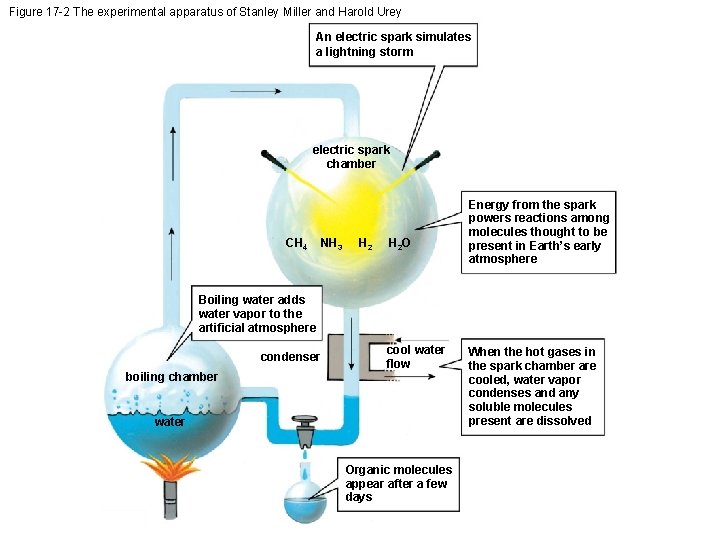
How Did Life Begin? They simulated early Earth’s atmosphere by mixing the gases in a flask and adding an electrical discharge to simulate lightning » Simple organic molecules appeared after a few days » The experiment showed that small molecules likely present in the early atmosphere can combine to form larger organic molecules if electrical energy is present » Similar experiments by Miller and others have produced amino acids, short proteins, nucleotides, ATP, and other molecules characteristic of living things
Figure 17 -2 The experimental apparatus of Stanley Miller and Harold Urey An electric spark simulates a lightning storm electric spark chamber CH 4 NH 3 H 2 O Energy from the spark powers reactions among molecules thought to be present in Earth’s early atmosphere Boiling water adds water vapor to the artificial atmosphere condenser boiling chamber cool water flow water Organic molecules appear after a few days When the hot gases in the spark chamber are cooled, water vapor condenses and any soluble molecules present are dissolved
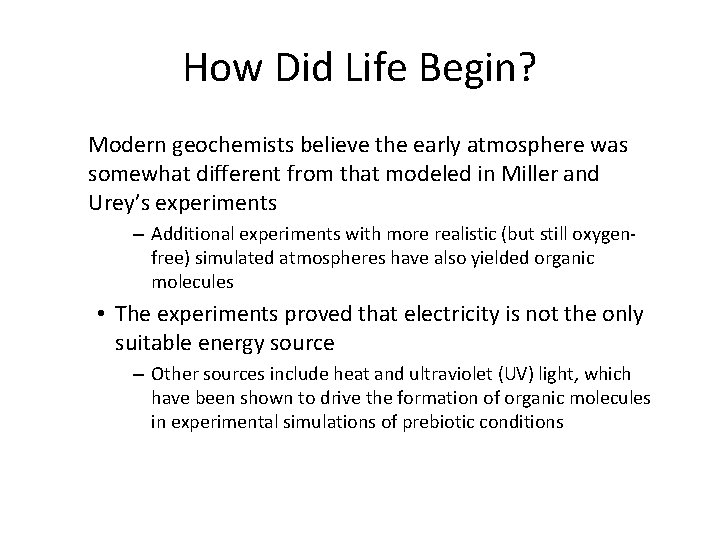
How Did Life Begin? Modern geochemists believe the early atmosphere was somewhat different from that modeled in Miller and Urey’s experiments – Additional experiments with more realistic (but still oxygenfree) simulated atmospheres have also yielded organic molecules • The experiments proved that electricity is not the only suitable energy source – Other sources include heat and ultraviolet (UV) light, which have been shown to drive the formation of organic molecules in experimental simulations of prebiotic conditions
How Did Life Begin? • Additional organic molecules probably arrived from space when meteorites and comets crashed into the Earth’s surface – Analysis of present-day meteorites recovered from impact craters on Earth has revealed that some meteorites contain relatively high concentrations of amino acids and other simple organic molecules – When small molecules known to be present in space were placed under space-like conditions of very low temperature and pressure and bombarded with UV light, larger organic molecules were produced
How Did Life Begin? The ozone layer is a region high in today’s atmosphere that is enriched with ozone molecules – The ozone molecules form when incoming solar energy splits some O 2 molecules in the outer atmosphere into individual oxygen (O) atoms – The oxygen (O) atoms react with O 2 to form O 3 (ozone) • Before the formation of the ozone layer, UV bombardment must have been fierce – UV radiation can provide energy for the formation of organic molecules, but can also break them apart
How Did Life Begin? • Sites beneath rock ledges or at bottoms of even fairly shallow seas, would have been protected from UV radiation • In these locations, organic molecules may have accumulated – Clay may have catalyzed the formation of larger organic molecules • In the next stage of evolution, simple molecules combined to larger molecules • One possibility is that small molecules accumulated on surfaces of clay particles may have a small electrical charge that attracts dissolved molecules of the opposite charge
How Did Life Begin? • Initially, these molecules might had formed on clay at the bottom of early Earth’s oceans or lakes, but have now become the building blocks of the first living organisms
How Did Life Begin? • RNA may have been the first self-reproducing molecule • RNA is simpler than DNA – DNA was probably not the earliest informational molecule • DNA replication requires large complex protein enzymes – The instructions for building these enzymes are coded in DNA
How Did Life Begin? • chicken-and-egg interdependency makes DNA an unlikely candidate for self-replication • The current DNA-based system of information storage likely evolved from an earlier system – RNA can act as a catalyst • RNA is a prime candidate for the first self-replicating informational molecule
How Did Life Begin? – Thomas Cech and Sidney Altman (1980 s), working with the single-celled organism called Tetrahymena, discovered a cellular reaction that was catalyzed by a protein, by a small RNA molecule • Cech and Altman named their catalytic RNA molecule ribozyme
How Did Life Begin? – RNA can act as a catalyst • Since Cech and Altman’s initial discovery, dozens of naturally occurring ribozymes have been found that catalyze reactions, including – Cutting other RNA molecules – Splicing together different RNA fragments – Attaching amino acids to growing proteins
How Did Life Begin? – Earth may once have been an RNA world • Discovery of ribozymes led to the hypothesis that RNA preceded the origin of DNA, in an “RNA world” – According to this view, the current era of DNA-based life was preceded by one in which RNA served as the informationcarrying genetic molecule and the catalyst for its own replication
How Did Life Begin? This first self-reproducing ribozyme probably wasn’t very good at its job and produced copies with lots of errors – Natural selection acted on these errors to improve the function of these early ribozymes – With increased speed and accuracy of replication, these variant ribozymes reproduced, copying themselves and displacing less efficient molecules • Molecular evolution continued • By some unknown chain of events, RNA gradually receded into its present role as intermediary between DNA and protein enzymes
How Did Life Begin? • Membrane-like vesicles may have enclosed ribozymes – Self-replicating molecules on their own do not constitute life – In all living cells such molecules are contained within some kind of enclosing membrane – Chemists have shown that if water containing proteins and lipids is agitated to simulate waves beating against ancient shores, the proteins and lipids combine to form hollow vesicles
How Did Life Begin? – Certain vesicles (protocells) may have contained organic molecules, including ribozymes, and would have been the precursors of living cells • The membranes would have served to confiscate the molecules of life and to protect them from extraneous ribozymes • …. BIG JUMP---- REPRODUCTION • After sufficient time, these protocells may have developed the ability to divide and pass on copies of their enclosed ribozymes to daughter protocells
What Were the Earliest Organisms Like? • Earth formed about 4. 5 billion years ago and was hot – Meteorites smashed into the forming planet, and the kinetic energy of these extraterrestrial rocks was converted into heat on impact • Geological evidence suggests that Earth cooled enough for water to exist in liquid form 4. 3 billion years ago • The oldest fossil organisms found so far are in rocks that are approximately 3. 4 billion years old
• Once we have fundamental processes like DNA replication, protein synthesis, cell division, diversification of life ensued • Innovations like photosynthesis and the nuclear envelope evolve • The time interval during which we see most of the phyla appear that we have today is the Cambrian (542 -488 Ma)
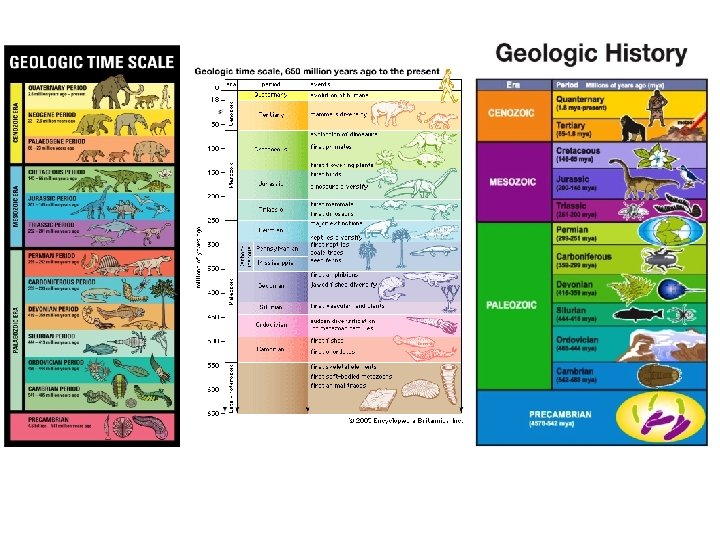
What is the Cambrian Explosion? • Refers to the Cambrian period (542 -488 Mya) • Geological time is divided by eons, eras, periods, epochs • Phanerozoic eon, Paleozoic era • The intervals are defined based on their distinctive fossils
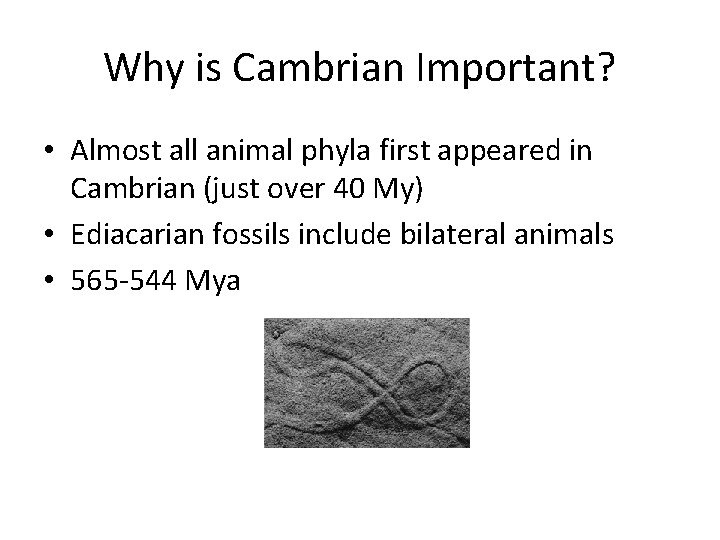
Why is Cambrian Important? • Almost all animal phyla first appeared in Cambrian (just over 40 My) • Ediacarian fossils include bilateral animals • 565 -544 Mya
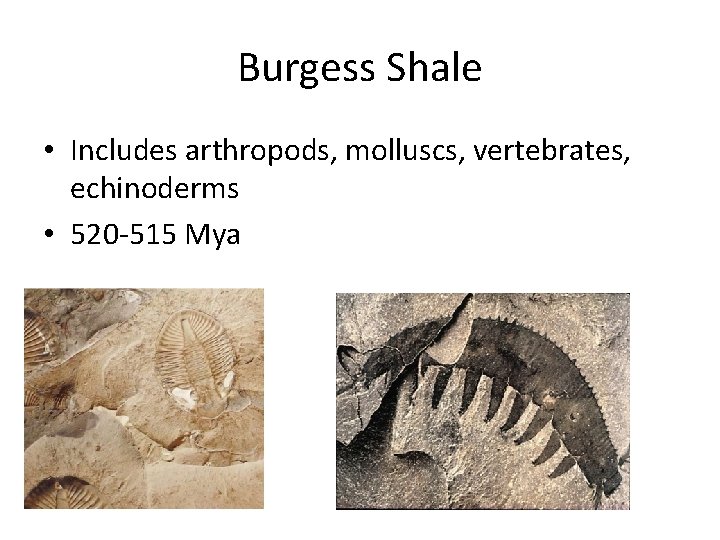
Burgess Shale • Includes arthropods, molluscs, vertebrates, echinoderms • 520 -515 Mya
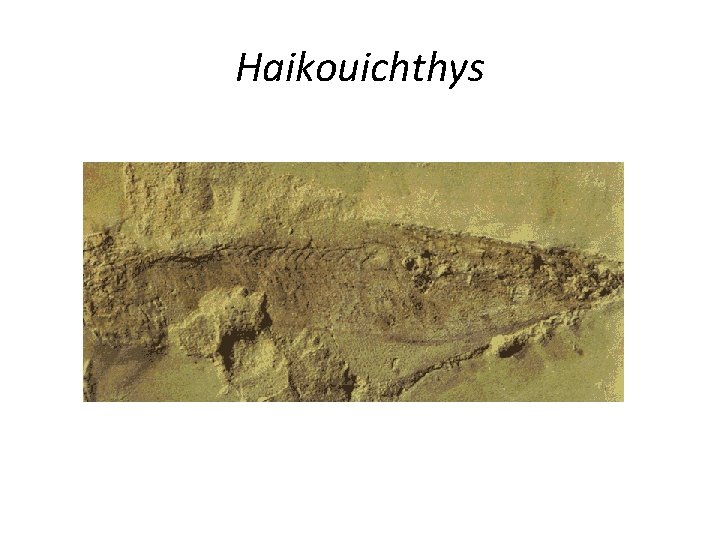
Haikouichthys
Cambrian Explosion Summary • Explosion of morphological diversity in animals • The lineages may have originated earlier • Major animal phyla were present by the Cambrian • Marine groups (fossilization occurs more easily in water with sediment)
Human Evolution brief video https: //www. youtube. com/watch? v=K 4 S 2 q. Jboi 4 I
Human Evolution • Humans belong to the same clade as apes, as they share numerous synapomorphies. These synapomorphies distinguish them from the rest of the Catarrhini • Include: relatively large brains, absence of a tail, erect posture, flexibility in hips and ankles, wrist and thumb, changes in arm/shoulder structure • Molecular evidence supports this.
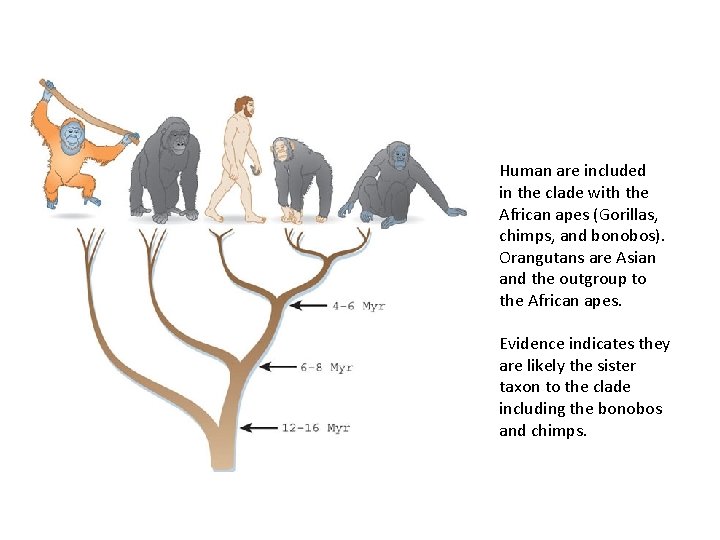
Human are included in the clade with the African apes (Gorillas, chimps, and bonobos). Orangutans are Asian and the outgroup to the African apes. Evidence indicates they are likely the sister taxon to the clade including the bonobos and chimps.
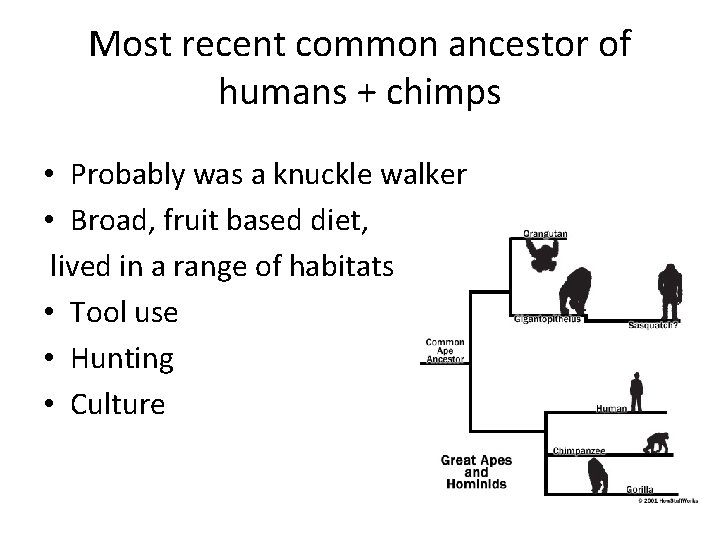
Most recent common ancestor of humans + chimps • Probably was a knuckle walker • Broad, fruit based diet, lived in a range of habitats • Tool use • Hunting • Culture
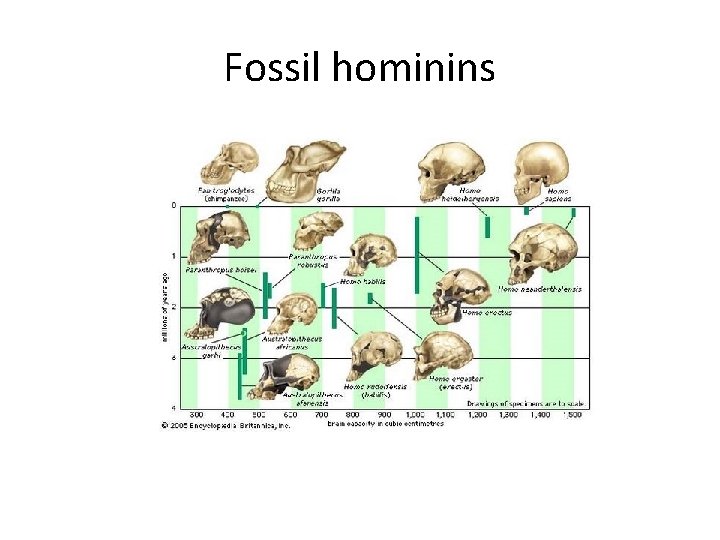
Fossil hominins
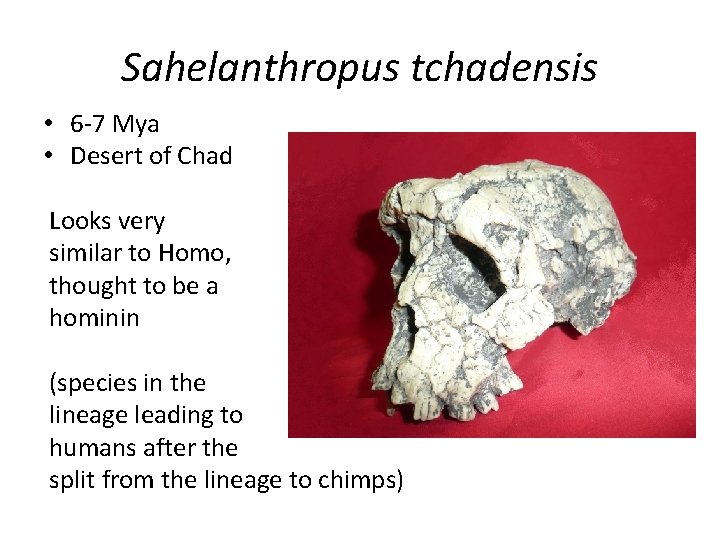
Sahelanthropus tchadensis • 6 -7 Mya • Desert of Chad Looks very similar to Homo, thought to be a hominin (species in the lineage leading to humans after the split from the lineage to chimps)
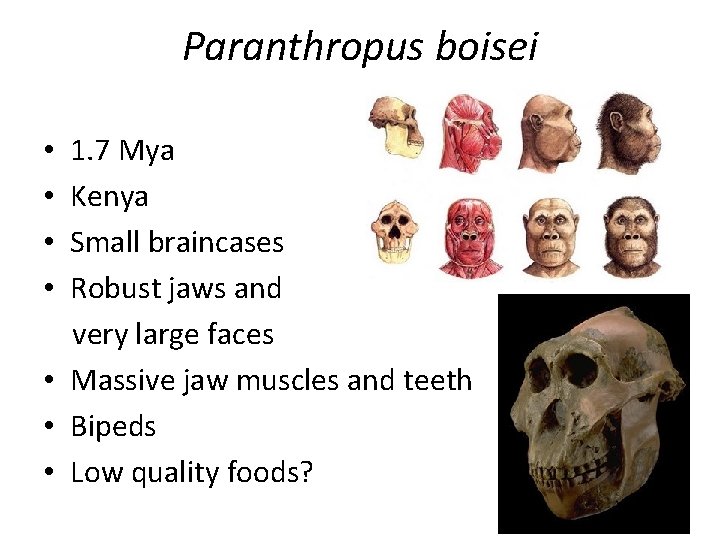
Paranthropus boisei 1. 7 Mya Kenya Small braincases Robust jaws and very large faces • Massive jaw muscles and teeth • Bipeds • Low quality foods? • •
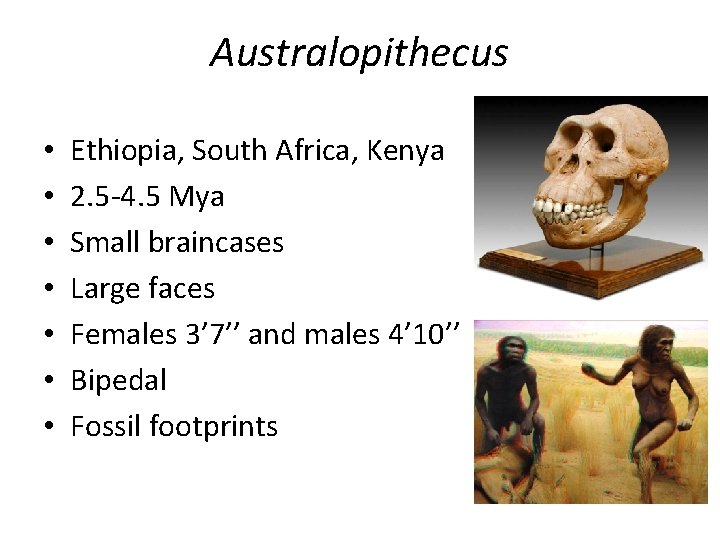
Australopithecus • • Ethiopia, South Africa, Kenya 2. 5 -4. 5 Mya Small braincases Large faces Females 3’ 7’’ and males 4’ 10’’ Bipedal Fossil footprints
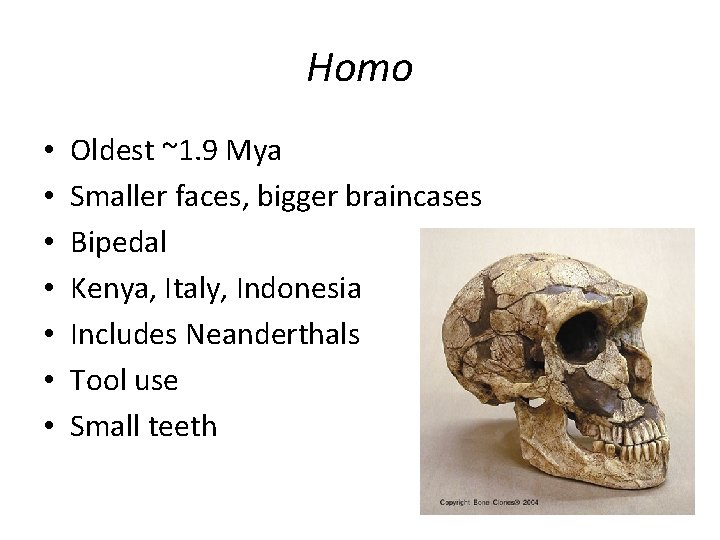
Homo • • Oldest ~1. 9 Mya Smaller faces, bigger braincases Bipedal Kenya, Italy, Indonesia Includes Neanderthals Tool use Small teeth
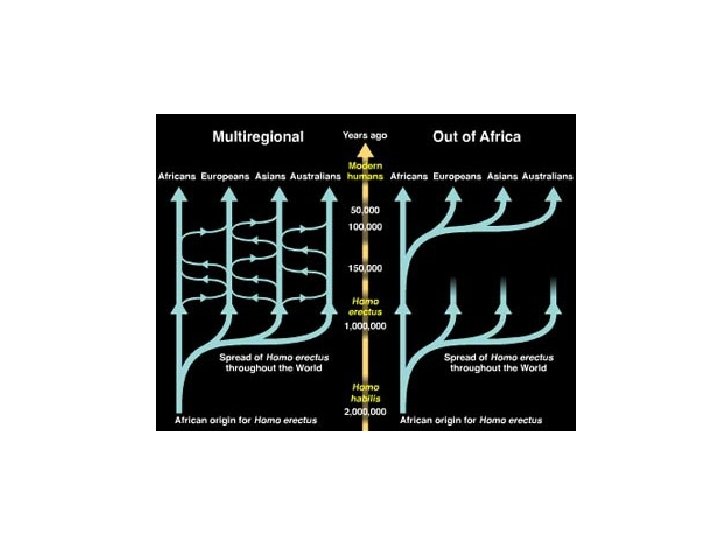
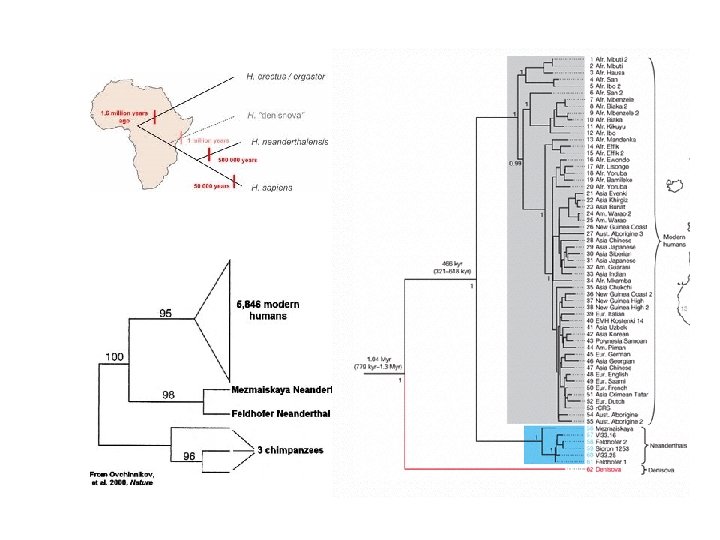
Homo sapiens • Unclear how many species in Homo… • Part of the H. erectus/ergaster group • First modern fossil H. sapiens 100, 000 in Africa/Israel • Evolved in Africa and spread or evolved separately in multiple regions? • If Africa, modern races evolved as recent geographic variation • If multiple evolutions, races are due to more ancient geographic variation in erectus/ergaster
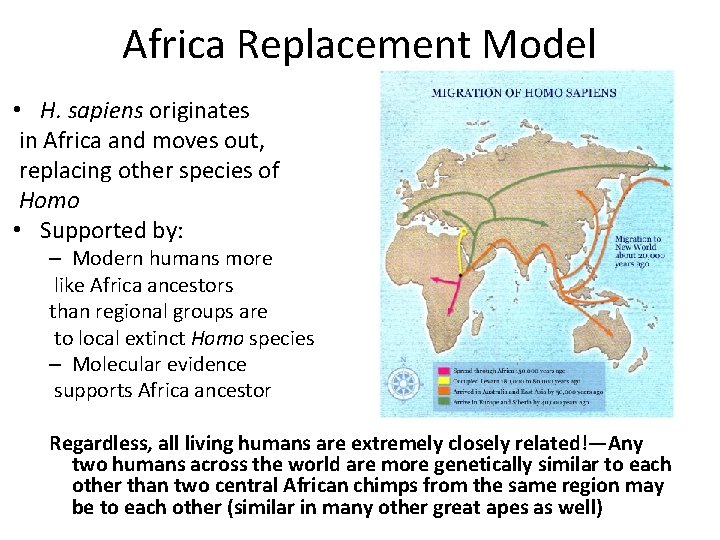
Africa Replacement Model • H. sapiens originates in Africa and moves out, replacing other species of Homo • Supported by: – Modern humans more like Africa ancestors than regional groups are to local extinct Homo species – Molecular evidence supports Africa ancestor Regardless, all living humans are extremely closely related!—Any two humans across the world are more genetically similar to each other than two central African chimps from the same region may be to each other (similar in many other great apes as well)
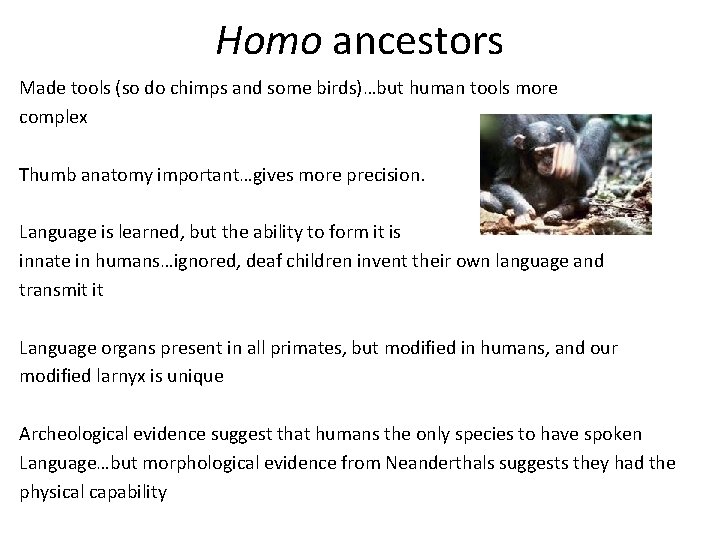
Homo ancestors Made tools (so do chimps and some birds)…but human tools more complex Thumb anatomy important…gives more precision. Language is learned, but the ability to form it is innate in humans…ignored, deaf children invent their own language and transmit it Language organs present in all primates, but modified in humans, and our modified larnyx is unique Archeological evidence suggest that humans the only species to have spoken Language…but morphological evidence from Neanderthals suggests they had the physical capability