
Orientation Objectives Fundamentals of Laser Operation film laser
Orientation Objectives • Fundamentals of Laser Operation – film: laser classification system • Overview of ANSI Standard for the Safe Use of Lasers • Biological Effects of Overexposure to Laser Radiation
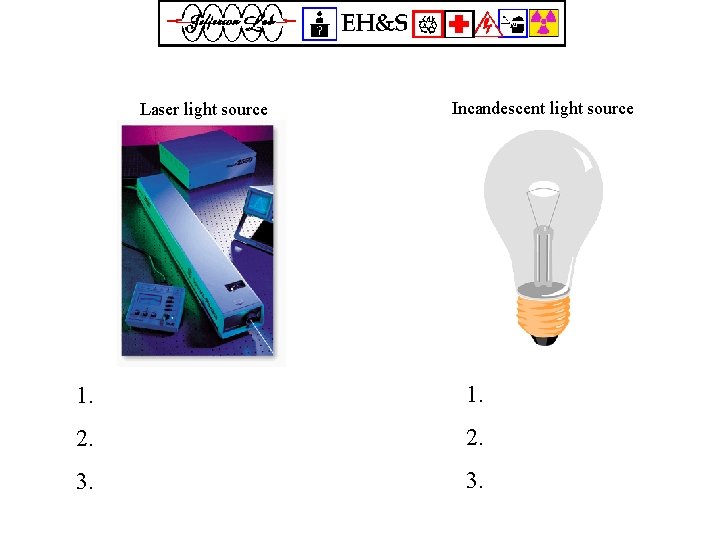
Laser light source Incandescent light source 1. 2. 3.
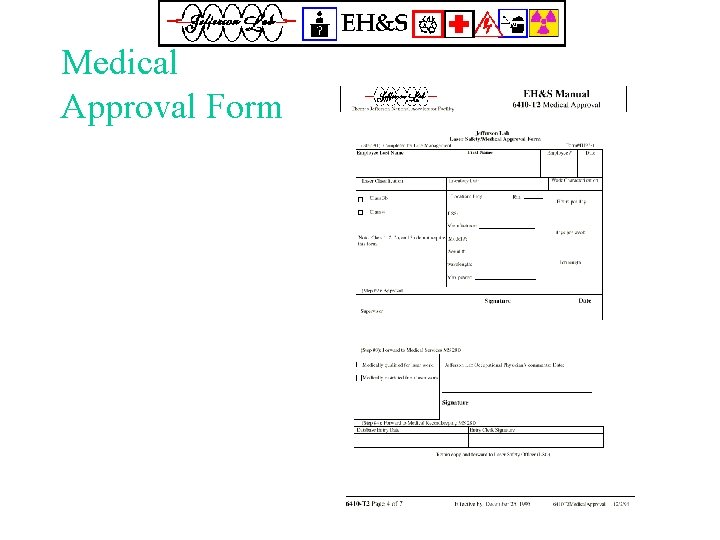
Medical Approval Form

CDRH/ANSI Hazard Classification • Class 3 a – These lasers can be visible, IR or UV. – Direct viewing may cause eye injury. – Laser power is <1 m. Watt • Class 3 b – These lasers can be visible, IR or UV. – Direct and indirect viewing may cause eye injury. – Laser power is between 5 and 500 m. Watt
CDRH/ANSI Hazard Classification • Class 4 – High power lasers – Direct and Indirect Viewing Hazard – Fire Hazard – Laser Power is >500 m. Watts • Special Considerations: – invisible beams – frequency doubled lasers
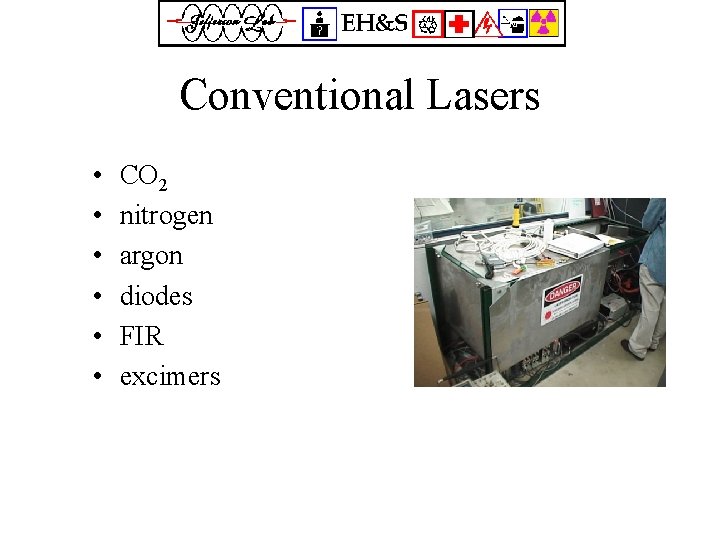
Conventional Lasers • • • CO 2 nitrogen argon diodes FIR excimers
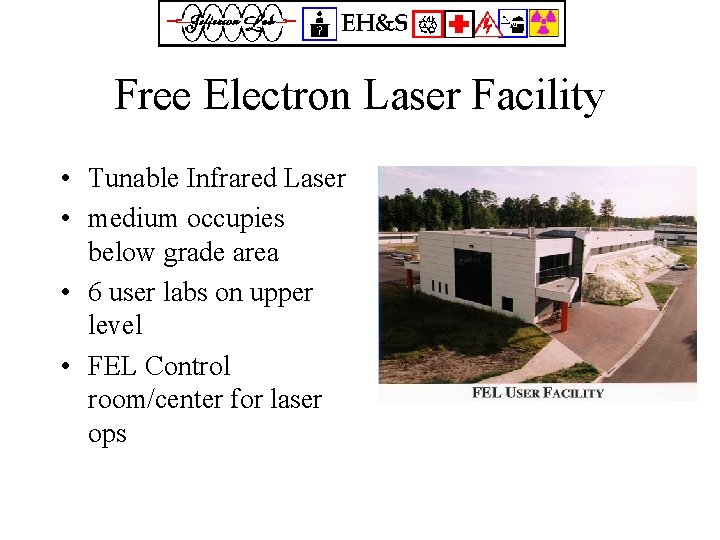
Free Electron Laser Facility • Tunable Infrared Laser • medium occupies below grade area • 6 user labs on upper level • FEL Control room/center for laser ops
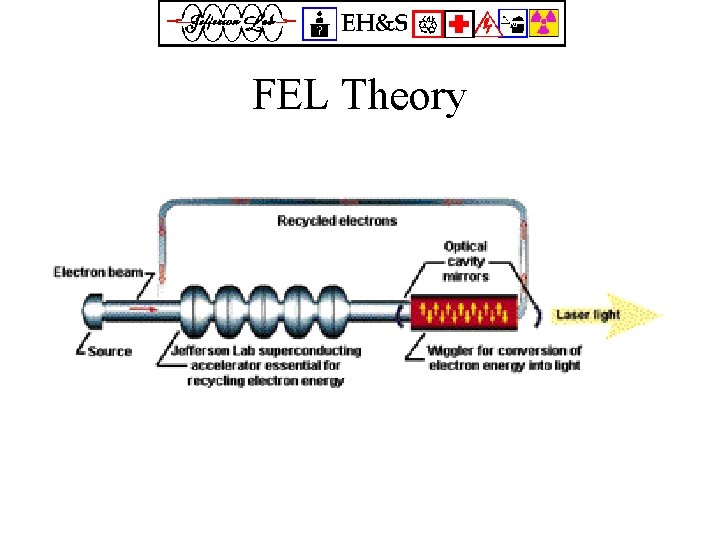
FEL Theory

Jlab FEL Schematic
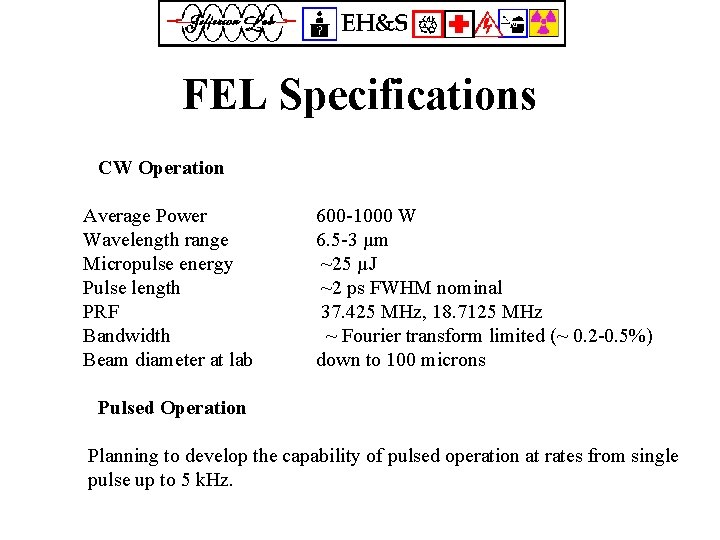
FEL Specifications CW Operation Average Power Wavelength range Micropulse energy Pulse length PRF Bandwidth Beam diameter at lab 600 -1000 W 6. 5 -3 µm ~25 µJ ~2 ps FWHM nominal 37. 425 MHz, 18. 7125 MHz ~ Fourier transform limited (~ 0. 2 -0. 5%) down to 100 microns Pulsed Operation Planning to develop the capability of pulsed operation at rates from single pulse up to 5 k. Hz.
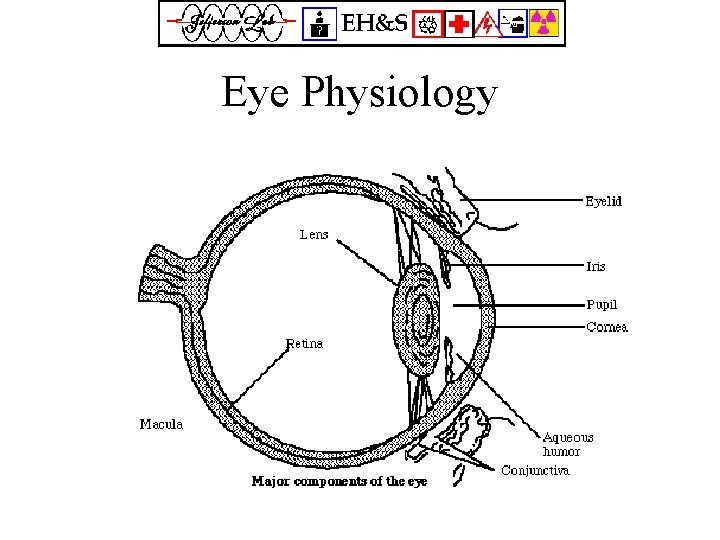
Eye Physiology
Conventional Laser Safety Program • • Responsibility/Authority Procedures Required controls User Qualifications
Responsibility/Authority Laser Safety Officer Laser System Supervisor
Procedures Laser Standard Operating Procedure (LSOP) • Author: LSS • Approvals: Management, LSO
User Qualifications • General laser safety orientation • Laser Specific safety training • Medical Approval
Class 3 b Required Controls • Same as Class 4 with two exceptions: 1. interlocked smoke detector not required 2. crash button not required
Class 4 Required Controls • • Smoke detector interlock to laser power Entrance door interlock to shutter or power Yellow beacon inline with power Crash button inside and outside the laser area • Emission time delay 10 second minimum • Approved schematic of safety interlock system
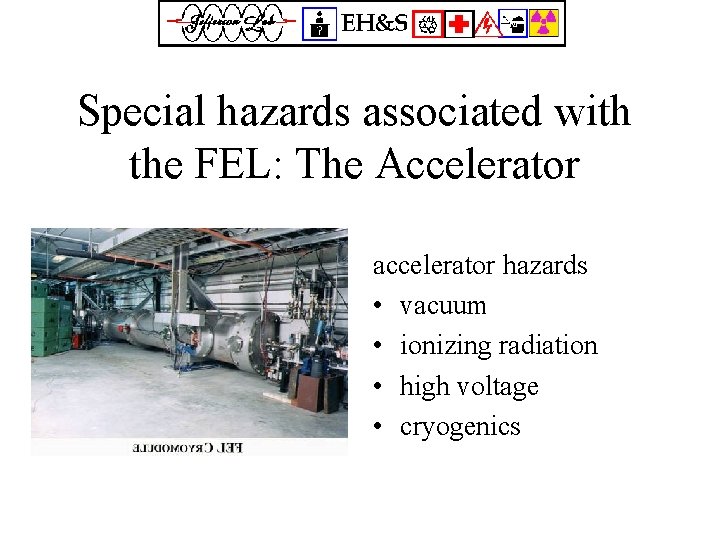
Special hazards associated with the FEL: The Accelerator accelerator hazards • vacuum • ionizing radiation • high voltage • cryogenics
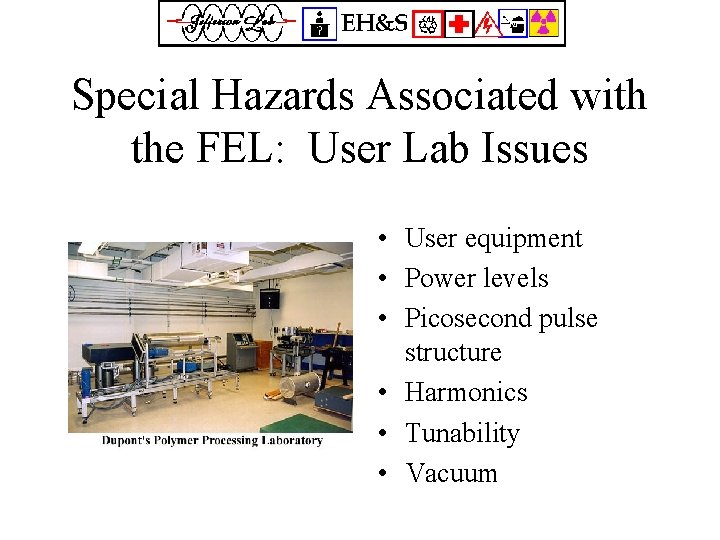
Special Hazards Associated with the FEL: User Lab Issues • User equipment • Power levels • Picosecond pulse structure • Harmonics • Tunability • Vacuum
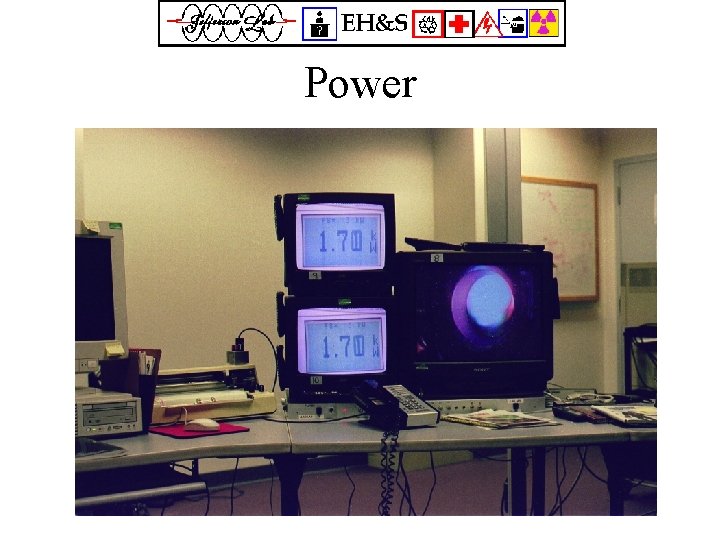
Power
Picosecond Pulse Structure • Existing ANSI standard does not address MPE’s for picosecond pulses • picosecond pulse structure may be more efficient in causing injury
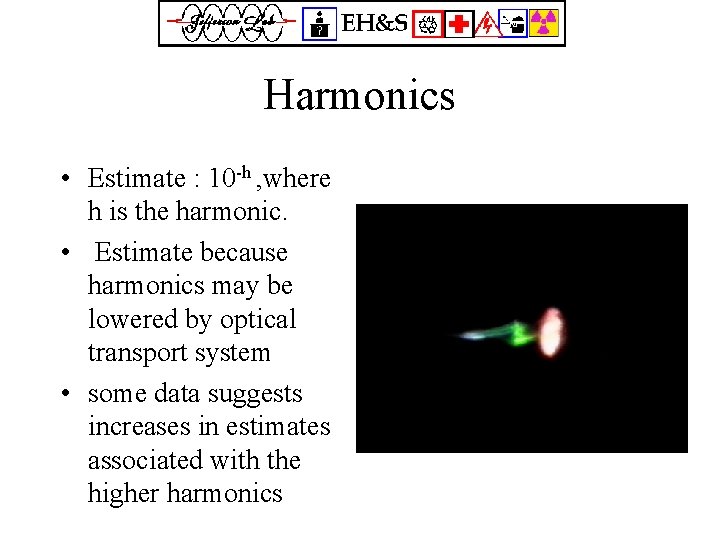
Harmonics • Estimate : 10 -h , where h is the harmonic. • Estimate because harmonics may be lowered by optical transport system • some data suggests increases in estimates associated with the higher harmonics
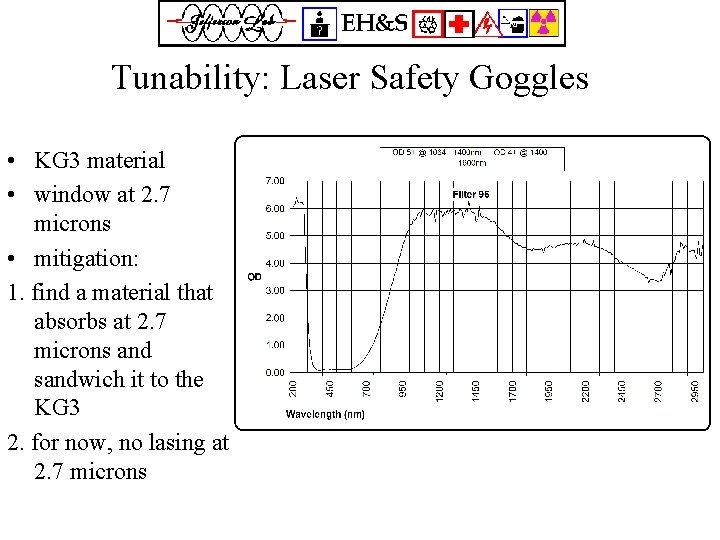
Tunability: Laser Safety Goggles • KG 3 material • window at 2. 7 microns • mitigation: 1. find a material that absorbs at 2. 7 microns and sandwich it to the KG 3 2. for now, no lasing at 2. 7 microns
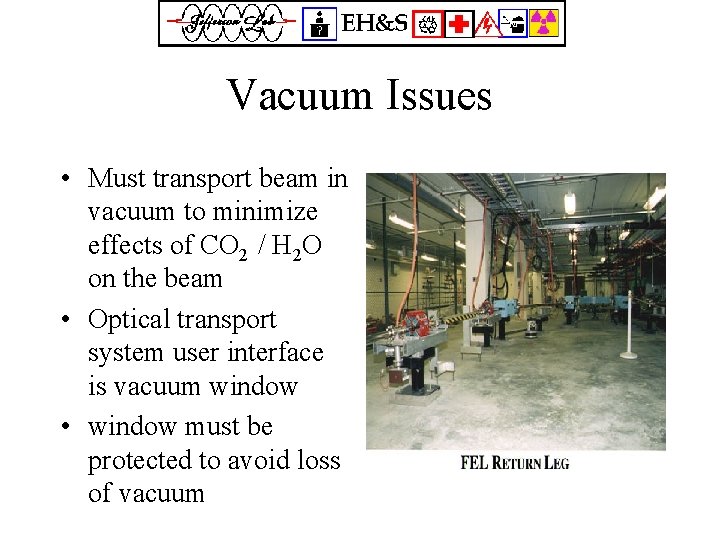
Vacuum Issues • Must transport beam in vacuum to minimize effects of CO 2 / H 2 O on the beam • Optical transport system user interface is vacuum window • window must be protected to avoid loss of vacuum
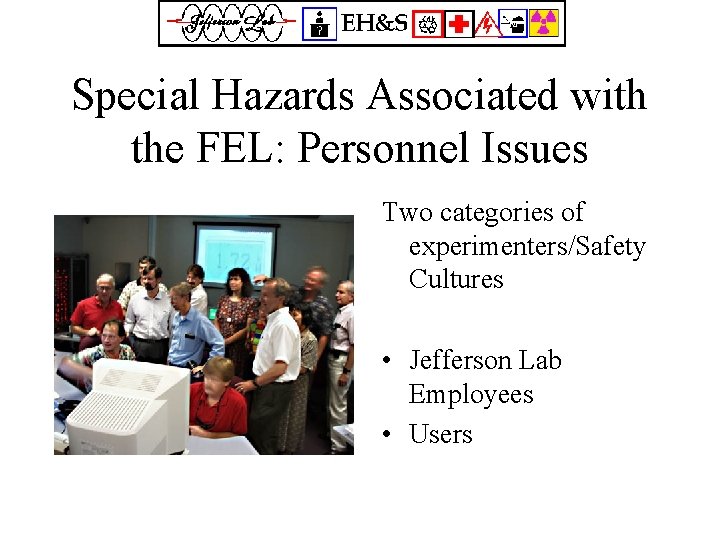
Special Hazards Associated with the FEL: Personnel Issues Two categories of experimenters/Safety Cultures • Jefferson Lab Employees • Users
User Labs: Additional Controls • Robust laser safety interlock system • FEL control room with permissive to user shutter • video camera monitoring • Experiment Approval Process
Bootstrapping An FEL Laser Safety Program • Benchmarking • Peer Reviews • Laser Expert audit meetings arguments
Benchmarking • Information gathering from other FEL facilities • Drawing on past experience • audit of three high energy laser labs
Reviews/Audits • • Accelerator Readiness Review Personal Safety System Review Laser Safety System Review Anteon Audit
- Slides: 30