
Orientation in Space and Time Explorations Social histories

- Slides: 12
Orientation in Space and Time Explorations: - Social histories - Epochs, eras, turning points - Scale, duration, frequency - Boundaries - Exchange - Human landscapes - Resources
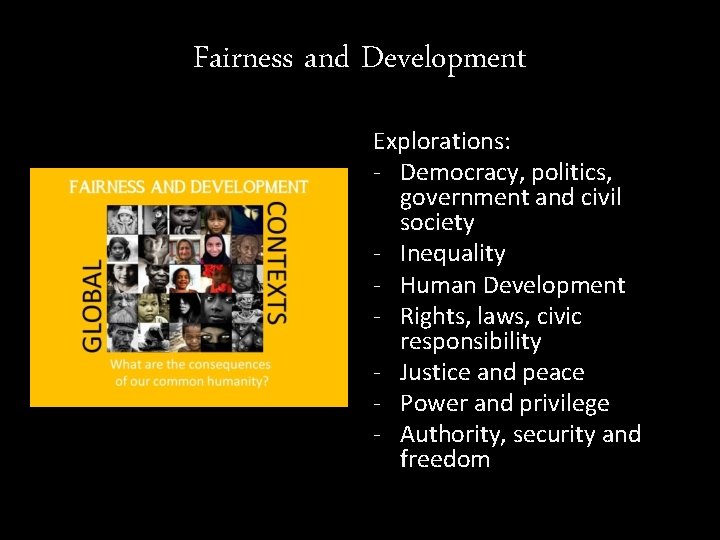
Fairness and Development Explorations: - Democracy, politics, government and civil society - Inequality - Human Development - Rights, laws, civic responsibility - Justice and peace - Power and privilege - Authority, security and freedom
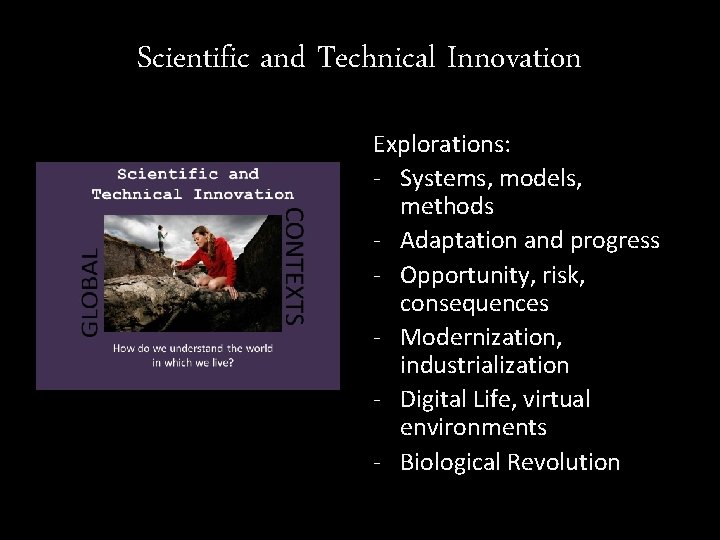
Scientific and Technical Innovation Explorations: - Systems, models, methods - Adaptation and progress - Opportunity, risk, consequences - Modernization, industrialization - Digital Life, virtual environments - Biological Revolution
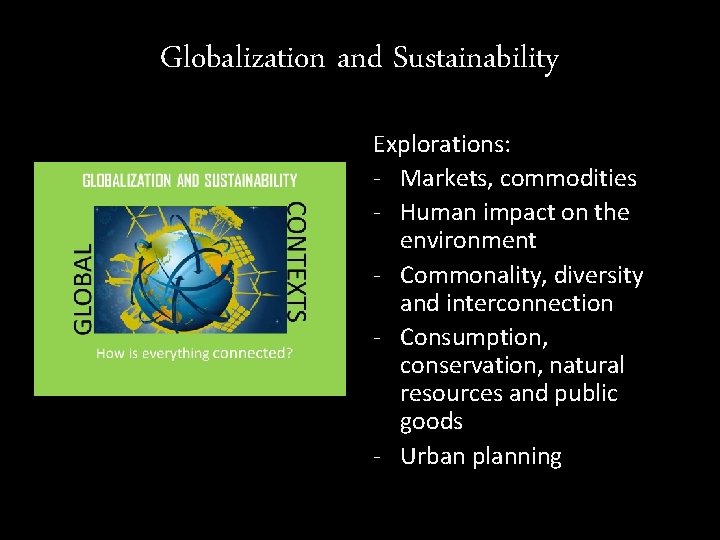
Globalization and Sustainability Explorations: - Markets, commodities - Human impact on the environment - Commonality, diversity and interconnection - Consumption, conservation, natural resources and public goods - Urban planning
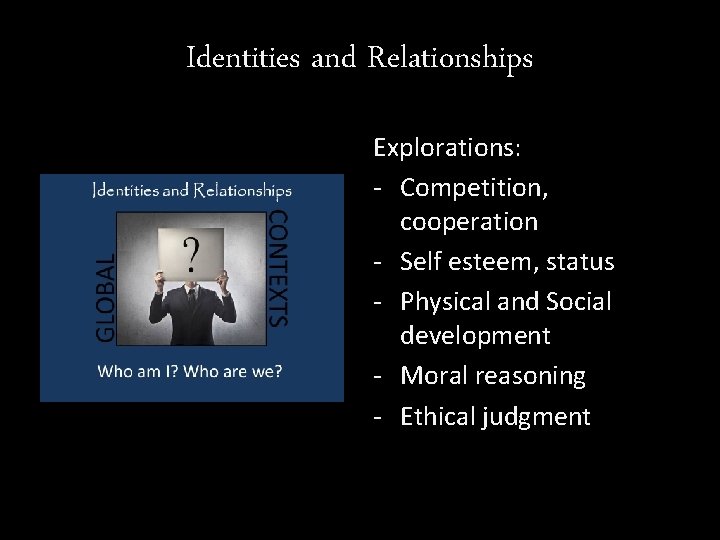
Identities and Relationships Explorations: - Competition, cooperation - Self esteem, status - Physical and Social development - Moral reasoning - Ethical judgment
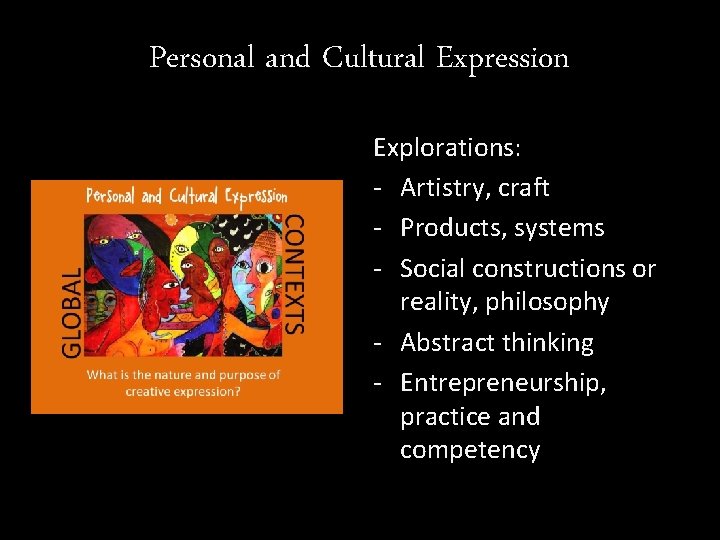
Personal and Cultural Expression Explorations: - Artistry, craft - Products, systems - Social constructions or reality, philosophy - Abstract thinking - Entrepreneurship, practice and competency
How do I choose a Global Context? Look at each and ask: - Why re we engaged in this inquiry? - Why are these concepts important? - Why is it important for me to understand? - Why do we care about this topic? Action: Reflect on the unit you brought with you today…which Global Context would you choose? Once you select it discuss it with the person next to you.
Why should students think conceptually? • New York Times Article Action: Think about a way in which creativity has shaped a concept within you. (Thaggard ’s Days of the Week Example)
There are 16 Key Concepts in the New MYP They are shared by ALL Courses!!!! Aesthetics Change Communication Communities Connections Creativity Culture Development Form Global interactions Identity Logic Perspective Relationships Time, place and space Systems •
What key concept would you use to teach… • • The civil rights movement Linear equations Shading (visual art) DNA Existential literature Play recognition in athletics Formal nouns and pronouns in World Language Action: Look at your Unit and the definitions of each Key Concept. Pick 3 that you think best fit what you want to promote with this unit. Open discussion/reflection on your selection…
How do Key Concepts help learning? • • • Abstract Create Interconnections Create higher-order thinking skills Helps students connect facts and topics Creates intellectual synergy (Erickson 2007)
Related Concepts • • Tailored for each course Lead to deeper understanding of specific course areas Provide a more detailed means of exploration This list is just a start…students and teachers are free to add their own related concepts as they determine their applicability Action: Look in your course guide and locate your Related Concepts. Choose 3 that you feel apply to your MYP Unit. Then, create your own concept and write about it in the “During Teaching” portion of your reflection section.