
Orientation for Afterschool Professionals Presented by University of
Orientation for Afterschool Professionals Presented by University of New Hampshire Cooperative Extension 4 -H Youth Development Program UNHCE/PGregory/August 2010
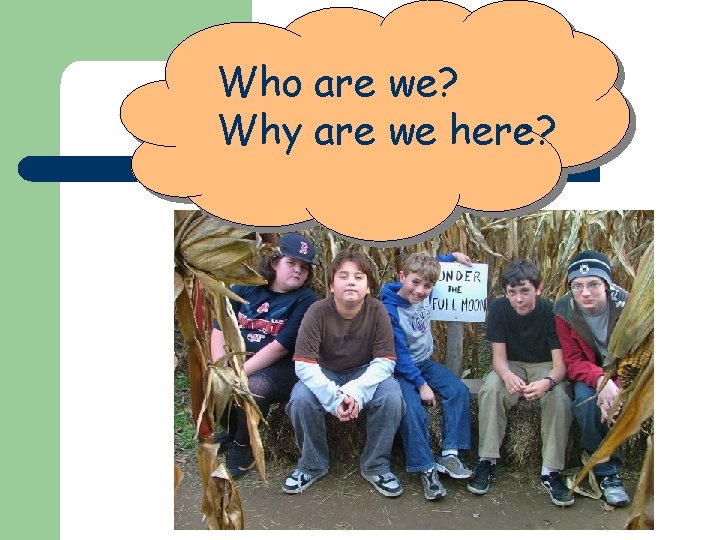
Who are we? Why are we here?
Training Goals Understand QUALITY l Examine RULES l Explore PROFESSIONALISM l Focus on YOUTH l Consider FAMILY & COMMUNITY l
Keys to Success in the Field þ Program & Environment þProfessionalism & Leadership þChild & Youth Development þFamily, School & Community
Ground Rules • Experience the day! • Have fun! • Respect others • Share the air • Tend to own needs • Silence technology
3 -2 -1 Letter to Myself 3 things I will start doing or will change 2 things I learned that I already do well 1 thing I will do to continue learning
What do we already know?
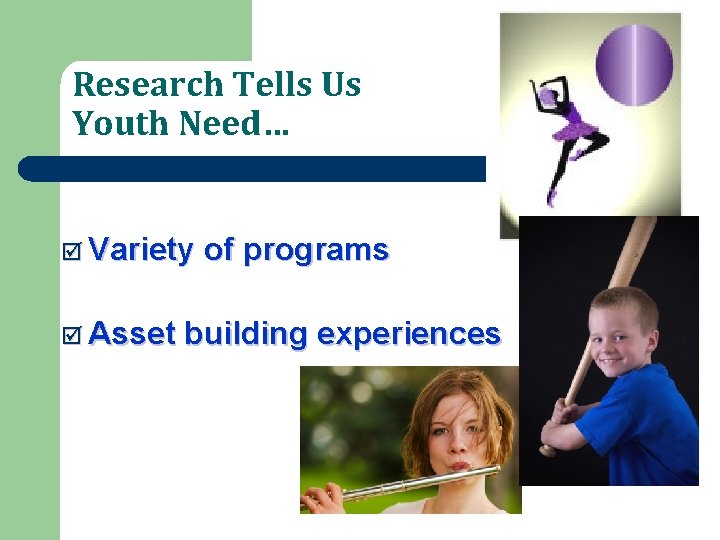
Research Tells Us Youth Need… þ Variety þ Asset of programs building experiences
Youth Acquire Assets Through … Exposure to positive § Experiences § Settings § People (8 Essential Elements)
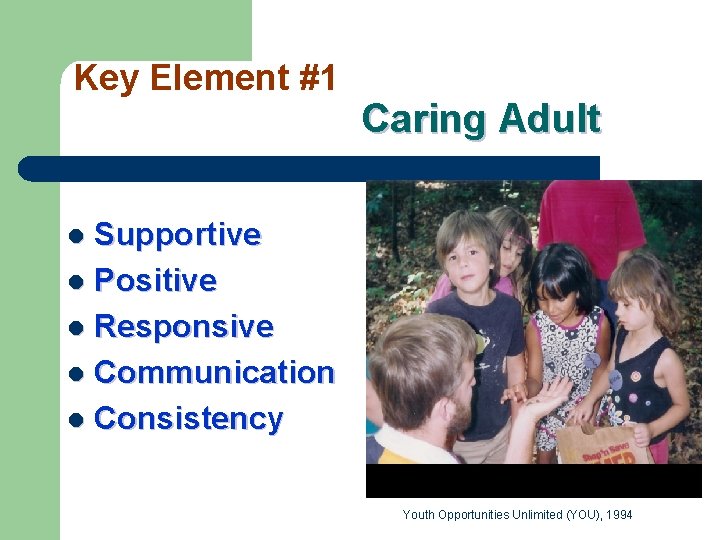
Key Element #1 Caring Adult Supportive l Positive l Responsive l Communication l Consistency l Youth Opportunities Unlimited (YOU), 1994
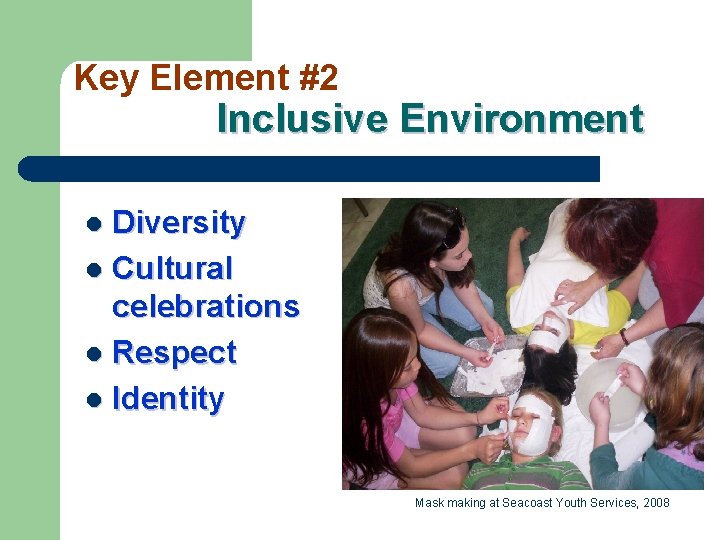
Key Element #2 Inclusive Environment Diversity l Cultural celebrations l Respect l Identity l Mask making at Seacoast Youth Services, 2008
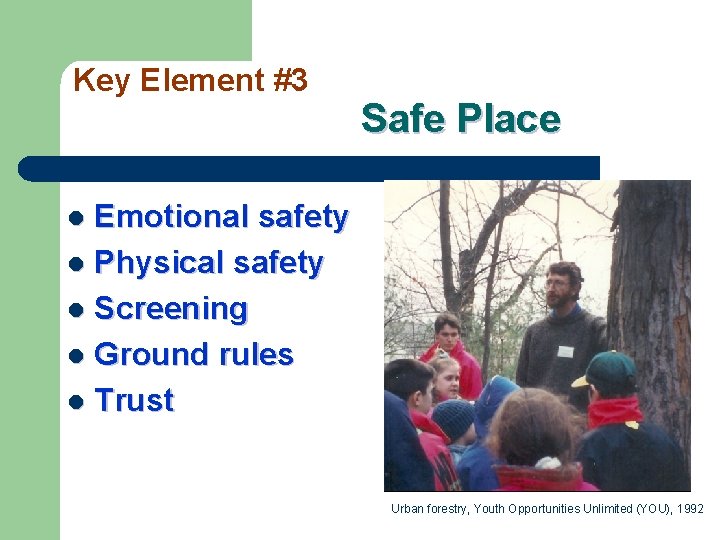
Key Element #3 Safe Place Emotional safety l Physical safety l Screening l Ground rules l Trust l Urban forestry, Youth Opportunities Unlimited (YOU), 1992
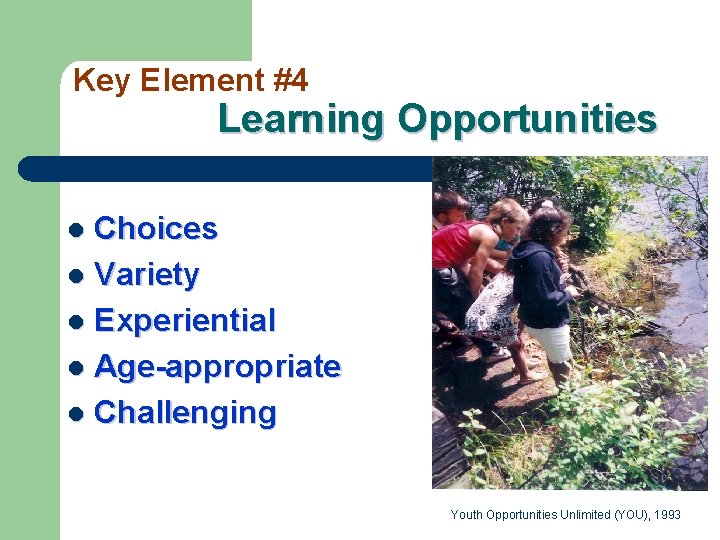
Key Element #4 Learning Opportunities Choices l Variety l Experiential l Age-appropriate l Challenging l Youth Opportunities Unlimited (YOU), 1993
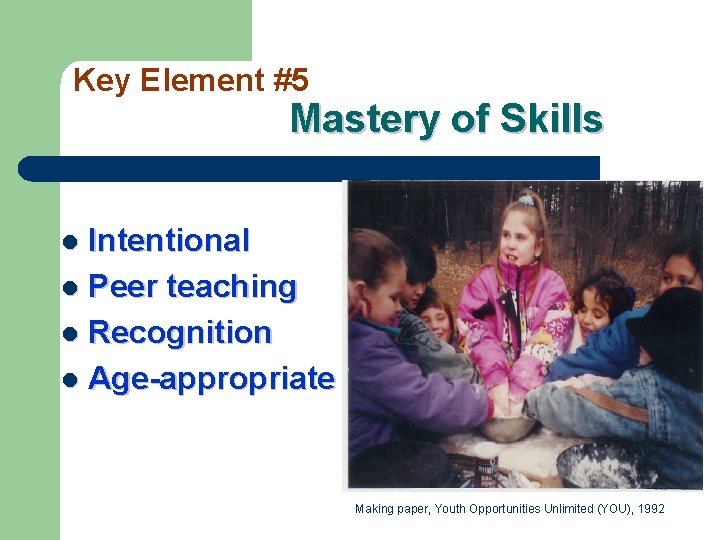
Key Element #5 Mastery of Skills Intentional l Peer teaching l Recognition l Age-appropriate l Making paper, Youth Opportunities Unlimited (YOU), 1992
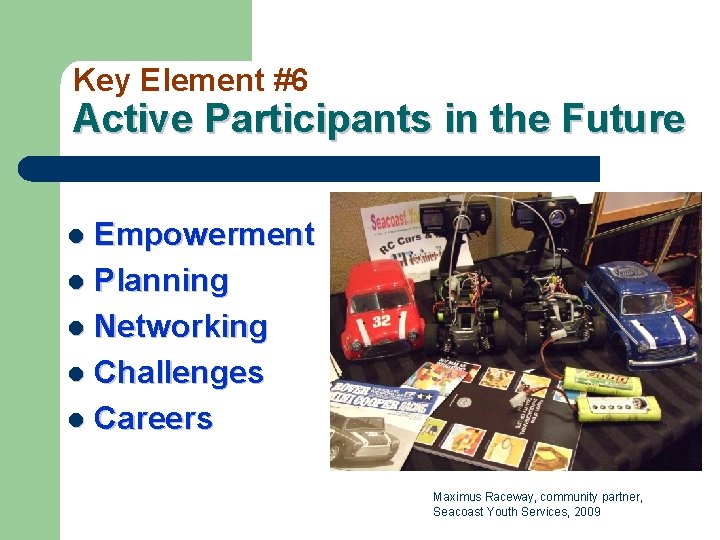
Key Element #6 Active Participants in the Future Empowerment l Planning l Networking l Challenges l Careers l Maximus Raceway, community partner, Seacoast Youth Services, 2009
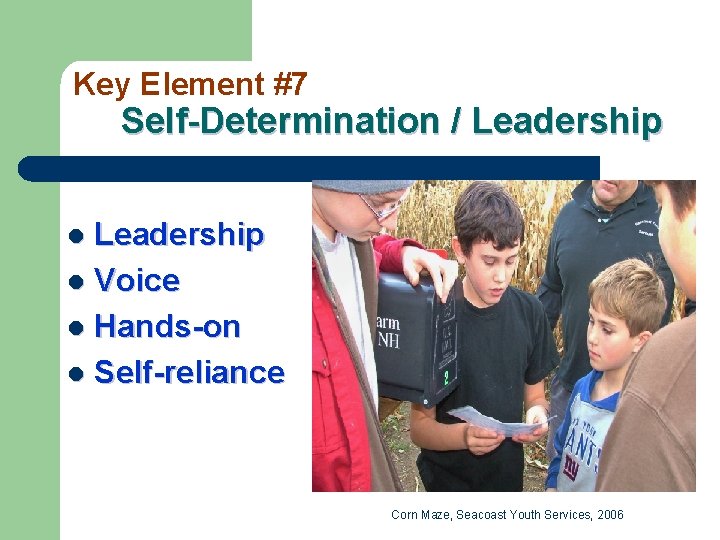
Key Element #7 Self-Determination / Leadership l Voice l Hands-on l Self-reliance l Corn Maze, Seacoast Youth Services, 2006
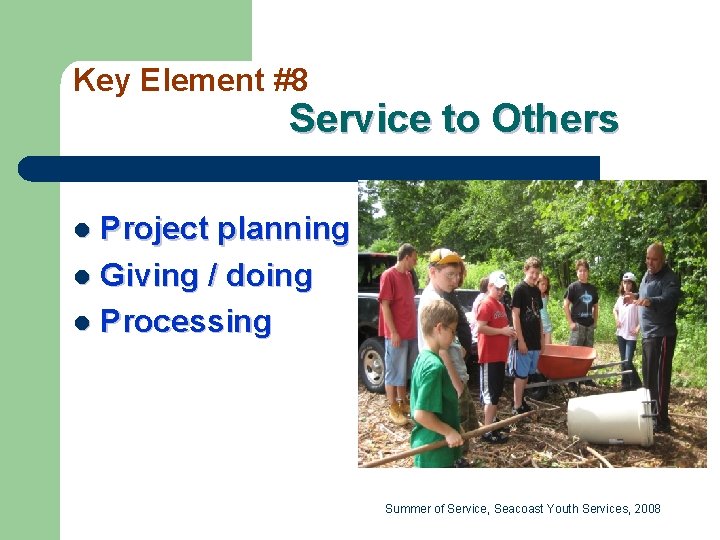
Key Element #8 Service to Others Project planning l Giving / doing l Processing l Summer of Service, Seacoast Youth Services, 2008
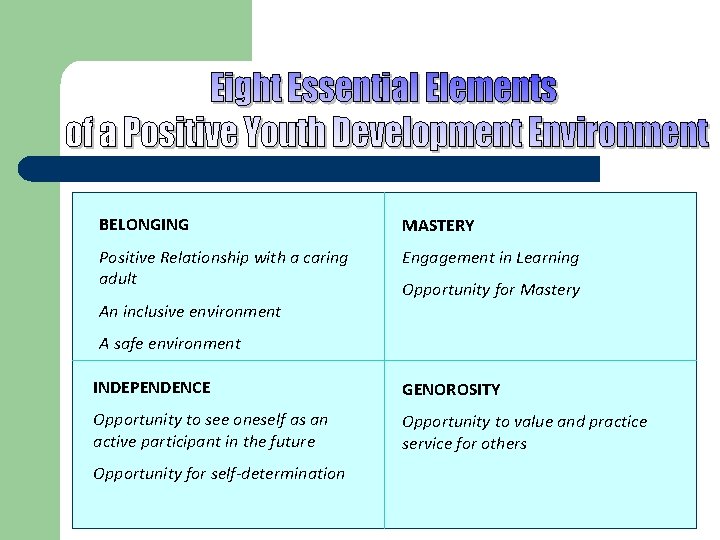
BELONGING MASTERY Positive Relationship with a caring adult Engagement in Learning An inclusive environment Opportunity for Mastery A safe environment INDEPENDENCE GENOROSITY Opportunity to see oneself as an active participant in the future Opportunity to value and practice service for others Opportunity for self-determination
Core Knowledge Area #1 Program & Environment
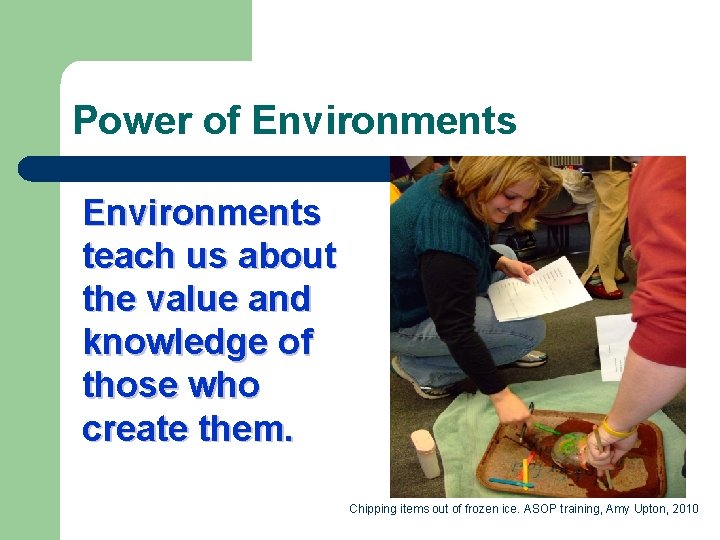
Power of Environments teach us about the value and knowledge of those who create them. Chipping items out of frozen ice. ASOP training, Amy Upton, 2010
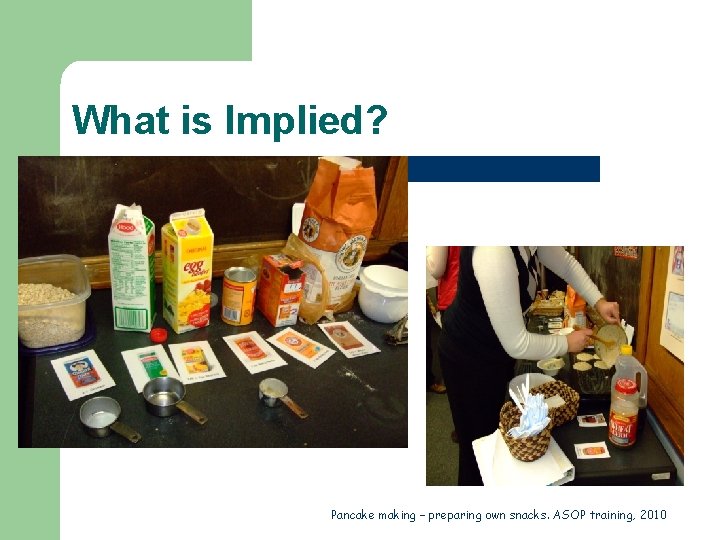
What is Implied? Pancake making – preparing own snacks. ASOP training, 2010
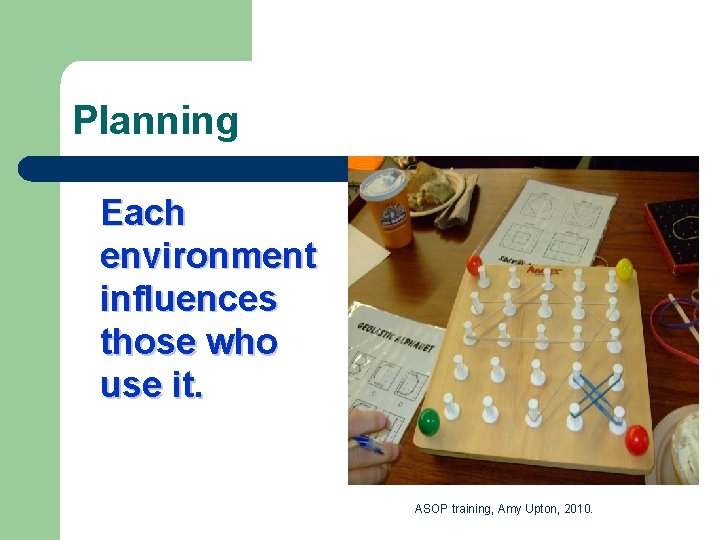
Planning Each environment influences those who use it. ASOP training, Amy Upton, 2010.
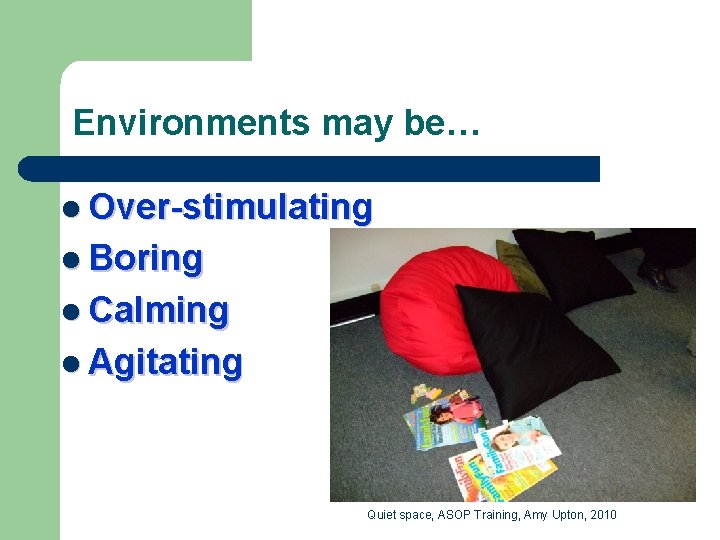
Environments may be… l Over-stimulating l Boring l Calming l Agitating Quiet space, ASOP Training, Amy Upton, 2010
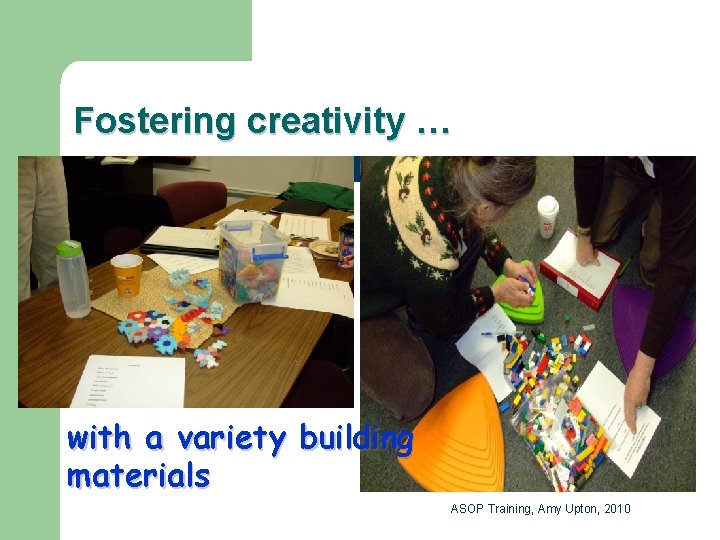
Fostering creativity … with a variety building materials ASOP Training, Amy Upton, 2010
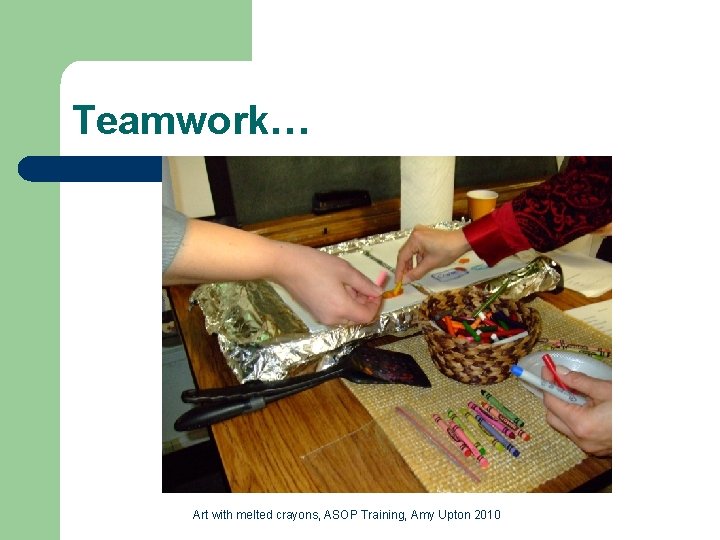
Teamwork… Art with melted crayons, ASOP Training, Amy Upton 2010
Key point… Learning environments that are: – well designed – structured – engaging foster positive behavior and create a culture of creativity.
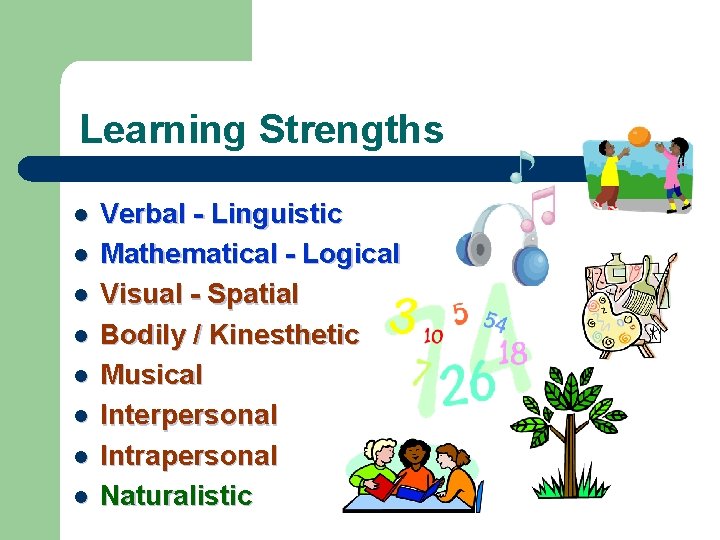
Learning Strengths l l l l Verbal - Linguistic Mathematical - Logical Visual - Spatial Bodily / Kinesthetic Musical Interpersonal Intrapersonal Naturalistic
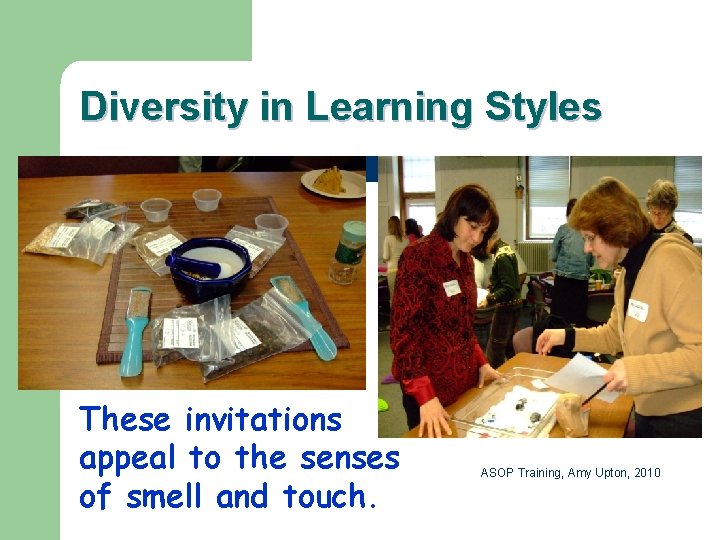
Diversity in Learning Styles These invitations appeal to the senses of smell and touch. ASOP Training, Amy Upton, 2010
Core Knowledge Area #2 Professionalism & Leadership • Standards of Quality – licensing • Reporting child abuse /neglect • Professionalism - credential
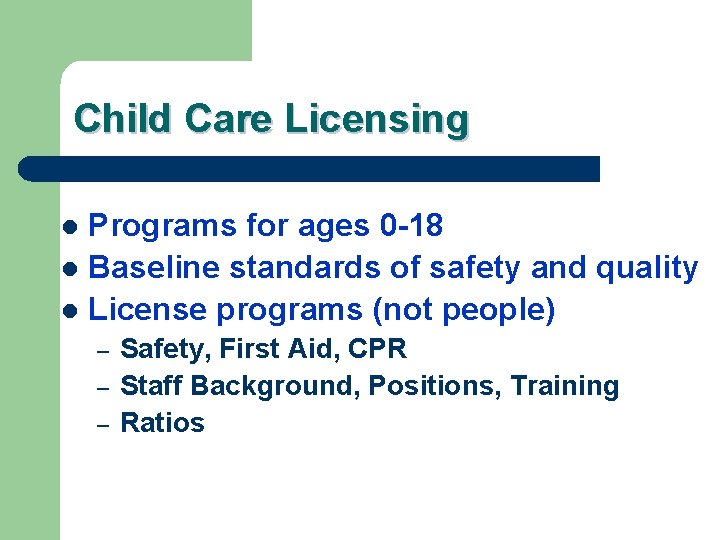
Child Care Licensing Programs for ages 0 -18 l Baseline standards of safety and quality l License programs (not people) l – – – Safety, First Aid, CPR Staff Background, Positions, Training Ratios
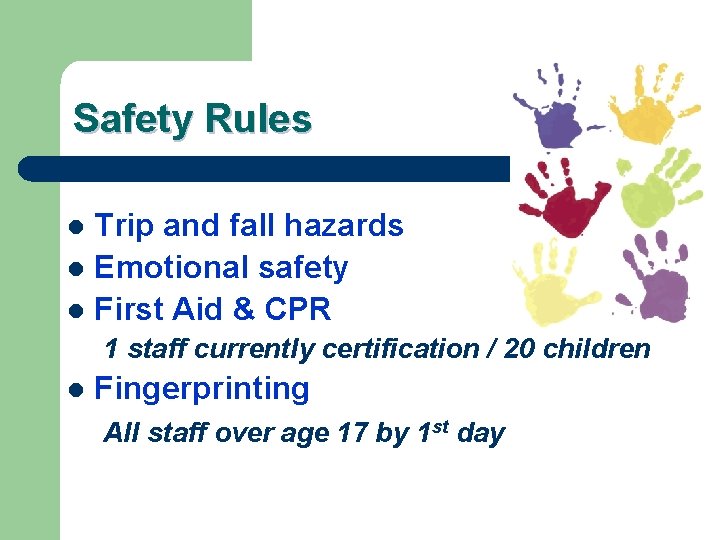
Safety Rules Trip and fall hazards l Emotional safety l First Aid & CPR l 1 staff currently certification / 20 children l Fingerprinting All staff over age 17 by 1 st day
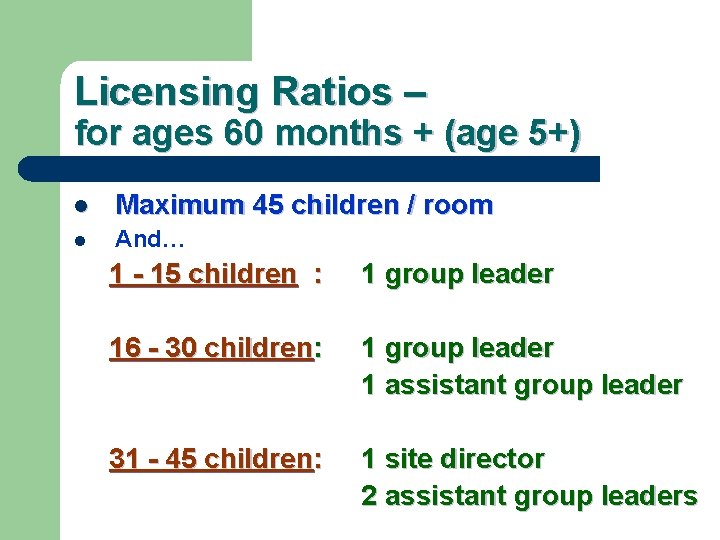
Licensing Ratios – for ages 60 months + (age 5+) l Maximum 45 children / room l And… 1 - 15 children : 1 group leader 16 - 30 children: 1 group leader 1 assistant group leader 31 - 45 children: 1 site director 2 assistant group leaders
Licensing: Direct Service Professionals l Required Annual Training Hours – – l Revised in 2013 Based on Levels in the Lattice System Professional Development Defined – – Includes Self Study Face to face professional development relevant to afterschool Minimum of 12 Hrs per year Level 1 Minimum of 18 Hrs per year Level 2 -6
Child Abuse: MANDATED Reporting Anytime you suspect there is abuse and/or neglect you are mandated to report!
Mandated Reporting Internal protocols (i. e. informing a superior or requesting superior’s permission prior to reporting) are NOT the law or DCYF policy – – If unable to meet with supervisor immediately, make the report to DCYF and follow up with your supervisor later If you suspect abuse and/or neglect you are mandated to report even if your supervisor does not agree!
You Are Protected if You Report! Anyone participating in good faith in the making of a report pursuant to this chapter is immune from any liability, civil or criminal, that might otherwise be imposed. RSA 169 -C: 31 and RSA 161 -F: 47 You can request that your name be kept confidential!
Child Abuse: What to Report l Physical abuse l Sexual abuse l Neglect l Emotional or psychological maltreatment
To Report Suspected Abuse Child Abuse Report Line 1 -800 -894 -5533(in state) 603 -271 -6562(out of state) After hours, weekends, holidays CALL 911
DHHS Resources Licensing website: l http: //www. dhhs. nh. gov/oos/cclu/ Credential website: http: //www. dhhs. nh. gov/dcyf/cdb/profdev. htm Child Abuse Reporting contact: http: //www. dhhs. nh. gov/dcyf/cps/
Afterschool Credential Benefits to Individual l l Recognizes professional knowledge, experience Verifies you are qualified Defines a ladder for professional growth Defines knowledge and skills to deepen practice Benefits to program l Enables program to prove qualifications of staff
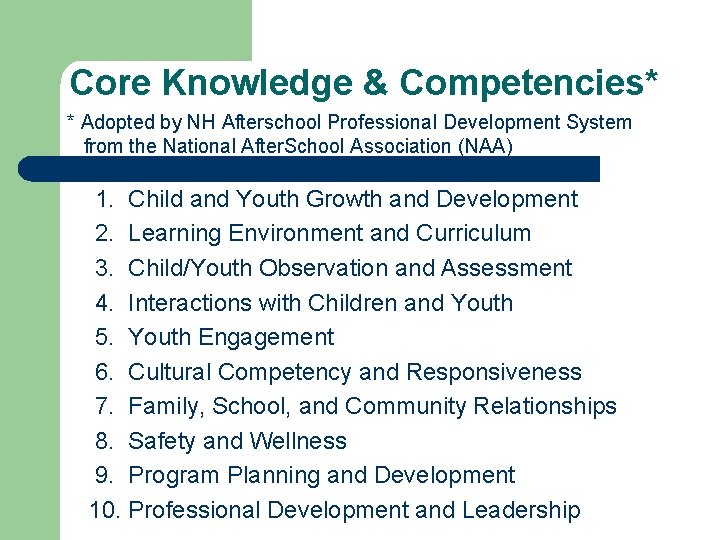
Core Knowledge & Competencies* * Adopted by NH Afterschool Professional Development System from the National After. School Association (NAA) 1. Child and Youth Growth and Development 2. Learning Environment and Curriculum 3. Child/Youth Observation and Assessment 4. Interactions with Children and Youth 5. Youth Engagement 6. Cultural Competency and Responsiveness 7. Family, School, and Community Relationships 8. Safety and Wellness 9. Program Planning and Development 10. Professional Development and Leadership
NH Afterschool Professional Development System (2013) Child Development Bureau Division for Children, Youth and Families NH Dept of Health and Human Services. http: //www. dhhs. nh. gov/dcyf/cdb/profdev. htm
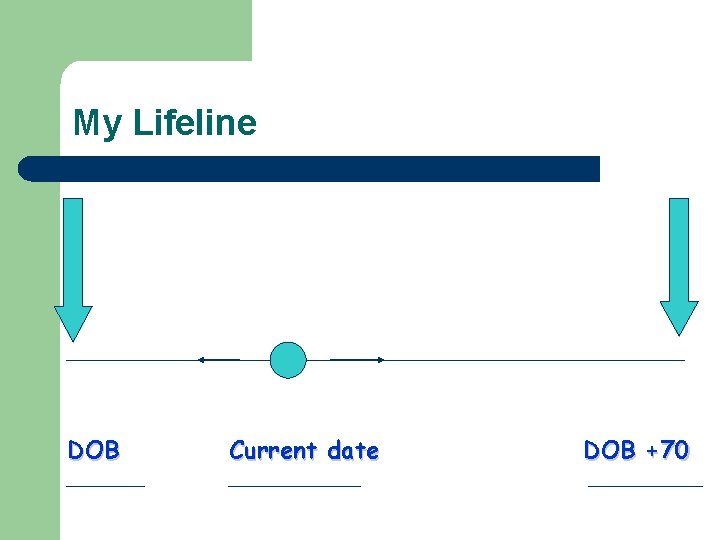
My Lifeline DOB Current date DOB +70
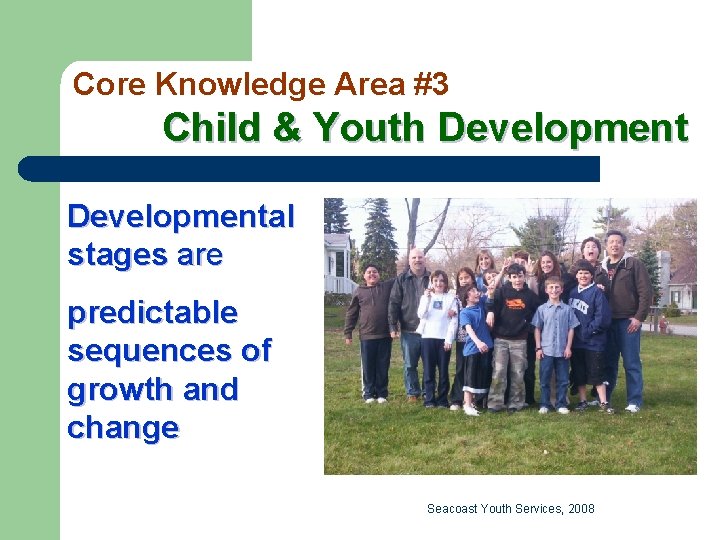
Core Knowledge Area #3 Child & Youth Developmental stages are predictable sequences of growth and change Seacoast Youth Services, 2008
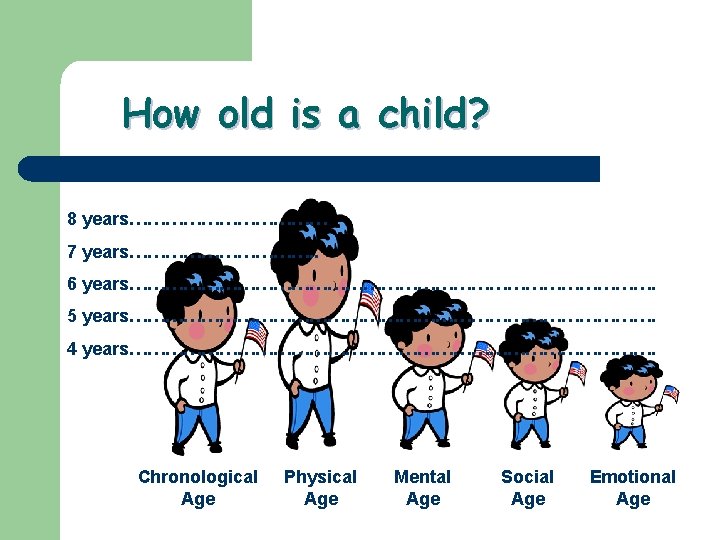
How old is a child? 8 years……………… 7 years……………. . 6 years………………………………………. 5 years………………………………………. 4 years………………………………………. Chronological Age Physical Age Mental Age Social Age Emotional Age
Ages & Stages of Development Grades K-2 l Grades 3 -5 l Grades 6 -8 l Grades 9 -12 l Characteristics and Teaching Tips
Ages & Stages Keys to successful programming: – – Age is not a predictor of maturity Growth may proceed at different rates
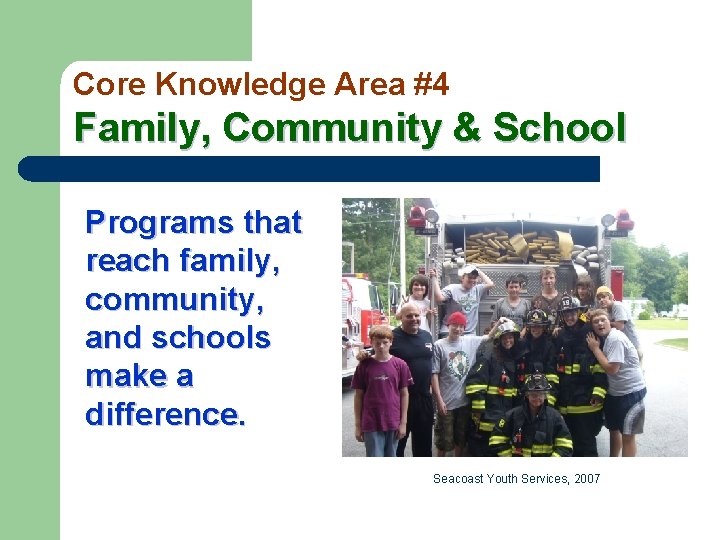
Core Knowledge Area #4 Family, Community & School Programs that reach family, community, and schools make a difference. Seacoast Youth Services, 2007
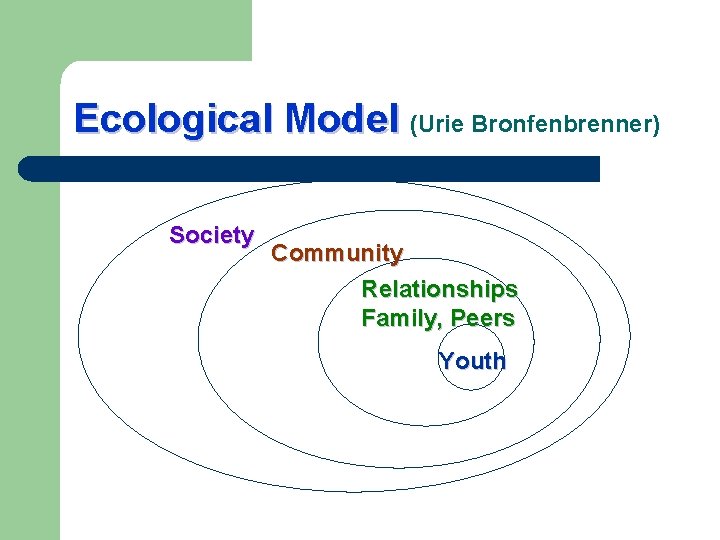
Ecological Model (Urie Bronfenbrenner) Society Community Relationships Family, Peers Youth
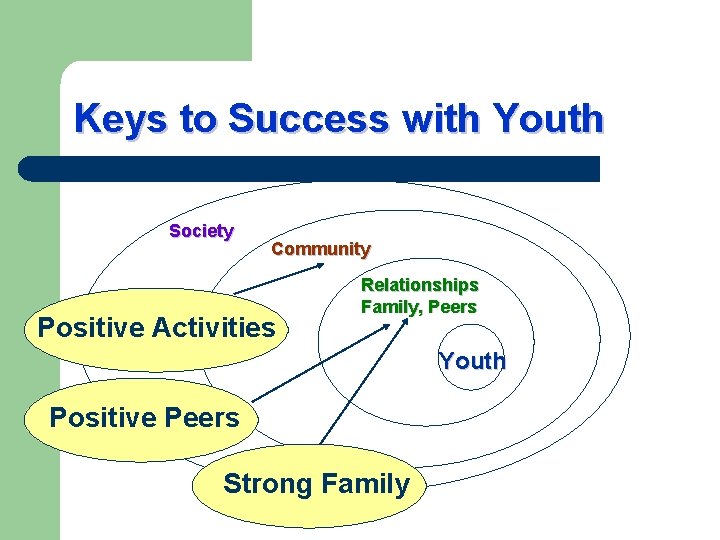
Keys to Success with Youth Society Community Positive Activities Relationships Family, Peers Youth Positive Peers Strong Family
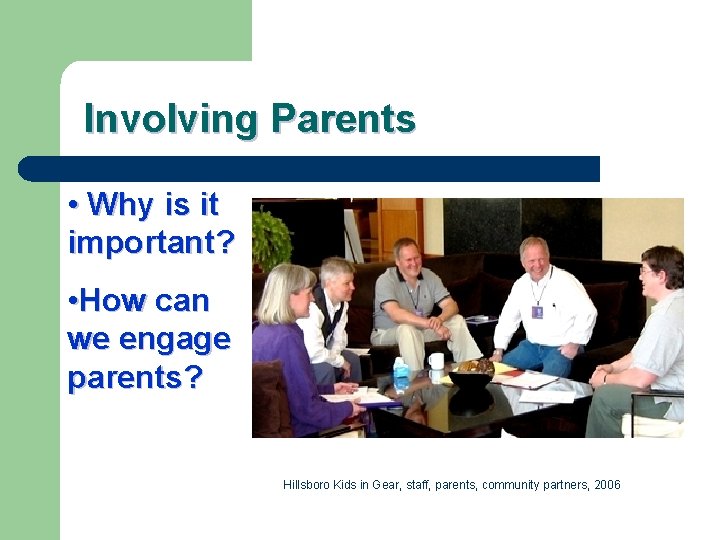
Involving Parents • Why is it important? • How can we engage parents? Hillsboro Kids in Gear, staff, parents, community partners, 2006
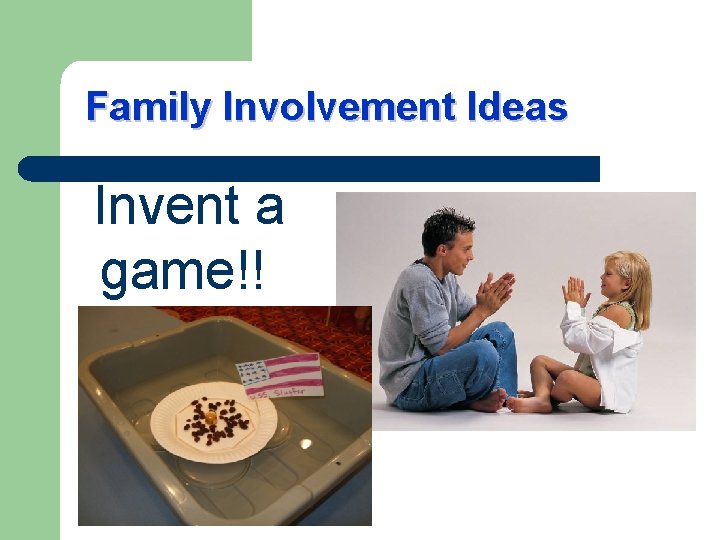
Family Involvement Ideas Invent a game!!
Now what do we know?
Final Details Certificate of Attendance NH Afterschool Orientation 3 hours ______________ (your name) Todays Date_____ Workshop Trainers _____________________
Thank You! Presented by In partnership with New Hampshire Afterschool Coalition (NHASC)
- Slides: 55