
Organs in Abdominal Pelvic Cavity Abdomenpelvis The abdomen
Organs in Abdominal & Pelvic Cavity
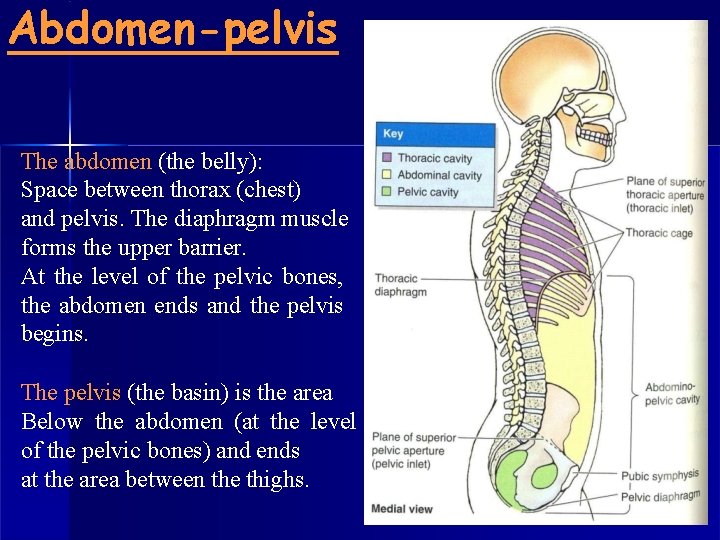
Abdomen-pelvis The abdomen (the belly): Space between thorax (chest) and pelvis. The diaphragm muscle forms the upper barrier. At the level of the pelvic bones, the abdomen ends and the pelvis begins. The pelvis (the basin) is the area Below the abdomen (at the level of the pelvic bones) and ends at the area between the thighs.
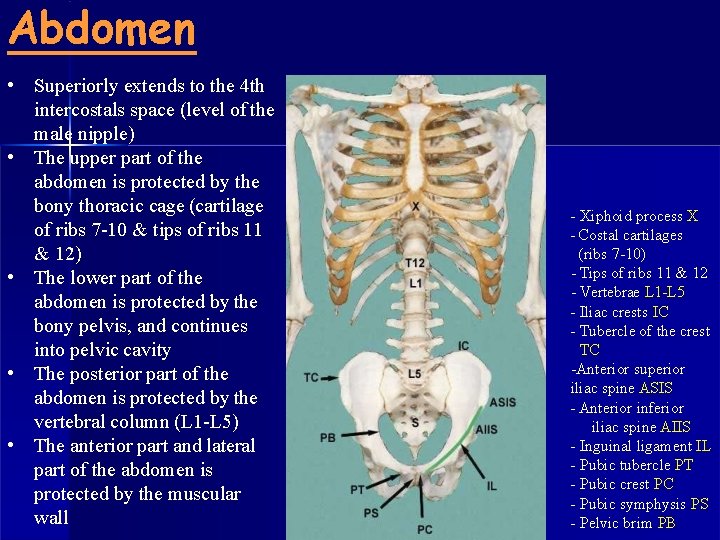
Abdomen • Superiorly extends to the 4 th intercostals space (level of the male nipple) • The upper part of the abdomen is protected by the bony thoracic cage (cartilage of ribs 7 -10 & tips of ribs 11 & 12) • The lower part of the abdomen is protected by the bony pelvis, and continues into pelvic cavity • The posterior part of the abdomen is protected by the vertebral column (L 1 -L 5) • The anterior part and lateral part of the abdomen is protected by the muscular wall - Xiphoid process X - Costal cartilages (ribs 7 -10) - Tips of ribs 11 & 12 - Vertebrae L 1 -L 5 - Iliac crests IC - Tubercle of the crest TC -Anterior superior iliac spine ASIS - Anterior inferior iliac spine AIIS - Inguinal ligament IL - Pubic tubercle PT - Pubic crest PC - Pubic symphysis PS - Pelvic brim PB
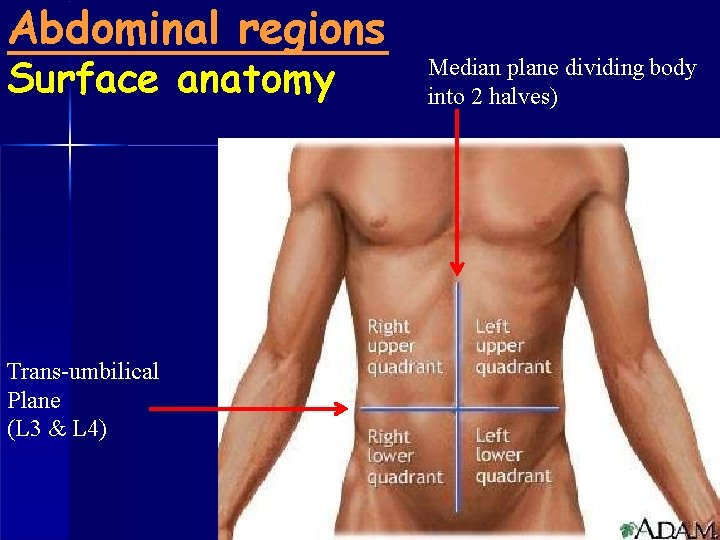
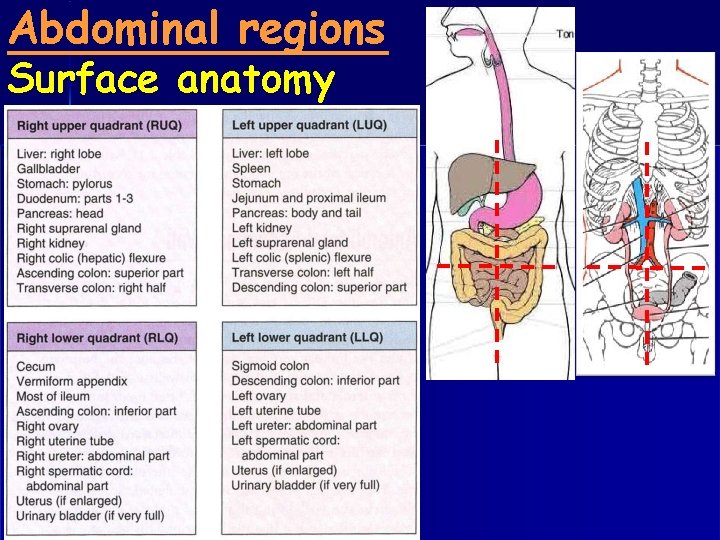
Abdominal regions Surface anatomy Trans-umbilical Plane (L 3 & L 4) Median plane dividing body into 2 halves)
Abdominal regions Surface anatomy

Abdominal regions Surface anatomy R ight hypochondriac Right Lumbar Right Iliac Epigastric Left hypochondriac Umbilical Left Lumbar Hypogastric Left Iliac
Abdomen systems and organs Digestive System:
Abdomen systems and organs Digestive System:
Abdomen systems and organs Digestive System:
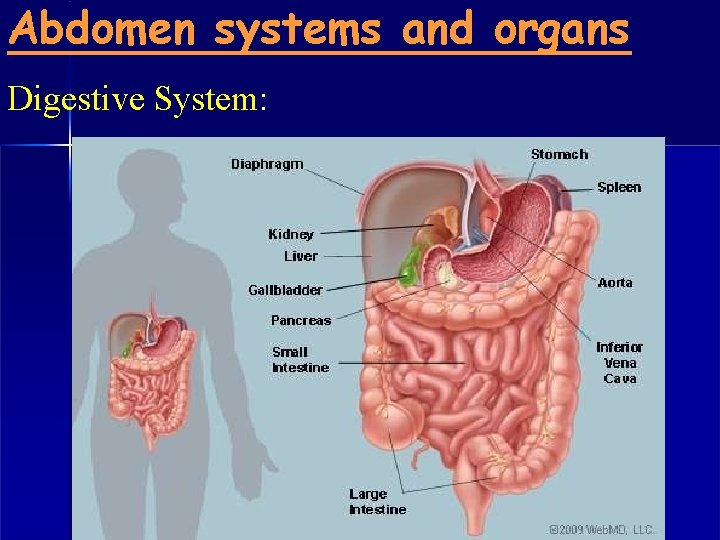
Abdomen systems and organs Digestive System:
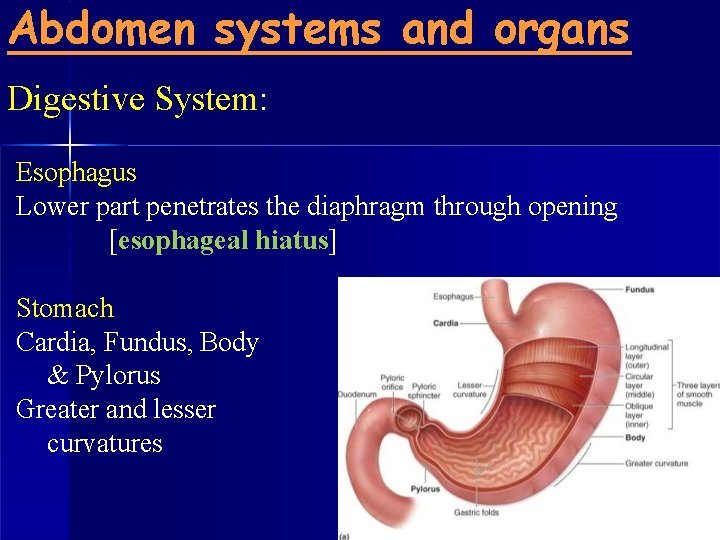
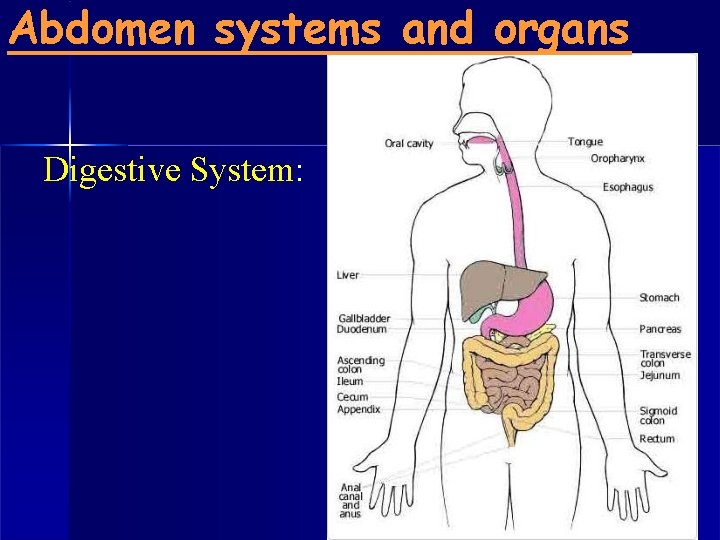
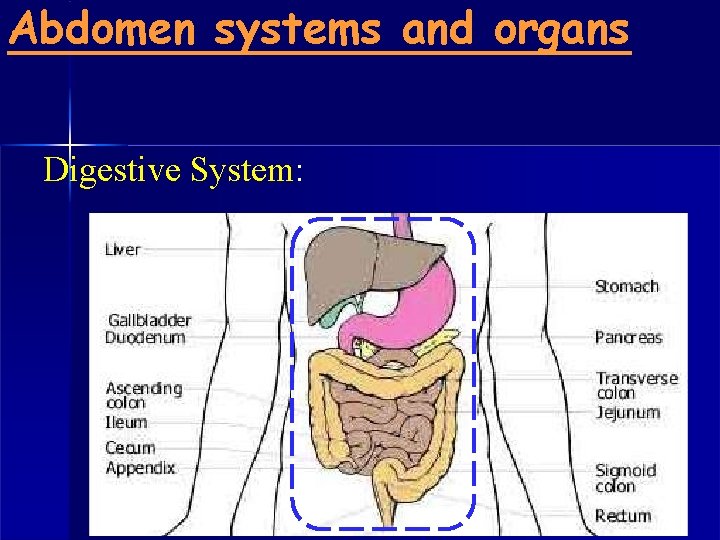
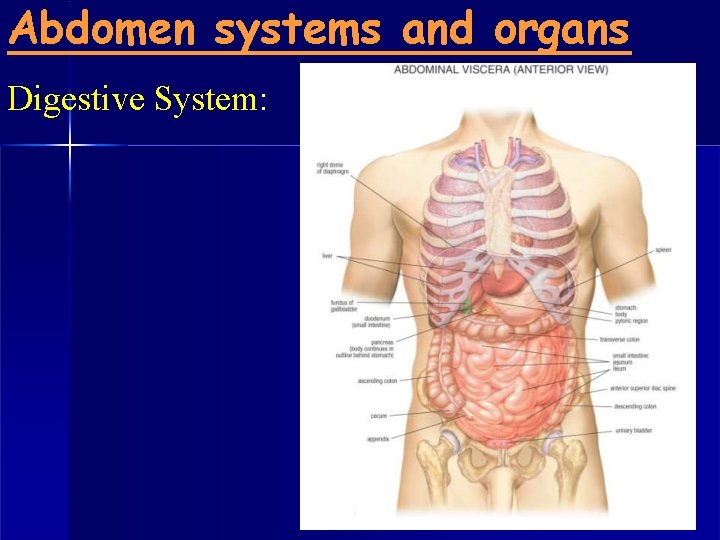
Abdomen systems and organs Digestive System: Esophagus Lower part penetrates the diaphragm through opening [esophageal hiatus] Stomach Cardia, Fundus, Body & Pylorus Greater and lesser curvatures
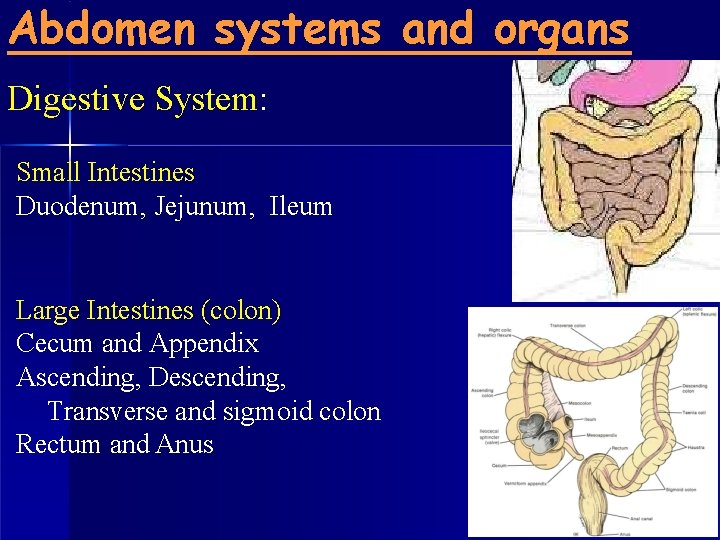
Abdomen systems and organs Digestive System: Small Intestines Duodenum, Jejunum, Ileum Large Intestines (colon) Cecum and Appendix Ascending, Descending, Transverse and sigmoid colon Rectum and Anus
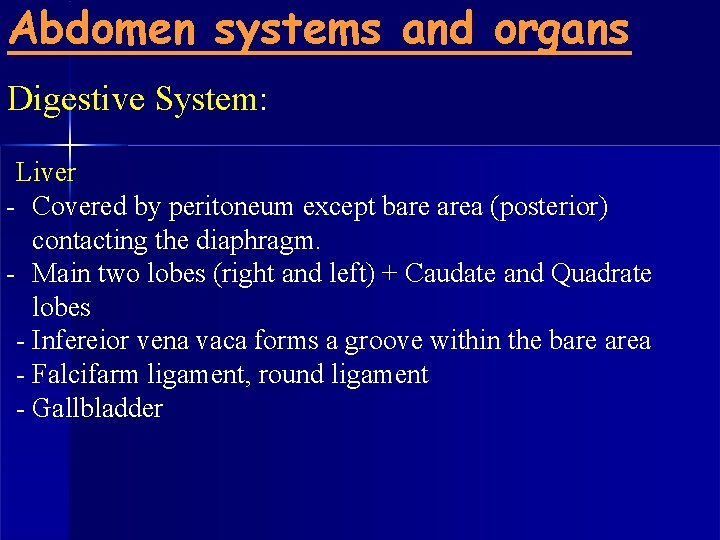
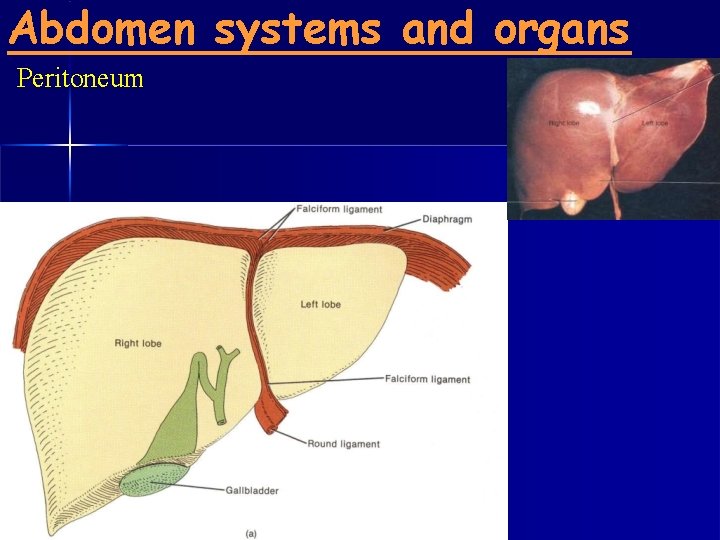
Abdomen systems and organs Digestive System: Liver - Covered by peritoneum except bare area (posterior) contacting the diaphragm. - Main two lobes (right and left) + Caudate and Quadrate lobes - Infereior vena vaca forms a groove within the bare area - Falcifarm ligament, round ligament - Gallbladder
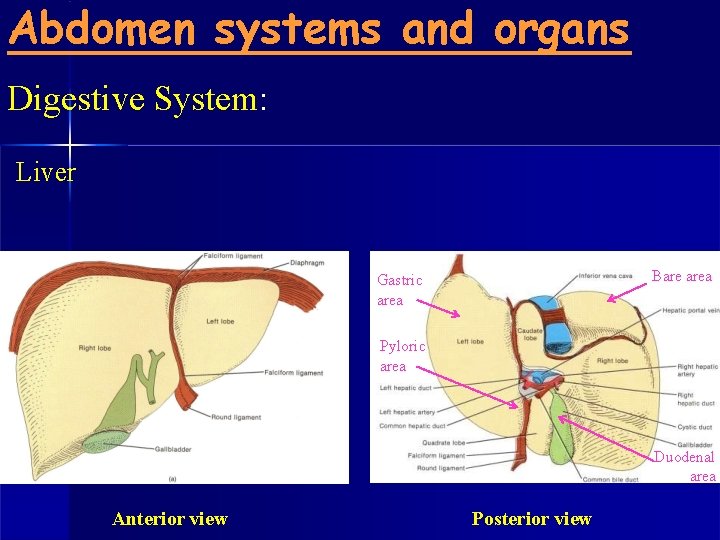
Abdomen systems and organs Digestive System: Liver Bare area Gastric area Pyloric area Duodenal area Anterior view Posterior view
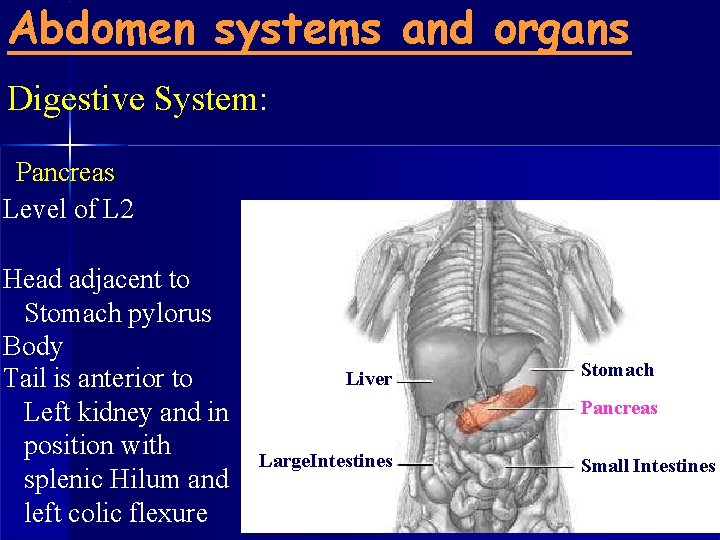
Abdomen systems and organs Digestive System: Pancreas Level of L 2 Head adjacent to Stomach pylorus Body Tail is anterior to Left kidney and in position with splenic Hilum and left colic flexure Liver Stomach Pancreas Large. Intestines Small Intestines
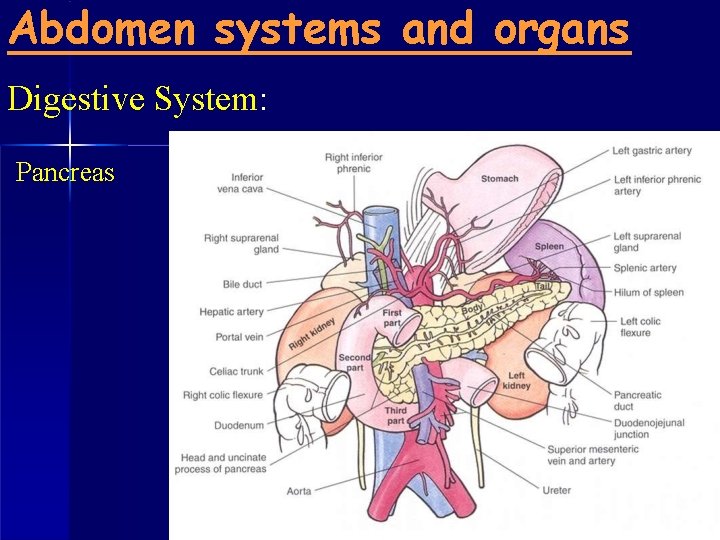
Abdomen systems and organs Digestive System: Pancreas
Abdomen systems and organs Spleen
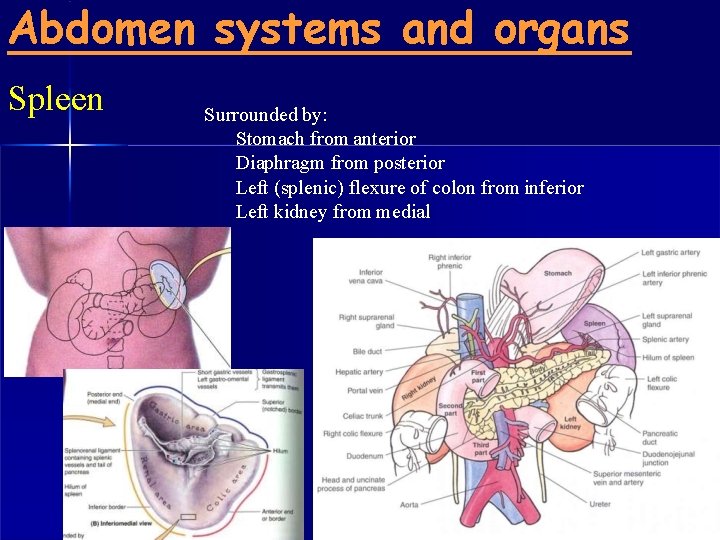
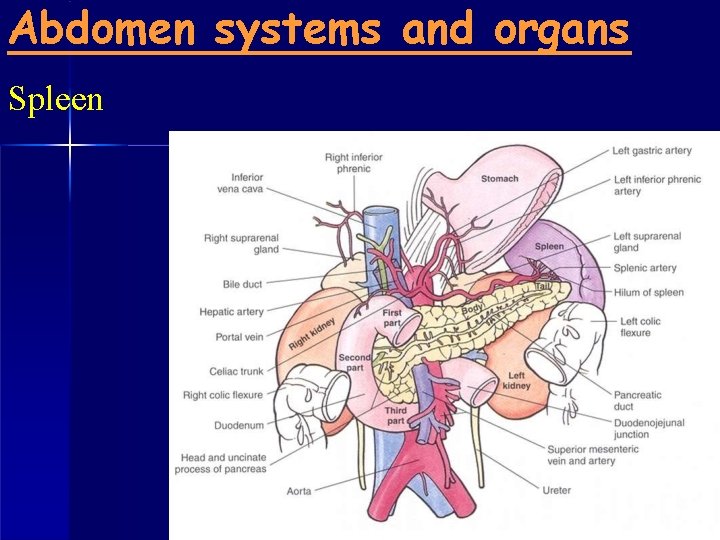
Abdomen systems and organs Spleen Surrounded by: Stomach from anterior Diaphragm from posterior Left (splenic) flexure of colon from inferior Left kidney from medial
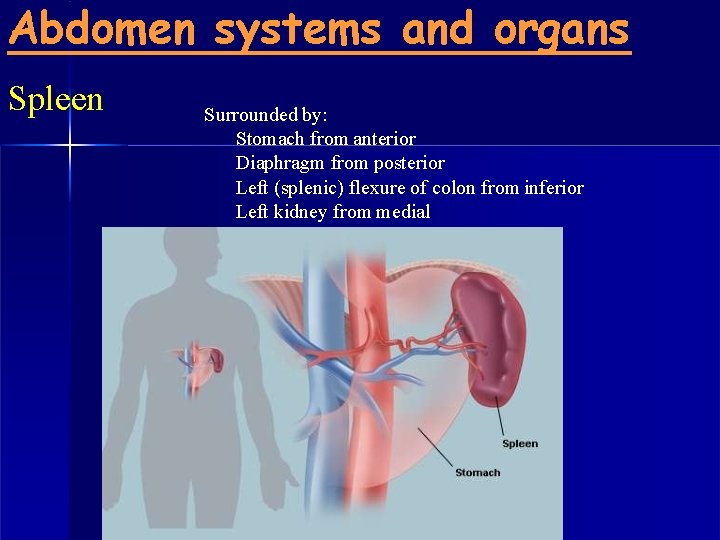
Abdomen systems and organs Spleen Surrounded by: Stomach from anterior Diaphragm from posterior Left (splenic) flexure of colon from inferior Left kidney from medial
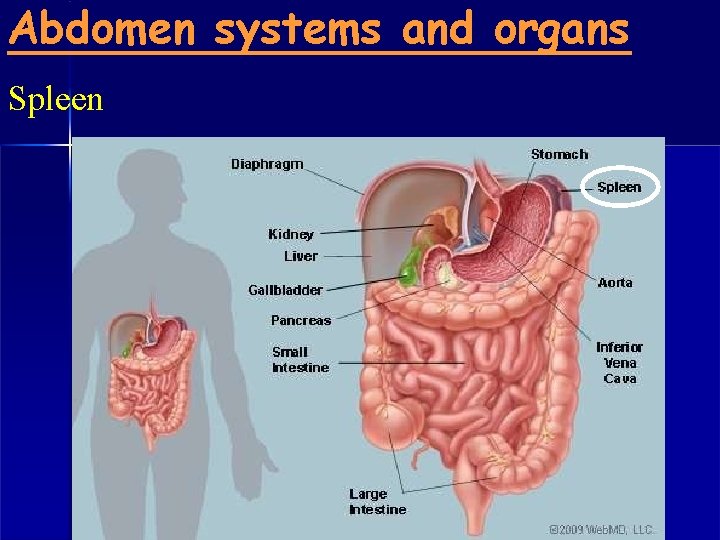
Abdomen systems and organs Spleen
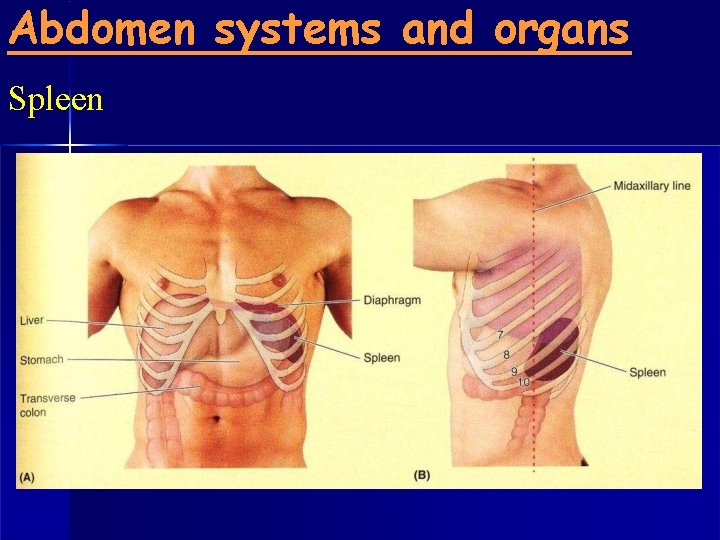
Abdomen systems and organs Spleen
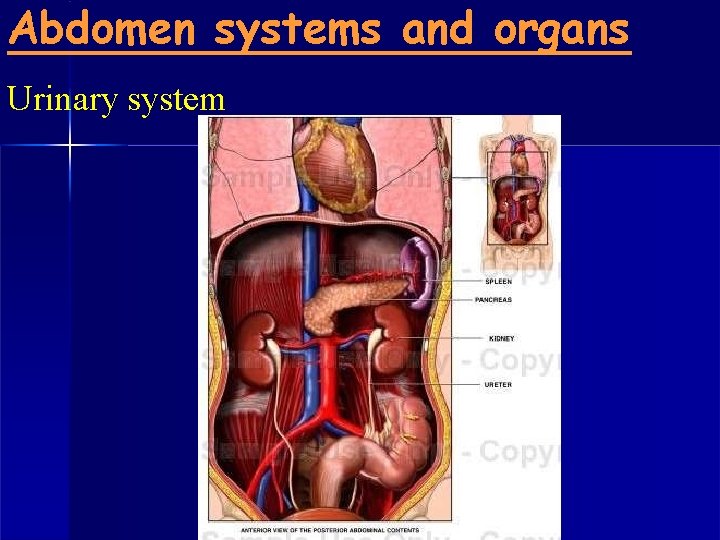
Abdomen systems and organs Urinary system
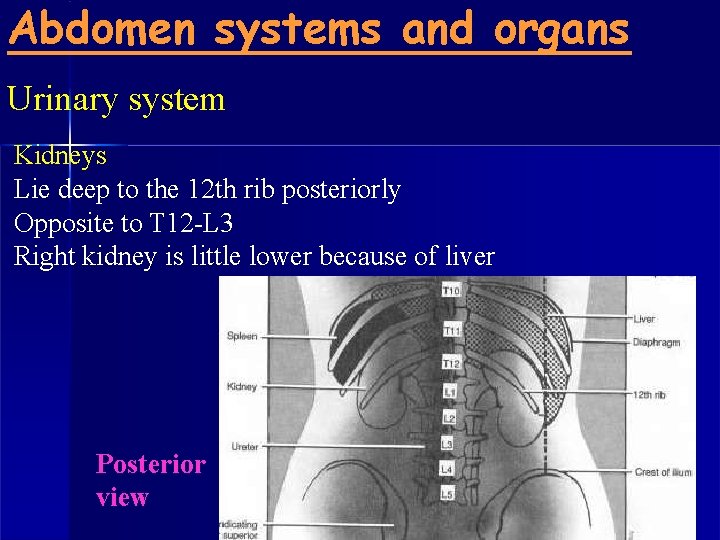
Abdomen systems and organs Urinary system Kidneys Lie deep to the 12 th rib posteriorly Opposite to T 12 -L 3 Right kidney is little lower because of liver Posterior view
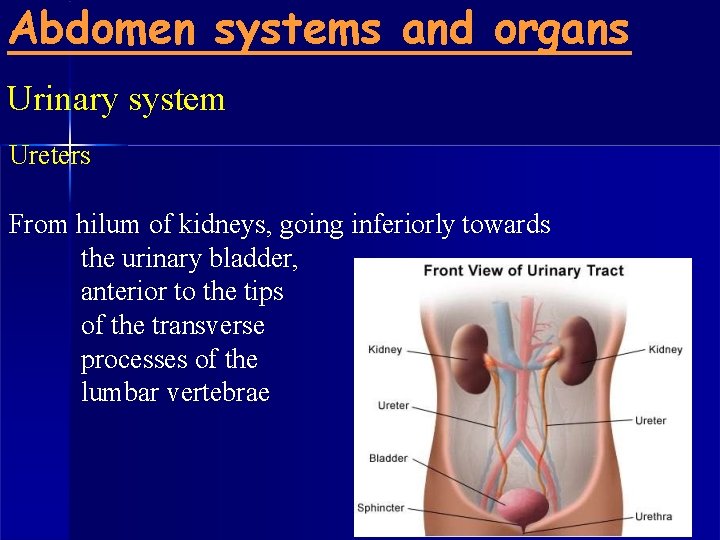
Abdomen systems and organs Urinary system Ureters From hilum of kidneys, going inferiorly towards the urinary bladder, anterior to the tips of the transverse processes of the lumbar vertebrae
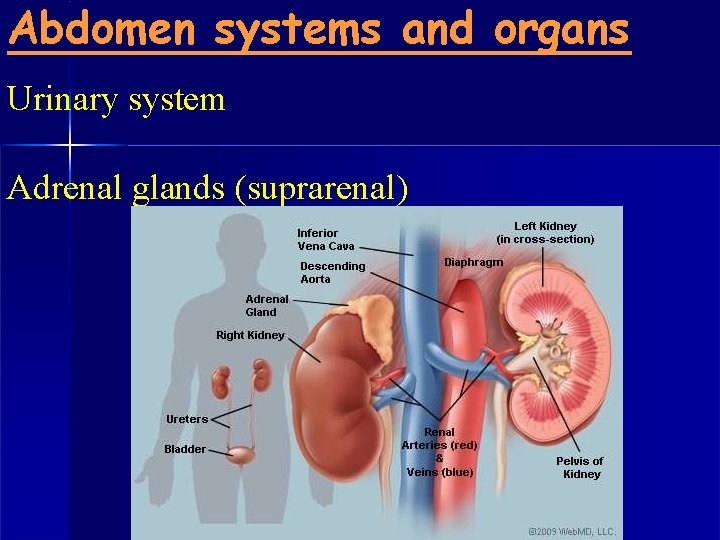
Abdomen systems and organs Urinary system Adrenal glands (suprarenal)
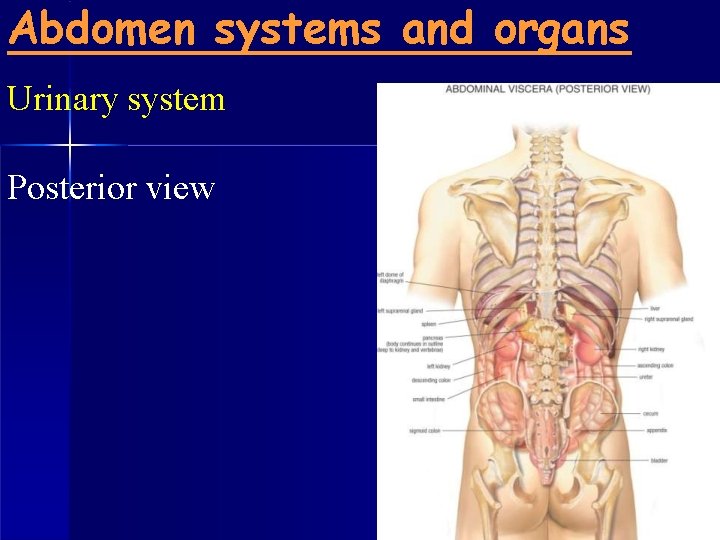
Abdomen systems and organs Urinary system Posterior view
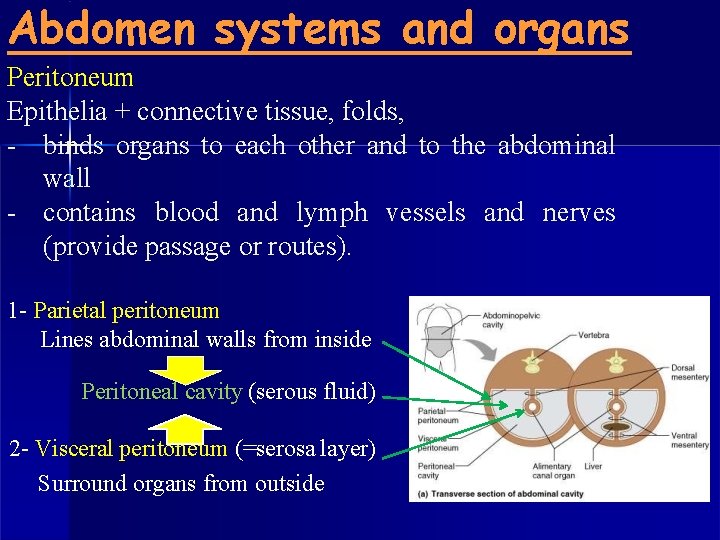
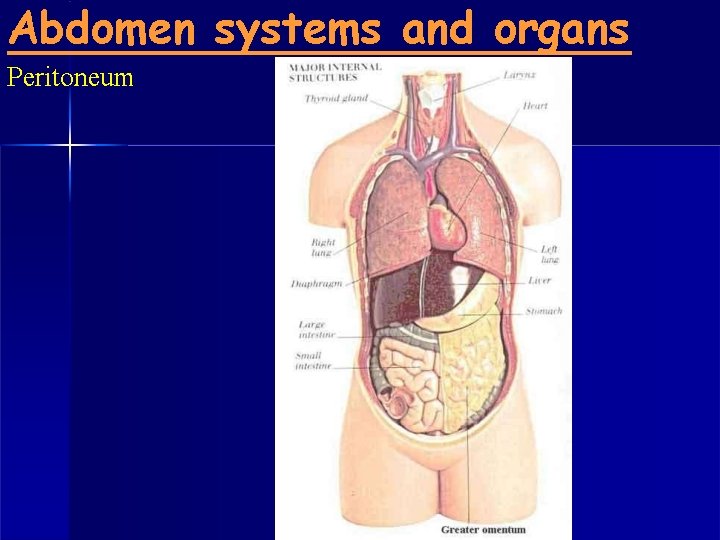
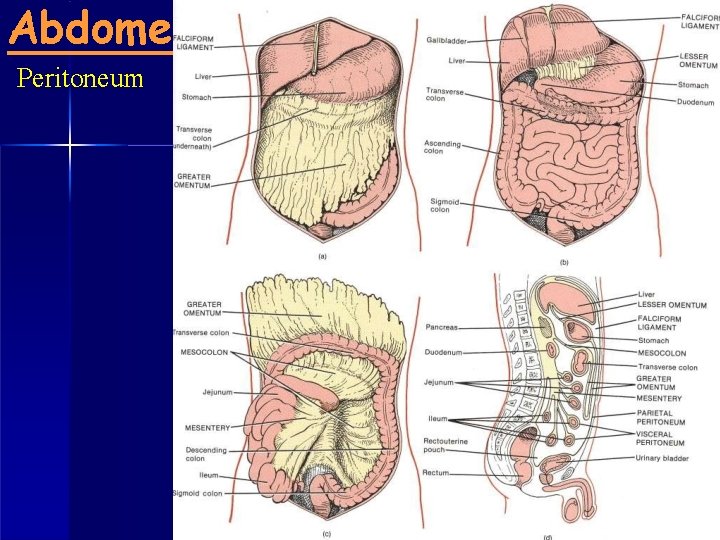
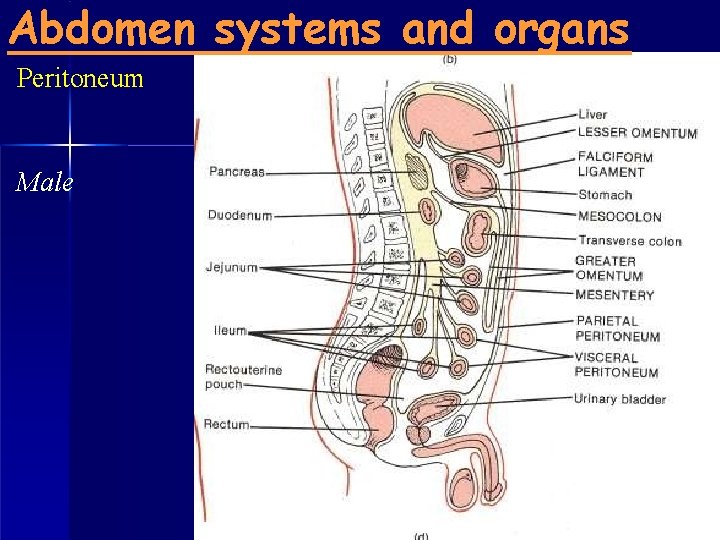
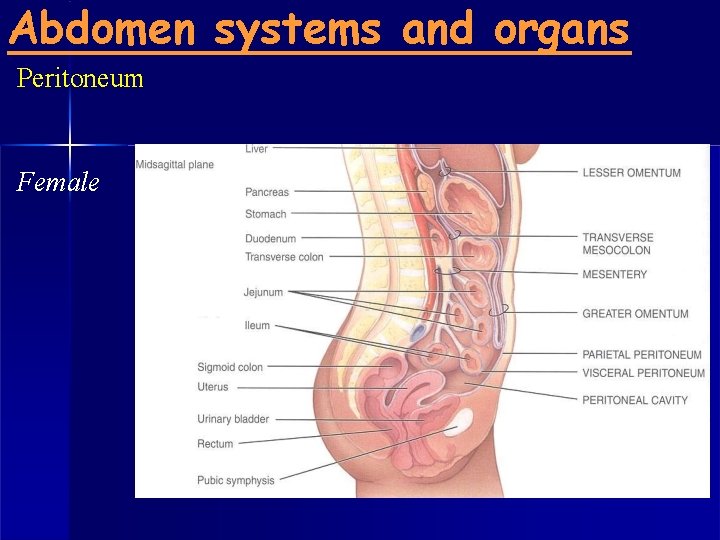
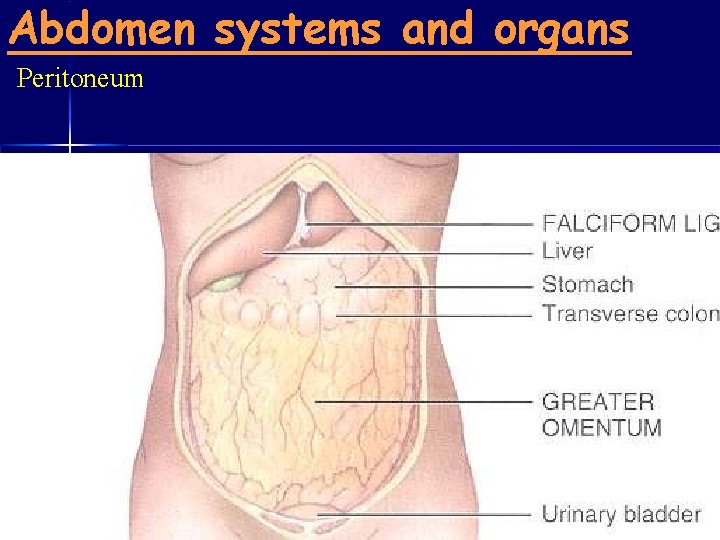
Abdomen systems and organs Peritoneum Epithelia + connective tissue, folds, - binds organs to each other and to the abdominal wall - contains blood and lymph vessels and nerves (provide passage or routes). 1 - Parietal peritoneum Lines abdominal walls from inside Peritoneal cavity (serous fluid) 2 - Visceral peritoneum (=serosa layer) Surround organs from outside
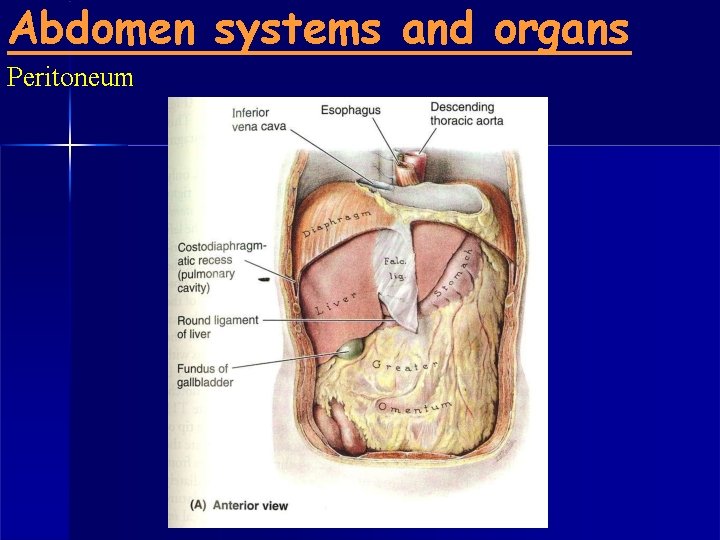
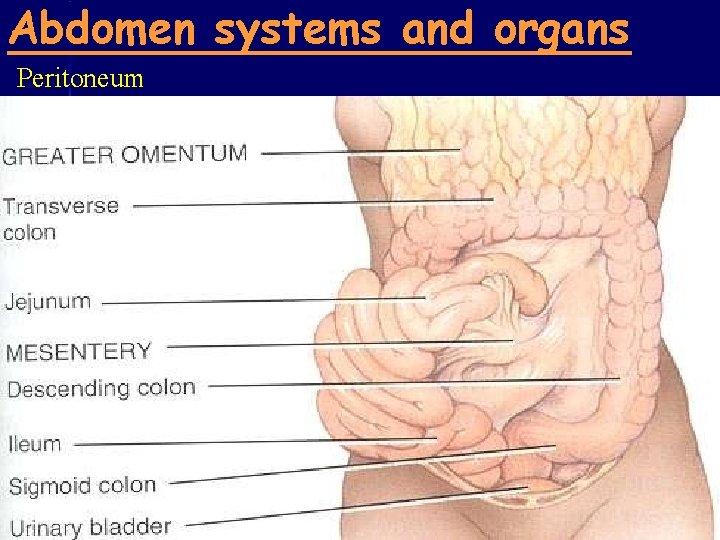
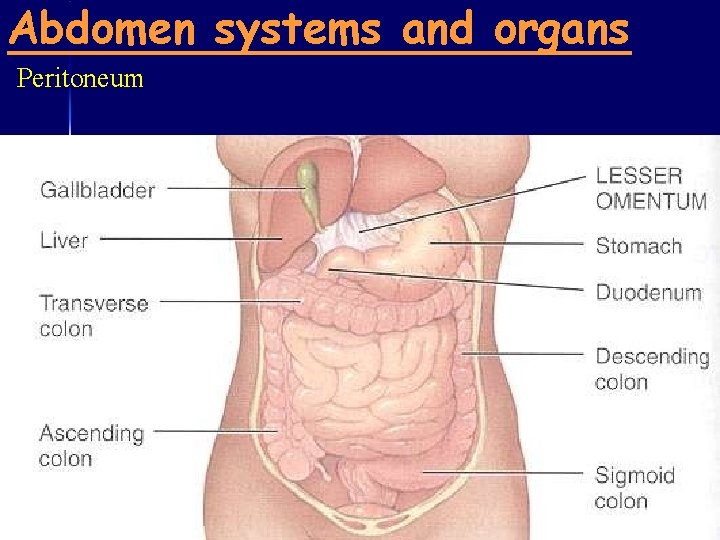
Abdomen systems and organs Peritoneum Extensions: Greater omentum: Folded membrane hanging from stomach (greater curvature) and proximal duodenum to cover the intestines, folding back to transverse colon. Lesser omentum: suspending stomach (lesser curvature) and proximal duodenum from liver - Mesentry: attaching the small intestine to the posterior wall - Mesocolon: attaching the colon to the posterior wall - Mesoappendix: appendix to cecum and ileum - Ligaments: folds connecting organs together: e. g. Falciform ligament: attaching the liver to the anterior wall and the diaphragm e. g. Gastrosplenic ligament e. g. Gastrocolic ligament e. g. splenorenal ligament
Abdomen systems and organs Peritoneum
Abdomen systems and organs Peritoneum
Abdomen systems and organs Peritoneum
Abdomen systems and organs Peritoneum Male
Abdomen systems and organs Peritoneum Female
Abdomen systems and organs Peritoneum
Abdomen systems and organs Peritoneum
Abdomen systems and organs Peritoneum
Abdomen systems and organs Peritoneum
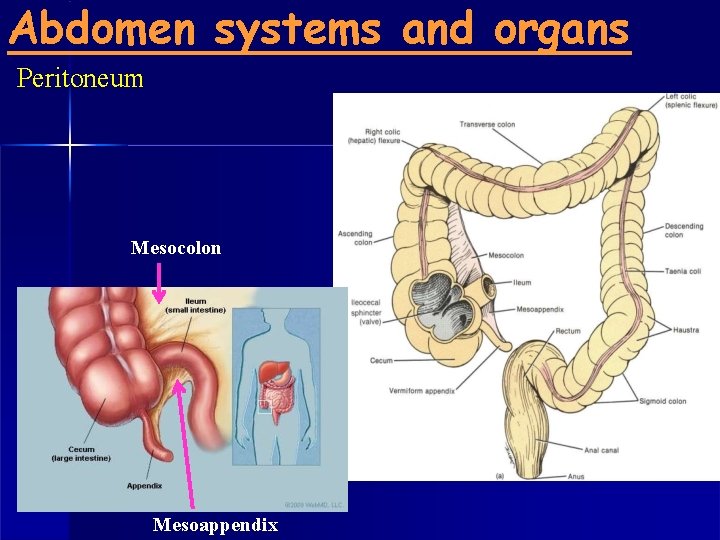
Abdomen systems and organs Peritoneum Mesocolon Mesoappendix
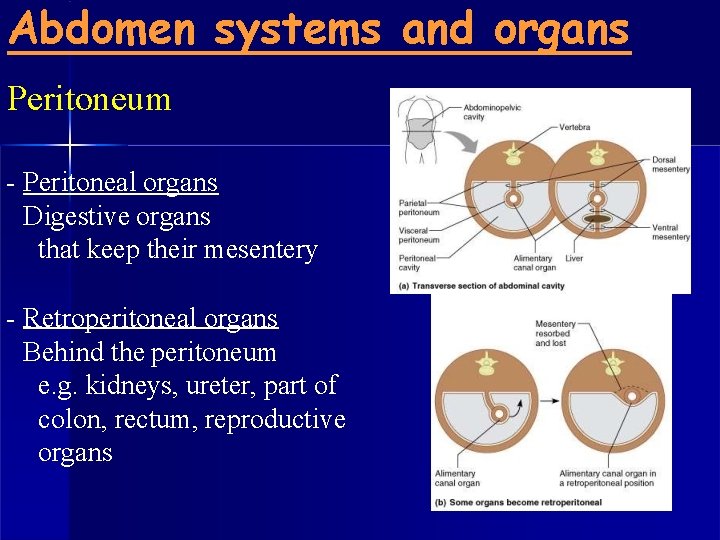
Abdomen systems and organs Peritoneum - Peritoneal organs Digestive organs that keep their mesentery - Retroperitoneal organs Behind the peritoneum e. g. kidneys, ureter, part of colon, rectum, reproductive organs
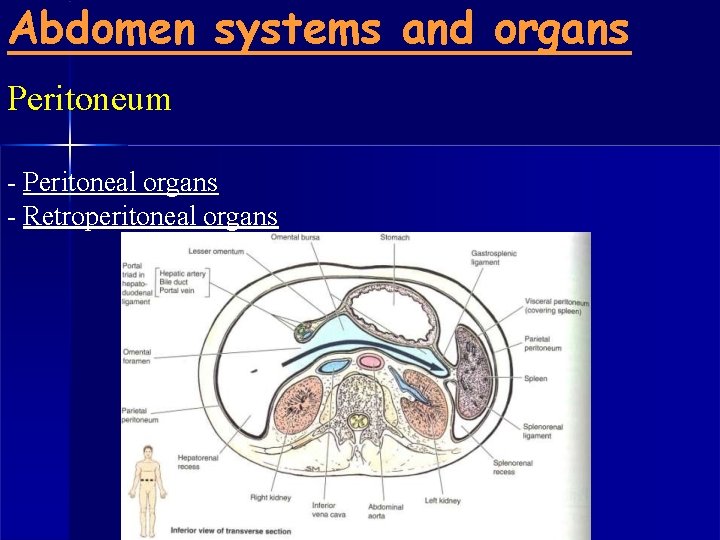
Abdomen systems and organs Peritoneum - Peritoneal organs - Retroperitoneal organs
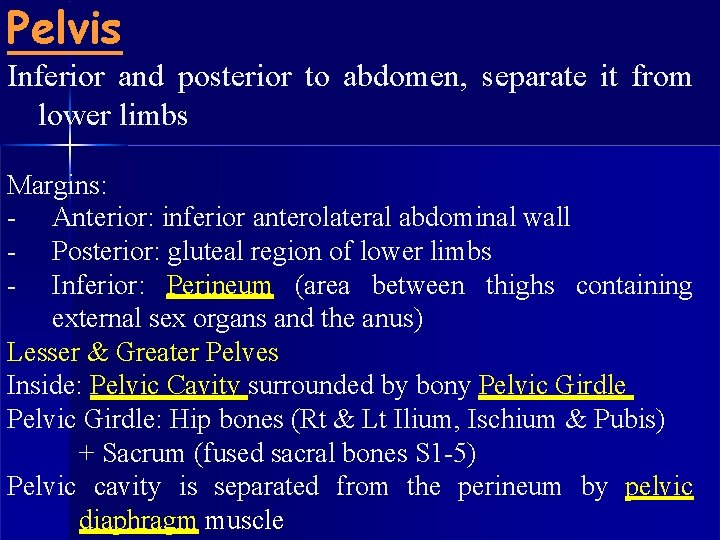
Pelvis Inferior and posterior to abdomen, separate it from lower limbs Margins: - Anterior: inferior anterolateral abdominal wall - Posterior: gluteal region of lower limbs - Inferior: Perineum (area between thighs containing external sex organs and the anus) Lesser & Greater Pelves Inside: Pelvic Cavity surrounded by bony Pelvic Girdle: Hip bones (Rt & Lt Ilium, Ischium & Pubis) + Sacrum (fused sacral bones S 1 -5) Pelvic cavity is separated from the perineum by pelvic diaphragm muscle
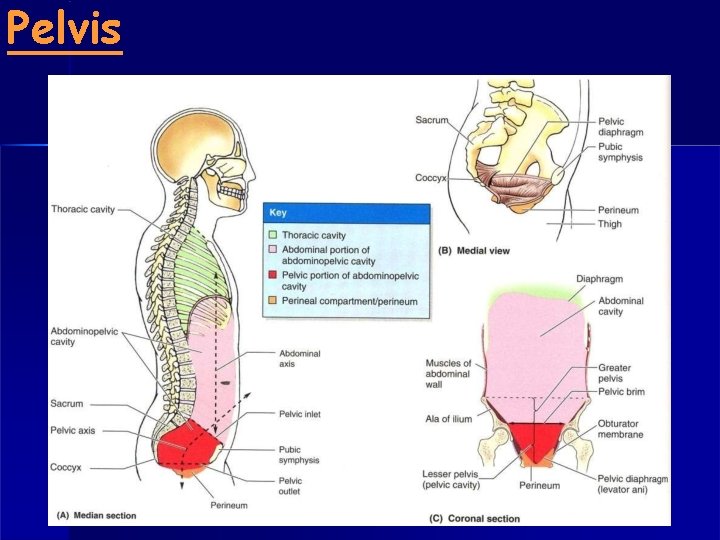
Pelvis

Pelvis
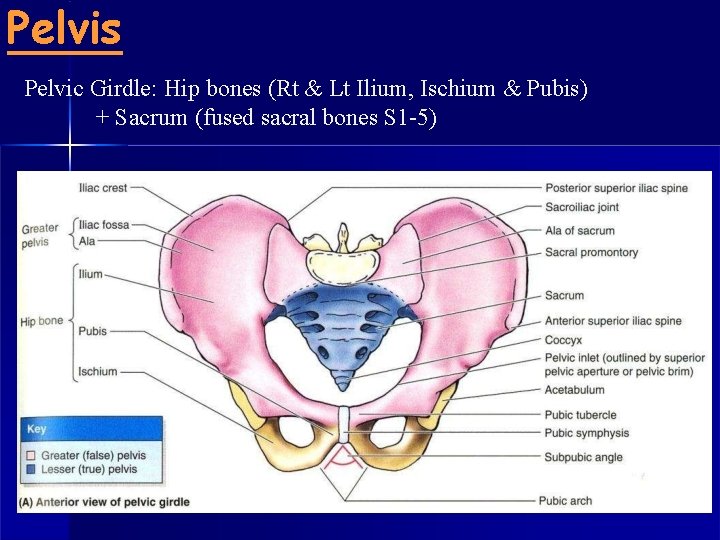
Pelvis Pelvic Girdle: Hip bones (Rt & Lt Ilium, Ischium & Pubis) + Sacrum (fused sacral bones S 1 -5)
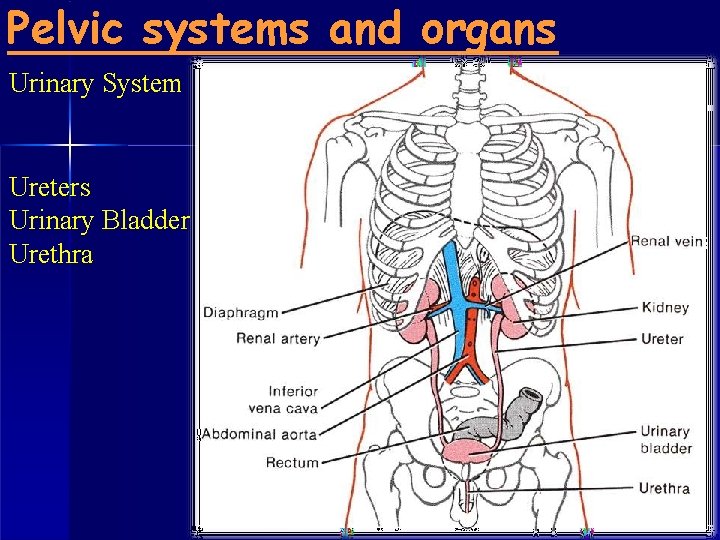
Pelvic systems and organs Urinary System Ureters Urinary Bladder Urethra
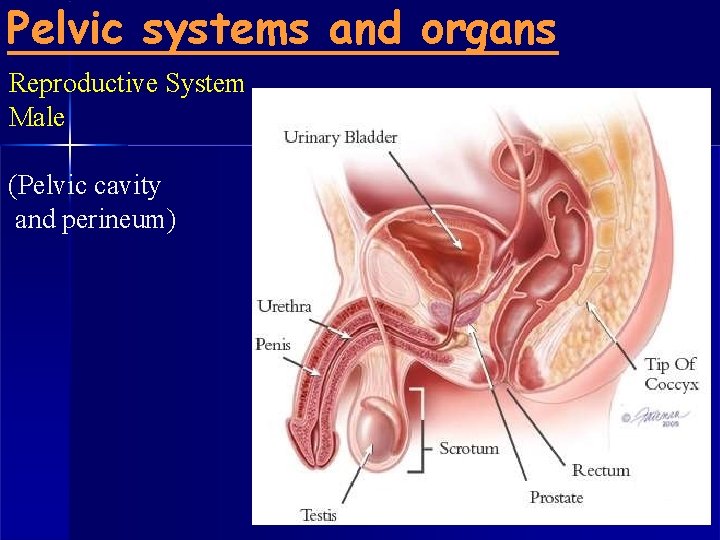
Pelvic systems and organs Reproductive System Male (Pelvic cavity and perineum)
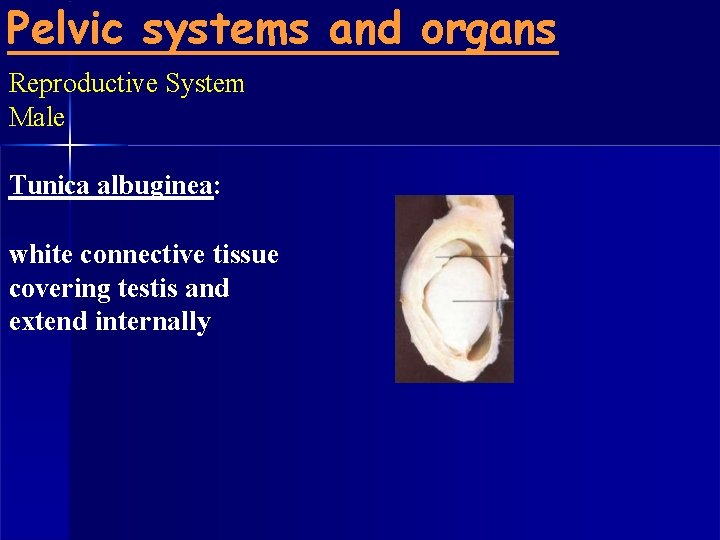
Pelvic systems and organs Reproductive System Male Tunica albuginea: white connective tissue covering testis and extend internally
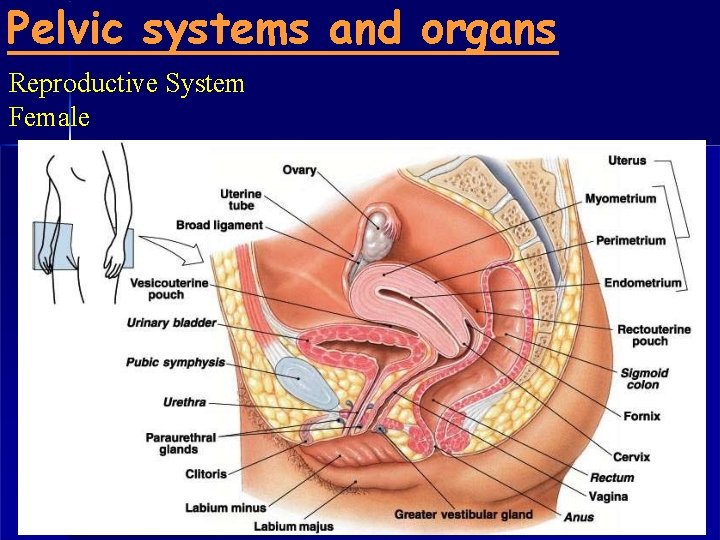
Pelvic systems and organs Reproductive System Female
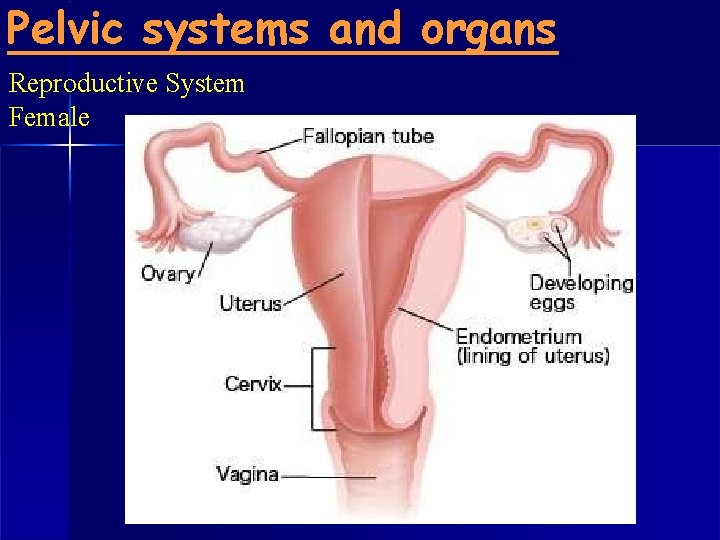
Pelvic systems and organs Reproductive System Female
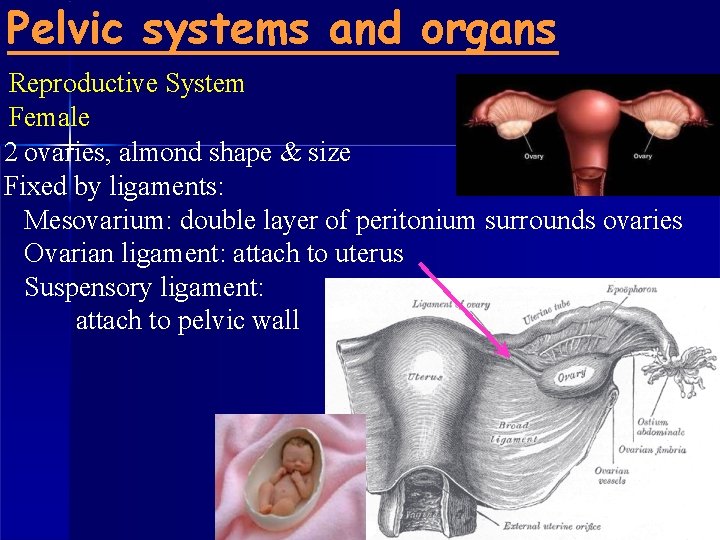
Pelvic systems and organs Reproductive System Female 2 ovaries, almond shape & size Fixed by ligaments: Mesovarium: double layer of peritonium surrounds ovaries Ovarian ligament: attach to uterus Suspensory ligament: attach to pelvic wall
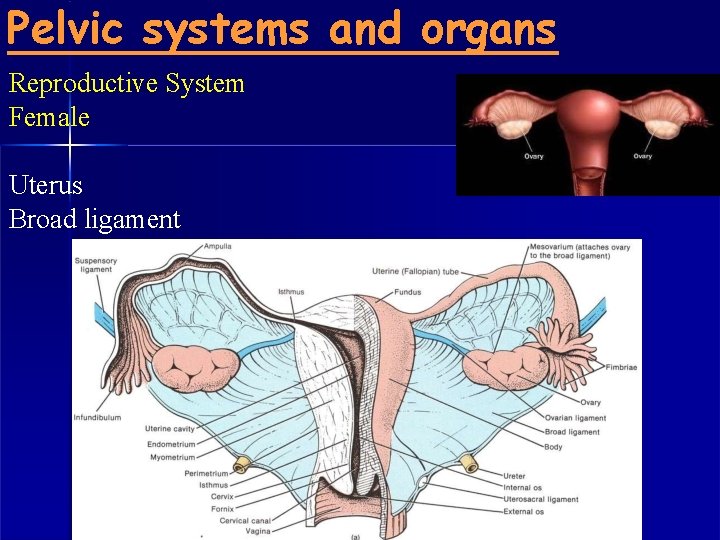
Pelvic systems and organs Reproductive System Female Uterus Broad ligament
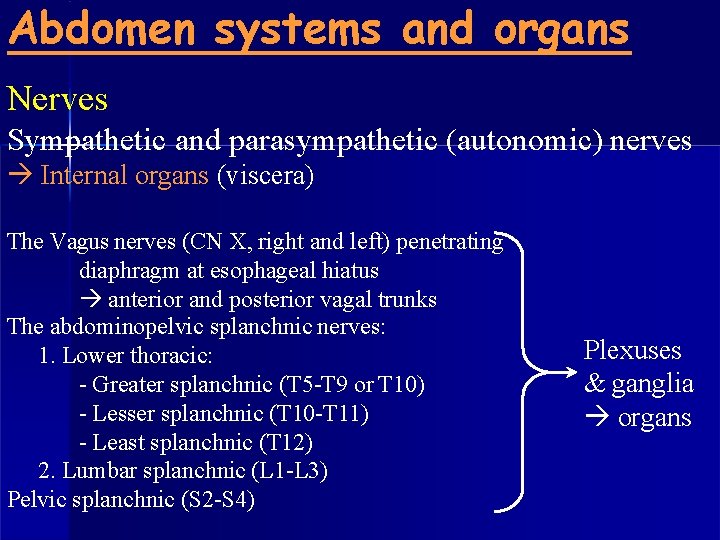
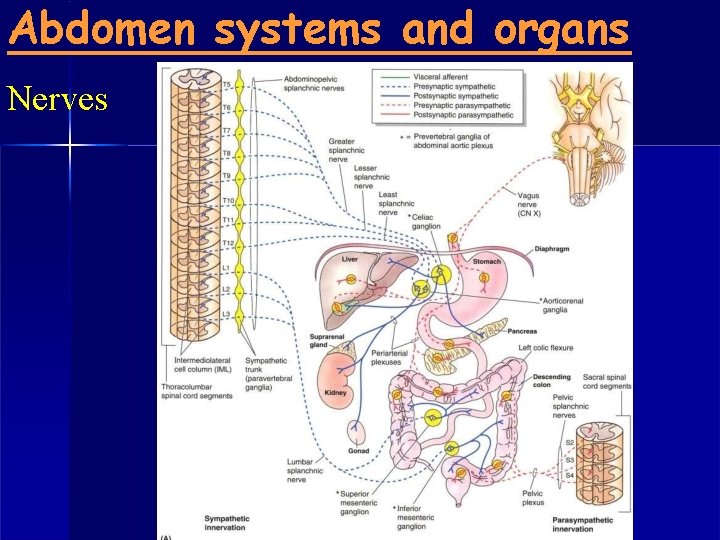
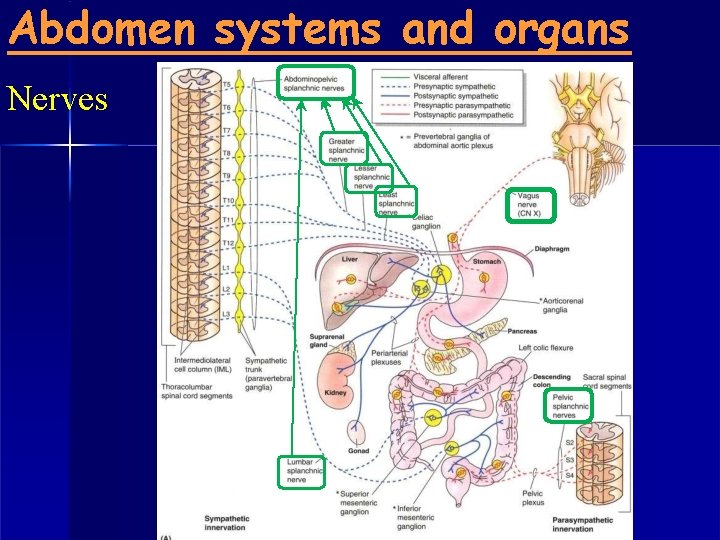
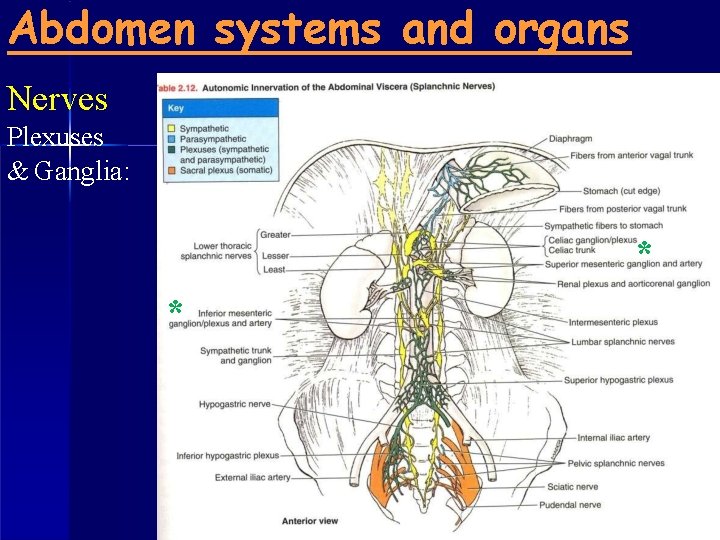
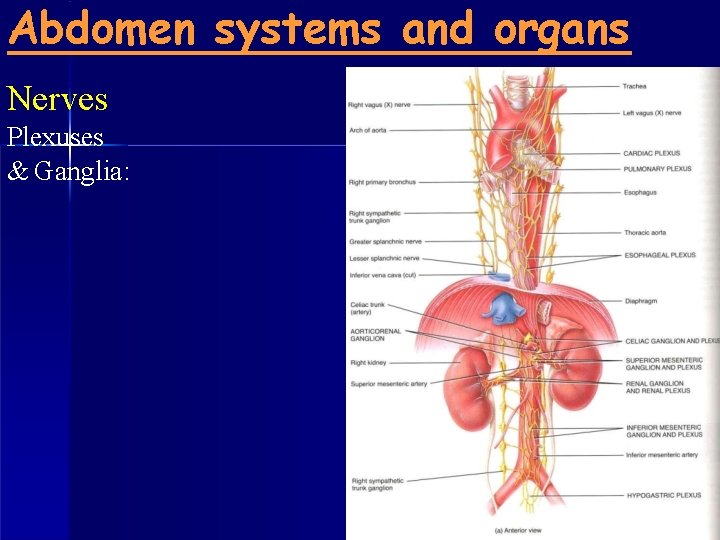
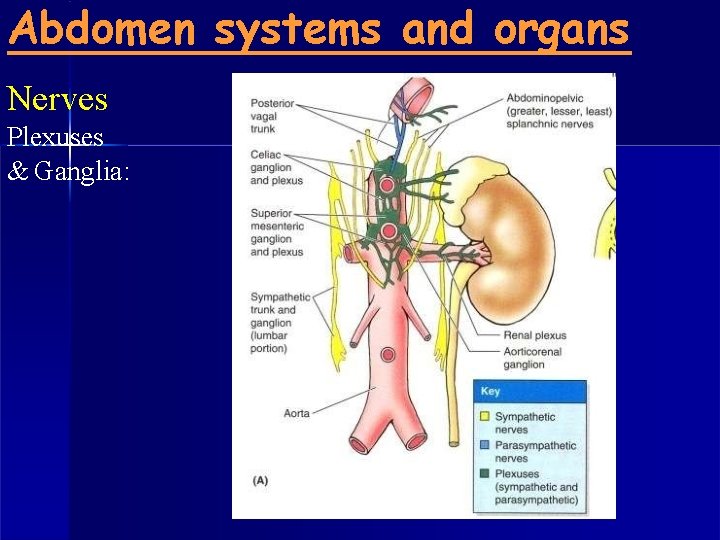
Abdomen systems and organs Nerves Sympathetic and parasympathetic (autonomic) nerves Internal organs (viscera) The Vagus nerves (CN X, right and left) penetrating diaphragm at esophageal hiatus anterior and posterior vagal trunks The abdominopelvic splanchnic nerves: 1. Lower thoracic: - Greater splanchnic (T 5 -T 9 or T 10) - Lesser splanchnic (T 10 -T 11) - Least splanchnic (T 12) 2. Lumbar splanchnic (L 1 -L 3) Pelvic splanchnic (S 2 -S 4) Plexuses & ganglia organs
Abdomen systems and organs Nerves
Abdomen systems and organs Nerves
Abdomen systems and organs Nerves Sympathetic and parasympathetic (autonomic) nerves Internal organs (viscera) The Vagus nerves (CN X, right and left) penetrating diaphragm at esophageal hiatus anterior and posterior vagal trunks The abdominopelvic splanchnic nerves: 1. Lower thoracic: - Greater splanchnic (T 5 -T 9 or T 10) - Lesser splanchnic (T 10 -T 11) - Least splanchnic (T 12) 2. Lumbar splanchnic (L 1 -L 3) Pelvic splanchnic (S 2 -S 4) Plexuses & ganglia organs
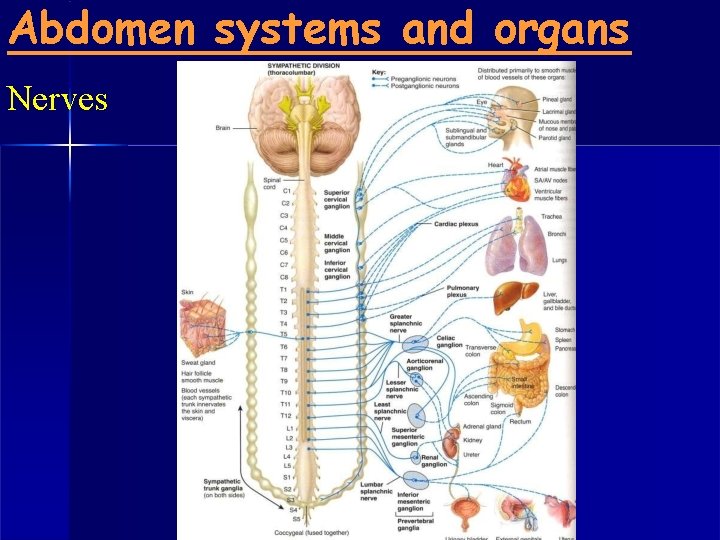
Abdomen systems and organs Nerves
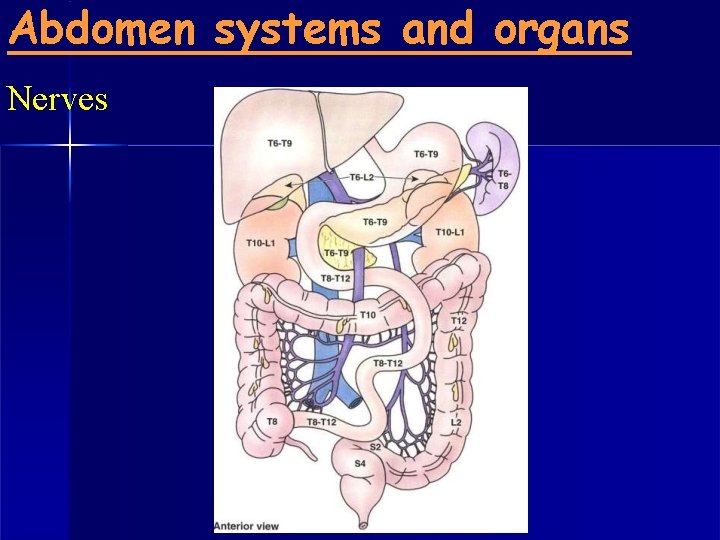
Abdomen systems and organs Nerves
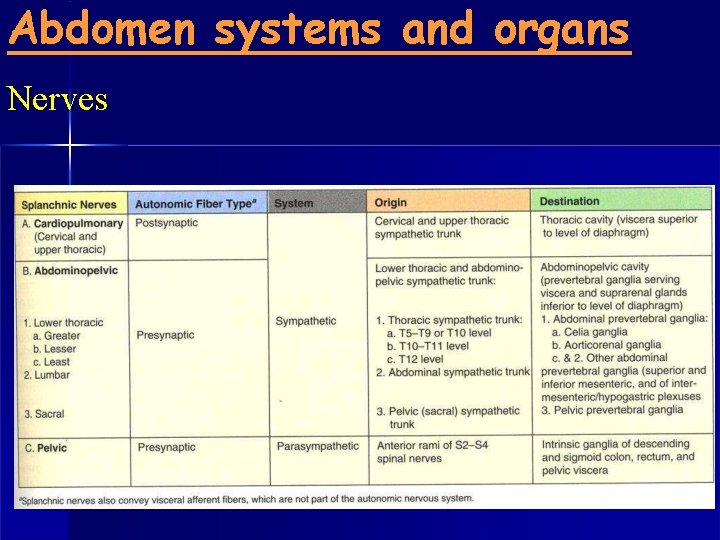
Abdomen systems and organs Nerves
Abdomen systems and organs Nerves Plexuses: Nerve networks surrounding blood vessels or organs e. g. Abdominal (para-aortic) autonomic plexuses surrounding abdominal aorta and its branches: celiac, superior mesenteric and inferior mesenteric plexuses Ganglia: Mass of nerve cells or fibers. They interact and form plexuses. e. g. celiac ganglion, superior and inferior mesenteric ganglia
Abdomen systems and organs Nerves Plexuses & Ganglia: * *
Abdomen systems and organs Nerves Plexuses & Ganglia:
Abdomen systems and organs Nerves Plexuses & Ganglia:
- Slides: 62