
ORGANIZING POWERPOINTS C MELANIE SAEZ What type of
- Slides: 33
ORGANIZING POWERPOINTS C. MELANIE SAEZ
What type of presentation are you doing? Click Below. GENERAL TABLE OF CONTENTS § Article Types § General Tips 2
What type of presentation are you doing? Click Below. § Article Reviews § Research Presentations Presentation Types § Project Updates § Research Proposals § Interactive Training § Marketing Pitch Wrong section? Click “ Table of Contents. “ to go back to the table of contents! Table of Contents 3
ARTICLE REVIEWS If you are going to review an article, this is the right section for you! Wrong section? Click “ Table of Contents. “ to go back to the table of contents! Table of Contents
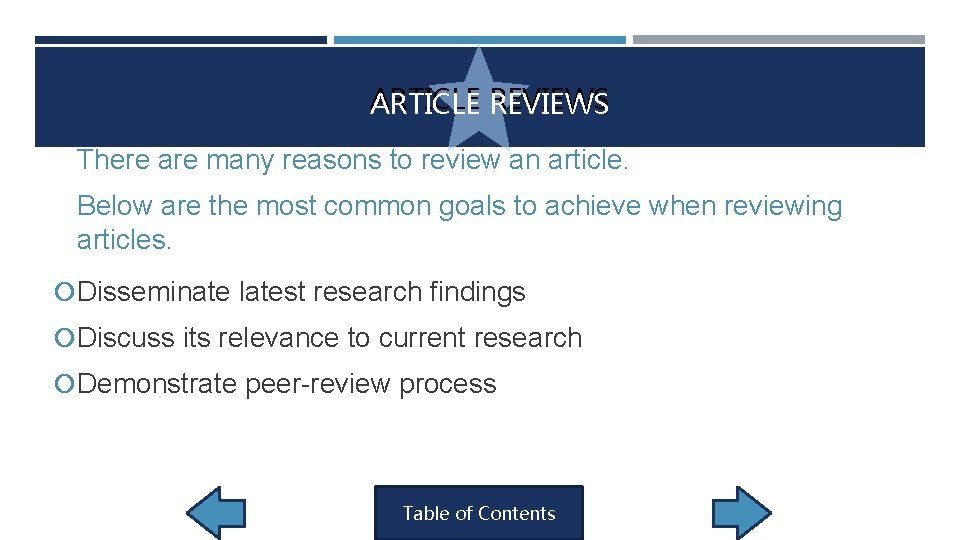
ARTICLE REVIEWS There are many reasons to review an article. Below are the most common goals to achieve when reviewing articles. Disseminate latest research findings Discuss its relevance to current research Demonstrate peer-review process Table of Contents
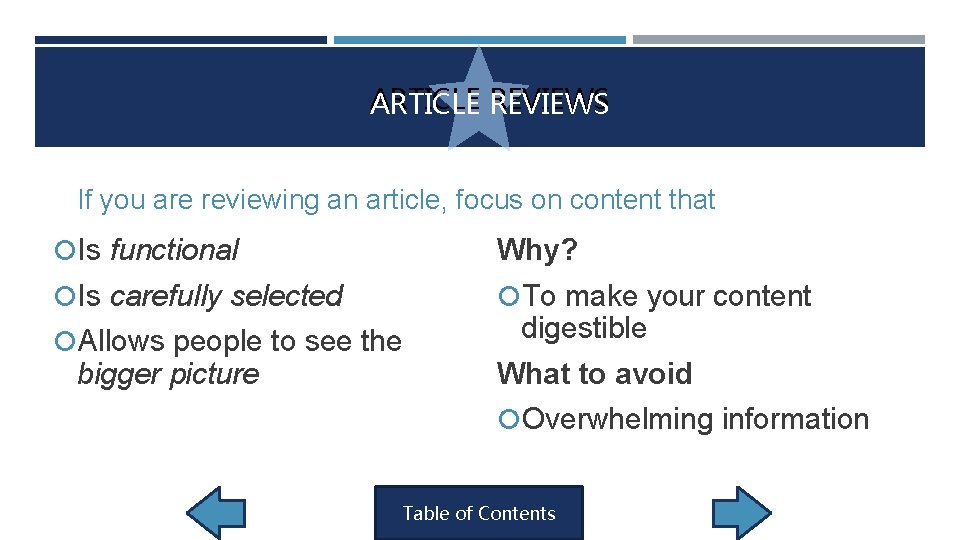
ARTICLE REVIEWS If you are reviewing an article, focus on content that Is functional Why? Is carefully selected To make your content Allows people to see the bigger picture digestible What to avoid Overwhelming information Table of Contents
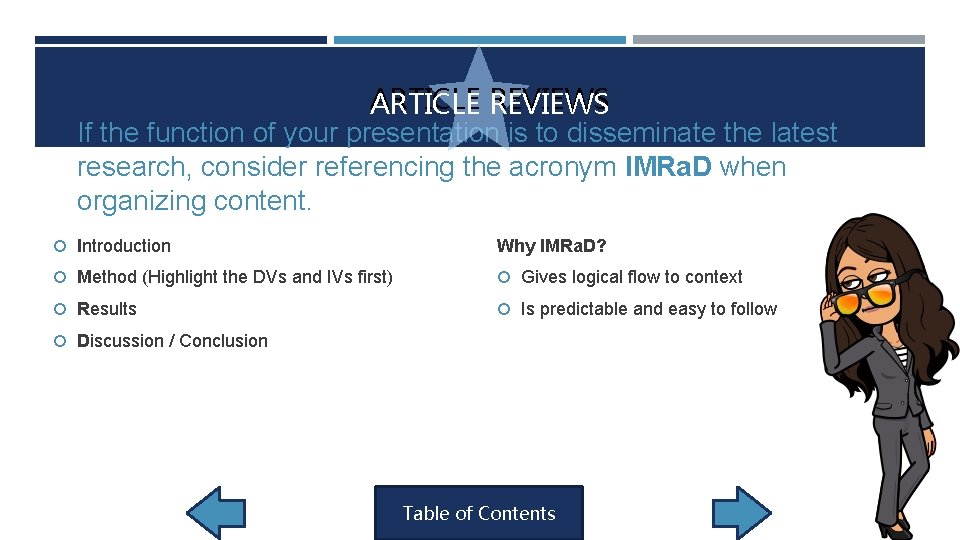
ARTICLE REVIEWS If the function of your presentation is to disseminate the latest research, consider referencing the acronym IMRa. D when organizing content. Introduction Why IMRa. D? Method (Highlight the DVs and IVs first) Gives logical flow to context Results Is predictable and easy to follow Discussion / Conclusion Table of Contents
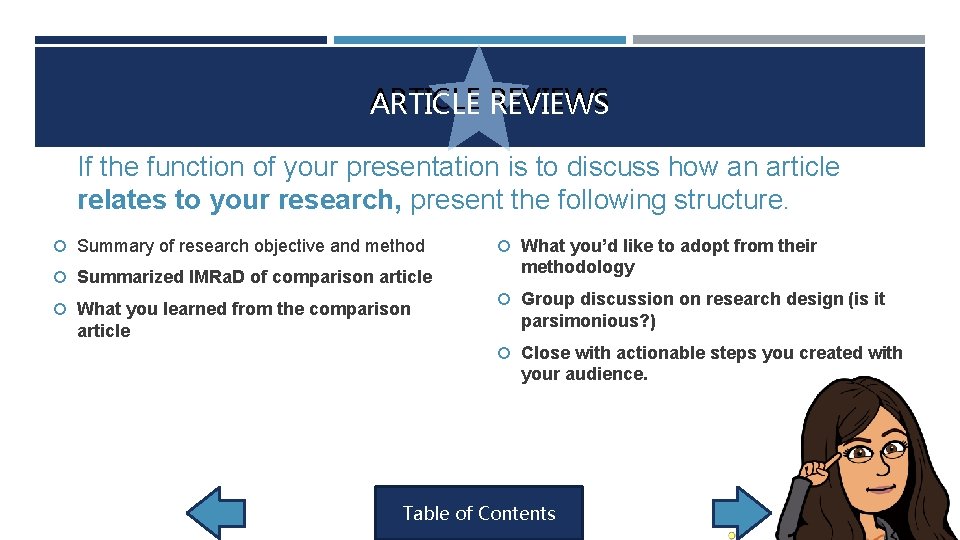
ARTICLE REVIEWS If the function of your presentation is to discuss how an article relates to your research, present the following structure. Summary of research objective and method Summarized IMRa. D of comparison article What you learned from the comparison article What you’d like to adopt from their methodology Group discussion on research design (is it parsimonious? ) Close with actionable steps you created with your audience. Table of Contents
ARTICLE REVIEWS If the function of your presentation is to demonstrate your peerreview process, consider the following structure Title of Journal Title of Article Summary of Article and your recommendation to the editor (accept with or without revision, reject, etc. ) Fundamental errors that you’ve identified (is not original, valid, replicable, and a significant contribution) General APA recommendations (e. g. , active vs passive voice) Table of Contents
RESEARCH PRESENTATION If you are presenting your finalized research project, this section is for you! Wrong section? Click “ Table of Contents. “ to go back to the table of contents! Table of Contents
RESEARCH PRESENTATION If you are presenting your research, focus on content that Is replicable Why? Is relevant to your audience To disseminate your research Allows people to understand the significance of What to avoid your contribution Tangential, drawn-out explanations of your introduction Table of Contents
PROJECT UPDATES If you are summarizing your progress on a project, this section is for you! Wrong section? Click “ Table of Contents. “ to go back to the table of contents! Table of Contents
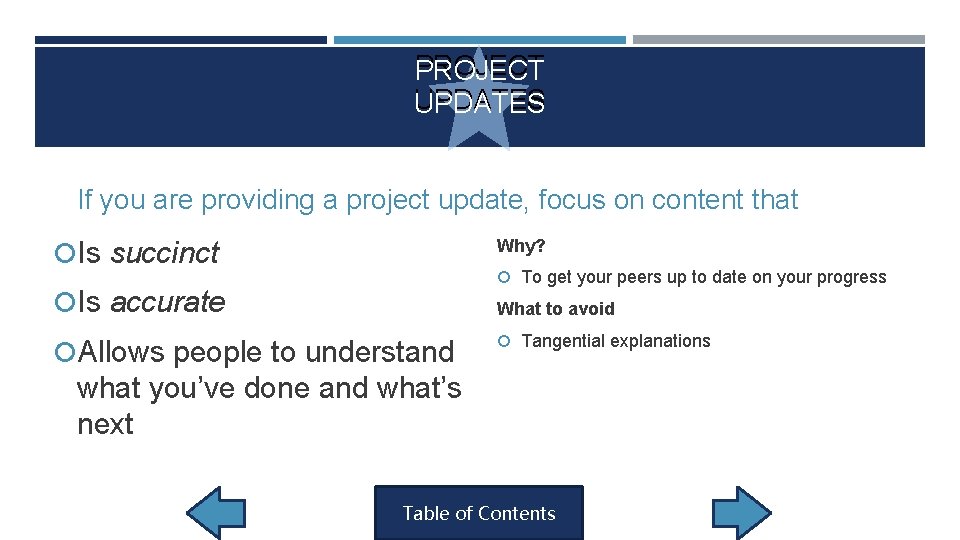
PROJECT UPDATES If you are providing a project update, focus on content that Is succinct Why? Is accurate What to avoid To get your peers up to date on your progress Allows people to understand Tangential explanations what you’ve done and what’s next Table of Contents
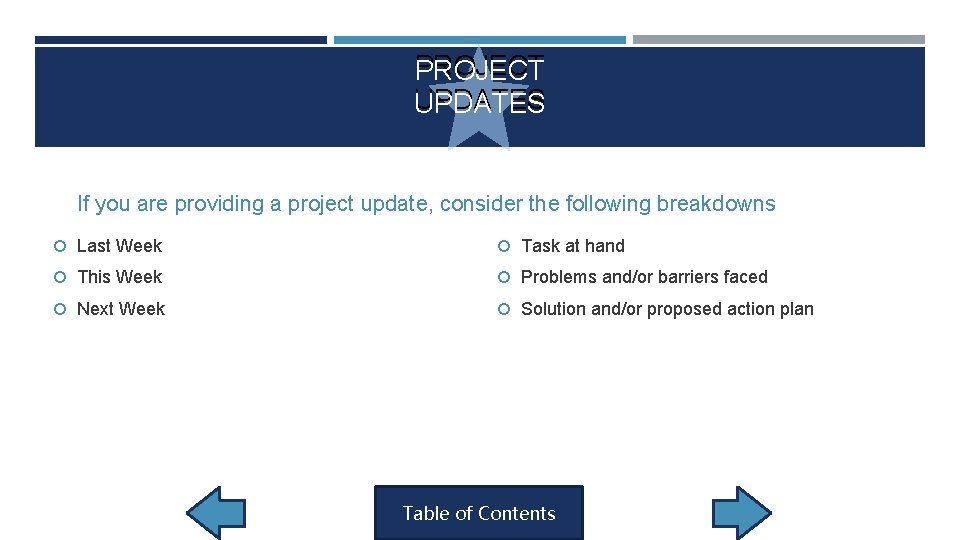
PROJECT UPDATES If you are providing a project update, consider the following breakdowns Last Week Task at hand This Week Problems and/or barriers faced Next Week Solution and/or proposed action plan Table of Contents
RESEARCH PROPOSALS If you are going to present a research proposal, continue to this section! Wrong section? Click “ Table of Contents. “ to go back to the table of contents! Table of Contents
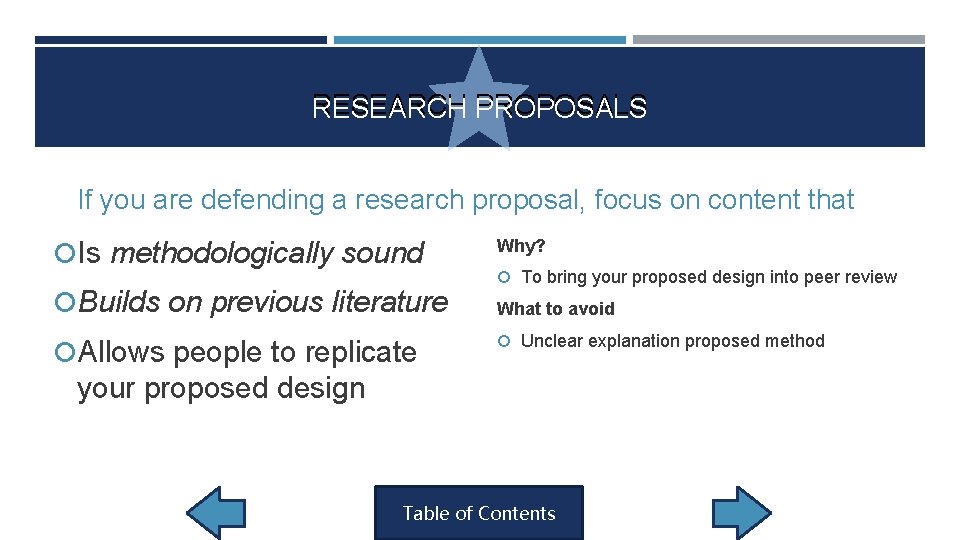
RESEARCH PROPOSALS If you are defending a research proposal, focus on content that Is methodologically sound Why? Builds on previous literature What to avoid Allows people to replicate To bring your proposed design into peer review Unclear explanation proposed method your proposed design Table of Contents
RESEARCH PROPOSALS If you are defending a research proposal, consider the following breakdown Problem at Hand Previous Literature Research Question Proposed Method Expected Results with Data Visualization Table of Contents
INTERACTIVE TRAINING If you are going to conduct an interactive training, continue to this section! Wrong section? Click “ Table of Contents. “ to go back to the table of contents! Table of Contents
INTERACTIVE TRAINING If you are conducting an interactive training, focus on content that Is interactive Why? Is easy to follow To teach a skill Allows people to follow along with ease What to avoid Losing touch with your trainees Table of Contents
INTERACTIVE TRAINING If you are conducting an interactive training, consider the following structure Brief Introduction to Task and its Relevance to Lab Via links, answering questions, resources section Break Task Down Into Steps Assess for understanding Make Important Information Obvious Pop quizzes, check-ins (e. g. , Kahoot) Highlight, bold, or underline important details that may be overlooked Provide a video or picture model Offer Further Clarification Have lab members share their product/new skill Follow up with a social validity survey Table of Contents
MARKETING PITCH If you are going to propose a change in what we do or use in lab, continue to this section! Wrong section? Click “ Table of Contents. “ to go back to the table of contents! Table of Contents
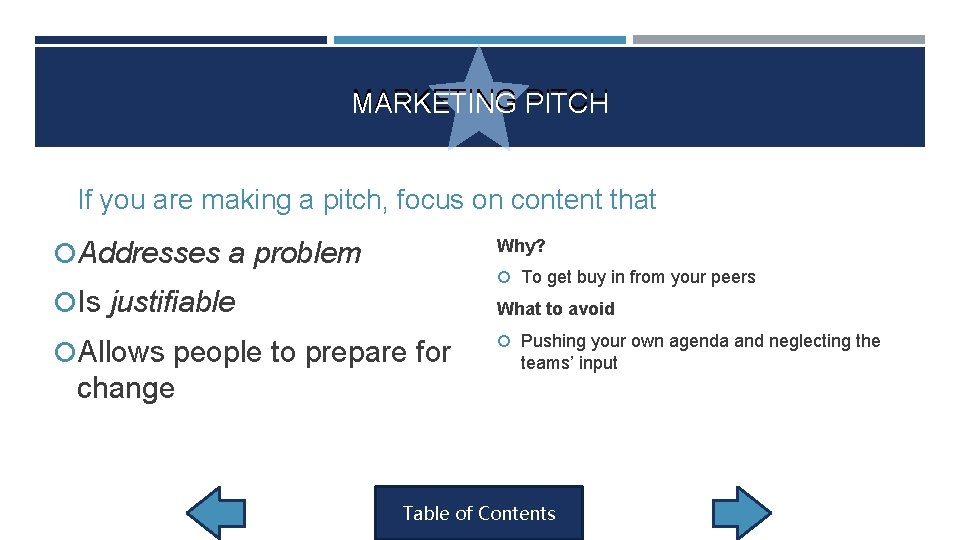
MARKETING PITCH If you are making a pitch, focus on content that Addresses a problem Why? Is justifiable What to avoid To get buy in from your peers Allows people to prepare for change Pushing your own agenda and neglecting the teams’ input Table of Contents
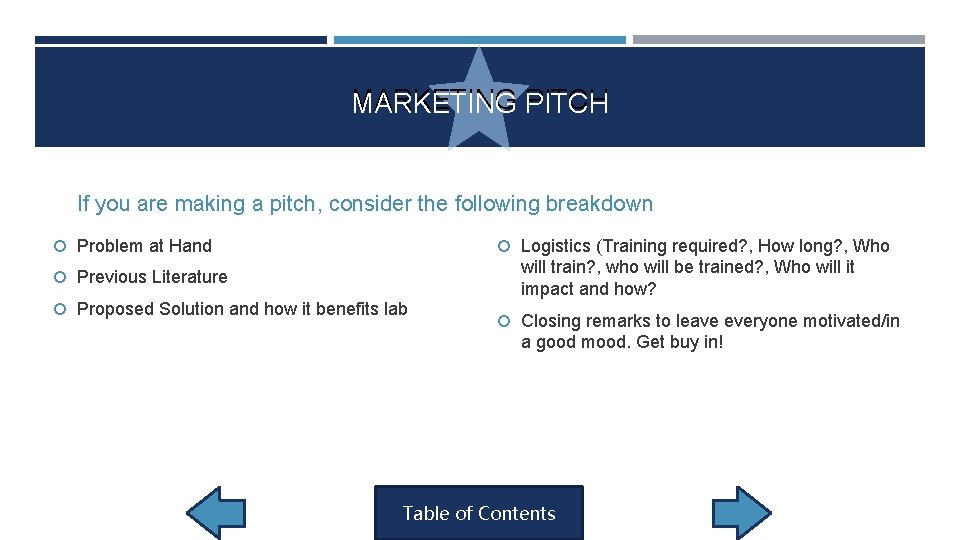
MARKETING PITCH If you are making a pitch, consider the following breakdown Problem at Hand Logistics (Training required? , How long? , Who will train? , who will be trained? , Who will it impact and how? Previous Literature Proposed Solution and how it benefits lab Closing remarks to leave everyone motivated/in a good mood. Get buy in! Table of Contents
GENERAL TIPS Table of Contents
What topic do you want to visit? Click Below. § Personalize Slides § Introduction § Purpose GENERAL TIPS § Method § Results § Time Tips § Referencing Wrong section? Click “ Table of Contents. “ to go back to the table of contents! 25 Table of Contents
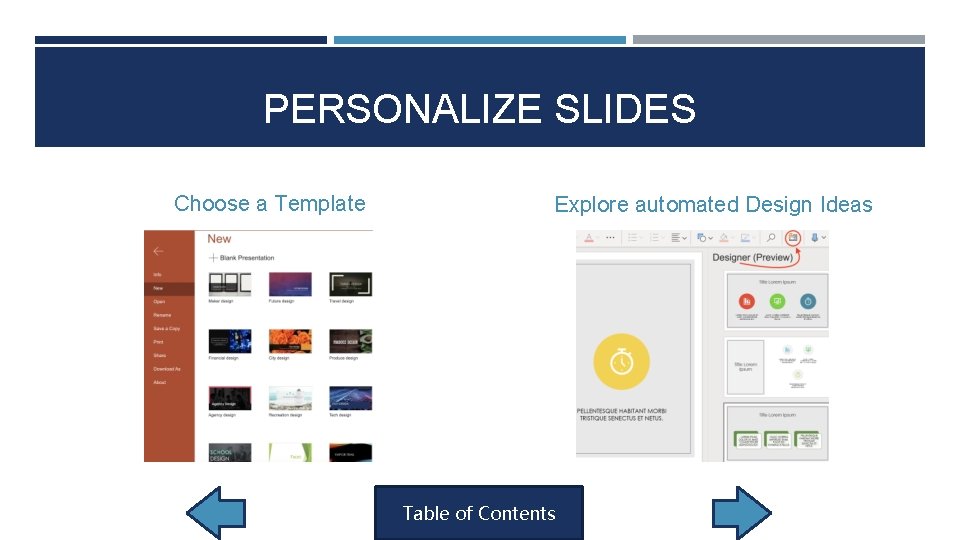
PERSONALIZE SLIDES Choose a Template Explore automated Design Ideas Table of Contents
INTRODUCTION Outline Your Table of Contents Table of contents
PURPOSE State the purpose of your presentation Specify the type of feedback you want from your audience (if obtaining peer-review) Table of Contents
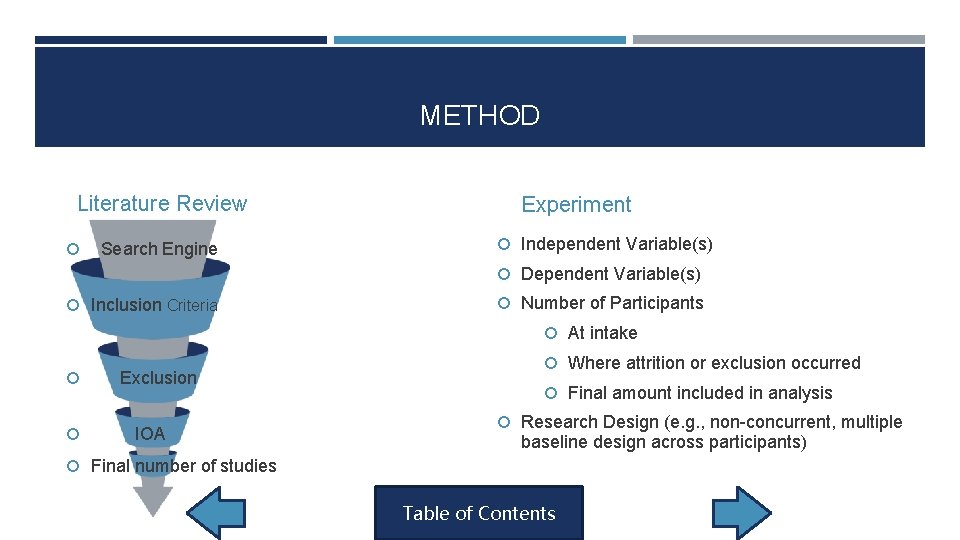
METHOD Literature Review Search Engine Experiment Independent Variable(s) Dependent Variable(s) Inclusion Criteria Number of Participants At intake Exclusion IOA Where attrition or exclusion occurred Final amount included in analysis Research Design (e. g. , non-concurrent, multiple baseline design across participants) Final number of studies Table of Contents
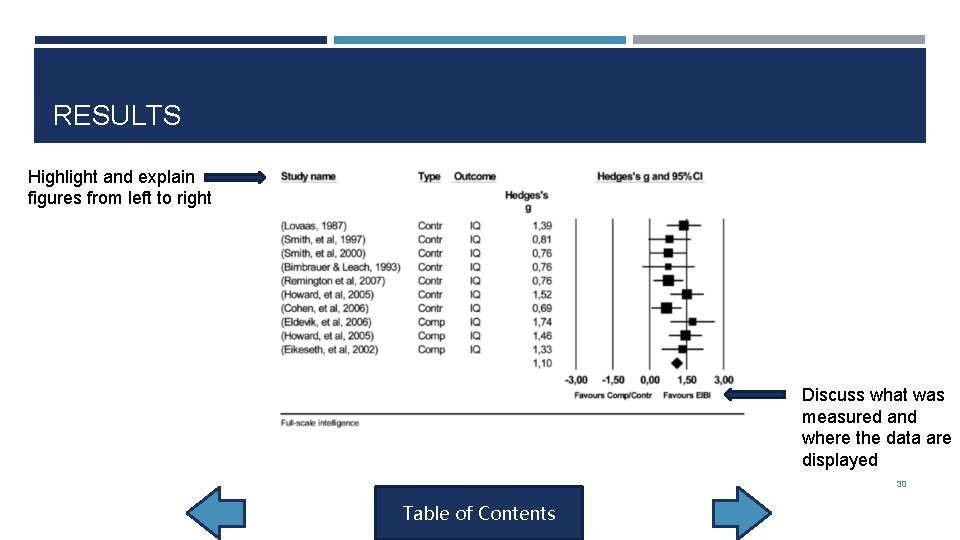
RESULTS Highlight and explain figures from left to right Discuss what was measured and where the data are displayed 30 Table of Contents
TIME TIPS Look up how much time you are allotted to present. Are there guidelines? Prepare for time changes and technical difficulties. Table of Contents
REFERENCING RESOURCES Referencing Resources To find APA style (e. g. , font size) and grammar guidelines visit https: //apastyle. apa. org/style-grammar- guidelines To find referencing information visit https: //owl. purdue. edu/owl/research_and_citation/resources. html To find APA examples on how to cite peer-reviewed articles, book chapters, books, etc. , refer to https: //apastyle. apa. org/instructional-aids/reference-guide. pdf Table of Contents
REFERENCES Springer. (n. d. ) Overview of IMRa. D structure. https: //www. springer. com/gp/authors-editors/journal-author/overview-ofimrad-structure/1408 Table of Contents