
Organizing Lifes Diversity Chapter 18 Classification Grouping objects
Organizing Life’s Diversity Chapter 18
Classification • Grouping objects or organisms based on a set of criteria • Aristotle – plants and animals, “red blooded and bloodless. ” • Further grouping based on physical characteristics • Did not account for evolutionary relationships
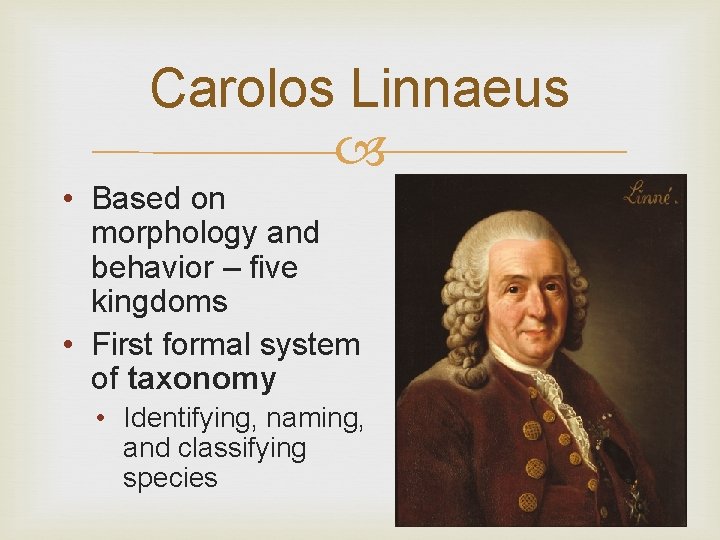
Carolos Linnaeus • Based on morphology and behavior – five kingdoms • First formal system of taxonomy • Identifying, naming, and classifying species
Binomial Nomenclature • Genus + Specific epithet = Species • Drosophilia melanogaster • Homo sapiens • Up to whoever discovers it! • Why do we use scientific names? • Today we use evolutionary relationships to classify organisms
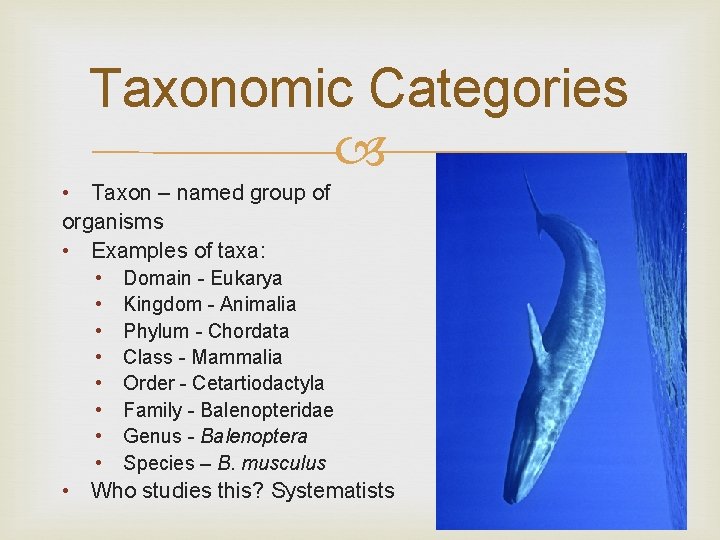
Taxonomic Categories • Taxon – named group of organisms • Examples of taxa: • • Domain - Eukarya Kingdom - Animalia Phylum - Chordata Class - Mammalia Order - Cetartiodactyla Family - Balenopteridae Genus - Balenoptera Species – B. musculus • Who studies this? Systematists
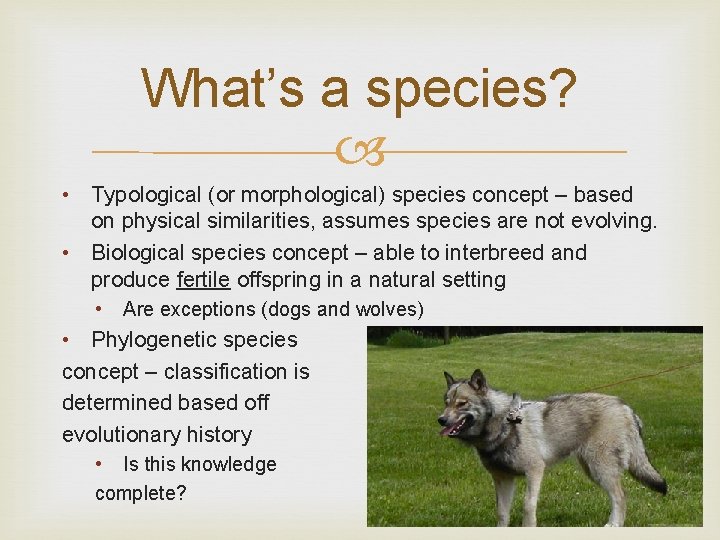
What’s a species? • Typological (or morphological) species concept – based on physical similarities, assumes species are not evolving. • Biological species concept – able to interbreed and produce fertile offspring in a natural setting • Are exceptions (dogs and wolves) • Phylogenetic species concept – classification is determined based off evolutionary history • Is this knowledge complete?
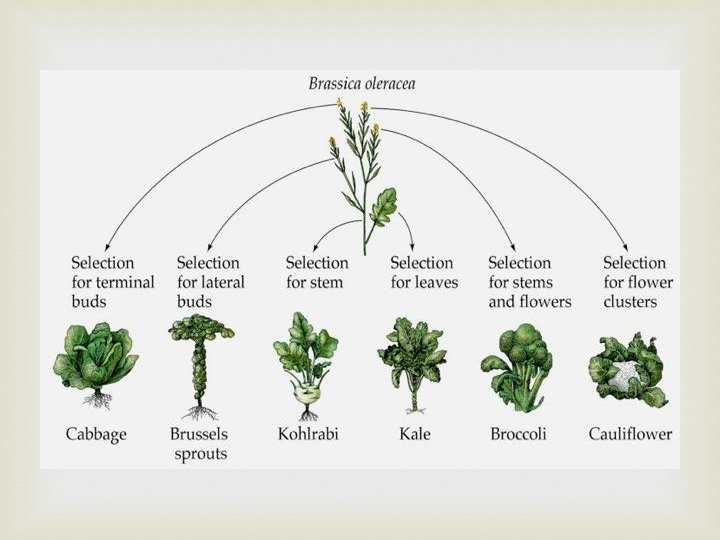
Characters • Scientists use characters, or inherited features, to construct patterns of descent • Morphological characters – homologous ones • Birds and dinosaurs both have hollow bones! • Biochemical characters – amino acids and nucleotides • Broccoli, cauliflower, and kale all look different, but have almost identical chromosome structure! • Molecular clocks – can compare two DNA sequences and their rate of mutation to determine how fast they’ve been evolving!
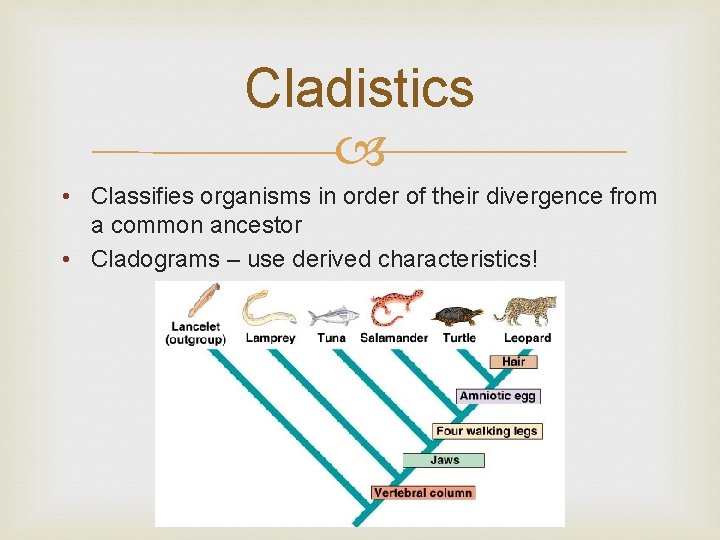
Cladistics • Classifies organisms in order of their divergence from a common ancestor • Cladograms – use derived characteristics!
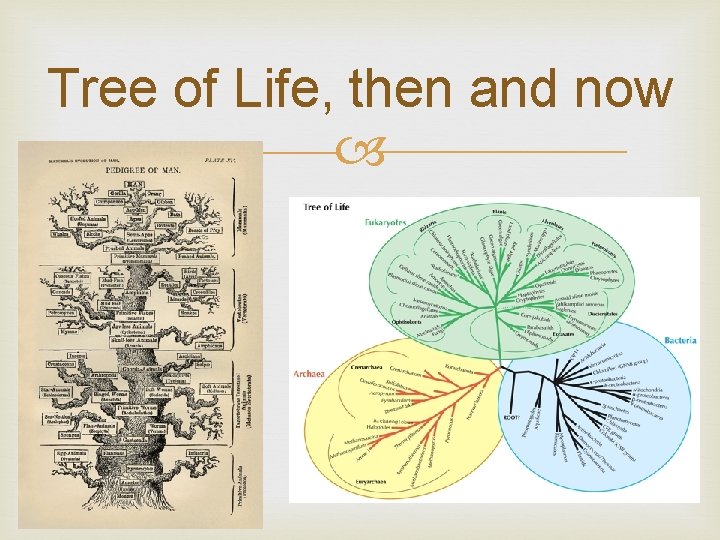
Tree of Life, then and now
Domains and Kingdoms • In 1990, five kingdoms were reclassified due to the diversity in Bacteria • Domain Bacteria – peptidoglycan in cell wall • Kingdom Eubacteria • Domain Archaea – no peptidoglycan in cell wall • Kingdom Archaebacteria • Domain Eukarya – eukaryotes! • • Kingdom Protista Kingdom Fungi – are fungi considered autotrophs? • Cell Walls made of Chitin (different from plants and bacteria) • • Kingdom Plantae Kingdom Animalia • What about viruses?
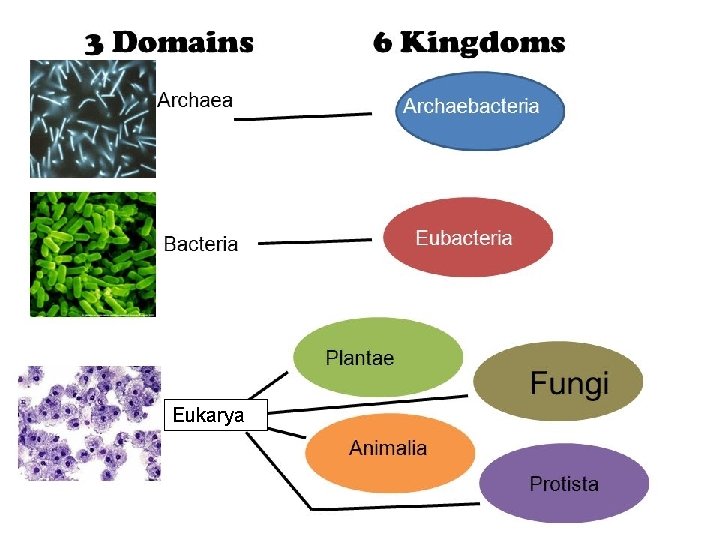
Eukarya
Basic Vocabulary/History Producer/Autotroph – makes its own food, usually via photosynthesis Produces oxygen that many other organisms need Was oxygen always present on Earth? (cyanobacteria) Consumer/Heterotroph – get food by consuming other organisms Decomposer/detritivore – breaks down materials Gets food and recycles nutrients All organisms go through cellular respiration
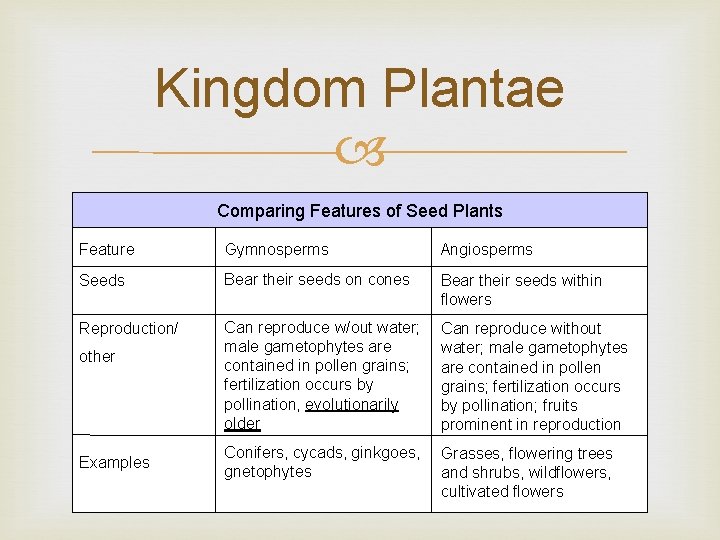
Kingdom Plantae Comparing Features of Seed Plants Feature Gymnosperms Angiosperms Seeds Bear their seeds on cones Bear their seeds within flowers Reproduction/ Can reproduce w/out water; male gametophytes are contained in pollen grains; fertilization occurs by pollination, evolutionarily older Can reproduce without water; male gametophytes are contained in pollen grains; fertilization occurs by pollination; fruits prominent in reproduction Conifers, cycads, ginkgoes, gnetophytes Grasses, flowering trees and shrubs, wildflowers, cultivated flowers other Examples
Kingdom Animalia - Phylums Phylum Porifera – sponges Phylum Cnidaria – jelly fish, hydra, anemones, coral Phylum Platyhelminthes – flat worms (Planaria) Phylum Nematoda – round worms Phylum Annelida – segmented worms (earth worms) Phylum Mollusca – snails, clams, oysters, octopuses Phylum Arthropoda - -pedes, insects (pill bugs), crabs Phylum Echinodermata – sea stars, sea urchins
Phylum Chordata Includes humans! (in addition to many other organisms) At some stage of life has… • hollow nerve chord- becomes a spinal chord • notochord – functions like a backbone (replaced by backbone in vertebrates) • Pharyngeal slits (gills, we have them as embryos) • Tail beyond anus • Bilateral symmetry
- Slides: 16