
ORGANIZING It involves Organizational Structure and Design Managing
- Slides: 18
ORGANIZING
It involves. . • Organizational Structure and Design • Managing Human Resources • Managing change and Innovation
9 -3 Exhibit 9. 1 Some Purposes of Organizing • Divides work to be done into specific jobs and departments • Assigns tasks and responsibilities associated with individual jobs • Coordinates diverse organizational tasks • Clusters jobs into units • Establishes relationships among individuals, groups, and departments • Establishes formal lines of authority • Allocates and deploys organizational resources
8 -4 How to Stand Out in a New Job: Fitting into an Organization’s Culture in the First 60 Days • • • Be Aware of the Power of First Impressions Come in 30 Minutes Early & Stay a Little Late to See How People Behave Get to Know Some People & Listen to What They Have to Say Make It Easy for Others to Give You Feedback Over-deliver
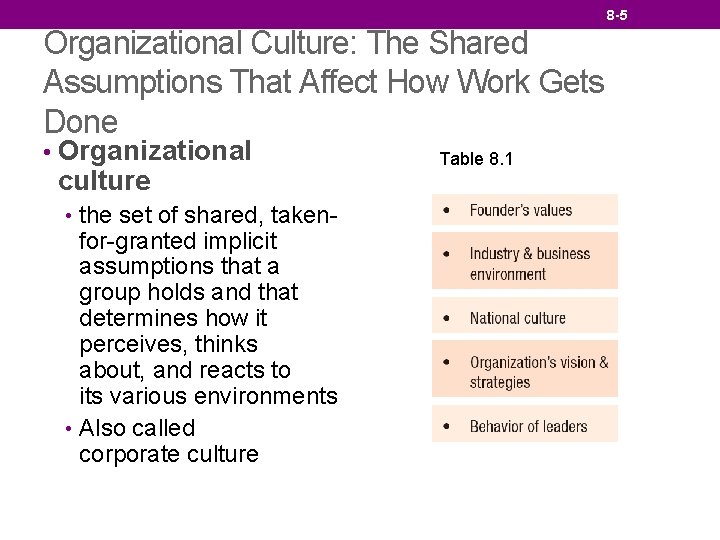
8 -5 Organizational Culture: The Shared Assumptions That Affect How Work Gets Done • Organizational culture • the set of shared, taken- for-granted implicit assumptions that a group holds and that determines how it perceives, thinks about, and reacts to its various environments • Also called corporate culture Table 8. 1
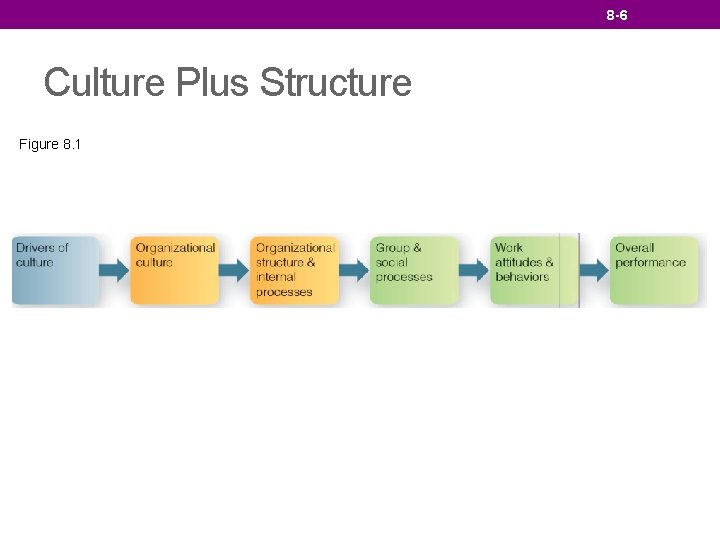
8 -6 Culture Plus Structure Figure 8. 1
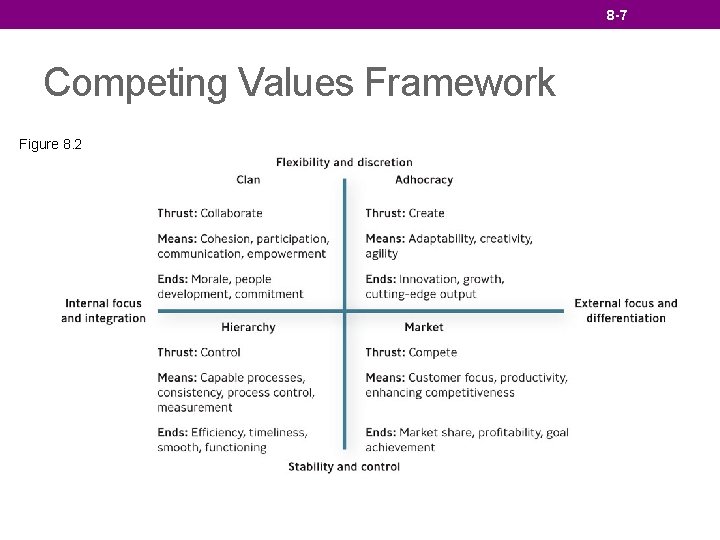
8 -7 Competing Values Framework Figure 8. 2
8 -8 The Importance of Culture • An organization’s culture matters • Employees are happier with clan cultures • Elements of these cultures can be used to boost innovation and quality • Changing the organizational culture won’t necessarily boost financial performance (but it might) • Market cultures tend to produce better results
8 -9 Ways to Change Organizational Culture 1. 2. 3. 4. 5. 6. Formal statements Slogans & sayings Rites & Rituals Stories, legends, & myths Leader reaction to crises Role modeling, training, & coaching
8 -10 The Process of Cultural Change (cont. ) 7. 8. 9. 10. 11. 12. Physical design Rewards, titles, promotions, & bonuses Organizational goals & performance criteria Measurable & controllable activities Organizational structure Organizational systems & procedures
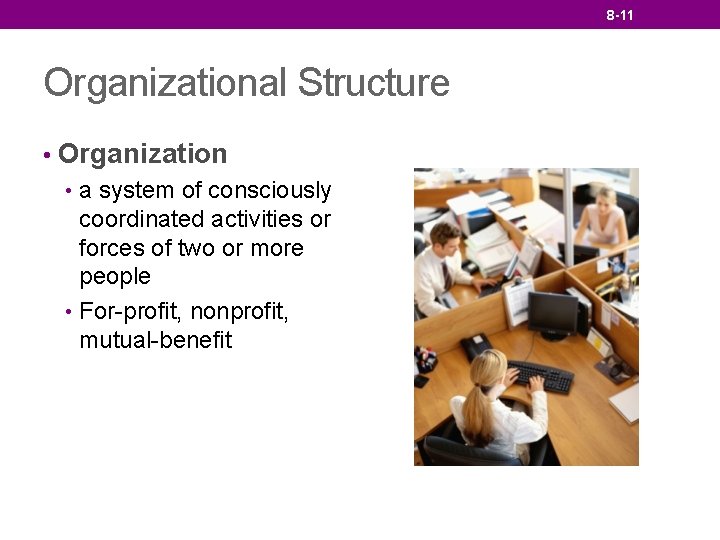
8 -11 Organizational Structure • Organization • a system of consciously coordinated activities or forces of two or more people • For-profit, nonprofit, mutual-benefit
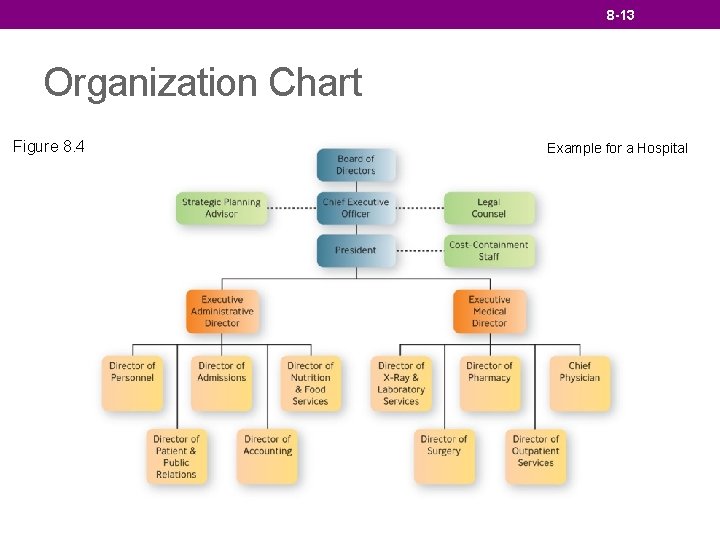
8 -12 The Organization Chart • box-and-lines illustration showing the formal lines of authority and the organization’s official positions or work specializations
8 -13 Organization Chart Figure 8. 4 Example for a Hospital
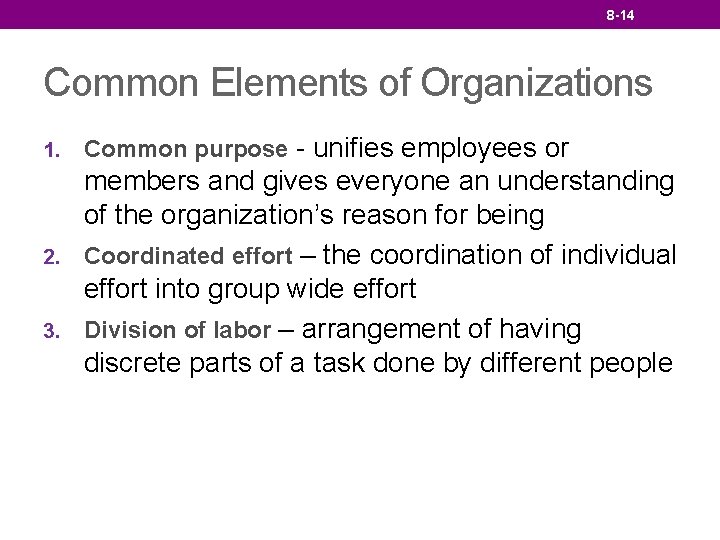
8 -14 Common Elements of Organizations 1. 2. 3. Common purpose - unifies employees or members and gives everyone an understanding of the organization’s reason for being Coordinated effort – the coordination of individual effort into group wide effort Division of labor – arrangement of having discrete parts of a task done by different people
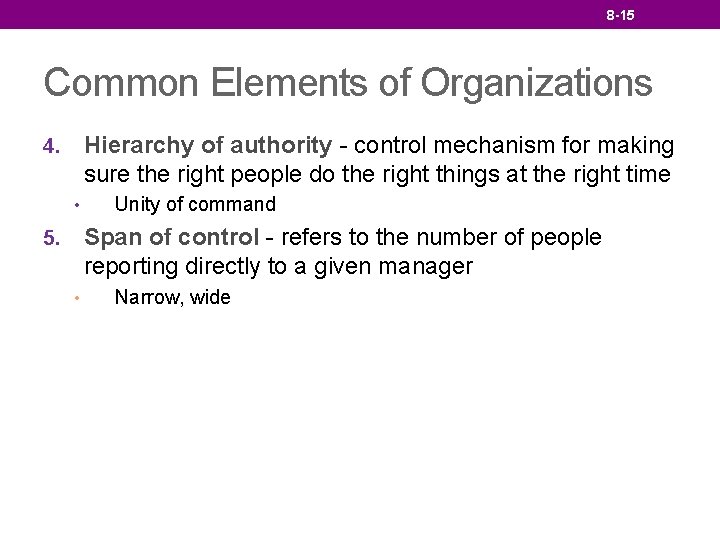
8 -15 Common Elements of Organizations Hierarchy of authority - control mechanism for making sure the right people do the right things at the right time 4. • Unity of command Span of control - refers to the number of people reporting directly to a given manager 5. • Narrow, wide
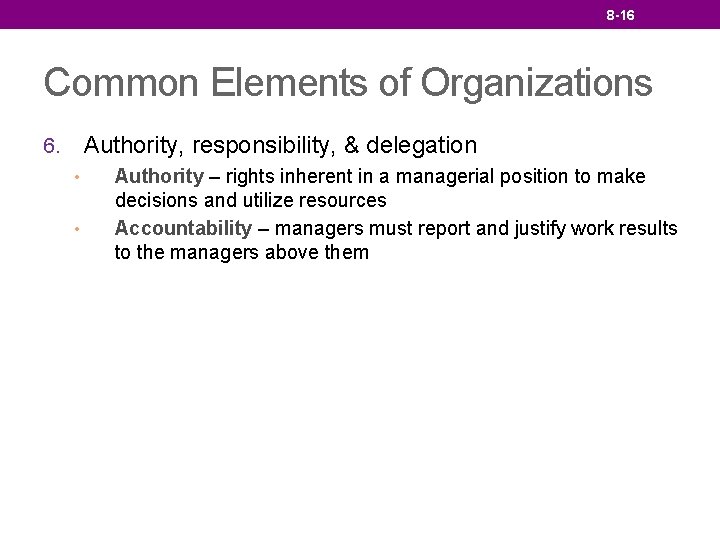
8 -16 Common Elements of Organizations Authority, responsibility, & delegation 6. • • Authority – rights inherent in a managerial position to make decisions and utilize resources Accountability – managers must report and justify work results to the managers above them
8 -17 Common Elements of Organizations Authority, responsibility, & delegation (cont. ) 6. • • Responsibility – obligation you have to perform the tasks assigned to you Delegation – process of assigning managerial authority and responsibility to managers and employees lower in the hierarchy
8 -18 Common Elements of Organizations Centralization versus decentralization of authority 7. • • Centralized authority – important decisions are made by higher-level managers Decentralized authority – important decisions are made by middle-level and supervisory-level managers