
Organizing information in the postgenomic era The rise
- Slides: 18
Organizing information in the post-genomic era The rise of bioinformatics
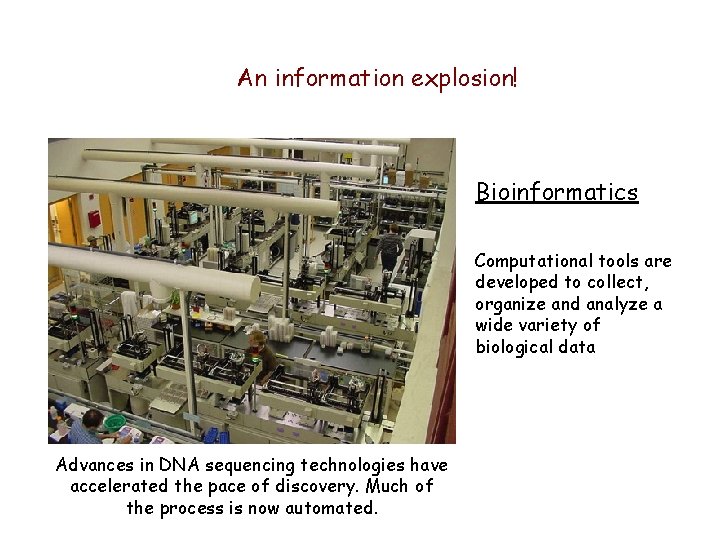
An information explosion! Bioinformatics Computational tools are developed to collect, organize and analyze a wide variety of biological data Advances in DNA sequencing technologies have accelerated the pace of discovery. Much of the process is now automated.
What is a database? Which databases are important for molecular cell biology research? How is information processed in databases?
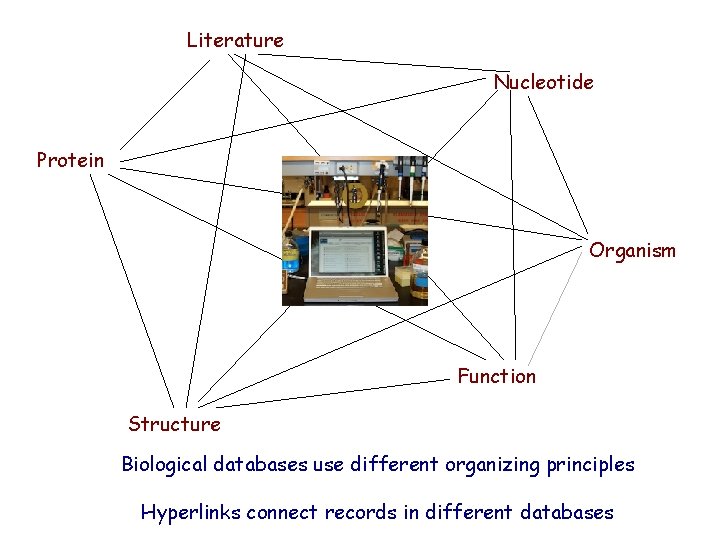
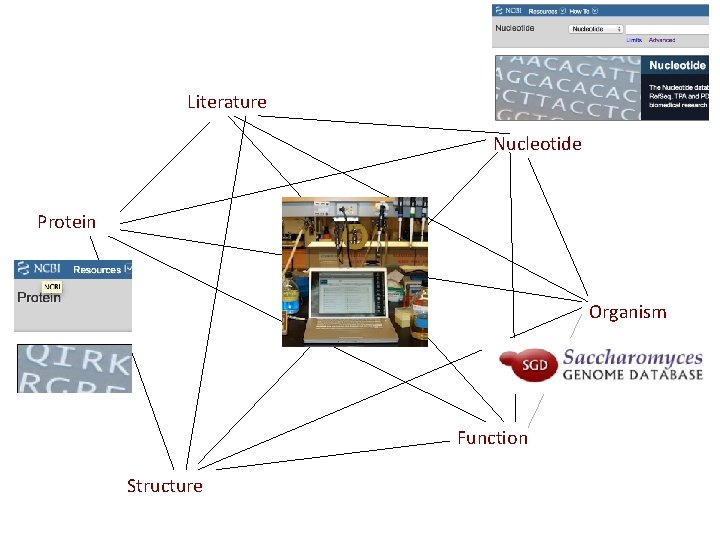
Literature Nucleotide Protein Organism Function Structure Biological databases use different organizing principles Hyperlinks connect records in different databases
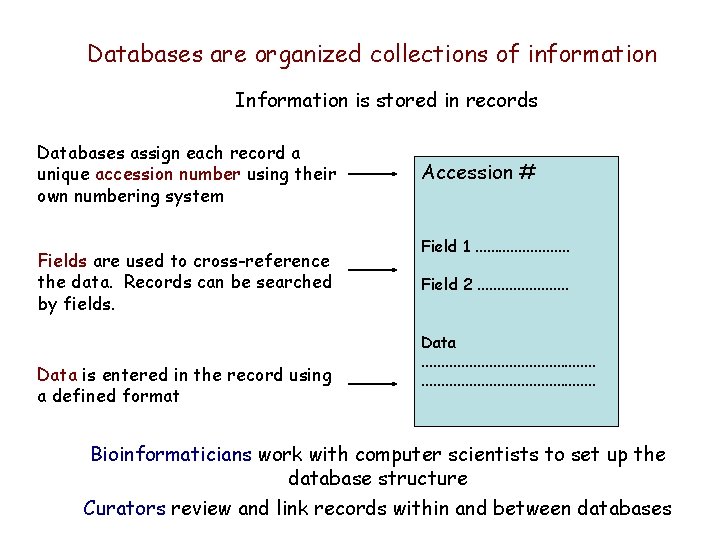
Databases are organized collections of information Information is stored in records Databases assign each record a unique accession number using their own numbering system Fields are used to cross-reference the data. Records can be searched by fields. Data is entered in the record using a defined format Accession # Field 1. . . Field 2. . . Data. . . . . . Bioinformaticians work with computer scientists to set up the database structure Curators review and link records within and between databases
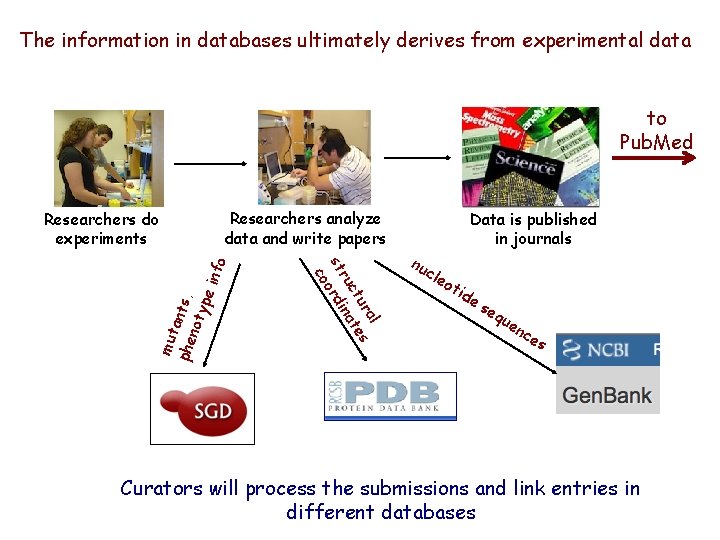
The information in databases ultimately derives from experimental data to Pub. Med Researchers analyze data and write papers mut phe ants, not ype in al s ur ct te ru na st ordi co fo Researchers do experiments Data is published in journals nu cle ot ide se qu en ce s Curators will process the submissions and link entries in different databases
What is a database? Which databases are important for molecular cell biology research? How is information processed in databases?
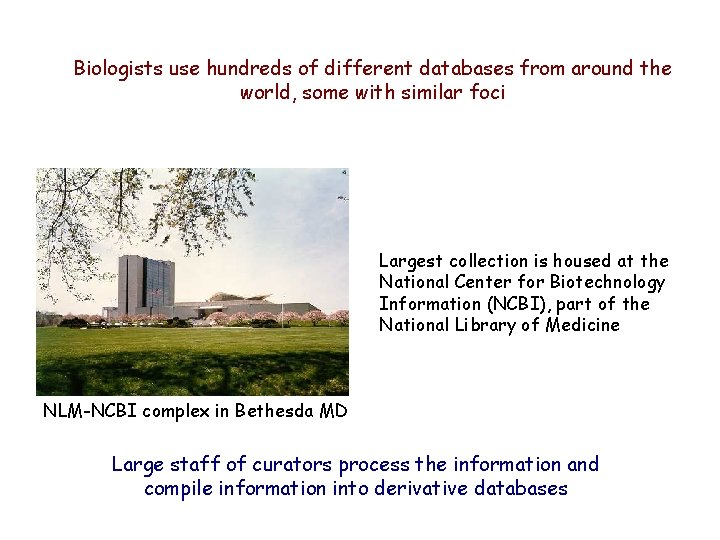
Biologists use hundreds of different databases from around the world, some with similar foci Largest collection is housed at the National Center for Biotechnology Information (NCBI), part of the National Library of Medicine NLM-NCBI complex in Bethesda MD Large staff of curators process the information and compile information into derivative databases
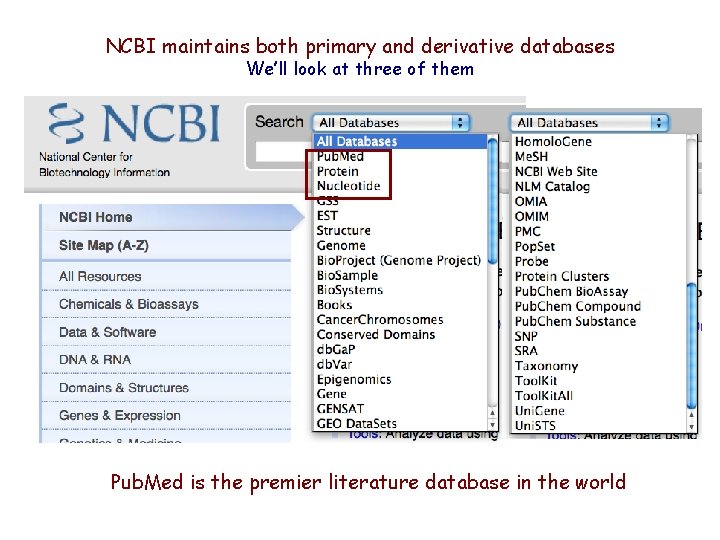
NCBI maintains both primary and derivative databases We’ll look at three of them Pub. Med is the premier literature database in the world
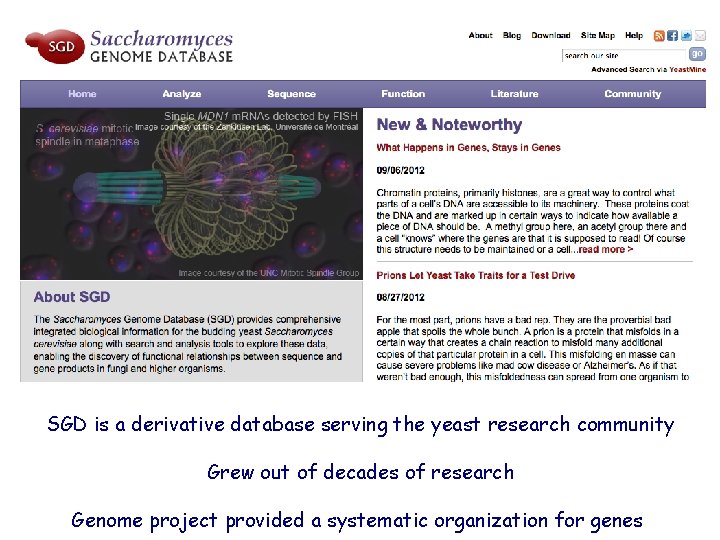
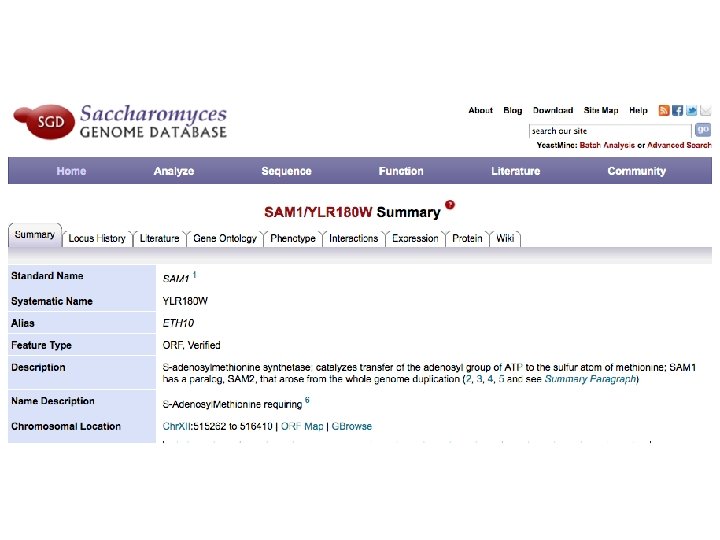
SGD is a derivative database serving the yeast research community Grew out of decades of research Genome project provided a systematic organization for genes
Questions for today: What is a database? Which databases are important for molecular cell biology research? How is information processed in databases?
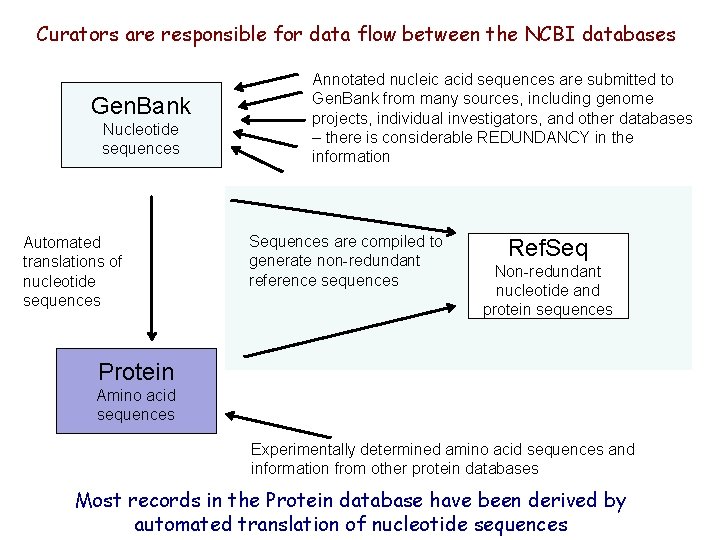
Curators are responsible for data flow between the NCBI databases Gen. Bank Nucleotide sequences Automated translations of nucleotide sequences Annotated nucleic acid sequences are submitted to Gen. Bank from many sources, including genome projects, individual investigators, and other databases – there is considerable REDUNDANCY in the information Sequences are compiled to generate non-redundant reference sequences Ref. Seq Non-redundant nucleotide and protein sequences Protein Amino acid sequences Experimentally determined amino acid sequences and information from other protein databases Most records in the Protein database have been derived by automated translation of nucleotide sequences
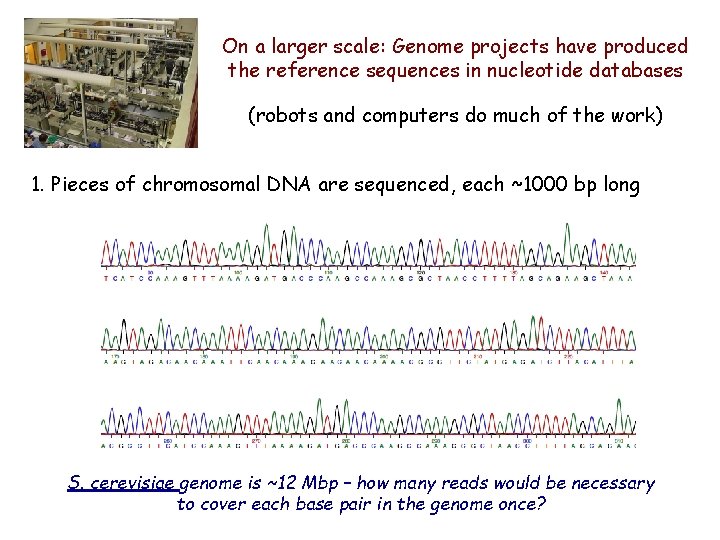
On a larger scale: Genome projects have produced the reference sequences in nucleotide databases (robots and computers do much of the work) 1. Pieces of chromosomal DNA are sequenced, each ~1000 bp long S. cerevisiae genome is ~12 Mbp – how many reads would be necessary to cover each base pair in the genome once?
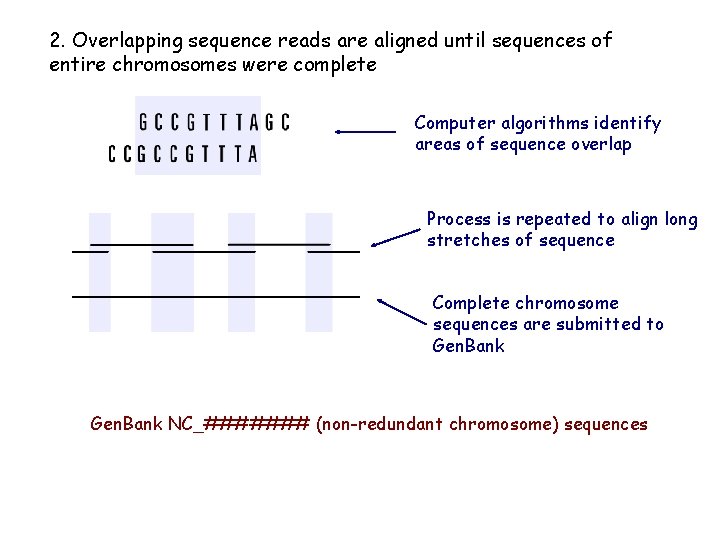
2. Overlapping sequence reads are aligned until sequences of entire chromosomes were complete Computer algorithms identify areas of sequence overlap Process is repeated to align long stretches of sequence Complete chromosome sequences are submitted to Gen. Bank NC_####### (non-redundant chromosome) sequences
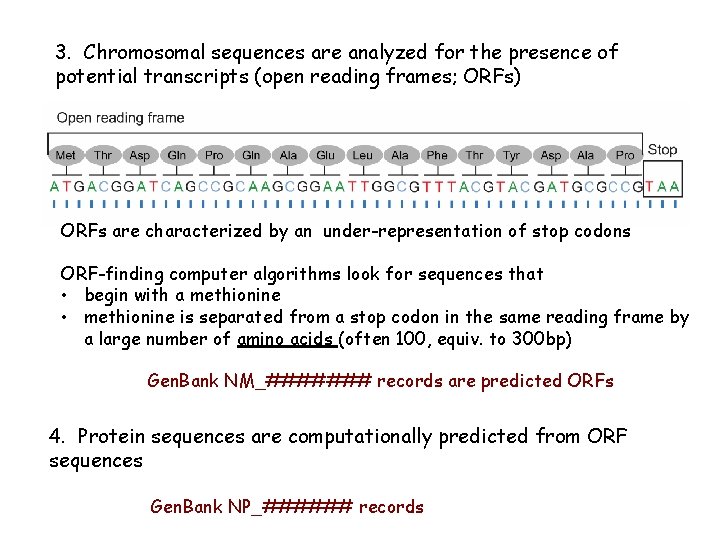
3. Chromosomal sequences are analyzed for the presence of potential transcripts (open reading frames; ORFs) ORFs are characterized by an under-representation of stop codons ORF-finding computer algorithms look for sequences that • begin with a methionine • methionine is separated from a stop codon in the same reading frame by a large number of amino acids (often 100, equiv. to 300 bp) Gen. Bank NM_####### records are predicted ORFs 4. Protein sequences are computationally predicted from ORF sequences Gen. Bank NP_###### records
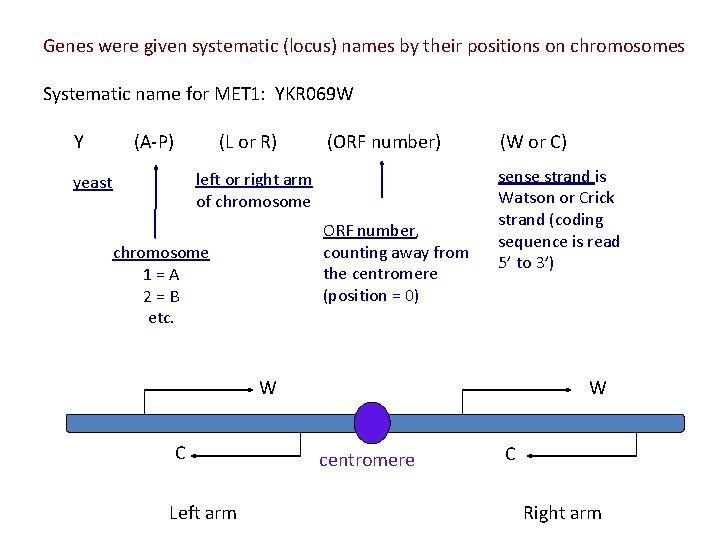
Genes were given systematic (locus) names by their positions on chromosomes Systematic name for MET 1: YKR 069 W Y (A-P) (L or R) (ORF number) left or right arm of chromosome yeast ORF number, counting away from the centromere (position = 0) chromosome 1=A 2=B etc. (W or C) sense strand is Watson or Crick strand (coding sequence is read 5’ to 3’) W C Left arm W centromere C Right arm
Literature Nucleotide Protein Organism Function Structure