
Organizing and Delivering an IMPROMPTU SPEECH Lesson 3

- Slides: 13
Organizing and Delivering an IMPROMPTU SPEECH Lesson 3
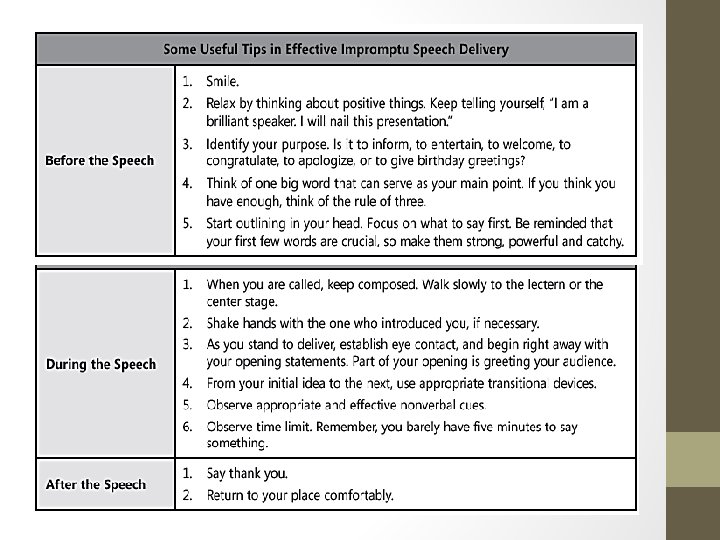
Impromptu speeches are delivered with little or no time for preparation. In most instances, you are called to speak at the spur of the moment because you are expected to be knowledgeable about the subject. For example, your teacher assigned you to read an article before the class starts. Then, during the class you were asked to deliver
an impromptu speech about what you have learned from the article. Another instance to illustrate an impromptu situation is when you are asked by a friend or a relative about your current or planned vacation trip or when you are campaigning for a position in school and you are asked by your fellow students to respond to their questions.
Strategies in Organizing and Delivering an Impromptu Speech Below are some of the strategies that you can follow when you organize and deliver an impromptu speech. 1. Past, Present, Future Example: In the past, I was not comfortable in making impromptu speeches because I could not think right away of what to say; maybe it was because of nervousness and lack of time to prepare. At present, however, I am enjoying it because I constantly
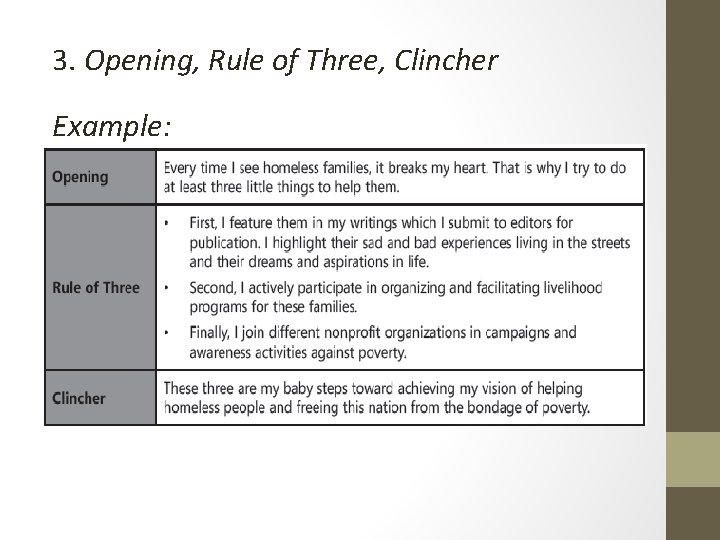
practice and keep on exposing myself to any speaking situation. In the future, I look forward to teaching others how to survive impromptu speech situations. 2. Point-Reason-Example/Explanation-Point Example:
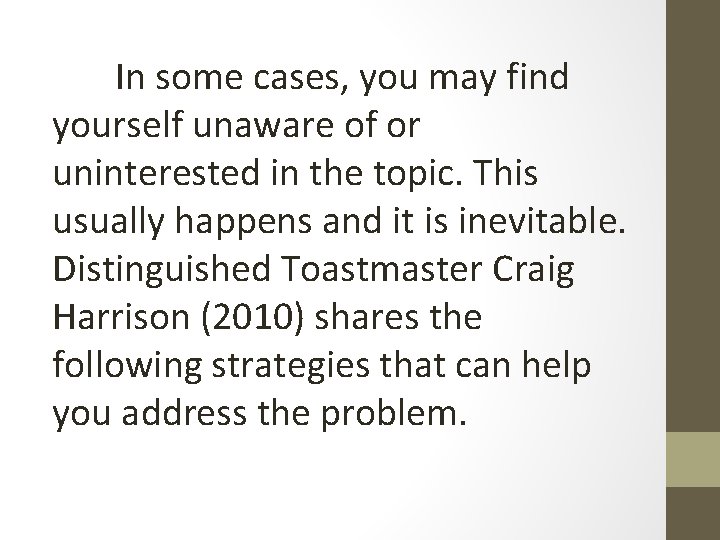
3. Opening, Rule of Three, Clincher Example:
In some cases, you may find yourself unaware of or uninterested in the topic. This usually happens and it is inevitable. Distinguished Toastmaster Craig Harrison (2010) shares the following strategies that can help you address the problem.
a. Bridging. This entails building a connection between what you do know and what you do not know. Example:
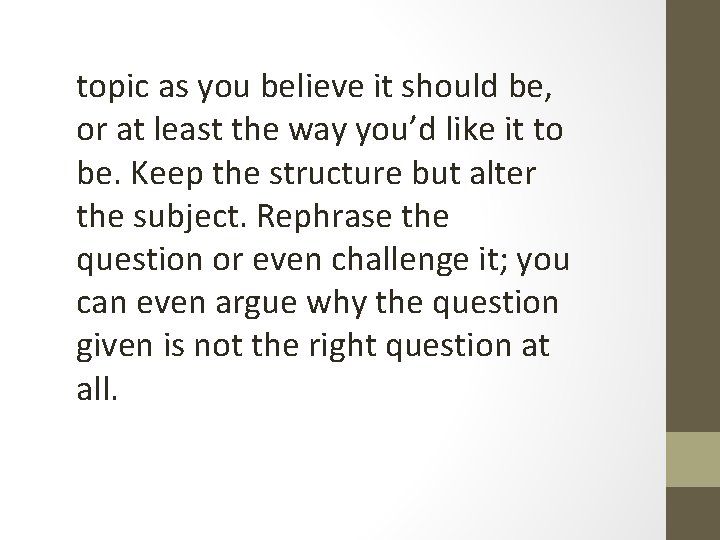
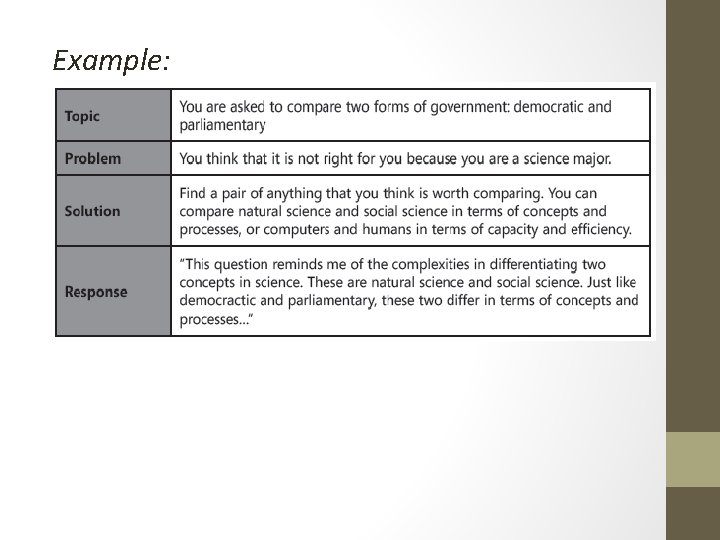
b. Reframing. This means rephrasing or redefining the topic into something that you want to talk about. This usually occurs if you think the topic is inappropriate or it is not meant for you. If you are given a topic that you do not like or is not right for you, don’t despair. Simply reframe it as a topic you’d like to respond to. Redefine the
topic as you believe it should be, or at least the way you’d like it to be. Keep the structure but alter the subject. Rephrase the question or even challenge it; you can even argue why the question given is not the right question at all.
Example:
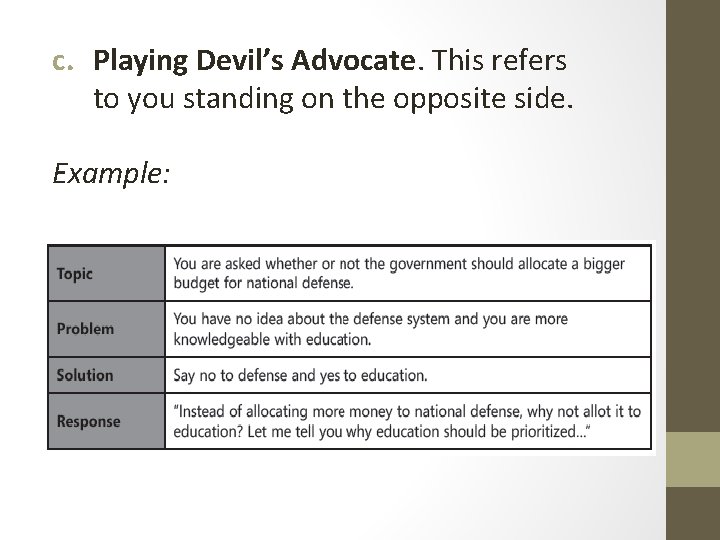
c. Playing Devil’s Advocate. This refers to you standing on the opposite side. Example: