
ORGANIZATIONS Principles of Effective Organizing unity of objectives

ORGANIZATIONS
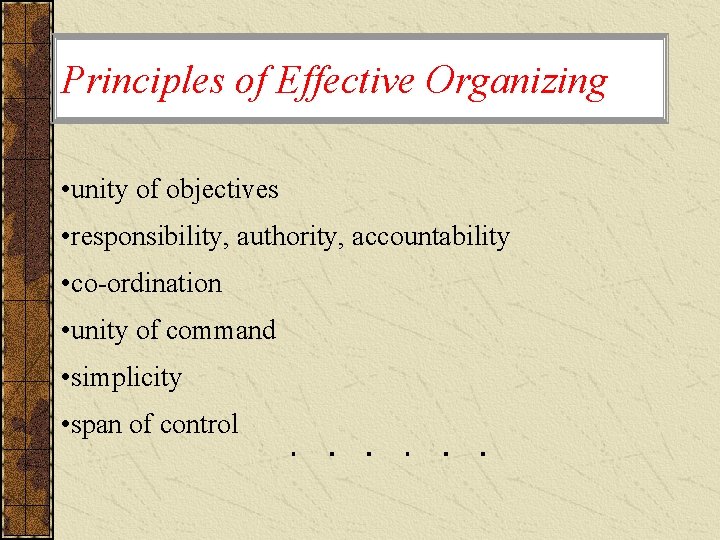
Principles of Effective Organizing • unity of objectives • responsibility, authority, accountability • co-ordination • unity of command • simplicity • span of control
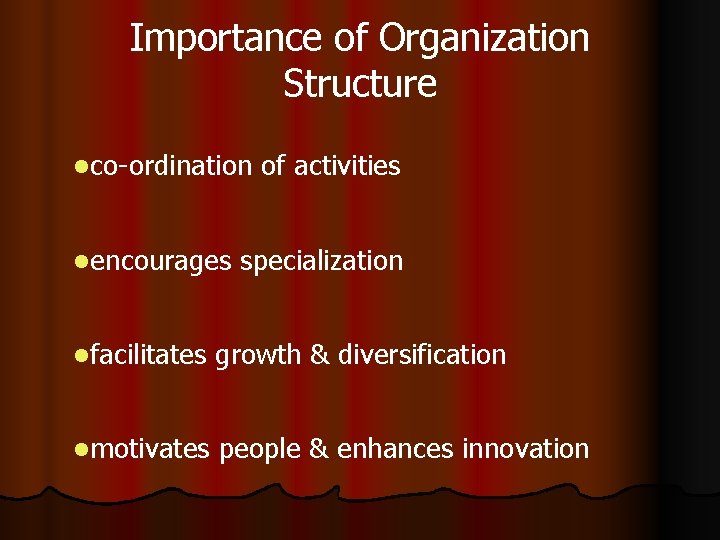
Importance of Organization Structure lco-ordination lencourages of activities specialization lfacilitates growth & diversification lmotivates people & enhances innovation
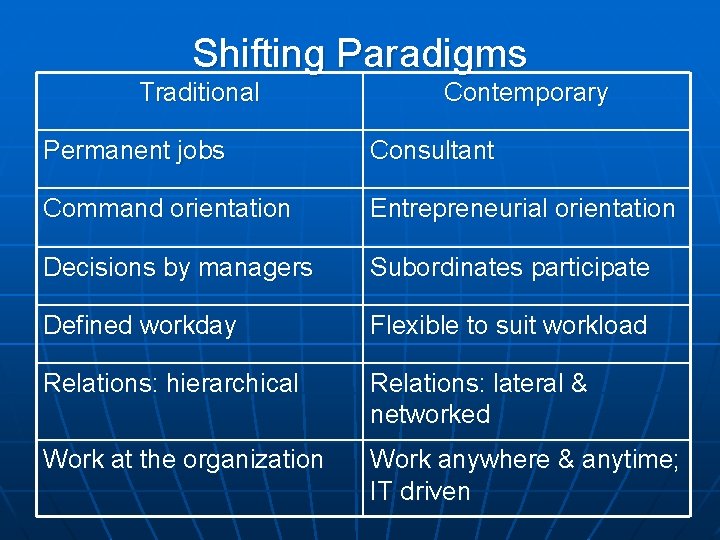
Shifting Paradigms Traditional Contemporary Permanent jobs Consultant Command orientation Entrepreneurial orientation Decisions by managers Subordinates participate Defined workday Flexible to suit workload Relations: hierarchical Relations: lateral & networked Work at the organization Work anywhere & anytime; IT driven
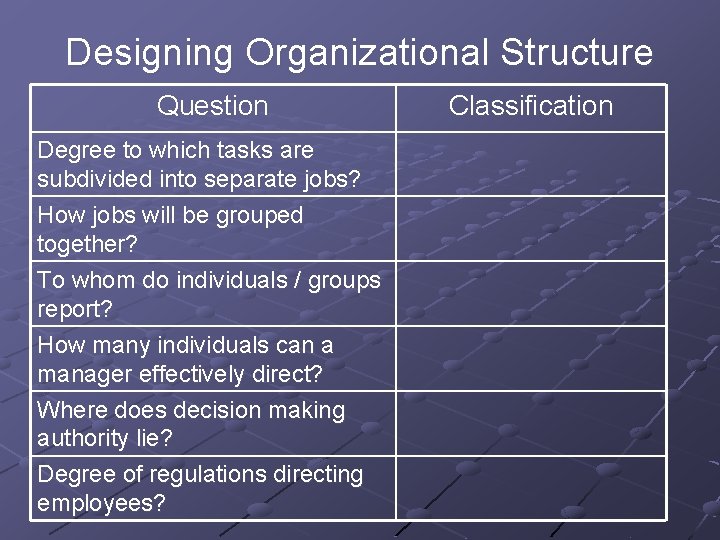
Designing Organizational Structure Question Degree to which tasks are subdivided into separate jobs? How jobs will be grouped together? To whom do individuals / groups report? How many individuals can a manager effectively direct? Where does decision making authority lie? Degree of regulations directing employees? Classification
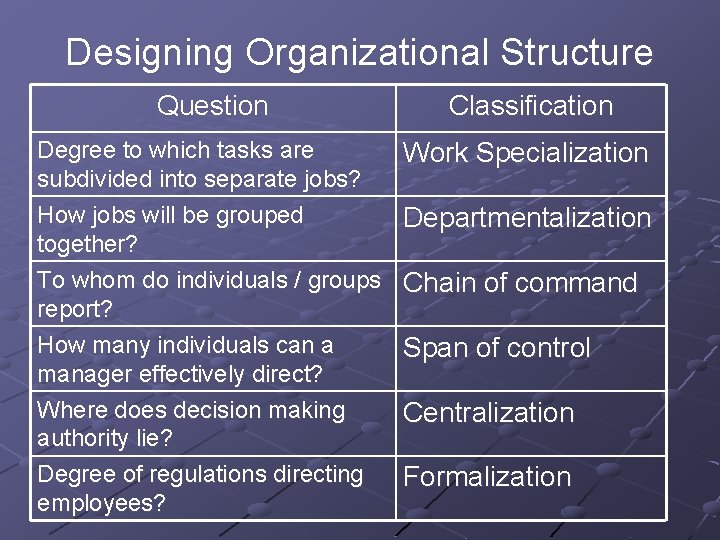
Designing Organizational Structure Question Classification Degree to which tasks are subdivided into separate jobs? How jobs will be grouped together? To whom do individuals / groups report? How many individuals can a manager effectively direct? Where does decision making authority lie? Degree of regulations directing employees? Work Specialization Departmentalization Chain of command Span of control Centralization Formalization
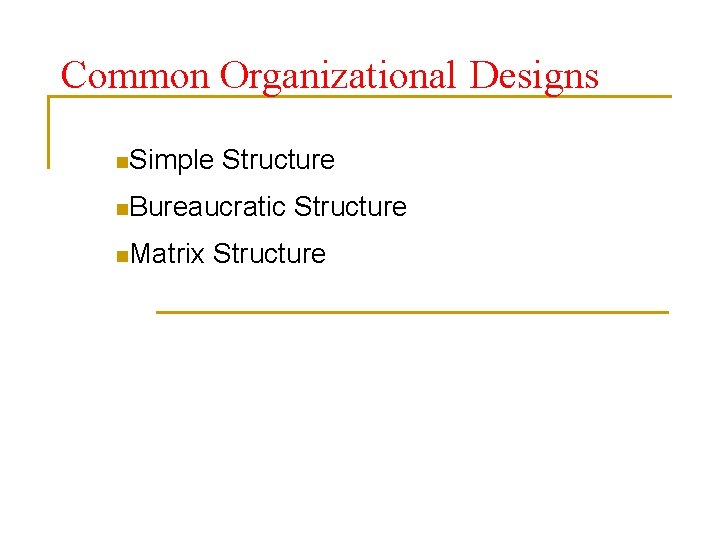
Common Organizational Designs n. Simple Structure n. Bureaucratic n. Matrix Structure
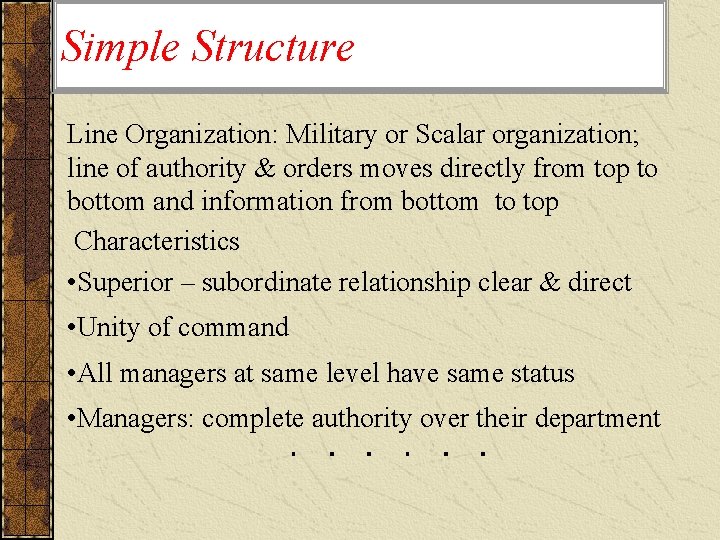
Simple Structure Line Organization: Military or Scalar organization; line of authority & orders moves directly from top to bottom and information from bottom to top Characteristics • Superior – subordinate relationship clear & direct • Unity of command • All managers at same level have same status • Managers: complete authority over their department
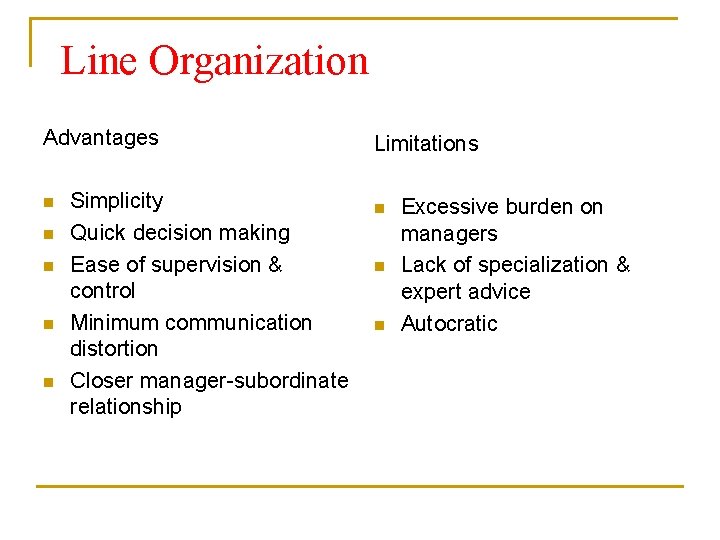
Line Organization Advantages n n n Simplicity Quick decision making Ease of supervision & control Minimum communication distortion Closer manager-subordinate relationship Limitations n n n Excessive burden on managers Lack of specialization & expert advice Autocratic
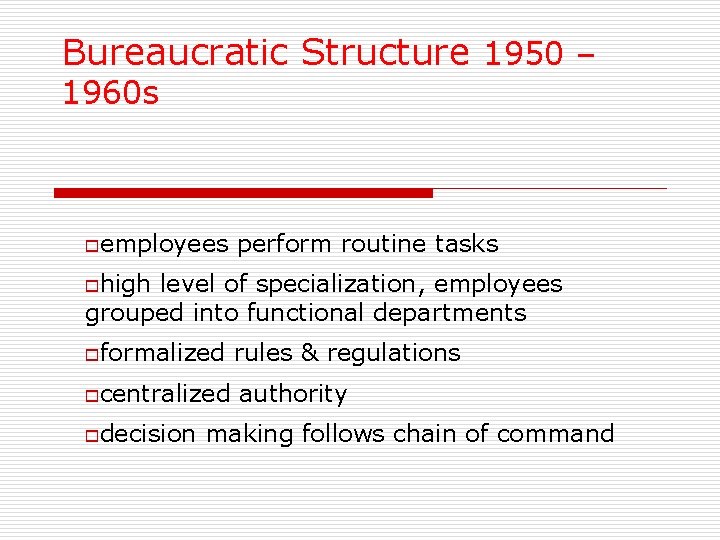
Bureaucratic Structure 1950 – 1960 s oemployees perform routine tasks ohigh level of specialization, employees grouped into functional departments oformalized ocentralized odecision rules & regulations authority making follows chain of command
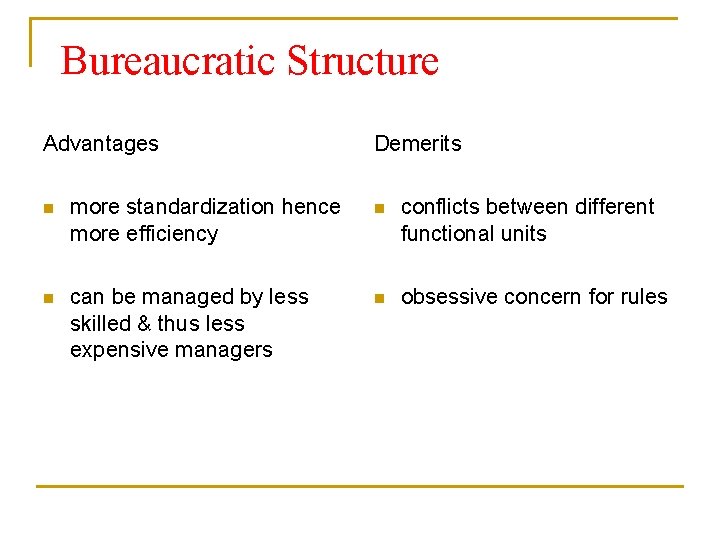
Bureaucratic Structure Advantages Demerits n more standardization hence more efficiency n conflicts between different functional units n can be managed by less skilled & thus less expensive managers n obsessive concern for rules
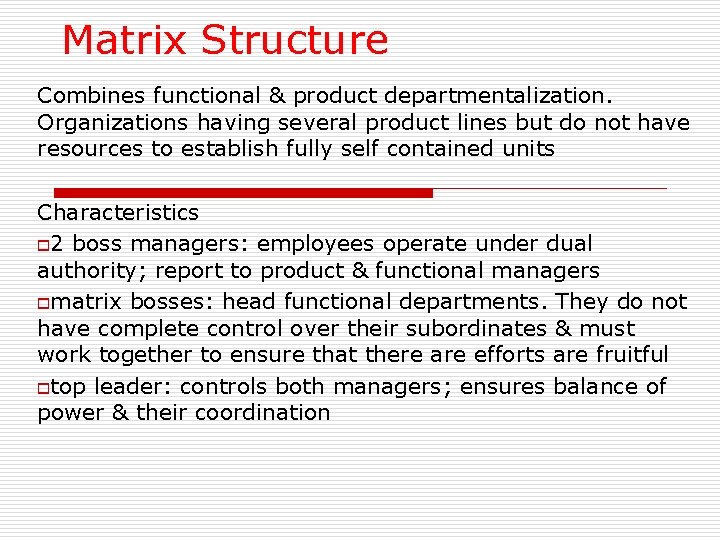
Matrix Structure Combines functional & product departmentalization. Organizations having several product lines but do not have resources to establish fully self contained units Characteristics o 2 boss managers: employees operate under dual authority; report to product & functional managers omatrix bosses: head functional departments. They do not have complete control over their subordinates & must work together to ensure that there are efforts are fruitful otop leader: controls both managers; ensures balance of power & their coordination
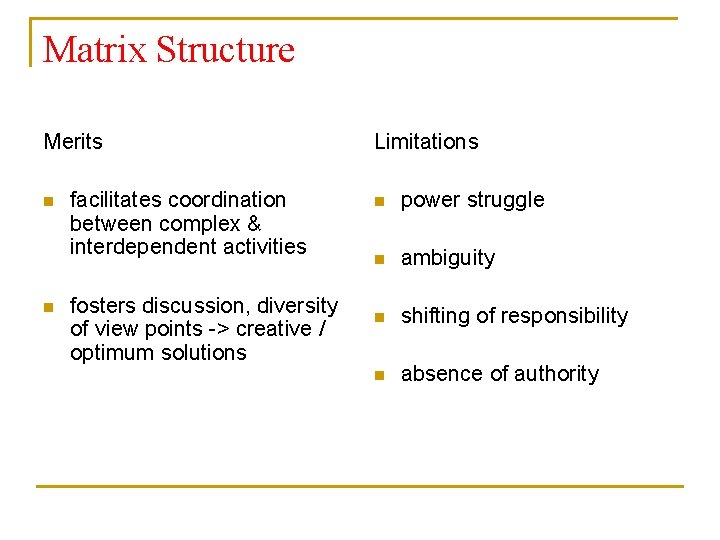
Matrix Structure Merits n n facilitates coordination between complex & interdependent activities fosters discussion, diversity of view points -> creative / optimum solutions Limitations n power struggle n ambiguity n shifting of responsibility n absence of authority
Contemporary Organizational Designs l. Team structure l. Virtual organization
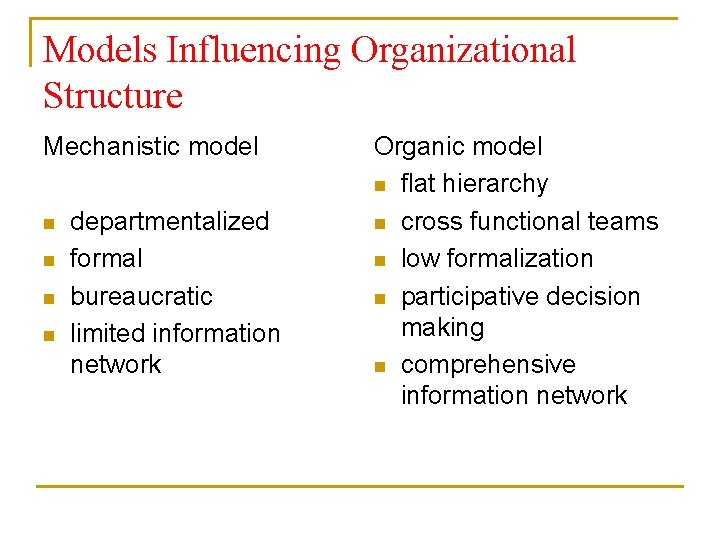
Models Influencing Organizational Structure Mechanistic model n n departmentalized formal bureaucratic limited information network Organic model n flat hierarchy n cross functional teams n low formalization n participative decision making n comprehensive information network
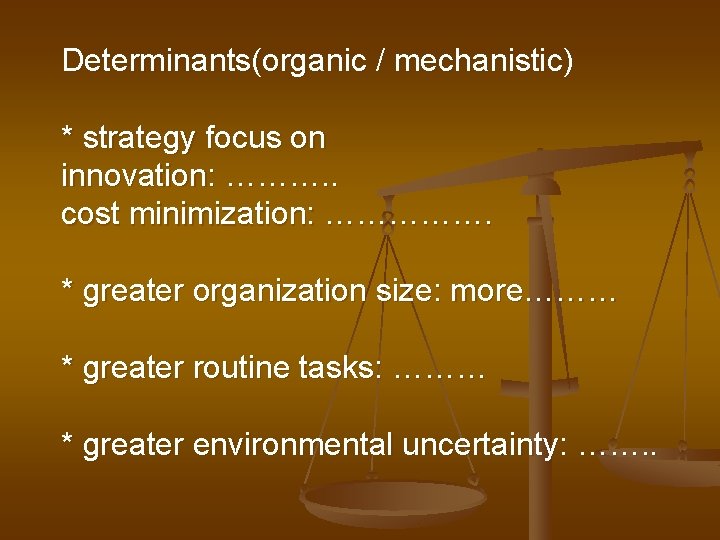
Determinants(organic / mechanistic) * strategy focus on innovation: ………. . cost minimization: ……………. * greater organization size: more……… * greater routine tasks: ……… * greater environmental uncertainty: ……. .
Determinants(organic / mechanistic) * strategy focus on innovation: organic cost minimization: mechanistic * greater organization size: mechanistic * greater routine tasks: mechanistic * greater environmental uncertainty: organic
ORGANIZATIONAL CULTURE The set of beliefs, values, norms and assumptions or core characteristics, shared by organization’s members.
Core Characteristics • innovation: encourage creativity v/s strict adherence of rules • stability: emphasis on status quo v/s embrace change • people orientation: decisions made after consideration to its effect on its people • results focus: emphasis on results rather than methods used. Individual level --- Machs? • competitiveness: degree to which work environment is aggressive & competitive. Type – behavior? • team work emphasis
Importance of Organizational Culture Merits Limitations n greater employee identification with n resistance to change organization. n resistance to diversity n greater commitment to n barrier to mergers & organization’s mission acquisitions n guides appropriate standards of behavior
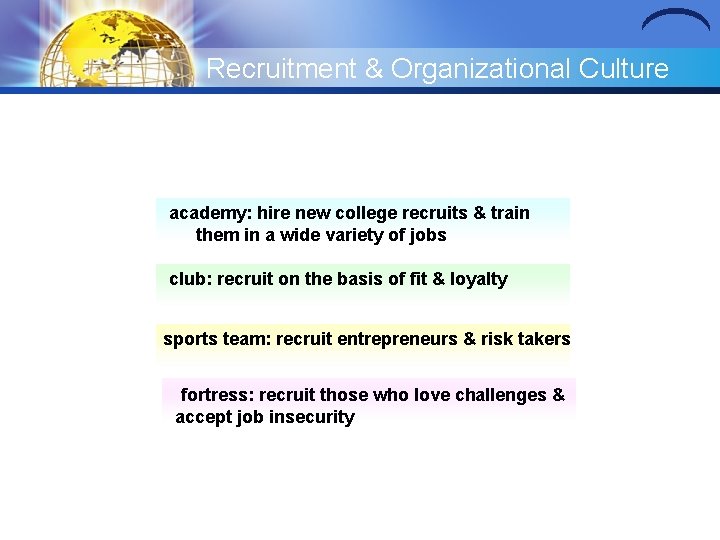
Recruitment & Organizational Culture academy: hire new college recruits & train them in a wide variety of jobs club: recruit on the basis of fit & loyalty sports team: recruit entrepreneurs & risk takers fortress: recruit those who love challenges & accept job insecurity
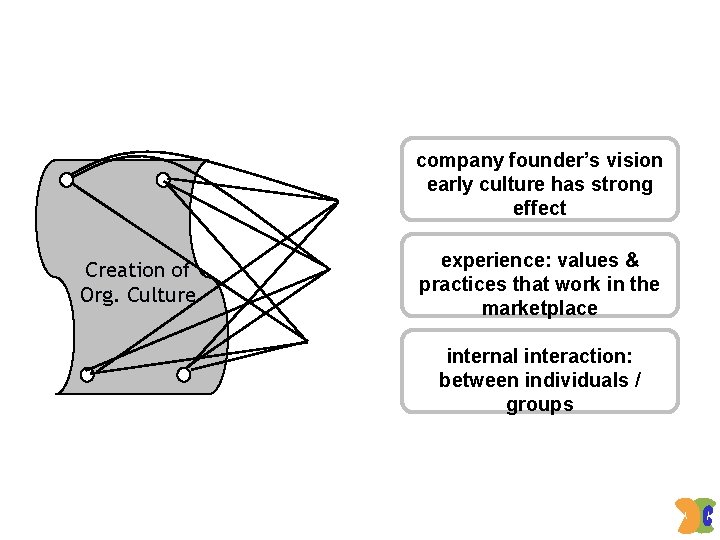
company founder’s vision early culture has strong effect Creation of Org. Culture experience: values & practices that work in the marketplace internal interaction: between individuals / groups
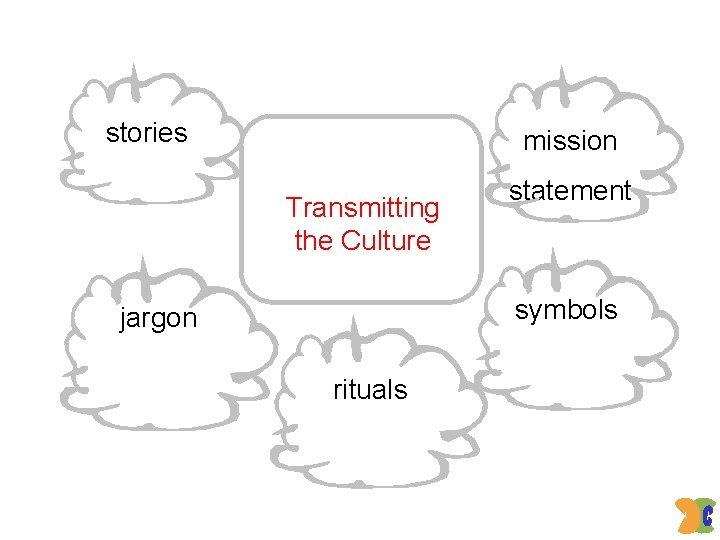
stories mission Transmitting the Culture statement symbols jargon rituals
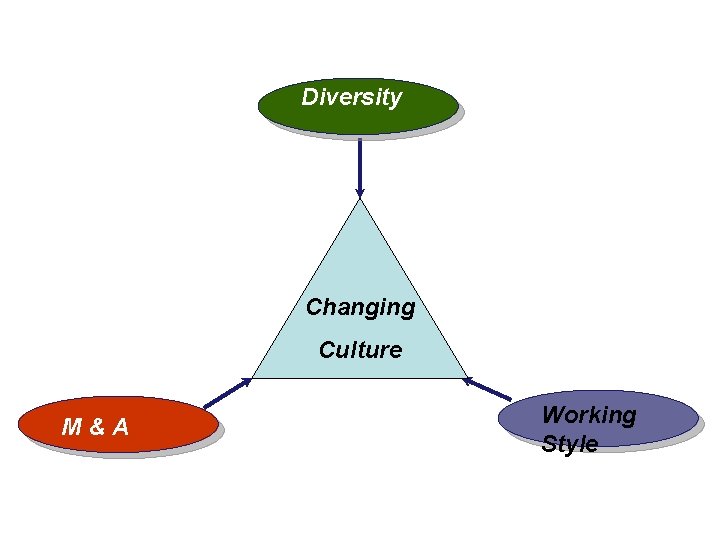
Diversity Changing Culture M&A Working Style
- Slides: 25