
Organizations Culture A culture is the unwritten rules
- Slides: 25
Organization’s Culture
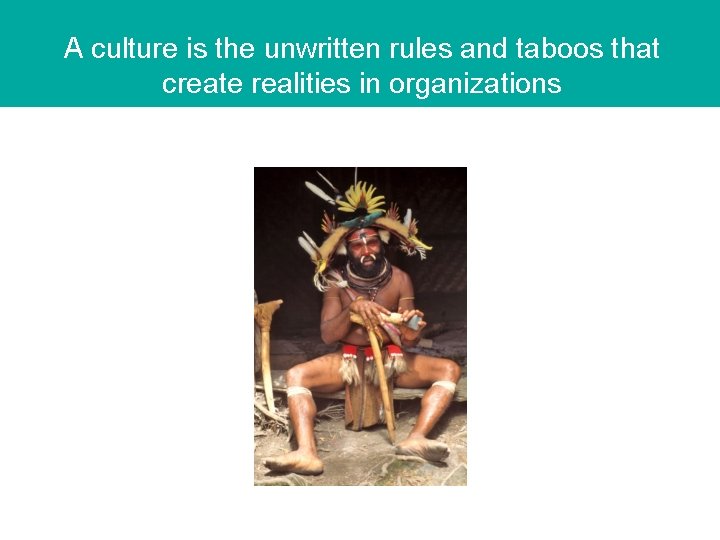
A culture is the unwritten rules and taboos that create realities in organizations
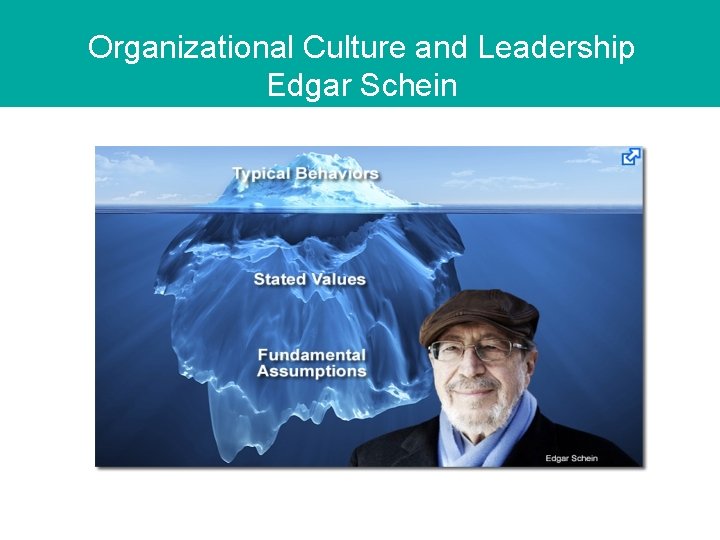
Organizational Culture and Leadership Edgar Schein
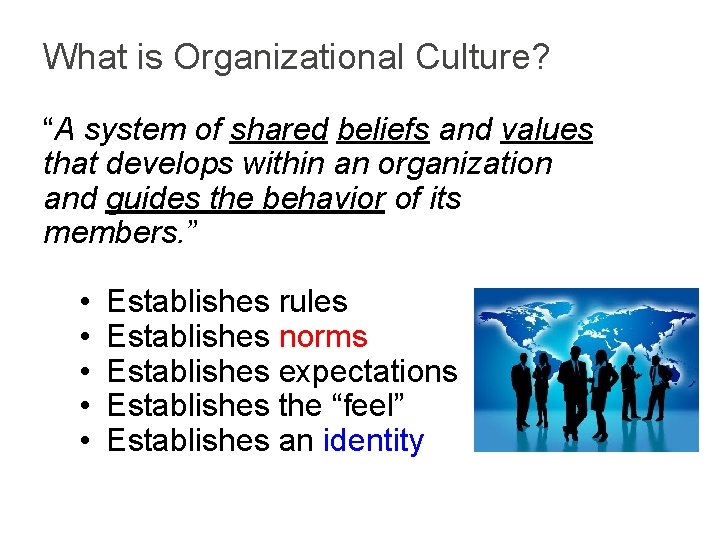
What is Organizational Culture? “A system of shared beliefs and values that develops within an organization and guides the behavior of its members. ” • • • Establishes rules Establishes norms Establishes expectations Establishes the “feel” Establishes an identity
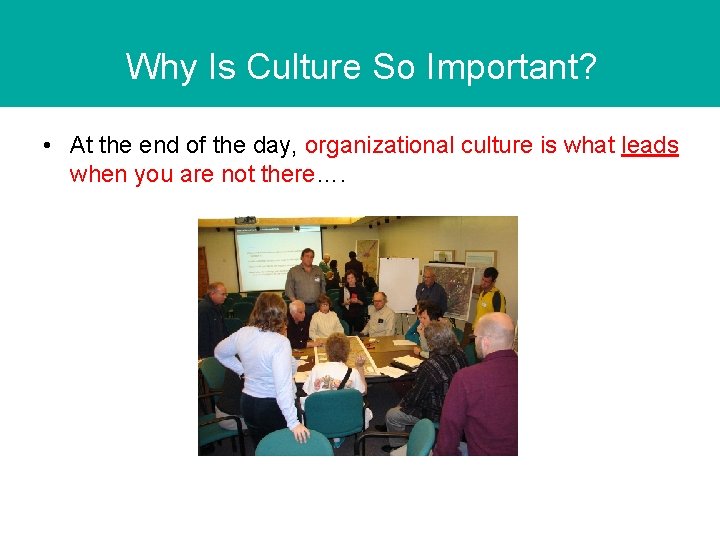
Why Is Culture So Important? • At the end of the day, organizational culture is what leads when you are not there….
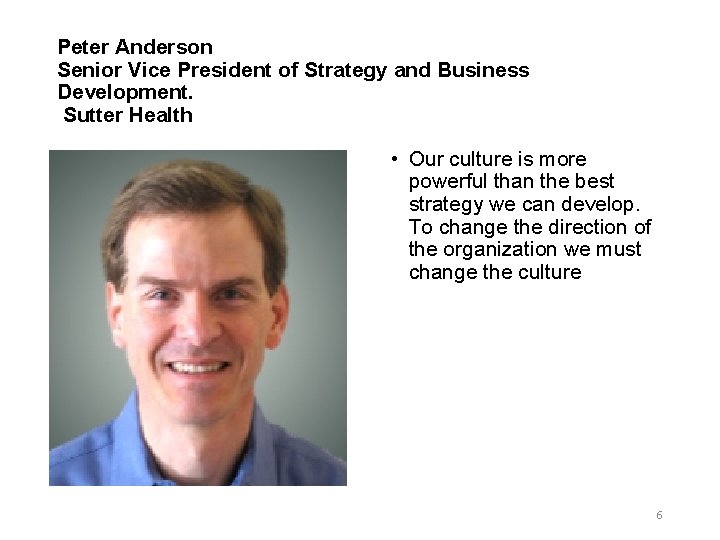
Peter Anderson Senior Vice President of Strategy and Business Development. Sutter Health • Our culture is more powerful than the best strategy we can develop. To change the direction of the organization we must change the culture 6
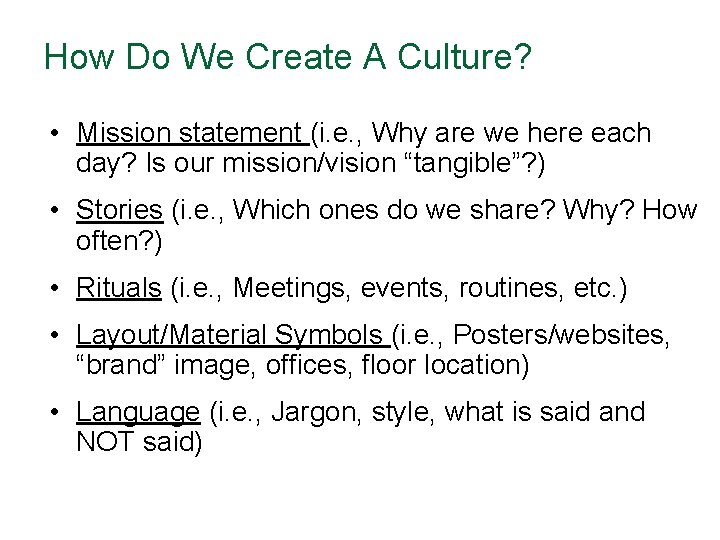
How Do We Create A Culture? • Mission statement (i. e. , Why are we here each day? Is our mission/vision “tangible”? ) • Stories (i. e. , Which ones do we share? Why? How often? ) • Rituals (i. e. , Meetings, events, routines, etc. ) • Layout/Material Symbols (i. e. , Posters/websites, “brand” image, offices, floor location) • Language (i. e. , Jargon, style, what is said and NOT said)
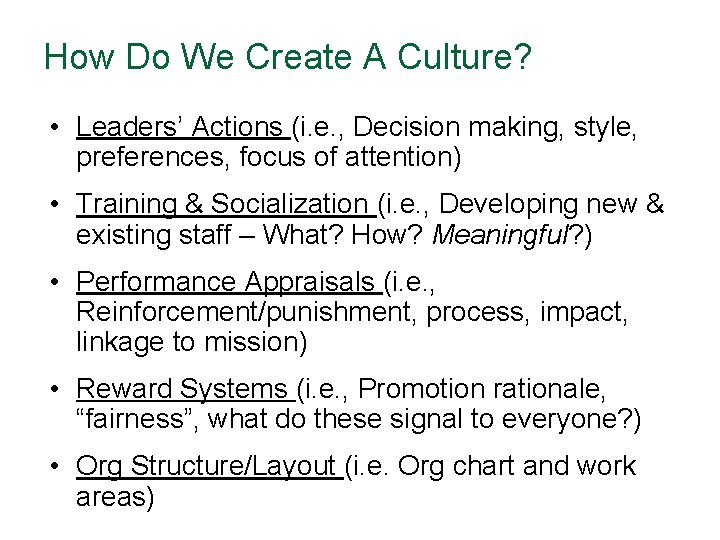
How Do We Create A Culture? • Leaders’ Actions (i. e. , Decision making, style, preferences, focus of attention) • Training & Socialization (i. e. , Developing new & existing staff – What? How? Meaningful? ) • Performance Appraisals (i. e. , Reinforcement/punishment, process, impact, linkage to mission) • Reward Systems (i. e. , Promotion rationale, “fairness”, what do these signal to everyone? ) • Org Structure/Layout (i. e. Org chart and work areas)
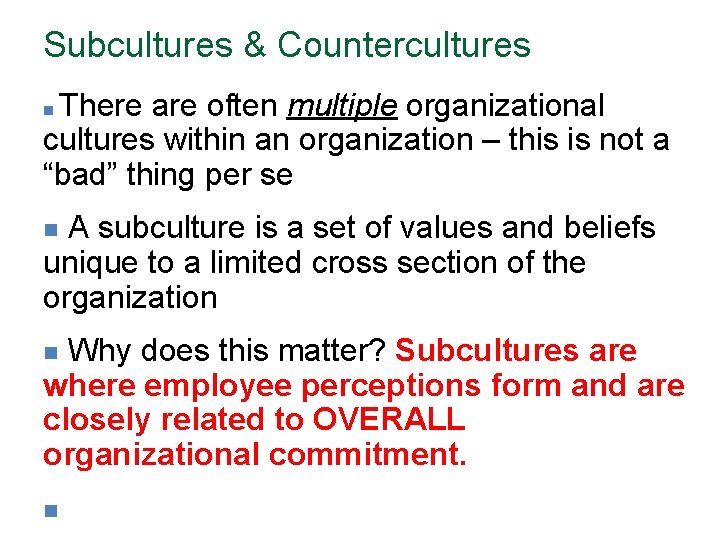
Subcultures & Countercultures There are often multiple organizational cultures within an organization – this is not a “bad” thing per se n A subculture is a set of values and beliefs unique to a limited cross section of the organization n Why does this matter? Subcultures are where employee perceptions form and are closely related to OVERALL organizational commitment. n n
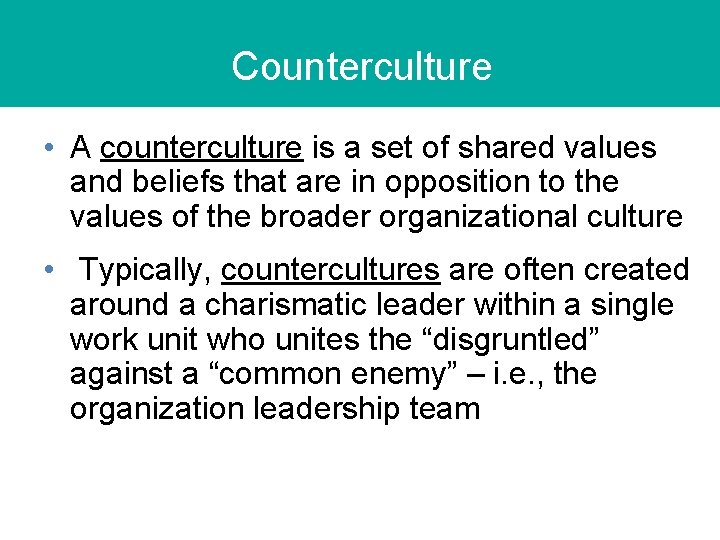
Counterculture • A counterculture is a set of shared values and beliefs that are in opposition to the values of the broader organizational culture • Typically, countercultures are often created around a charismatic leader within a single work unit who unites the “disgruntled” against a “common enemy” – i. e. , the organization leadership team
Measuring Organizational Culture • There are many available models/methods for measuring culture…
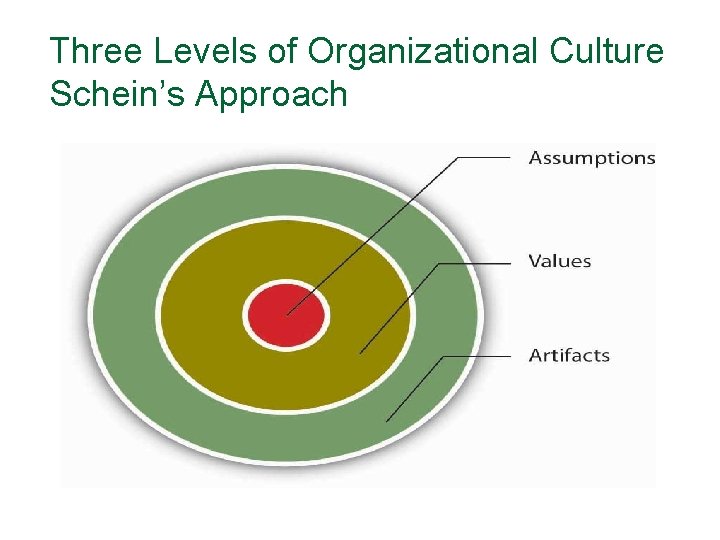
Three Levels of Organizational Culture Schein’s Approach
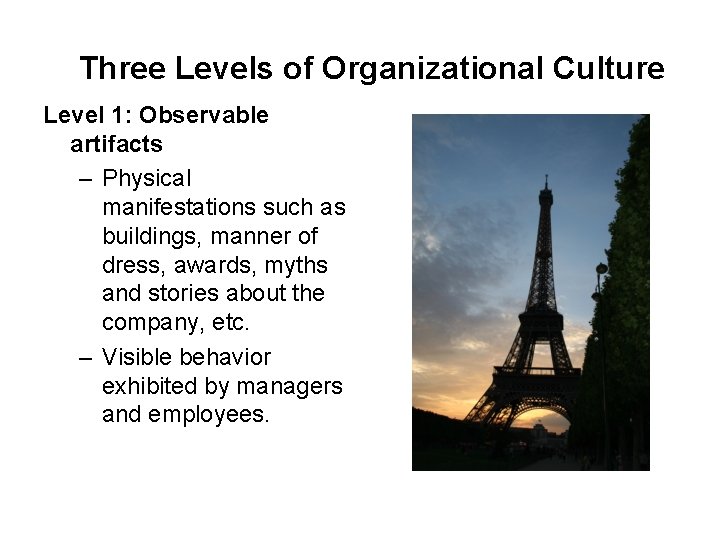
Three Levels of Organizational Culture Level 1: Observable artifacts – Physical manifestations such as buildings, manner of dress, awards, myths and stories about the company, etc. – Visible behavior exhibited by managers and employees.
Three Levels of Organizational Culture Level 2: Values • Espoused values – Explicitly stated values and norms preferred by an organization (“instrumental” and “terminal”) Ex) “Our patients are our #1 priority” • Enacted values – Represent the values and norms actually exhibited in the organization Ex) Of course we need patients but the really important thing around here is….
Three Levels of Organizational Culture Level 3: Basic Assumptions • Represent the core values of the organization’s culture • Those taken for granted and highly resistant to change – The best way to address profitability is by reducing cost and staff.
16
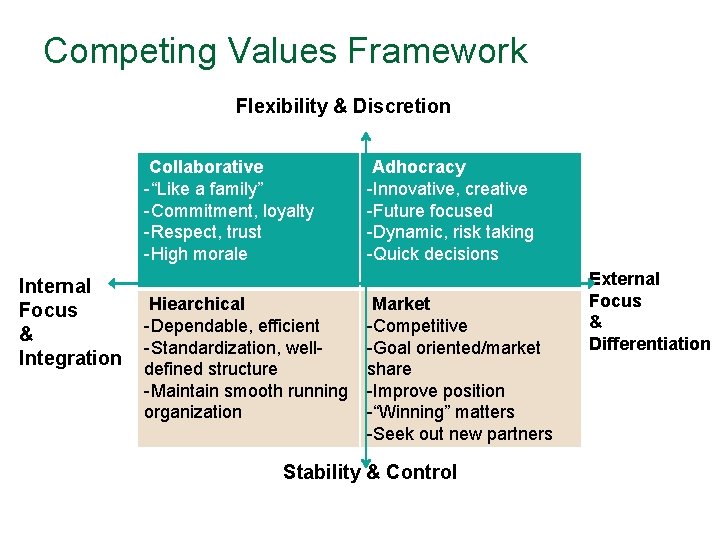
Competing Values Framework Flexibility & Discretion Collaborative -“Like a family” -Commitment, loyalty -Respect, trust -High morale Internal Focus & Integration Hiearchical -Dependable, efficient -Standardization, welldefined structure -Maintain smooth running organization Adhocracy -Innovative, creative -Future focused -Dynamic, risk taking -Quick decisions Market -Competitive -Goal oriented/market share -Improve position -“Winning” matters -Seek out new partners Stability & Control External Focus & Differentiation
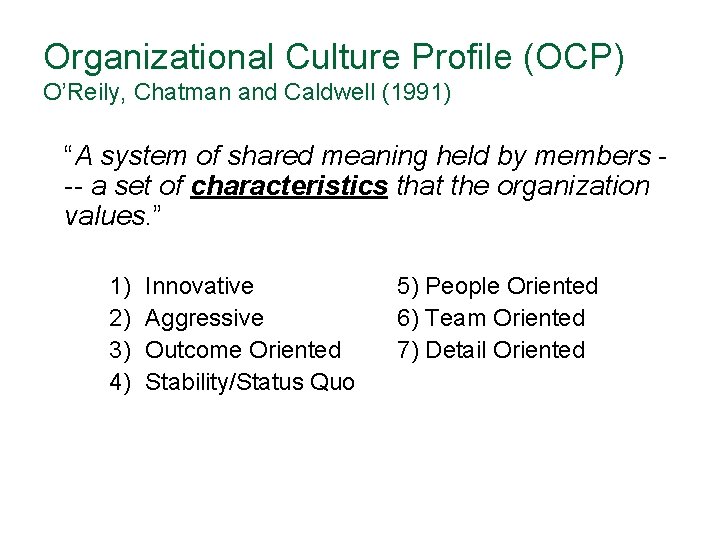
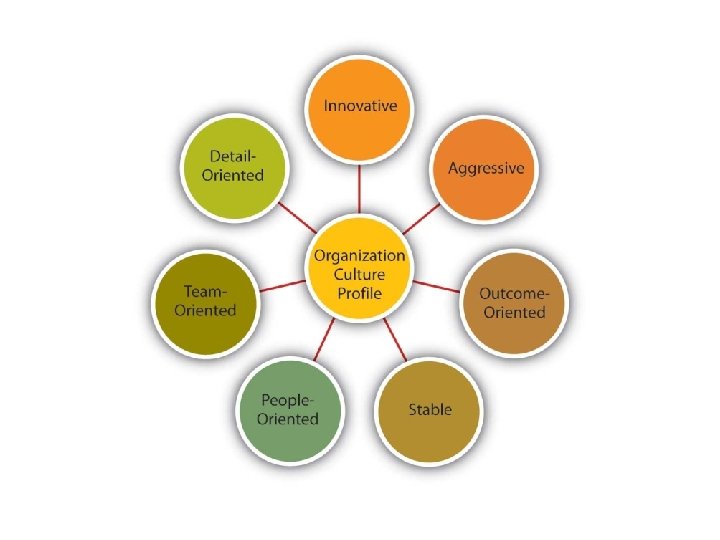
Organizational Culture Profile (OCP) O’Reily, Chatman and Caldwell (1991) “A system of shared meaning held by members -- a set of characteristics that the organization values. ” 1) 2) 3) 4) Innovative Aggressive Outcome Oriented Stability/Status Quo 5) People Oriented 6) Team Oriented 7) Detail Oriented
NEW SLIDE
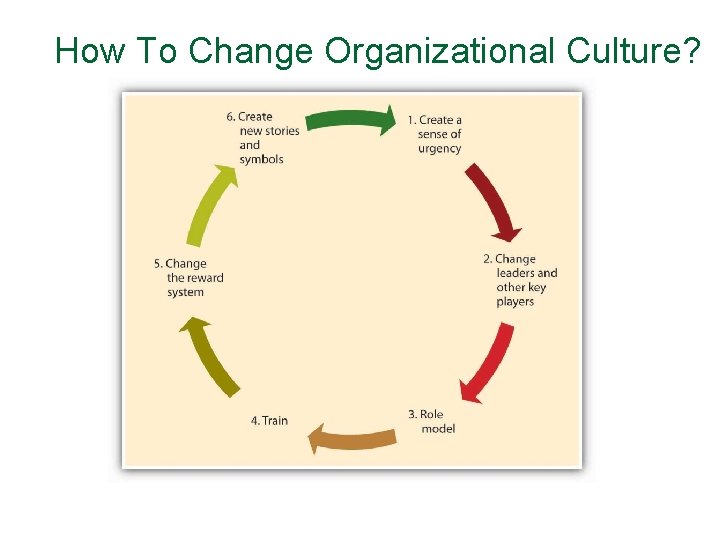
How To Change Organizational Culture?
Peak at the Edge
Jay Lorsch • Culture is not something that is created by Human Resource programs or a poster campaign and bumper stickers, • Culture is created and changed when an organization implements a new strategy, set of policies or procedures (how things will be done) 22
Tribes Leadership Dave Logan, John King and Halee Fischer-Wright • Basic theory is that people form into natural groups (tribes with membership limited to no more than 150) • Challenge for management and leadership is to get the tribes to share a common set of values and direction 23
Tribes Operate at Different Stages • Stage One: Mood – Despair and Hostility • Theme “Life sucks” • Stage Two: Mood – Apathetic Victim • Theme “My life sucks” • Stage Three: Mood – Lone Warrior • Theme “I’m great you’re not • Stage Four: Mood – Tribal Pride • Theme ”We’re great you’re not • Stage Five: Mood – Innocent Wonderment • Theme “Life is great” 24
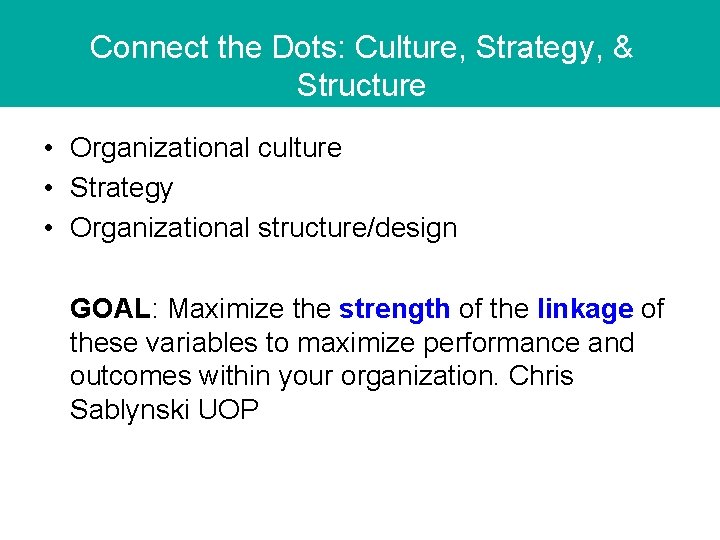
Connect the Dots: Culture, Strategy, & Structure • Organizational culture • Strategy • Organizational structure/design GOAL: Maximize the strength of the linkage of these variables to maximize performance and outcomes within your organization. Chris Sablynski UOP