
Organizational Transactional Analysis A seminar by Marian Timmermans
Organizational Transactional Analysis A seminar by Marian Timmermans

Welcome! Program: • Introduction to zoom, to Marian, to TA Org • The dynamic PRO-triangle • The group as a whole • Wrap up
Organizational Transactional Analysis Application of TA in organizations (EATA) • organizational frames of reference • development, growth and increased effectiveness of the people and/in the organization Rosa Krausz: • collective behavior • psychological approach to behavior in organizations
Organizational Transactional Analysis How I see it: • Take person-in-role as starting point • Take group-as-a-whole as starting point • Aim: development & effectiveness of people in/and organizations Why TA Org is so useful in 21 st century corona times: Framework for understanding reality and reducing complexity in organizations Options!

Role (1) Change is the only constant (VUCA world) We have many roles TA Org focusses on role(s) at work • job description is a start • you need to understand what the organization is for
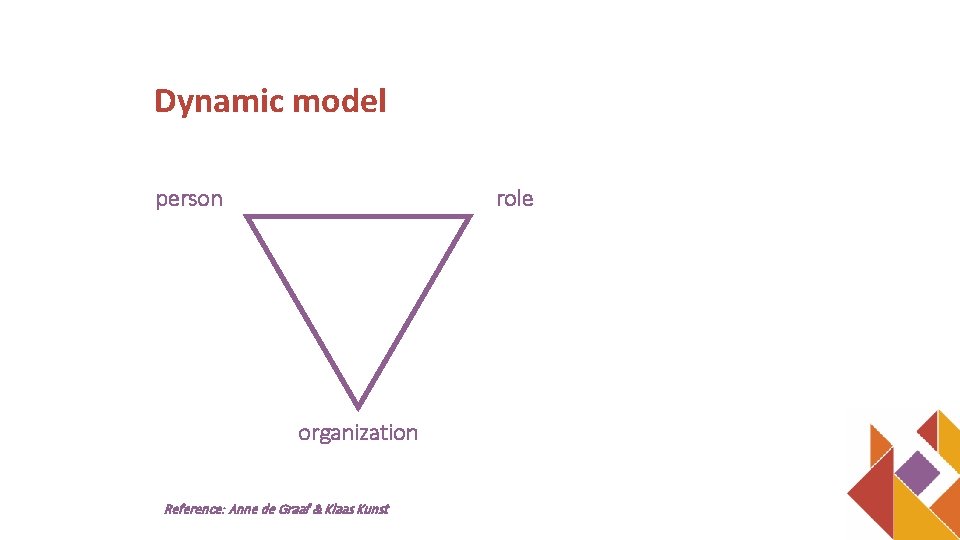
Dynamic model person role organization Reference: Anne de Graaf & Klaas Kunst

PRO in breakout rooms Person: What do you bring (knowledge, experience, personality) and what do you need? What assumptions do you have about your role? Organization : What is the organization for? What does the organization want from you? How does the organization support you in your role? Role: What are your tasks? What would the organization miss if you weren’t there? How do you understand your role?
Role (2) • Dynamic model • Formal and informal roles • Bernd Schmid: private, organizational, professional role
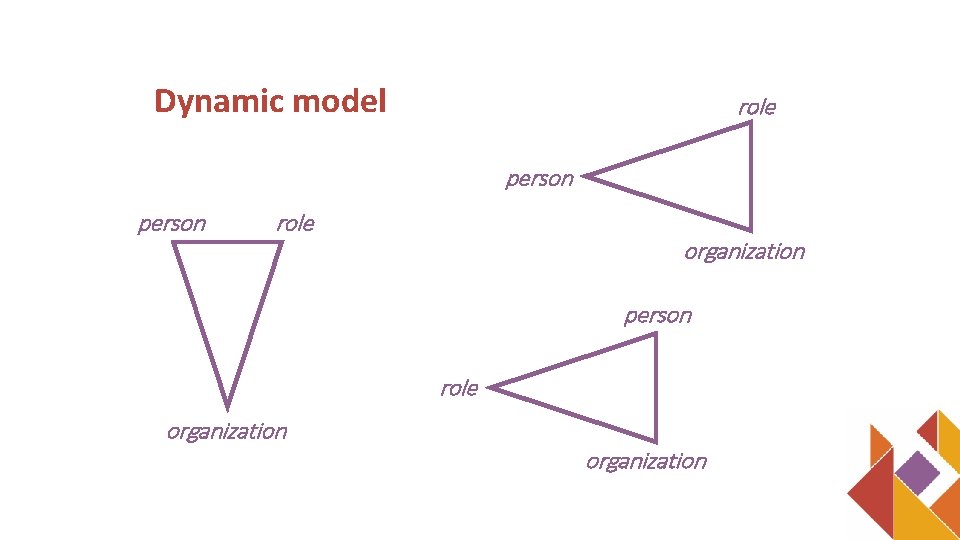
Dynamic model role person role organization
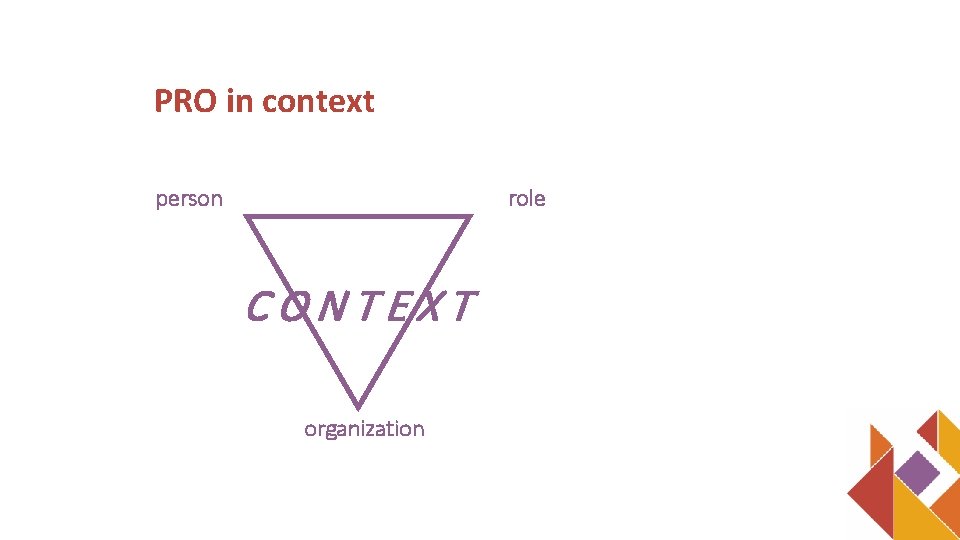
PRO in context person role CONTEXT organization

The group-as-a-whole (1) • What is a group? • The group and its culture stay alive, even if all participants/ members have been replaced • Group life under the surface profoundly impacts the effectiveness of a team References: Transactional Analysis Journal e. g. Servaas van Beekum, N. Michel Landaiche
The group-as-a-whole (2) • Berne: people are in groups to prevent biological, psychological and moral decay • Berne: behavior cannot be understood by individual psychology alone • Berne: ‘It is always an easy out for a …consultant in group dynamics to suggest that […the individual (MT)] is in need of personal psychotherapy, but that merely amounts to a confession that the consultant has reached the end of his rope, as far as his knowledge of group dynamics is concerned’ (Structure and dynamics, p. 191)
Games in teams • Psychological game: something of importance is not on the table, but is ‘worked with’ in an indirect way • Games in teams are permitted by group culture • The whole team is involved (may take a while to notice…)
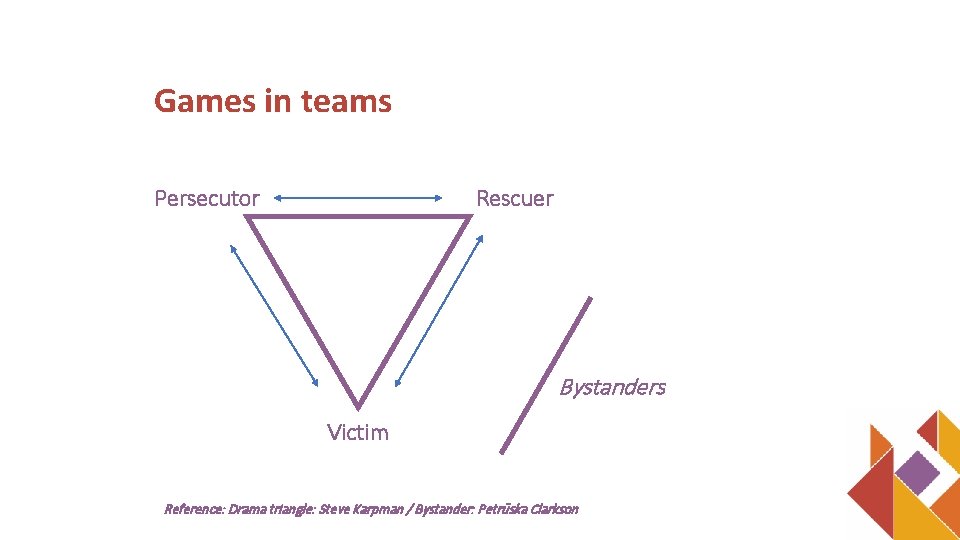
Games in teams Persecutor Rescuer Bystanders Victim Reference: Drama triangle: Steve Karpman / Bystander: Petrūska Clarkson
Games in teams: break out rooms • Decide which case to discuss (confidentiality!) • Then focus on the Bystanders: What do they do? How do they influence the group Game? • What question would you want to ask this team?
Organizational Transactional Analysis What do you take with you from this seminar -> to your professional self -> to your organization?
Contact? mail@mariantimmermansconsult. nl www. mariantimmermansconsult. nl +316 533 24483
- Slides: 17