
ORGANIZATIONAL STRUCTURE Chapter 12 Lecture 1 Every Organization

- Slides: 27
ORGANIZATIONAL STRUCTURE Chapter 12 Lecture 1
Every Organization has a Structure n. But structures can differ u. Due to choice u. Due to national laws n. The words used to describe them also can differ u. Organization chart, design, structure n. The way they are drawn can differ u pyramid, sideways pyramid, circle
The Structural Configuration is the skeleton of the organization n reflects corporate governance n is intended to meet organizational objectives n arises out of strategic directions n and causes managers to ask: u what structure will best aid us in meeting our strategy and objectives? n
Restructuring Occurs for Many Reasons Turnover in top management n Competitive positioning n Mergers and/or acquisitions n Cost-savings n Even the illusion of managerial control n
The Illusion of Managerial Control “We trained hard—but it seemed that every time we were beginning to form up into teams, we would be reorganized. I was to learn later in life that we tend to meet any new situation by reorganizing; and a wonderful method it can be for creating the illusion of progress while producing confusion, inefficiency, and demoralization. ” –Petronius Arbiter, 210 B. C.
Structural Choice is Important Because it focuses attention on particular areas n shapes how resources will be used n directs communication flows n defines control and other processes n illustrates people’s roles relative to others’ roles n
Your Job n Understand organizational objectives (articulated in the varied levels of strategy) n Analyze the structure n Assess the match between organizational strategies and structures
Top Managers Answer to a Power Greater than Themselves n n n God or conscience in a wholly owned private firm The family in a family owned firm The Board in a publicly owned firm: u U. S. boards often are chaired by the CEO u Boards in U. K. usually are chaired by a non executive u European companies often have a two-tier board t In Germany, duties are split between supervisory and management boards t Spain and France often use an executive committee
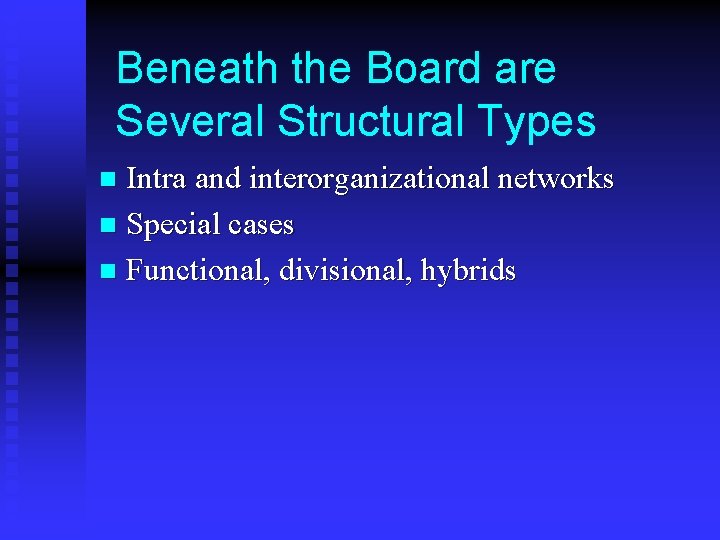
Beneath the Board are Several Structural Types Intra and interorganizational networks n Special cases n Functional, divisional, hybrids n
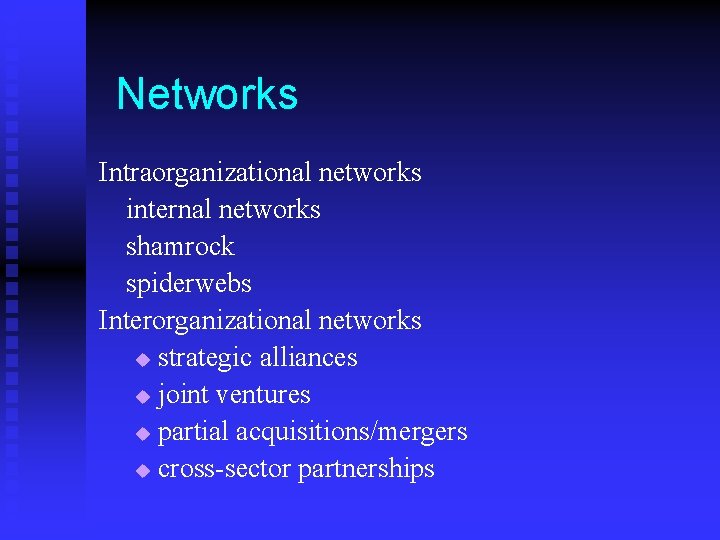
Networks Intraorganizational networks internal networks shamrock spiderwebs Interorganizational networks u strategic alliances u joint ventures u partial acquisitions/mergers u cross-sector partnerships
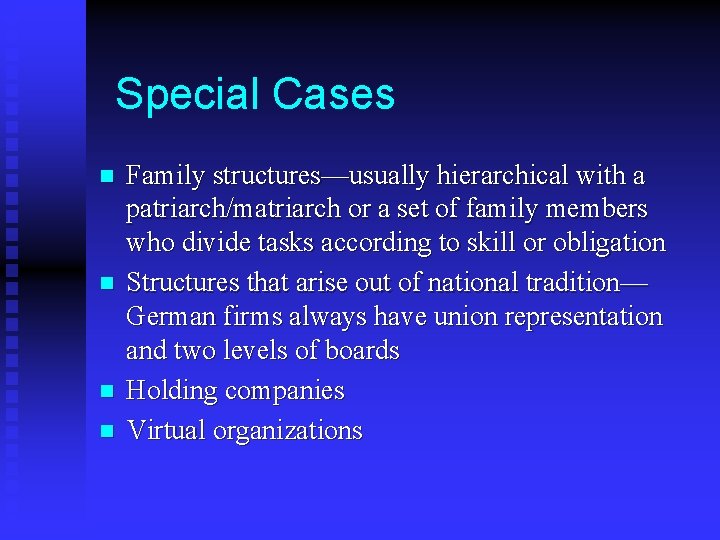
Special Cases Family structure n Holding companies n Virtual structure n
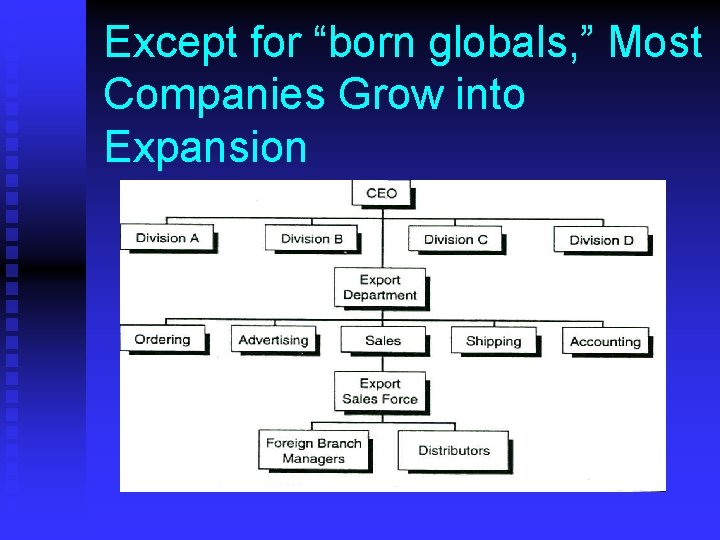
Except for “born globals, ” Most Companies Grow into Expansion
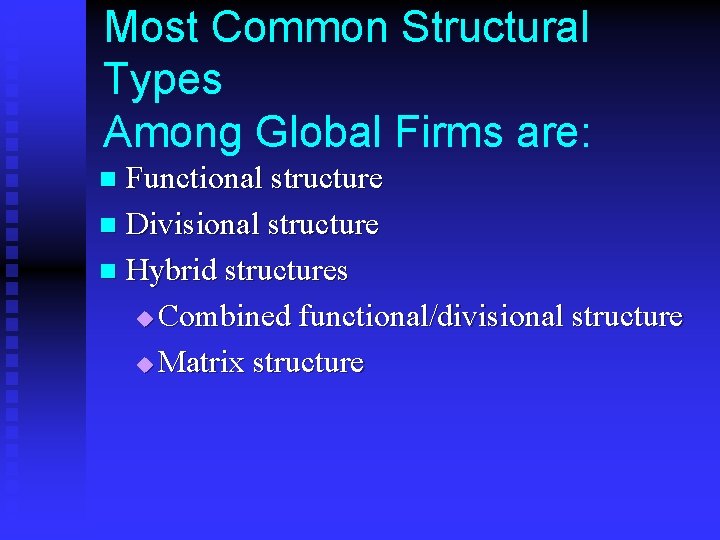
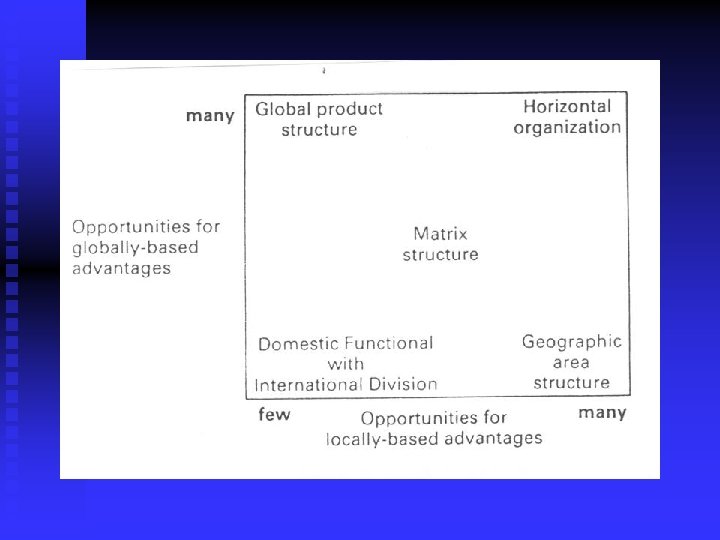
Most Common Structural Types Among Global Firms are: Functional structure n Divisional structure n Hybrid structures u Combined functional/divisional structure u Matrix structure n
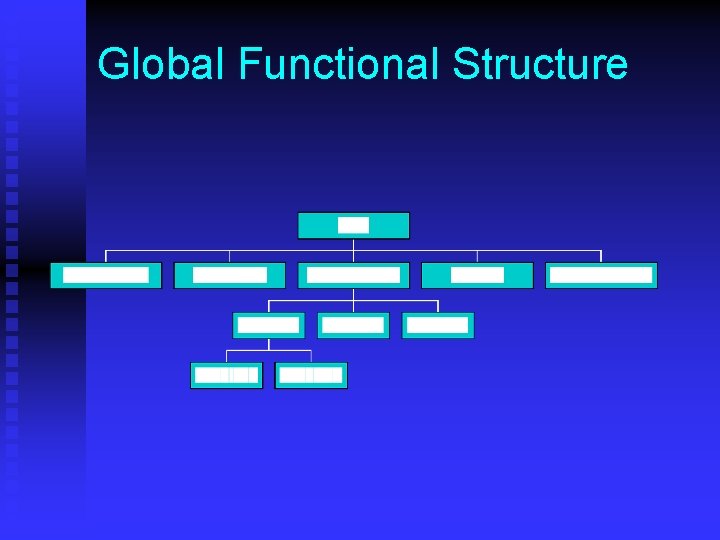
Global Functional Structure
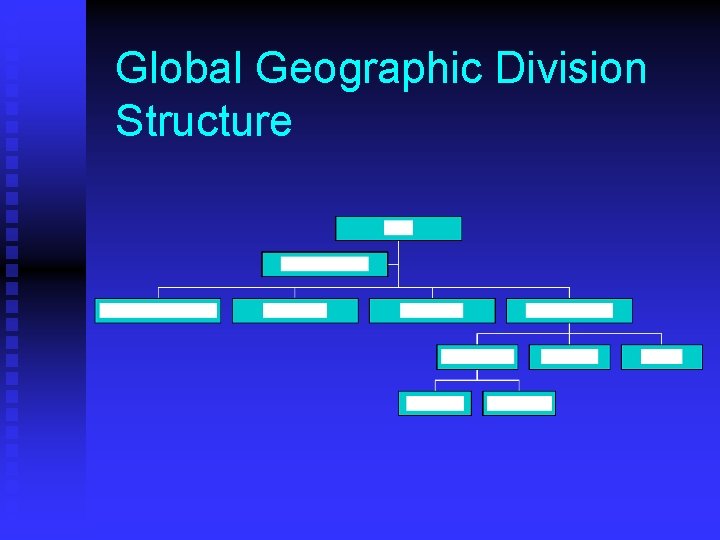
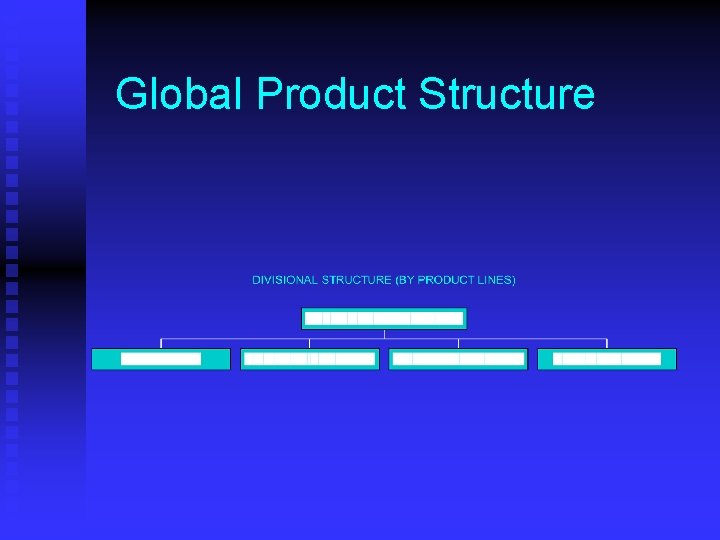
Divisional Structure Can Take Different Forms Product n Geographic n Customer group served n
Global Geographic Division Structure
Global Product Structure
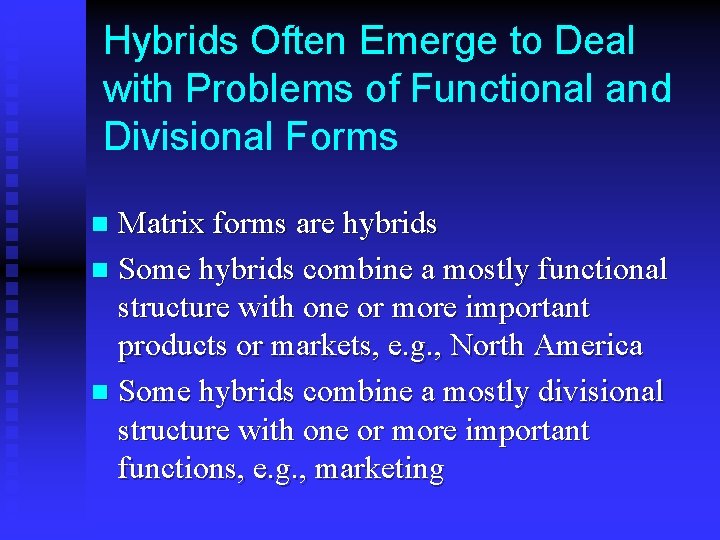
Hybrids Often Emerge to Deal with Problems of Functional and Divisional Forms Matrix forms are hybrids n Some hybrids combine a mostly functional structure with one or more important products or markets, e. g. , North America n Some hybrids combine a mostly divisional structure with one or more important functions, e. g. , marketing n
We Use a Matrix to Organize Roles and Relationships in Business Education
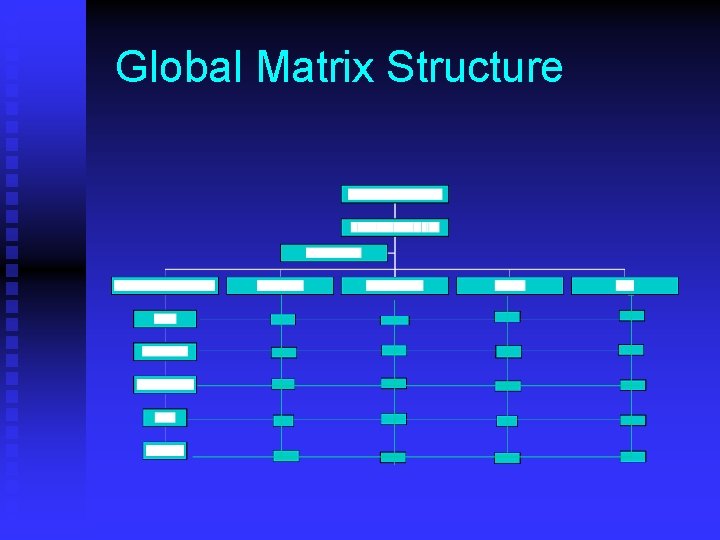
Global Matrix Structure
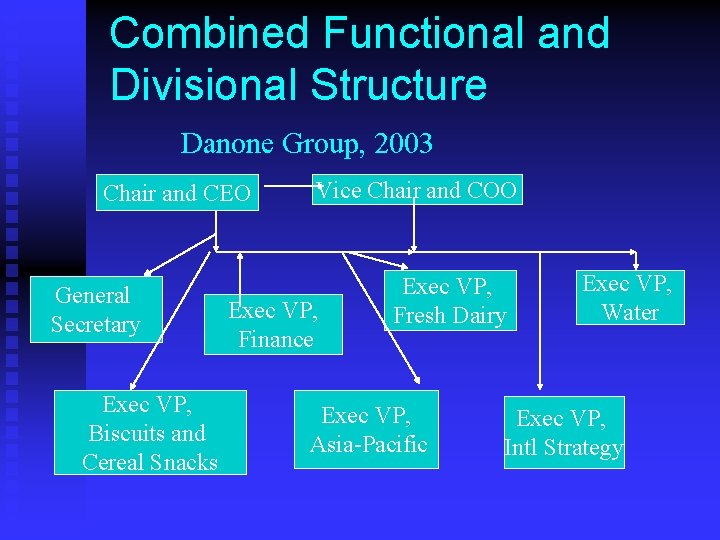
Combined Functional and Divisional Structure Danone Group, 2003 Chair and CEO General Secretary Exec VP, Biscuits and Cereal Snacks Vice Chair and COO Exec VP, Finance Exec VP, Fresh Dairy Exec VP, Asia-Pacific Exec VP, Water Exec VP, Intl Strategy
Intraorganizational Structures n n n n spiderwebs internal networks shamrocks horizontal keiretsu chaebol
Mitsubishi Group Network
Mitsubishi Village
Interorganizational Structures Strategic alliances n Joint ventures n Partial acquisitions n
Special Cases n n Family structures—usually hierarchical with a patriarch/matriarch or a set of family members who divide tasks according to skill or obligation Structures that arise out of national tradition— German firms always have union representation and two levels of boards Holding companies Virtual organizations