
Organizational Structure and Governance Corporation A legal entity


- Slides: 50
Organizational Structure and Governance
Corporation § A legal entity formed for business activities § Treated as a separate and unique “person” under the law
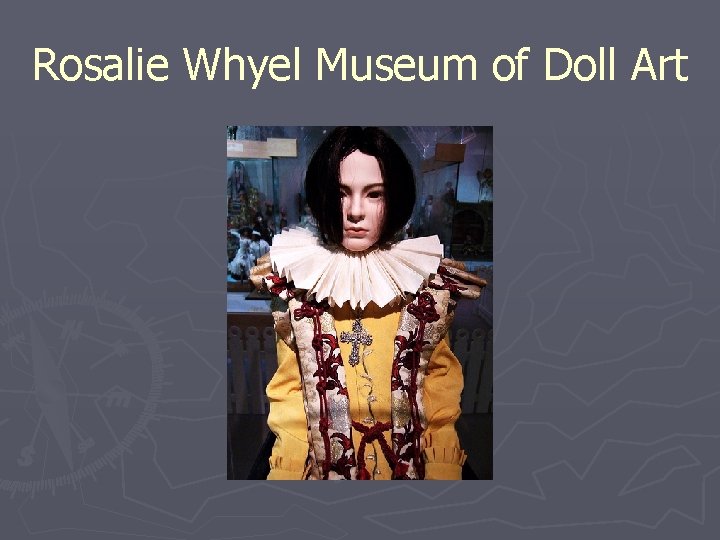
Rosalie Whyel Museum of Doll Art
Nonprofit Museum Definition: AAM museum is ”a nonprofit permanent establishment, not existing primarily for the purpose of conducting temporary exhibitions, exempt from federal and state income taxes, open to the public and administered in the public interest, for the purpose of conserving and presenting, studying, interpreting, assembling, and exhibiting to the public for its instruction and enjoyment objects and specimens of educational and cultural value, including artistic, scientific (whether animate or inanimate), historical, and technological material. ” ►A
Nonprofit Museum Definition: US Congress museum is “a public or private nonprofit agency or institution organized on a permanent basis for essentially educational or aesthetic purposes which, utilizing a professional staff, owns or utilizes tangible objects, cares for them, and exhibits them to the public on a regular basis. ” ►A
For-Profit Corporation ►A business entity where the assets of the corporation are held by the corporation ultimately for the benefit of the owners (stock holders)
Nonprofit Corporation ►A charitable business entity where the assets of the corporation are held by the corporation in pursuit of certain public benefits
Major Differences ► Mission vs. Earnings ► Advancement of Mission vs. Increased Profits
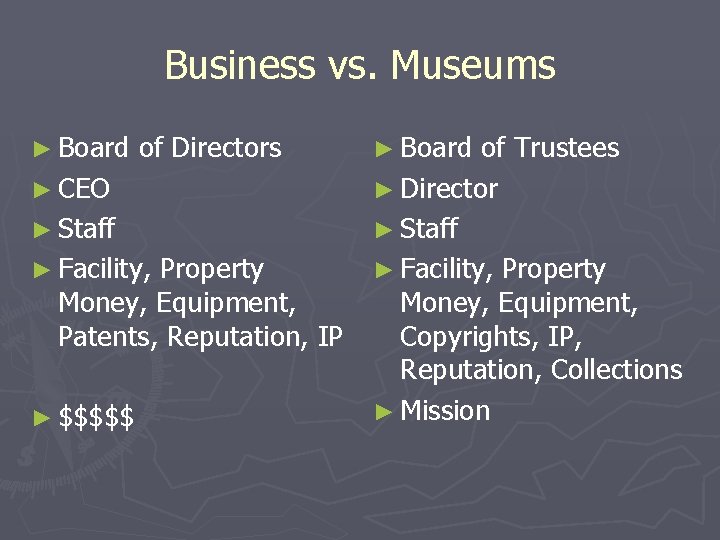
Business vs. Museums ► Board of Directors ► CEO ► Staff ► Facility, Property Money, Equipment, Patents, Reputation, IP ► $$$$$ ► Board of Trustees ► Director ► Staff ► Facility, Property Money, Equipment, Copyrights, IP, Reputation, Collections ► Mission
Two Categories of Nonprofit Museums § Public nonprofit museums § Private nonprofit museums
Private Nonprofits ► Independent corporations ► Achieve public their legal status through the submission of specific legal documents ► Majority of US Museums ~ 55 – 60% ► Examples…
Public Non-Profits ► Not independent Corporations ► Part of a larger corporate body ► Examples …. .
Stakeholder ► Anyone with a vested interest and/or share in the outcome of a venture
Internal Museum Stakeholders ► Board of Trustees ► Staff ► Members ► Donors § Corporate § Individual ► Volunteers
The Board of Trustees ►A body vested with the legal responsibility for the overall governance of the institution ► Legal obligations ► Responsibilities ► Composition ► Organization
Legal Obligations ►First, no compensation or remuneration for service ►Second, legally liable for any malfeasance, fraud, negligence, or even mistake of judgment
Primary Board Responsibilities ► Fiduciary Duty – To manage and raise funds ► Policy Duty – Develop and adopt institutional policies ► Personnel Duty – Hire and fire the Chief executive office
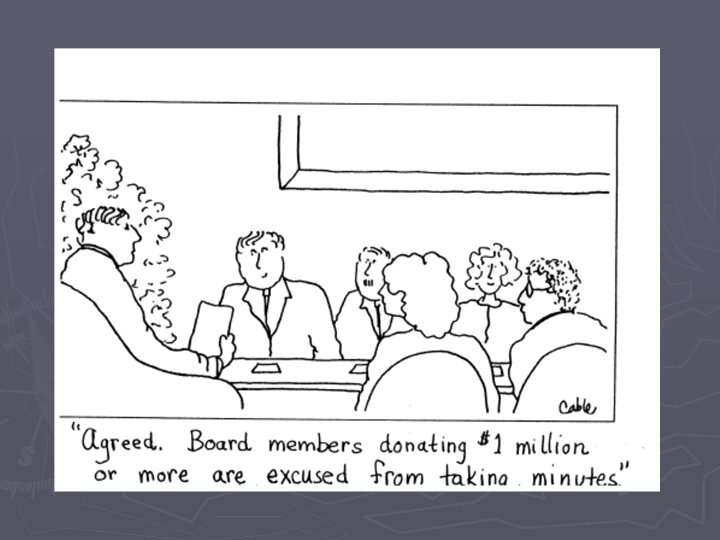
Resistance to Fundraising ► Oversight requires less commitment of time and energy ► Often have great expertise in oversight, but not at fundraising ► Fundraising requires a serious commitment of time, energy, and wealth
Museum Organizational Policies: Institutional ► Mission Statement—statement of institutional purpose and goals ► Code of Ethics—trustee, staff, and institutional guidelines and procedures for standards of behavior and operations ► By-Laws—specific organizational guidelines for board, director, and membership
Museum Organizational Policies: Operational Management—operational structure, delegation of authority, charge of responsibilities, operational ethics ► Financial—revenue, debts, audits, insurance ► Personnel—benefits, grievances, procedures ► Collections: § Acquisition—selection, accession, documentation, records § Care—research, storage, conservation § Use—access, loans, interpretation, reproductions § Disposition—deaccession, exchange, donation, sale, destruction ►
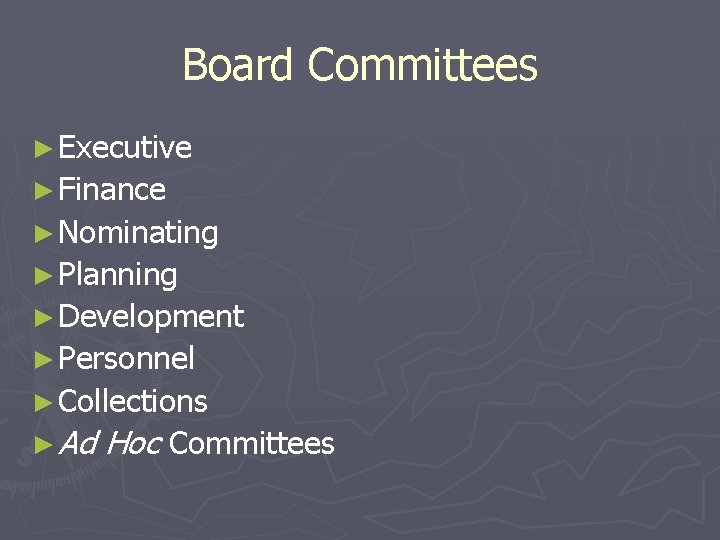
Board Committees ► Executive ► Finance ► Nominating ► Planning ► Development ► Personnel ► Collections ► Ad Hoc Committees
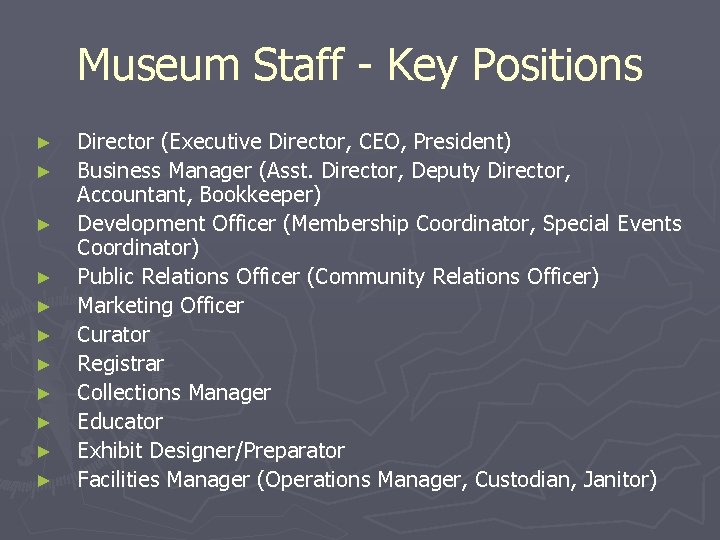
Museum Staff - Key Positions ► ► ► Director (Executive Director, CEO, President) Business Manager (Asst. Director, Deputy Director, Accountant, Bookkeeper) Development Officer (Membership Coordinator, Special Events Coordinator) Public Relations Officer (Community Relations Officer) Marketing Officer Curator Registrar Collections Manager Educator Exhibit Designer/Preparator Facilities Manager (Operations Manager, Custodian, Janitor)
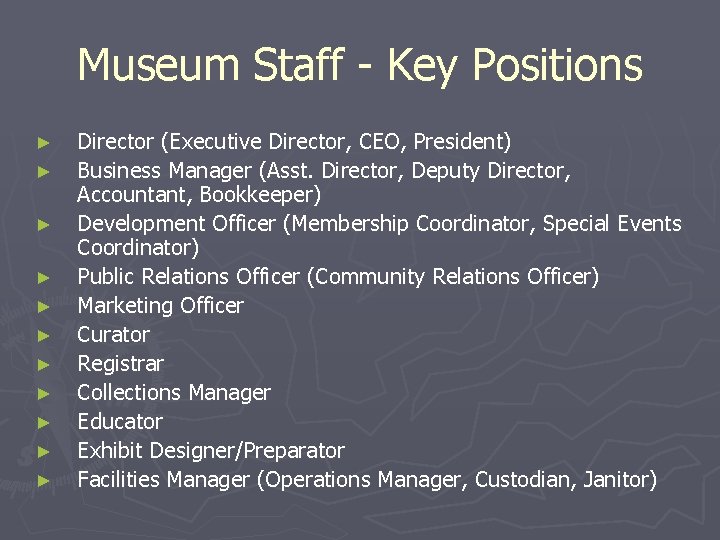
Museum Staff - Key Positions ► ► ► Director (Executive Director, CEO, President) Business Manager (Asst. Director, Deputy Director, Accountant, Bookkeeper) Development Officer (Membership Coordinator, Special Events Coordinator) Public Relations Officer (Community Relations Officer) Marketing Officer Curator Registrar Collections Manager Educator Exhibit Designer/Preparator Facilities Manager (Operations Manager, Custodian, Janitor)
Membership - Benefits 1. 2. 3. 4. Source of ongoing revenue Source of donation Source of visitors Marketing/Advertising vehicle
Membership - Liabilities ► Loss of institutional control ► Labor intensive activity ► $$$$$
Donor Categories ►Corporate—business or corporate donors ►Individual—individual and family donors ►Foundations—private, family or corporate donors
External Museum Stakeholders Visitors. § Local Market. § Tourists—Regional, National, International. ► ► ► K-12 Schools. Colleges and Universities. Researchers. WEB Site Users. Local Vendors. Granting Agencies. ► Governmental Agencies. ► ► Media. Local Vendors. § Public—Governmental. § Private—Foundations. § Politicians.
Articles of Incorporation ► Name of the corporation ► Principal place of business ► Official address of the corporation ► Statement of purpose ► Statement on membership ► Number of trustees ► Name of the incorporators
Three IRS Tax Code Sections § Section 501: ►Generally pertains to all educational, nonprofit, taxexempt museum organizations ►Two subsections of significance: § 501(c)1 Museums chartered by Congress § 501(c)3 Museums that receive broad public support § Section 509: ►Generally pertains to museum-related foundations— institution founded and supported by an endowment for the benefit of a third party § Section 170: ►Generally pertains to public museums—typically those museums owned by the states, counties, or municipalities
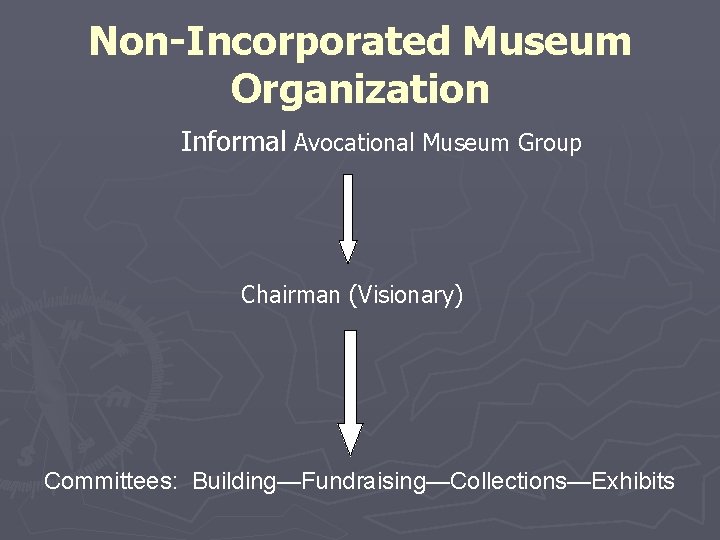
Non-Incorporated Museum Organization Informal Avocational Museum Group Chairman (Visionary) Committees: Building—Fundraising—Collections—Exhibits
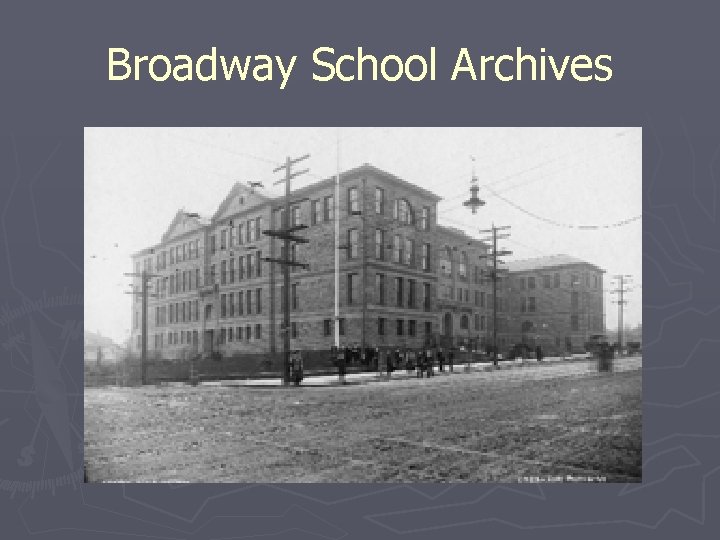
Broadway School Archives
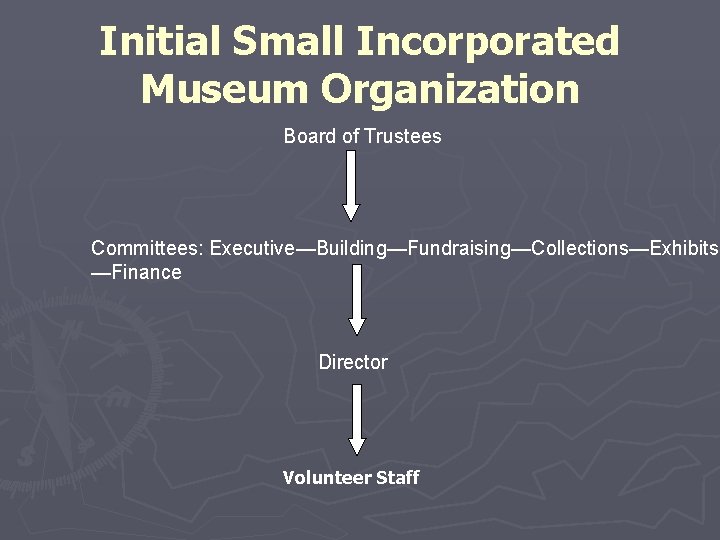
Initial Small Incorporated Museum Organization Board of Trustees Committees: Executive—Building—Fundraising—Collections—Exhibits —Finance Director Volunteer Staff
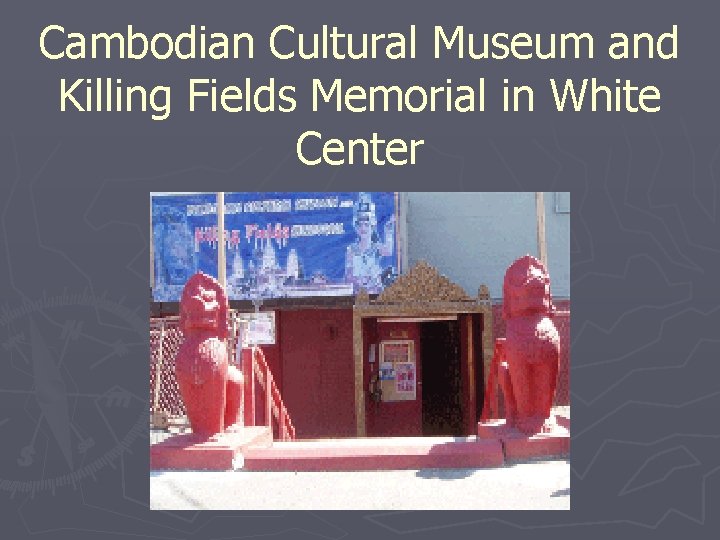
Cambodian Cultural Museum and Killing Fields Memorial in White Center
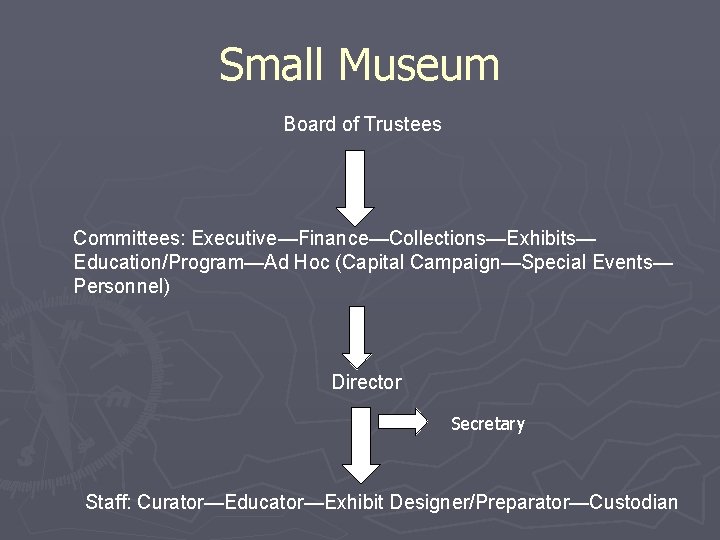
Small Museum Board of Trustees Committees: Executive—Finance—Collections—Exhibits— Education/Program—Ad Hoc (Capital Campaign—Special Events— Personnel) Director Secretary Staff: Curator—Educator—Exhibit Designer/Preparator—Custodian
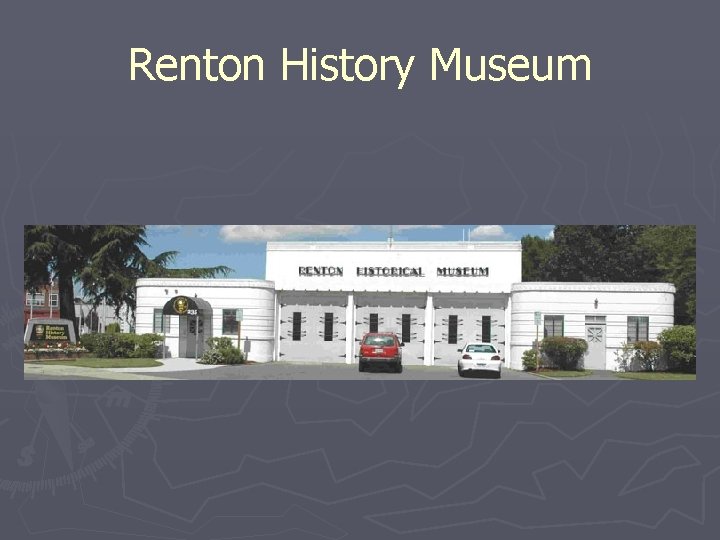
Renton History Museum
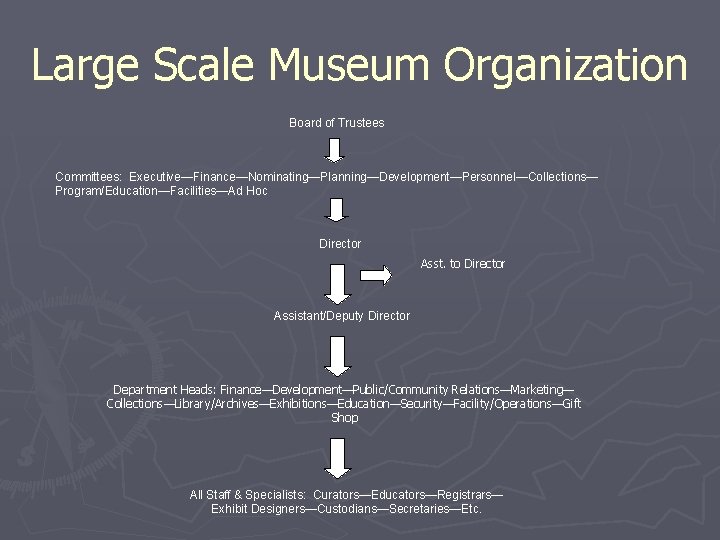
Large Scale Museum Organization Board of Trustees Committees: Executive—Finance—Nominating—Planning—Development—Personnel—Collections— Program/Education—Facilities—Ad Hoc Director Asst. to Director Assistant/Deputy Director Department Heads: Finance—Development—Public/Community Relations—Marketing— Collections—Library/Archives—Exhibitions—Education—Security—Facility/Operations—Gift Shop All Staff & Specialists: Curators—Educators—Registrars— Exhibit Designers—Custodians—Secretaries—Etc.
Museum of Flight
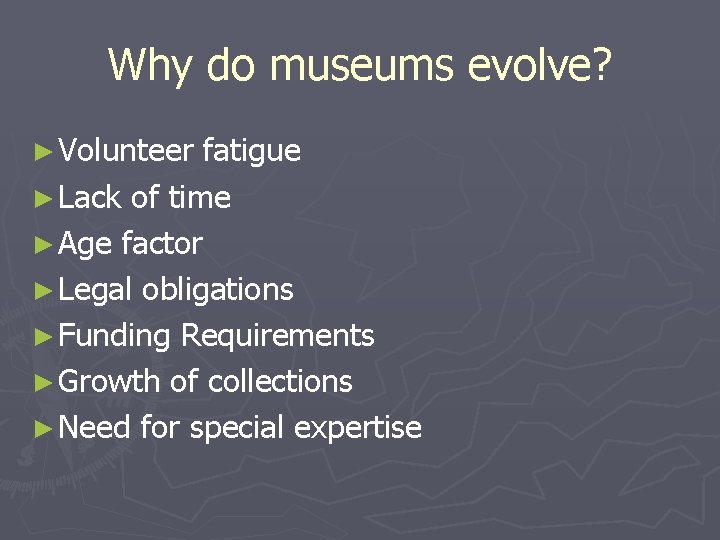
Why do museums evolve? ► Volunteer fatigue ► Lack of time ► Age factor ► Legal obligations ► Funding Requirements ► Growth of collections ► Need for special expertise
Mission vs. Vision ► The mission statement is derived from the statement of purpose in the articles of incorporation ► The vision is derived from the Mission Both mission and vision are critical components of the process of strategic planning in Museums
Legal Codes ► Law provides a lower stand but has more clout ► Law is the lowest standard but can insist on higher standards
Ethical Codes ► Grounded in personal accountability ► Voluntary adherence ► Exceed legal standards and provide
Duties of Trustees 1. 2. 3. 4. Due diligence with regard to mission Avoid conflicts of interest Perform duties with reasonable of duty and care Perform duties with Reasonable amount of duty and care
Donors ► Types 1. 2. 3. ► Corporate Individual Foundations Cultivation
Museums v. Business Corporations ► Governance ► Management ► Personnel ► Assets ► Accountability ► Corporate Goal
Manufacturer vs. Museum Operations 1. 2. 3. 4. 5. 6. Project Seed Money Raw Materials Research Production Marketing Profit
The Creation of a Museum ► By-laws - A code of rules adopted for the regulation or management of the business and affairs of the corporation ► Incorporation § Articles of Incorporation ► Mission