
Organizational Life Cycles Bailey Johnson Amanda Kurz UGA
Organizational Life Cycles Bailey Johnson & Amanda Kurz UGA Institute for Nonprofit Organizations
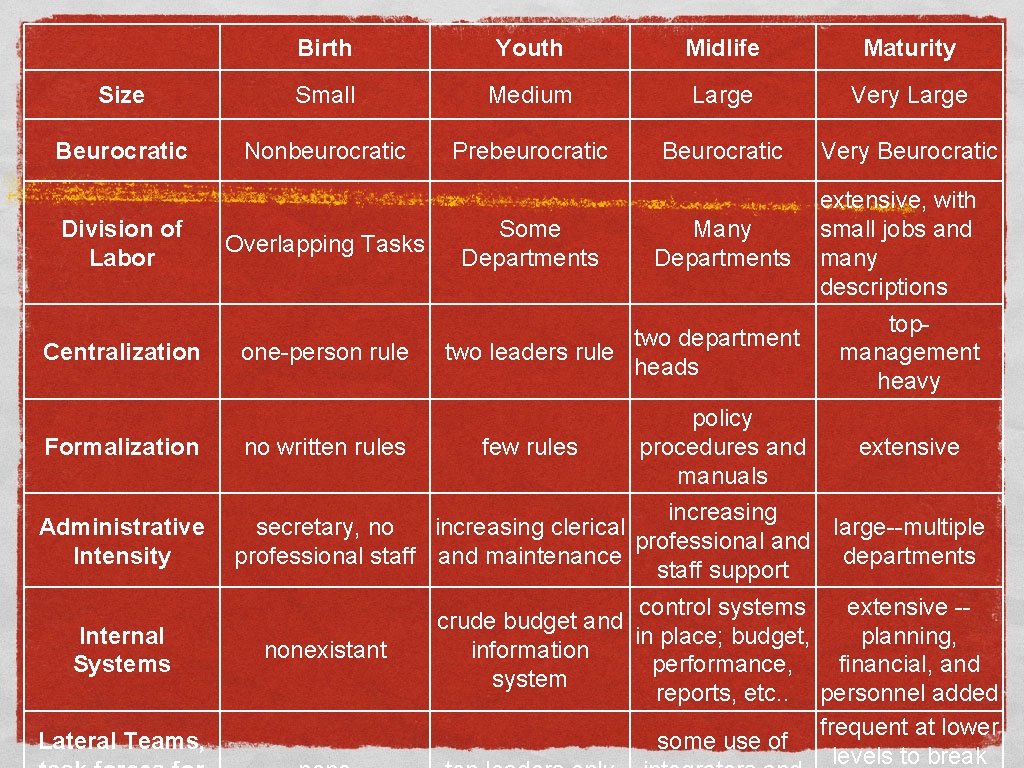
Birth Youth Midlife Maturity Size Small Medium Large Very Large Beurocratic Nonbeurocratic Prebeurocratic Beurocratic Very Beurocratic Division of Labor Centralization Formalization Administrative Intensity Internal Systems Lateral Teams, Overlapping Tasks Some Departments Many Departments one-person rule two department two leaders rule heads no written rules policy procedures and manuals few rules extensive, with small jobs and many descriptions topmanagement heavy extensive increasing secretary, no increasing clerical large--multiple professional and professional staff and maintenance departments staff support nonexistant control systems extensive -crude budget and in place; budget, planning, information performance, financial, and system reports, etc. . personnel added frequent at lower some use of levels to break
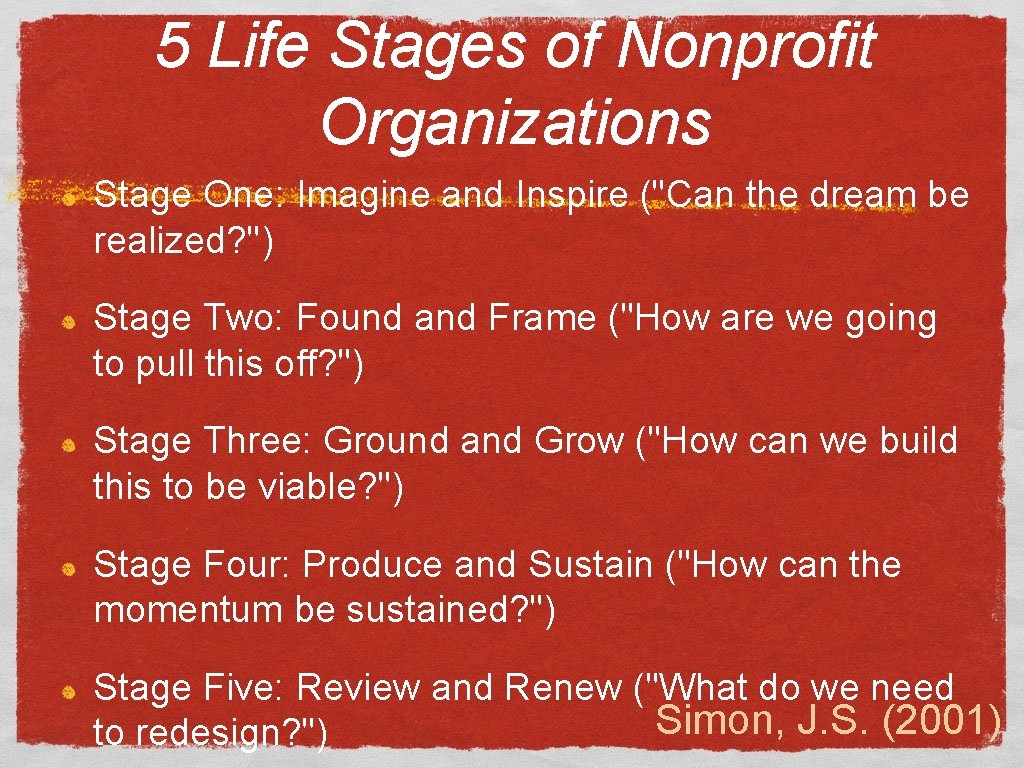
5 Life Stages of Nonprofit Organizations Stage One: Imagine and Inspire ("Can the dream be realized? ") Stage Two: Found and Frame ("How are we going to pull this off? ") Stage Three: Ground and Grow ("How can we build this to be viable? ") Stage Four: Produce and Sustain ("How can the momentum be sustained? ") Stage Five: Review and Renew ("What do we need Simon, J. S. (2001) to redesign? ")
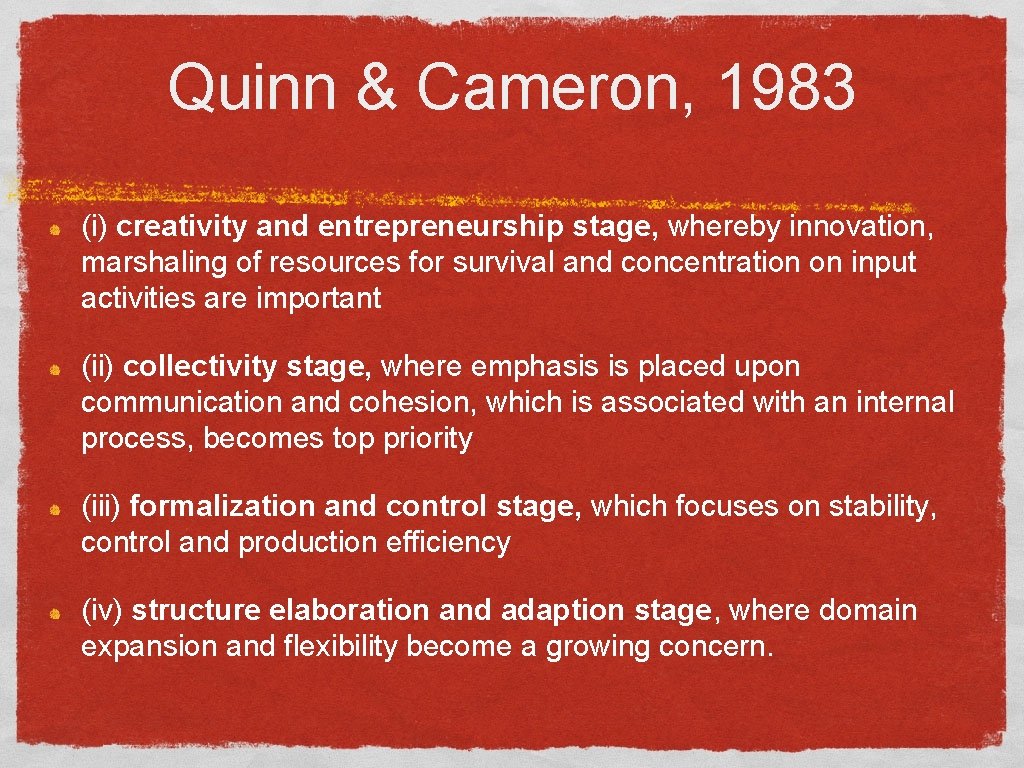
Quinn & Cameron, 1983 (i) creativity and entrepreneurship stage, whereby innovation, marshaling of resources for survival and concentration on input activities are important (ii) collectivity stage, where emphasis is placed upon communication and cohesion, which is associated with an internal process, becomes top priority (iii) formalization and control stage, which focuses on stability, control and production efficiency (iv) structure elaboration and adaption stage, where domain expansion and flexibility become a growing concern.
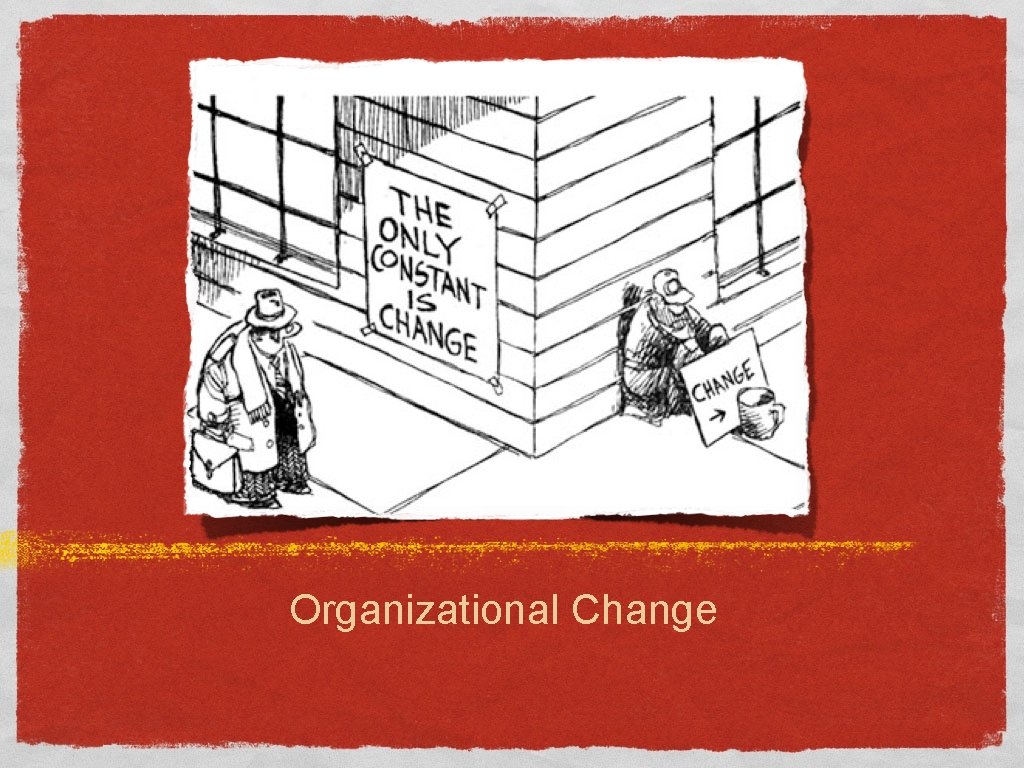
Organizational Change
Effective Change Phase 1: Motivating Change Phase 2: Creating Vision Phase 3: Developing Political Support Phase 4: Managing Transition Phase 5: Sustaining Momentum

Roles During Change Initiator Change Agent Champion for Change Sponsor for Change Leadership, Supervision and Delegation
Application Activity Split into groups. Read the article. Describe in which stage of the organizational life cycle this nonprofit orgainzation resides. How can you tell? What changes would you recommend for this organization to further develop or move to the next stage?
Resources Mc. Namara, C. (2008). Field guide to leadership and supervision. Minneapolis, MN: Authenticity Consulting. www. managementhelp. org Chin, D. C. W. (1994). Organizational life cycle: a review and proposed directions for research. Mid. Atlantic Journal of Business. From www. allbusiness. com.
- Slides: 9