
ORGANIZATIONAL EFFECTIVENESS Discovering How to Make It Happen
- Slides: 16
ORGANIZATIONAL EFFECTIVENESS -Discovering How to Make It Happen Presented by – Barasha Konwar Debanshu Chakravarty Gunjan Pratap Singh Priyakshi Dutta Sarath Chandra M 0079 M 0081 M 0086 M 0101 M 0112 1
Introduction “Organizational effectiveness” is critical to success in any economy. In order to achieve increased and sustainable business results, organizations need to execute strategy and engage employees. To create organizational effectiveness, business leaders need to focus on aligning and engaging their people, the people management systems, the structure and capabilities (including organizational culture) to the strategy. To understand more about the elements of an effective organization and the connection to productivity, “Right Management” conducted a global study of nearly 29, 000 employees from 10 major industry sectors in 15 countries in the Americas, Europe and Asia Pacific. 2
About the GLOBAL STUDY … To arrive at a clearer understanding of engagement drivers impacting critical business metrics such as performance, employee satisfaction, and retention, Right Management conducted a major study of engagement among 28, 810 employees representing a broad range of sectors from 15 countries and 10 different industries in the Americas, Europe, and Asia-Pacific. COUNTRIES United States, Canada, Australia, New Zealand, Brazil, UK, France, Germany, Norway, Sweden, Denmark, China, India, Japan, South Korea INDUSTRIES Agriculture, forestry and fishing; Mining and quarrying; Manufacturing; Electricity, gas and water supply; Construction; Wholesales and retail trade; Restaurants and hotels; Transportation, storage and communication; Finance, insurance, real estates and business services; Government, social and personal services. 3
Basic findings of the survey There are some fundamental relationships between organizational elements that work together to deliver a well-executed strategy through an engaged workforce, resulting in a great customer experience, high performance, and profitability: • A “fit for purpose” structure where people understand expectations and accountabilities • People systems and processes that drive the right behaviors • Capable and credible leadership • A positive work environment 4
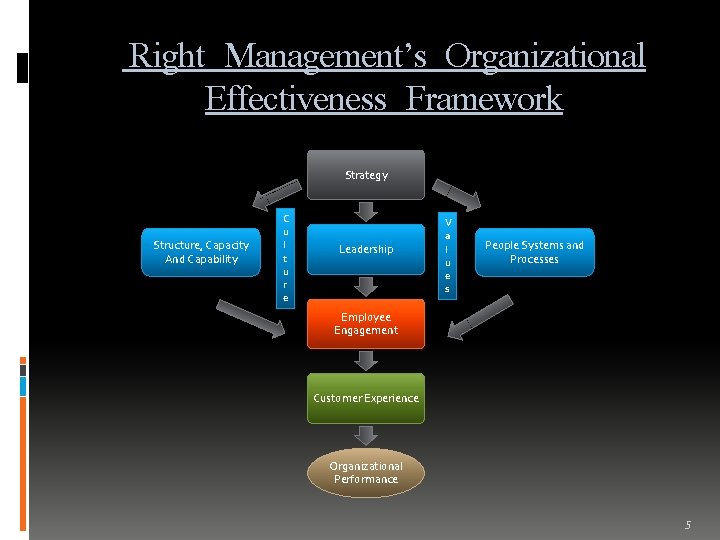
Right Management’s Organizational Effectiveness Framework Strategy Structure, Capacity And Capability C u l t u r e Leadership V a l u e s People Systems and Processes Employee Engagement Customer Experience Organizational Performance 5
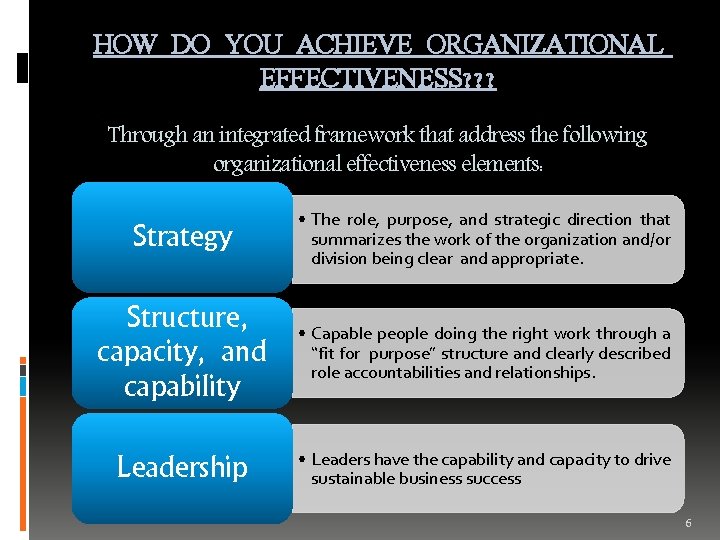
HOW DO YOU ACHIEVE ORGANIZATIONAL EFFECTIVENESS? ? ? Through an integrated framework that address the following organizational effectiveness elements: Strategy • The role, purpose, and strategic direction that summarizes the work of the organization and/or division being clear and appropriate. Structure, capacity, and capability • Capable people doing the right work through a “fit for purpose” structure and clearly described role accountabilities and relationships. Leadership • Leaders have the capability and capacity to drive sustainable business success 6
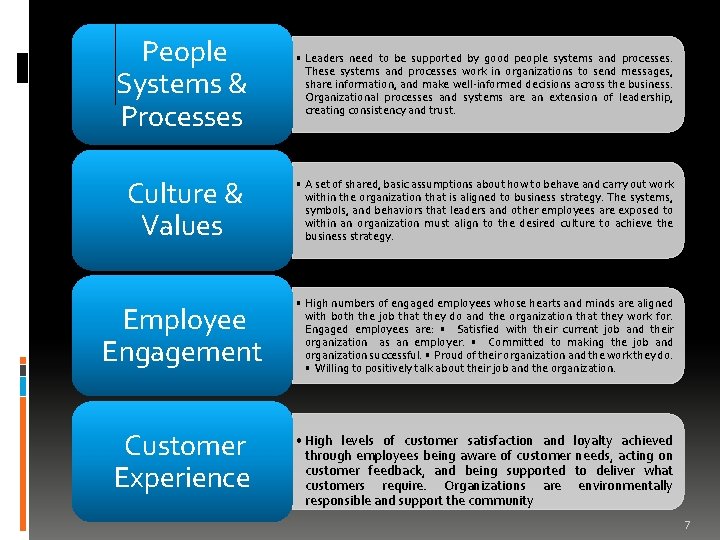
People Systems & Processes • Leaders need to be supported by good people systems and processes. These systems and processes work in organizations to send messages, share information, and make well-informed decisions across the business. Organizational processes and systems are an extension of leadership, creating consistency and trust. Culture & Values • A set of shared, basic assumptions about how to behave and carry out work within the organization that is aligned to business strategy. The systems, symbols, and behaviors that leaders and other employees are exposed to within an organization must align to the desired culture to achieve the business strategy. Employee Engagement • High numbers of engaged employees whose hearts and minds are aligned with both the job that they do and the organization that they work for. Engaged employees are: • Satisfied with their current job and their organization as an employer. • Committed to making the job and organization successful. • Proud of their organization and the work they do. • Willing to positively talk about their job and the organization. Customer Experience • High levels of customer satisfaction and loyalty achieved through employees being aware of customer needs, acting on customer feedback, and being supported to deliver what customers require. Organizations are environmentally responsible and support the community 7
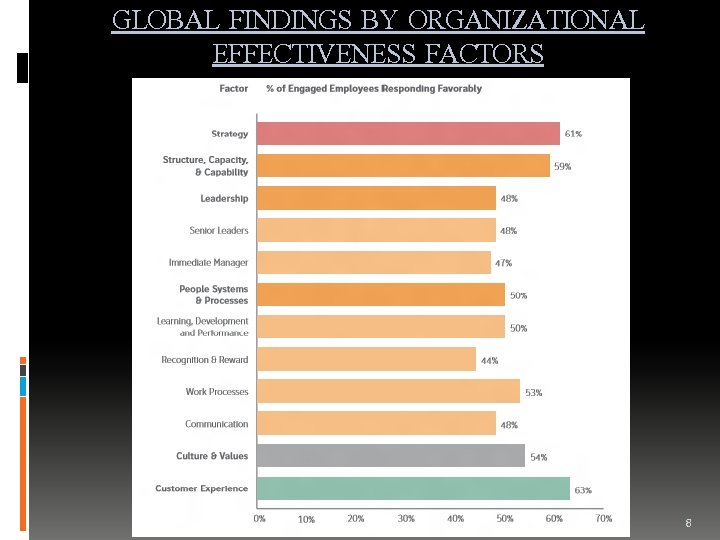
GLOBAL FINDINGS BY ORGANIZATIONAL EFFECTIVENESS FACTORS 8
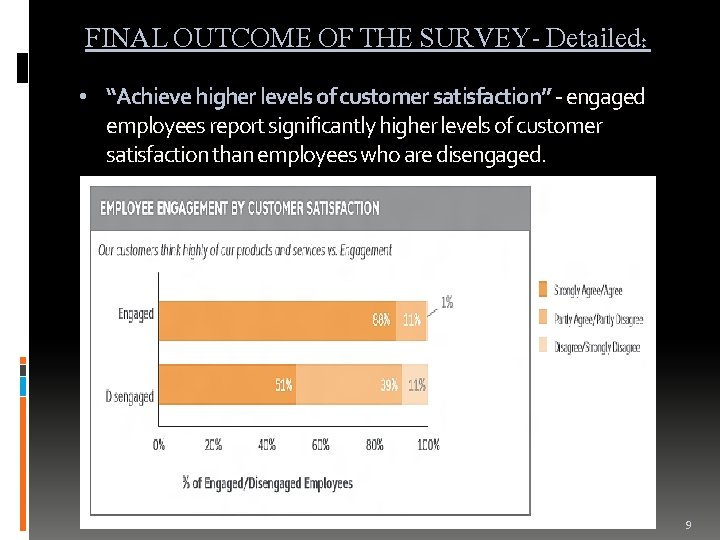
FINAL OUTCOME OF THE SURVEY- Detailed: • “Achieve higher levels of customer satisfaction” - engaged employees report significantly higher levels of customer satisfaction than employees who are disengaged. 9
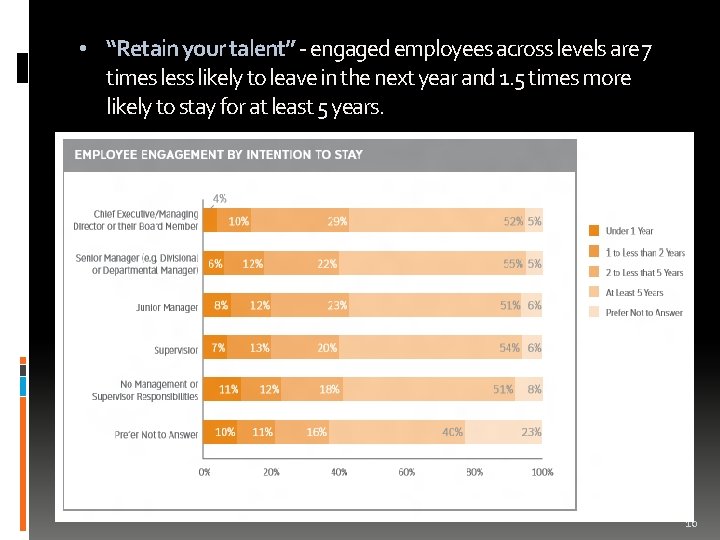
• “Retain your talent” - engaged employees across levels are 7 times less likely to leave in the next year and 1. 5 times more likely to stay for at least 5 years. 10
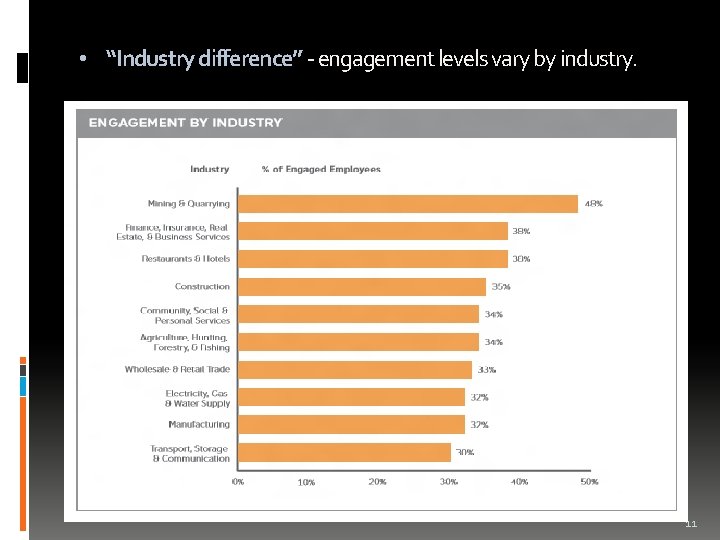
• “Industry difference” - engagement levels vary by industry. 11
Getting It Right Management has worked with thousands of organizations, using an approach that incorporates robust research and skill development methodologies with real business application. As experts in the areas of talent assessment, leader development, employee engagement, and organizational effectiveness, our solution is proven and equips companies to create high levels of capability to deliver their strategy and achieve sustainable, improved business performance. 12
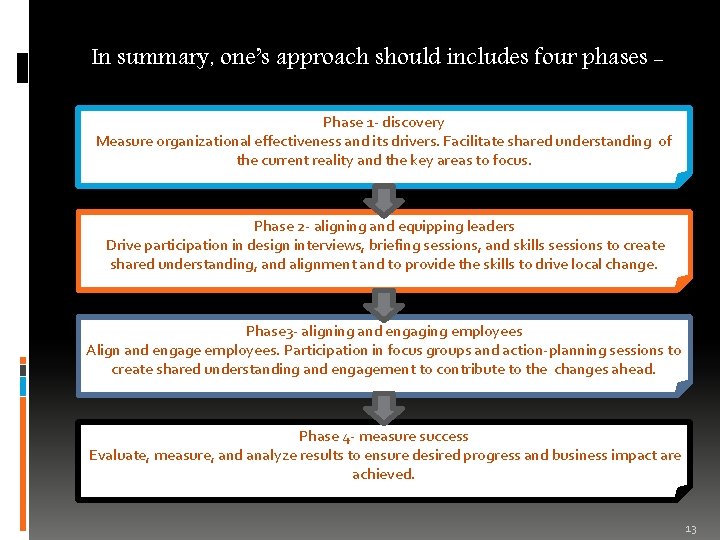
In summary, one’s approach should includes four phases Phase 1 - discovery Measure organizational effectiveness and its drivers. Facilitate shared understanding of the current reality and the key areas to focus. Factors Affecting Organizational Success Phase 2 - aligning and equipping leaders Drive participation in design interviews, briefing sessions, and skills sessions to create shared understanding, and alignment and to provide the skills to drive local change. Phase 3 - aligning and engaging employees Align and engage employees. Participation in focus groups and action-planning sessions to create shared understanding and engagement to contribute to the changes ahead. Phase 4 - measure success Evaluate, measure, and analyze results to ensure desired progress and business impact are achieved. 13
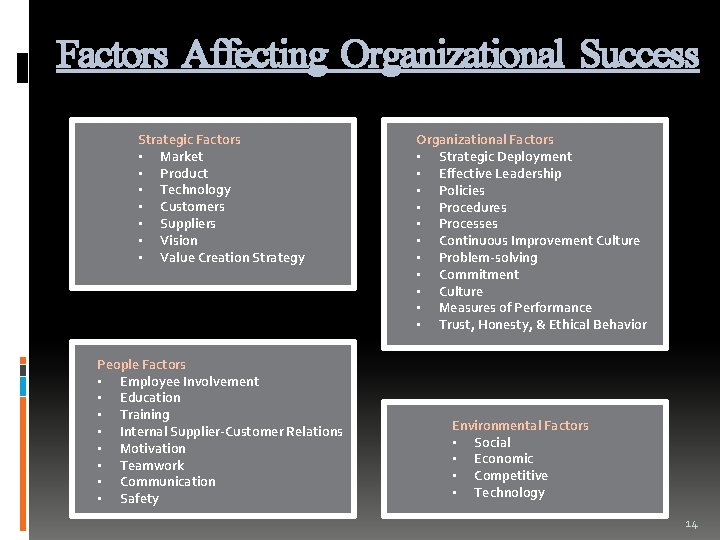
Factors Affecting Organizational Success Strategic Factors • Market • Product • Technology • Customers • Suppliers • Vision • Value Creation Strategy People Factors • Employee Involvement • Education • Training • Internal Supplier-Customer Relations • Motivation • Teamwork • Communication • Safety Organizational Factors • Strategic Deployment • Effective Leadership • Policies • Procedures • Processes • Continuous Improvement Culture • Problem-solving • Commitment • Culture • Measures of Performance • Trust, Honesty, & Ethical Behavior Environmental Factors • Social • Economic • Competitive • Technology 14
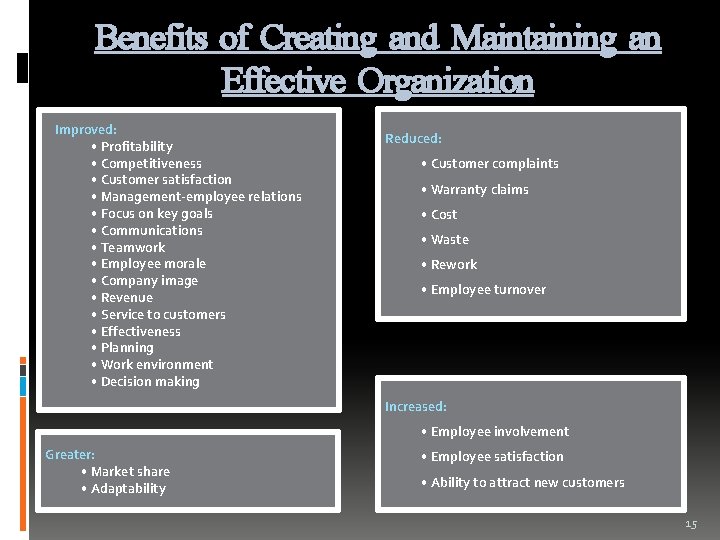
Benefits of Creating and Maintaining an Effective Organization Improved: • Profitability • Competitiveness • Customer satisfaction • Management-employee relations • Focus on key goals • Communications • Teamwork • Employee morale • Company image • Revenue • Service to customers • Effectiveness • Planning • Work environment • Decision making Reduced: • Customer complaints • Warranty claims • Cost • Waste • Rework • Employee turnover Increased: • Employee involvement Greater: • Market share • Adaptability • Employee satisfaction • Ability to attract new customers 15
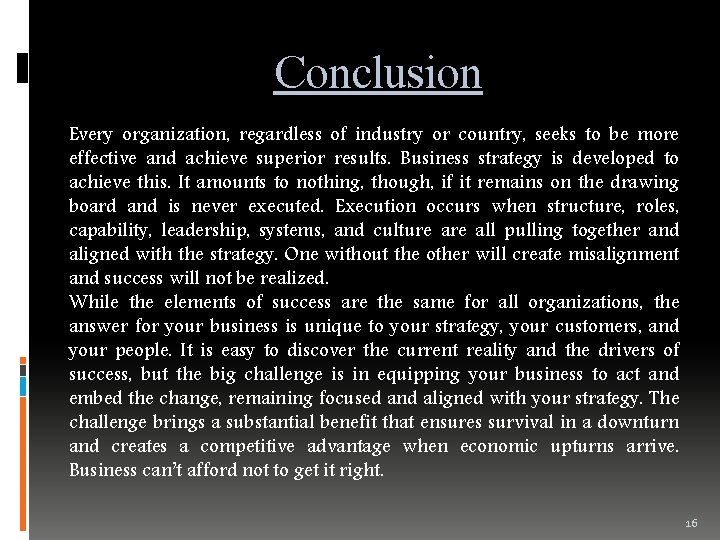
Conclusion Every organization, regardless of industry or country, seeks to be more effective and achieve superior results. Business strategy is developed to achieve this. It amounts to nothing, though, if it remains on the drawing board and is never executed. Execution occurs when structure, roles, capability, leadership, systems, and culture all pulling together and aligned with the strategy. One without the other will create misalignment and success will not be realized. While the elements of success are the same for all organizations, the answer for your business is unique to your strategy, your customers, and your people. It is easy to discover the current reality and the drivers of success, but the big challenge is in equipping your business to act and embed the change, remaining focused and aligned with your strategy. The challenge brings a substantial benefit that ensures survival in a downturn and creates a competitive advantage when economic upturns arrive. Business can’t afford not to get it right. 16