
Organizational Design Diagnosis and Development Session 21 Technostructural
- Slides: 29
Organizational Design, Diagnosis, and Development Session 21 Techno-structural Interventions, IV Work Design
Objectives • To review the application of Socio-technical systems to job design • To review the Demand -Control model of job strain • To review Action Theory approach to job design • To understand the implications of the demands of modern manufacturing for job design • To understand the implications of information technologies & teleworking on job design
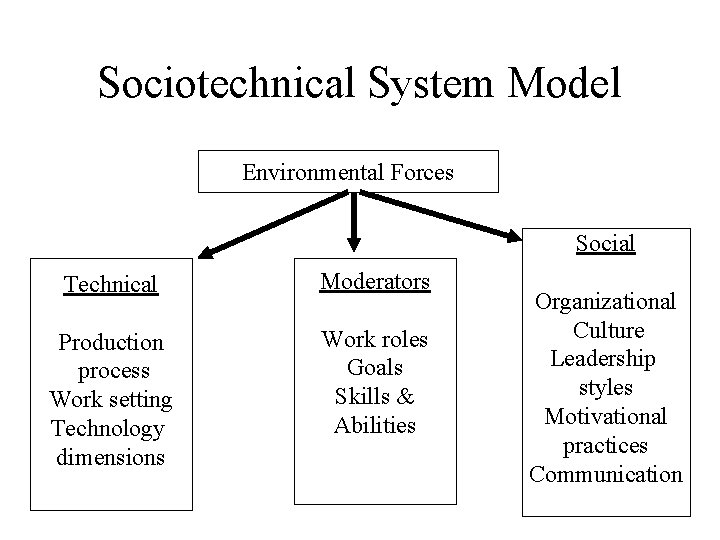
Sociotechnical System Model Environmental Forces Social Technical Moderators Production process Work setting Technology dimensions Work roles Goals Skills & Abilities Organizational Culture Leadership styles Motivational practices Communication
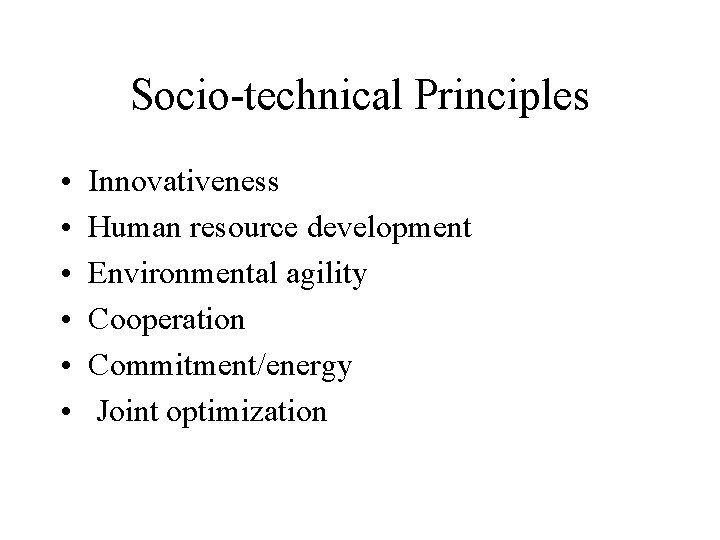
Socio-technical Principles • • • Innovativeness Human resource development Environmental agility Cooperation Commitment/energy Joint optimization
Self-Managed Work Groups • Team task design – Task differentiation: Responsibility for product or service – Task control: Control of task behaviors – Boundary control: Decision latitude • Group process • Organizational support
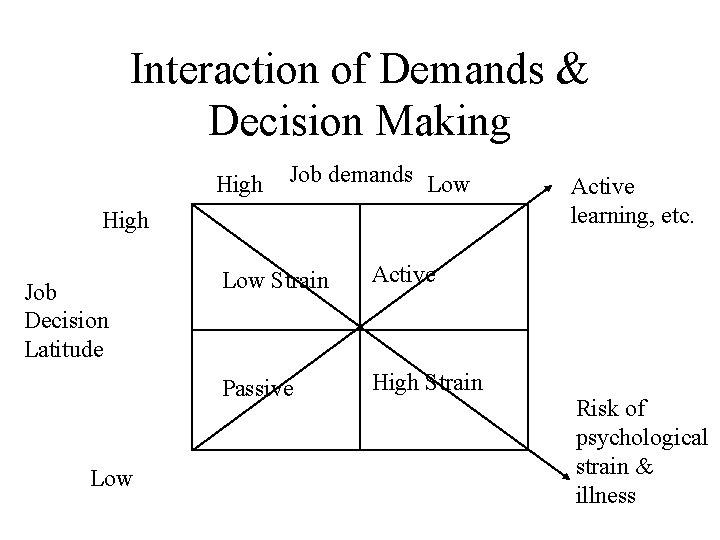
Demand -Control Model of Job Strain • Decision latitude and psychological demands • Job strain level and activity level • Interaction of demands and decision making • Social support
Decision Latitude and Psychological Demands • Decision latitudes - Combination of decision making authority and opportunity to use and develop skills on the job • Psychological demands - The mental workload or intellectual requirements of the job
Job Strain Level and Activity Level • Job strain level - level of stress derived from the workplace. Job strain relates positively to feelings of passivity and helplessness on the job • Activity level - Level of job demands in relation to decision latitude. – High activity - lawyers, engineers, teachers, nurses – Low activity - clerks, janitors
Interaction of Demands & Decision Making High Job demands Low High Job Decision Latitude Low Strain Active Passive High Strain Active learning, etc. Risk of psychological strain & illness
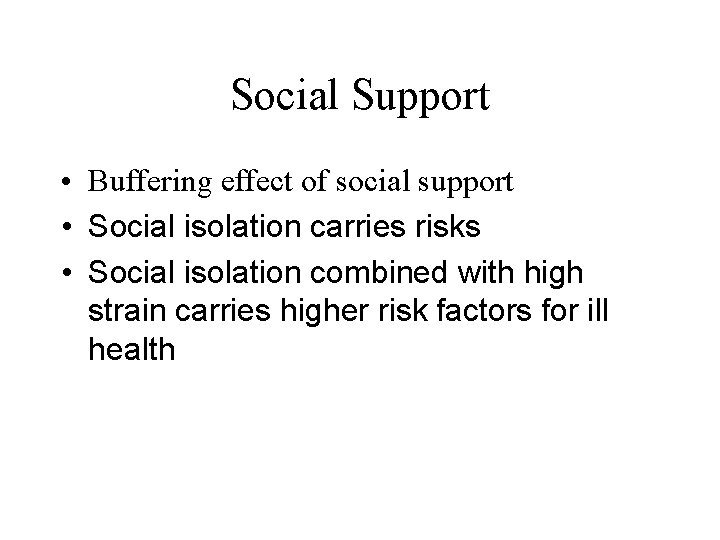
Social Support • Buffering effect of social support • Social isolation carries risks • Social isolation combined with high strain carries higher risk factors for ill health
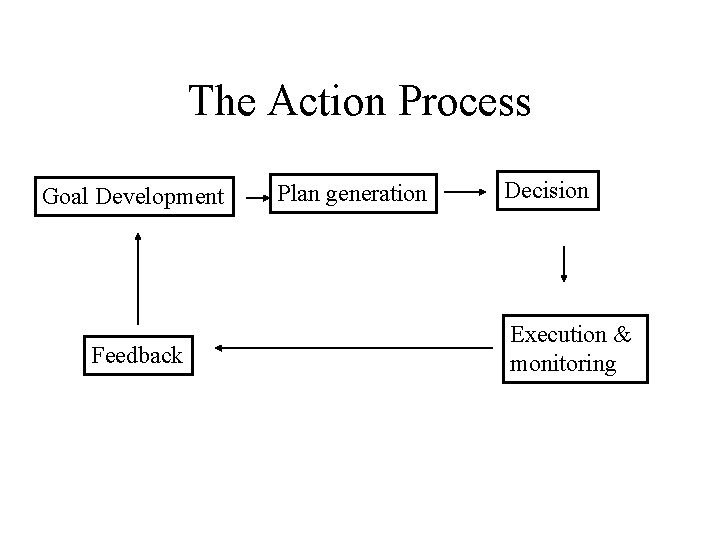
The Action Process Goal Development Feedback Plan generation Decision Execution & monitoring
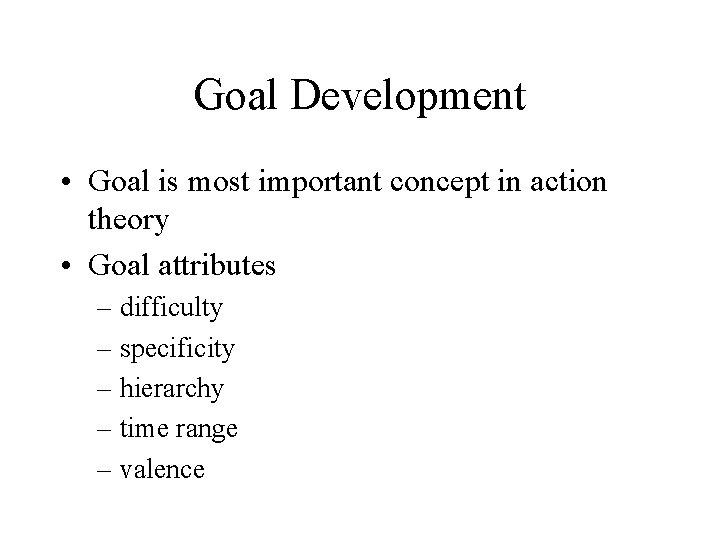
Goal Development • Goal is most important concept in action theory • Goal attributes – difficulty – specificity – hierarchy – time range – valence
Plan Generation • Detailedness • Inclusiveness
Execution & Monitoring • Flexibility • Speed • Monitoring
Feedback • • Concurrent vs terminal Extrinsic vs intrinsic Immediate vs delayed Verbal vs non-verbal
Levels of Action Regulation • • Sensori-motor Flexible action plans Intellectual level Heuristic level
Implications for Work Design • • Employees should choose own strategy Work should have complete actions Minimize obstacles Design for activity Design for control & complexity Emphasis on selection Design for feedback Design for job expansion
Advanced Manufacturing Technology • • CAD - Computer aided design uses computers to aid in the design of a product CAM - Computer aided manufacturing links computers to manufacturing equipment so that the equipment is controlled via computer CAPR - Computer aided production management is the planning & control of production resources CIM - Computer integrated manufacturing uses the computer as the spine for all aspects of design, manufacturing, assembly and inspection
Cellular Manufacturing • • Traditional factories - all machines of one type grouped together, e. g. all drills, all borers, etc. Cell technology - groups all machines required for producing a product into a cell – Advantage is simpler flow of work – Group people and machinery around the product, may include engineering, purchasing, etc
Just - In - Time Production • • • JIT is an inventory control process which minimizes stockpiling parts and finished products Inventories typically a control system to handle fluctuations in demand unexpected problems - Just- In- Case Lower inventories require coordination between suppliers and producers
Work Content • AMT leads to deskilling – – – • concern stems from machines taking over decision process and skills to concern with statistical numerical control JIT takes buffers out of the system TQM pressures workers AMT leads to enrichment and enhanced skills
Contingency Approach • Contingency approach says, It depends. – – – – Management commitment to initiative Environmental uncertainty Cognitive demands and the non-routine Interdependence or collaboration needed Production responsibility and error cost Performance visibility Workload
Supporting Job Designs • Uncertainty in production – – – High uncertainty - enriched job designs & autonomy Low uncertainty - standard job design and level of autonomy Uncertainty and needs for performance-related knowledge
Office Technologies • • • Word processing Presentation packages Data bases Spreadsheets Information storage and retrieval Internet capability (information search strategies)
Communication Technologies • • E-mail Audio teleconferencing Video conferencing Electronic conferencing – Asynchronous – Anytime – Anywhere
Design Implications • Job design – Initially some de-skilling – Ability to develop multiple skills in applications – Task lines blur between skill areas – Flexible job descriptions • Organizational design – Flatter – Decentralized
Teleworking • A definition: Trips to work are substituted with a home-based or telecenter based work-site. • Benefits: Productivity, Reduction of absenteeism, Retention, Employee safety, Disaster Mitigation, Environmental benefits • Costs: Isolation, Reduced corporate culture, loyalty, Added effort, Perceived inequitable treatment
Implications for Design • • • Goal setting Complete tasks Minimize obstacles Feedback Emphasis on selection
Backwards & Forwards • Summing up: Today’s session covered work design from the perspective of socio-technical theory, demand-control model, and action theory. Implications of advanced manufacturing and information technologies were explored for work design. • Looking ahead: Next time we examine human resource interventions, particularly performance management