
Organizational Culture Now that we know what culture
- Slides: 18
Organizational Culture Now that we know what culture means in terms of an individual. How can we conceptualize culture at the organizational level? Remember that one of the components of an individual’s mosaic is his/her “association”
Organizational Cultural Core Schein (1990) Ø“how an organization copes with problems of external adaptation and internal integration. ” Mitchell (1997) Øproposes that there is a theoretical link between an organization’s culture and the motives of the individuals within an organization.
Classic Dichotomy of cultural motives The predominant means by which interpersonal motives have been conceptualized has been along the lines of either self-centered competition or other-centered cooperation (Coase, 1937; Deutsch, 1949). This is perfectly consistent with the requirements of functioning in an industrial age. Coase, R. H. "The Nature of the Firm. " Economica 4 (November 1937): 386 -405. Coase, R. H. "The Problem of Social Cost. " Journal of Law and Economics 3 (October 1960): 1 -44. Deutsch, M. 1949. A theory of cooperation and competition. Human Relations, 2: 129 -152.
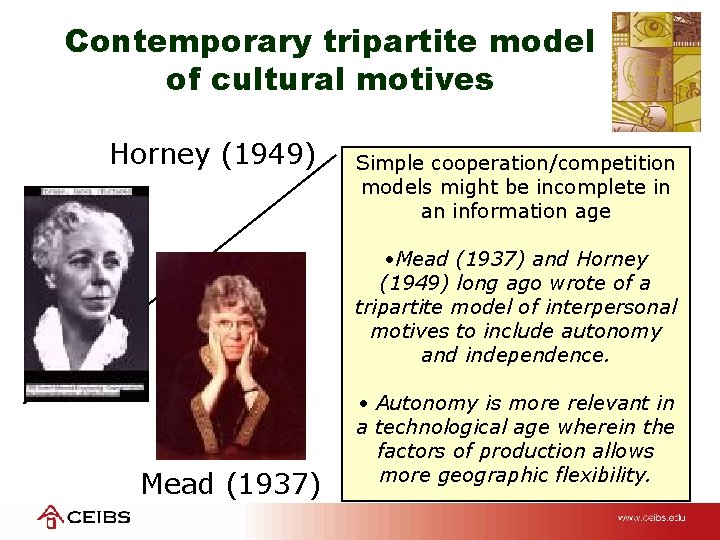
Contemporary tripartite model of cultural motives Horney (1949) Simple cooperation/competition models might be incomplete in an information age • Mead (1937) and Horney (1949) long ago wrote of a tripartite model of interpersonal motives to include autonomy and independence. Mead (1937) • Autonomy is more relevant in a technological age wherein the factors of production allows more geographic flexibility.
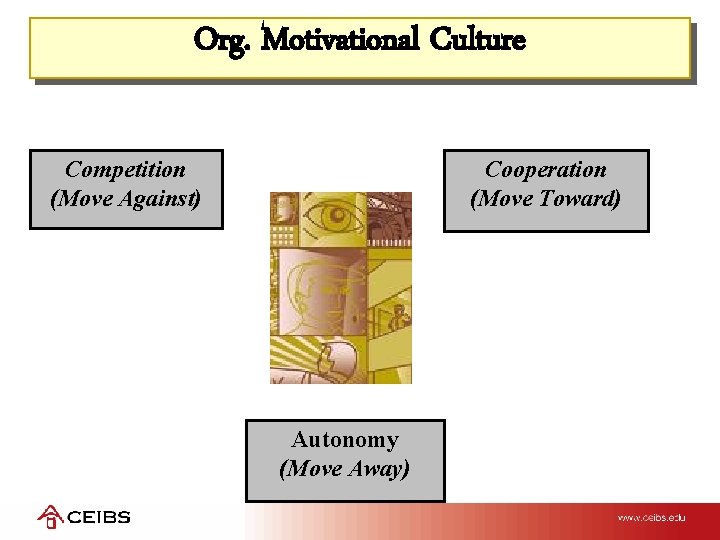
Org. Motivational Culture Competition (Move Against) Cooperation (Move Toward) Autonomy (Move Away)
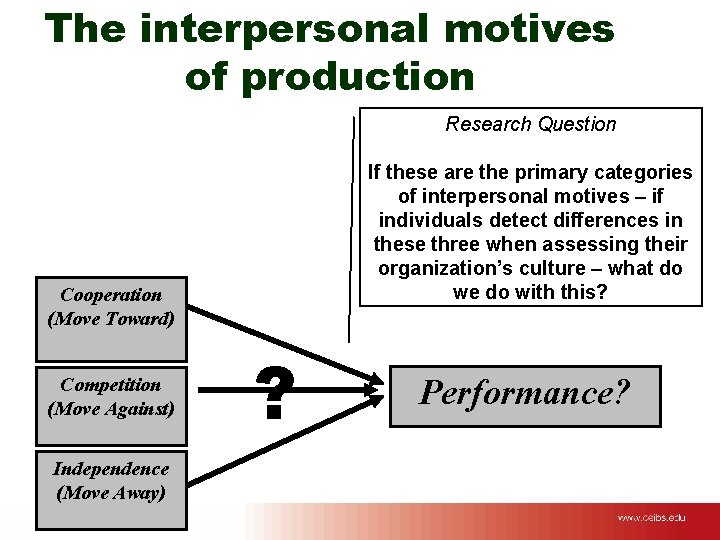
The interpersonal motives of production Research Question If these are the primary categories of interpersonal motives – if individuals detect differences in these three when assessing their organization’s culture – what do we do with this? Cooperation (Move Toward) Competition (Move Against) Independence (Move Away) ? Performance?
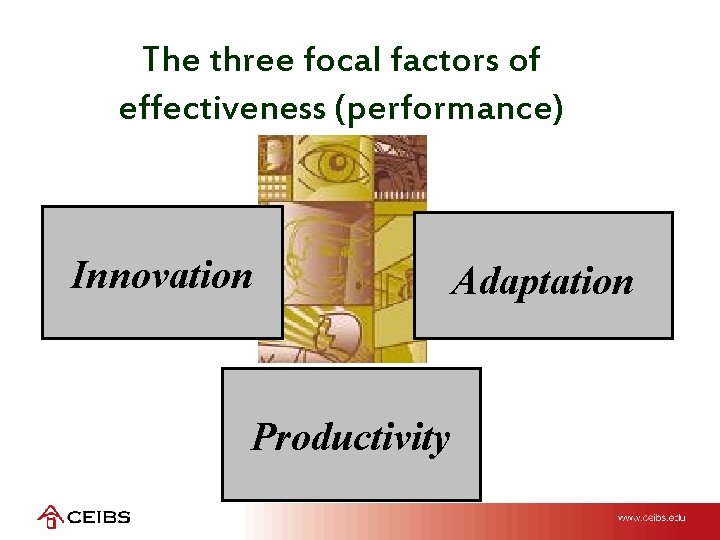
The three focal factors of effectiveness (performance) Innovation Productivity Adaptation
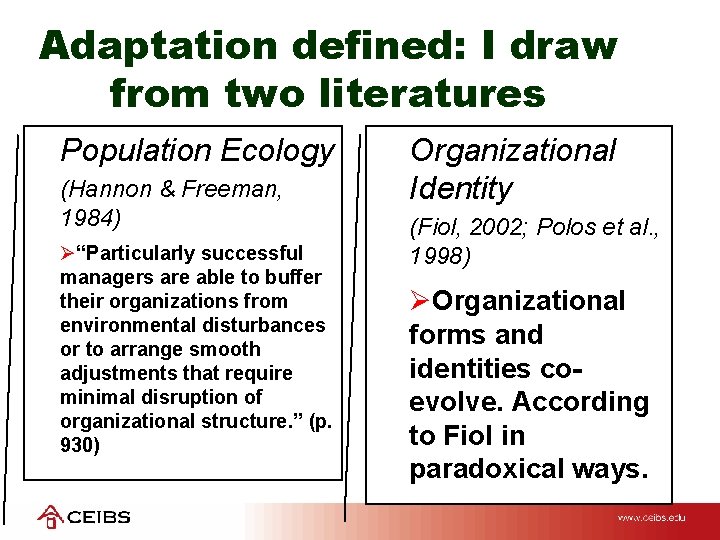
Adaptation defined: I draw from two literatures Population Ecology (Hannon & Freeman, 1984) Ø“Particularly successful managers are able to buffer their organizations from environmental disturbances or to arrange smooth adjustments that require minimal disruption of organizational structure. ” (p. 930) Organizational Identity (Fiol, 2002; Polos et al. , 1998) ØOrganizational forms and identities coevolve. According to Fiol in paradoxical ways.
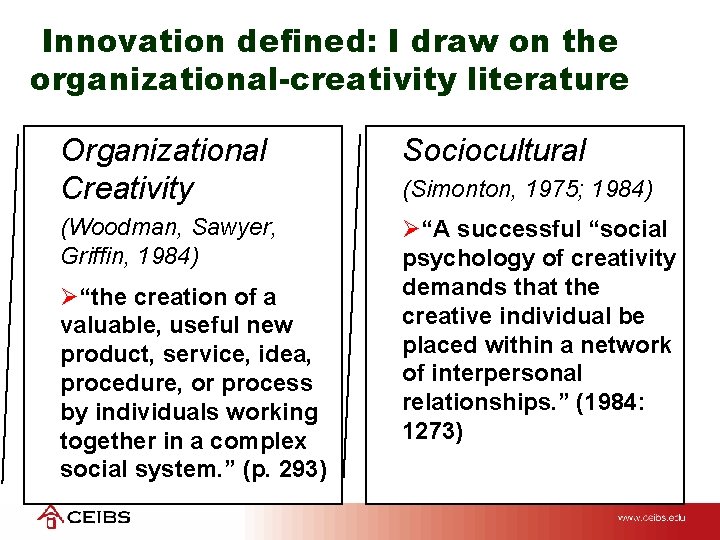
Innovation defined: I draw on the organizational-creativity literature Organizational Creativity Sociocultural (Woodman, Sawyer, Griffin, 1984) Ø“A successful “social psychology of creativity demands that the creative individual be placed within a network of interpersonal relationships. ” (1984: 1273) Ø“the creation of a valuable, useful new product, service, idea, procedure, or process by individuals working together in a complex social system. ” (p. 293) (Simonton, 1975; 1984)
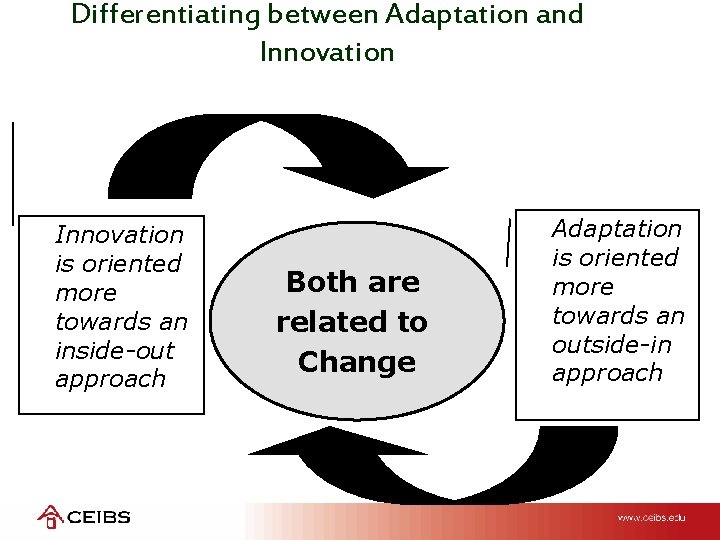
Differentiating between Adaptation and Innovation is oriented more towards an inside-out approach Both are related to Change Adaptation is oriented more towards an outside-in approach
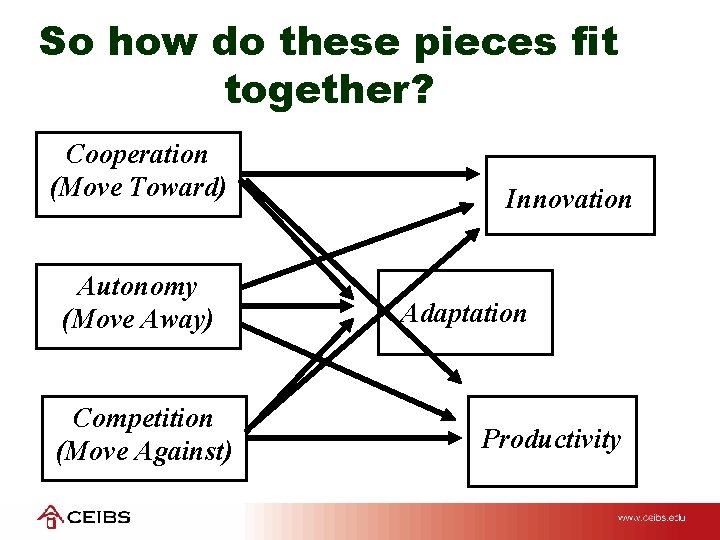
So how do these pieces fit together? Cooperation (Move Toward) Autonomy (Move Away) Competition (Move Against) Innovation Adaptation Productivity
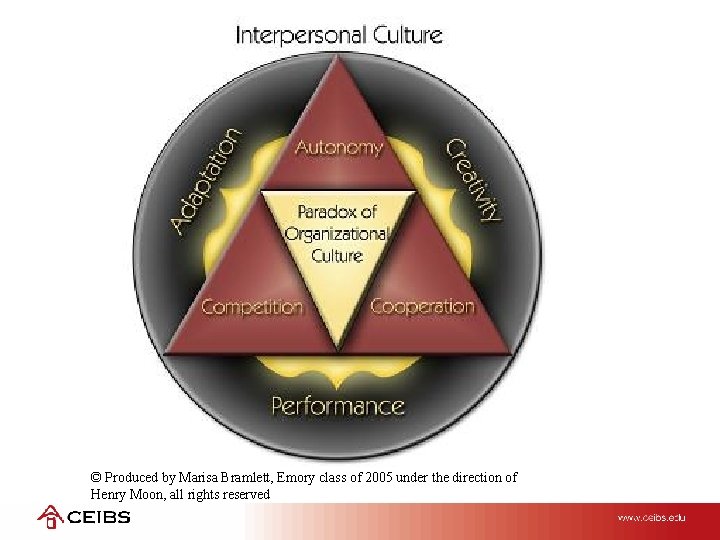
© Produced by Marisa Bramlett, Emory class of 2005 under the direction of Henry Moon, all rights reserved
The Paradox of organizations Cameron (1986) “Organizational effectiveness is inherently paradoxical. To be effective, an organization must possess attributes that are simultaneously contradictory, even mutually exclusive. ”
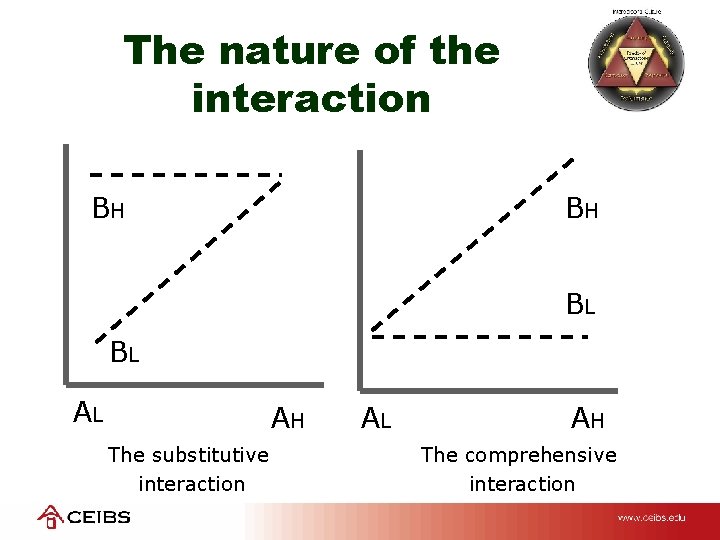
The nature of the interaction BH BH BL BL AL AH The substitutive interaction AL AH The comprehensive interaction
The paradox of Cooperation and Competition Cooperative and competitive cultures will be related to positive organizational efficiency significantly more than either cooperative or competitive cultures or the absence of both cooperative and competitive cultures. Brandenburger and Nalebuff (1996) coined the phrase “co-opetition” as the most advanced form of interpersonal relationships in a firm (see also, Katz, 2001). Lado, Boyd, and Hanlon (1997) proposed the ultimate strategy of a firm as “syncretic” which is associated with both competitive and cooperative organizational strategies
What happens when we add autonomy? There is an inherent decrease in productivity based on a divisional structure. As autonomy increases flexibility is gained at the cost of coordinating activities. Inefficiency results from instances wherein the “right-hand” may not know what the “left-hand” is doing (Hollenbeck et al. 2002).
The paradox of Autonomy and Cooperation Cooperative and autonomous cultures will be related to positive organizational creativity significantly more than either cooperative or autonomous cultures or the absence of both cooperative and autonomous cultures. Shalley, Gilson and Blum (2000) interviewed over 2, 800 individuals and found that their level of autonomy was directly related to creativity. A growing body of literature (George & Zhou, 2001; Shalley & Perry-Smith, 2001) is looking at the social side of creativity.
The paradox of Autonomy and Competition Autonomous and competitive cultures will be related to positive organizational adaptation significantly more than either autonomous or competitive cultures or the absence of both autonomous and competitive cultures. Chandler (1962) noted that as organizations increase in size and complexity – a natural byproduct is an increase in the level of autonomy. Williamson (1975) proposed a superior organizational form (M-form) that takes the form of a capital market with the ability allocate resources to deserving autonomous and competing units.