
ORGANIZATIONAL CULTURE By Dr Karl Knapp Copyright Karl
ORGANIZATIONAL CULTURE By Dr. Karl Knapp Copyright Karl Knapp, 2016. Do not copy or distribute without permiss
CLIMATE & CULTURE Climate - basis on the individual from the field of psychology Culture - basis on the group from the field of sociology and anthropology Copyright Karl Knapp, 2016. Do not copy or distribute without permiss
CULTURE “a pattern of shared basic assumptions that the group learned as it solved its problems of external adaptation and internal integration, that has worked well enough to be considered valid and, therefore, to be taught to new members as the correct way to perceive, think and feel in relation to those problems” Edgar Schein (1985) Copyright Karl Knapp, 2016. Do not copy or distribute without permiss
WHY CARE ABOUT CULTURE • Constraints behavior • Job satisfaction • Organizational commitment • Propensity to leave • Organizational functioning and performance Copyright Karl Knapp, 2016. Do not copy or distribute without permiss
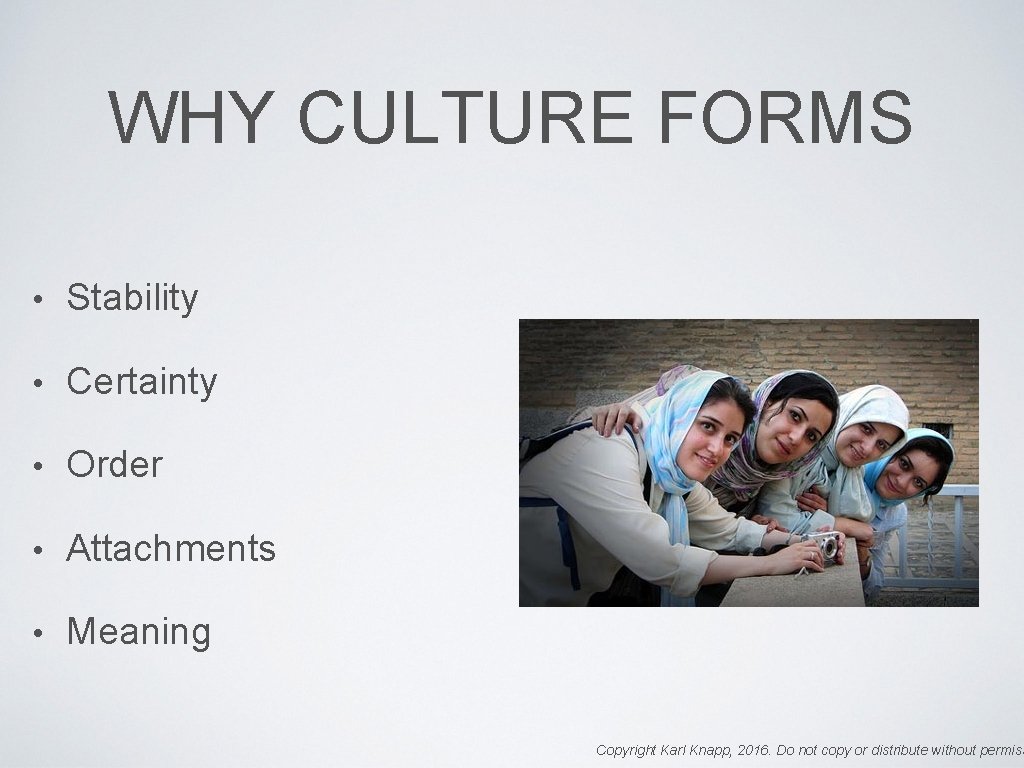
WHY CULTURE FORMS • Stability • Certainty • Order • Attachments • Meaning Copyright Karl Knapp, 2016. Do not copy or distribute without permiss
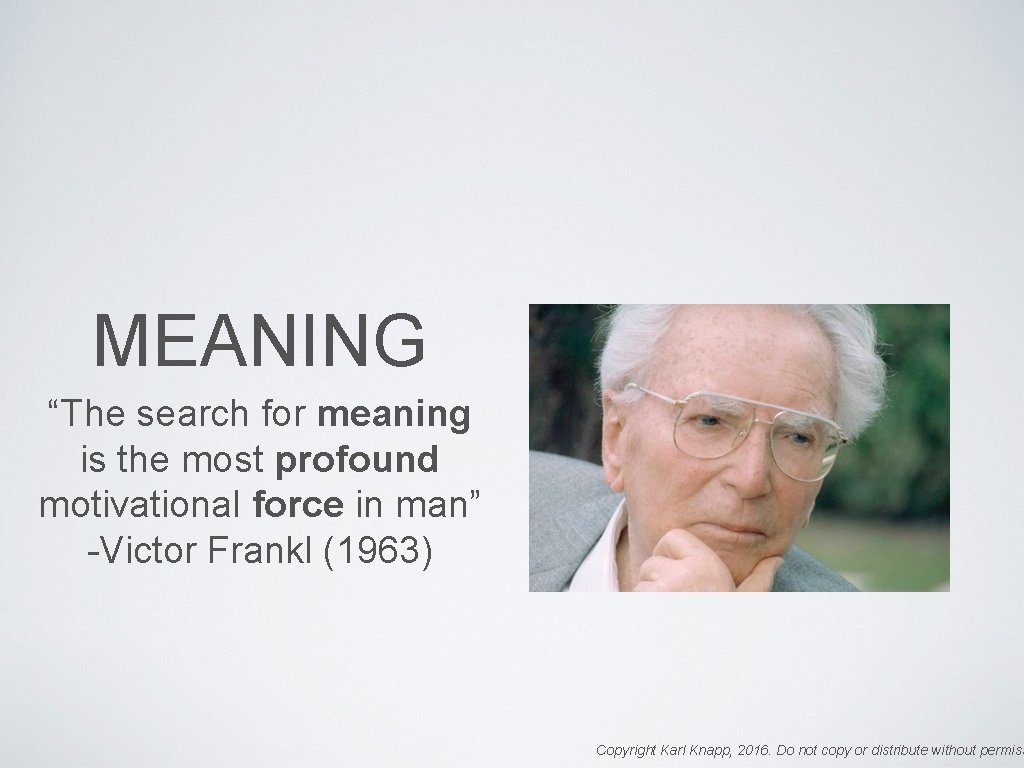
MEANING “The search for meaning is the most profound motivational force in man” -Victor Frankl (1963) Copyright Karl Knapp, 2016. Do not copy or distribute without permiss
HOW CULTURE FORMS Individual Learning • Anxiety / Pain Reduction • Reward / Reinforcement Group Learning • External Survival • Internal Integration Founders Big Effect Copyright Karl Knapp, 2016. Do not copy or distribute without permiss
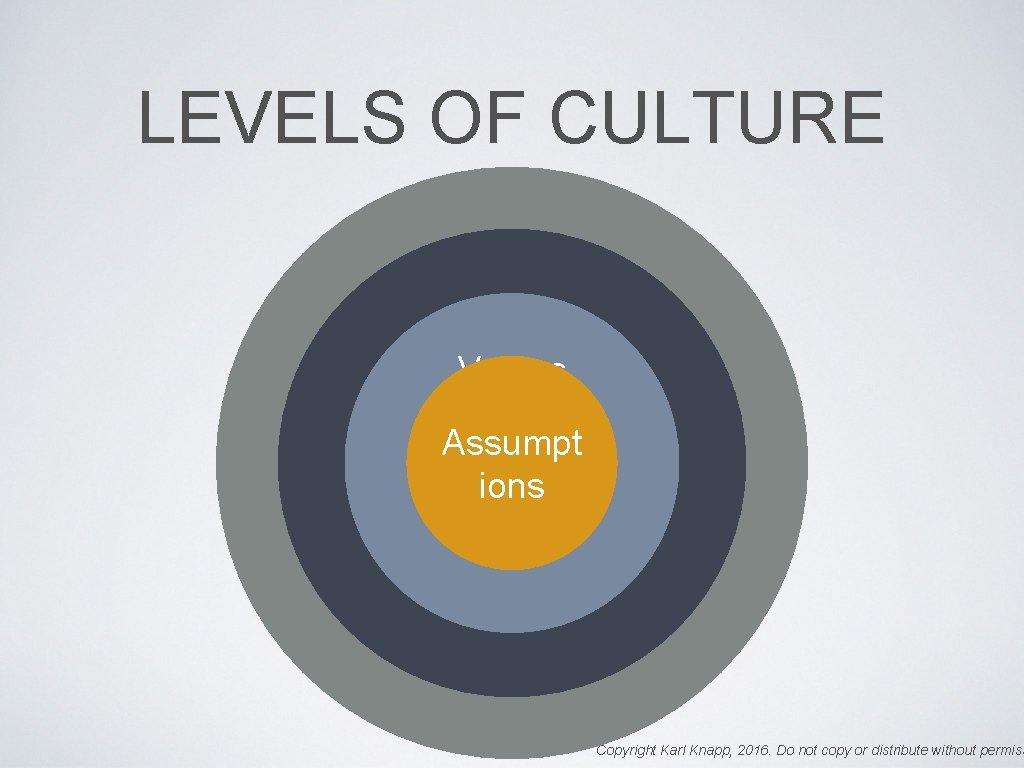
LEVELS OF CULTURE Artifacts Norms Values Assumpt ions Copyright Karl Knapp, 2016. Do not copy or distribute without permiss
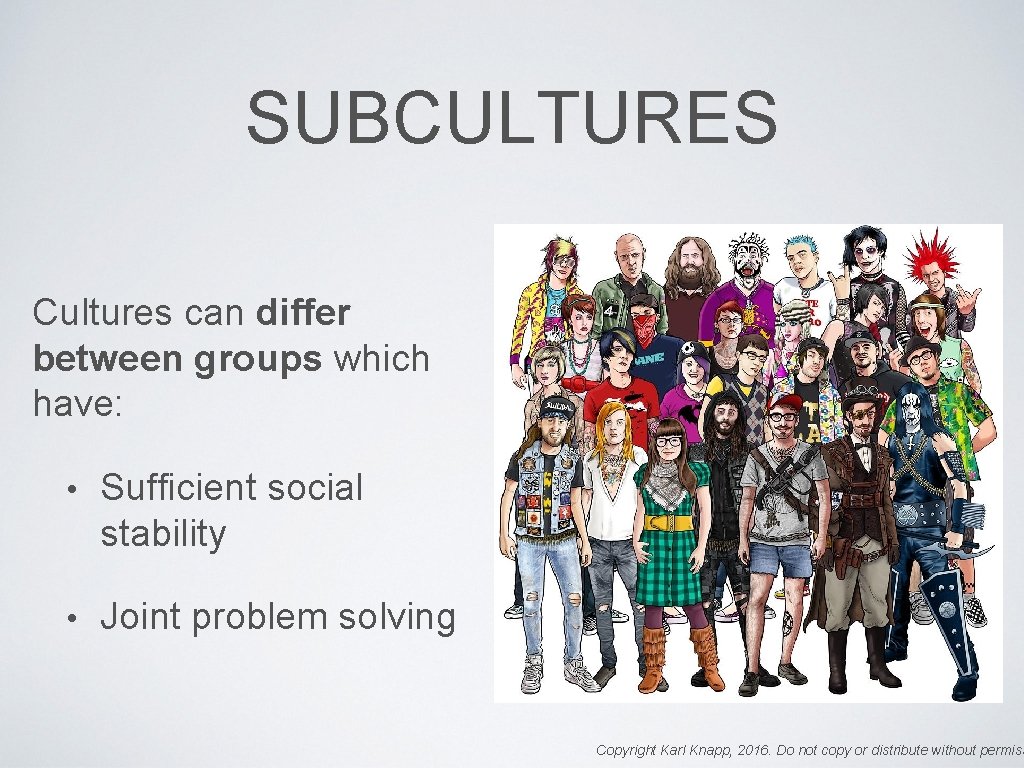
SUBCULTURES Cultures can differ between groups which have: • Sufficient social stability • Joint problem solving Copyright Karl Knapp, 2016. Do not copy or distribute without permiss
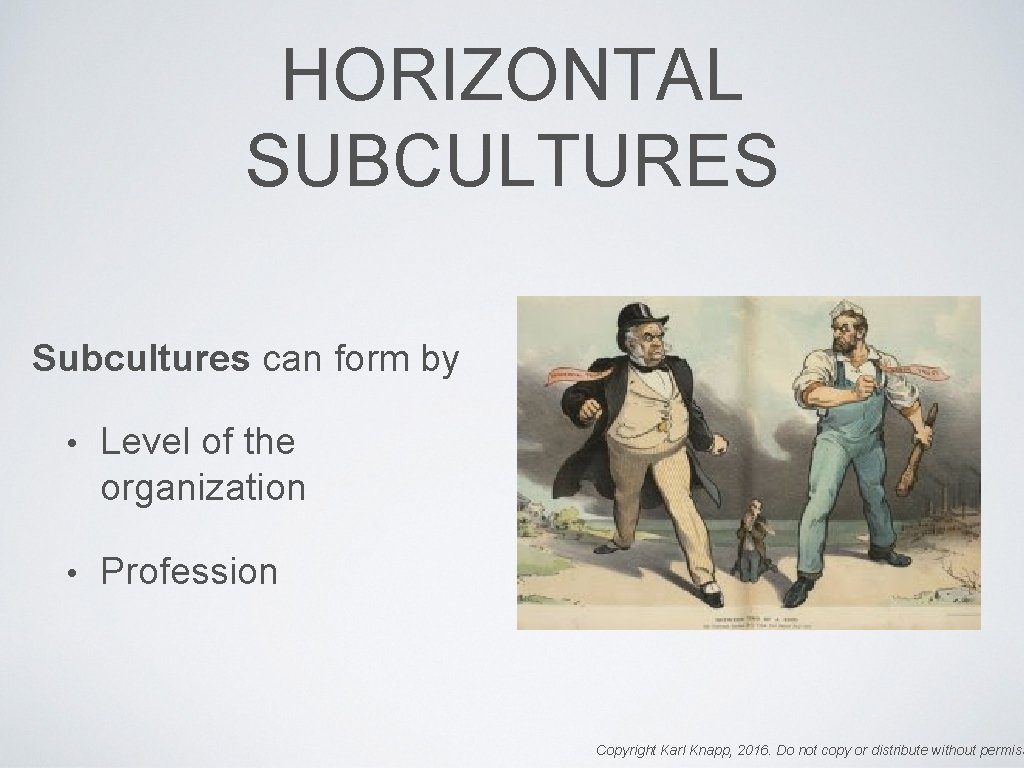
HORIZONTAL SUBCULTURES Subcultures can form by • Level of the organization • Profession Copyright Karl Knapp, 2016. Do not copy or distribute without permiss
VERTICAL SUBCULTURES Subcultures can form by: • Department • Project Copyright Karl Knapp, 2016. Do not copy or distribute without permiss

FOUR LEVELS OF ANALYSIS Co lle cti ve p ou Gr Dyad Individual Copyright Karl Knapp, 2016. Do not copy or distribute without permiss
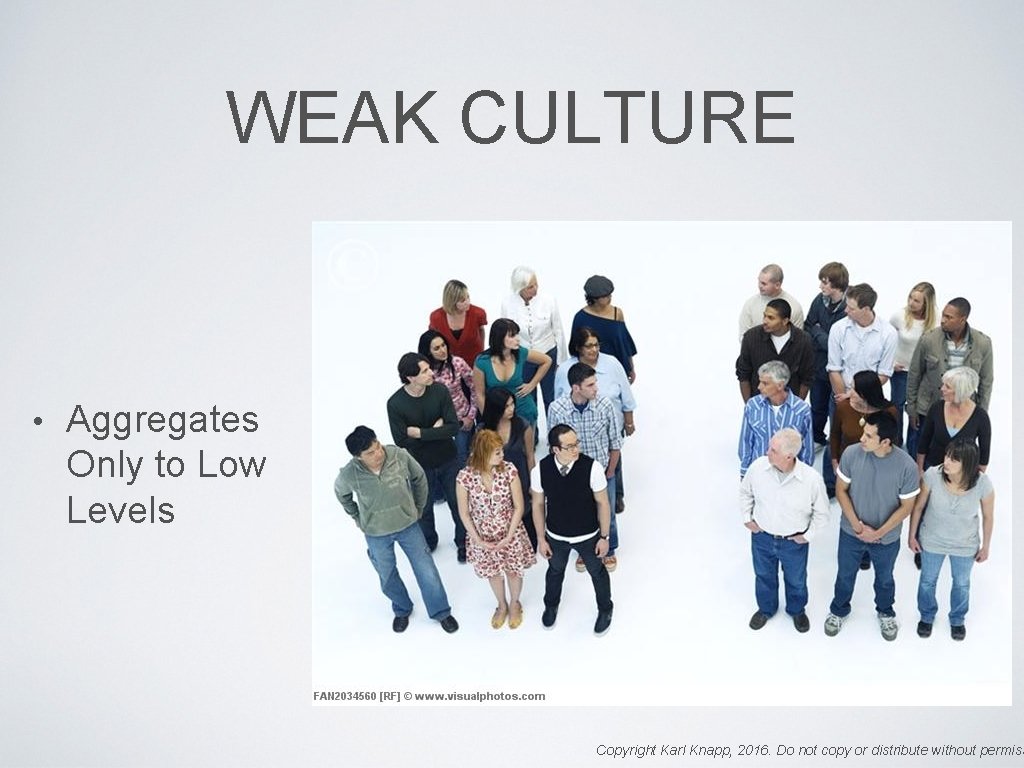
WEAK CULTURE • Aggregates Only to Low Levels Copyright Karl Knapp, 2016. Do not copy or distribute without permiss
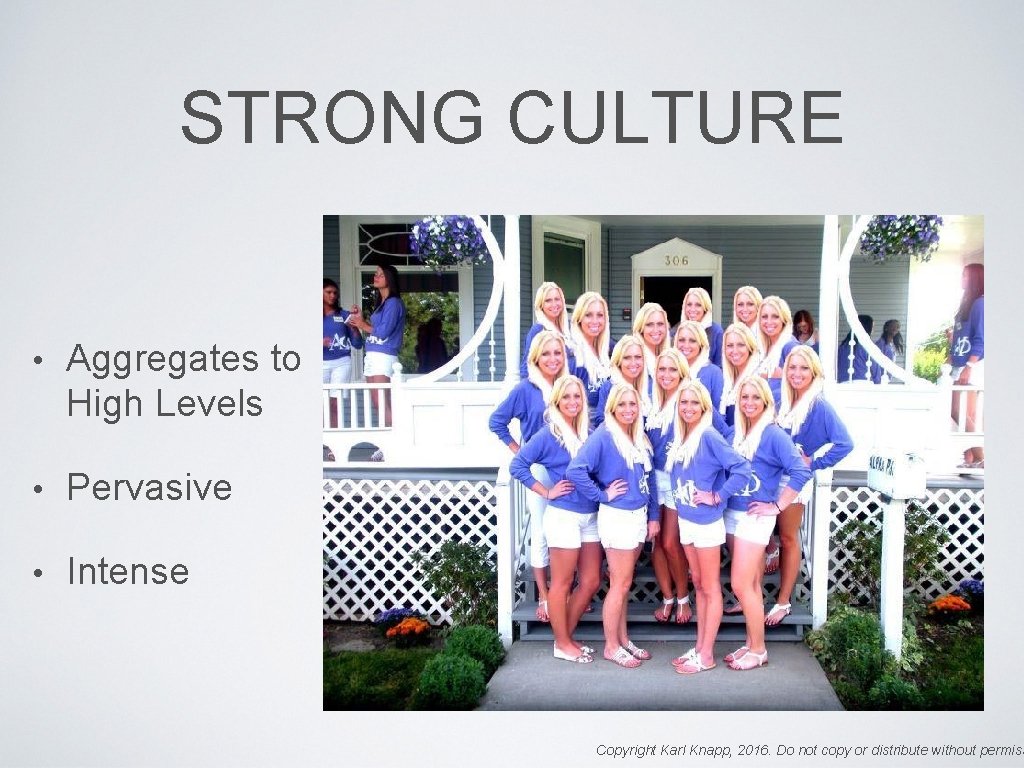
STRONG CULTURE • Aggregates to High Levels • Pervasive • Intense Copyright Karl Knapp, 2016. Do not copy or distribute without permiss
MEASURING CULTURE Copyright Karl Knapp, 2016. Do not copy or distribute without permiss
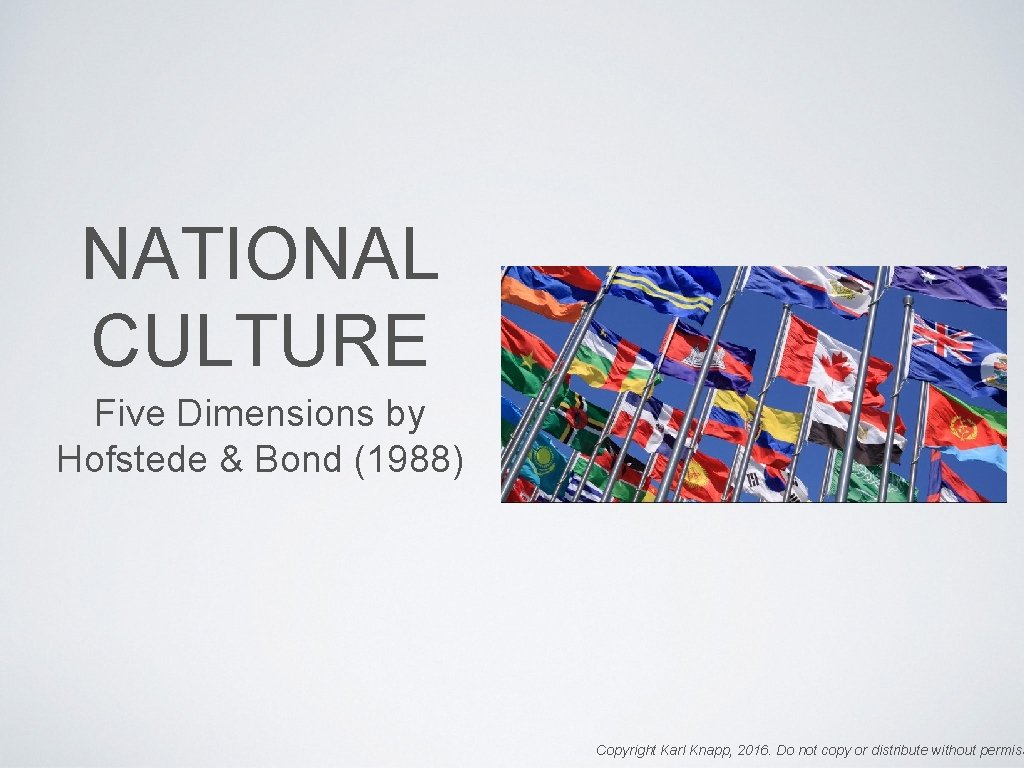
NATIONAL CULTURE Five Dimensions by Hofstede & Bond (1988) Copyright Karl Knapp, 2016. Do not copy or distribute without permiss

POWER DISTANCE Power Distance is the extent to which the lower ranking individuals of a society "accept and expect that power is distributed unequally" Malaysia has highest PDI at 104, US is 40, lowest is Austria at 11 Copyright Karl Knapp, 2016. Do not copy or distribute without permiss
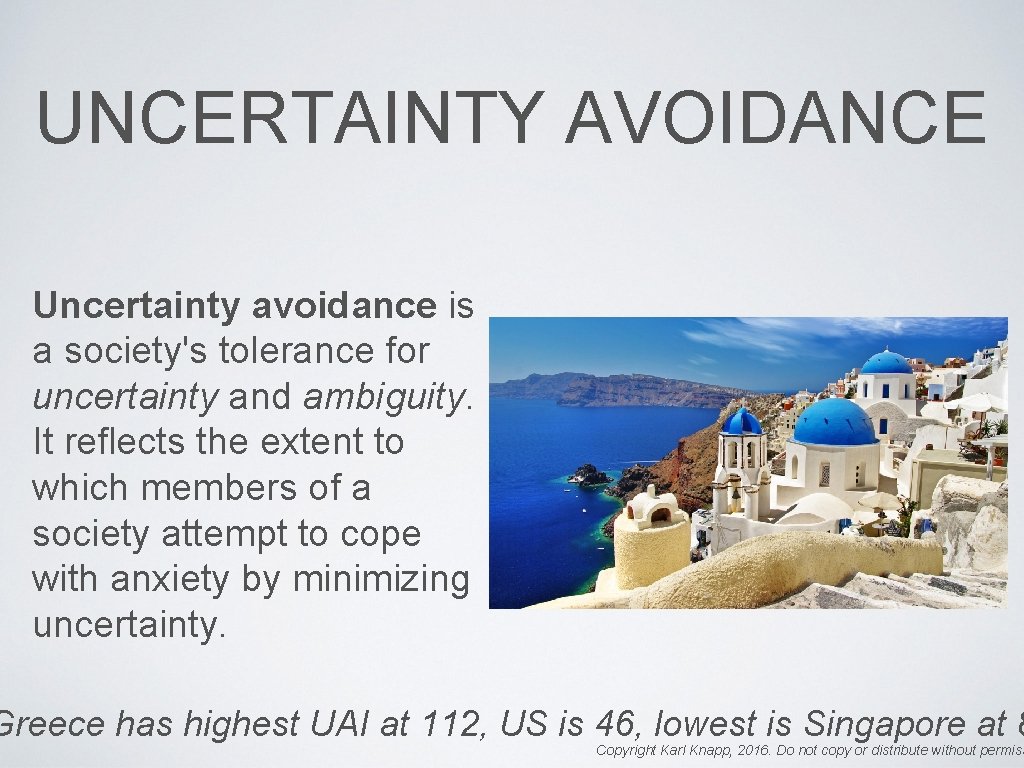
UNCERTAINTY AVOIDANCE Uncertainty avoidance is a society's tolerance for uncertainty and ambiguity. It reflects the extent to which members of a society attempt to cope with anxiety by minimizing uncertainty. Greece has highest UAI at 112, US is 46, lowest is Singapore at 8 Copyright Karl Knapp, 2016. Do not copy or distribute without permiss
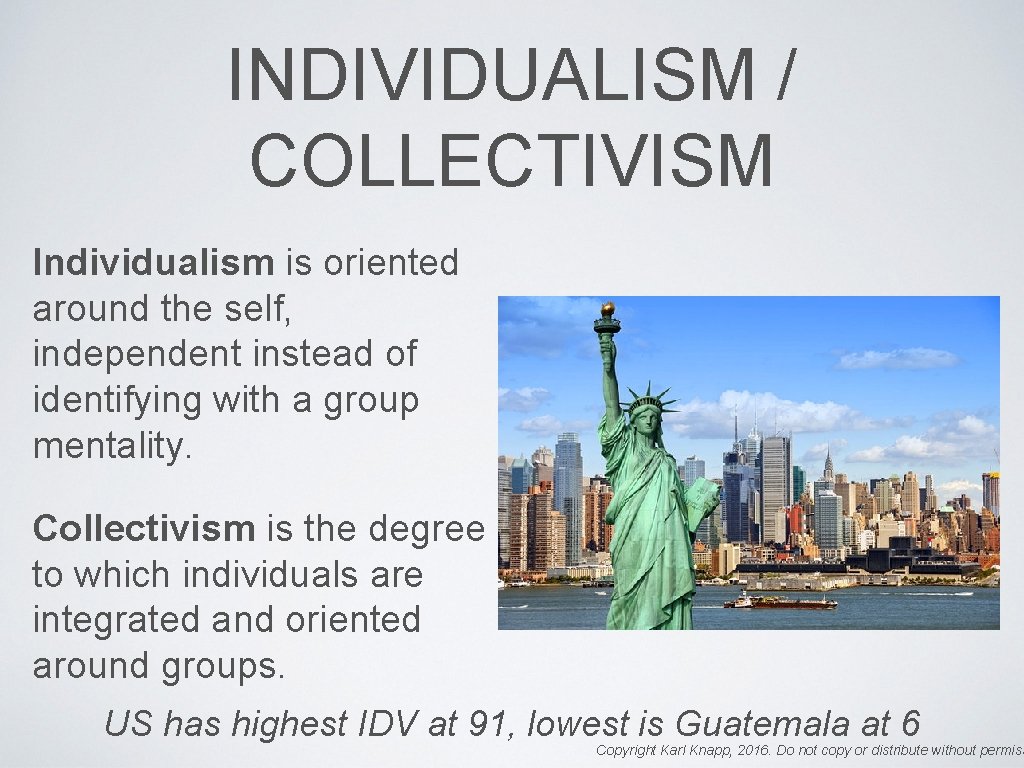
INDIVIDUALISM / COLLECTIVISM Individualism is oriented around the self, independent instead of identifying with a group mentality. Collectivism is the degree to which individuals are integrated and oriented around groups. US has highest IDV at 91, lowest is Guatemala at 6 Copyright Karl Knapp, 2016. Do not copy or distribute without permiss
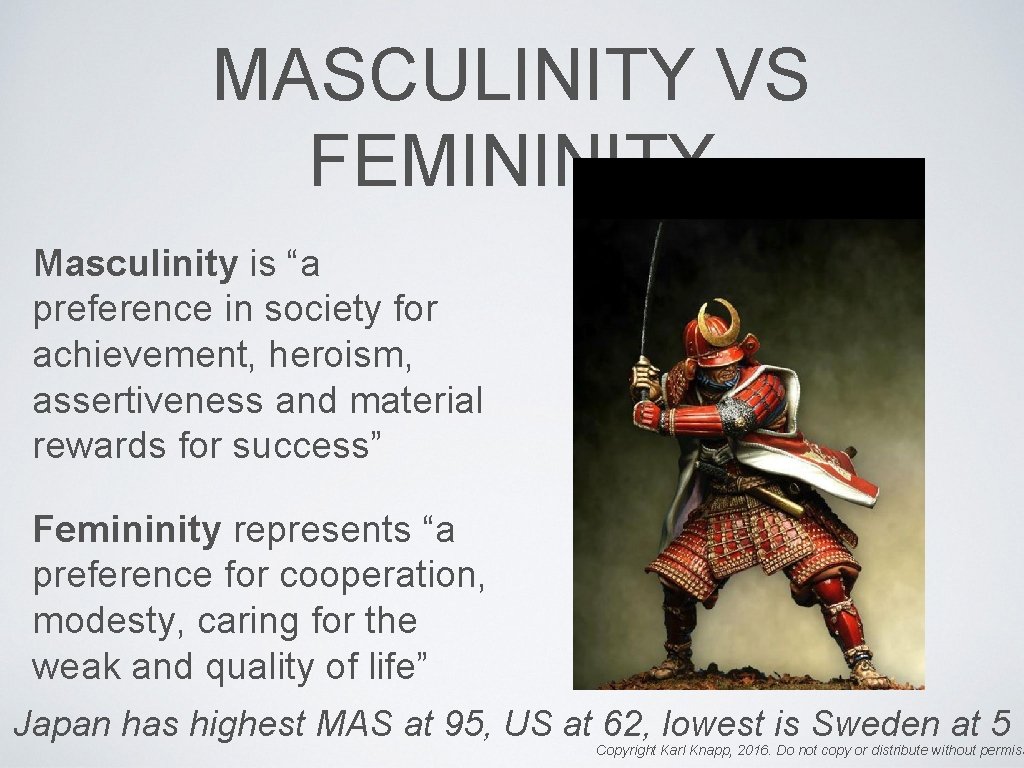
MASCULINITY VS FEMININITY Masculinity is “a preference in society for achievement, heroism, assertiveness and material rewards for success” Femininity represents “a preference for cooperation, modesty, caring for the weak and quality of life” Japan has highest MAS at 95, US at 62, lowest is Sweden at 5 Copyright Karl Knapp, 2016. Do not copy or distribute without permiss
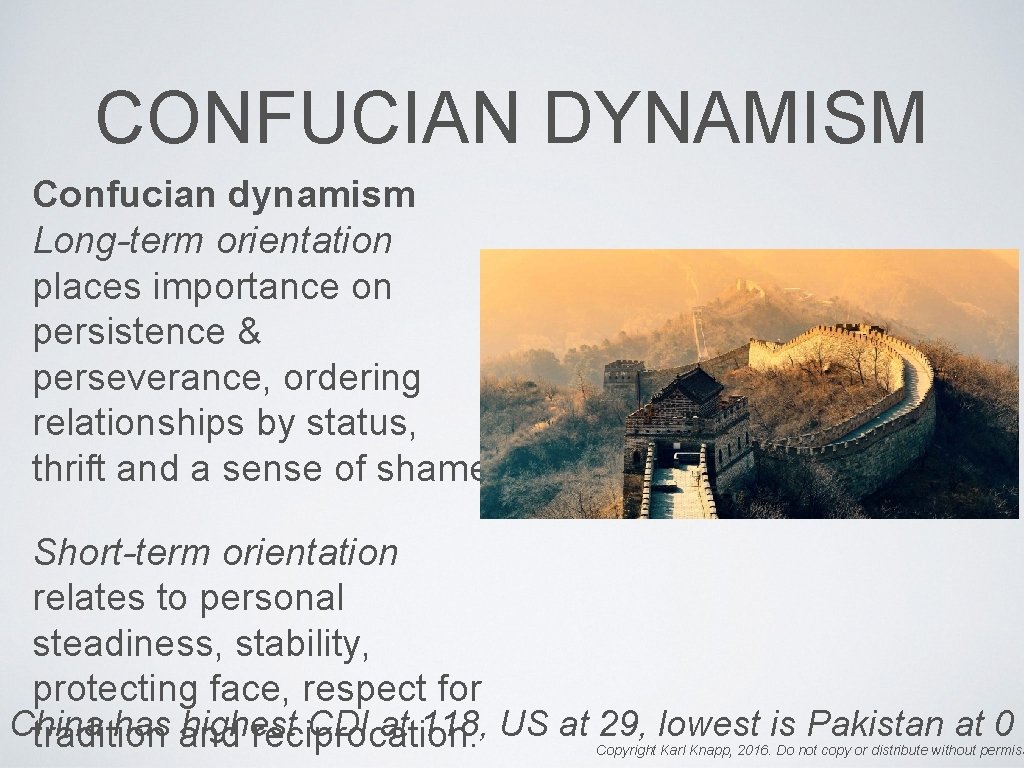
CONFUCIAN DYNAMISM Confucian dynamism Long-term orientation places importance on persistence & perseverance, ordering relationships by status, thrift and a sense of shame. Short-term orientation relates to personal steadiness, stability, protecting face, respect for China has and highest CDI at 118, US at 29, lowest is Pakistan at 0 tradition reciprocation. Copyright Karl Knapp, 2016. Do not copy or distribute without permiss
ORGANIZATIONAL CULTURE Copyright Karl Knapp, 2016. Do not copy or distribute without permiss
REASONS TO STUDY ORGANIZATIONAL CULTURE • Culture(s) and strategy • Partners and mergers • Development over time • Across the organization Copyright Karl Knapp, 2016. Do not copy or distribute without permiss
ORGANIZATIONAL CULTURE Hofstede (1990) had three hypotheses that he tested: • Organizational membership has its own culture • Independent dimensions • Culture partly predetermined by nationality, industry and task Copyright Karl Knapp, 2016. Do not copy or distribute without permiss
LET’S MEASURE What Get’s Measured Gets Managed (Peter Drucker) Copyright Karl Knapp, 2016. Do not copy or distribute without permiss
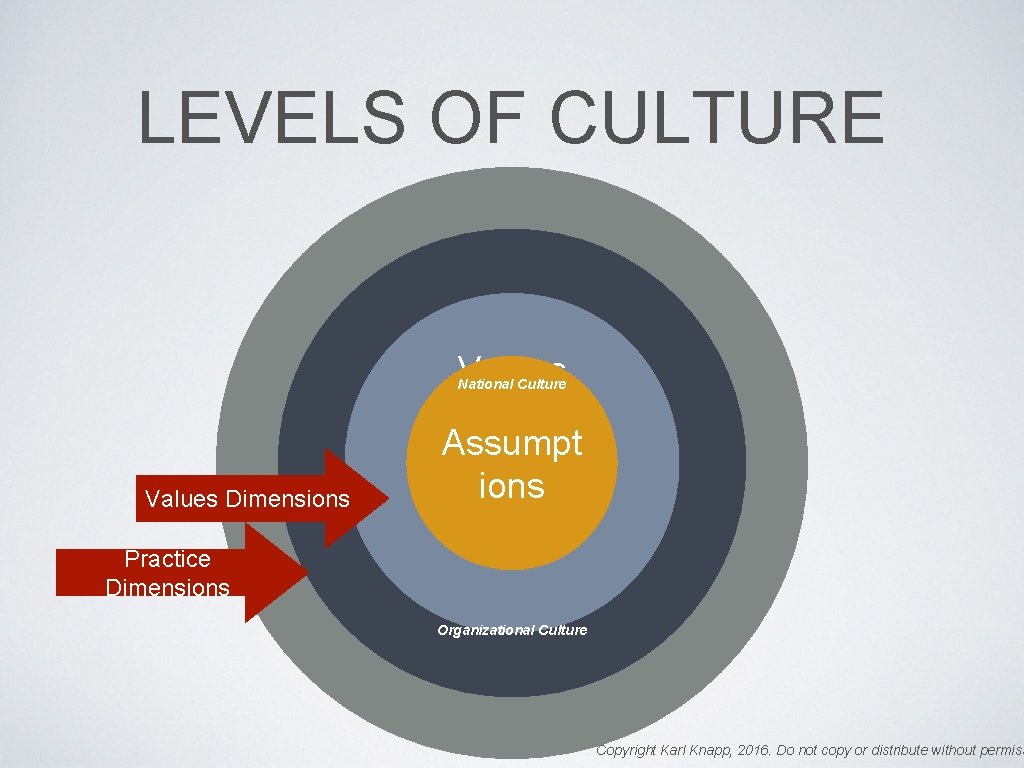
LEVELS OF CULTURE Artifacts Norms Values National Culture Values Dimensions Assumpt ions Practice Dimensions Organizational Culture Copyright Karl Knapp, 2016. Do not copy or distribute without permiss
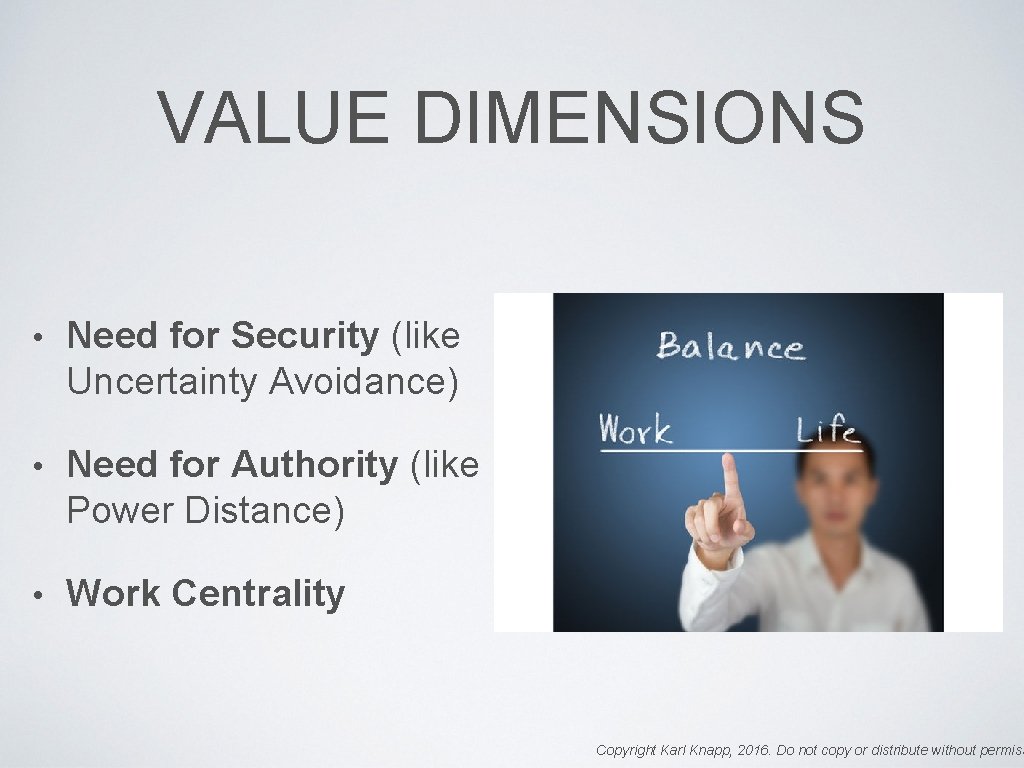
VALUE DIMENSIONS • Need for Security (like Uncertainty Avoidance) • Need for Authority (like Power Distance) • Work Centrality Copyright Karl Knapp, 2016. Do not copy or distribute without permiss
PRACTICE DIMENSIONS Process versus Results The predominance of a concern with means or concern with goals Copyright Karl Knapp, 2016. Do not copy or distribute without permiss
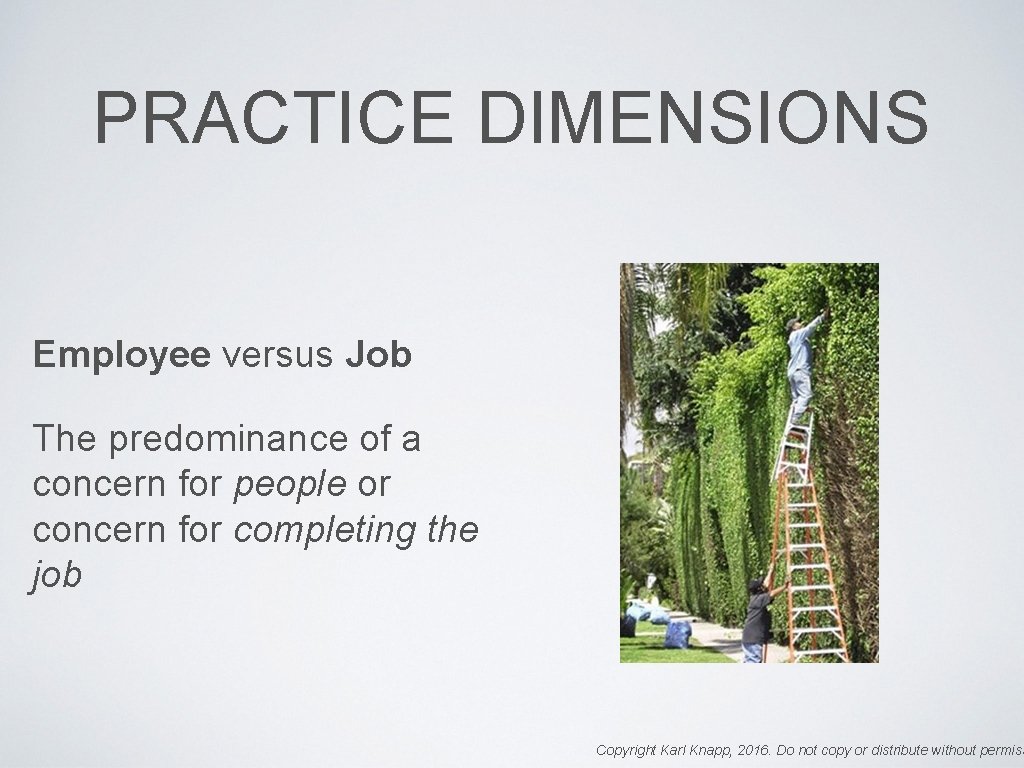
PRACTICE DIMENSIONS Employee versus Job The predominance of a concern for people or concern for completing the job Copyright Karl Knapp, 2016. Do not copy or distribute without permiss
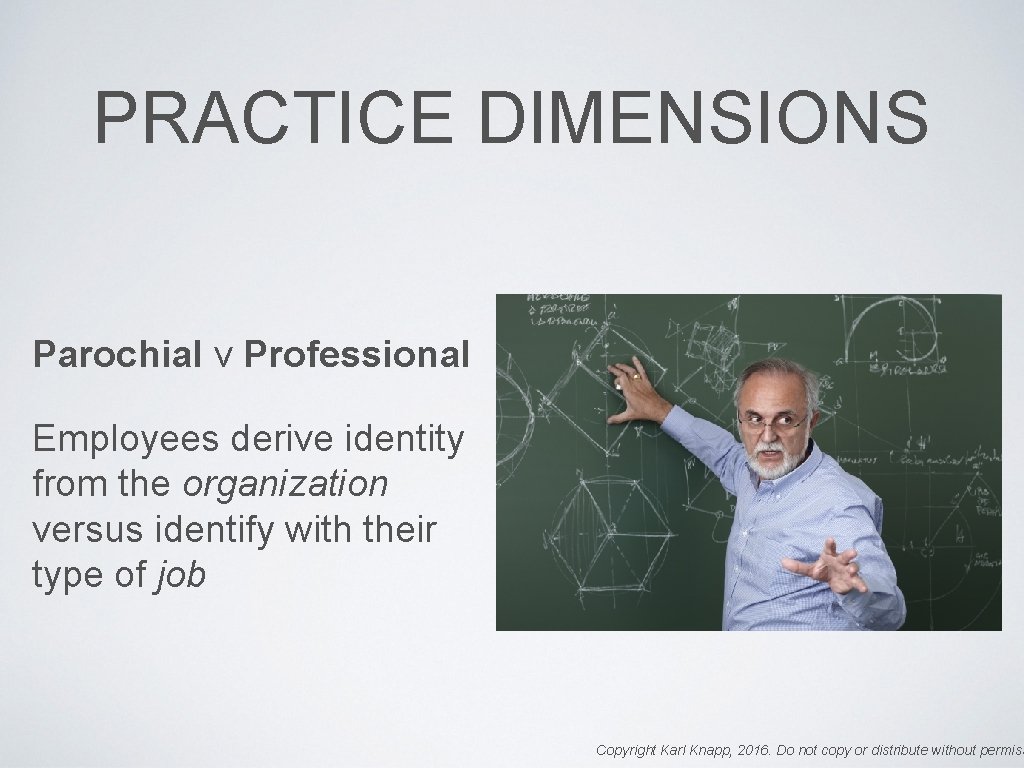
PRACTICE DIMENSIONS Parochial v Professional Employees derive identity from the organization versus identify with their type of job Copyright Karl Knapp, 2016. Do not copy or distribute without permiss
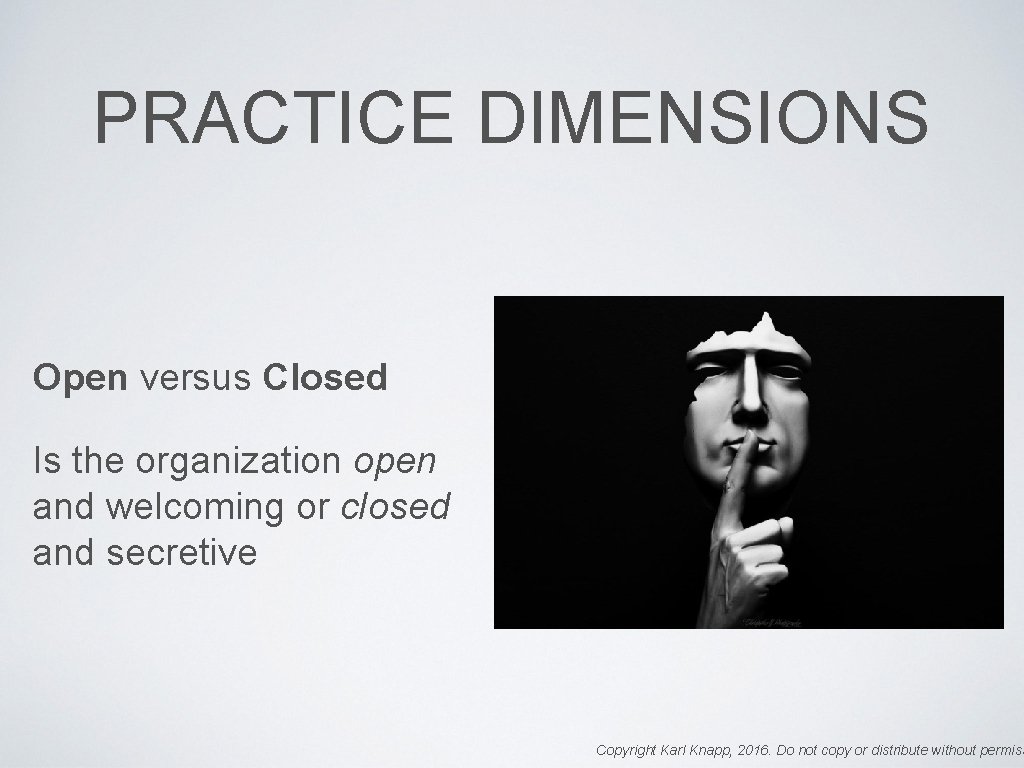
PRACTICE DIMENSIONS Open versus Closed Is the organization open and welcoming or closed and secretive Copyright Karl Knapp, 2016. Do not copy or distribute without permiss
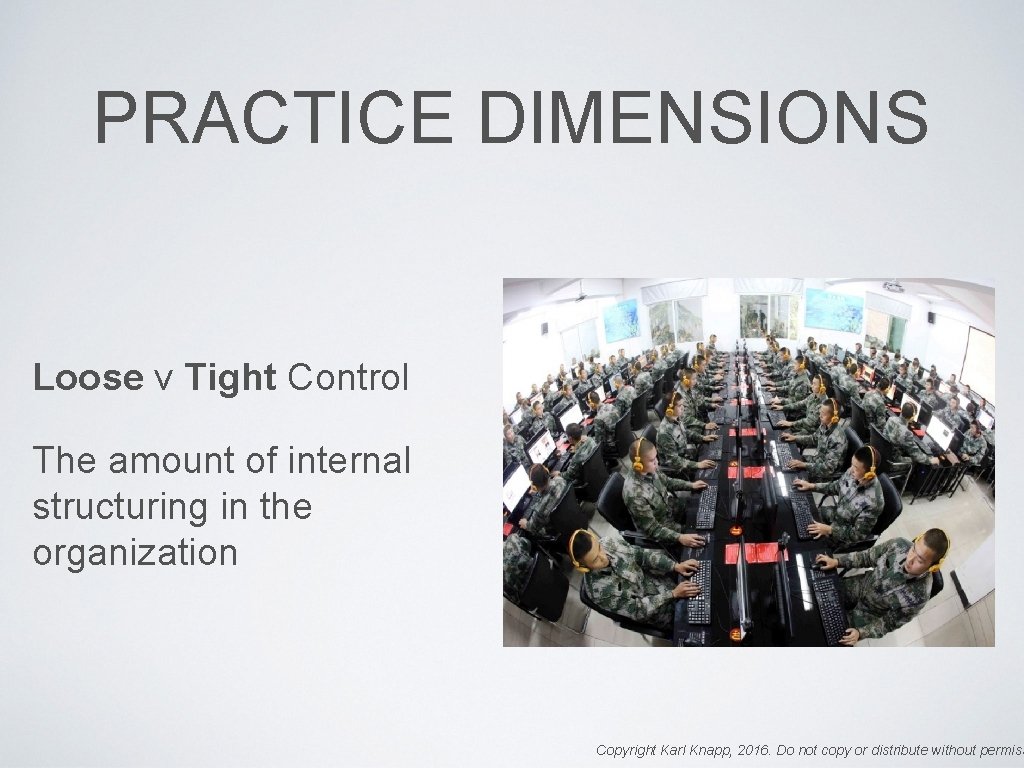
PRACTICE DIMENSIONS Loose v Tight Control The amount of internal structuring in the organization Copyright Karl Knapp, 2016. Do not copy or distribute without permiss
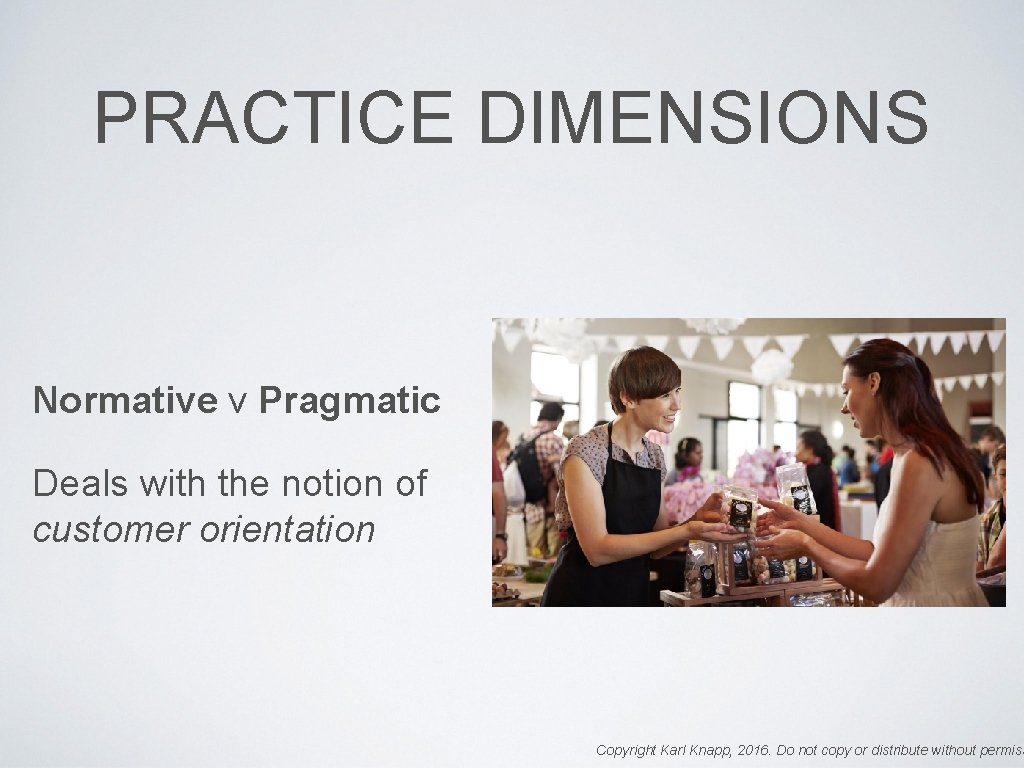
PRACTICE DIMENSIONS Normative v Pragmatic Deals with the notion of customer orientation Copyright Karl Knapp, 2016. Do not copy or distribute without permiss
UNDERSTANDING THE RESULTS OF MEASURING CULTURE Copyright Karl Knapp, 2016. Do not copy or distribute without permiss
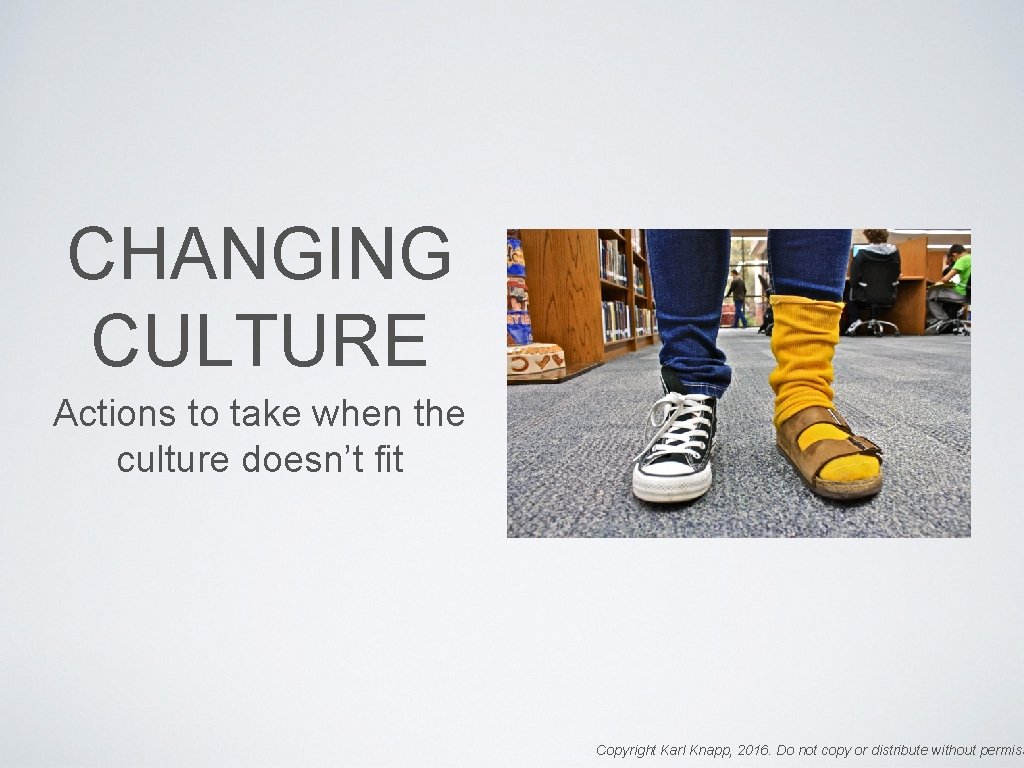
CHANGING CULTURE Actions to take when the culture doesn’t fit Copyright Karl Knapp, 2016. Do not copy or distribute without permiss
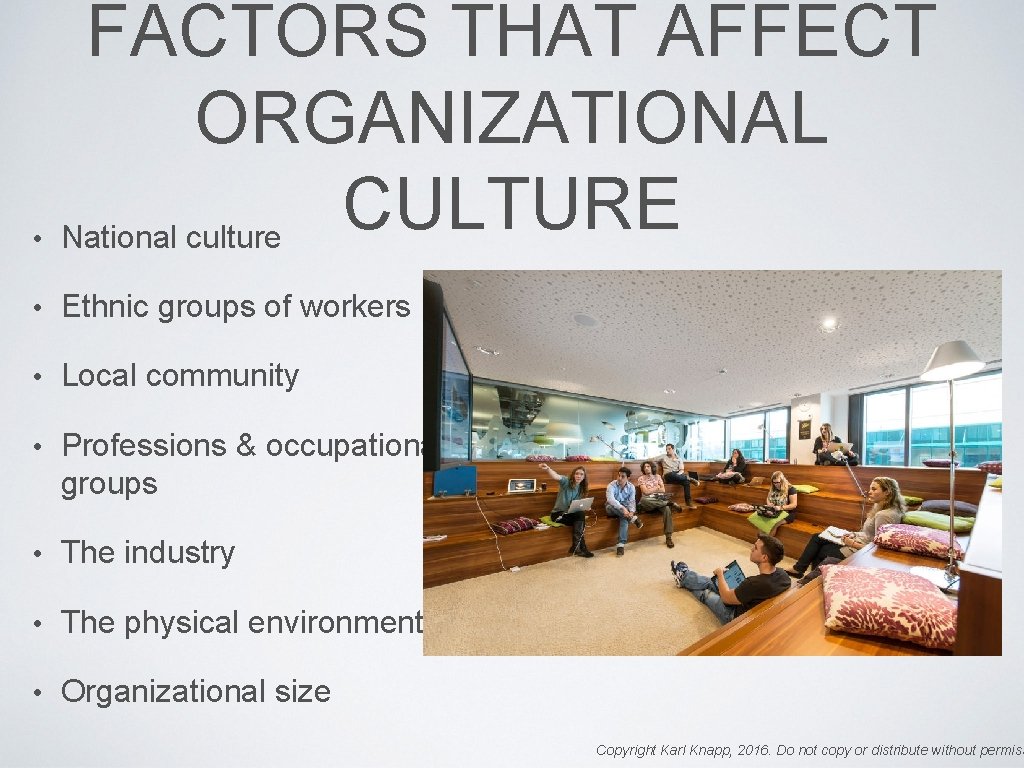
• FACTORS THAT AFFECT ORGANIZATIONAL CULTURE National culture • Ethnic groups of workers • Local community • Professions & occupational groups • The industry • The physical environment • Organizational size Copyright Karl Knapp, 2016. Do not copy or distribute without permiss
THREE METHODS FOR CULTURE CHANGE 3 Copyright Karl Knapp, 2016. Do not copy or distribute without permiss
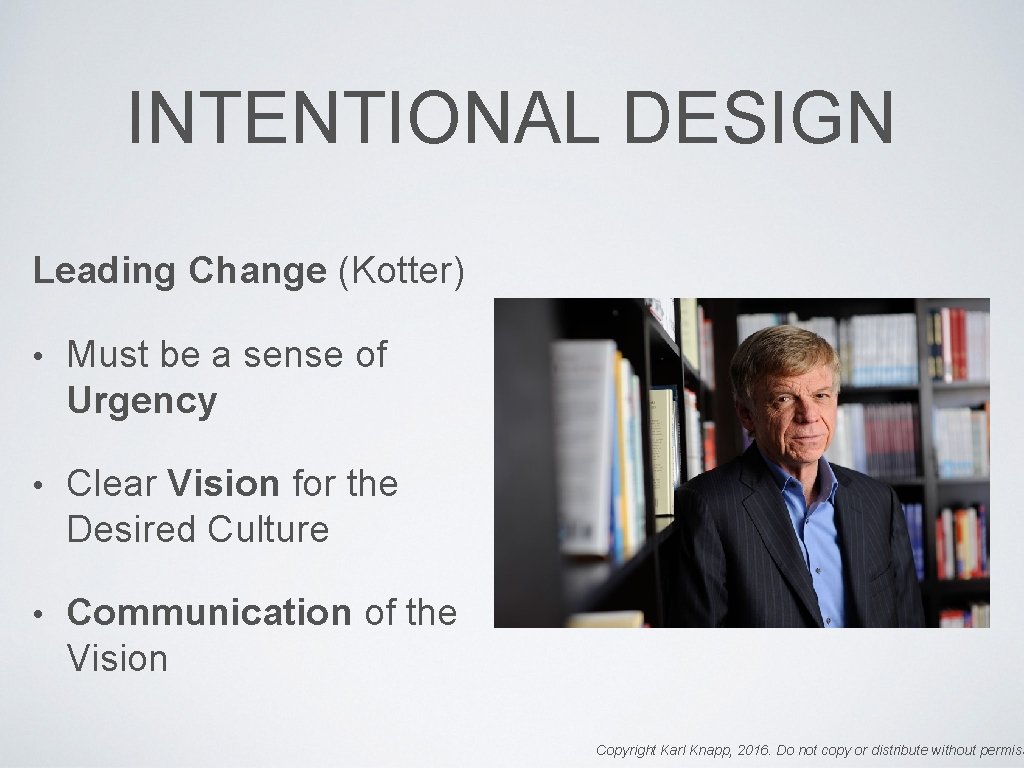
INTENTIONAL DESIGN Leading Change (Kotter) • Must be a sense of Urgency • Clear Vision for the Desired Culture • Communication of the Vision Copyright Karl Knapp, 2016. Do not copy or distribute without permiss
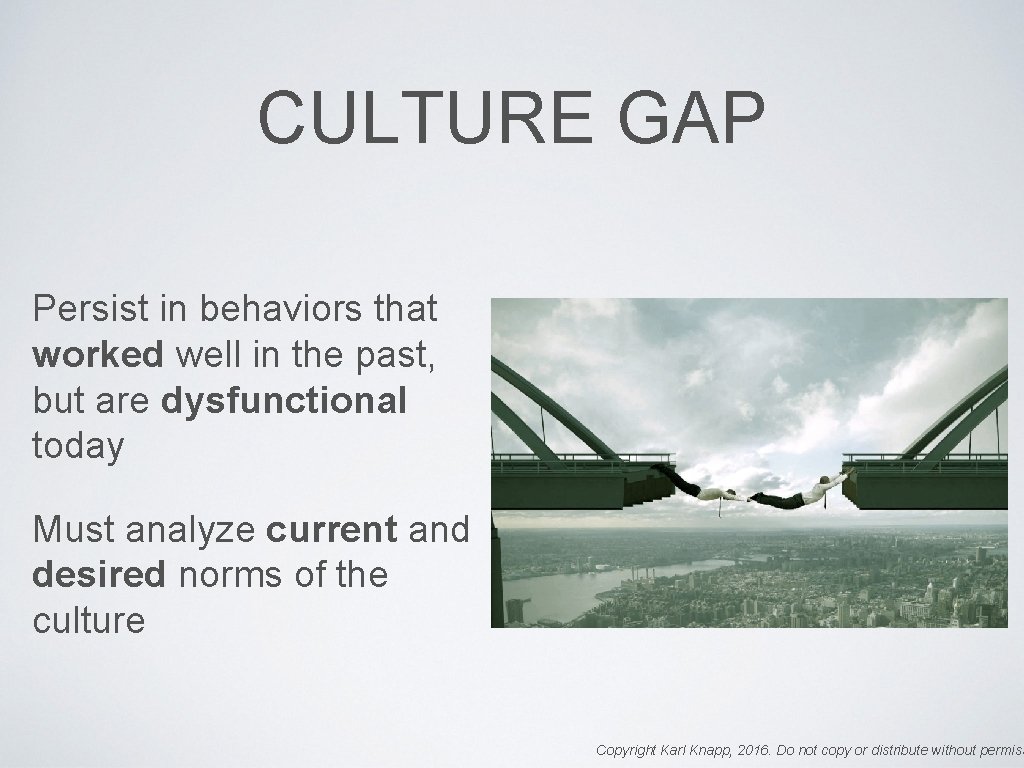
CULTURE GAP Persist in behaviors that worked well in the past, but are dysfunctional today Must analyze current and desired norms of the culture Copyright Karl Knapp, 2016. Do not copy or distribute without permiss
LET’S VISION Mind the Gap! Copyright Karl Knapp, 2016. Do not copy or distribute without permiss
1 SOCIAL INTERACTION Culture changed through the Social interaction of members, in two situations: • Positive problem solving • Anxiety avoidance Copyright Karl Knapp, 2016. Do not copy or distribute without permiss
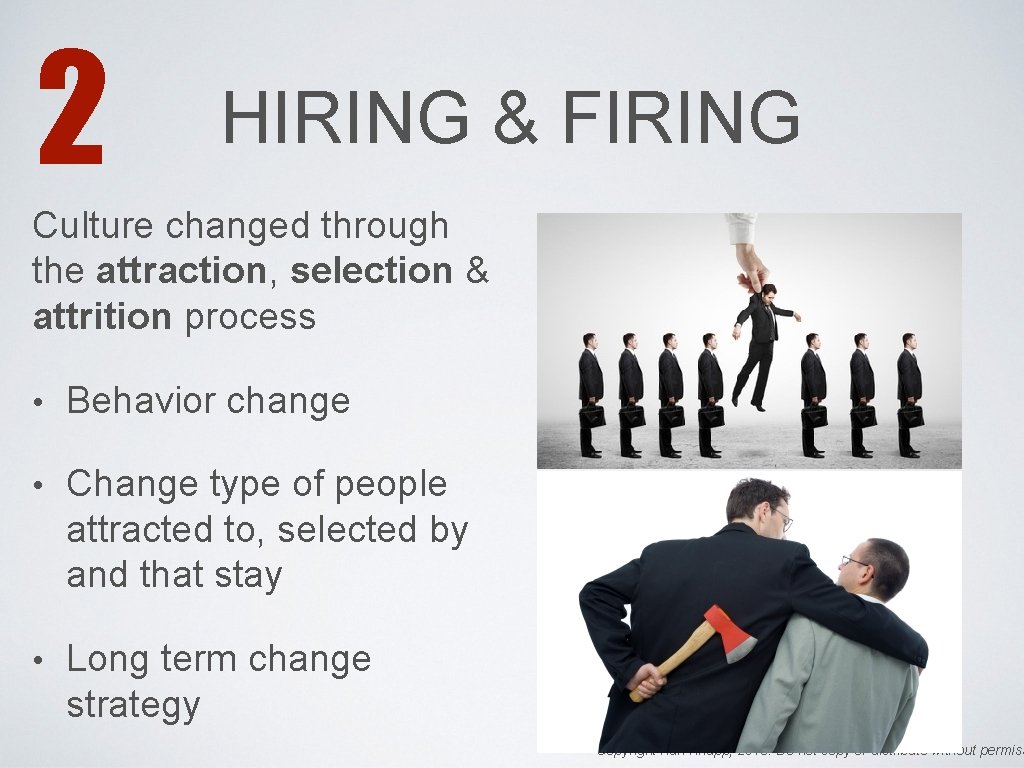
2 HIRING & FIRING Culture changed through the attraction, selection & attrition process • Behavior change • Change type of people attracted to, selected by and that stay • Long term change strategy Copyright Karl Knapp, 2016. Do not copy or distribute without permiss
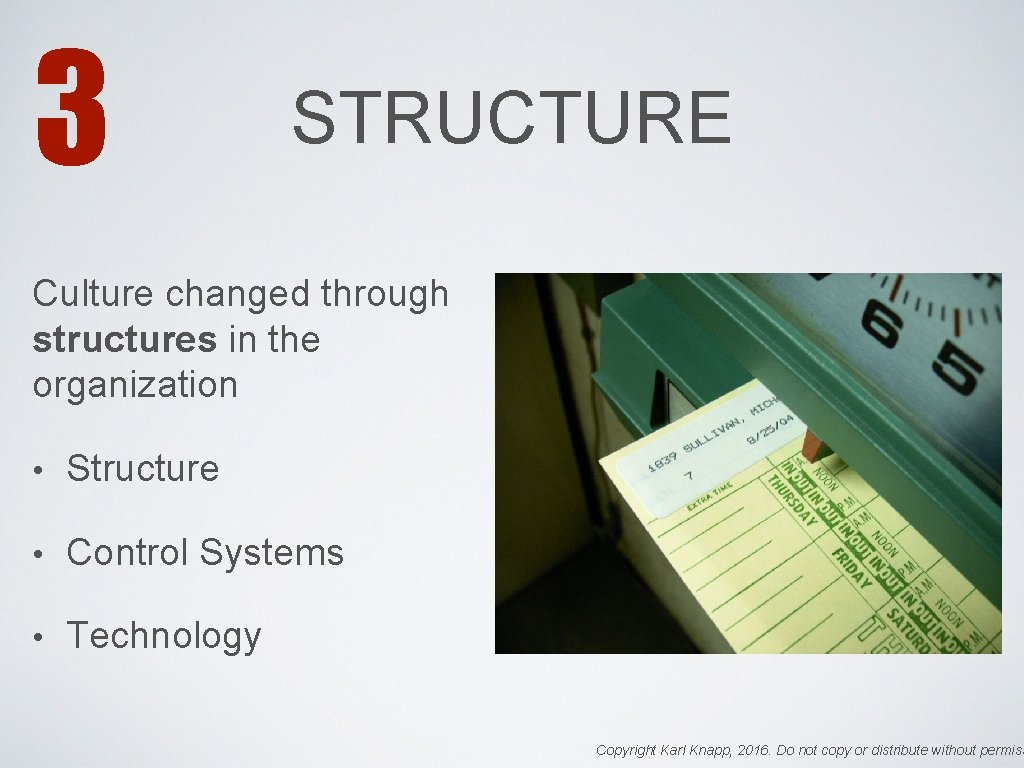
3 STRUCTURE Culture changed through structures in the organization • Structure • Control Systems • Technology Copyright Karl Knapp, 2016. Do not copy or distribute without permiss
DIFFICULTIES • Greater number of sub-cultures • Greater depth of desired change Copyright Karl Knapp, 2016. Do not copy or distribute without permiss
1 Social Interaction Changes 2 Personnel Changes 3 Structural Changes Control Systems Changes Technology Changes LET’S PLAN Planning to Plan (Office Space) Copyright Karl Knapp, 2016. Do not copy or distribute without permiss
CULTURE CHANGE REALITY • Culture Resists Change • Requires Individuals to Change Schemata • Usually Requires a Crisis • Change at observables levels (values outward) easier than assumptions • Change, instability & grief Copyright Karl Knapp, 2016. Do not copy or distribute without permiss
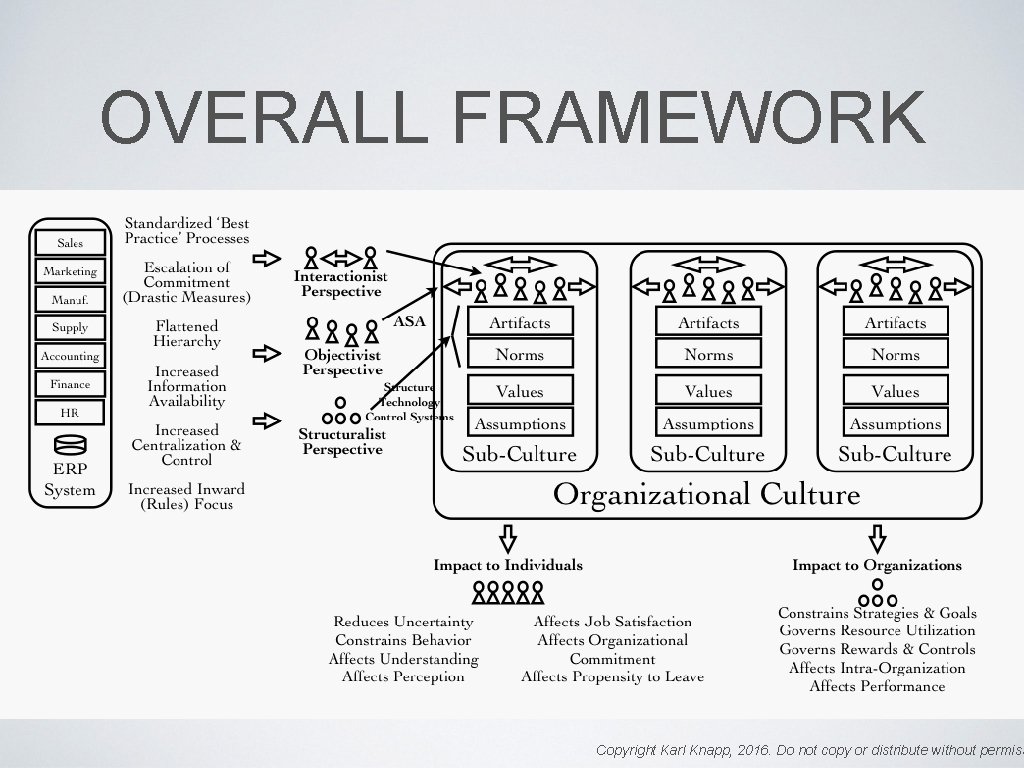
OVERALL FRAMEWORK Copyright Karl Knapp, 2016. Do not copy or distribute without permiss
- Slides: 47