
ORGANIZATIONAL CONFLICT IN IBM BY CHAN SUNHO HUYNJIN
ORGANIZATIONAL CONFLICT IN IBM BY CHAN, SUNHO & HUYNJIN
Outline ■ ■ ■ ■ Introduction What is Conflict? Types of Conflicts Sources of Conflict Resolution Conclusions and Recommendations References Questions
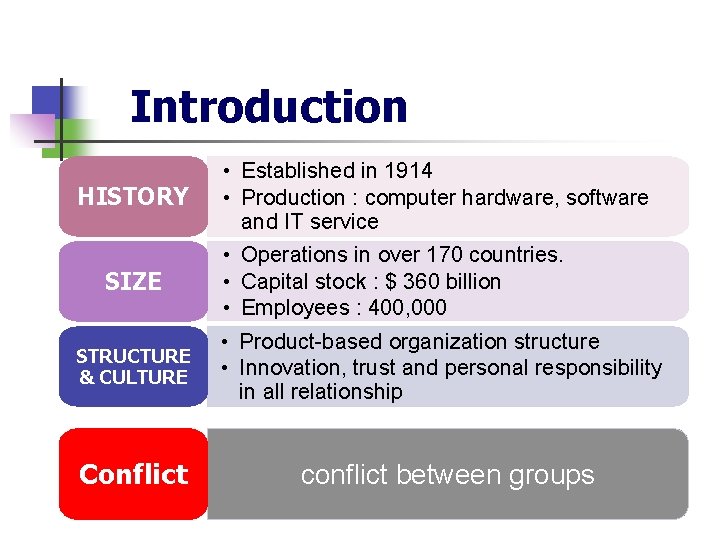
Introduction HISTORY SIZE STRUCTURE & CULTURE Conflict • Established in 1914 • Production : computer hardware, software and IT service • Operations in over 170 countries. • Capital stock : $ 360 billion • Employees : 400, 000 • Product-based organization structure • Innovation, trust and personal responsibility in all relationship conflict between groups

What is Conflict? ■ Disagreement or tension among individuals or groups 1. Oppositional or hostile interaction 2. Recognition of conflict 3. Inducing intentional & external action
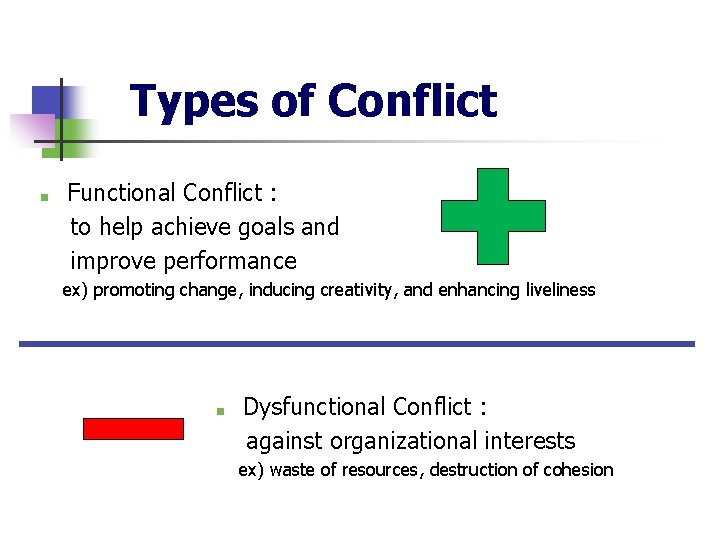
Types of Conflict ■ Functional Conflict : to help achieve goals and improve performance ex) promoting change, inducing creativity, and enhancing liveliness ■ Dysfunctional Conflict : against organizational interests ex) waste of resources, destruction of cohesion

Dysfunctional Conflict in IBM Conflict between groups(1991 -1993) Sales Department Systems & Technology Software Seeking the interests of own group only Global technology service Global business service Declining performance of the whole organization
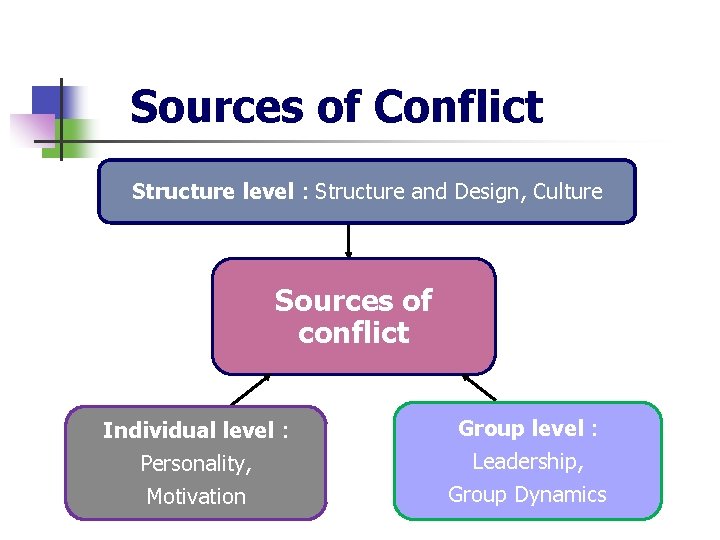
Sources of Conflict Structure level : Structure and Design, Culture Sources of conflict Individual level : Personality, Motivation Group level : Leadership, Group Dynamics
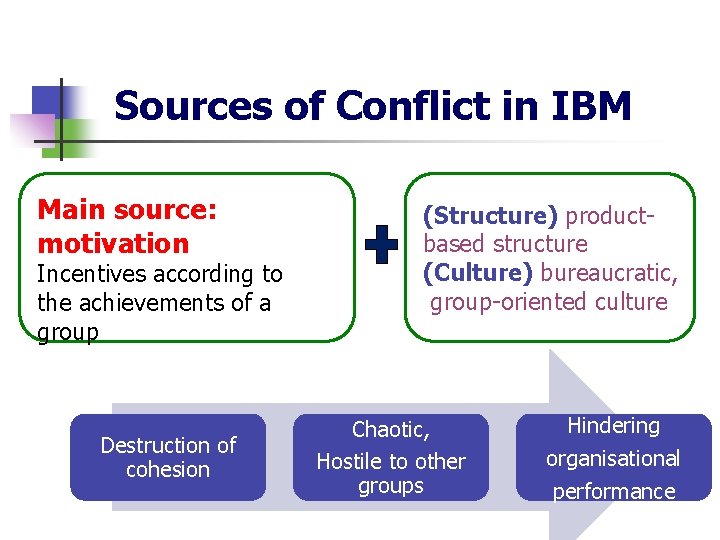
Sources of Conflict in IBM Main source: motivation Incentives according to the achievements of a group Destruction of cohesion (Structure) productbased structure (Culture) bureaucratic, group-oriented culture Chaotic, Hostile to other groups Hindering organisational performance
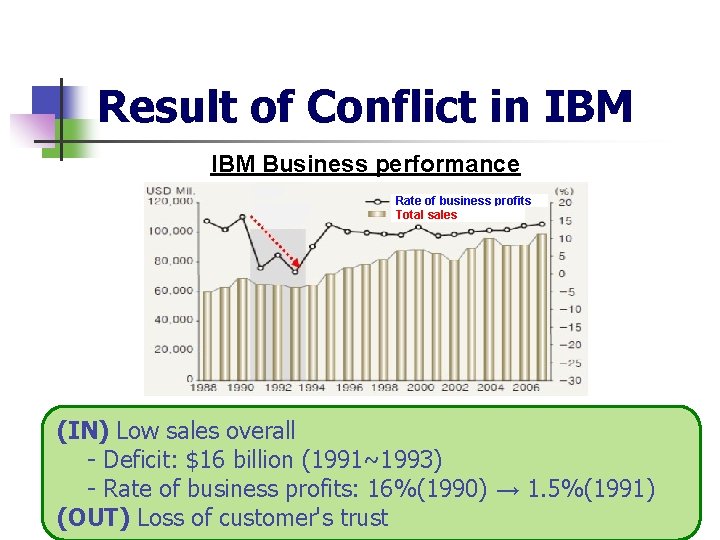
Result of Conflict in IBM Business performance Rate of business profits Total sales (IN) Low sales overall - Deficit: $16 billion (1991~1993) - Rate of business profits: 16%(1990) → 1. 5%(1991) (OUT) Loss of customer's trust
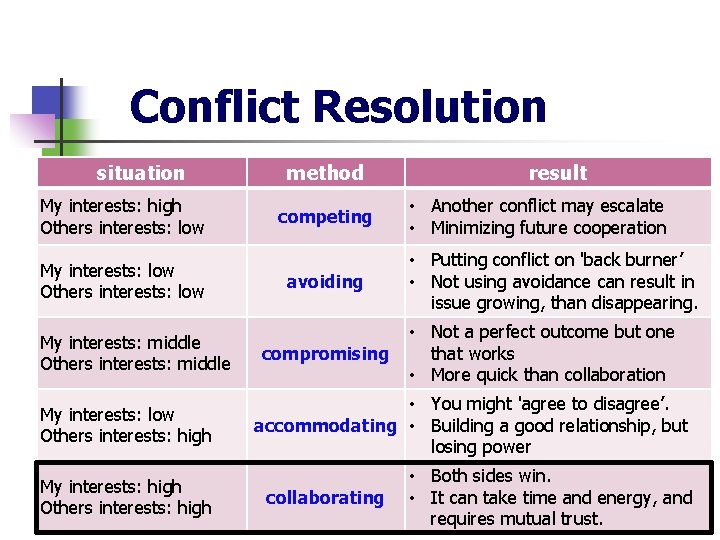
Conflict Resolution situation My interests: high Others interests: low My interests: low Others interests: low My interests: middle Others interests: middle method competing avoiding compromising result • Another conflict may escalate • Minimizing future cooperation • Putting conflict on 'back burner’ • Not using avoidance can result in issue growing, than disappearing. • Not a perfect outcome but one that works • More quick than collaboration My interests: low Others interests: high • You might 'agree to disagree’. accommodating • Building a good relationship, but losing power My interests: high Others interests: high • Both sides win. • It can take time and energy, and requires mutual trust. collaborating
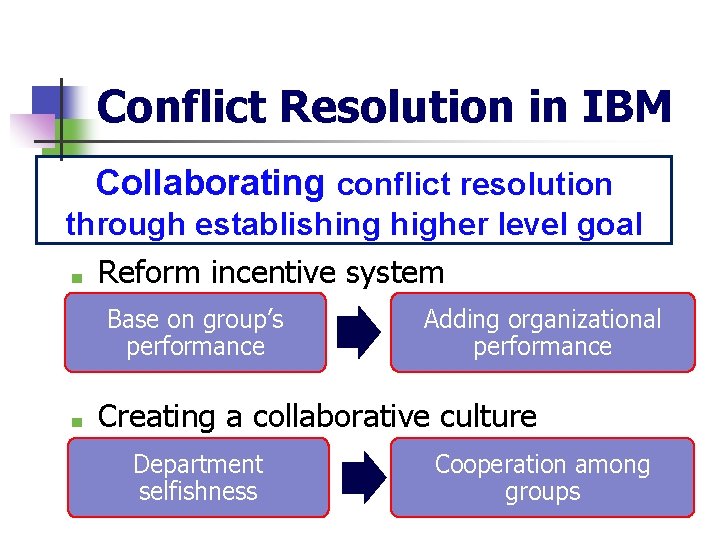
Conflict Resolution in IBM Collaborating conflict resolution through establishing higher level goal ■ Reform incentive system Base on group’s performance ■ Adding organizational performance Creating a collaborative culture Department selfishness Cooperation among groups
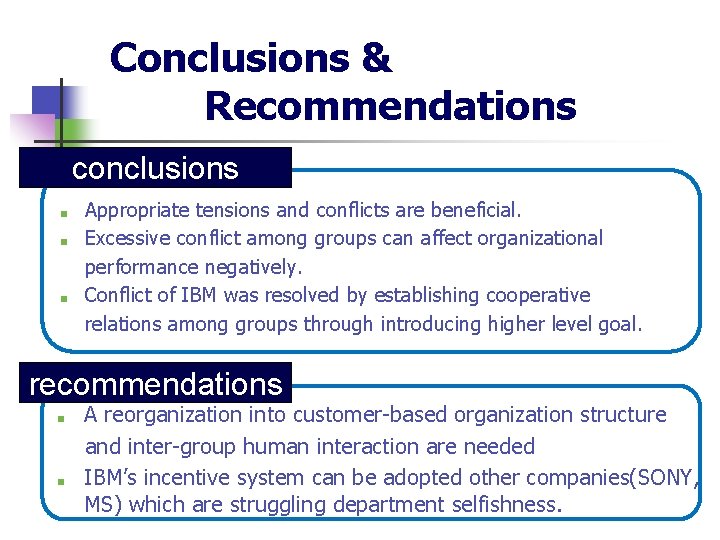
Conclusions & Recommendations conclusions ■ ■ ■ Appropriate tensions and conflicts are beneficial. Excessive conflict among groups can affect organizational performance negatively. Conflict of IBM was resolved by establishing cooperative relations among groups through introducing higher level goal. recommendations ■ ■ A reorganization into customer-based organization structure and inter-group human interaction are needed IBM’s incentive system can be adopted other companies(SONY, MS) which are struggling department selfishness.
References/Bibliography ■ ■ ■ Bartol, K. M. & Srivastava, A. (2002) ‘Encouraging Knowledge Sharing: The Role of Organizational Reward Systems’. Journal of Leadership and Organizational Studies. 9(1). 64 -76 Dicarlo, L. (2002) How Lou Gerstner Got IBM To Dance [on line] available from <https: //www. forbes. com/2002/11/11/cx_ld_1112 gerstner. html#41 b 288824257> (22 Febrary 2018) Gerstner, L. (2003) Who says elephants can’t dance? . New York: Harper. Collins Publisher Inc. Lagace, M (2002) Changing Culture at IBM - Lou Gerstner Discusses Changing the Culture at IBM [on line] available from < https: // hbswk. hbs. edu/archive/gerstner-changing-culture-at-ibm-lou- gerstnerdiscusses-changing-the-culture-at-ibm> (22 Febrary 2018) Roberto, M. A. (2014) How business leaders avoid conflict(collection). New Jersey: Pearson Education Inc. Slater, R. (1999) Saving Big Blue: Leadership Lessons and Turnaround Tactics of IBM's Lou Gerstner. Mc. Graw-Hill School Education Group
Thank you for listening
- Slides: 14