
ORGANIZATIONAL CHANGE Objects of Change Physical Setting Structure
ORGANIZATIONAL CHANGE
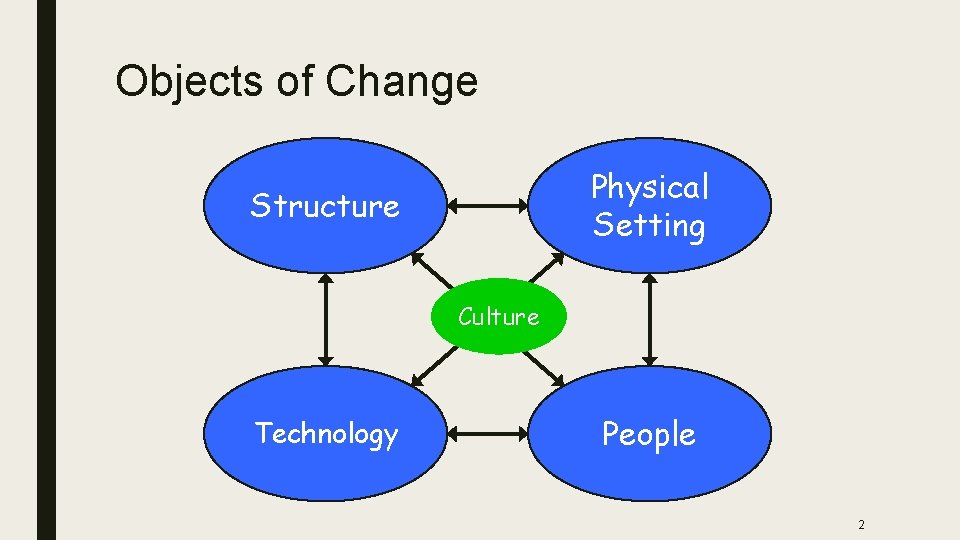
Objects of Change Physical Setting Structure Culture Technology People 2
Organizational change Problem resistance to change - Eksplicit - Implicit
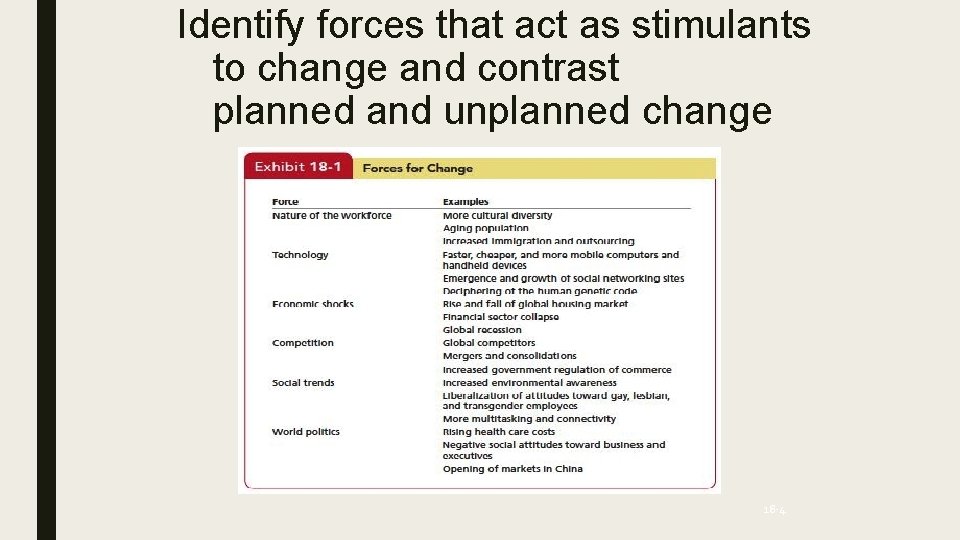
Identify forces that act as stimulants to change and contrast planned and unplanned change 18 -4
Identify forces that act as stimulants to change and contrast planned and unplanned change ■ Planned Change – Some organizations treat all change as an accidental occurrence; however, change as an intentional, goal-oriented activity is planned change. – There are two goals of planned change: ■ Improve the ability of the organization to adapt to changes in its environment. ■ Change employee behavior. 18 -5
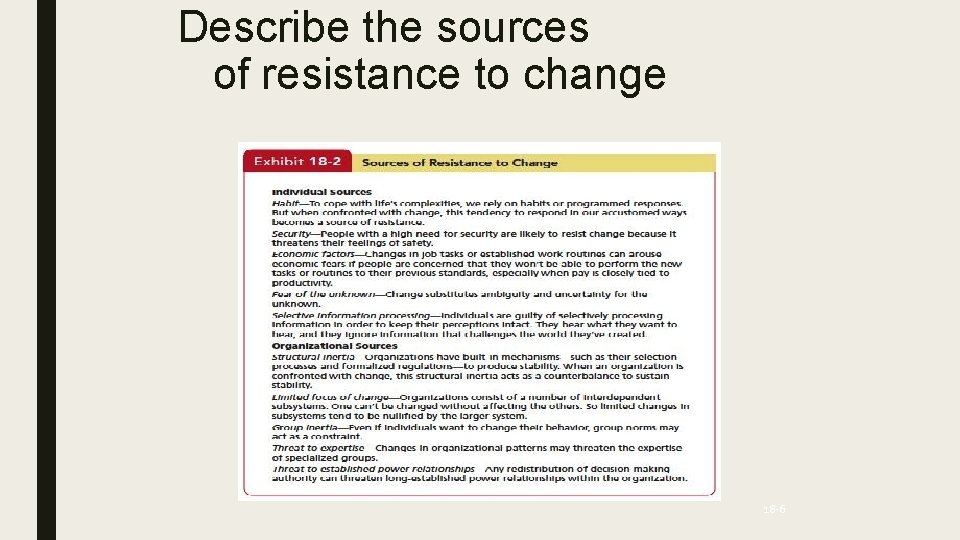
Describe the sources of resistance to change 18 -6
Habit : ■ Merupakan pola tingkah laku yang ditampilkan berulang –ulang sepanjang hidup. Kebiasaan dilakukan karena merasa nyaman, menyenangkan, jika perubahan berpengaruh besar terhadap pola kehidupan maka akan muncul mekanisme diri yaitu Penolakan. Security : ■ Jika kondisi saat ini memberi rasa aman (nyaman), & kita membutuhkan rasa aman yg relatif tinggi, maka potensi menolak perubahan pun besar.
Economic Factors: ■ Dengan perubahan tertentu mungkin akan mengurangi pendapatan, misal konsep 5 hari kerja akan mengurangi upah lembur. Fear the Unknown : ■ Karena perubahan tidak mudah diprediksi hasilnya. maka kondisi nanti setelah perubahan belum pasti. Untuk itu orang akan cenderung memilih kondisi sekarang yang sudah pasti dan menolak perubahan. Selective infrmation Processing “hear what they want
Describe the sources of resistance to change ■ Overcome Resistance – Education and Communication – Participation – Building Support and Commitment – Develop Positive Relationships – Manipulation and Cooptation – Selecting People Who Accept Change – Coercion 18 -9

a. Pendidikan & komunikasi ■ Memberikan penjelasan secara tuntas tentang latar belakang, tujuan, akibat, dari diadakannya perubahan kepada semua pihak terkait. Komunikasikan dlm berbagai macam bentuk. Ceramah, diskusi, laporan, presentasi, bahkan sosialisasi.
b. Partisipasi ■ Ajak serta semua fihak untuk mengambil keputusan bersama. Leader hanya sebagai fasilitator & motivator, biarkan anggota organisasi yg ambil keputusan.
c. Fasilitas & dukungan ■ Jika anggota organisasi merasa takut atau cemas terhadap perubahan yg diterapkan, lakukan konsultasi atau bahkan terapi. Berikan juga pelatihan-pelatihan, terkait peningkatan kemampuan individual. Tujuannya untuk mengurangi tingkat penolakan terhadap perubahan.
d. Negosiasi ■ Melakukan negosiasi dengan fihak-fihak yg menentang perubahan. Cara ini bisa dilakukan jika yg menentang memiliki kekuatan yg tidak kecil, misal serikat pekerja yg menentang kebijakan baru dari manajemen perusahaan.

e. Manipulasi & kooptasi ■ Manipulasi adalah menutupi kondisi yang sesungguhnya. Misal memlintir (twisting) fakta agar tampak lebih menarik, tidak mengutarakan hal yg negatif. Kooptasi dilakukan dengan cara memberikan kedudukan penting kepada pimpinan penentang perubahan dlm mengambil keputusan.
f. Paksaan ■ Berikan ancaman & jatuhkan hukuman bagi siapapun yang menentang dilakukannya perubahan organisasi.
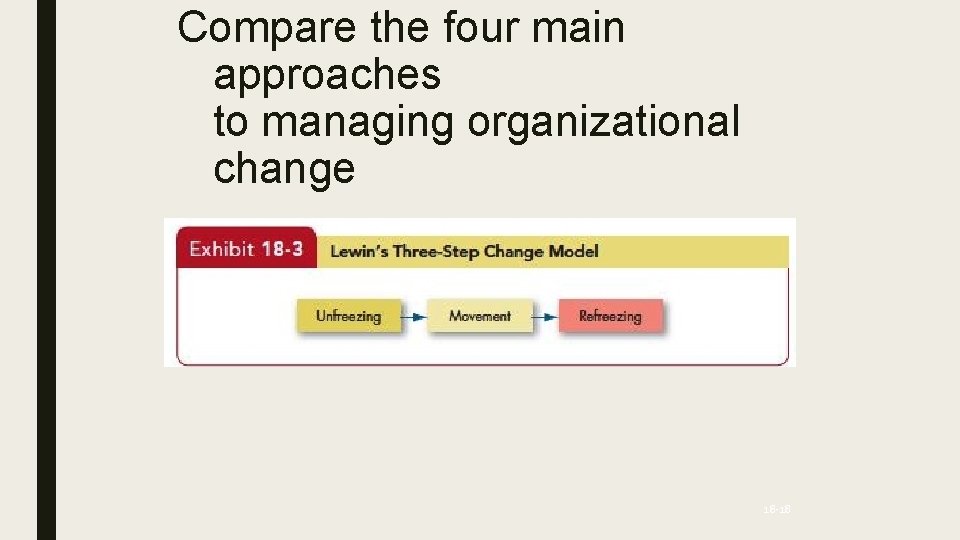
Compare the four main approaches to managing organizational – Lewin’s Three-Step Model (Exhibit 18 -3) change – Kotter’s Eight-Step Plan for Implementing Change (Exhibit 185) – Action Research – Organizational Development 18 -17
Compare the four main approaches to managing organizational change 18 -18
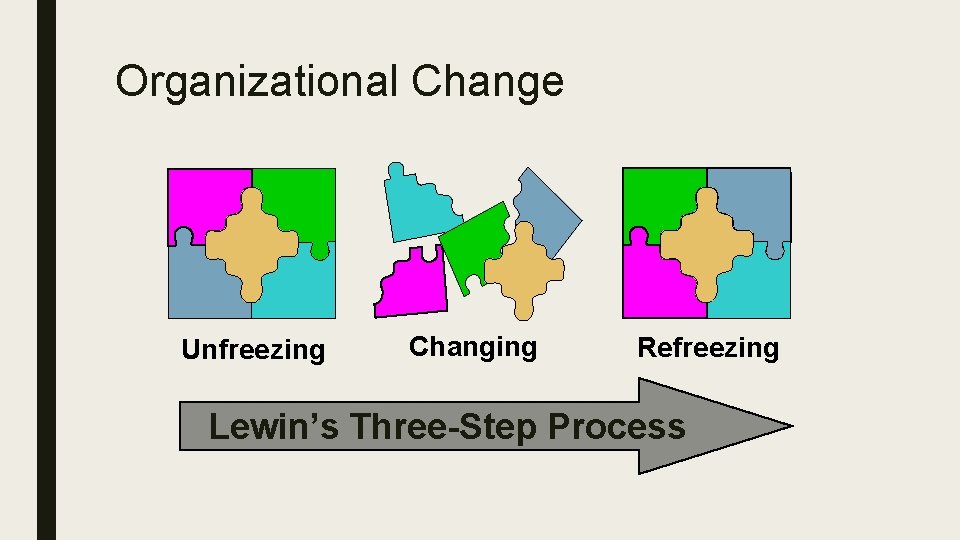
Organizational Change Unfreezing Changing Refreezing Lewin’s Three-Step Process
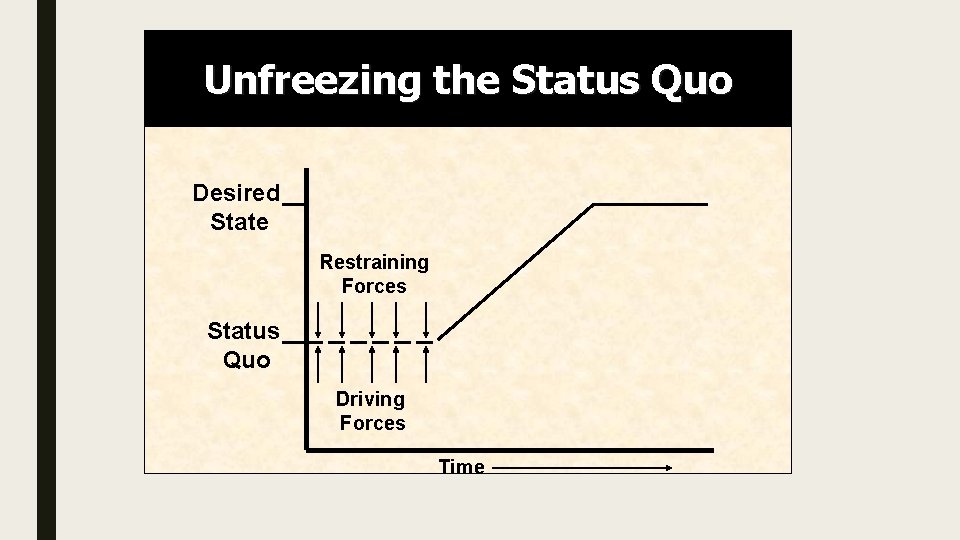
Unfreezing the Status Quo Desired State Restraining Forces Status Quo Driving Forces Time
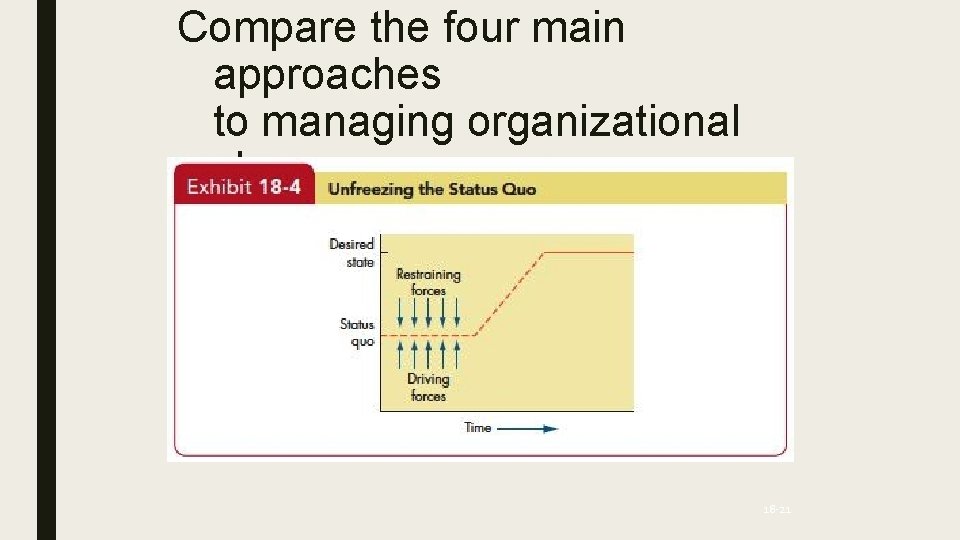
Compare the four main approaches to managing organizational change 18 -21
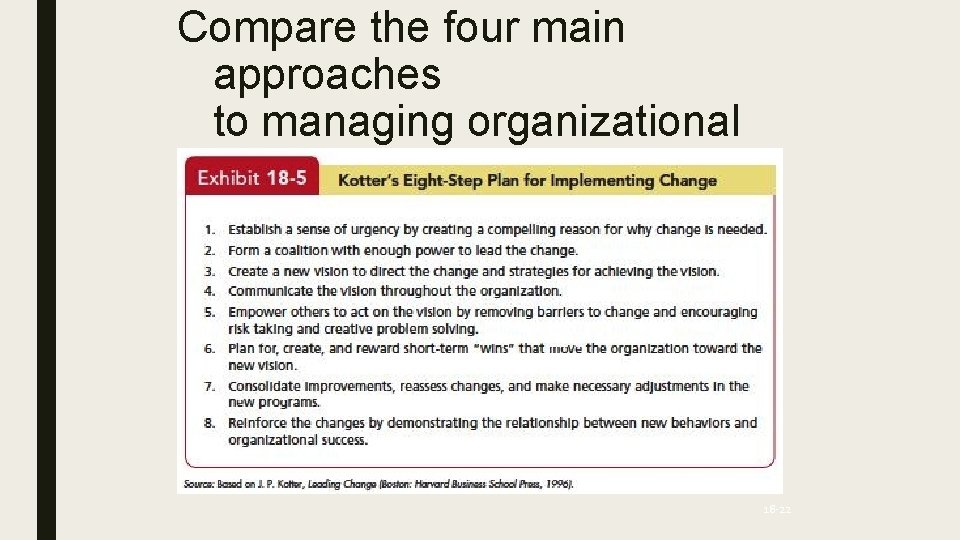
Compare the four main approaches to managing organizational change 18 -22
Compare the four main approaches to managing organizational ■ Action research is “a change process based on the systematic collection of data and then selection of a change action based on change what the analyzed data indicate. ” ■ The process consists of five steps: diagnosis, analysis, feedback, action, and evaluation. ■ Action research provides at least two specific benefits for an organization: problem focused and resistance to change is reduced. 18 -23
Compare the four main approaches to managing organizational ■ Organizational development (OD) is a collection of change methods change that try to improve organizational effectiveness and employee wellbeing. ■ The OD methods value human and organizational growth, collaborative and participative processes, and a spirit of inquiry. 18 -24
Compare the four main approaches to managing organizational ■ The underlying values in most OD efforts: change – Respect for people – – Trust and support Power equalization Confrontation Participation 18 -25
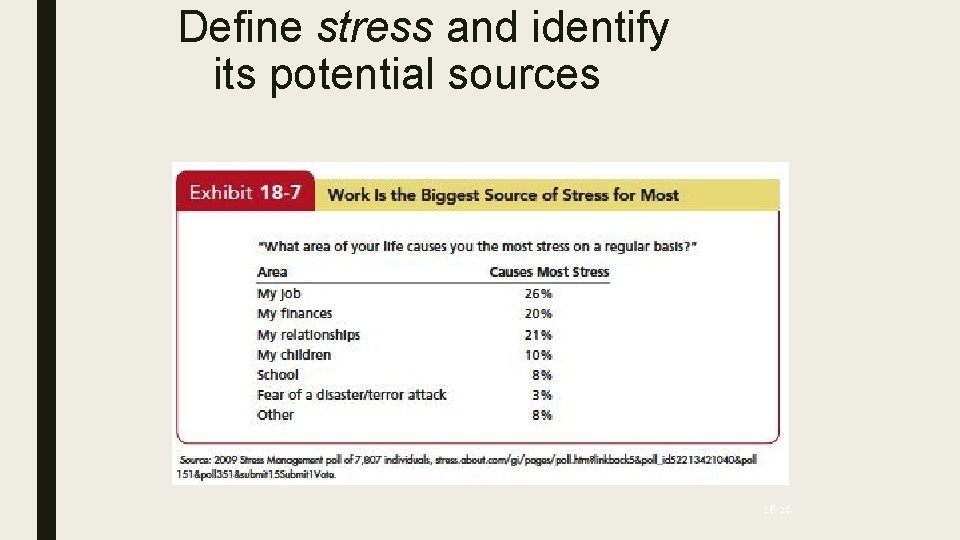
Define stress and identify its potential sources 18 -26
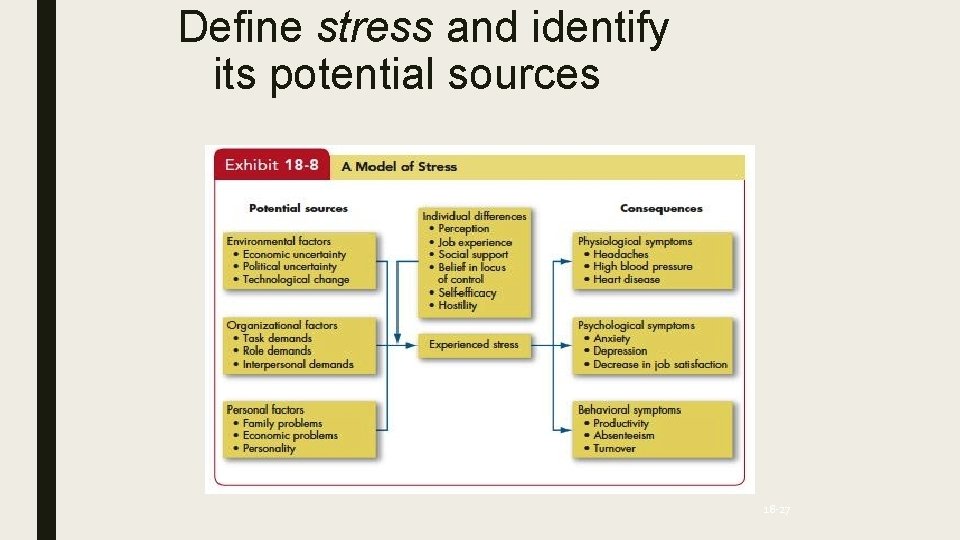
Define stress and identify its potential sources 18 -27
Identify the consequences of stress ■ Consequences of Stress-Physiological Symptoms – Most early concern with stress was directed at physiological symptoms because most researchers were specialists in the health and medical sciences. ■ Research has found profound effect of stress on physical aspects 18 -28
Identify the consequences of stress ■ Consequences of Stress-Psychological Symptoms – Job-related stress and job-related dissatisfaction. – Job dissatisfaction is “the simplest and most obvious psychological effect” of stress. – Multiple and conflicting demands increase stress and dissatisfaction. – The less control people have over the pace of their work, the greater the stress and dissatisfaction. 18 -29
Identify the consequences of stress ■ Consequences of Stress-Behavioral Symptoms – Research on behavior and stress has been conducted across several countries and over time, and the relationships appear relatively consistent. – Behavior-related stress symptoms include reductions in productivity, absence, and turnover, as well as changes in eating habits, increased smoking or consumption of alcohol, rapid speech, fidgeting, and sleep disorders. 18 -30
Contrast the individual and organizational approaches to managing stress ■ Managing Stress – Because low to moderate levels of stress can be functional and lead to higher performance, management may not be concerned when employees experience them. – What management may consider to be “a positive stimulus that keeps the adrenaline running” is very likely to be seen as “excessive pressure” by the employee. 18 -31
Contrast the individual and organizational approaches to managing stress ■ Managing Stress- Individual Approaches – An employee can take personal responsibility for reducing stress levels. – Individual strategies that have proven effective include timemanagement techniques, increased physical exercise, relaxation training, and expanded social support networks. 18 -32
Contrast the individual and organizational approaches to managing stress ■ Managing Stress- Organizational Approaches – Several organizational factors that cause stress are controlled by management. – Strategies include improved employee selection and job placement, training, realistic goal-setting, redesign of jobs, increased employee involvement, improved organizational communication, employee sabbaticals, and corporate wellness programs. 18 -33
Contrast the individual and organizational approaches to managing stress ■ Goal-setting – Goals can reduce stress as well as provide motivation. – Employees who are highly committed to their goals and see purpose in their jobs experience less stress. 18 -34
Contrast the individual and organizational approaches to managing stress ■ Redesigning jobs to give employees more responsibility, more meaningful work, more autonomy, and increased feedback can reduce stress because these factors give employees greater control over work activities and lessen dependence on others. 18 -35
Contrast the individual and organizational approaches to managing stress ■ Role stress is detrimental to a large extent because employees feel uncertain about goals, expectations, how they’ll be evaluated, and the like. – By giving these employees a voice in the decisions management can increase employee control and reduce role stress. – Managers should consider increasing employee involvement in decision making. 18 -36
Contrast the individual and organizational approaches to managing stress ■ Increasing formal organizational communication with employees reduces uncertainty by lessening role ambiguity and role conflict. ■ Given the importance that perceptions play in moderating the stressresponse relationship, management can also use effective communications as a means to shape employee perceptions. 18 -37
Contrast the individual and organizational approaches to managing stress ■ Some employees need an occasional escape from the frenetic pace of their work. ■ These sabbaticals—ranging in length from a few weeks to several months— allow employees to travel, relax, or pursue personal projects that consume time beyond normal vacations. 18 -38
Contrast the individual and organizational approaches to managing stress ■ Organizationally supported wellness programs. – These typically provide workshops to help people quit smoking, control alcohol use, lose weight, eat better, and develop a regular exercise program; they focus on the employee’s total physical and mental condition. 18 -39
- Slides: 39