
Organizational Behavior V 2 0 By Talya Bauer
Organizational Behavior V 2. 0 By Talya Bauer and Berrin Erdogan
Published by: Flat World Knowledge, Inc. © 2015 by Flat World Knowledge, Inc. All rights reserved. Your use of this work is subject to the License Agreement available here http: //www. flatworldknowledge. com/legal. No part of this work may be used, modified, or reproduced in any form or by any means except as expressly permitted under the License Agreement. 13 -2
Chapter 15 Organizational Culture
Learning Objectives 1. Describe organizational culture and why it is important for an organization 2. Understand the dimensions that make up a company’s culture 3. Assess whether a culture is weak or strong 4. Understand factors that create culture 5. Understand how to change culture 6. Understand how organizational culture and ethics relate 7. Understand cross-cultural differences in organizational culture
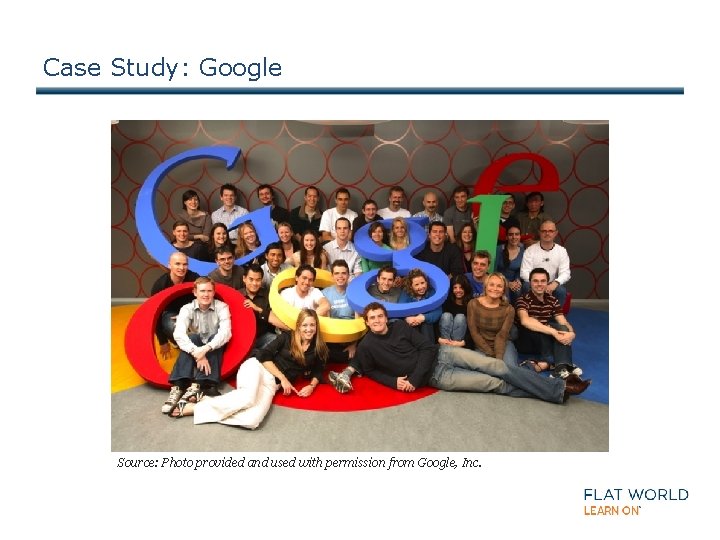
Case Study: Google Source: Photo provided and used with permission from Google, Inc.
Case Discussion Questions 1. Using the OCP framework, analyze Google’s culture dimensions. Which dimensions seem to characterize Google Culture? 2. What are the factors responsible for the specific culture that exists in Google? 3. Do you see any challenges Google may face in preserving its culture? What are the challenges of having this culture for a global organization with more than 52, 000 employees?
What is Organizational Culture? A system of shared assumptions, values, and beliefs that show people what is appropriate and inappropriate behavior The culture of the organization is closely linked to organizational design
Why Does Organizational Culture Matter? An organization’s culture may be one of its strongest assets or its biggest liability Organizational culture is an effective control mechanism dictating employee behavior Culture, or shared values within the organization, may be related to increased performance Organizations which have a rare and hard to imitate culture may enjoy a competitive advantage
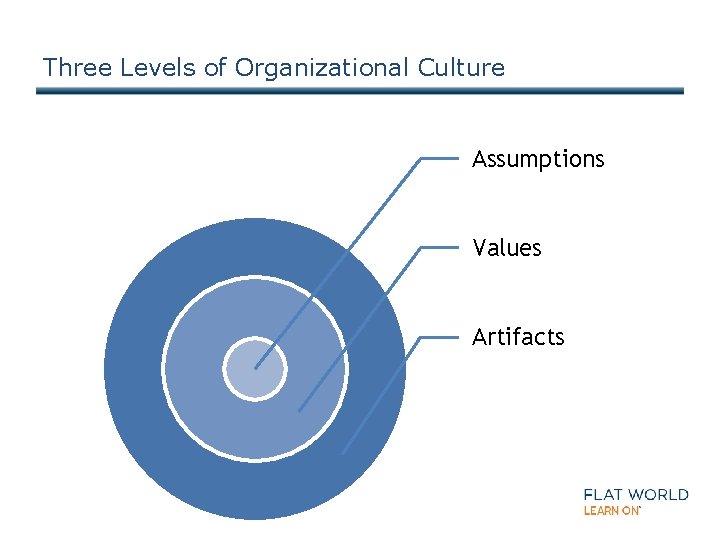
Three Levels of Organizational Culture Assumptions Values Artifacts
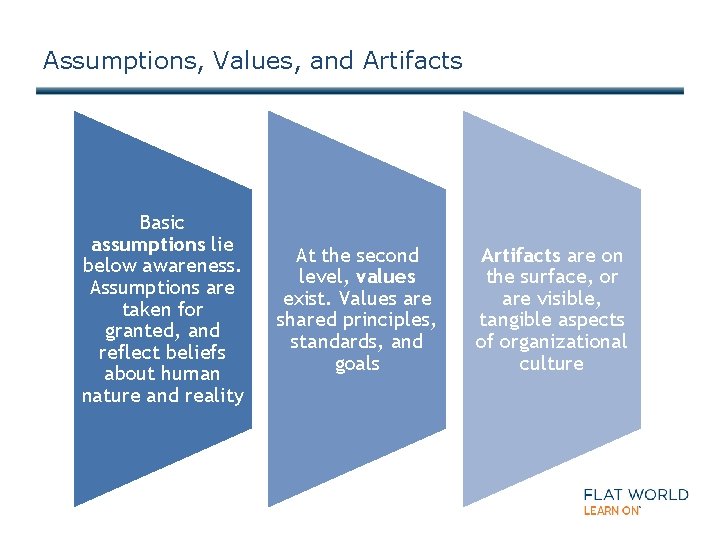
Assumptions, Values, and Artifacts Basic assumptions lie below awareness. Assumptions are taken for granted, and reflect beliefs about human nature and reality At the second level, values exist. Values are shared principles, standards, and goals Artifacts are on the surface, or are visible, tangible aspects of organizational culture
Discussion • Why do companies need culture? • Give an example of a company culture being a strength and also a weakness. • In what ways does culture serve as a controlling mechanism? • If assumptions are below the surface, why do they matter? • Share examples of artifacts you have noticed at different organizations.
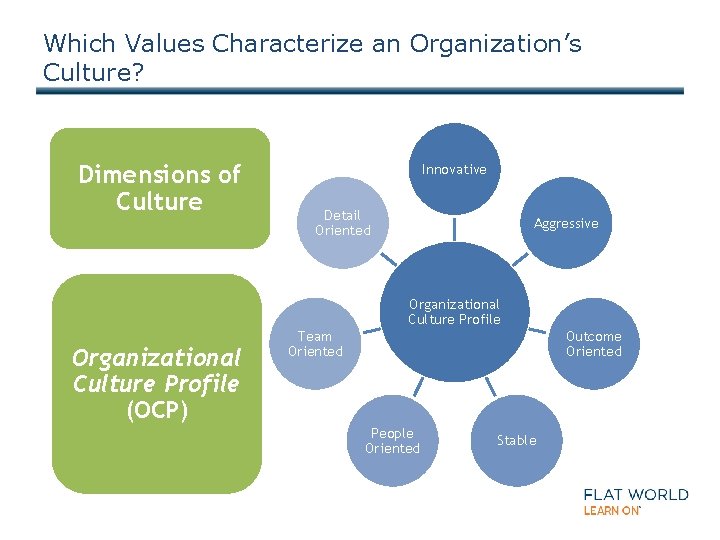
Which Values Characterize an Organization’s Culture? Dimensions of Culture Innovative Detail Oriented Aggressive Organizational Culture Profile (OCP) Team Oriented Outcome Oriented People Oriented Stable
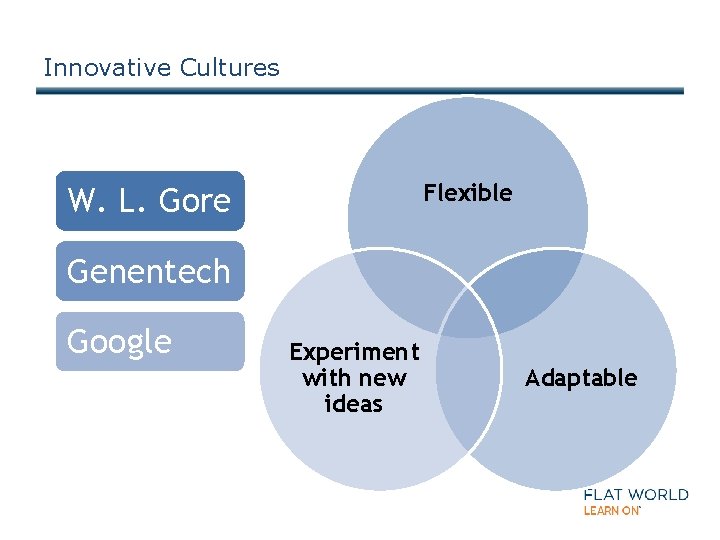
Innovative Cultures Flexible W. L. Gore Genentech Google Experiment with new ideas Adaptable
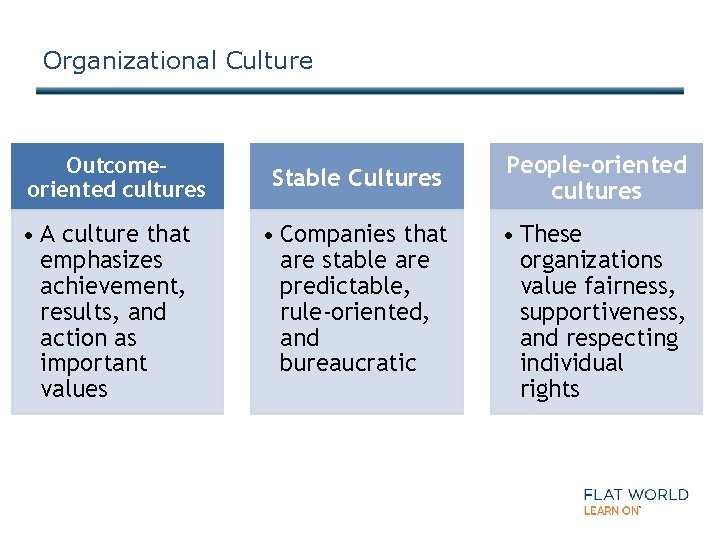
Organizational Culture Outcomeoriented cultures • A culture that emphasizes achievement, results, and action as important values Stable Cultures • Companies that are stable are predictable, rule-oriented, and bureaucratic People-oriented cultures • These organizations value fairness, supportiveness, and respecting individual rights
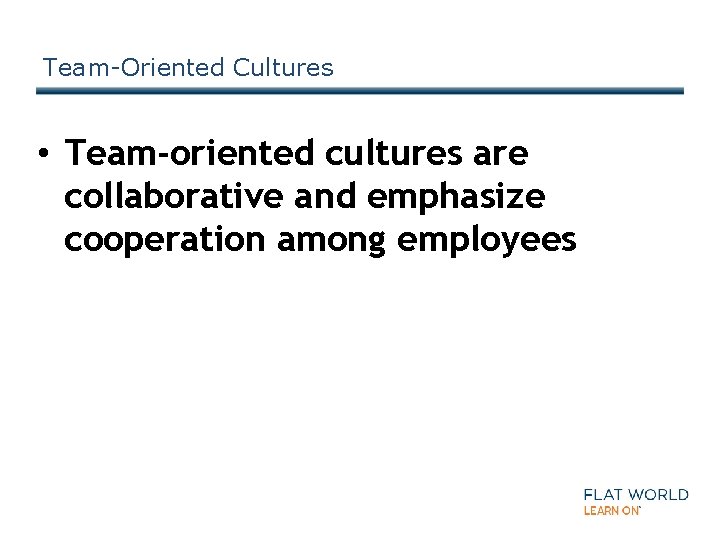
Team-Oriented Cultures • Team-oriented cultures are collaborative and emphasize cooperation among employees
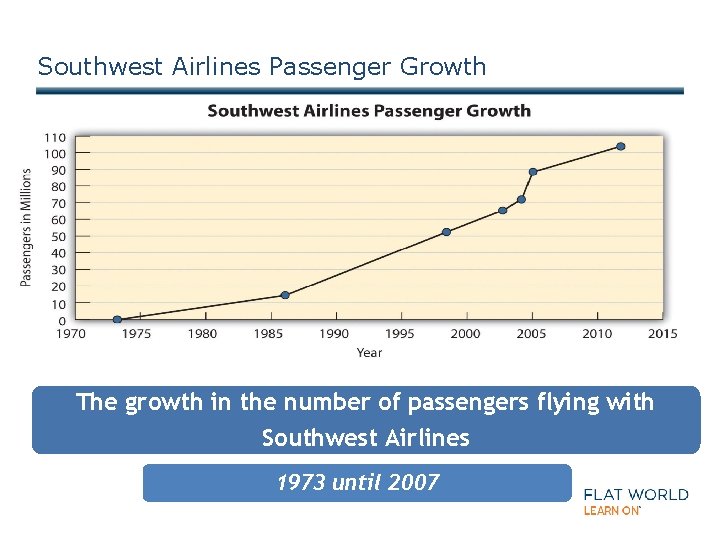
Southwest Airlines Passenger Growth The growth in the number of passengers flying with Southwest Airlines 1973 until 2007
Detail-Oriented Culture A culture that is characterized in the OCP framework as emphasizing precision and paying attention to details
Challenges of a Strong Culture Difficult to change Can be a liability during a merger as each separate culture must merge together
Discussion • Think about an organization you are familiar with. Based on the dimensions of OCP, how would you characterize its culture? • Out of the culture dimensions described, which dimension do you think would lead to higher levels of employee satisfaction and retention? Which one would be related to company performance? • What are pros and cons of an outcome oriented culture? • When bureaucracies were first invented, they were considered quite innovative. Do you think that different cultures are more or less effective at different points in time and in different industries? Why or why not? • Can you imagine an effective use of subcultures within an organization?
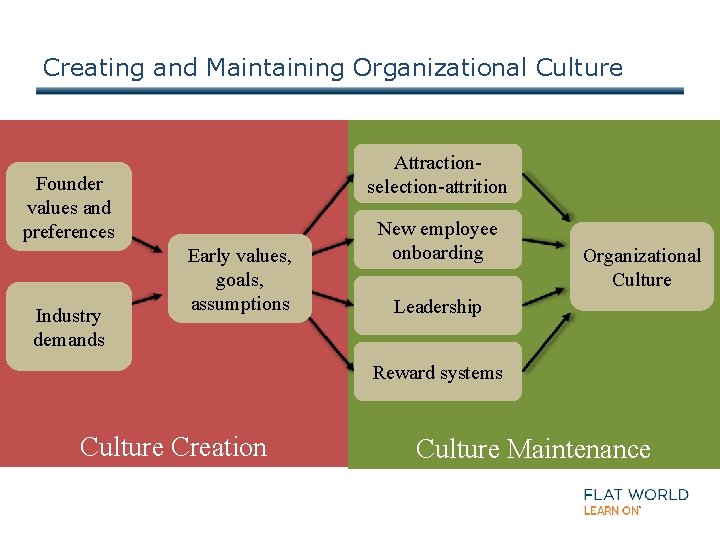
Creating and Maintaining Organizational Culture Attractionselection-attrition Founder values and preferences Industry demands Early values, goals, assumptions New employee onboarding Organizational Culture Leadership Reward systems Culture Creation Culture Maintenance
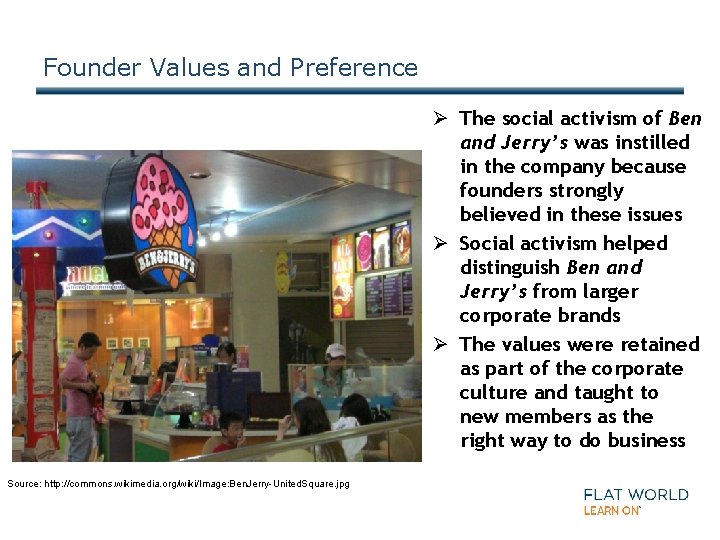
Founder Values and Preference Ø The social activism of Ben and Jerry’s was instilled in the company because founders strongly believed in these issues Ø Social activism helped distinguish Ben and Jerry’s from larger corporate brands Ø The values were retained as part of the corporate culture and taught to new members as the right way to do business Source: http: //commons. wikimedia. org/wiki/Image: Ben. Jerry-United. Square. jpg
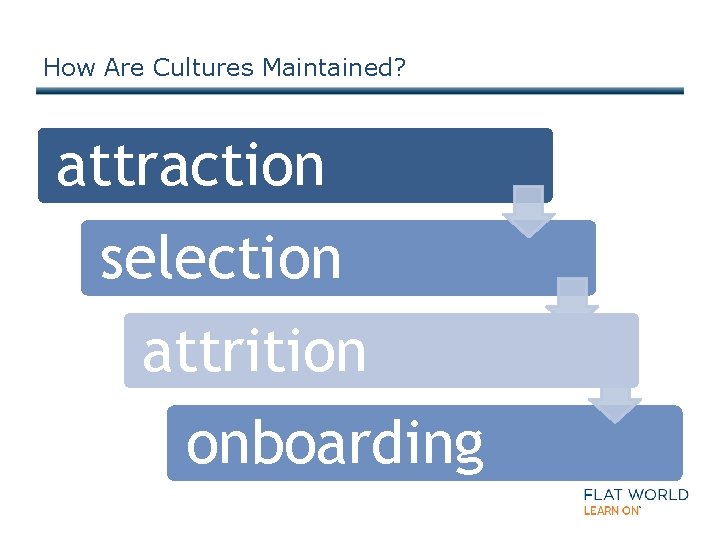
How Are Cultures Maintained? attraction selection attrition onboarding
Learning Culture Through Onboarding The process through which new employees learn the attitudes, knowledge, skills, and behaviors required to function effectively within an organization
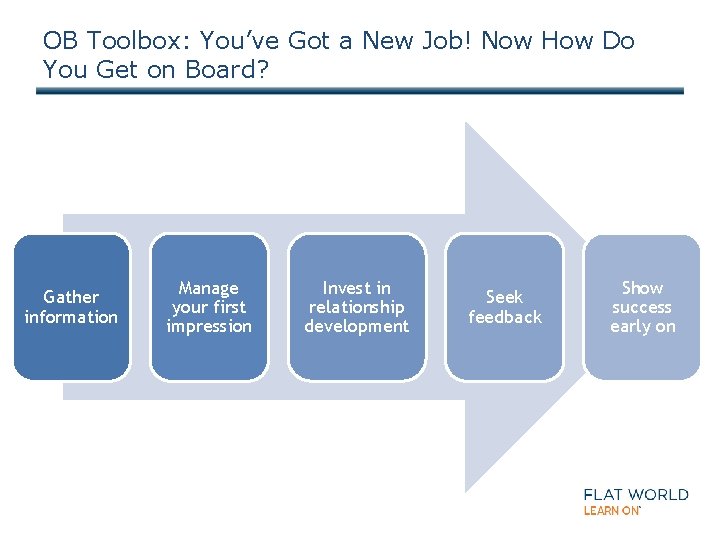
OB Toolbox: You’ve Got a New Job! Now How Do You Get on Board? Gather information Manage your first impression Invest in relationship development Seek feedback Show success early on
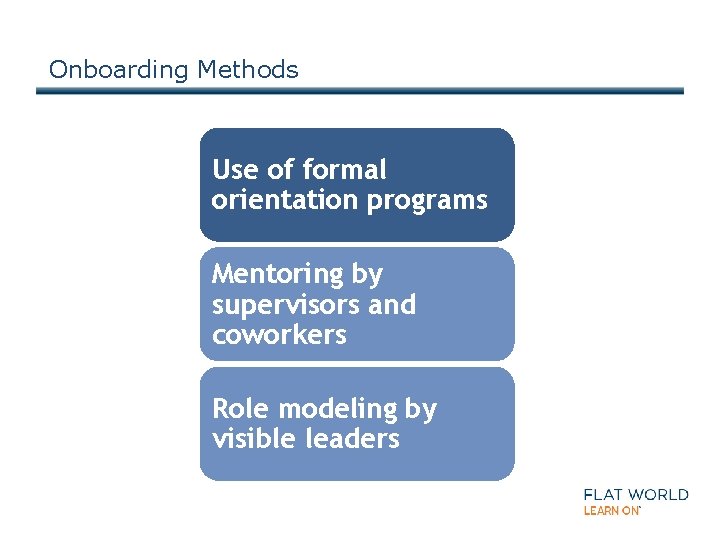
Onboarding Methods Use of formal orientation programs Mentoring by supervisors and coworkers Role modeling by visible leaders

OB Toolbox: Best Practices – How to Maximize Onboarding Success Written down Clear on objectives, timeline, roles, and responsibilities Participatory Tracked over time Clear on scheduled key stakeholder meetings with managers and mentors: • Going over strengths and development areas, • Hearing about potential problems and critical advice to help you be successful.

Rewards Influence Culture Results? Behaviors? Performance? The types of behaviors that are rewarded or ignored set the tone for the culture Seniority?

Visual Elements of Culture Mission Statement Rituals Stories Signs of Culture Rules & Policies Physical Layout
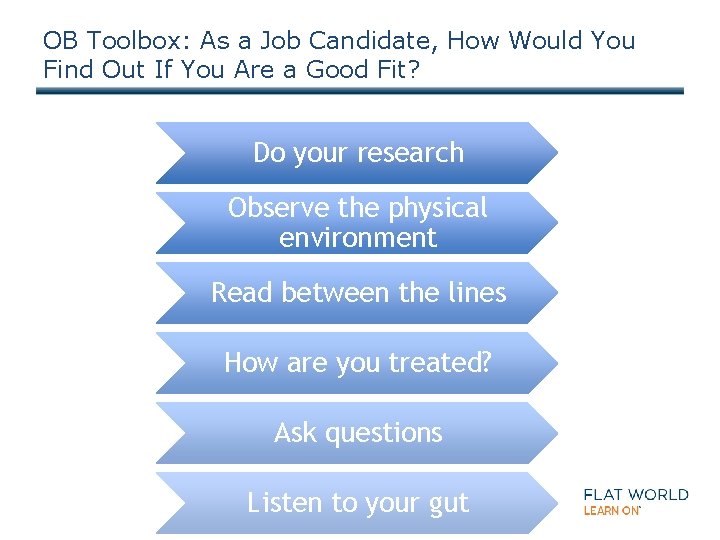
OB Toolbox: As a Job Candidate, How Would You Find Out If You Are a Good Fit? Do your research Observe the physical environment Read between the lines How are you treated? Ask questions Listen to your gut
Discussion • Do you think it is a good idea for companies to emphasize personorganization fit when hiring new employees? What advantages and disadvantages do you see when hiring people who fit with company values? • What is the influence of company founders on company culture? Give examples based on your personal knowledge. • What are the methods companies use to aid with employee onboarding? What is the importance of onboarding for organizations? • What type of a company do you feel you would fit in? What type of a culture would be a misfit for you? In your past work experience, were there any moments when you felt that you did not fit in? Why? • What is the role of physical layout as an indicator of company culture? What type of a physical layout would you expect from a company that is people oriented? Team oriented? Stable?
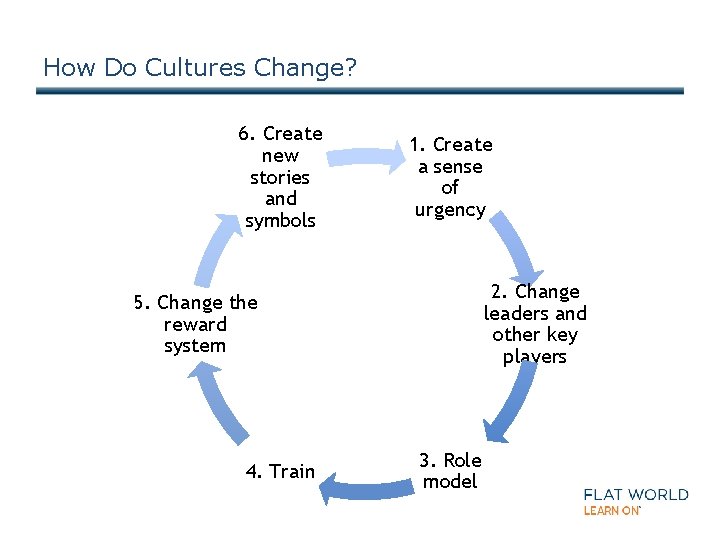
How Do Cultures Change? 6. Create new stories and symbols 1. Create a sense of urgency 2. Change leaders and other key players 5. Change the reward system 4. Train 3. Role model
Discussion • Can new employees change a company’s culture? If so, how? • Are there any conditions under which change is not possible? If so, what would such conditions be? • Have you ever observed a change process at an organization you were involved with? If so, what worked well and what didn’t? • What recommendations would you have for someone considering a major change of culture within their own organization?
Discussion • Have you seen example of ethical or unethical organizational cultures? Describe what you observed. • Have you seen examples of national culture affecting an organization’s culture? • What advice would you give to someone who was interested in starting a new division of a company in another culture?
- Slides: 33