
Organizational Behavior V 2 0 By Talya Bauer

Organizational Behavior V 2. 0 By Talya Bauer and Berrin Erdogan
Published by: Flat World Knowledge, Inc. © 2015 by Flat World Knowledge, Inc. All rights reserved. Your use of this work is subject to the License Agreement available here http: //www. flatworldknowledge. com/legal. No part of this work may be used, modified, or reproduced in any form or by any means except as expressly permitted under the License Agreement. 13 -2
Chapter 12 Leading People Within Organizations
Learning Objectives 1. Define what leadership is and identify traits of effective leaders 2. Describe behaviors that effective leaders demonstrate 3. Specify the contexts in which various leadership styles are effective 4. Explain the concepts of transformational, transactional, charismatic, servant, and authentic leadership
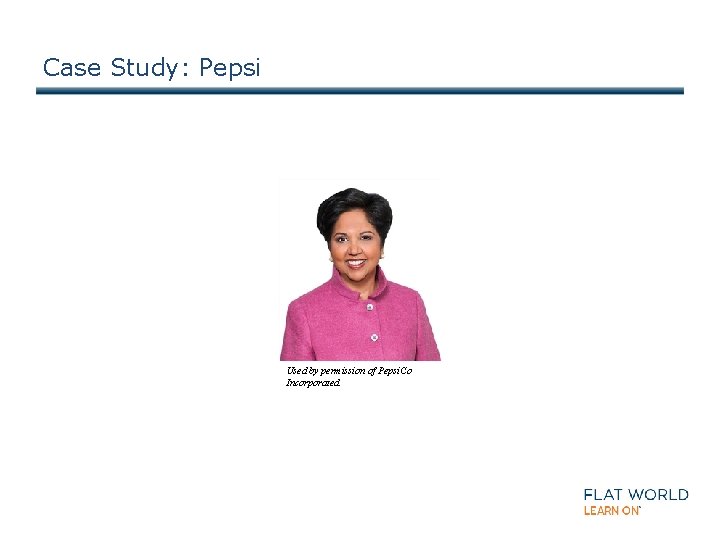
Case Study: Pepsi Used by permission of Pepsi. Co Incorporated.
Case Discussion Questions 1. Indra Nooyi is not a typical CEO. How does she differ from your idea of what a typical CEO is like? How do you think your current image of CEOs was created? 2. Indra Nooyi is touted as being “unusually collaborative” for someone in charge of a Fortune 500 company. Why do you think her level of collaboration is so unusual for top executives? 3. Do you think Nooyi’s story represents a transition of American companies to a different type of leader or simply a unique case? 4. Pepsi-Cola dates back to 1898 and officially became Pepsi. Co after merging with Frito-Lay in 1965. What are some challenges the CEO faces today that were not an issue at that time? What are some aspects that make the position easier in modern times? 5. If you were in Indra Nooyi’s shoes, what direction would you take the company, given the success you have had thus far? What are some challenges that could arise in the near future for Pepsi. Co?
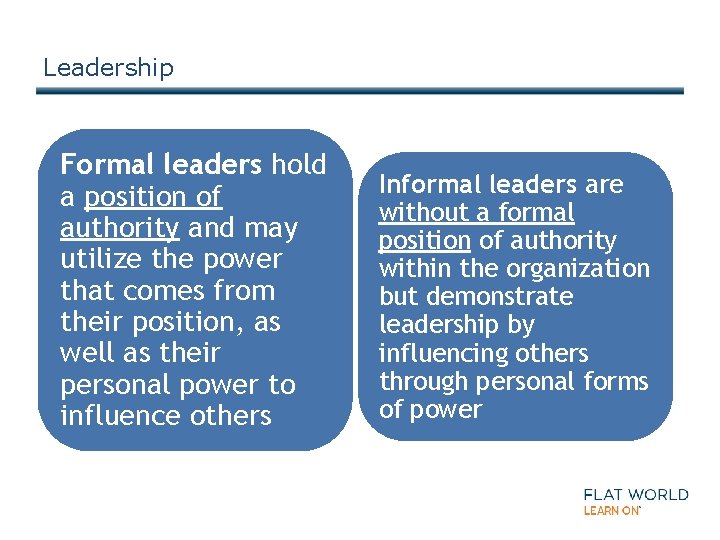
Leadership Formal leaders hold a position of authority and may utilize the power that comes from their position, as well as their personal power to influence others Informal leaders are without a formal position of authority within the organization but demonstrate leadership by influencing others through personal forms of power
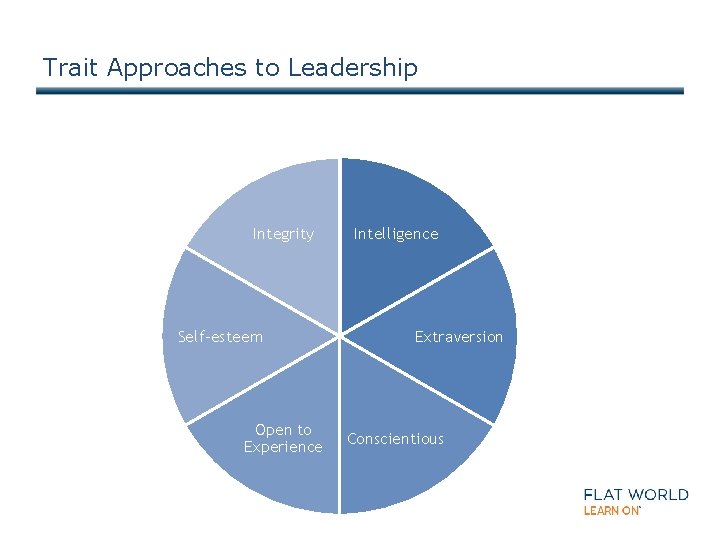
Trait Approaches to Leadership Integrity Self-esteem Open to Experience Intelligence Extraversion Conscientious
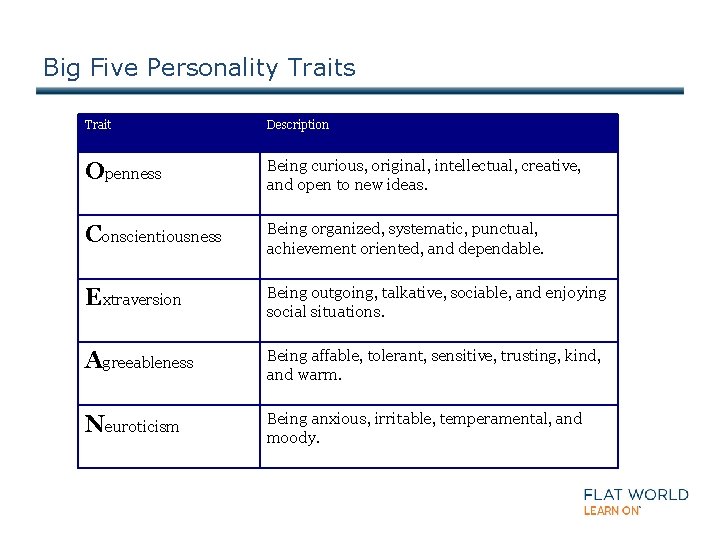
Big Five Personality Traits Trait Description Openness Being curious, original, intellectual, creative, and open to new ideas. Conscientiousness Being organized, systematic, punctual, achievement oriented, and dependable. Extraversion Being outgoing, talkative, sociable, and enjoying social situations. Agreeableness Being affable, tolerant, sensitive, trusting, kind, and warm. Neuroticism Being anxious, irritable, temperamental, and moody.
Discussion • What traits are evident in leaders you admire? Are they consistent with the traits discussed in this chapter? If not, why is this person effective despite the presence of different traits? • Can the findings of trait approaches be used to train potential leaders? Which traits seem easier to teach? Which are more stable? • How can organizations identify future leaders with a given set of traits? Which methods would be useful for this purpose? • What other traits can you think of that would be relevant to leadership?

Behavioral Approaches to Leadership Task oriented leader behaviors involve structuring the roles of subordinates, providing them with instructions and behaving in ways that will increase the performance of the group *Task oriented behaviors are directives given to employees to get things done and to ensure that organizational goals are met People oriented leader behaviors include showing concern for employee feelings and treating employees with respect *People oriented leaders genuinely care about the well being of their employees and they demonstrate their concern in their actions and decisions

Leader Decision Making Autocratic decision making • Leaders make the decision alone without necessarily involving employees in the decision making process Democratic decision making • Employees participate in the making of the decision Laissez-faire decision making • Leaders leave employees alone to make the decision; the leader provides minimum guidance and involvement in the decision
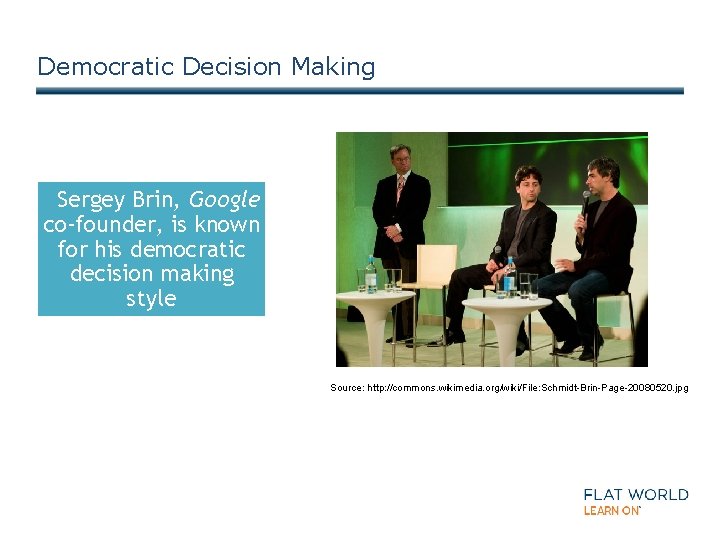
Democratic Decision Making Sergey Brin, Google co-founder, is known for his democratic decision making style Source: http: //commons. wikimedia. org/wiki/File: Schmidt-Brin-Page-20080520. jpg
Discussion • Give an example of a leader you admire whose behavior is primarily task oriented, and one whose behavior is primarily people oriented. • What are the limitations of autocratic decision making? Under which conditions do you think autocratic style would be more effective? • What are the limitations of democratic decision making? Under which conditions do you think democratic style would be more effective? • What are the limitations of laissez-faire decision making? Under which conditions do you think laissezfaire style would be more effective? • Examine your own leadership style. Which behaviors are you more likely to demonstrate? Which decision making style are you more likely to use?
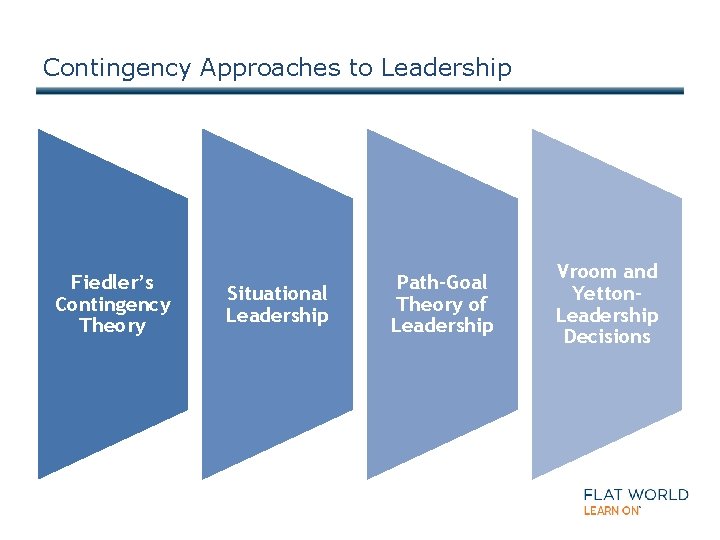
Contingency Approaches to Leadership Fiedler’s Contingency Theory Situational Leadership Path-Goal Theory of Leadership Vroom and Yetton. Leadership Decisions
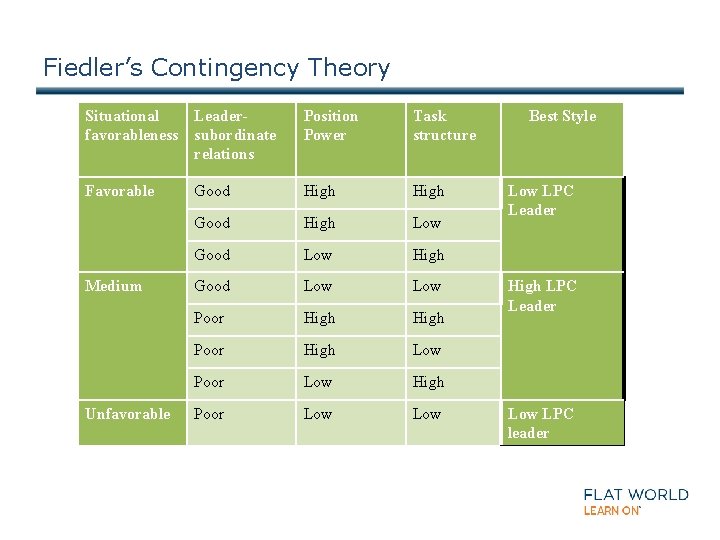
Fiedler’s Contingency Theory Situational Leaderfavorableness subordinate relations Position Power Task structure Favorable Good High Low Good Low High Good Low Poor High Low Poor Low High Poor Low Medium Unfavorable Best Style Low LPC Leader High LPC Leader Low LPC leader
Situational Leadership • Leaders choose from four basic situational leadership styles as defined by Blanchard and Hersey. • The style that a leader chooses is determined by situational factors such as employee readiness.
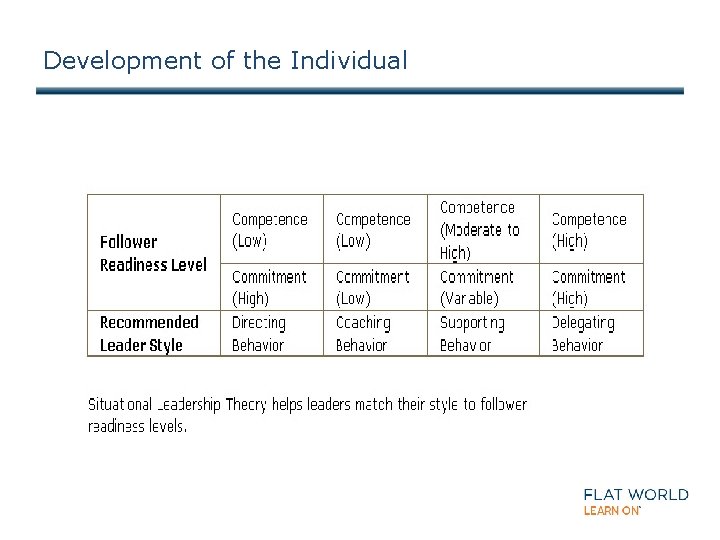
Development of the Individual
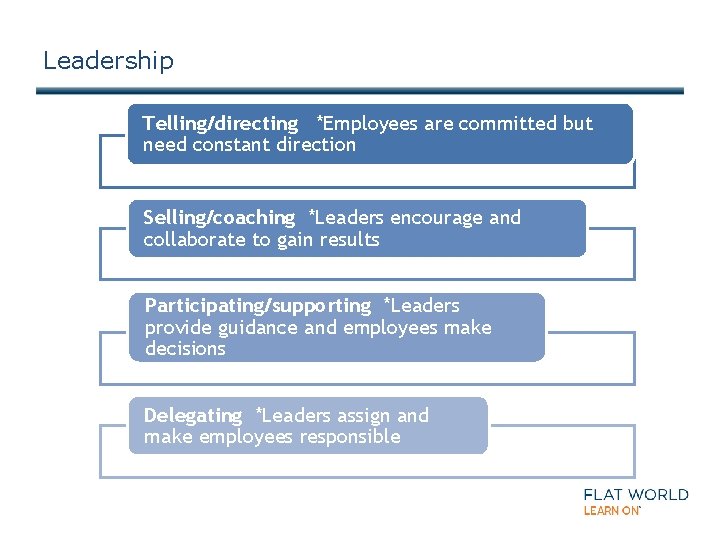
Leadership Telling/directing *Employees are committed but need constant direction Selling/coaching *Leaders encourage and collaborate to gain results Participating/supporting *Leaders provide guidance and employees make decisions Delegating *Leaders assign and make employees responsible
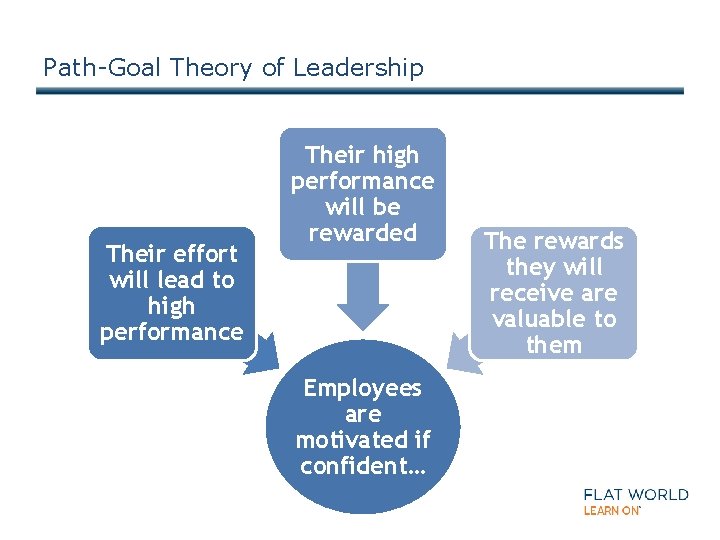
Path-Goal Theory of Leadership Their effort will lead to high performance Their high performance will be rewarded Employees are motivated if confident… The rewards they will receive are valuable to them

Four Leadership Styles Directive Supportive Participative Achievement Oriented
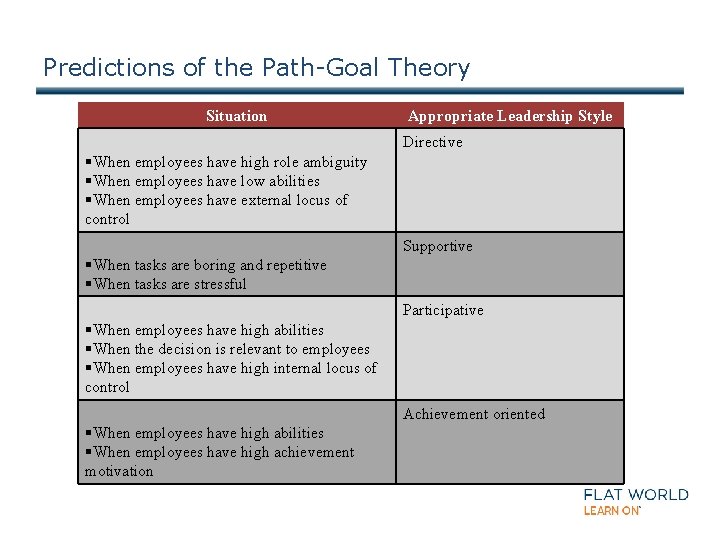
Predictions of the Path-Goal Theory Situation Appropriate Leadership Style Directive When employees have high role ambiguity When employees have low abilities When employees have external locus of control Supportive When tasks are boring and repetitive When tasks are stressful Participative When employees have high abilities When the decision is relevant to employees When employees have high internal locus of control Achievement oriented When employees have high abilities When employees have high achievement motivation
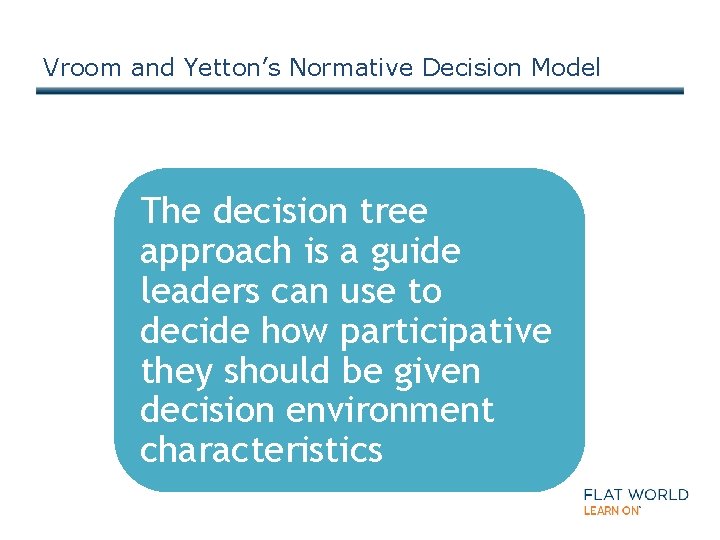
Vroom and Yetton’s Normative Decision Model The decision tree approach is a guide leaders can use to decide how participative they should be given decision environment characteristics
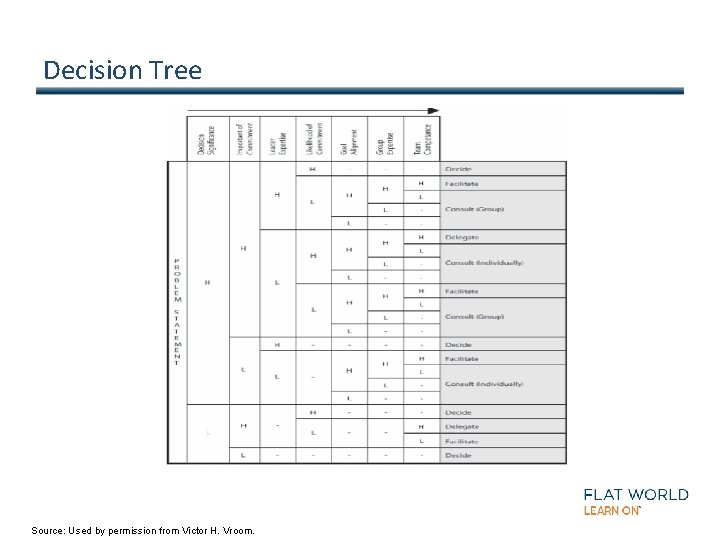
Decision Tree Source: Used by permission from Victor H. Vroom.
Discussion • Do you believe that the least preferred coworker technique is a valid method of measuring someone’s leadership style? Why or why not? • Do you believe that leaders can vary their style to demonstrate directive, supportive, achievement oriented and participative styles with respect to different employees? Or does each leader tend to have a personal style that he or she regularly uses toward all employees? • What do you see as the limitations of the Vroom. Yetton leadership decision making approach? • Which of the leadership theories covered in this section do you think are most useful, and least useful, to practicing managers? Why?
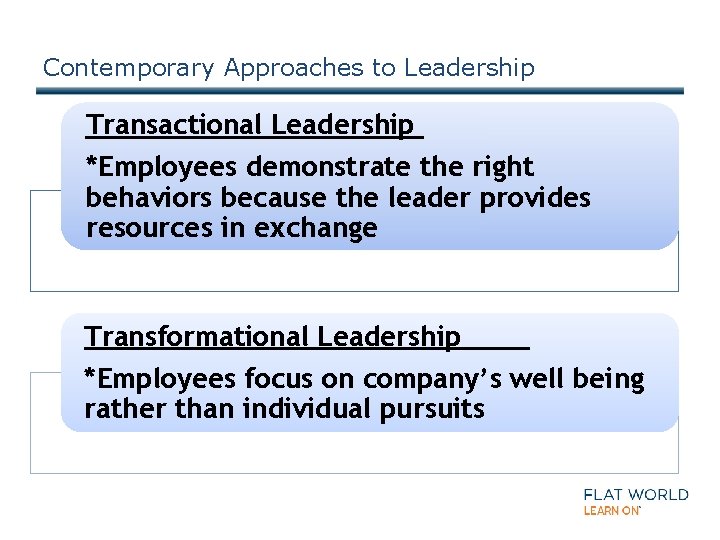
Contemporary Approaches to Leadership Transactional Leadership *Employees demonstrate the right behaviors because the leader provides resources in exchange Transformational Leadership *Employees focus on company’s well being rather than individual pursuits
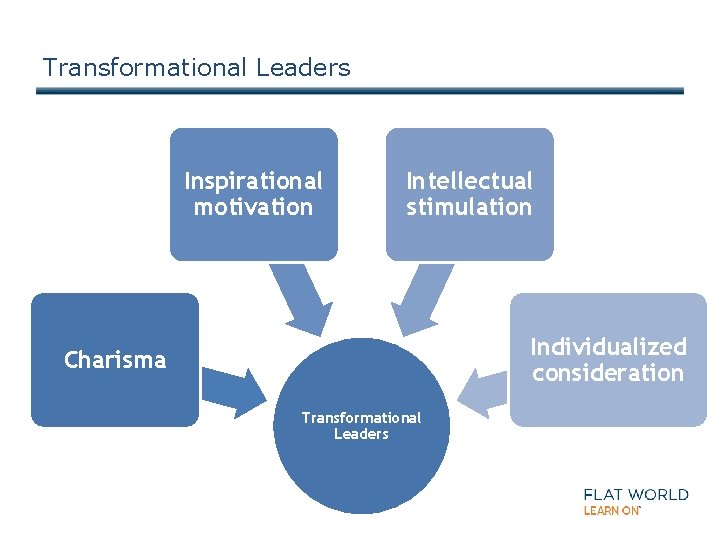
Transformational Leaders Inspirational motivation Intellectual stimulation Individualized consideration Charisma Transformational Leaders
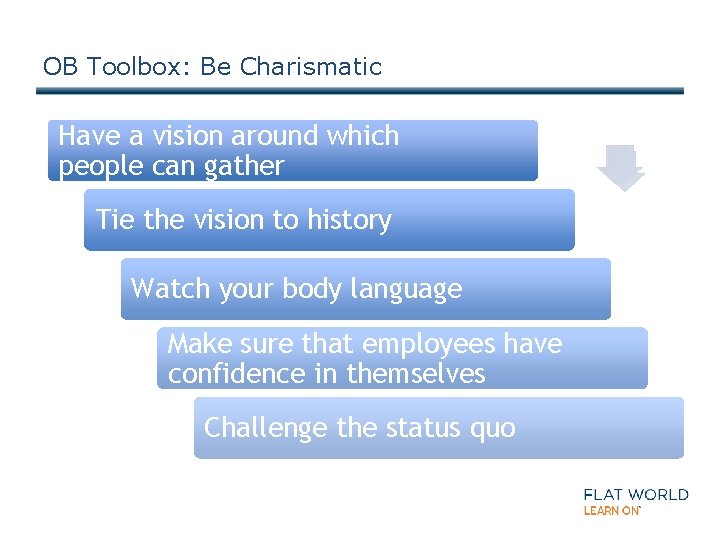
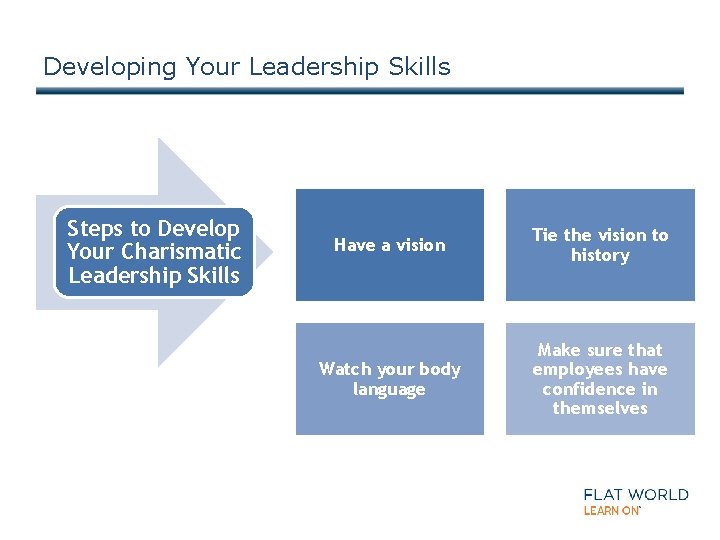
OB Toolbox: Be Charismatic Have a vision around which people can gather Tie the vision to history Watch your body language Make sure that employees have confidence in themselves Challenge the status quo
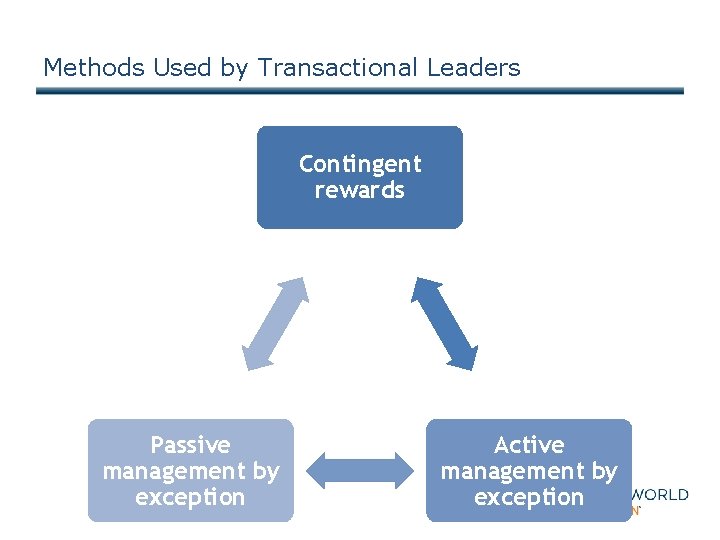
Methods Used by Transactional Leaders Contingent rewards Passive management by exception Active management by exception

Leader-Member Exchange Theory High quality LMX relationships have mutual respect between the leader and the followers Low quality LMX relationships portray lower levels of trust and respect between leaders and followers
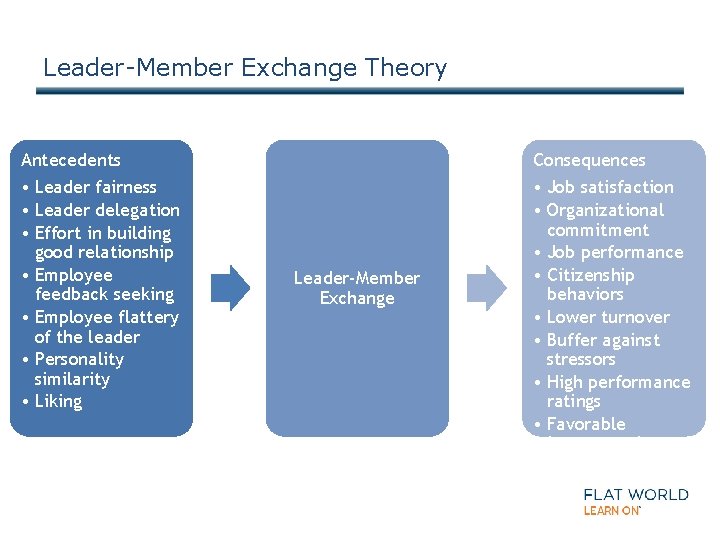
Leader-Member Exchange Theory Antecedents Consequences • Leader fairness • Leader delegation • Effort in building good relationship • Employee feedback seeking • Employee flattery of the leader • Personality similarity • Liking • Job satisfaction • Organizational commitment • Job performance • Citizenship behaviors • Lower turnover • Buffer against stressors • High performance ratings • Favorable interpretations of behavior Leader-Member Exchange
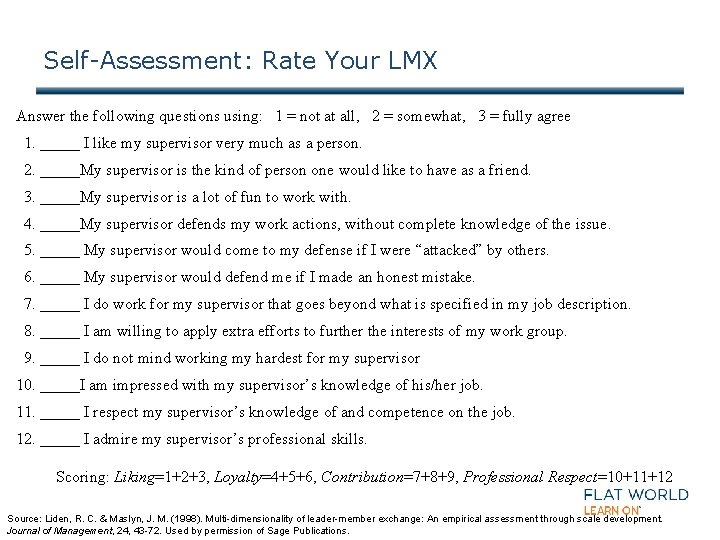
Self-Assessment: Rate Your LMX Answer the following questions using: 1 = not at all, 2 = somewhat, 3 = fully agree 1. _____ I like my supervisor very much as a person. 2. _____My supervisor is the kind of person one would like to have as a friend. 3. _____My supervisor is a lot of fun to work with. 4. _____My supervisor defends my work actions, without complete knowledge of the issue. 5. _____ My supervisor would come to my defense if I were “attacked” by others. 6. _____ My supervisor would defend me if I made an honest mistake. 7. _____ I do work for my supervisor that goes beyond what is specified in my job description. 8. _____ I am willing to apply extra efforts to further the interests of my work group. 9. _____ I do not mind working my hardest for my supervisor 10. _____I am impressed with my supervisor’s knowledge of his/her job. 11. _____ I respect my supervisor’s knowledge of and competence on the job. 12. _____ I admire my supervisor’s professional skills. Scoring: Liking=1+2+3, Loyalty=4+5+6, Contribution=7+8+9, Professional Respect=10+11+12 Source: Liden, R. C. & Maslyn, J. M. (1998). Multi-dimensionality of leader-member exchange: An empirical assessment through scale development. Journal of Management, 24, 43 -72. Used by permission of Sage Publications.
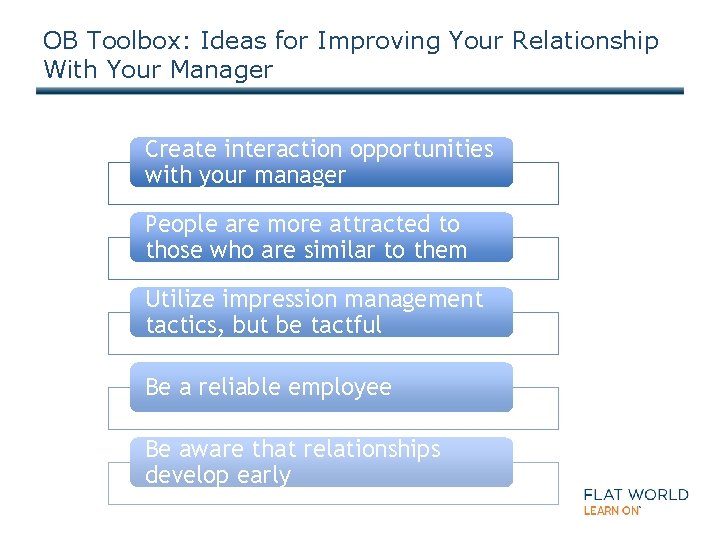
OB Toolbox: Ideas for Improving Your Relationship With Your Manager Create interaction opportunities with your manager People are more attracted to those who are similar to them Utilize impression management tactics, but be tactful Be a reliable employee Be aware that relationships develop early
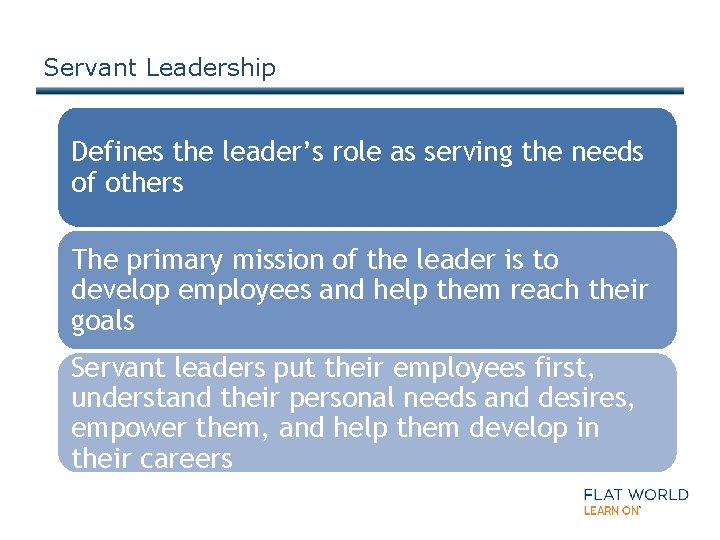
Servant Leadership Defines the leader’s role as serving the needs of others The primary mission of the leader is to develop employees and help them reach their goals Servant leaders put their employees first, understand their personal needs and desires, empower them, and help them develop in their careers
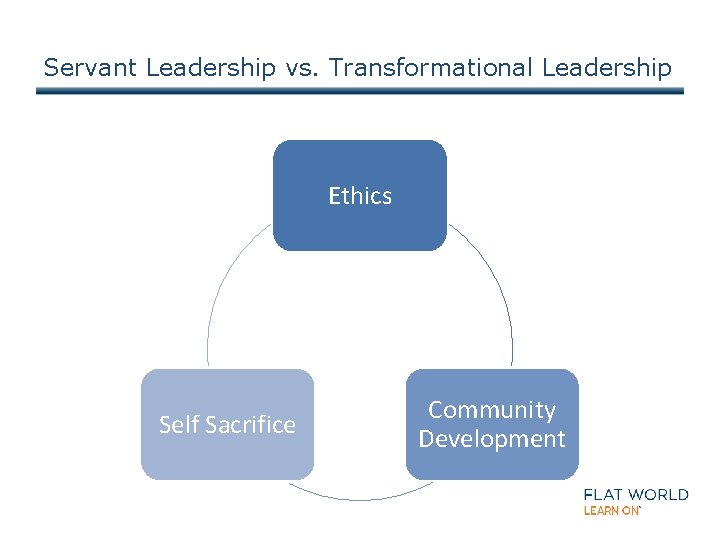
Servant Leadership vs. Transformational Leadership Ethics Self Sacrifice Community Development
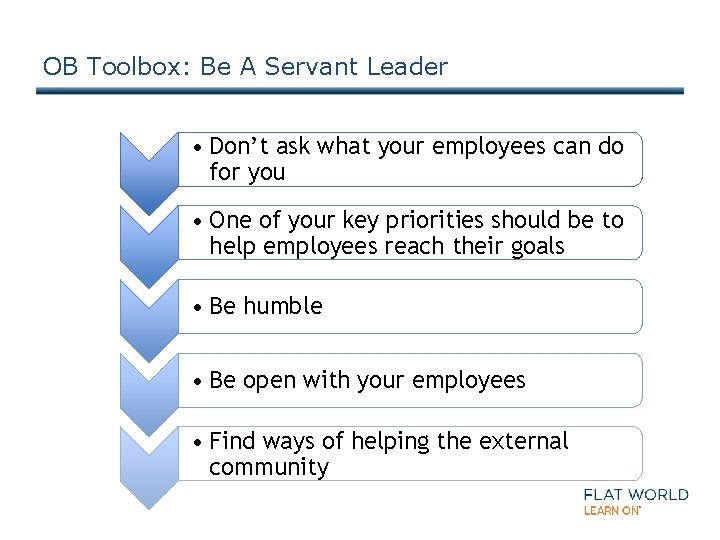
OB Toolbox: Be A Servant Leader • Don’t ask what your employees can do for you • One of your key priorities should be to help employees reach their goals • Be humble • Be open with your employees • Find ways of helping the external community
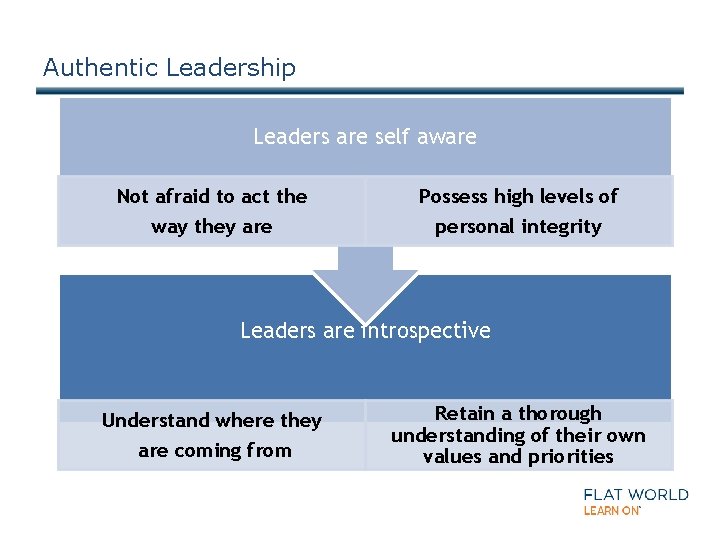
Authentic Leadership Leaders are self aware Not afraid to act the way they are Possess high levels of personal integrity Leaders are introspective Understand where they are coming from Retain a thorough understanding of their own values and priorities
Discussion • What are the characteristics of transformational leaders? Are transformational leaders more effective than transactional leaders? • What is charisma? What are the advantages and disadvantages of charismatic leadership? Should organizations look for charismatic leaders when selecting managers? • What are the differences (if any) between a leader having a high quality exchange with employees and being friends with employees? • What does it mean to be a servant leader? Do you know any leaders whose style resembles servant leaders? What are the advantages of adopting such a leadership style? • What does it mean to be an authentic leader? How would such a style be developed?
Developing Your Leadership Skills Steps to Develop Your Charismatic Leadership Skills Have a vision Tie the vision to history Watch your body language Make sure that employees have confidence in themselves
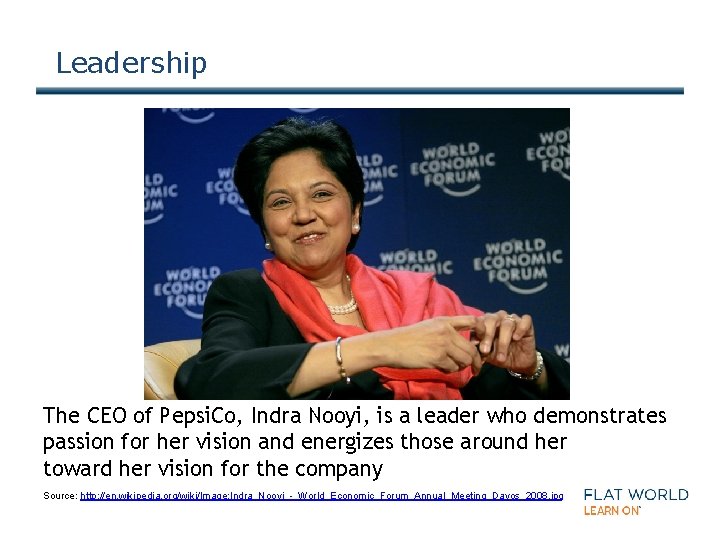
Leadership The CEO of Pepsi. Co, Indra Nooyi, is a leader who demonstrates passion for her vision and energizes those around her toward her vision for the company Source: http: //en. wikipedia. org/wiki/Image: Indra_Nooyi_-_World_Economic_Forum_Annual_Meeting_Davos_2008. jpg
Case Study: Starbucks Source: Real Life Design/Shutterstock
Case Discussion Questions 1. Why does Starbucks Coffee consider internal leadership development such an important part of its core business process? 2. What possible negative repercussions can the aggressive growth strategy that Starbucks exhibits have on its leadership agenda? 3. Over time, how can Starbucks ensure that the importance of leadership development does not get overlooked? 4. How does your experience with leadership and management compare with the case of Starbucks?
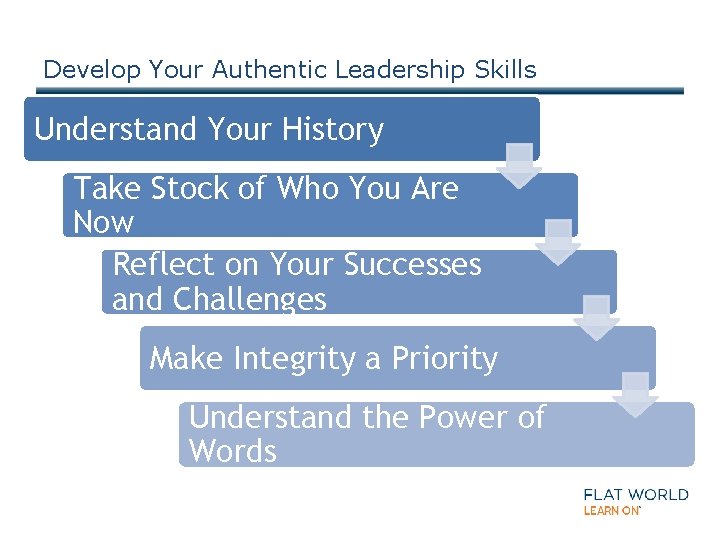
Develop Your Authentic Leadership Skills Understand Your History Take Stock of Who You Are Now Reflect on Your Successes and Challenges Make Integrity a Priority Understand the Power of Words
Discussion • What is the connection between leadership and ethics? • Do you believe that ethical leaders are more successful in organizations? • Which of the leadership theories seem to be most applicable to other cultures? Which ones are culturally dependent?
- Slides: 44