
Organizational Behavior V 2 0 By Talya Bauer

Organizational Behavior V 2. 0 By Talya Bauer and Berrin Erdogan
Published by: Flat World Knowledge, Inc. © 2015 by Flat World Knowledge, Inc. All rights reserved. Your use of this work is subject to the License Agreement available here http: //www. flatworldknowledge. com/legal. No part of this work may be used, modified, or reproduced in any form or by any means except as expressly permitted under the License Agreement. 13 -1
Chapter 9 Managing Groups and Teams
Learning Objectives 1. Recognize and understand group dynamics and development 2. Understand the difference between groups and teams 3. Compare and contrast different types of teams 4. Understand how to design effective teams 5. Explore teams and ethics 6. Understand cross-cultural influences on teams 1 -3
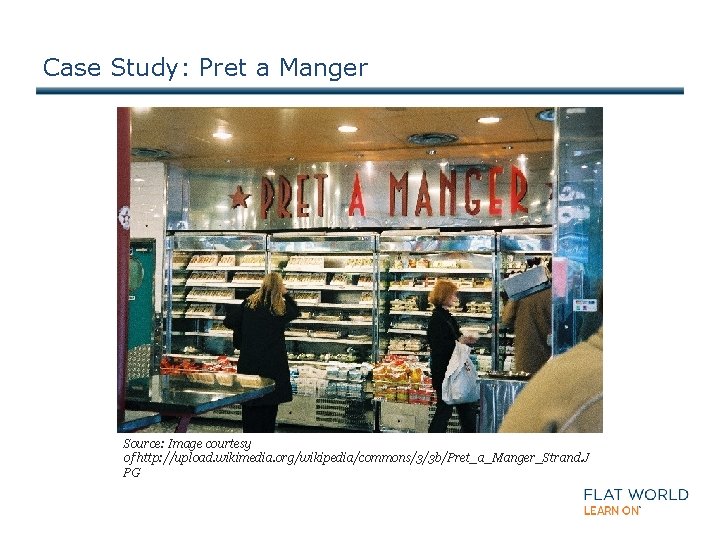
Case Study: Pret a Manger Source: Image courtesy of http: //upload. wikimedia. org/wikipedia/commons/3/3 b/Pret_a_Manger_Strand. J PG
Case Discussion Questions 1. What are the benefits of creating a team whose members hold hiring power over potential new employees? What are the potential negatives? 2. What do you think inspires individuals at Pret to work as a cohesive team? 3. In the case of Pret, do you view the team members or the management leaders as the most important part of the story? 4. How do you think Pret holds team members accountable for their actions? 5. Do you think that Pret offers enough of a support system for its employees in order to create this type of team cohesion?
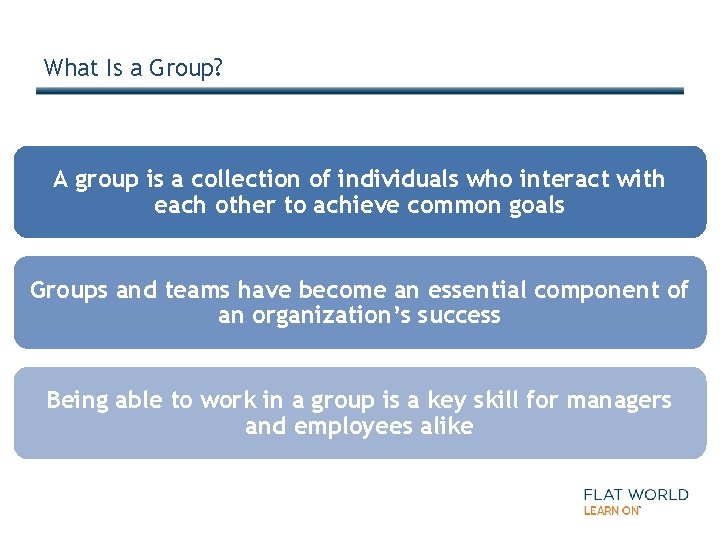
What Is a Group? A group is a collection of individuals who interact with each other to achieve common goals Groups and teams have become an essential component of an organization’s success Being able to work in a group is a key skill for managers and employees alike 1 -6
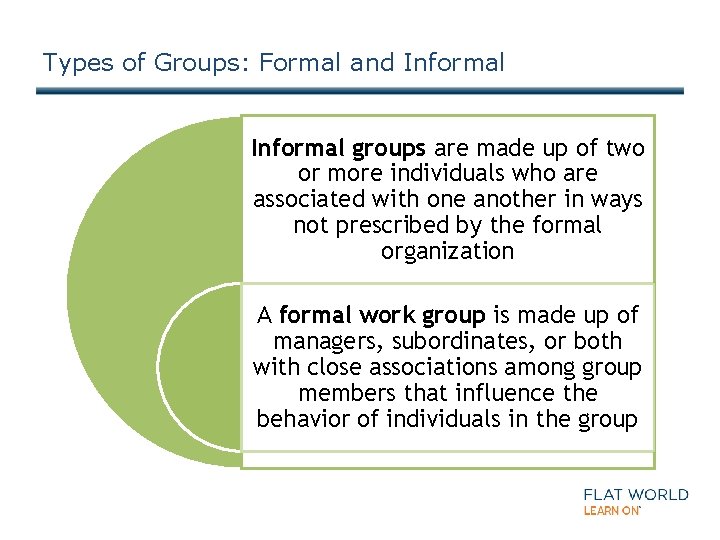
Types of Groups: Formal and Informal groups are made up of two or more individuals who are associated with one another in ways not prescribed by the formal organization A formal work group is made up of managers, subordinates, or both with close associations among group members that influence the behavior of individuals in the group
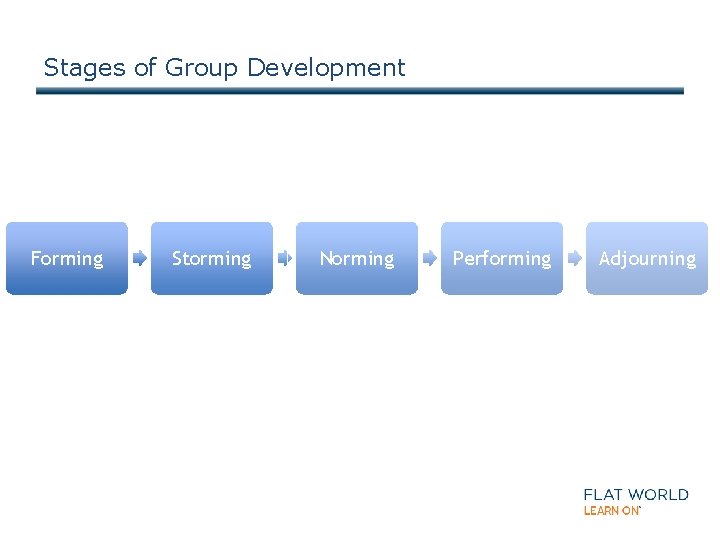
Stages of Group Development Forming Storming Norming Performing Adjourning
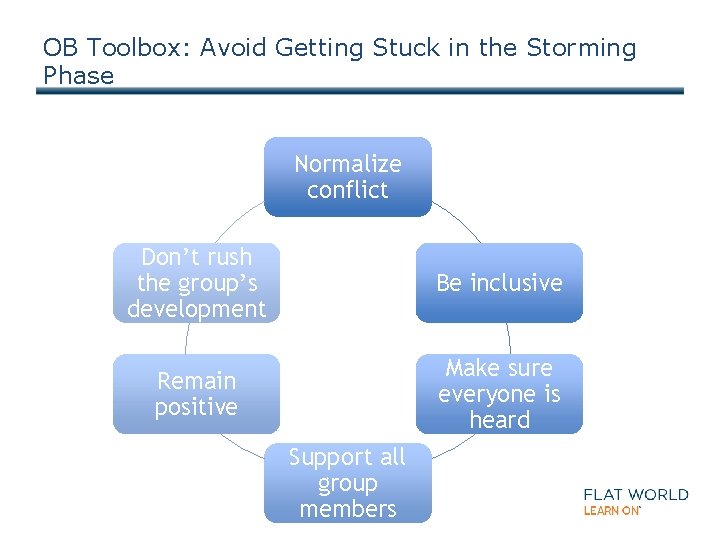
OB Toolbox: Avoid Getting Stuck in the Storming Phase Normalize conflict Don’t rush the group’s development Be inclusive Remain positive Make sure everyone is heard Support all group members

The Punctuated-Equilibrium Model Change Periods of stability Periods of rapid change Time
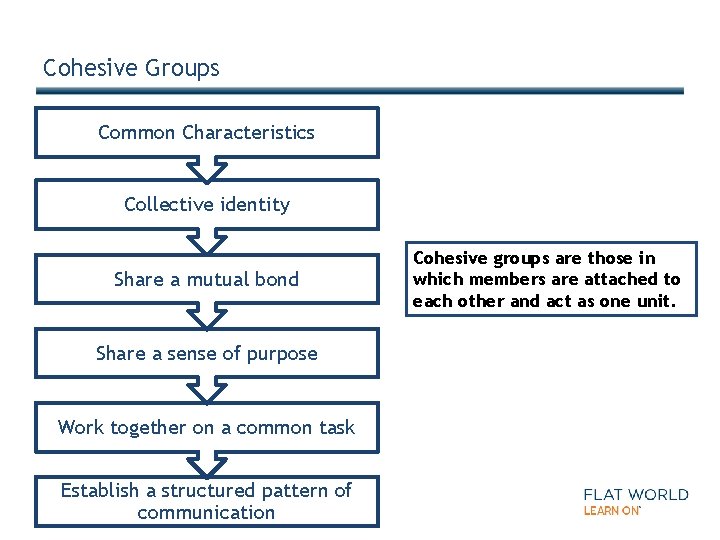
Cohesive Groups Common Characteristics Collective identity Share a mutual bond Share a sense of purpose Work together on a common task Establish a structured pattern of communication Cohesive groups are those in which members are attached to each other and act as one unit.
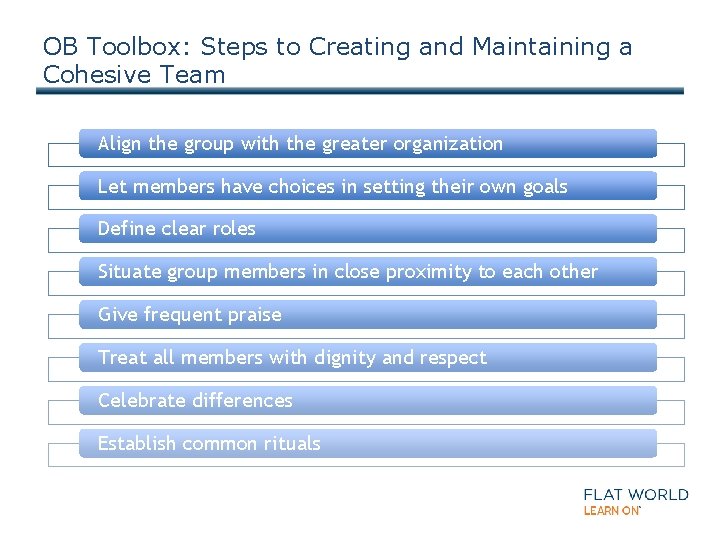
OB Toolbox: Steps to Creating and Maintaining a Cohesive Team Align the group with the greater organization Let members have choices in setting their own goals Define clear roles Situate group members in close proximity to each other Give frequent praise Treat all members with dignity and respect Celebrate differences Establish common rituals
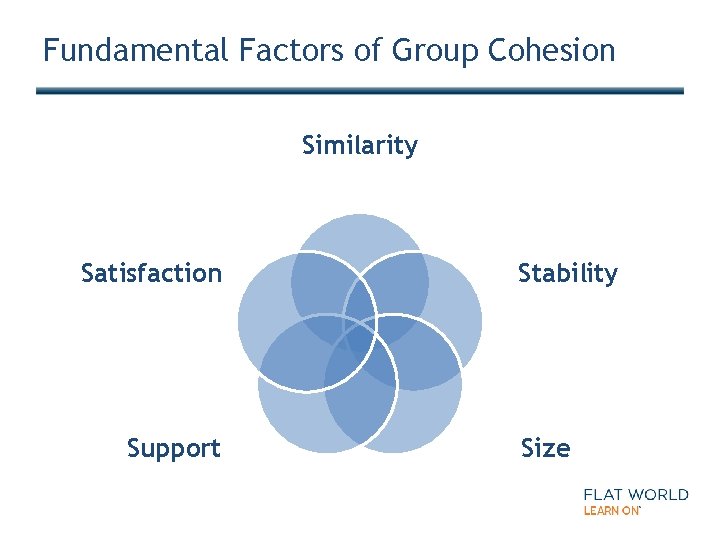
Fundamental Factors of Group Cohesion Similarity Satisfaction Support Stability Size
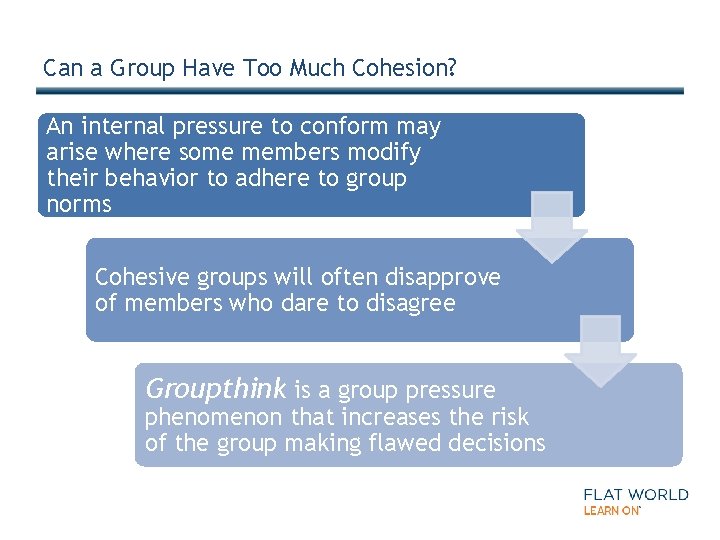
Can a Group Have Too Much Cohesion? An internal pressure to conform may arise where some members modify their behavior to adhere to group norms Cohesive groups will often disapprove of members who dare to disagree Groupthink is a group pressure phenomenon that increases the risk of the group making flawed decisions 1 -14

Task Commitment and Group Cohesion Low task commitment Low group cohesion Low performance High task commitment Performance ranges depending on a number of factors High performance
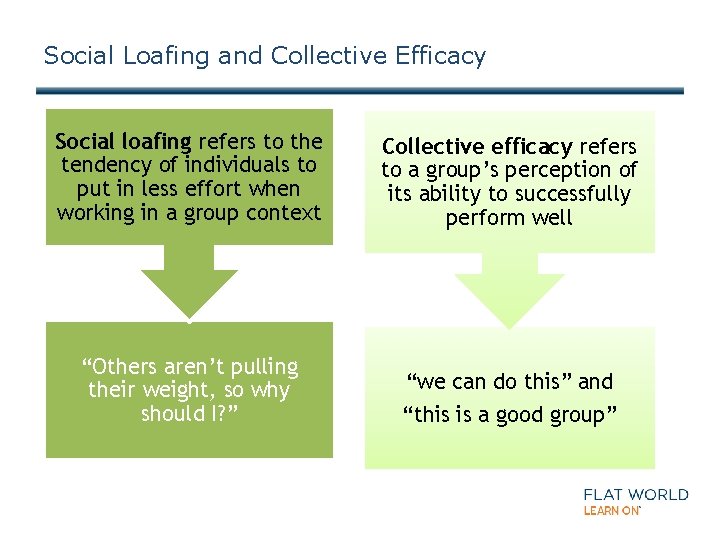
Social Loafing and Collective Efficacy Social loafing refers to the tendency of individuals to put in less effort when working in a group context Collective efficacy refers to a group’s perception of its ability to successfully perform well “Others aren’t pulling their weight, so why should I? ” “we can do this” and “this is a good group”
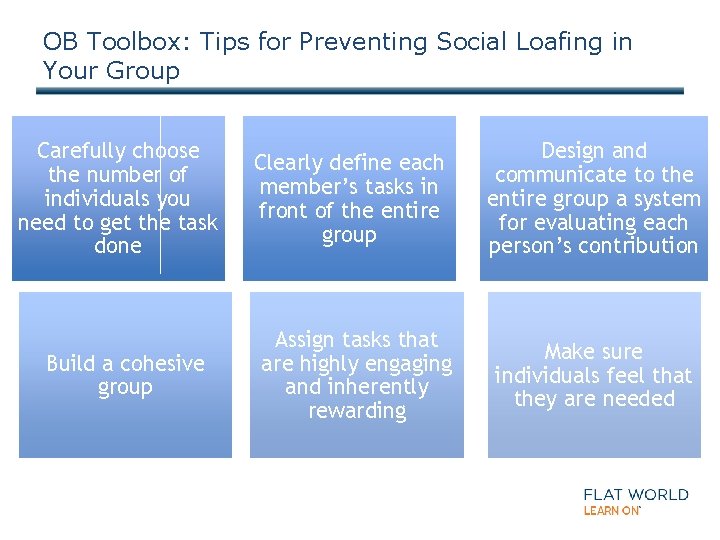
OB Toolbox: Tips for Preventing Social Loafing in Your Group Carefully choose the number of individuals you need to get the task done Build a cohesive group Clearly define each member’s tasks in front of the entire group Assign tasks that are highly engaging and inherently rewarding Design and communicate to the entire group a system for evaluating each person’s contribution Make sure individuals feel that they are needed
Discussion • If you believe the punctuated-equilibrium model is true about groups, how can you use this knowledge to help your own group? • Think about the most cohesive group you have ever been in. How did it compare to less cohesive groups in terms of similarity, stability, size, support, and satisfaction? • Why do you think social loafing occurs within groups? • What can be done to combat social loafing? • Have you seen instances of collective efficacy helping or hurting a team? Please explain your answer.

Differences between Groups and Teams A group is a collection of individuals but different from teams in both scope and composition A team is a particular type of group: a cohesive coalition of people working together to achieve mutual goals A team is a small number of people with complementary skills who are committed to a common purpose, performance goals, and approach for which they are mutually accountable
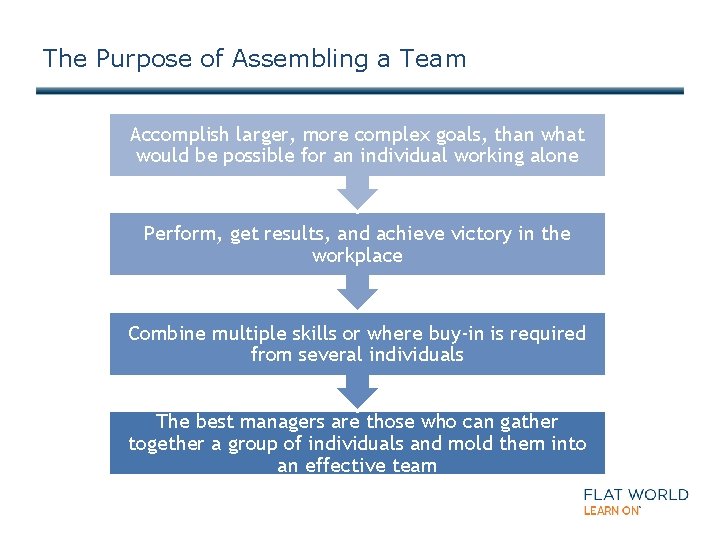
The Purpose of Assembling a Team Accomplish larger, more complex goals, than what would be possible for an individual working alone Perform, get results, and achieve victory in the workplace Combine multiple skills or where buy-in is required from several individuals The best managers are those who can gather together a group of individuals and mold them into an effective team
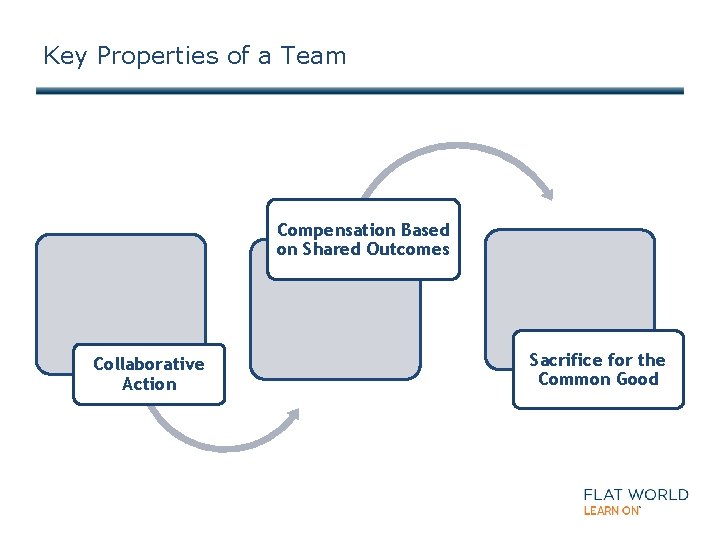
Key Properties of a Team Compensation Based on Shared Outcomes Collaborative Action Sacrifice for the Common Good
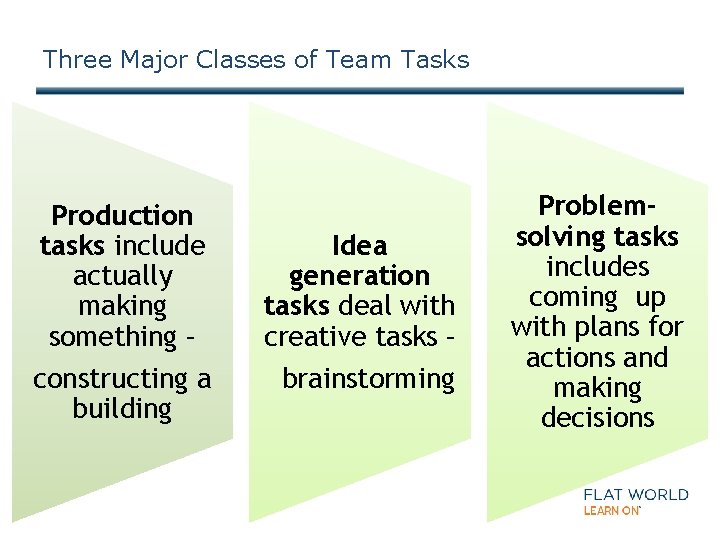
Three Major Classes of Team Tasks Production tasks include actually making something – constructing a building Idea generation tasks deal with creative tasks – brainstorming Problemsolving tasks includes coming up with plans for actions and making decisions
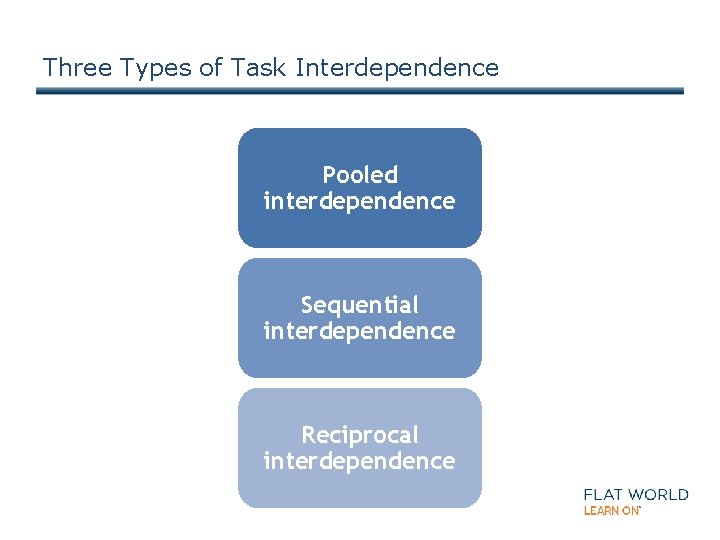
Three Types of Task Interdependence Pooled interdependence Sequential interdependence Reciprocal interdependence

Team Role Typology These 10 roles include task roles (light yellow), social roles (medium orange), and boundary spanning roles (dark orange)
Types of Teams • A task force is a temporary team which is asked to address a specific issue or problem until it is resolved • A product development team can be temporary or ongoing • A cross-functional team appears in matrix organizations where individuals from different parts of the organization staff the team which may be temporary or long standing in nature
Virtual Teams • Virtual teams are teams where members are not located in the same physical place • Upwards of 8. 4 million individuals worldwide work virtually in at least one team Øvirtual teams are formed to take advantage of distributed expertise or time • Challenges of Virtual Teams ØBuilding trust is difficult ØIf individuals in a virtual team are not fully engaged and tend to avoid conflict, team performance can suffer
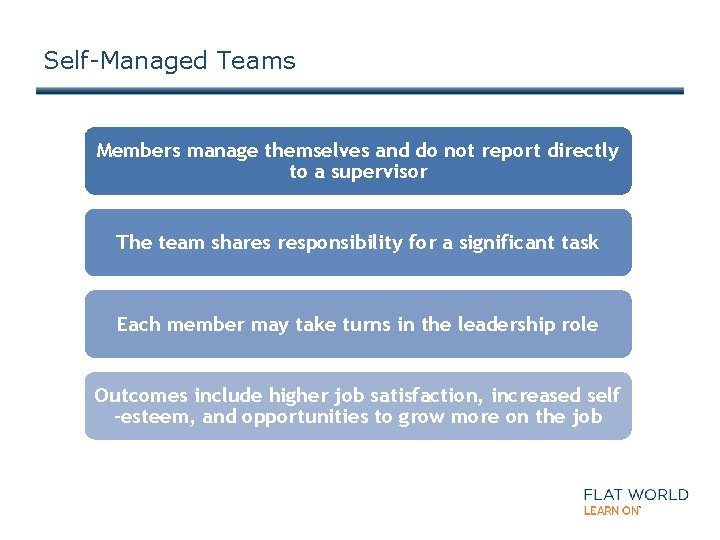
Self-Managed Teams Members manage themselves and do not report directly to a supervisor The team shares responsibility for a significant task Each member may take turns in the leadership role Outcomes include higher job satisfaction, increased self -esteem, and opportunities to grow more on the job
Employee Empowerment • Self-managed teams are empowered, which means that they have the responsibility as well as the authority to achieve their goals
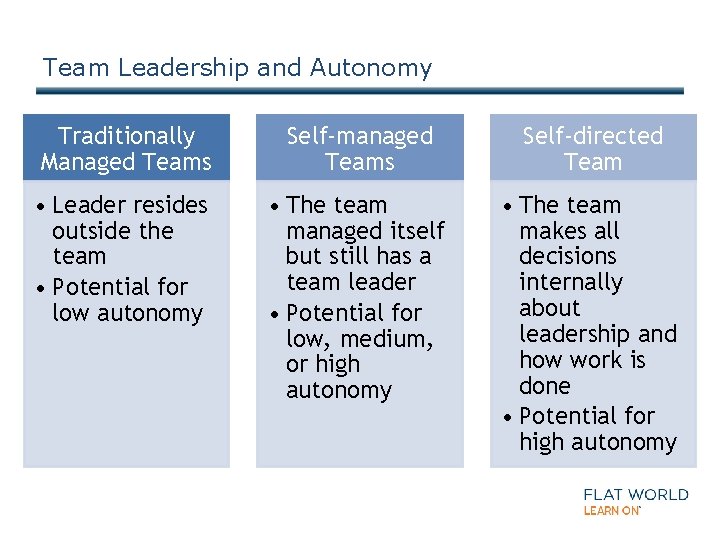
Team Leadership and Autonomy Traditionally Managed Teams Self-managed Teams Self-directed Team • Leader resides outside the team • Potential for low autonomy • The team managed itself but still has a team leader • Potential for low, medium, or high autonomy • The team makes all decisions internally about leadership and how work is done • Potential for high autonomy
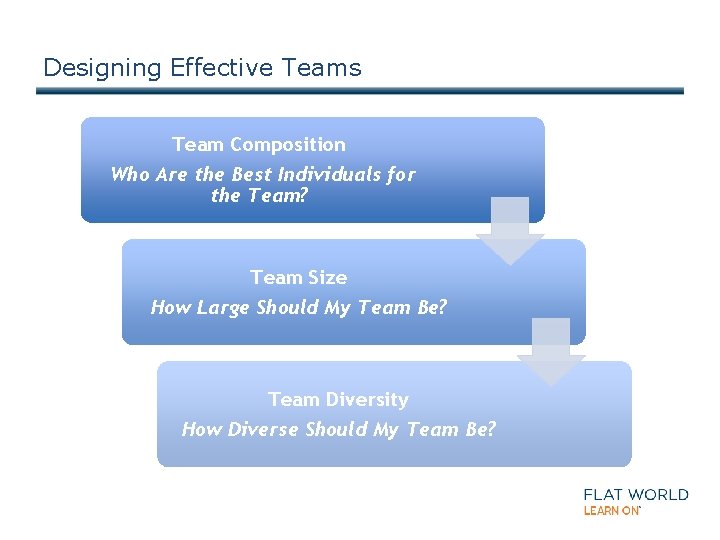
Designing Effective Teams Team Composition Who Are the Best Individuals for the Team? Team Size How Large Should My Team Be? Team Diversity How Diverse Should My Team Be?
Discussion • Think of the last team you were in. Did the task you were asked to do affect the team? Why or why not? • Which of the 10 work roles do you normally take in a team? How difficult or easy do you think it would be for you to take on a different role? • Have you ever worked in a virtual team? If so, what were the challenges and advantages of working virtually? • How large do you think teams should be and why?
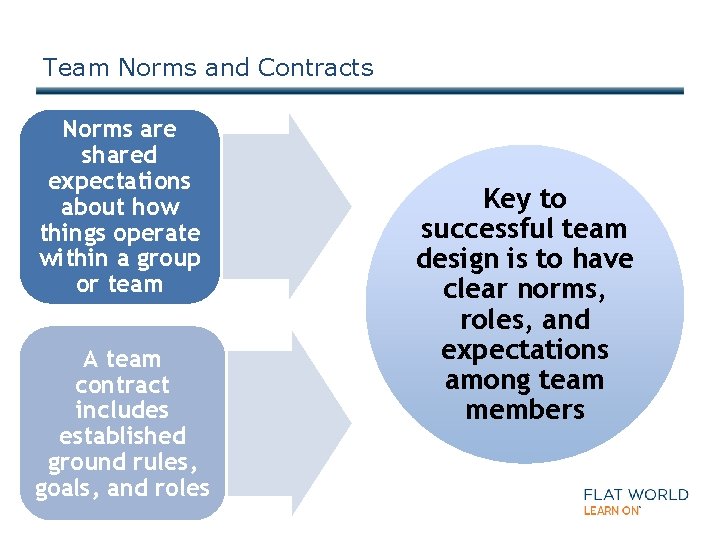
Team Norms and Contracts Norms are shared expectations about how things operate within a group or team A team contract includes established ground rules, goals, and roles Key to successful team design is to have clear norms, roles, and expectations among team members
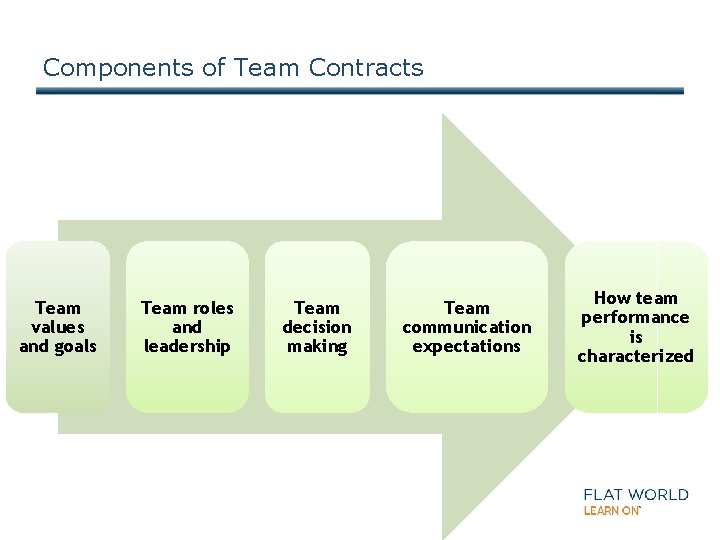
Components of Team Contracts Team values and goals Team roles and leadership Team decision making Team communication expectations How team performance is characterized
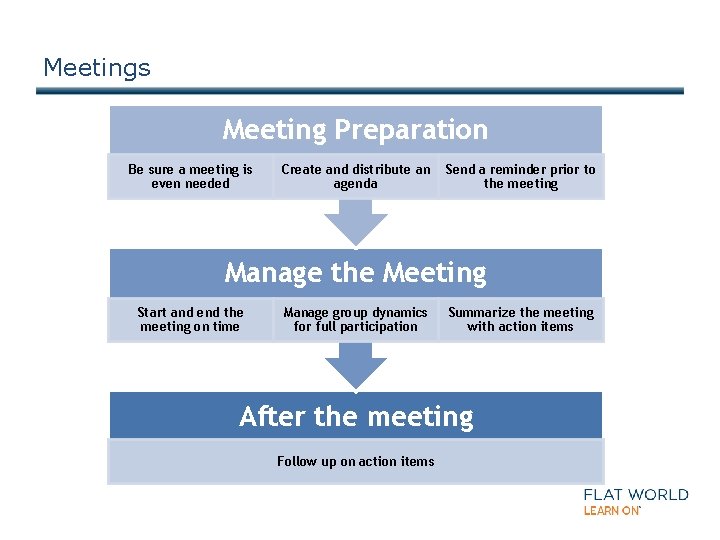
Meetings Meeting Preparation Be sure a meeting is even needed Create and distribute an agenda Send a reminder prior to the meeting Manage the Meeting Start and end the meeting on time Manage group dynamics for full participation Summarize the meeting with action items After the meeting Follow up on action items
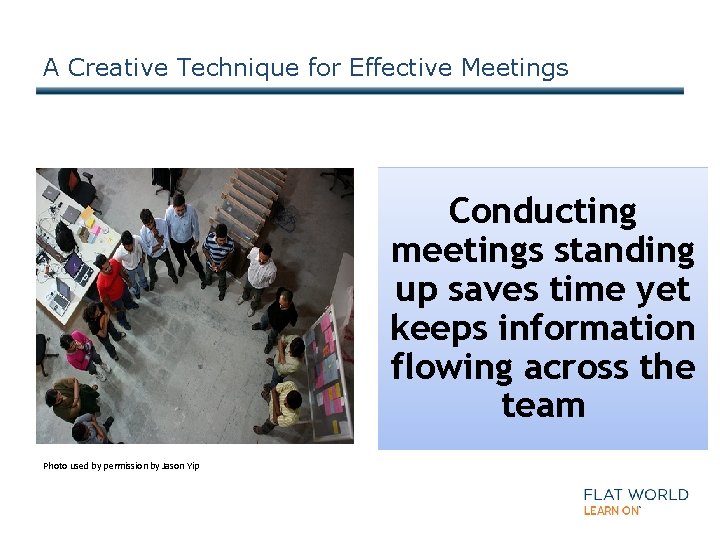
A Creative Technique for Effective Meetings Conducting meetings standing up saves time yet keeps information flowing across the team Photo used by permission by Jason Yip
Discussion • Have the norms for most of the teams you have belonged to been formal or informal? How do you think that has affected these teams? • Have you ever been involved in creating a team contract? Explain how you think that may have influenced how the team functioned? • Should the person requesting a meeting always prepare a meeting agenda? Why or why not? • Do you think conducting team meetings standing up is a good idea? Why or why not?

Barriers to Effective Teams Challenges Knowing Where to Begin Dominating Team Members Poor Performance of Team Members Poorly Managed Team Conflict
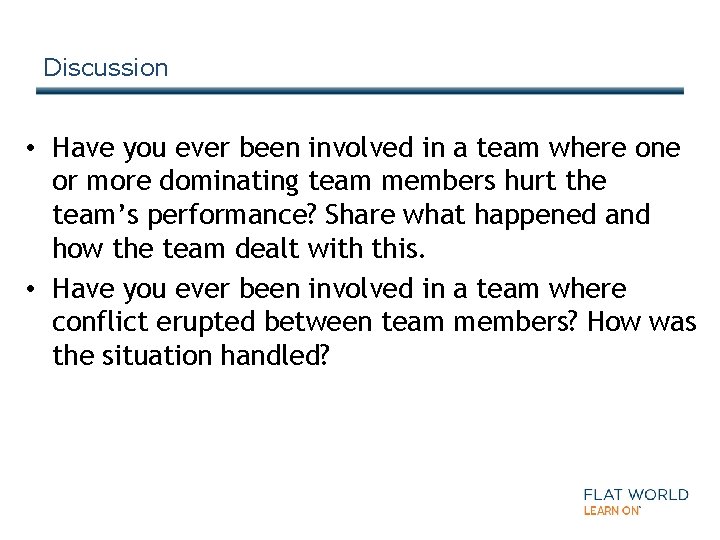
Discussion • Have you ever been involved in a team where one or more dominating team members hurt the team’s performance? Share what happened and how the team dealt with this. • Have you ever been involved in a team where conflict erupted between team members? How was the situation handled?
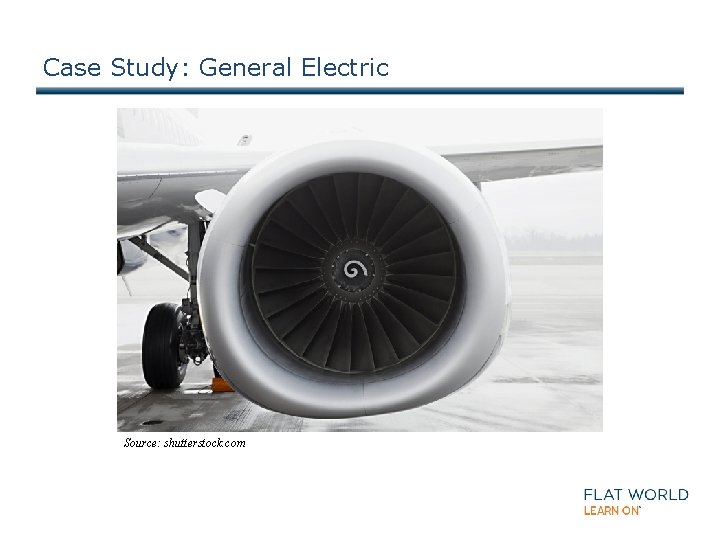
Case Study: General Electric Source: shutterstock. com
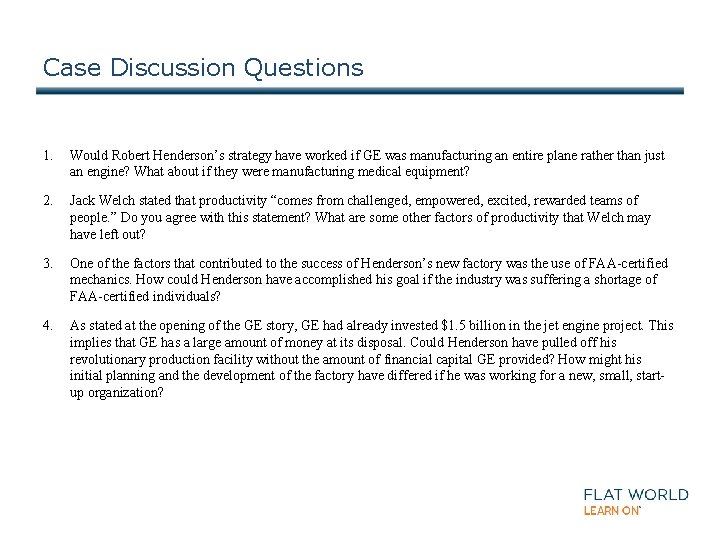
Case Discussion Questions 1. Would Robert Henderson’s strategy have worked if GE was manufacturing an entire plane rather than just an engine? What about if they were manufacturing medical equipment? 2. Jack Welch stated that productivity “comes from challenged, empowered, excited, rewarded teams of people. ” Do you agree with this statement? What are some other factors of productivity that Welch may have left out? 3. One of the factors that contributed to the success of Henderson’s new factory was the use of FAA-certified mechanics. How could Henderson have accomplished his goal if the industry was suffering a shortage of FAA-certified individuals? 4. As stated at the opening of the GE story, GE had already invested $1. 5 billion in the jet engine project. This implies that GE has a large amount of money at its disposal. Could Henderson have pulled off his revolutionary production facility without the amount of financial capital GE provided? How might his initial planning and the development of the factory have differed if he was working for a new, small, startup organization?

Building Your Cohesive Team Establish common objectives Establish common rituals Let members choose goals and participate fully Define clear roles and responsibilities Celebrate differences Build familiarity through close proximity Treat all members with dignity and respect Give frequent praise and validate
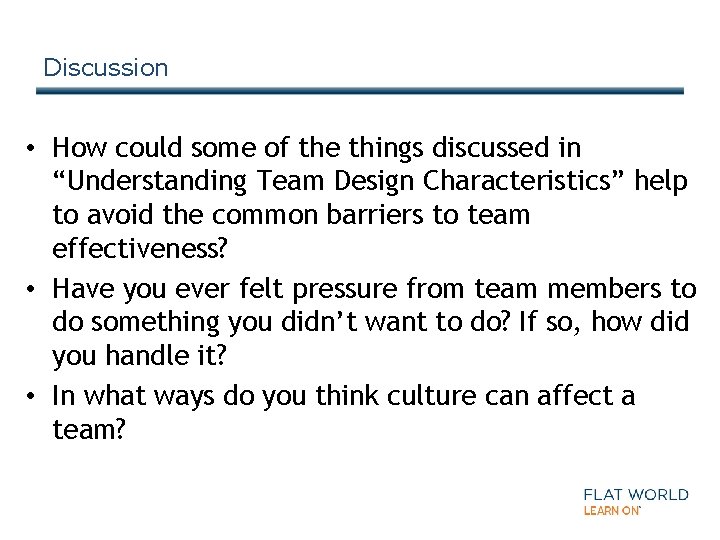
Discussion • How could some of the things discussed in “Understanding Team Design Characteristics” help to avoid the common barriers to team effectiveness? • Have you ever felt pressure from team members to do something you didn’t want to do? If so, how did you handle it? • In what ways do you think culture can affect a team?
- Slides: 43