
Organizational Behavior V 2 0 By Talya Bauer
Organizational Behavior V 2. 0 By Talya Bauer and Berrin Erdogan

Published by: Flat World Knowledge, Inc. © 2015 by Flat World Knowledge, Inc. All rights reserved. Your use of this work is subject to the License Agreement available here http: //www. flatworldknowledge. com/legal. No part of this work may be used, modified, or reproduced in any form or by any means except as expressly permitted under the License Agreement. 13 -1
Chapter 5 Theories of Motivation
Learning Objectives 1. Understand the role of motivation in determining employee performance 2. Classify the basic needs of employees 3. Describe how fairness perceptions are determined and consequences of these perceptions 4. Understand the importance of rewards and punishments 5. Apply motivation theories to analyze performance problems 1 -3
Case Study: Zappos Source: shutterstock. com
Case Discussion Questions 1. After reviewing the need-based motivation theories in this chapter, use theory to explain how Zappos motivates employees. 2. Why do you think Zappos’ approach is not utilized more often? In other words, what are the challenges to these techniques? 3. Why do you think Zappos offers a $3, 000 incentive to quit? 4. Would you be motivated to work at Zappos? Why or why not?
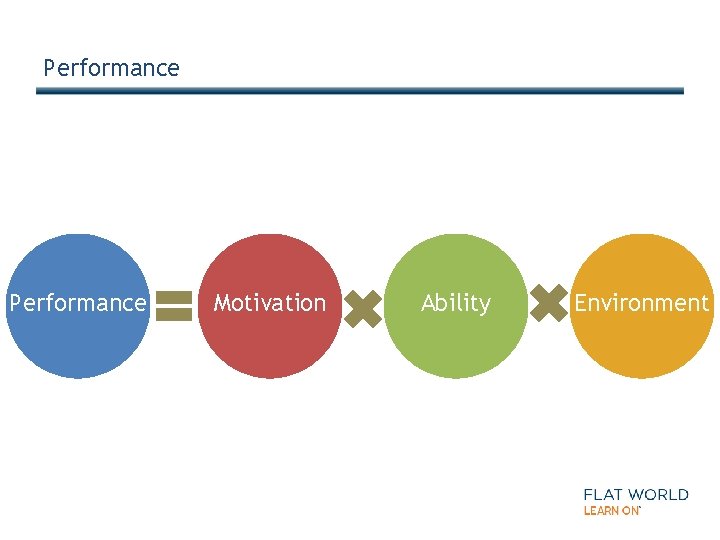
Performance 1 -6 Motivation Ability Environment
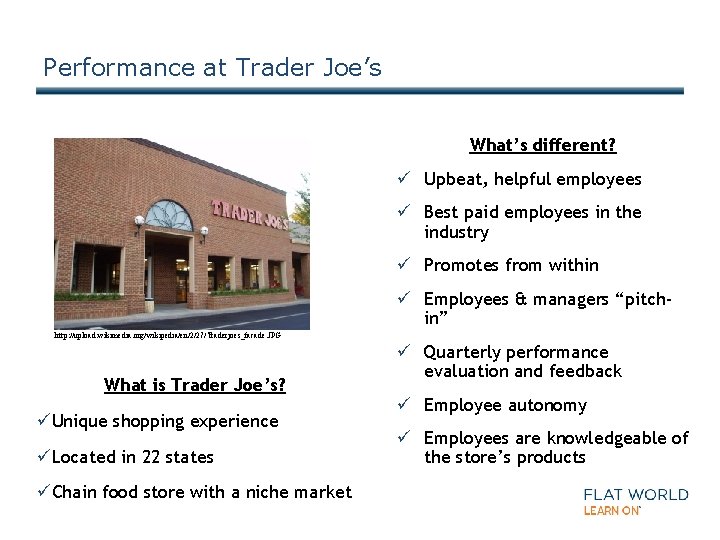
Performance at Trader Joe’s What’s different? ü Upbeat, helpful employees ü Best paid employees in the industry ü Promotes from within ü Employees & managers “pitchin” http: //upload. wikimedia. org/wikipedia/en/2/27/Traderjoes_facade. JPG What is Trader Joe’s? üUnique shopping experience üLocated in 22 states üChain food store with a niche market ü Quarterly performance evaluation and feedback ü Employee autonomy ü Employees are knowledgeable of the store’s products
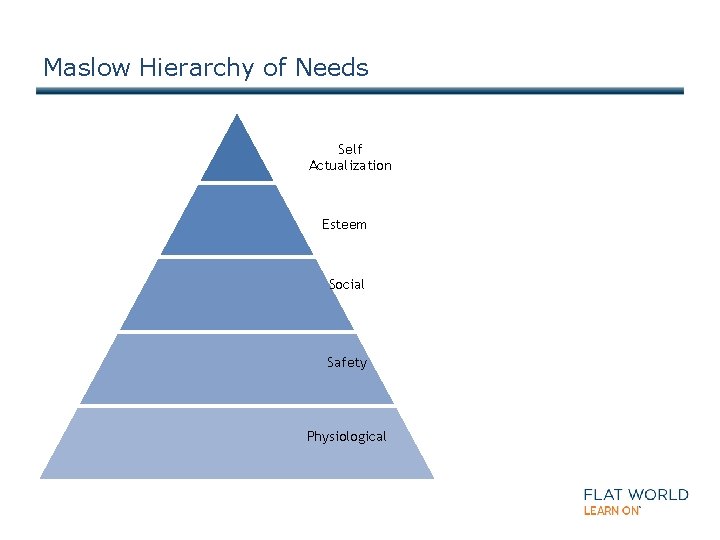
Maslow Hierarchy of Needs Self Actualization Esteem Social Safety Physiological
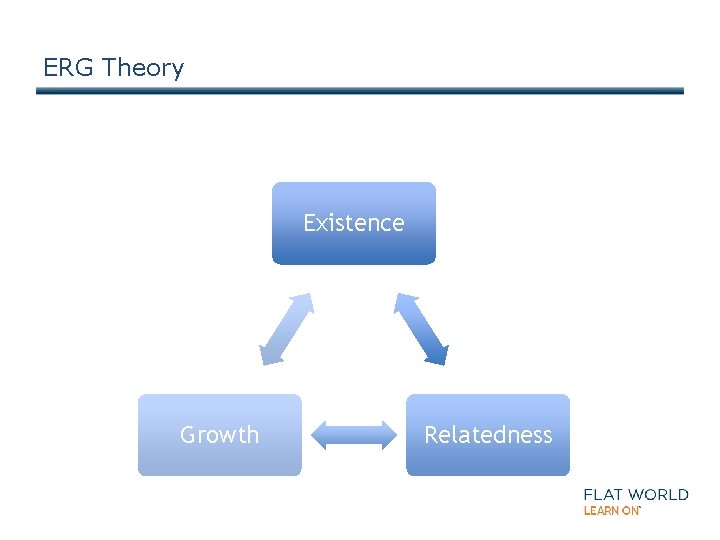
ERG Theory Existence Growth Relatedness
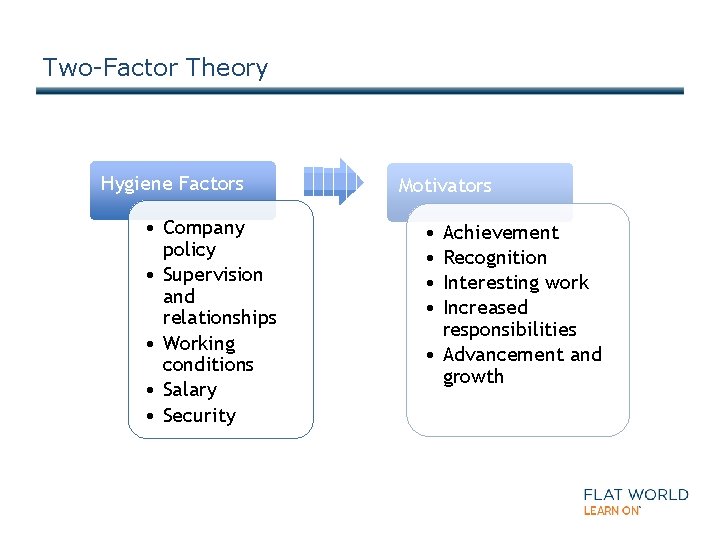
Two-Factor Theory Hygiene Factors • Company policy • Supervision and relationships • Working conditions • Salary • Security Motivators • • Achievement Recognition Interesting work Increased responsibilities • Advancement and growth
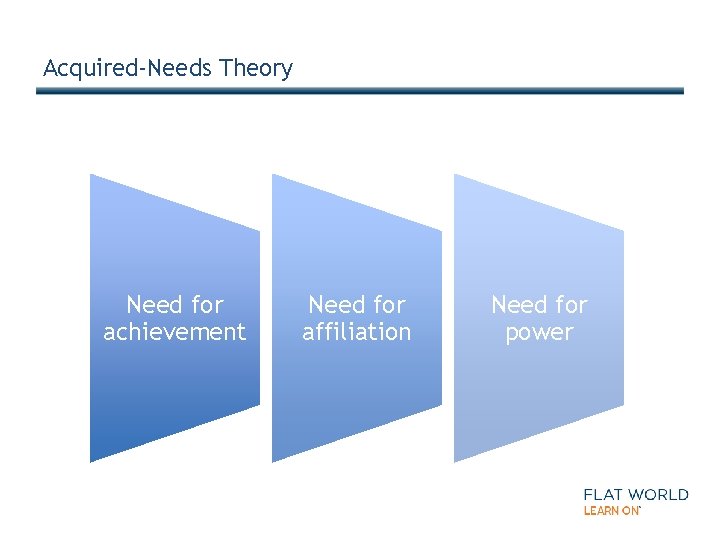
Acquired-Needs Theory Need for achievement Need for affiliation Need for power
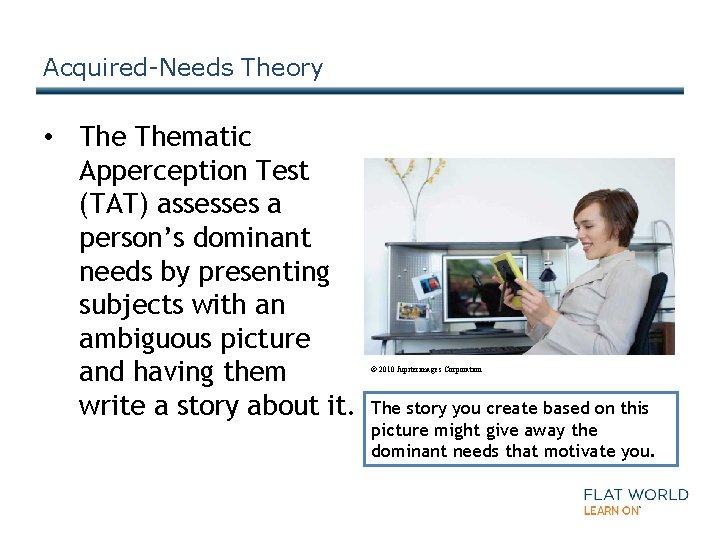
Acquired-Needs Theory • Thematic Apperception Test (TAT) assesses a person’s dominant needs by presenting subjects with an ambiguous picture and having them write a story about it. © 2010 Jupiterimages Corporation The story you create based on this picture might give away the dominant needs that motivate you.
Discussion • Many managers assume that if an employee is not performing well, the reason must be a lack of motivation. Do you think this reasoning is accurate? What is the problem with the assumption? • Review Maslow’s hierarchy of needs. Do you agree with the particular ranking of employee needs? • How can an organization satisfy employee needs that are included in Maslow’s hierarchy? • Which motivation theory have you found to be the most useful in explaining why people behave in a certain way? Why? • Review the hygiene and motivators in the two-factor theory of motivation. Do you agree with the distinction between hygiene factors and motivators? Are there any hygiene factors that you would consider to be motivators? • A friend of yours demonstrates the traits of achievement motivation: This person is competitive, requires frequent and immediate feedback, and enjoys accomplishing things and doing things better than she did before. She has recently been promoted to a managerial position and seeks your advice. What would you tell her?
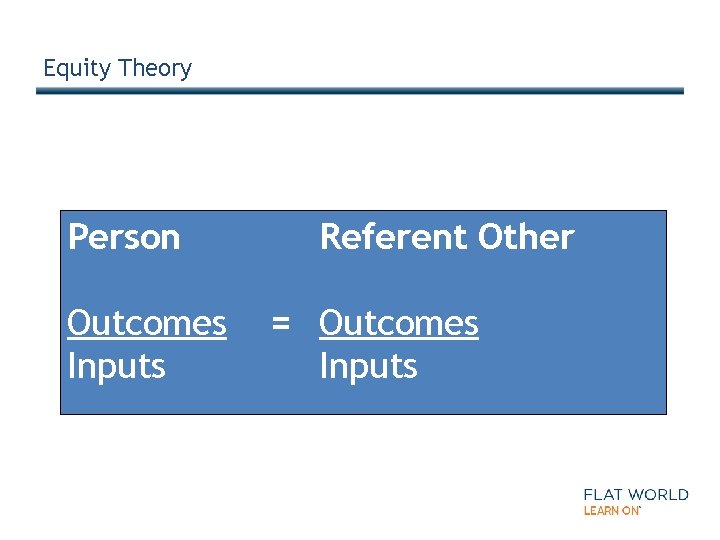
Equity Theory Person Outcomes Inputs 1 -14 Referent Other = Outcomes Inputs
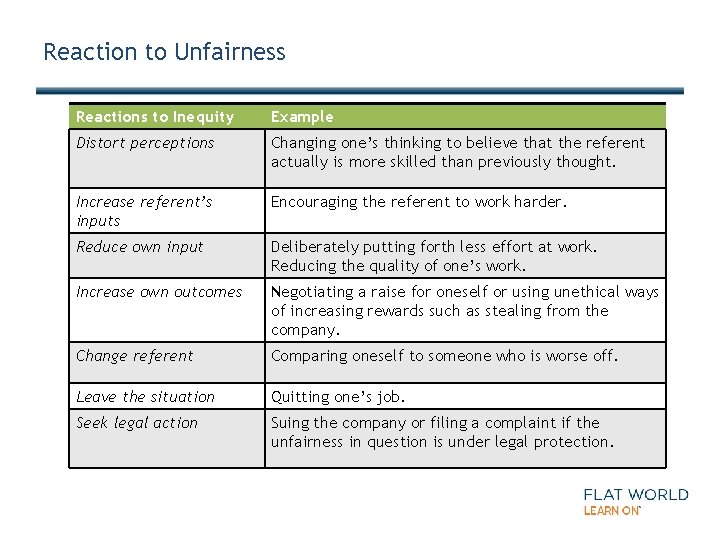
Reaction to Unfairness Reactions to Inequity Example Distort perceptions Changing one’s thinking to believe that the referent actually is more skilled than previously thought. Increase referent’s inputs Encouraging the referent to work harder. Reduce own input Deliberately putting forth less effort at work. Reducing the quality of one’s work. Increase own outcomes Negotiating a raise for oneself or using unethical ways of increasing rewards such as stealing from the company. Change referent Comparing oneself to someone who is worse off. Leave the situation Quitting one’s job. Seek legal action Suing the company or filing a complaint if the unfairness in question is under legal protection.
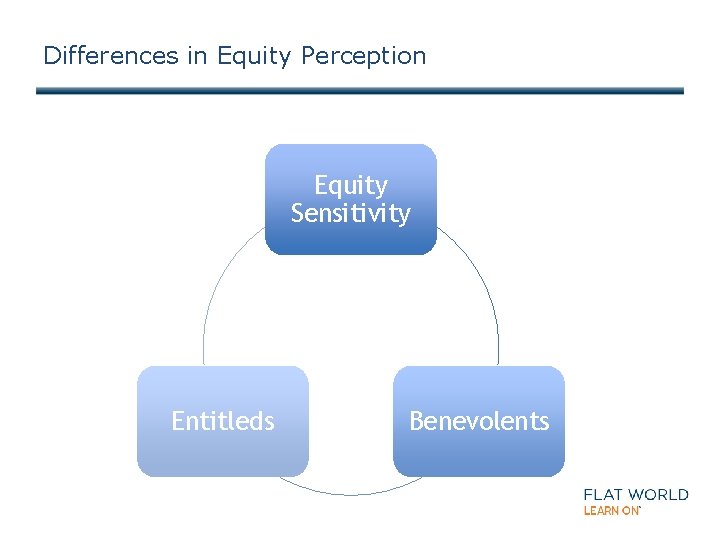
Differences in Equity Perception Equity Sensitivity Entitleds Benevolents
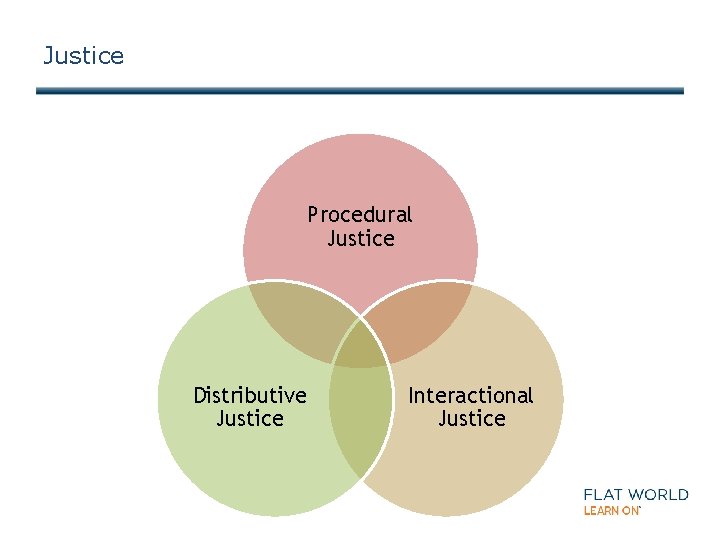
Justice Procedural Justice Distributive Justice Interactional Justice
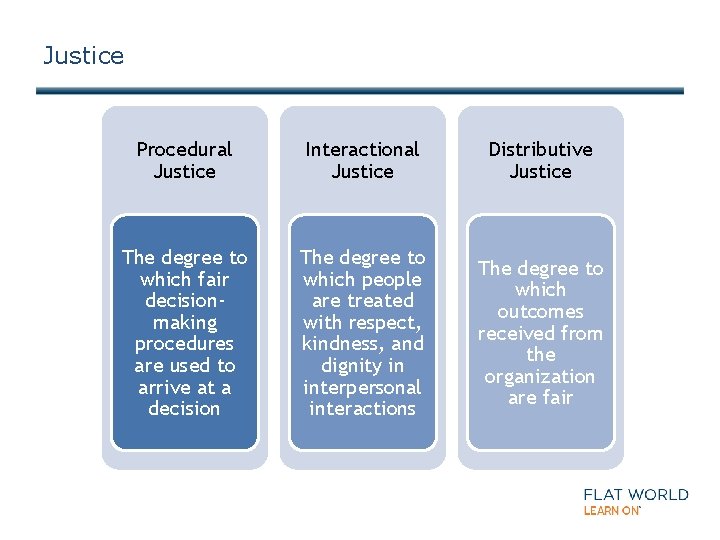
Justice Procedural Justice Interactional Justice Distributive Justice The degree to which fair decisionmaking procedures are used to arrive at a decision The degree to which people are treated with respect, kindness, and dignity in interpersonal interactions The degree to which outcomes received from the organization are fair
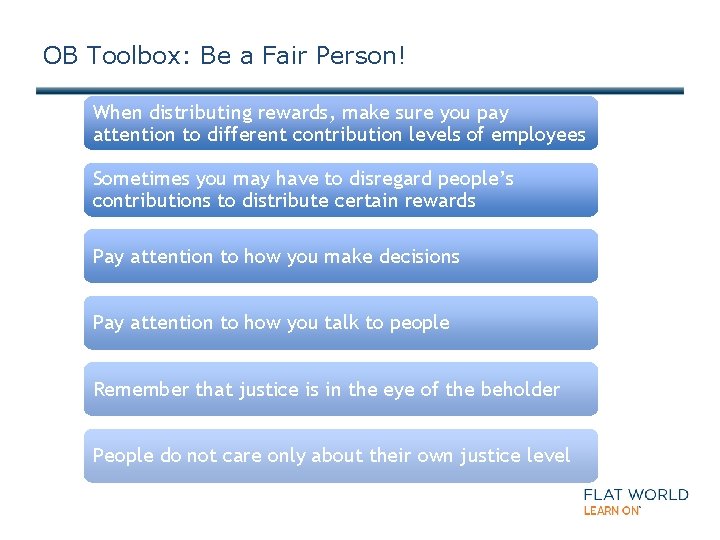
OB Toolbox: Be a Fair Person! When distributing rewards, make sure you pay attention to different contribution levels of employees Sometimes you may have to disregard people’s contributions to distribute certain rewards Pay attention to how you make decisions Pay attention to how you talk to people Remember that justice is in the eye of the beholder People do not care only about their own justice level
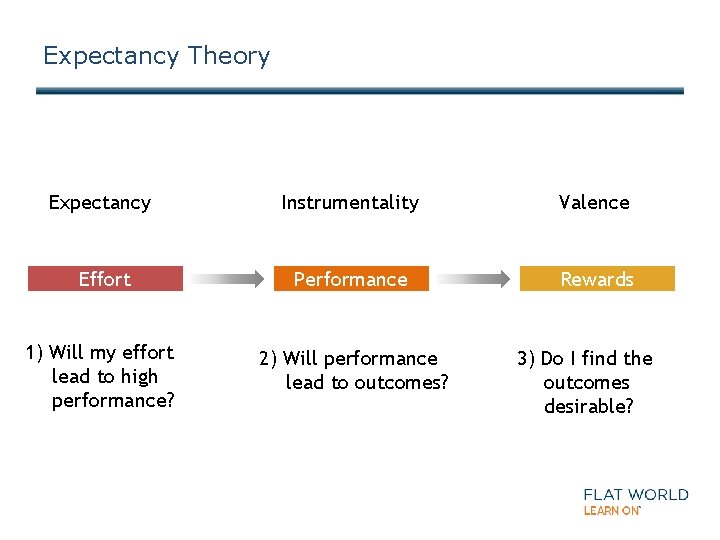
Expectancy Theory Expectancy Instrumentality Valence Effort Performance Rewards 1) Will my effort lead to high performance? 2) Will performance lead to outcomes? 3) Do I find the outcomes desirable?
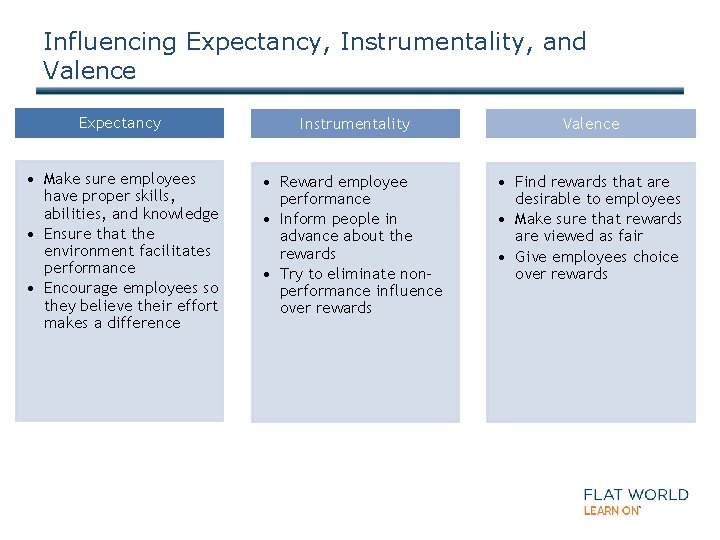
Influencing Expectancy, Instrumentality, and Valence Expectancy Instrumentality Valence • Make sure employees have proper skills, abilities, and knowledge • Ensure that the environment facilitates performance • Encourage employees so they believe their effort makes a difference • Reward employee performance • Inform people in advance about the rewards • Try to eliminate nonperformance influence over rewards • Find rewards that are desirable to employees • Make sure that rewards are viewed as fair • Give employees choice over rewards
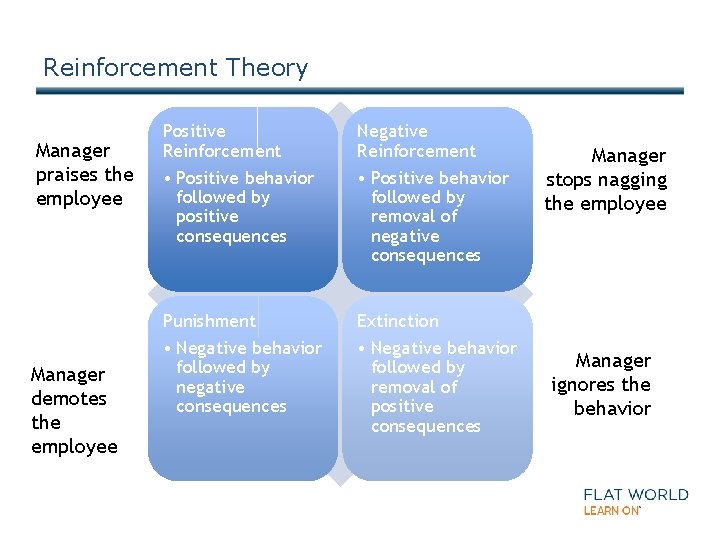
Reinforcement Theory Manager praises the employee Manager demotes the employee Positive Reinforcement • Positive behavior followed by positive consequences Negative Reinforcement • Positive behavior followed by removal of negative consequences Punishment Extinction • Negative behavior followed by negative consequences • Negative behavior followed by removal of positive consequences Manager stops nagging the employee Manager ignores the behavior
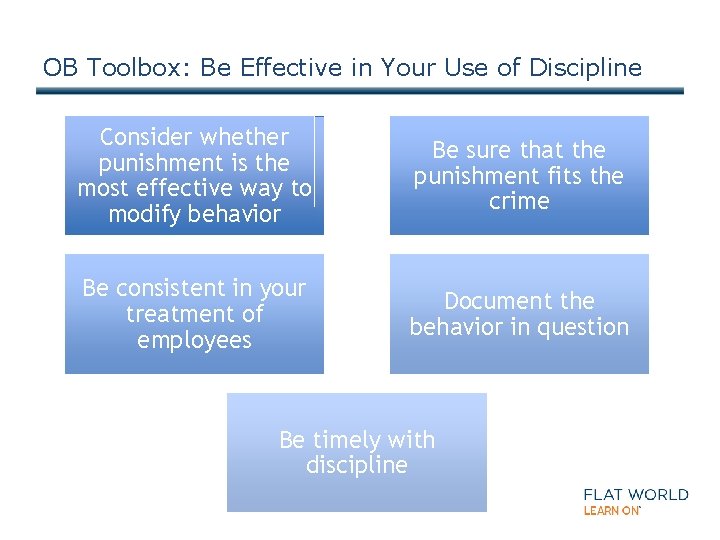
OB Toolbox: Be Effective in Your Use of Discipline Consider whether punishment is the most effective way to modify behavior Be sure that the punishment fits the crime Be consistent in your treatment of employees Document the behavior in question Be timely with discipline
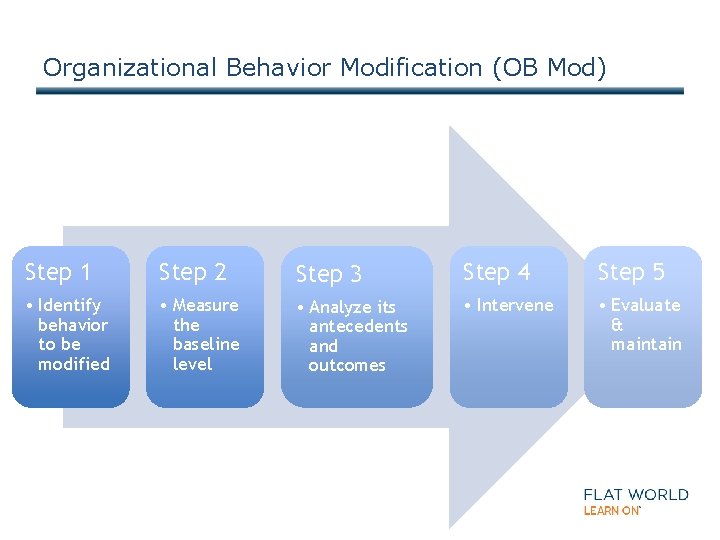
Organizational Behavior Modification (OB Mod) Step 1 Step 2 Step 3 Step 4 Step 5 • Identify behavior to be modified • Measure the baseline level • Analyze its antecedents and outcomes • Intervene • Evaluate & maintain
Discussion • Your manager tells you that the best way of ensuring fairness in reward distribution is to keep the pay a secret. How would you respond to this assertion? • When distributing bonuses or pay, how would you ensure perceptions of fairness? • What are the differences between procedural, interactional, and distributive justice? List ways in which you could increase each of these justice perceptions. • Using examples, explain the concepts of expectancy, instrumentality, and valence. • Some practitioners and researchers consider OB Mod unethical because it may be viewed as a way of manipulation. What would be your reaction to such a criticism?
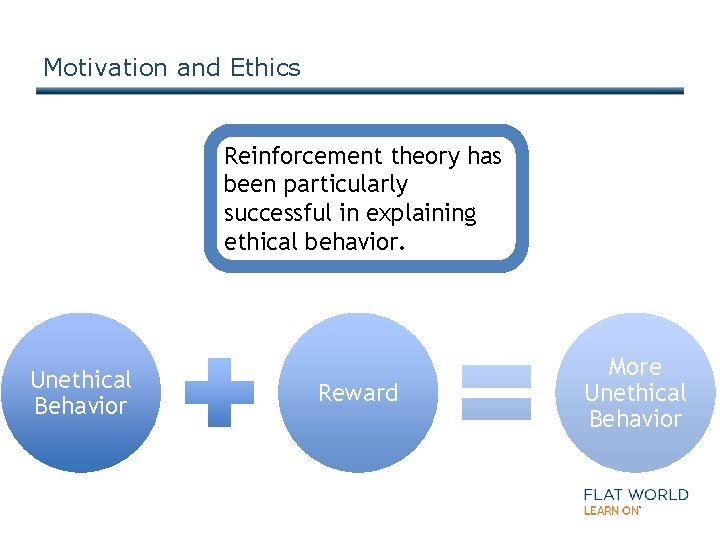
Motivation and Ethics Reinforcement theory has been particularly successful in explaining ethical behavior. Unethical Behavior Reward More Unethical Behavior
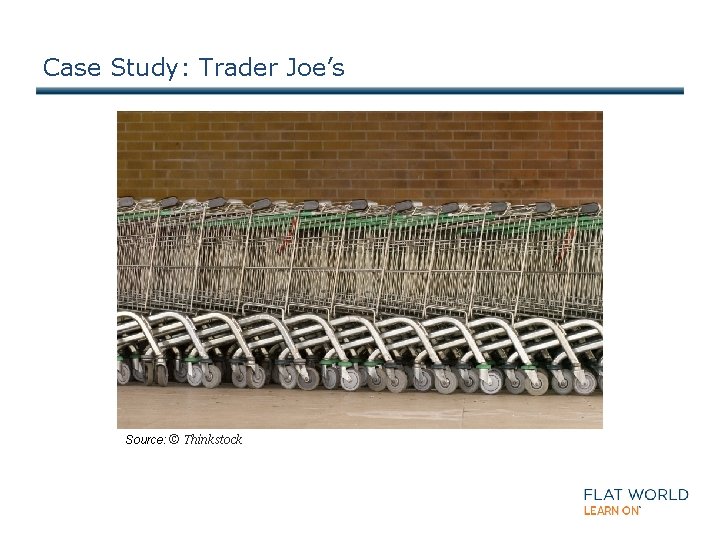
Case Study: Trader Joe’s Source: © Thinkstock
Case Discussion Questions 1. How much of Trader Joe’s success can be attributed to the fact that most larger chain grocery stores do not sell the type of food available at Trader Joe’s? 2. Is pay enough of an incentive to continue at a job you do not enjoy? 3. Trader Joe’s promotes entirely from within the organization. This means that if you are a good, dedicated worker, you can rise up within the company. Do you feel employees would be as dedicated to the company if this were not the case? Would high pay be enough to keep employees? What if the company only promoted from within but pay were not as good? 4. A fact mentioned in the case is that Trader Joes is also a supermarket that emphasizes cost minimization and low prices. How can an organization emphasize low prices while also investing in its employees? Are these contradictory strategies? Why or why not?
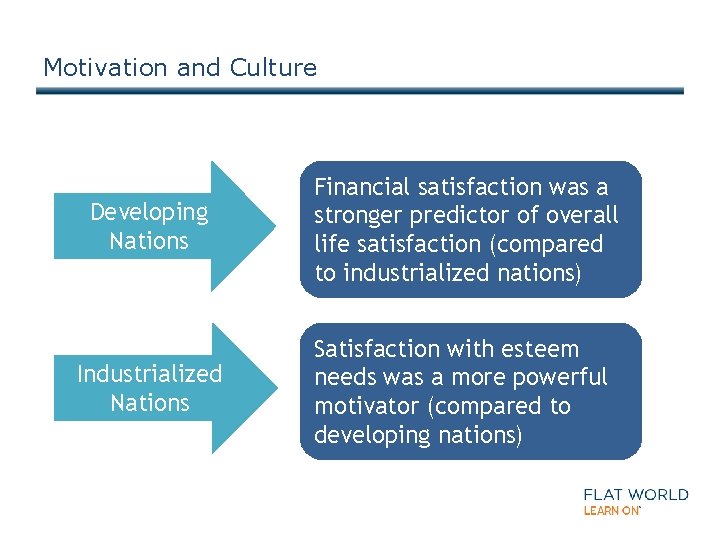
Motivation and Culture Developing Nations Financial satisfaction was a stronger predictor of overall life satisfaction (compared to industrialized nations) Industrialized Nations Satisfaction with esteem needs was a more powerful motivator (compared to developing nations)
Discussion • What is the connection between a company’s reward system and the level of ethical behaviors? • Which of the motivation theories do you think would be more applicable to many different cultures?
- Slides: 31