
Organizational Behavior V 2 0 By Talya Bauer
Organizational Behavior V 2. 0 By Talya Bauer and Berrin Erdogan
Published by: Flat World Knowledge, Inc. © 2015 by Flat World Knowledge, Inc. All rights reserved. Your use of this work is subject to the License Agreement available here http: //www. flatworldknowledge. com/legal. No part of this work may be used, modified, or reproduced in any form or by any means except as expressly permitted under the License Agreement. 13 -1
Chapter 11 Making Decisions
Learning Objectives 1. Understand the meaning of decision making. 2. Compare and contrast different decision-making models. 3. Compare and contrast individual and group decision making. 4. Understand potential decision-making traps and how to avoid them. 5. Understand the pros and cons of different decisionmaking aids. 6. Engage in ethical decision making. 7. Understand cross-cultural differences in decision making. 1 -3
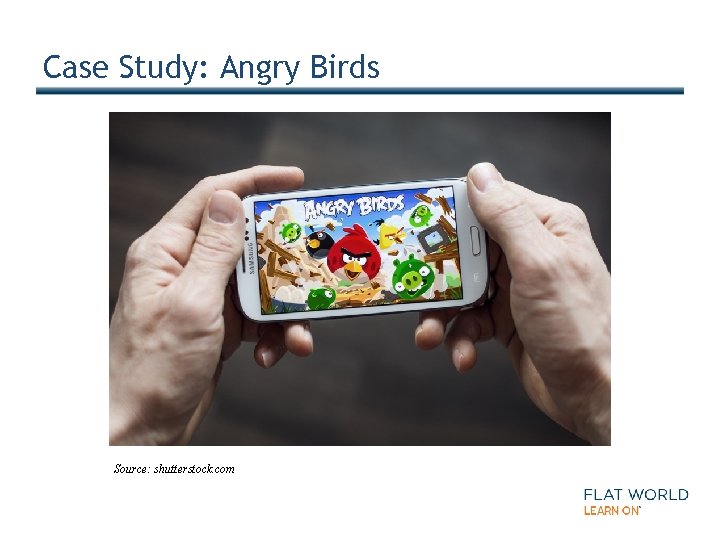
Case Study: Angry Birds Source: shutterstock. com
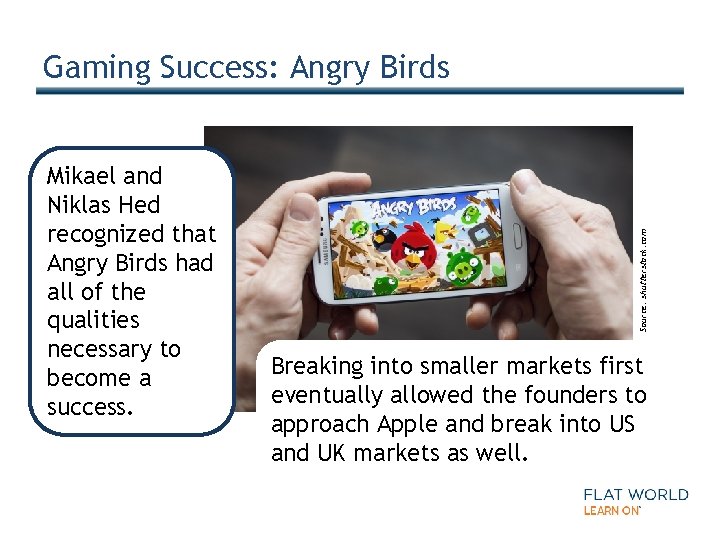
Mikael and Niklas Hed recognized that Angry Birds had all of the qualities necessary to become a success. 1 -5 Source: shutterstock. com Gaming Success: Angry Birds Breaking into smaller markets first eventually allowed the founders to approach Apple and break into US and UK markets as well.
Discussion Questions • What do you believe is the role of luck in Rovio entertainment’s success? • How did Mikael and Niklas engage in rational decision making? Explain. • Which of the Heds’ decisions may be characterized as intuitive decisions? • Did the founders of Rovio engage in creative decision making? Explain your answer using examples.

Types of Decisions Strategic Tactical Operational • Set the course for an organization. • e. g. introducing a long-term change • Decide how things will get done. • e. g. issue a coupon to increase sales • Made by employees on a daily basis • e. g. fulfilling a customer’s order

Decision Making Models
Discussion • What do you see as the main difference between a successful and an unsuccessful decision? • Research has shown that over half of the decisions made within organizations fail. Does this surprise you? Why or why not? • Have you used the rational decision-making model to make a decision? What was the context? How well did the model work? • Do you think intuition is respected as a decision-making style? Do you think it should be? Why or why not?
Faulty Decision Making • Availability Bias • Escalation of Commitment Bias • Fundamental Attribution Error • Hindsight Bias • Correlation vs. Causality • Sampling Misunderstanding Bias • Overconfidence Bias • Satisficing
Discussion • Describe a time when you fell into one of the decisionmaking traps. How did you come to realize that you had made a poor decision? • How can you avoid escalation of commitment? • Share an example of anchoring. • Which of the traps seems the most dangerous for decision makers and why?

Individual vs. Group Decision Making
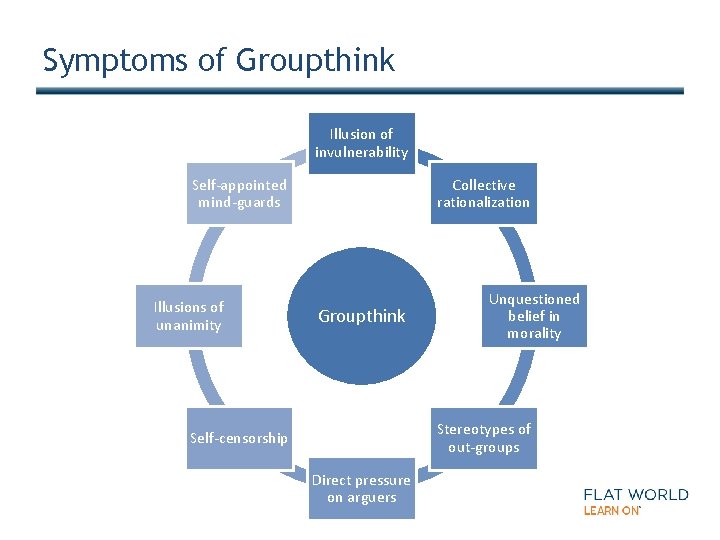
Symptoms of Groupthink Illusion of invulnerability Self-appointed mind-guards Illusions of unanimity Collective rationalization Groupthink Unquestioned belief in morality Stereotypes of out-groups Self-censorship Direct pressure on arguers
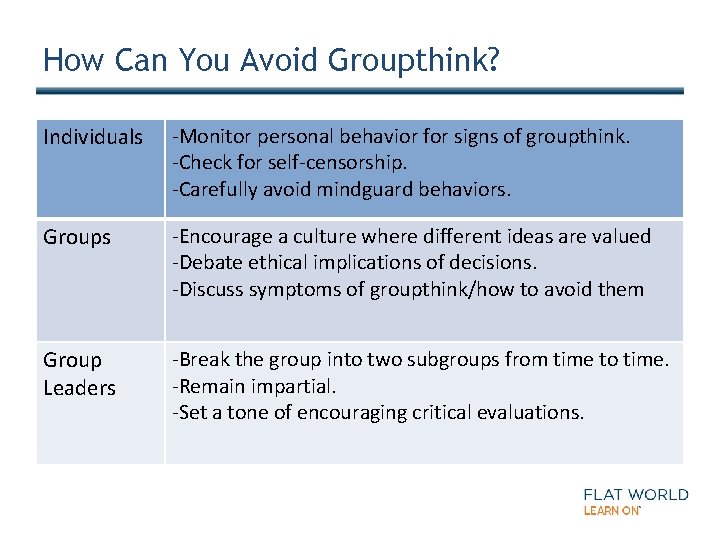
How Can You Avoid Groupthink? Individuals -Monitor personal behavior for signs of groupthink. -Check for self-censorship. -Carefully avoid mindguard behaviors. Groups -Encourage a culture where different ideas are valued -Debate ethical implications of decisions. -Discuss symptoms of groupthink/how to avoid them Group Leaders -Break the group into two subgroups from time to time. -Remain impartial. -Set a tone of encouraging critical evaluations.
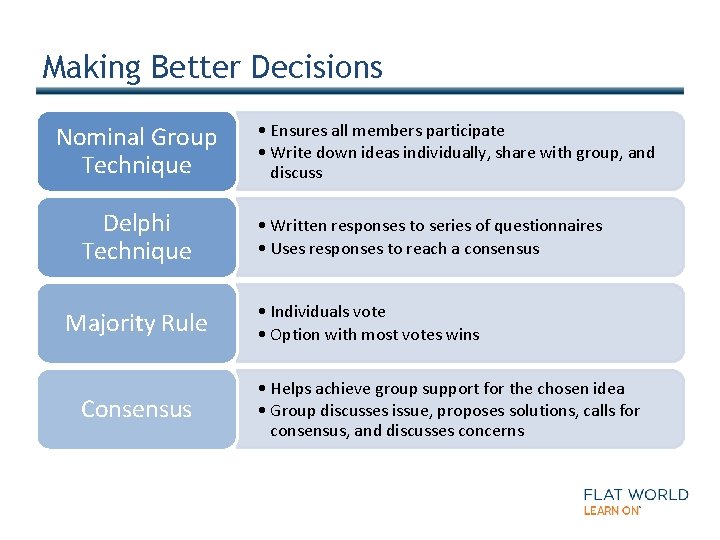
Making Better Decisions Nominal Group Technique Delphi Technique Majority Rule Consensus • Ensures all members participate • Write down ideas individually, share with group, and discuss • Written responses to series of questionnaires • Uses responses to reach a consensus • Individuals vote • Option with most votes wins • Helps achieve group support for the chosen idea • Group discusses issue, proposes solutions, calls for consensus, and discusses concerns
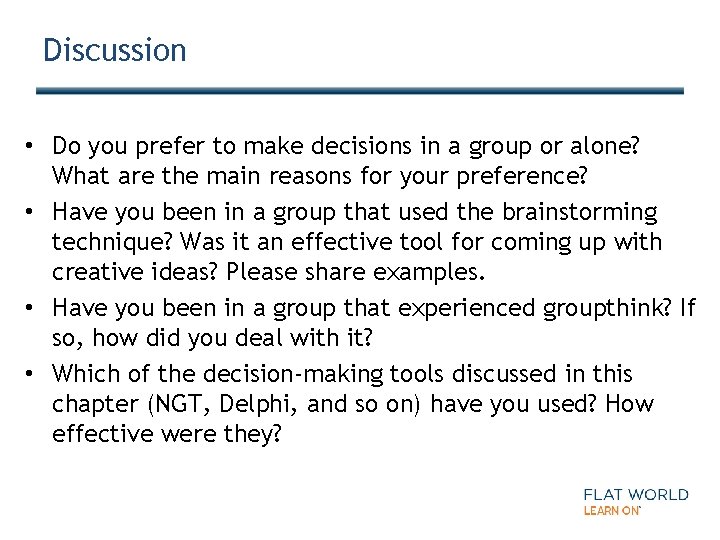
Discussion • Do you prefer to make decisions in a group or alone? What are the main reasons for your preference? • Have you been in a group that used the brainstorming technique? Was it an effective tool for coming up with creative ideas? Please share examples. • Have you been in a group that experienced groupthink? If so, how did you deal with it? • Which of the decision-making tools discussed in this chapter (NGT, Delphi, and so on) have you used? How effective were they?
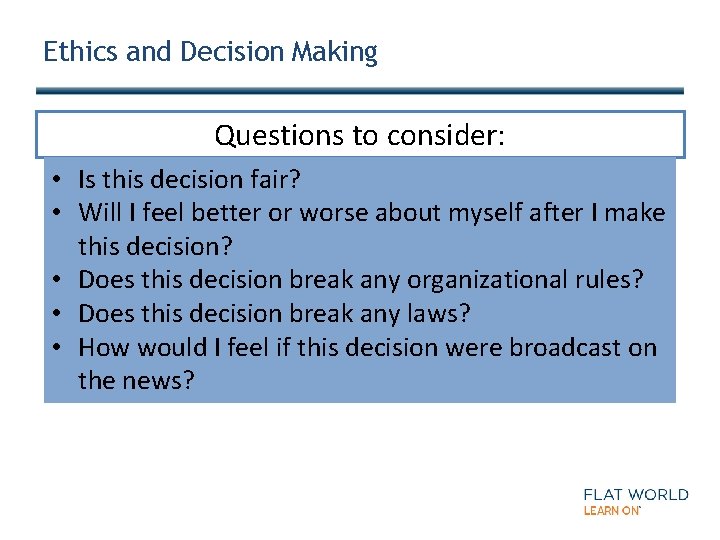
Ethics and Decision Making Questions to consider: • Is this decision fair? • Will I feel better or worse about myself after I make this decision? • Does this decision break any organizational rules? • Does this decision break any laws? • How would I feel if this decision were broadcast on the news? 1 -17
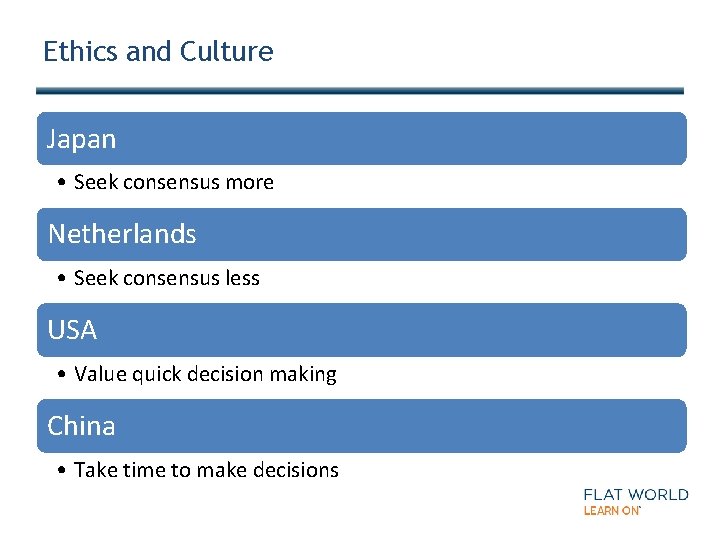
Ethics and Culture Japan • Seek consensus more Netherlands • Seek consensus less USA • Value quick decision making China • Take time to make decisions
Discussion • How can you assess if you are making ethical decisions or not? • Have you seen examples of ethical or unethical decisions being made? Describe what you observed. • Have you seen examples of national culture affecting decision making? • What advice surrounding decision making would you give to someone who will be managing a new division of a company in another culture? • What can go wrong when cultural factors are ignored?
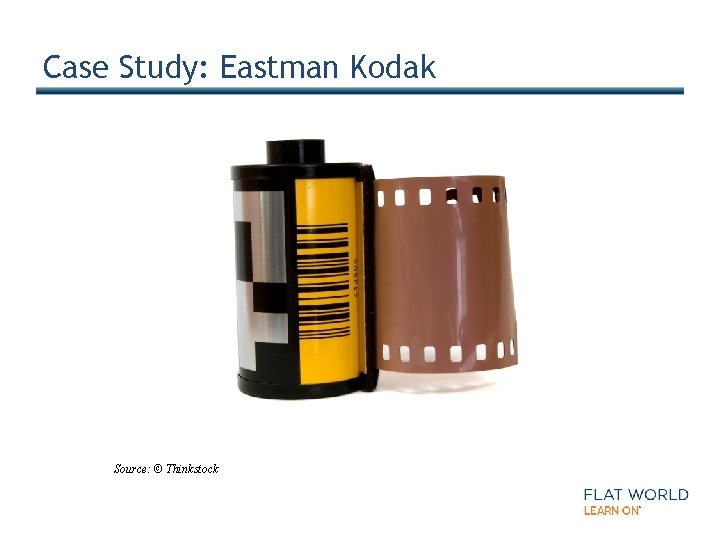
Case Study: Eastman Kodak Source: © Thinkstock
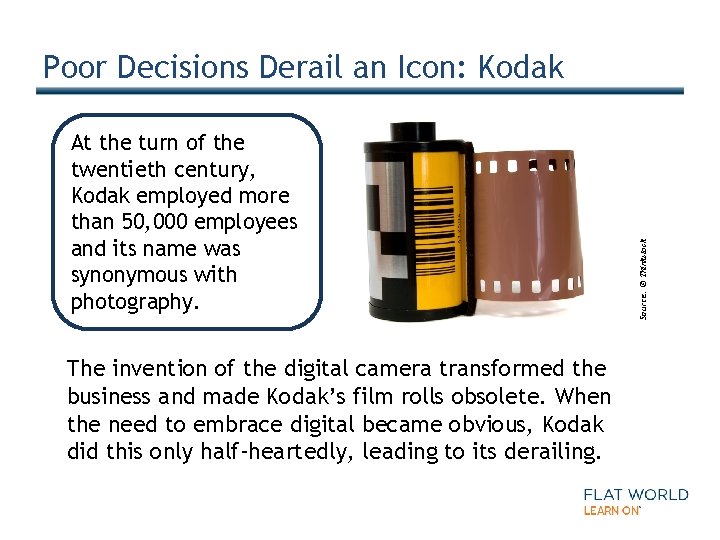
At the turn of the twentieth century, Kodak employed more than 50, 000 employees and its name was synonymous with photography. The invention of the digital camera transformed the business and made Kodak’s film rolls obsolete. When the need to embrace digital became obvious, Kodak did this only half-heartedly, leading to its derailing. 1 -21 Source: © Thinkstock Poor Decisions Derail an Icon: Kodak
Discussion • Do you feel that Kodak’s bankruptcy was inevitable? How did high-level decision making contributed to this situation? • What decision-making errors do you think contributed to the problems of Kodak? • What do you think Kodak should have done to arrive at a different outcome? • What are the decision-making lessons you would draw from this case?
- Slides: 23