
Organizational Behavior V 2 0 By Talya Bauer
Organizational Behavior V 2. 0 By Talya Bauer and Berrin Erdogan
Published by: Flat World Knowledge, Inc. © 2015 by Flat World Knowledge, Inc. All rights reserved. Your use of this work is subject to the License Agreement available here http: //www. flatworldknowledge. com/legal. No part of this work may be used, modified, or reproduced in any form or by any means except as expressly permitted under the License Agreement. 13 -1
Chapter 7 Managing Stress and Emotions
Learning Objectives 1. 2. 3. 4. 5. 6. 7. 8. 1 -3 Understand the stress cycle Recognize the sources of stress for employees Recognize the outcomes of stress Understand how to manage stress in organizational contexts Understand the role emotions play in attitudes and behaviors at work Learn about emotional labor and how to manage it Understand how emotions can affect perceptions of what is ethical Understand cross-cultural differences in stressors
Camden Trust Case Study • Downsizing and layoffs are prevalent forms of stress that could cause strain if not handled properly. • Part of Camden’s success during the transition was to give the staff necessary information about the situation. © Thinkstock 1 -4
Case Study: Camden Property Trust Source: © Thinkstock
Case Discussion Questions 1. What do you think the long-term benefits will be for Camden Property Trust and its employees as a result of the way it handled an economic downturn? 2. What other suggestions do you have for Camden in creating business opportunities during a period of economic volatility? 3. How does a company as large as Camden effectively and authentically communicate to its employees? 4. Does Camden increase or decrease its credibility to staff when the CEO dresses up as Captain Kirk? Why do you believe this? 5. What steps has Camden taken to help employees manage their stress levels?

The Stress Process In Selye’s General Adaptation Syndrome (GAS) model, stress affects an individual in three steps: alarm, resistance and exhaustion. Resistance to Stress • Stress is the body’s reaction to a change that requires a physical, mental, or emotional adjustment or response. • In a 2012 Gallup poll, 41% of Americans reported that they felt stressed the day before. Alarm Resistance Exhaustion
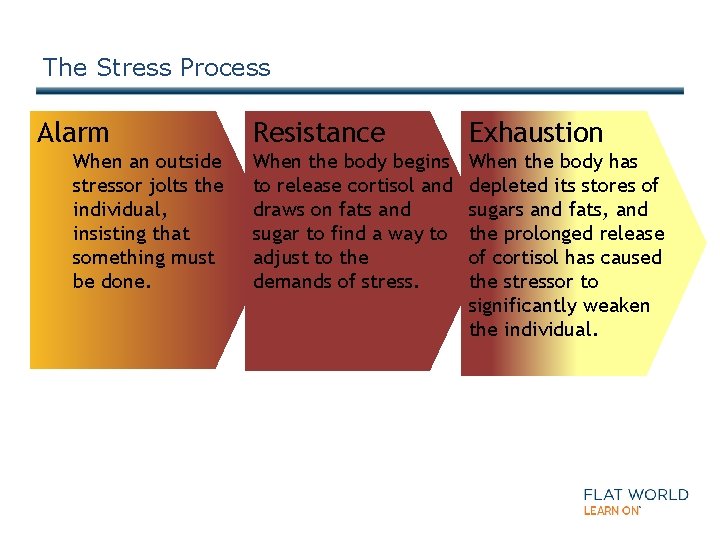
The Stress Process Alarm When an outside stressor jolts the individual, insisting that something must be done. Resistance Exhaustion When the body begins to release cortisol and draws on fats and sugar to find a way to adjust to the demands of stress. When the body has depleted its stores of sugars and fats, and the prolonged release of cortisol has caused the stressor to significantly weaken the individual.

Workplace Stressors Role Demands Role Ambiguity • Vagueness in relation to job responsibilitie s Role Conflict Role Overload • Facing contradictory demands at work • Having insufficient time and resources to complete one’s job
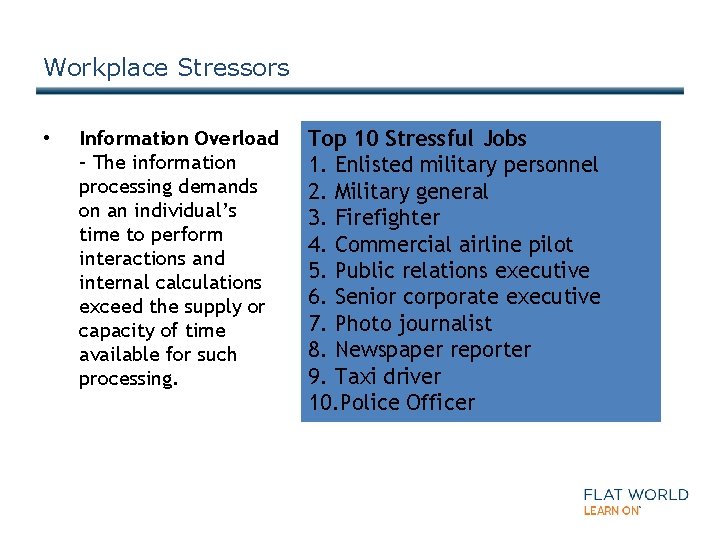
Workplace Stressors • Information Overload – The information processing demands on an individual’s time to perform interactions and internal calculations exceed the supply or capacity of time available for such processing. Top 10 Stressful Jobs 1. Enlisted military personnel 2. Military general 3. Firefighter 4. Commercial airline pilot 5. Public relations executive 6. Senior corporate executive 7. Photo journalist 8. Newspaper reporter 9. Taxi driver 10. Police Officer
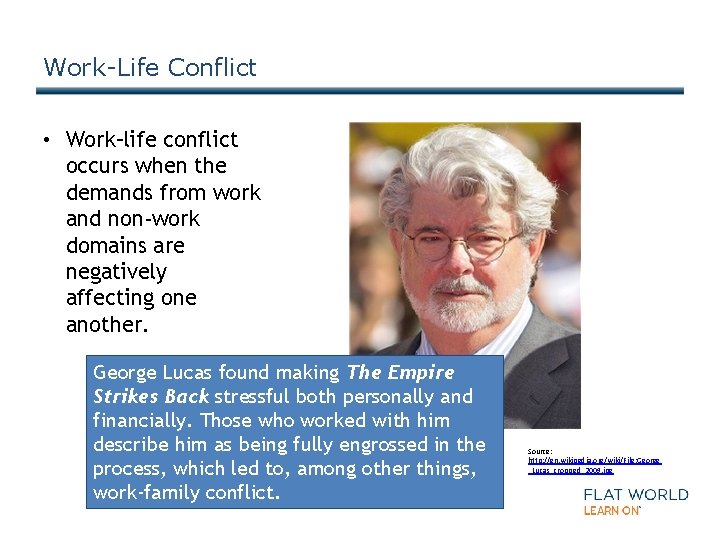
Work-Life Conflict • Work–life conflict occurs when the demands from work and non-work domains are negatively affecting one another. George Lucas found making The Empire Strikes Back stressful both personally and financially. Those who worked with him describe him as being fully engrossed in the process, which led to, among other things, work-family conflict. Source: http: //en. wikipedia. org/wiki/File: George _Lucas_cropped_2009. jpg
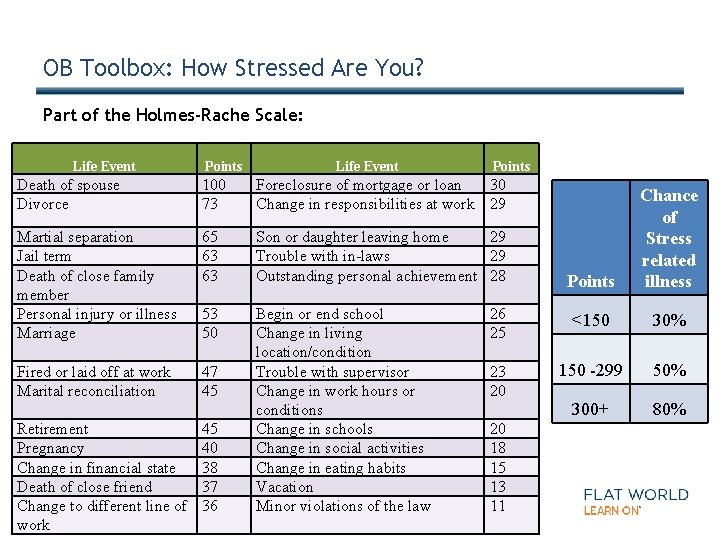
OB Toolbox: How Stressed Are You? Part of the Holmes-Rache Scale: Life Event Points Death of spouse Divorce 100 73 Foreclosure of mortgage or loan 30 Change in responsibilities at work 29 Martial separation Jail term Death of close family member Personal injury or illness Marriage 65 63 63 Son or daughter leaving home 29 Trouble with in-laws 29 Outstanding personal achievement 28 53 50 Fired or laid off at work Marital reconciliation 47 45 Retirement Pregnancy Change in financial state Death of close friend Change to different line of work 45 40 38 37 36 Begin or end school Change in living location/condition Trouble with supervisor Change in work hours or conditions Change in schools Change in social activities Change in eating habits Vacation Minor violations of the law Points Chance of Stress related illness 26 25 <150 30% 23 20 150 -299 50% 300+ 80% 20 18 15 13 11
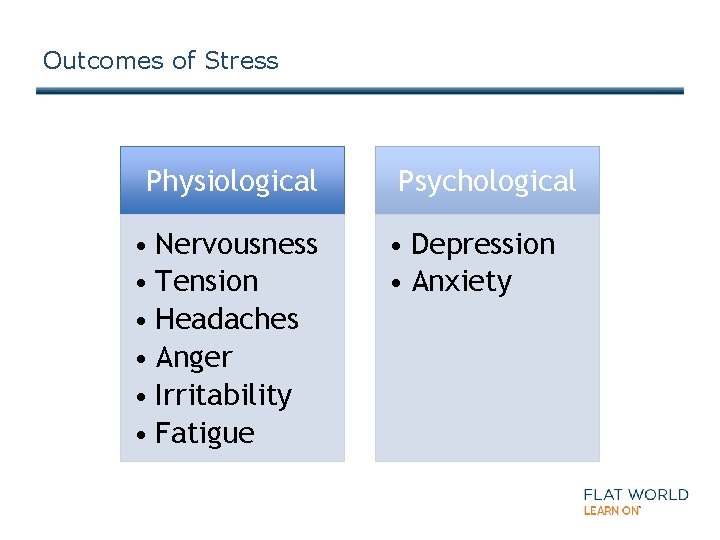
Outcomes of Stress Physiological • Nervousness • Tension • Headaches • Anger • Irritability • Fatigue Psychological • Depression • Anxiety
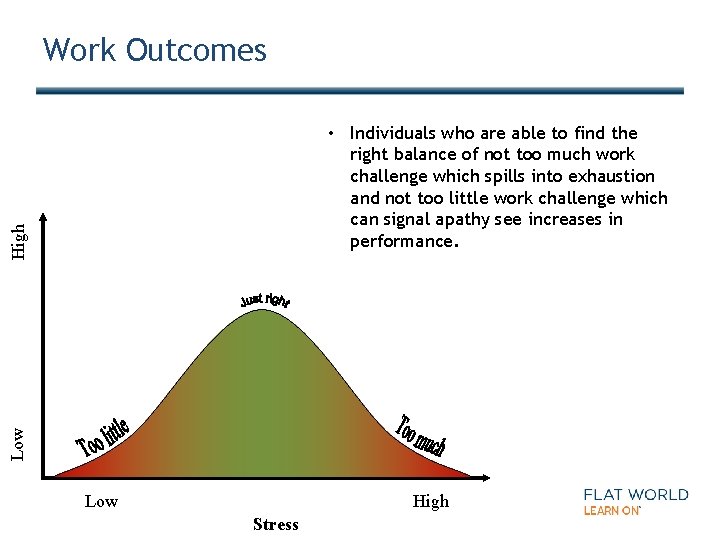
Work Outcomes Low High • Individuals who are able to find the right balance of not too much work challenge which spills into exhaustion and not too little work challenge which can signal apathy see increases in performance. Low High Stress
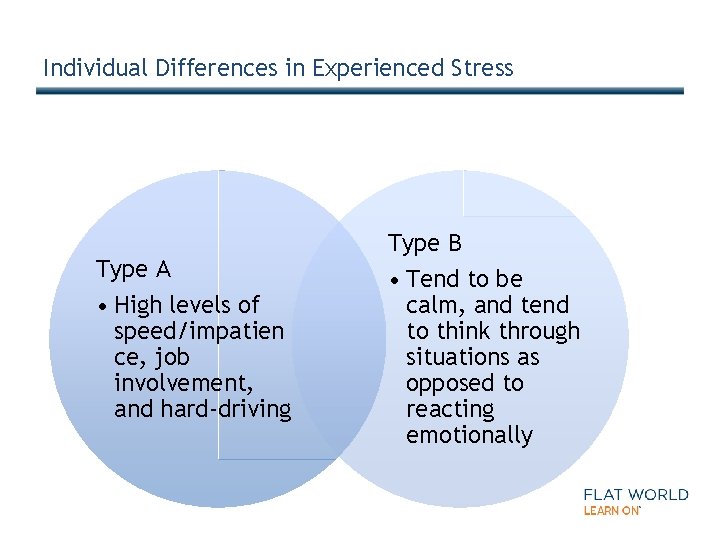
Individual Differences in Experienced Stress Type A • High levels of speed/impatien ce, job involvement, and hard-driving 1 -15 Type B • Tend to be calm, and tend to think through situations as opposed to reacting emotionally
Discussion • Research shows that entrepreneurs who are leading new enterprises experience low levels of stress. Why would this be true? Explain using stress models. • Stress can be in the form of a challenge or hindrance type of stress. Think about stressors you experienced in the past six months. Were these challenge or hindrance stress? Does this classification depend on the person? • What other stressors do you have experience with? Can you think of additional categories of common stressors?
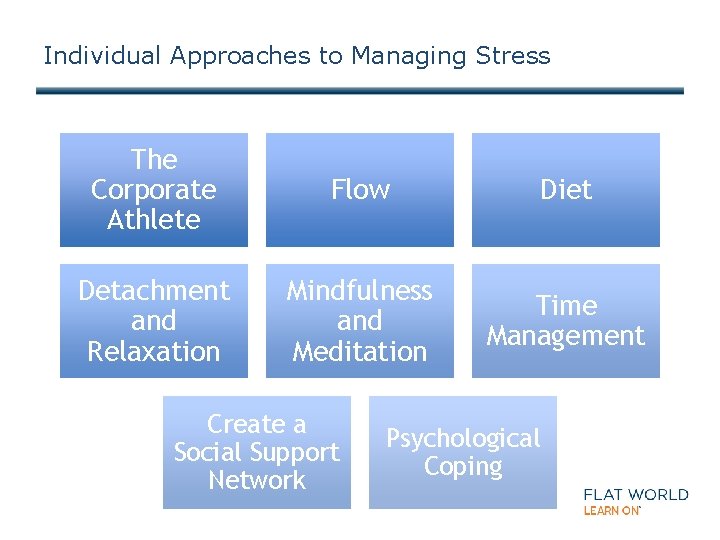
Individual Approaches to Managing Stress The Corporate Athlete Flow Diet Detachment and Relaxation Mindfulness and Meditation Time Management Create a Social Support Network Psychological Coping
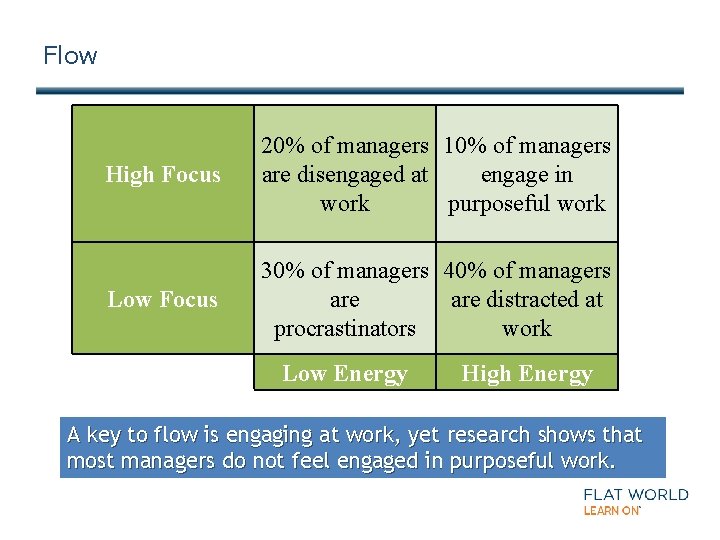
Flow High Focus 20% of managers 10% of managers are disengaged at engage in work purposeful work Low Focus 30% of managers 40% of managers are distracted at procrastinators work Low Energy High Energy A key to flow is engaging at work, yet research shows that most managers do not feel engaged in purposeful work.
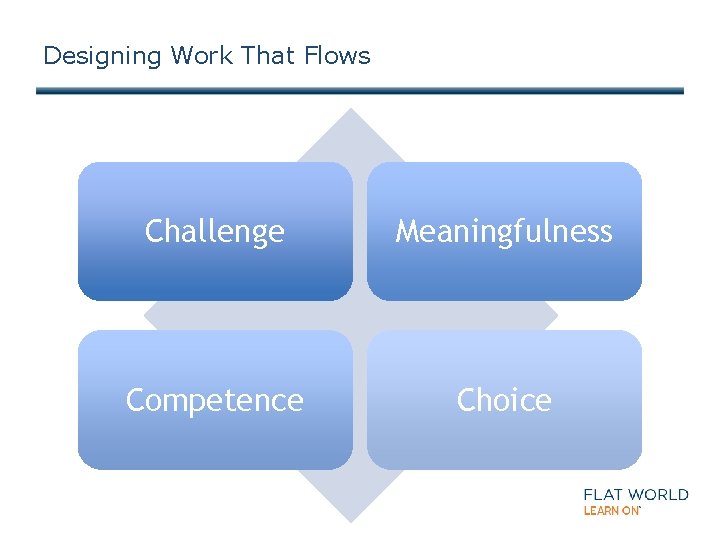
Designing Work That Flows Challenge Meaningfulness Competence Choice

Organizational Approaches to Managing Stress Make Expectations Clear Give Employees Autonomy Create Fair Work Environments Telecommuting Employee Sabbaticals Employee Assistance Programs
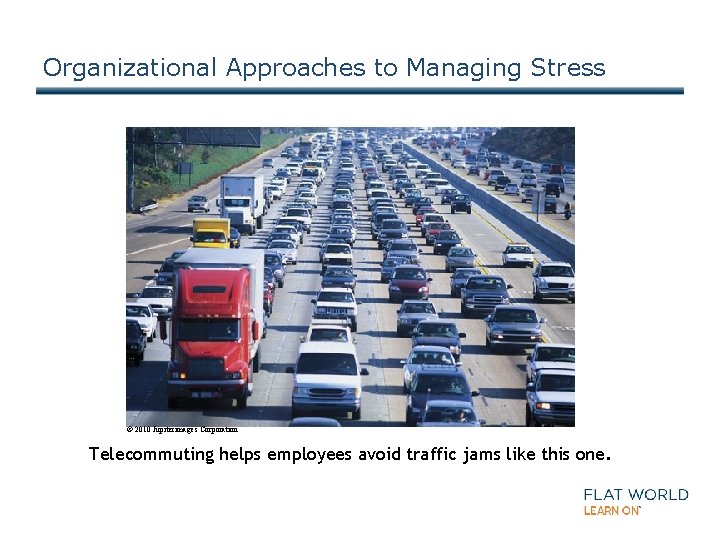
Organizational Approaches to Managing Stress © 2010 Jupiterimages Corporation Telecommuting helps employees avoid traffic jams like this one.
Discussion • Have you ever been in a state of flow as described in this section? If so, what was special about this time? • Whose responsibility do you think it is to deal with employee stress – the employee or the organization? Why?
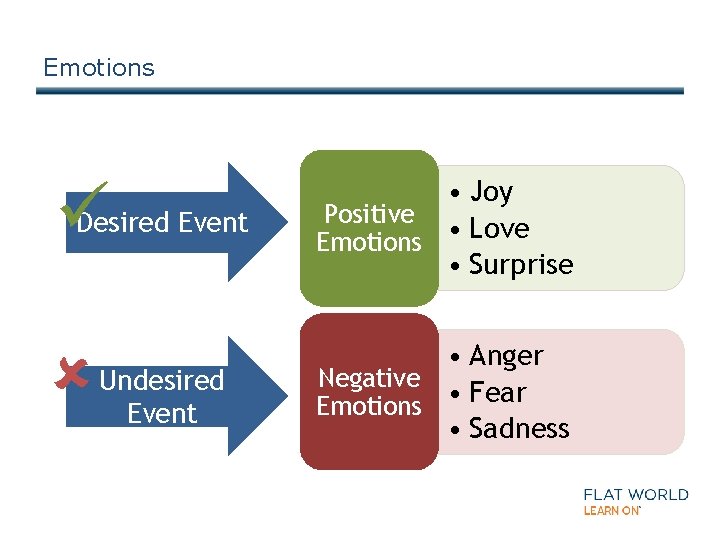
Emotions • Joy Positive • Love Emotions • Surprise • Anger Negative • Fear Emotions • Sadness Desired Event Undesired Event
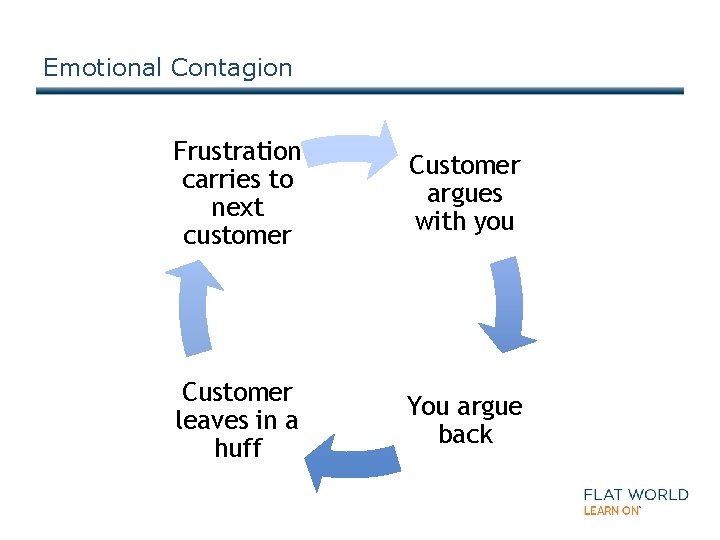
Emotional Contagion Frustration carries to next customer Customer argues with you Customer leaves in a huff You argue back
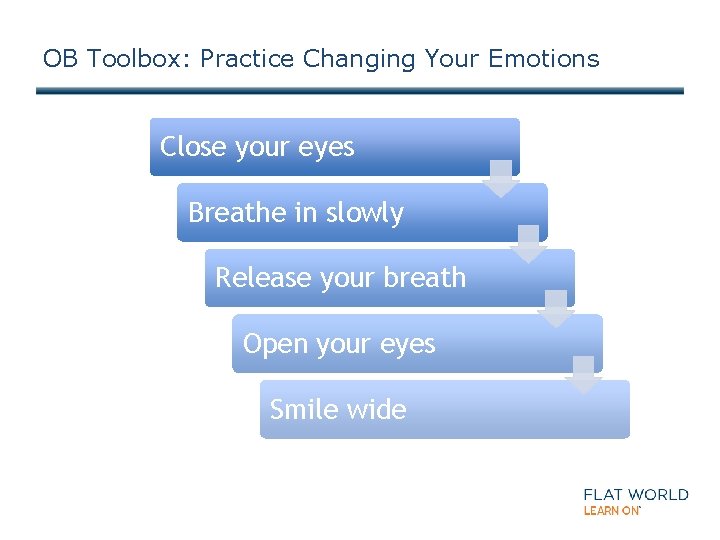
OB Toolbox: Practice Changing Your Emotions Close your eyes Breathe in slowly Release your breath Open your eyes Smile wide
Discussion • How easy do you think it is to “manage” one’s emotions? • Which types of emotions are most socially accepted in the workplace? Why do you think this is? • What are factors that affect your emotions? • Share an example of either positive or negative emotional contagion. How did it start and stop? • What do you do, if anything, to try to change how you are feeling? How effective are your strategies?

Emotions Affect Attitudes and Behavior at Work Anger Sadness Love Fear Joy Surprise Affective Events Theory (AET) explores how events on the job cause different kinds of people to feel different emotions.
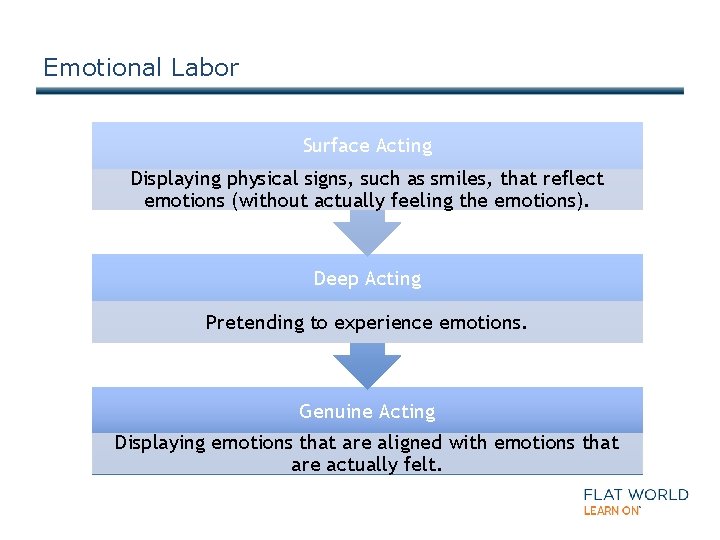
Emotional Labor Surface Acting Displaying physical signs, such as smiles, that reflect emotions (without actually feeling the emotions). Deep Acting Pretending to experience emotions. Genuine Acting Displaying emotions that are aligned with emotions that are actually felt.

Emotional Labor When it comes to acting, the closer to the middle of the circle that your actions are, the less emotional labor your job demands. The further away, the more emotional labor the job demands. Employee Personality Genuine Acting Deep Acting Surface Acting
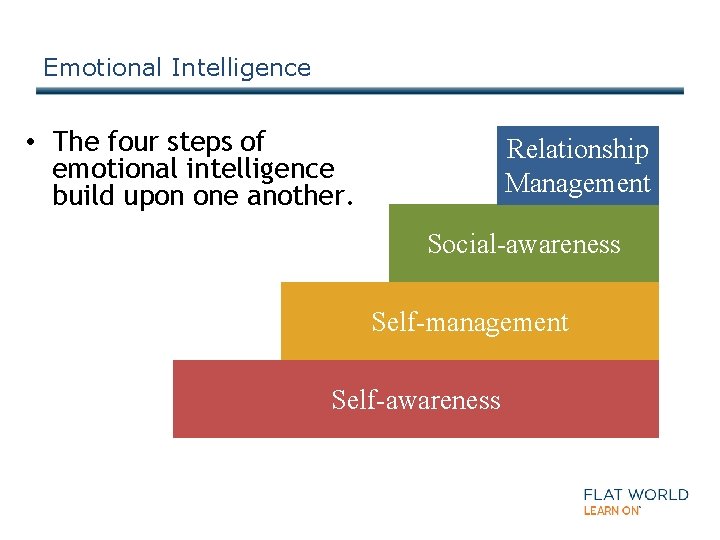
Emotional Intelligence • The four steps of emotional intelligence build upon one another. Relationship Management Social-awareness Self-management Self-awareness
Discussion • What is the worst job you ever had (or class project if you haven’t worked)? Did the job require emotional labor? If so, how did you deal with it? • Research shows that acting “happy” when you are not can be exhausting. Why do you think that is? Have you ever felt that way? What can you do to lessen these feelings? • How important do you think emotional intelligence is at work? Why?
Case Study: American Express Source: shutterstock. com
Case Discussion Questions 1. What are some other jobs that deal with relatively negative or unfavorable emotions daily? 2. In what type of job might American Express’s open emotion policy not be acceptable? 3. What type of personality might be better equipped for dealing with negative emotions at work? 4. What are some ways you deal with negative emotions either at work or at school? Do your methods differ depending on what type of situation you are in?
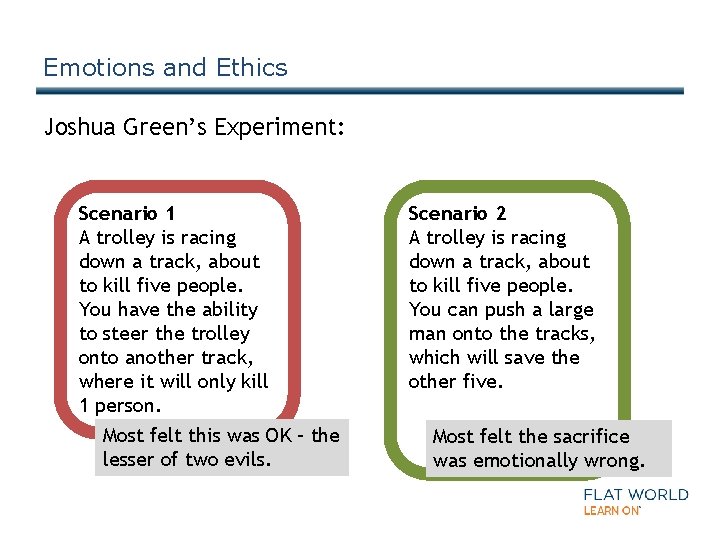
Emotions and Ethics Joshua Green’s Experiment: Scenario 1 A trolley is racing down a track, about to kill five people. You have the ability to steer the trolley onto another track, where it will only kill 1 person. Most felt this was OK – the lesser of two evils. Scenario 2 A trolley is racing down a track, about to kill five people. You can push a large man onto the tracks, which will save the other five. Most felt the sacrifice was emotionally wrong.
Lack of Leisure Time and Stress around the Globe • 40% of Americans do not plan to take a vacation within the next year. • Americans have 16. 5 hours of leisure time per week after their work and household obligations are fulfilled. • Some Japanese employees work an average of 236 hours more per year than their American counterparts and 500 more than employees in France or Germany. • Many Europeans take the month of August off.
Discussion • Explain a time when you have seen emotions help someone to be more ethical than they might have otherwise been. • Explain a time when you have seen emotions help someone to be less ethical than they might have otherwise been. • Why do you think some countries have so much vacation time compared to others? In your opinion, is this a problem? Why or why not?
- Slides: 37