
Organizational Behavior V 2 0 By Talya Bauer
Organizational Behavior V 2. 0 By Talya Bauer and Berrin Erdogan
Published by: Flat World Knowledge, Inc. © 2015 by Flat World Knowledge, Inc. All rights reserved. Your use of this work is subject to the License Agreement available here http: //www. flatworldknowledge. com/legal. No part of this work may be used, modified, or reproduced in any form or by any means except as expressly permitted under the License Agreement. 13 -2
Chapter 13 Power and Politics
Learning Objectives 1. 2. 3. 4. 5. 6. 7. 8. Understand the meaning of power Recognize the positive and negative aspects of power and influence Recognize the sources of power Understand recognize influence tactics and impression management Learn the definition of a social network and how to analyze your own network Understand the antecedents and consequences of organizational politics Understand how ethics affect power Understand cross-cultural influences on power use
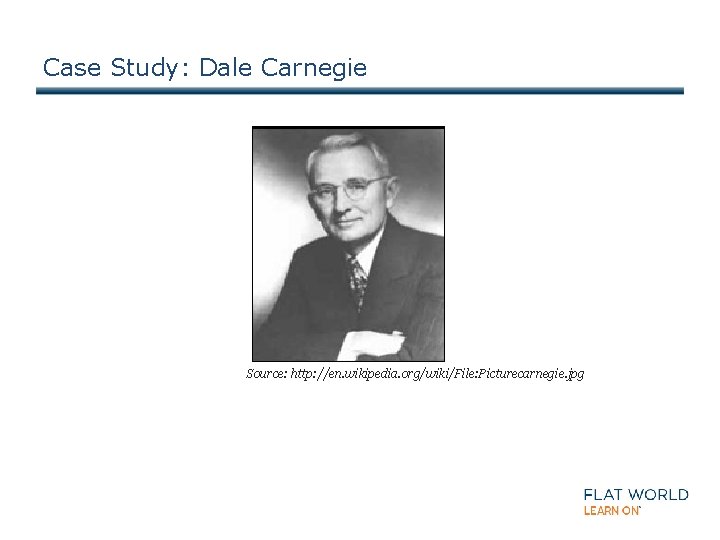
Case Study: Dale Carnegie Source: http: //en. wikipedia. org/wiki/File: Picturecarnegie. jpg
Case Discussion Questions 1. Have you read this book? If so, what did you think about it? If not, do you think you would find value in reading it? Why or why not? 2. Have you ever interacted with someone who used these principles described above too much? What was your reaction to them? 3. Why do you think so many people are attracted to ideas developed so long ago? 4. Would you add or delete anything from Carnegie’s rules for power and influence? Explain.
Power is the ability to influence the behavior of others to get what you want.
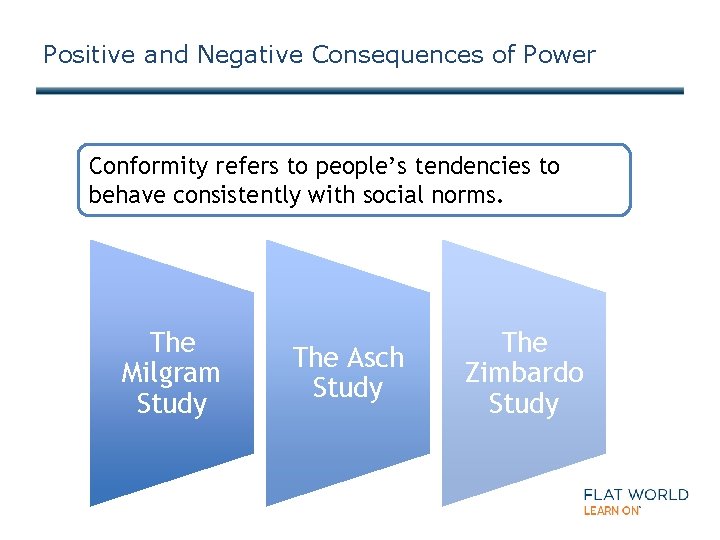
Positive and Negative Consequences of Power Conformity refers to people’s tendencies to behave consistently with social norms. The Milgram Study The Asch Study The Zimbardo Study
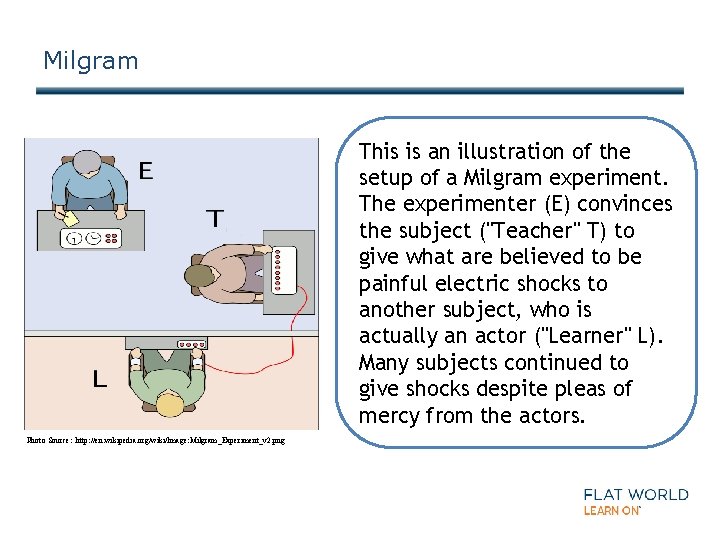
Milgram This is an illustration of the setup of a Milgram experiment. The experimenter (E) convinces the subject ("Teacher" T) to give what are believed to be painful electric shocks to another subject, who is actually an actor ("Learner" L). Many subjects continued to give shocks despite pleas of mercy from the actors. Photo Source: http: //en. wikipedia. org/wiki/Image: Milgram_Experiment_v 2. png
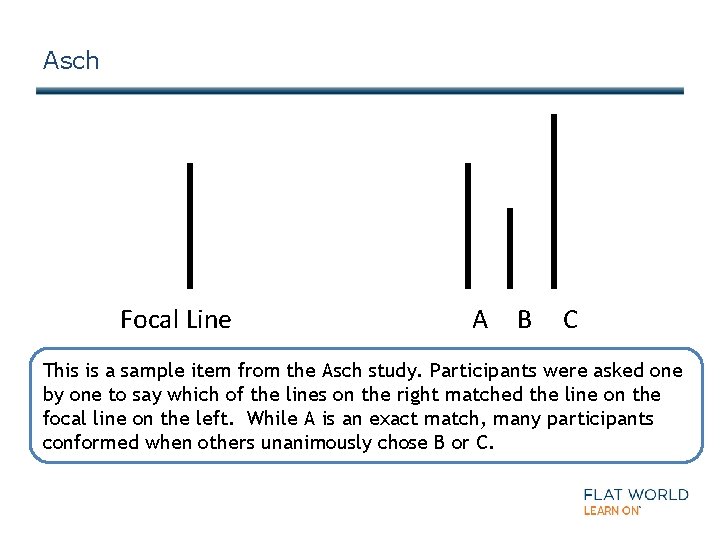
Asch Focal Line A B C This is a sample item from the Asch study. Participants were asked one by one to say which of the lines on the right matched the line on the focal line on the left. While A is an exact match, many participants conformed when others unanimously chose B or C.
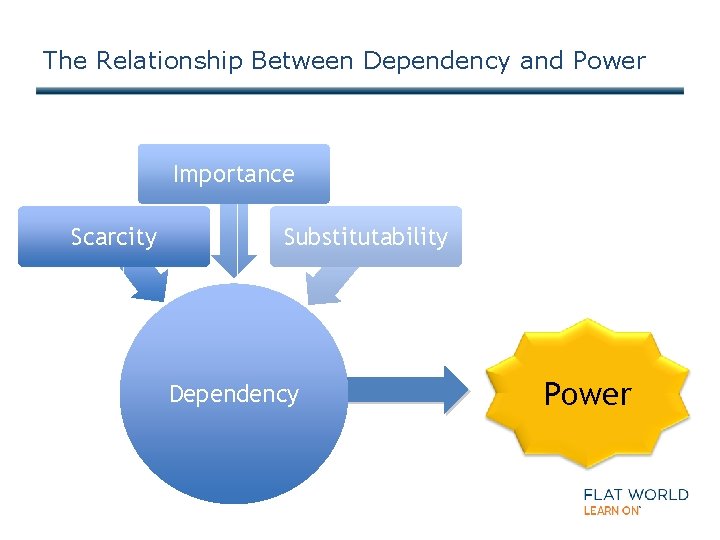
The Relationship Between Dependency and Power Importance Scarcity Substitutability Dependency Power
Discussion • What does the phrase “Power corrupts and absolute power corrupts absolutely” refer to? What experiences have you had that confirm or refute this assumption. • Thinking about the Milgram and Zimbardo studies, do you think you would behave the same or differently in those situations? Explain. • What lessons can be learned from the past studies of conformity to help avoid abuses of power in the future? • Give an example of someone who you are dependent upon. Think about how scarcity, importance, and substitutability affect this dependency.
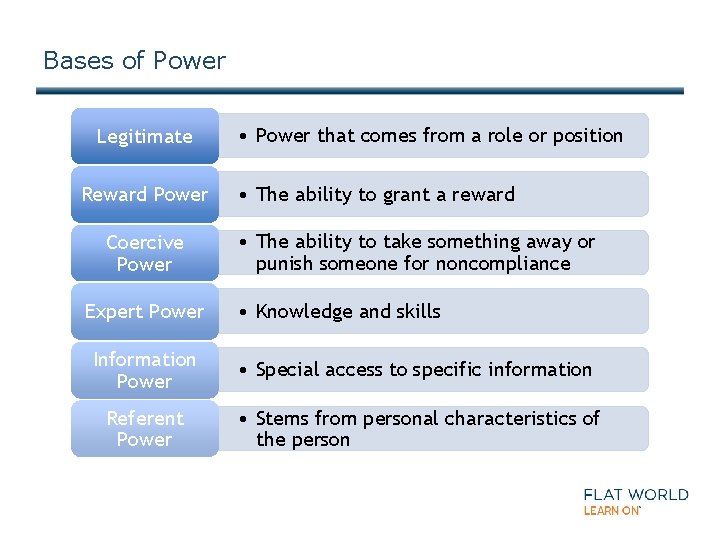
Bases of Power Legitimate Reward Power Coercive Power Expert Power • Power that comes from a role or position • The ability to grant a reward • The ability to take something away or punish someone for noncompliance • Knowledge and skills Information Power • Special access to specific information Referent Power • Stems from personal characteristics of the person
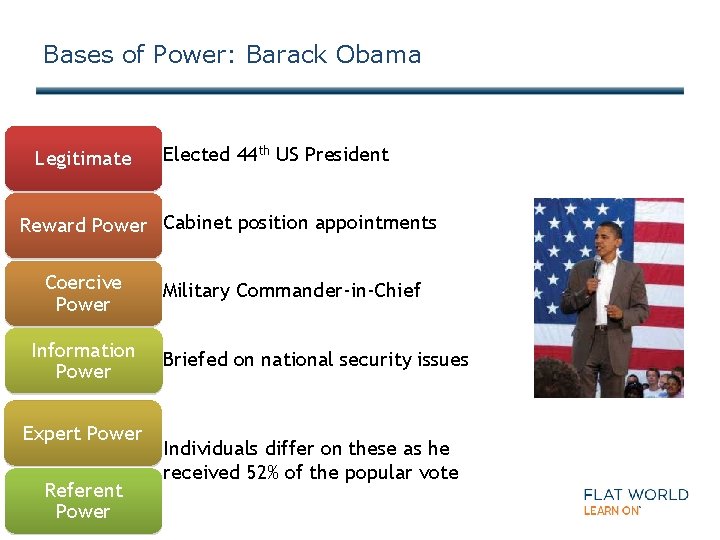
Bases of Power: Barack Obama Legitimate Elected 44 th US President Reward Power Cabinet position appointments Coercive Power Information Power Expert Power Referent Power Military Commander-in-Chief Briefed on national security issues Individuals differ on these as he received 52% of the popular vote
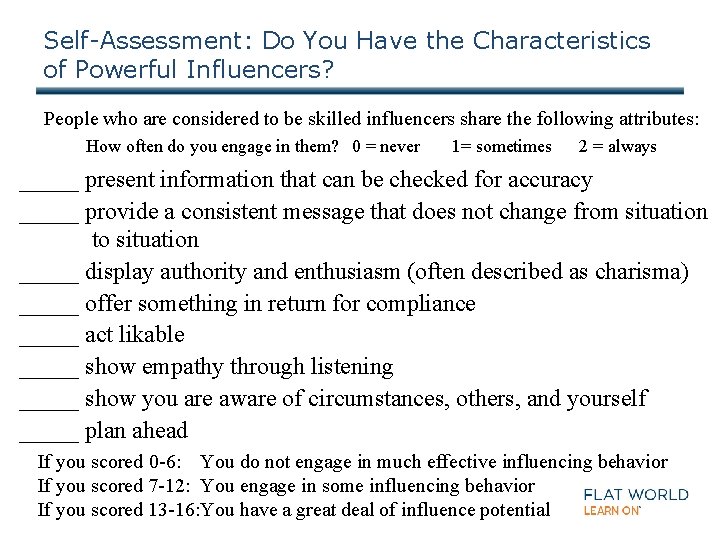
Self-Assessment: Do You Have the Characteristics of Powerful Influencers? People who are considered to be skilled influencers share the following attributes: How often do you engage in them? 0 = never 1= sometimes 2 = always _____ present information that can be checked for accuracy _____ provide a consistent message that does not change from situation to situation _____ display authority and enthusiasm (often described as charisma) _____ offer something in return for compliance _____ act likable _____ show empathy through listening _____ show you are aware of circumstances, others, and yourself _____ plan ahead If you scored 0 -6: You do not engage in much effective influencing behavior If you scored 7 -12: You engage in some influencing behavior If you scored 13 -16: You have a great deal of influence potential
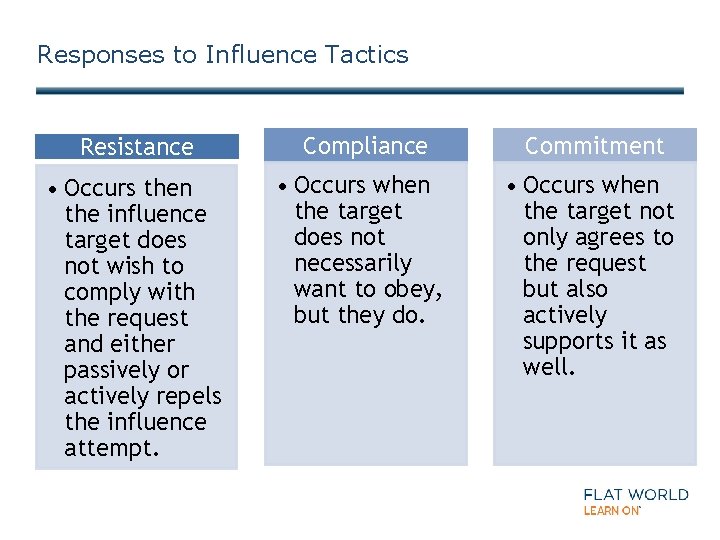
Responses to Influence Tactics Resistance Compliance Commitment • Occurs then the influence target does not wish to comply with the request and either passively or actively repels the influence attempt. • Occurs when the target does not necessarily want to obey, but they do. • Occurs when the target not only agrees to the request but also actively supports it as well.
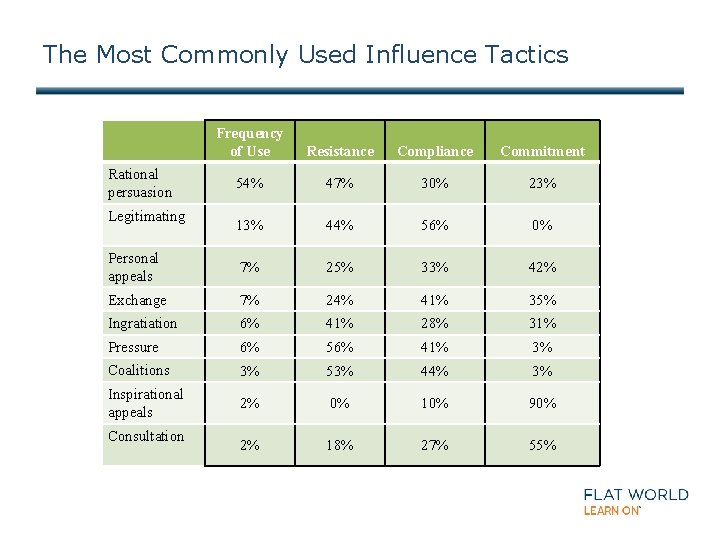
The Most Commonly Used Influence Tactics Frequency of Use Resistance Compliance Commitment 54% 47% 30% 23% 13% 44% 56% 0% Personal appeals 7% 25% 33% 42% Exchange 7% 24% 41% 35% Ingratiation 6% 41% 28% 31% Pressure 6% 56% 41% 3% Coalitions 3% 53% 44% 3% Inspirational appeals 2% 0% 10% 90% 2% 18% 27% 55% Rational persuasion Legitimating Consultation
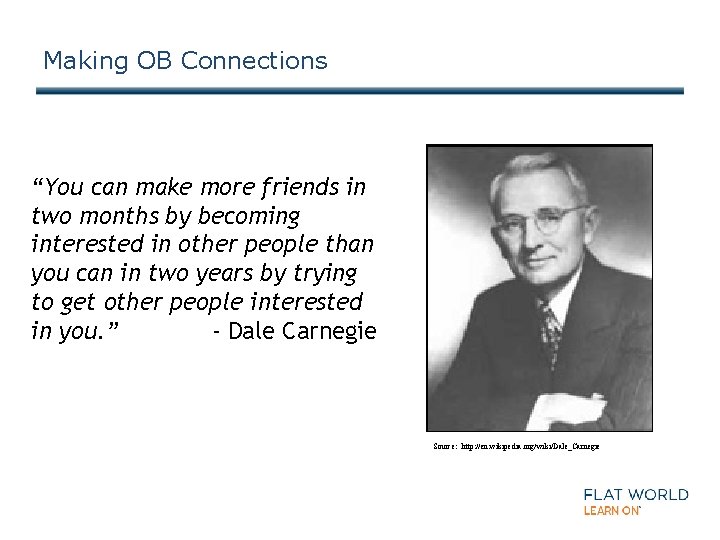
Making OB Connections “You can make more friends in two months by becoming interested in other people than you can in two years by trying to get other people interested in you. ” - Dale Carnegie Source: http: //en. wikipedia. org/wiki/Dale_Carnegie
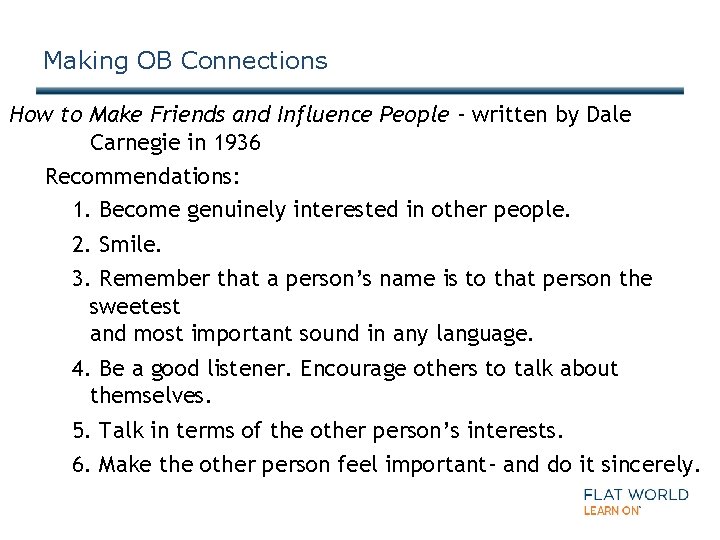
Making OB Connections How to Make Friends and Influence People - written by Dale Carnegie in 1936 Recommendations: 1. Become genuinely interested in other people. 2. Smile. 3. Remember that a person’s name is to that person the sweetest and most important sound in any language. 4. Be a good listener. Encourage others to talk about themselves. 5. Talk in terms of the other person’s interests. 6. Make the other person feel important- and do it sincerely.
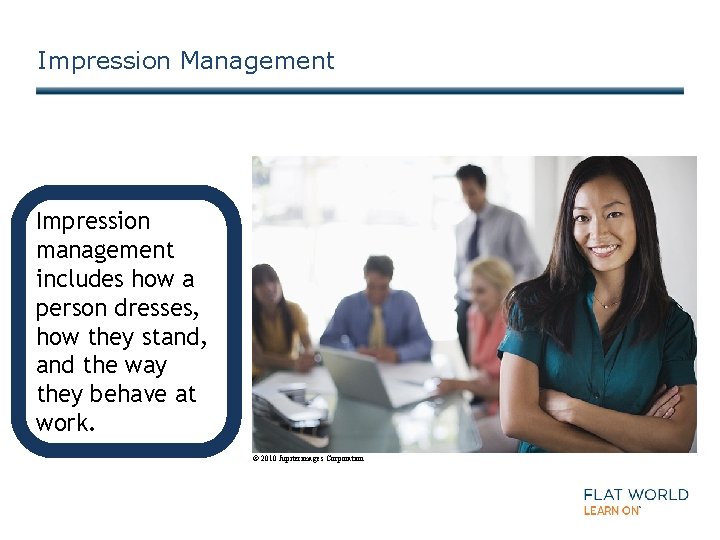
Impression Management Impression management includes how a person dresses, how they stand, and the way they behave at work. © 2010 Jupiterimages Corporation
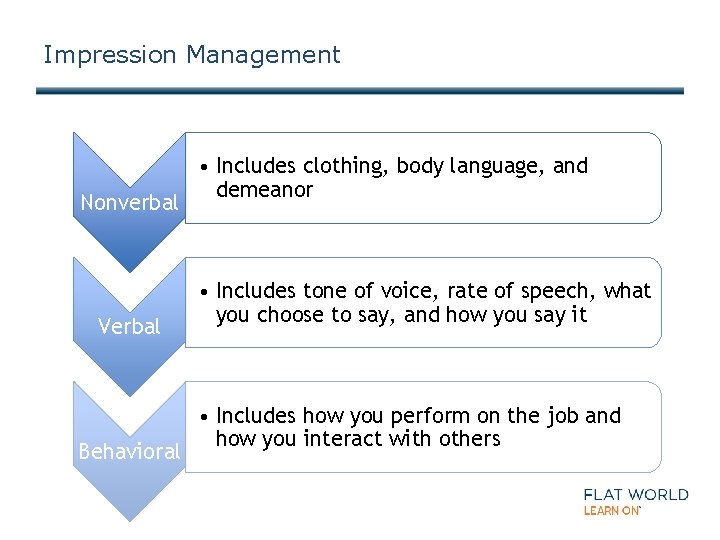
Impression Management Nonverbal Verbal Behavioral • Includes clothing, body language, and demeanor • Includes tone of voice, rate of speech, what you choose to say, and how you say it • Includes how you perform on the job and how you interact with others
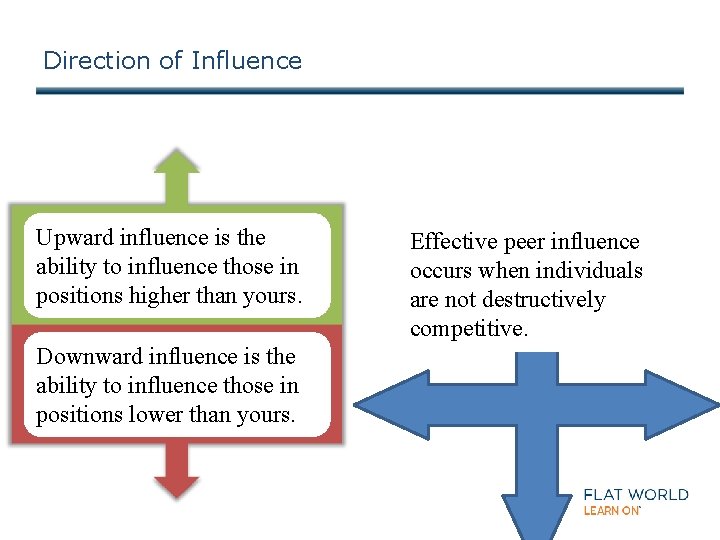
Direction of Influence Upward influence is the ability to influence those in positions higher than yours. Downward influence is the ability to influence those in positions lower than yours. Effective peer influence occurs when individuals are not destructively competitive.
OB Toolbox: Getting Comfortable with Power Are you comfortable… …saying, “I want to be powerful, ” to yourself? …saying “I want to be powerful, ” to someone else? …having someone say, “You are powerful, ” to you? Why or why not?
Discussion • Which of the six bases of power do you usually draw upon? Which do you use the least of at this time? • Distinguish between coercive and reward power. • Which tactics seem to be the most effective? Explain your answer. • Why do you think rational persuasion is the most frequently utilized influence tactic? • Give an example of someone you’ve tried to influence lately. Was it an upward, downward, or lateral influence attempt?
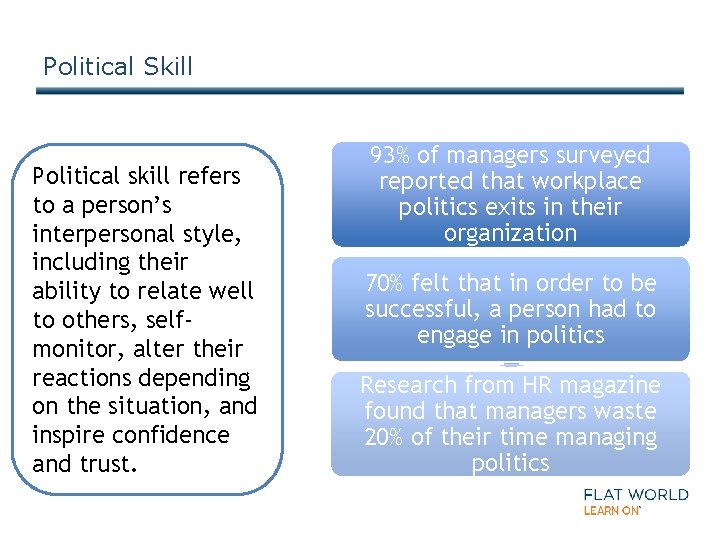
Political Skill Political skill refers to a person’s interpersonal style, including their ability to relate well to others, selfmonitor, alter their reactions depending on the situation, and inspire confidence and trust. 93% of managers surveyed reported that workplace politics exits in their organization 70% felt that in order to be successful, a person had to engage in politics Research from HR magazine found that managers waste 20% of their time managing politics
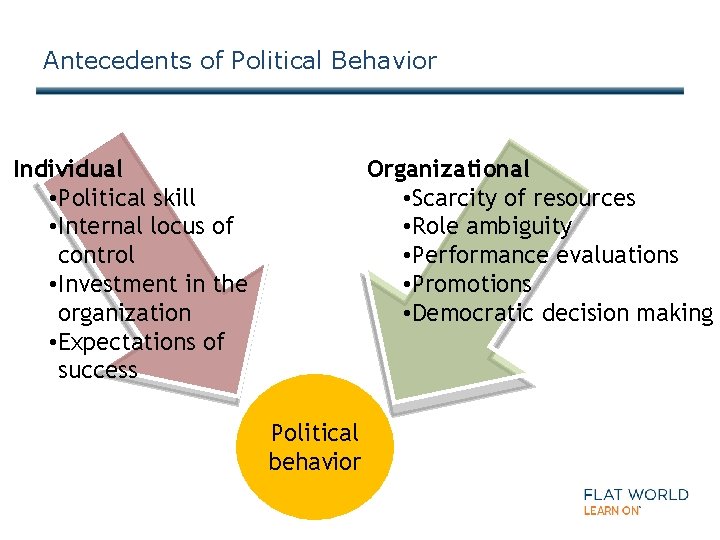
Antecedents of Political Behavior Individual • Political skill • Internal locus of control • Investment in the organization • Expectations of success Organizational • Scarcity of resources • Role ambiguity • Performance evaluations • Promotions • Democratic decision making Political behavior
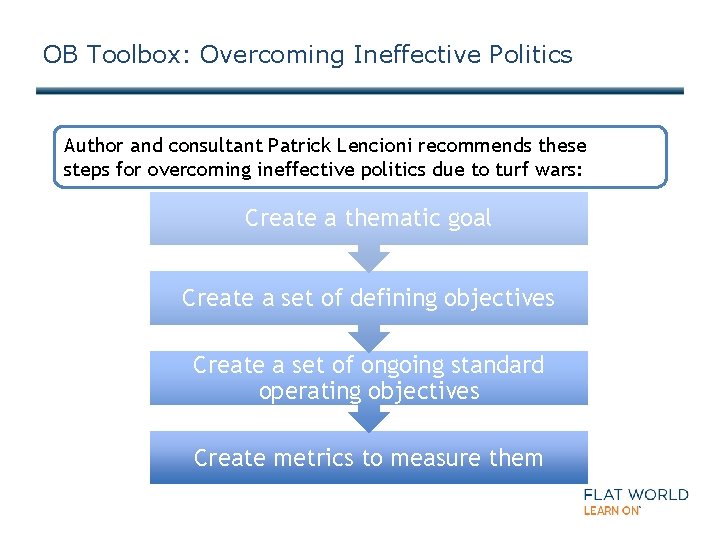
OB Toolbox: Overcoming Ineffective Politics Author and consultant Patrick Lencioni recommends these steps for overcoming ineffective politics due to turf wars: Create a thematic goal Create a set of defining objectives Create a set of ongoing standard operating objectives Create metrics to measure them
Discussion • Do you think politics are a positive or negative thing for organizations? Why? • Describe an example of a negative outcome due to politics. • Describe an example of a positive outcome due to politics. • Can you think of additional individual or organizational antecedents of political behavior? • What political behaviors have you observed within school groups or your workplace? Were they successful? Why or why not?
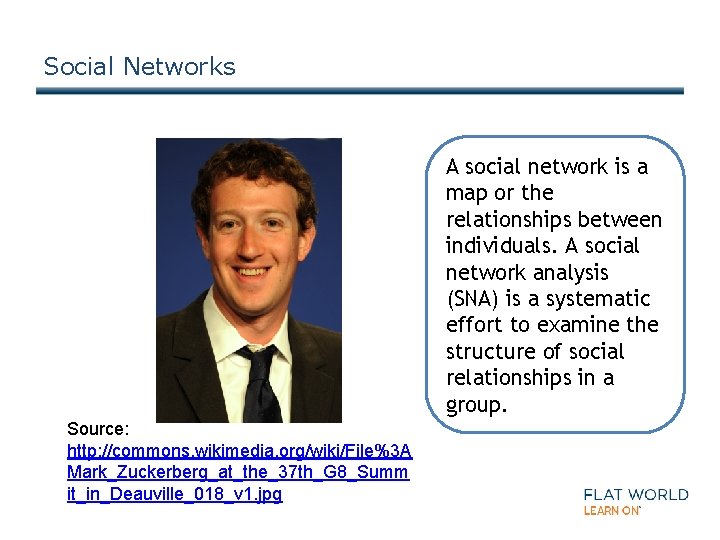
Social Networks A social network is a map or the relationships between individuals. A social network analysis (SNA) is a systematic effort to examine the structure of social relationships in a group. Source: http: //commons. wikimedia. org/wiki/File%3 A Mark_Zuckerberg_at_the_37 th_G 8_Summ it_in_Deauville_018_v 1. jpg
Network Ties and Key Network Roles Central Connectors • Those linked to the greatest number of people Boundary Spanners • People who connect one network to another Peripheral Specialists • People with special expertise that can be drawn upon even though they often work independently of the group
Strong and Weak Ties Strong Ties • Ties that often indicate emotional support, not just informational support between people Weak Ties • Ties characterized by less frequent interaction and often do not have as much emotional attachment, they are also easier to maintain so people can have more of them
Building Your Own Network Doing social things such as playing golf or tennis outside of work is one way to help build your social network.
Discussion • Have you ever thought about your own social network before? What do you think about it now? • Do you think the direct or indirect approach to doing a social network analysis is the most accurate? • Do you think it is ethical to play tennis with coworkers to build your social network? Why or why not? • How have computers influenced social networking?
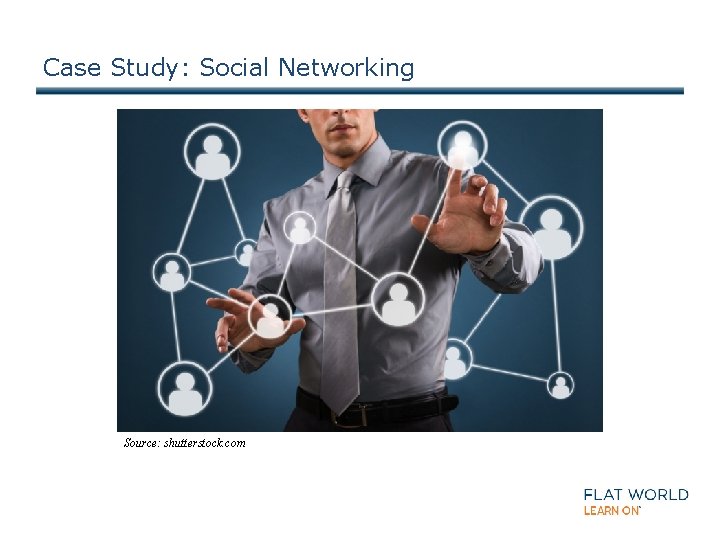
Case Study: Social Networking Source: shutterstock. com
Case Discussion Questions 1. How is online networking different from or similar to in-person networking? Please describe your experience with both. 2. What are the downfalls and benefits of social networking? 3. In what ways are indirect ties as powerful and important as direct ties? 4. To what extent have you built your own brand? Is this something that you have ever considered before?
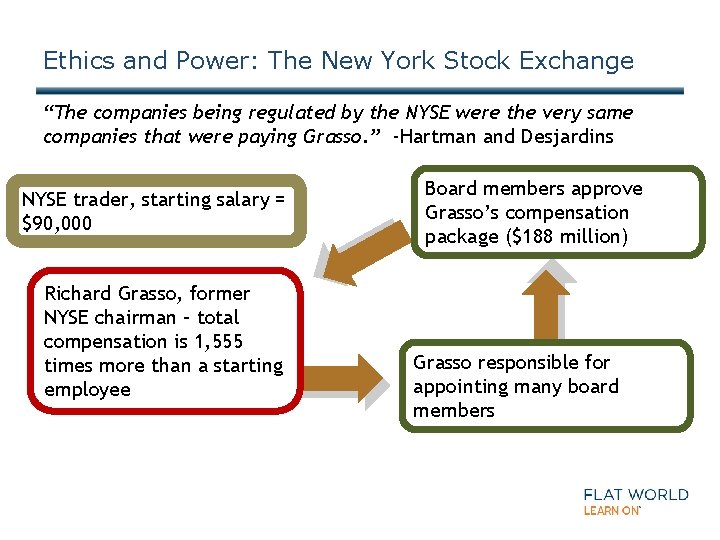
Ethics and Power: The New York Stock Exchange “The companies being regulated by the NYSE were the very same companies that were paying Grasso. ” -Hartman and Desjardins NYSE trader, starting salary = $90, 000 Richard Grasso, former NYSE chairman – total compensation is 1, 555 times more than a starting employee Board members approve Grasso’s compensation package ($188 million) Grasso responsible for appointing many board members
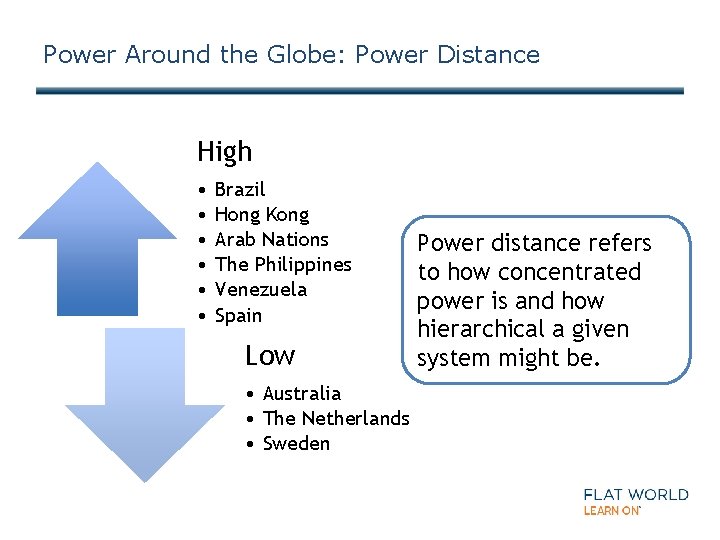
Power Around the Globe: Power Distance High • • • Brazil Hong Kong Arab Nations The Philippines Venezuela Spain Low • Australia • The Netherlands • Sweden Power distance refers to how concentrated power is and how hierarchical a given system might be.
Discussion • What could be done to make sure that CEOs are paid fairly for their work rather than as a favor from their friends? • What is some advice about power that you would give to a colleague who was leaving to China to set up a new business?
- Slides: 38