
Organizational Behavior V 2 0 By Talya Bauer
Organizational Behavior V 2. 0 By Talya Bauer and Berrin Erdogan
Published by: Flat World Knowledge, Inc. © 2015 by Flat World Knowledge, Inc. All rights reserved. Your use of this work is subject to the License Agreement available here http: //www. flatworldknowledge. com/legal. No part of this work may be used, modified, or reproduced in any form or by any means except as expressly permitted under the License Agreement. 13 -1
Chapter 10 Conflict and Negotiations
Learning Objectives 1. 2. 3. 4. 5. 6. 7. Understand the different types of conflict Understand the causes of conflict Understand the consequences of conflict Understand how to manage conflict effectively Understand the stages of the negotiation process Understand how to avoid common negotiation mistakes Engage in conflict management and negotiation ethically 8. Understand cross-cultural differences in conflict and negotiation 1 -3

Case Study: Point. Cast Source: shutterstock. com
Case Discussion Questions 1. Considering the amount of buzz surrounding Hassett’s new technology and the impact previous, similar advancements have made, was Hassett necessarily foolish for not taking a quick offer? 2. Is the Point. Cast situation a case of pride clouding someone’s judgment or more accurately a representation of the rapidly changing nature of computer-related business? In other words, if Hassett’s advancement had been in an industry that is not known for such rapid changes, would he have been considered foolish if he hadn’t held out for more money? 3. This case focuses on how foolish Hassett was for not accepting Rupert Murdoch’s first or second offer. However, think of the buyout offer from the perspective of Rupert Murdoch. If the buyout had gone through, News Corporation would likely have lost hundreds of millions of dollars on the deal, and the company was effectively spared massive losses by the merger falling through. What could Murdoch have done differently to protect against such risky mergers in the future?
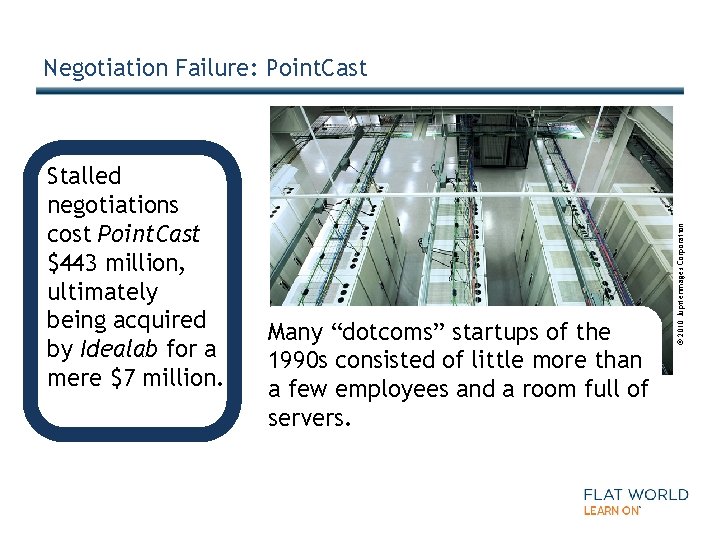
Stalled negotiations cost Point. Cast $443 million, ultimately being acquired by Idealab for a mere $7 million. 1 -6 Many “dotcoms” startups of the 1990 s consisted of little more than a few employees and a room full of servers. © 2010 Jupiterimages Corporation Negotiation Failure: Point. Cast
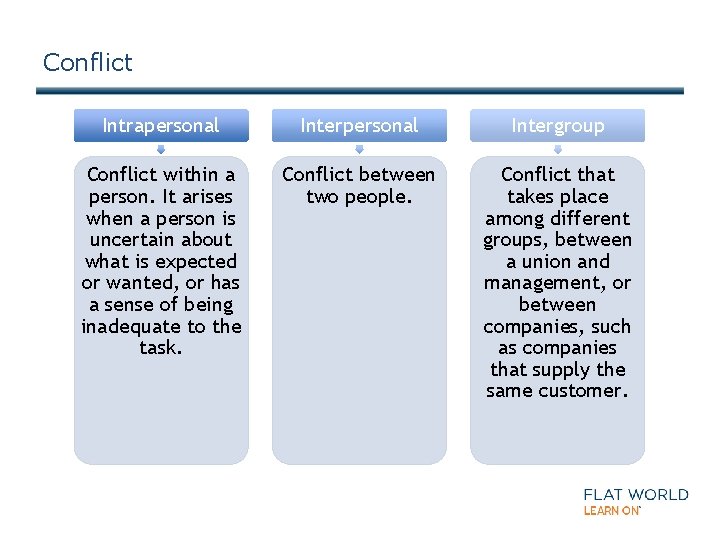
Conflict Intrapersonal Intergroup Conflict within a person. It arises when a person is uncertain about what is expected or wanted, or has a sense of being inadequate to the task. Conflict between two people. Conflict that takes place among different groups, between a union and management, or between companies, such as companies that supply the same customer.
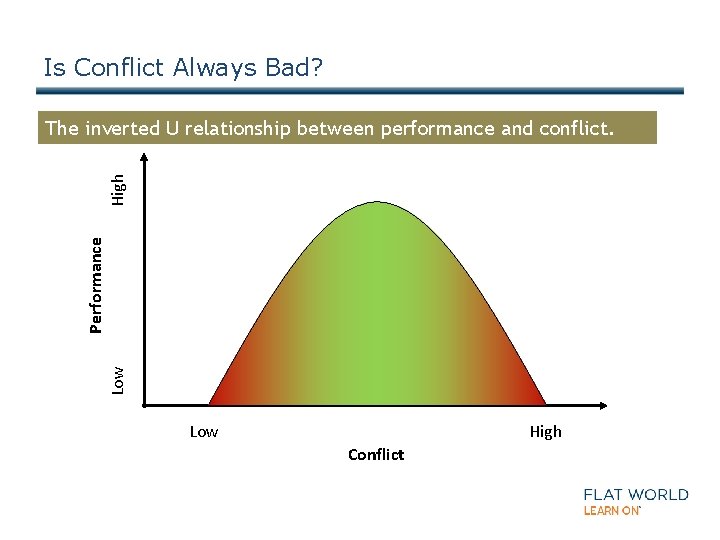
Is Conflict Always Bad? Low Performance High The inverted U relationship between performance and conflict. Low High Conflict
Discussion • What are the types of conflicts that individuals may have at work? Which type have you experienced the most? • What are some primary causes of conflict at work? • Explain how miscommunication might be related to a conflict at work.

Causes of Conflict Task Interdependence Incompatible Goals Personality Differences Limited Resources Organizational Structure Conflict Communication Problems
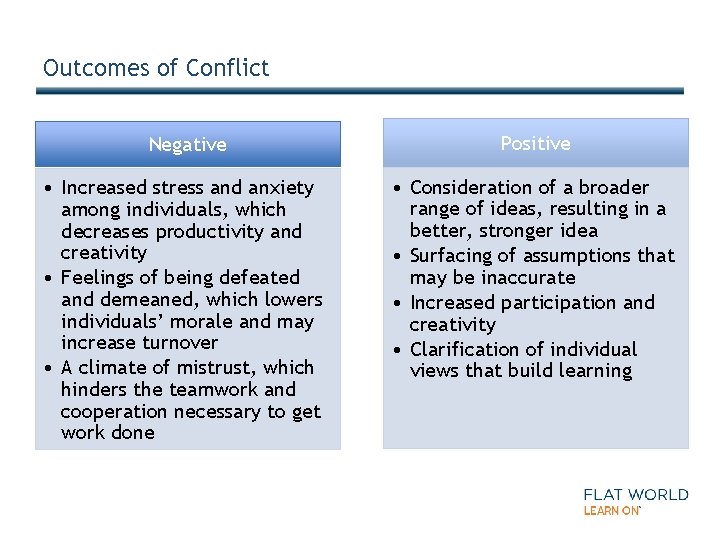
Outcomes of Conflict Negative Positive • Increased stress and anxiety among individuals, which decreases productivity and creativity • Feelings of being defeated and demeaned, which lowers individuals’ morale and may increase turnover • A climate of mistrust, which hinders the teamwork and cooperation necessary to get work done • Consideration of a broader range of ideas, resulting in a better, stronger idea • Surfacing of assumptions that may be inaccurate • Increased participation and creativity • Clarification of individual views that build learning
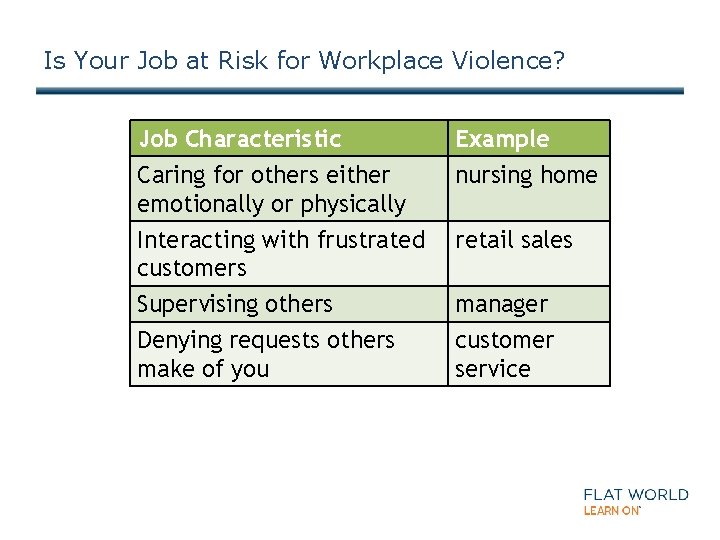
Is Your Job at Risk for Workplace Violence? Job Characteristic Caring for others either emotionally or physically Example nursing home Interacting with frustrated customers retail sales Supervising others Denying requests others make of you manager customer service
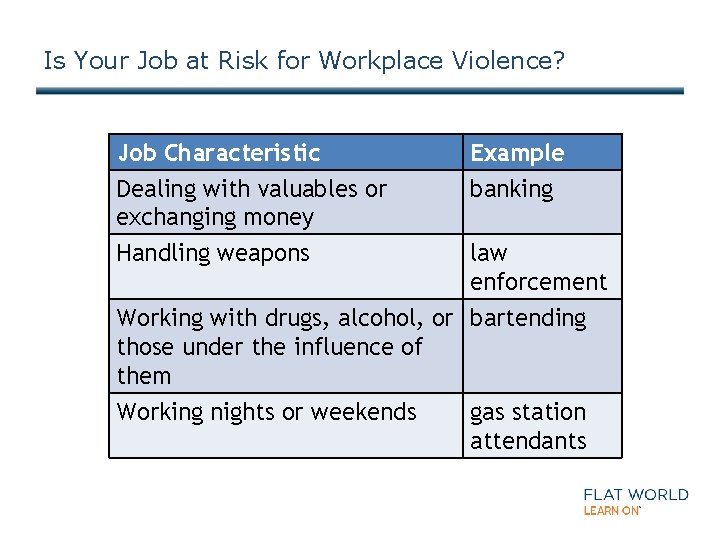
Is Your Job at Risk for Workplace Violence? Job Characteristic Dealing with valuables or exchanging money Example banking Handling weapons law enforcement Working with drugs, alcohol, or bartending those under the influence of them Working nights or weekends gas station attendants
Discussion • What are some primary causes of conflict at work? • What are the outcomes of workplace conflict? Which types of jobs are the most at risk for workplace violence? Why do you think that is? • What outcomes have you observed from conflict?
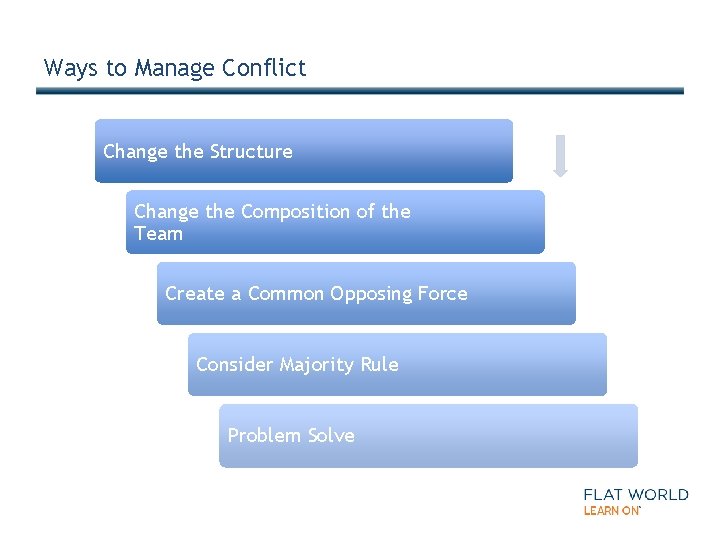
Ways to Manage Conflict Change the Structure Change the Composition of the Team Create a Common Opposing Force Consider Majority Rule Problem Solve 1 -15
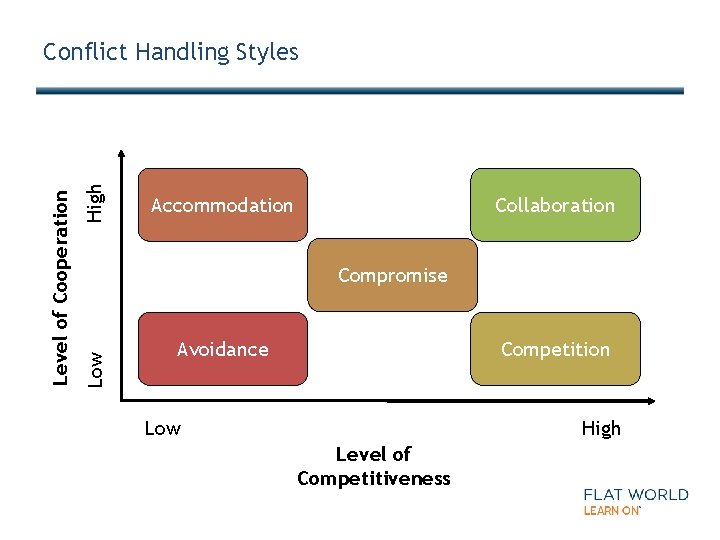
High Accommodation Collaboration Compromise Low Level of Cooperation Conflict Handling Styles Avoidance Competition Low High Level of Competitiveness
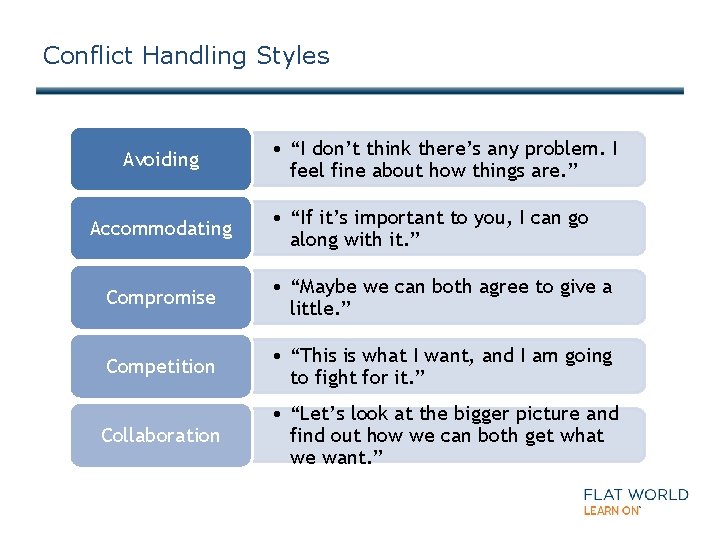
Conflict Handling Styles Avoiding Accommodating • “I don’t think there’s any problem. I feel fine about how things are. ” • “If it’s important to you, I can go along with it. ” Compromise • “Maybe we can both agree to give a little. ” Competition • “This is what I want, and I am going to fight for it. ” Collaboration • “Let’s look at the bigger picture and find out how we can both get what we want. ”
Which Style is Best? There is no single “right way” to deal with conflict. Although many people have a single method they use most frequently, the best conflict handlers will adapt their style to the situation.
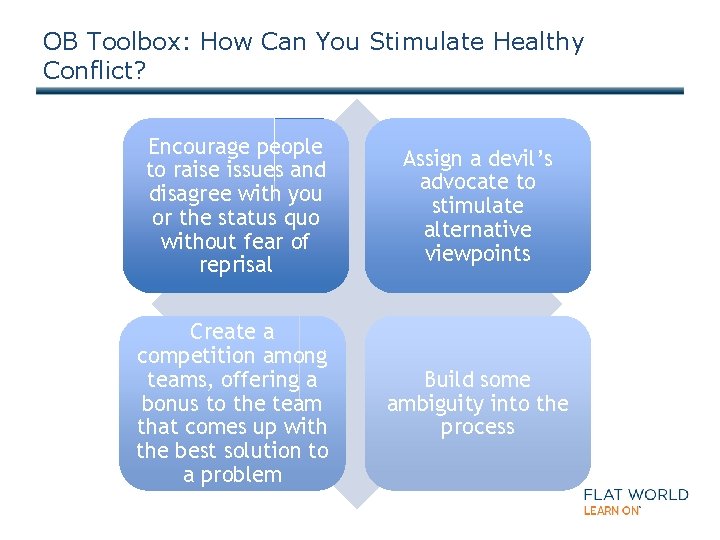
OB Toolbox: How Can You Stimulate Healthy Conflict? Encourage people to raise issues and disagree with you or the status quo without fear of reprisal Assign a devil’s advocate to stimulate alternative viewpoints Create a competition among teams, offering a bonus to the team that comes up with the best solution to a problem Build some ambiguity into the process
Discussion • List three ways to decrease a conflict situation. What are some pros and cons of each of these approaches? • Do you deal with conflict differently with friends and family than you do at work? If so, why do you think that is? • What is you usual conflict-handling style at work? Do you see it as effective or ineffective? • Describe a situation in which not having enough conflict can be a problem.
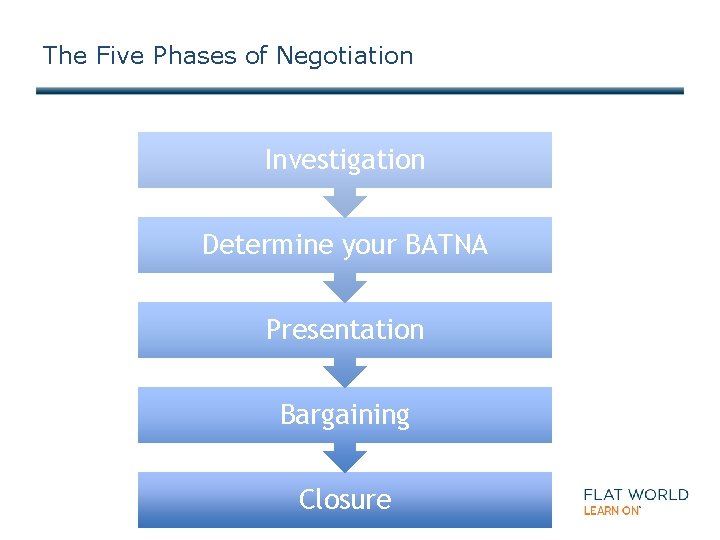
The Five Phases of Negotiation Investigation Determine your BATNA Presentation Bargaining Closure
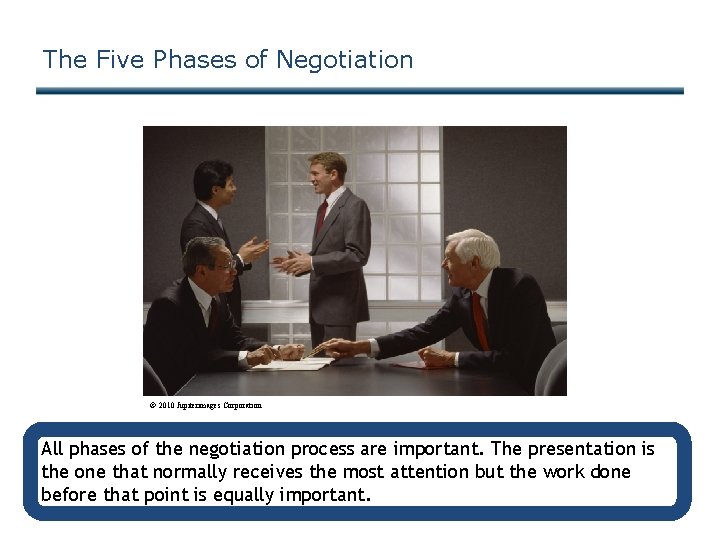
The Five Phases of Negotiation © 2010 Jupiterimages Corporation All phases of the negotiation process are important. The presentation is the one that normally receives the most attention but the work done before that point is equally important.
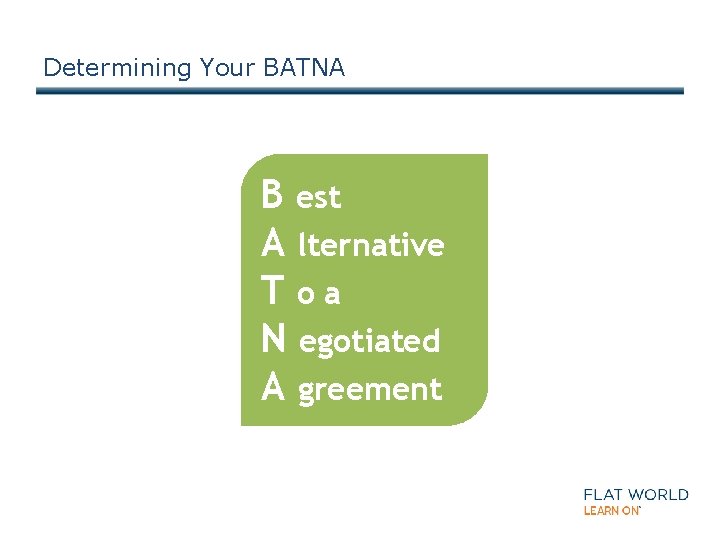
Determining Your BATNA B est A lternative Toa N egotiated A greement
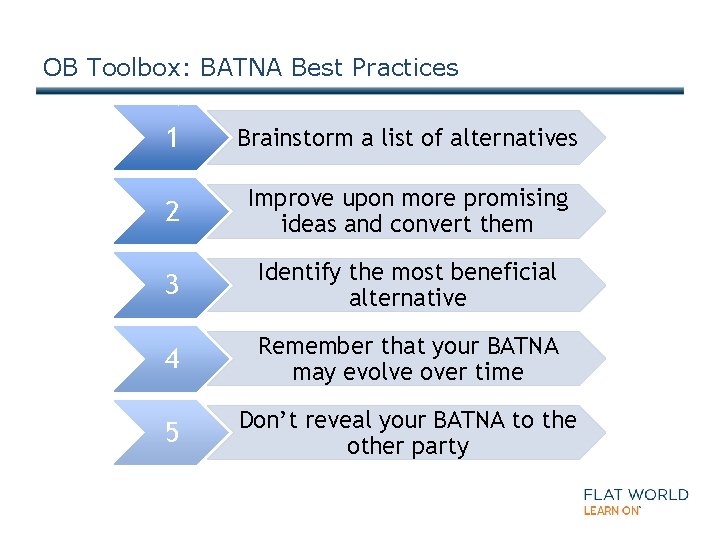
OB Toolbox: BATNA Best Practices 1 Brainstorm a list of alternatives 2 Improve upon more promising ideas and convert them 3 Identify the most beneficial alternative 4 Remember that your BATNA may evolve over time 5 Don’t reveal your BATNA to the other party
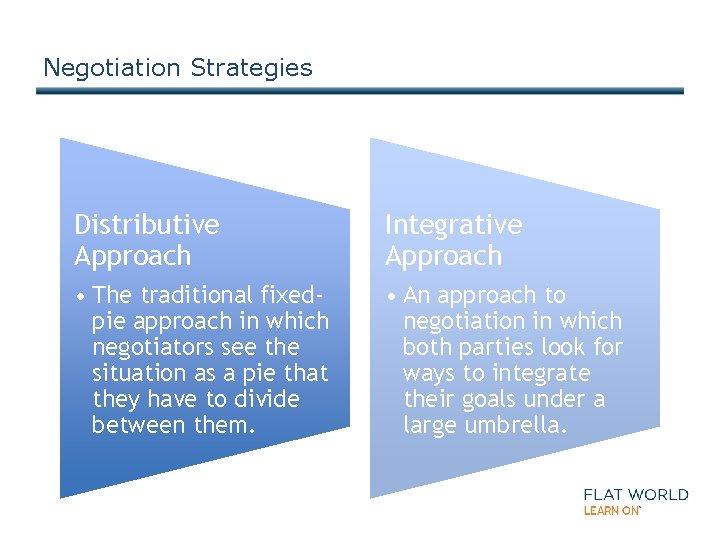
Negotiation Strategies Distributive Approach Integrative Approach • The traditional fixedpie approach in which negotiators see the situation as a pie that they have to divide between them. • An approach to negotiation in which both parties look for ways to integrate their goals under a large umbrella.
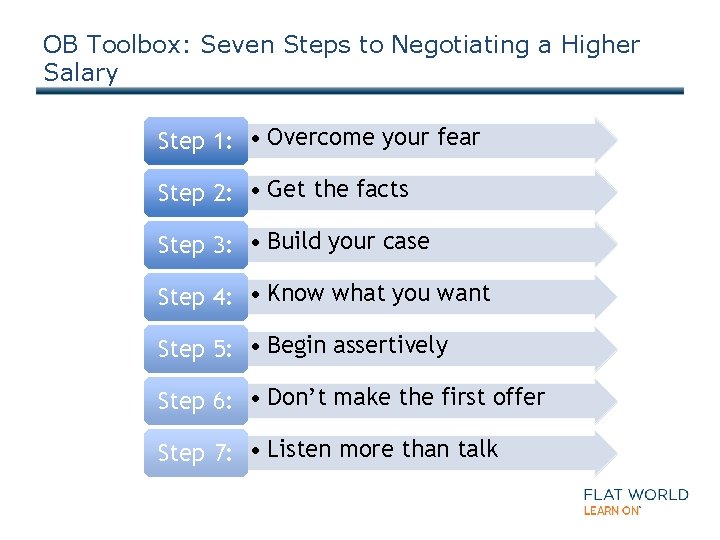
OB Toolbox: Seven Steps to Negotiating a Higher Salary Step 1: • Overcome your fear Step 2: • Get the facts Step 3: • Build your case Step 4: • Know what you want Step 5: • Begin assertively Step 6: • Don’t make the first offer Step 7: • Listen more than talk
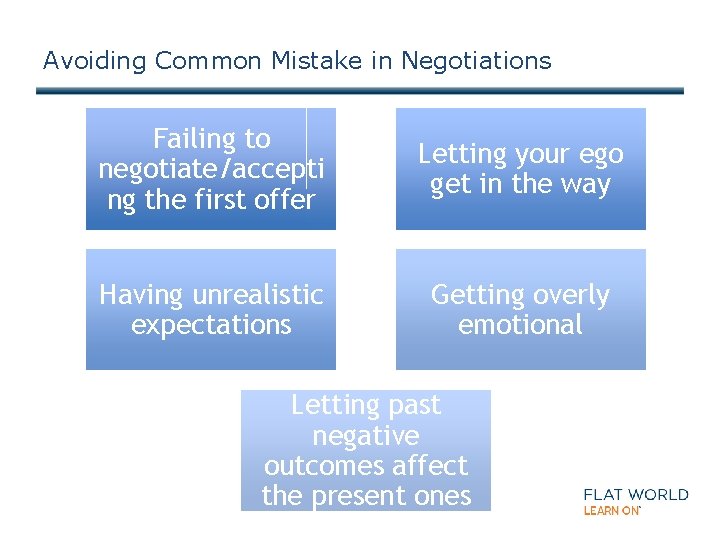
Avoiding Common Mistake in Negotiations Failing to negotiate/accepti ng the first offer Letting your ego get in the way Having unrealistic expectations Getting overly emotional Letting past negative outcomes affect the present ones
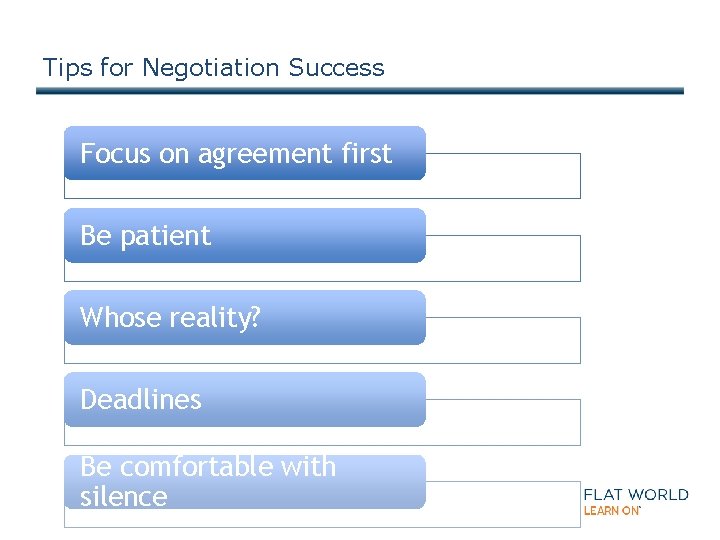
Tips for Negotiation Success Focus on agreement first Be patient Whose reality? Deadlines Be comfortable with silence
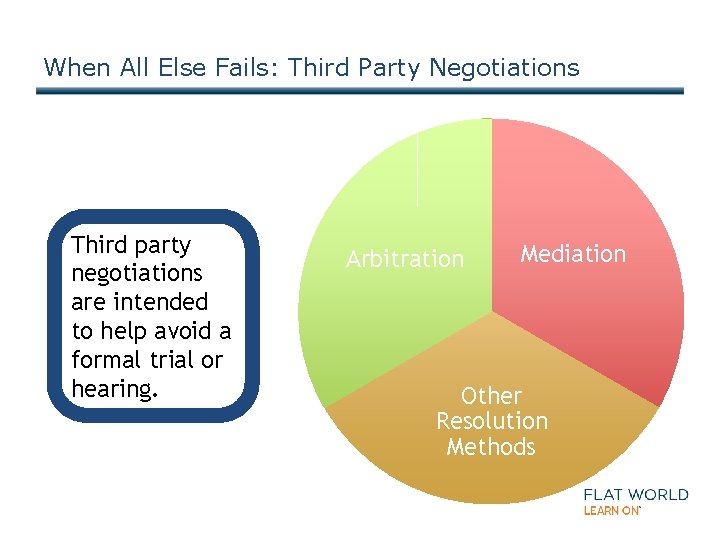
When All Else Fails: Third Party Negotiations Third party negotiations are intended to help avoid a formal trial or hearing. Arbitration Mediation Other Resolution Methods
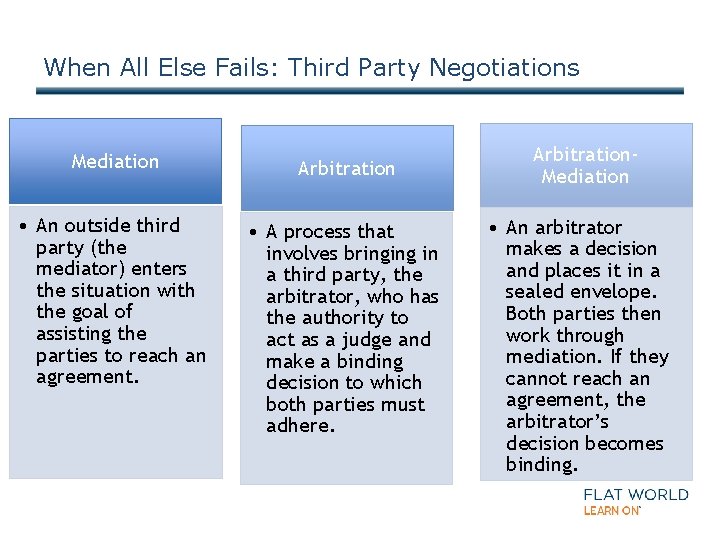
When All Else Fails: Third Party Negotiations Mediation Arbitration • An outside third party (the mediator) enters the situation with the goal of assisting the parties to reach an agreement. • A process that involves bringing in a third party, the arbitrator, who has the authority to act as a judge and make a binding decision to which both parties must adhere. Arbitration. Mediation • An arbitrator makes a decision and places it in a sealed envelope. Both parties then work through mediation. If they cannot reach an agreement, the arbitrator’s decision becomes binding.
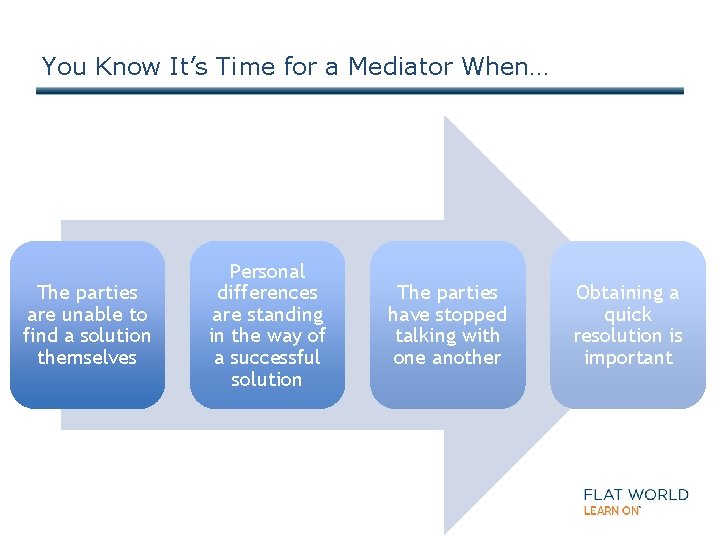
You Know It’s Time for a Mediator When… The parties are unable to find a solution themselves Personal differences are standing in the way of a successful solution The parties have stopped talking with one another Obtaining a quick resolution is important
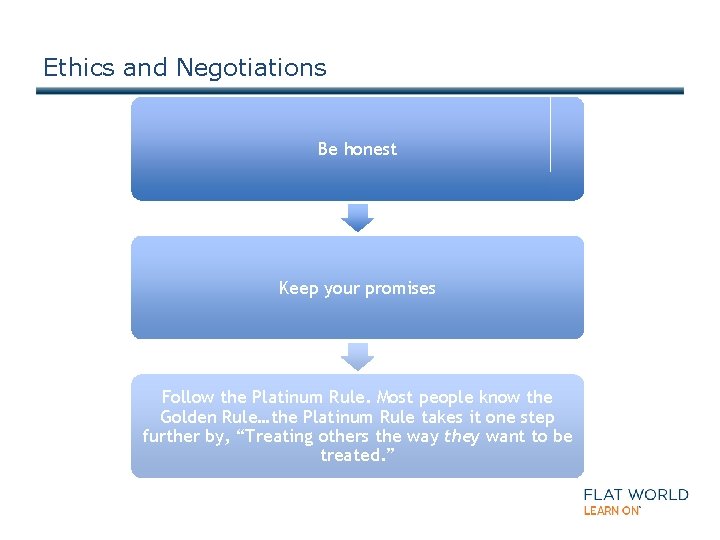
Ethics and Negotiations Be honest Keep your promises Follow the Platinum Rule. Most people know the Golden Rule…the Platinum Rule takes it one step further by, “Treating others the way they want to be treated. ”
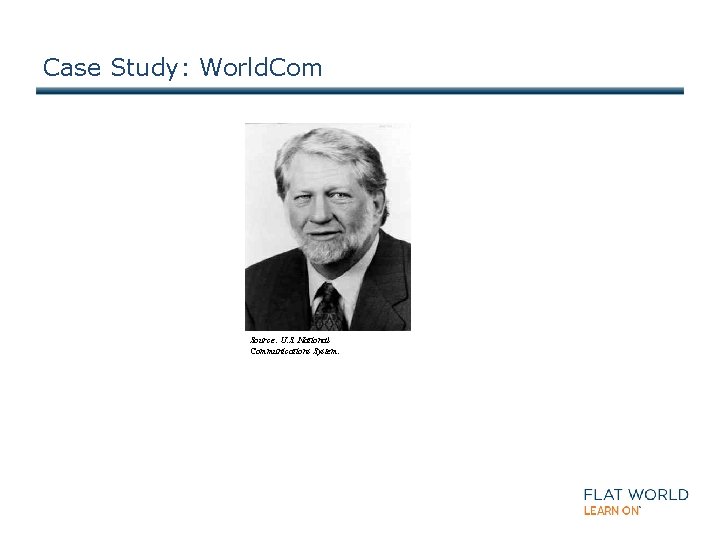
Case Study: World. Com Source: U. S. National Communications System.
Case Discussion Questions 1. What potential causes of conflict existed at World. Com during Bernard Ebbers’ administration? 2. What might have happened if Ebbers had been prone to a different conflict-handling style, such as compromise or collaboration? 3. How did having a small “inner circle” of leadership affect the corporate culture at World. Com? 4. If you were Cynthia Cooper, how might you have dealt with being ignored? What options did Cooper have to deal with the company conflict? 5. What responsibility did the board of directors have to detect and confront the problems at World. Com?
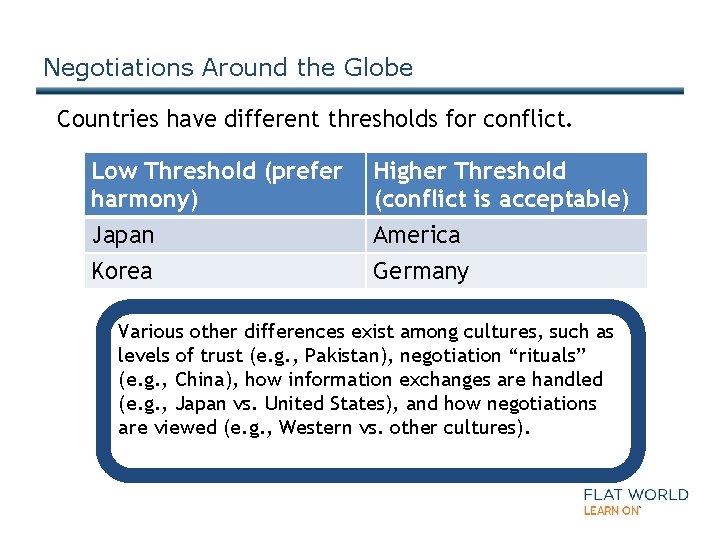
Negotiations Around the Globe Countries have different thresholds for conflict. Low Threshold (prefer harmony) Higher Threshold (conflict is acceptable) Japan America Korea Germany Various other differences exist among cultures, such as levels of trust (e. g. , Pakistan), negotiation “rituals” (e. g. , China), how information exchanges are handled (e. g. , Japan vs. United States), and how negotiations are viewed (e. g. , Western vs. other cultures).
Discussion • Is the goal of negotiation to maximize your economic outcome at all costs? Why or why not? Is it ethical to do so? • What are some similarities and differences in conflict management preference and negotiation practices among different countries around the globe? Have you had any negotiating experiences with individuals from other cultures? If so, how did it go? How might it have gone better?
- Slides: 37