
Organizational Behavior V 2 0 By Talya Bauer

Organizational Behavior V 2. 0 By Talya Bauer and Berrin Erdogan
Published by: Flat World Knowledge, Inc. © 2015 by Flat World Knowledge, Inc. All rights reserved. Your use of this work is subject to the License Agreement available here http: //www. flatworldknowledge. com/legal. No part of this work may be used, modified, or reproduced in any form or by any means except as expressly permitted under the License Agreement. 13 -2
Chapter 14 Organizational Structure and Change
Learning Objectives 1. Define organizational structure 2. Identify the basic elements of structure 3. Explain the difference between mechanistic and organic structures and describe factors shaping an organization’s structure 4. Describe matrix, boundaryless, and learning organizations. 5. Understand how structure affect ethics 6. Understand cross-cultural influences on structure and change
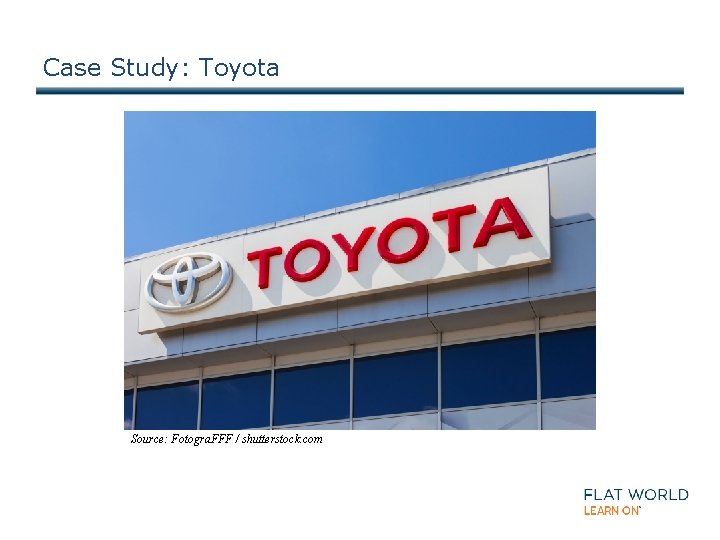
Case Study: Toyota Source: Fotogra. FFF / shutterstock. com
Case Discussion Questions 1. What changes might you make at Toyota to prevent future mishaps like the massive recalls related to brake and accelerator failures? 2. Do you think Toyota’s organizational structure and norms are explicitly formalized in rules, or do the norms seem to be more inherent in the culture of the organization? 3. What are the pros and cons of Toyota’s structure? 4. What elements of business would you suggest remain the same and what elements might need revising? 5. What are the most important elements of Toyota’s organizational structure?
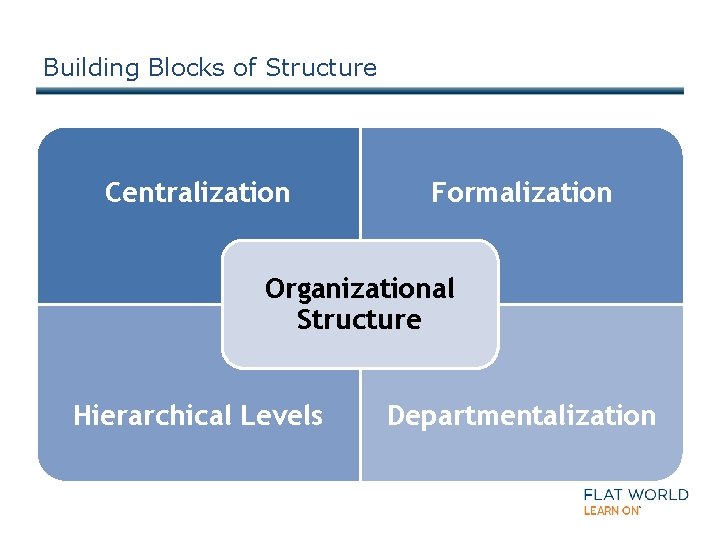
Building Blocks of Structure Centralization Formalization Organizational Structure Hierarchical Levels Departmentalization
Centralization The degree to which decision making authority is concentrated at higher levels in an organization Decentralized companies give more authority to lower level employees, resulting in a sense of empowerment
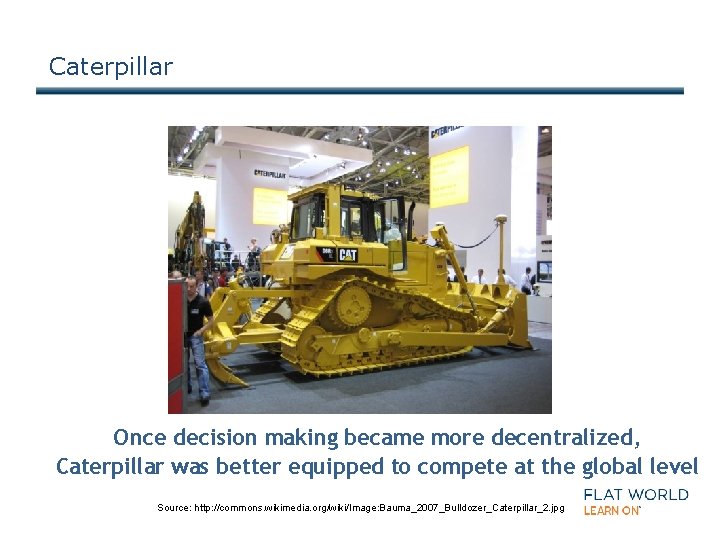
Caterpillar Once decision making became more decentralized, Caterpillar was better equipped to compete at the global level Source: http: //commons. wikimedia. org/wiki/Image: Bauma_2007_Bulldozer_Caterpillar_2. jpg
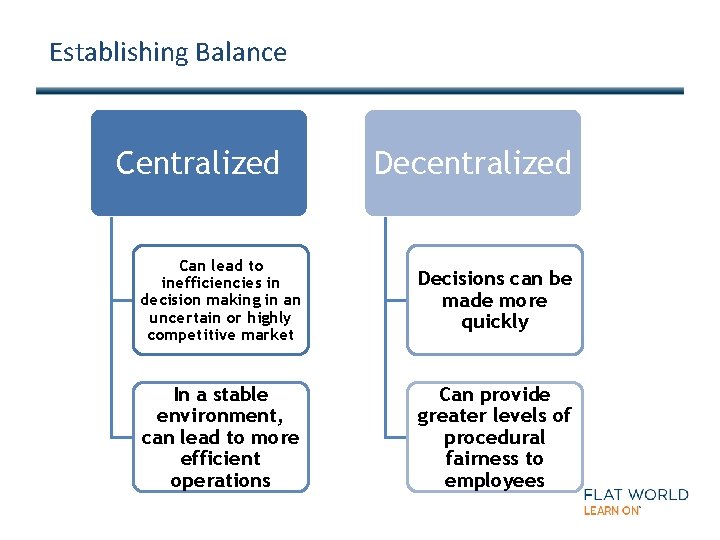
Establishing Balance Centralized Decentralized Can lead to inefficiencies in decision making in an uncertain or highly competitive market Decisions can be made more quickly In a stable environment, can lead to more efficient operations Can provide greater levels of procedural fairness to employees
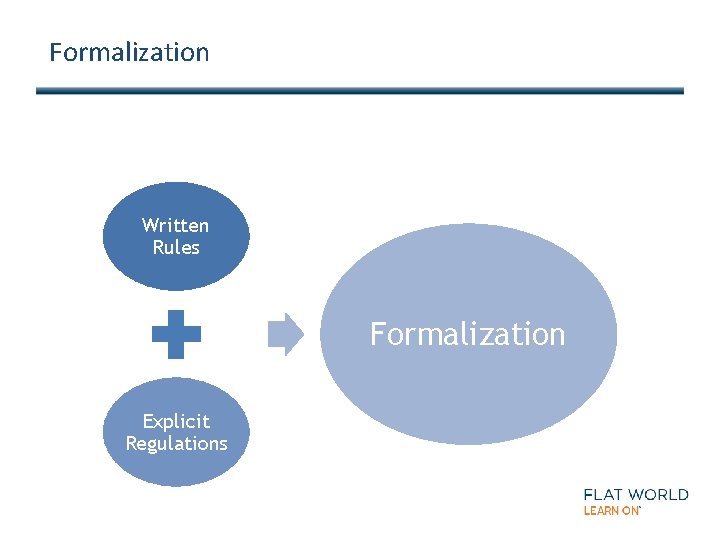
Formalization Written Rules Formalization Explicit Regulations
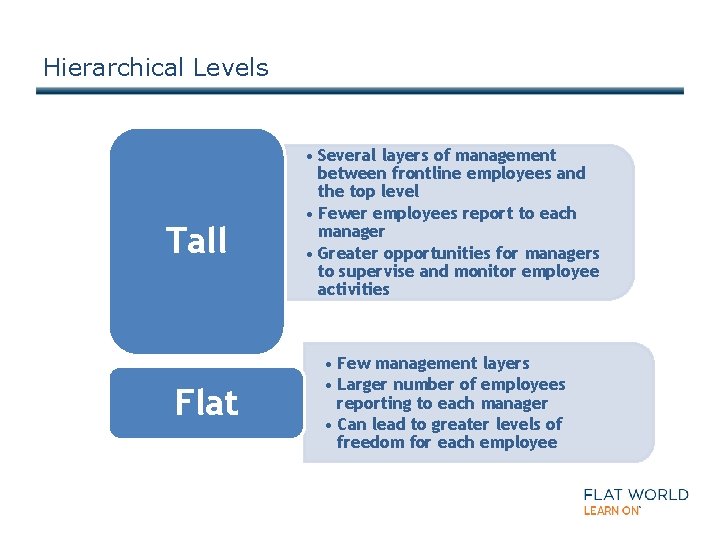
Hierarchical Levels Tall Flat • Several layers of management between frontline employees and the top level • Fewer employees report to each manager • Greater opportunities for managers to supervise and monitor employee activities • Few management layers • Larger number of employees reporting to each manager • Can lead to greater levels of freedom for each employee
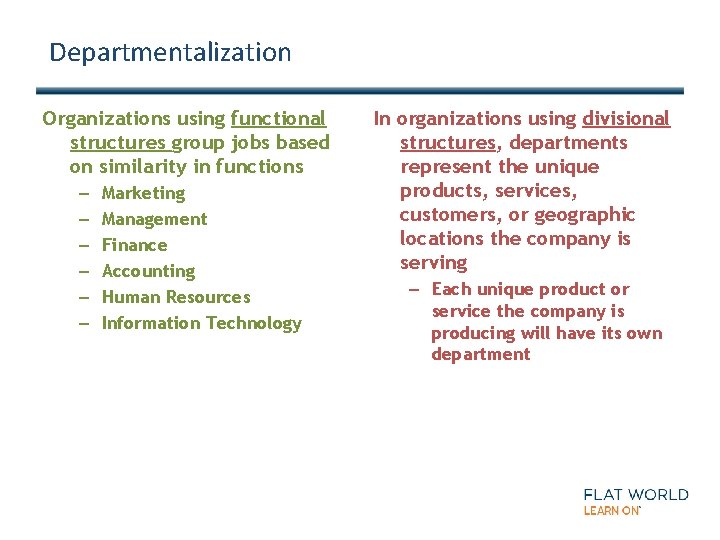
Departmentalization Organizations using functional structures group jobs based on similarity in functions – – – Marketing Management Finance Accounting Human Resources Information Technology In organizations using divisional structures, departments represent the unique products, services, customers, or geographic locations the company is serving – Each unique product or service the company is producing will have its own department
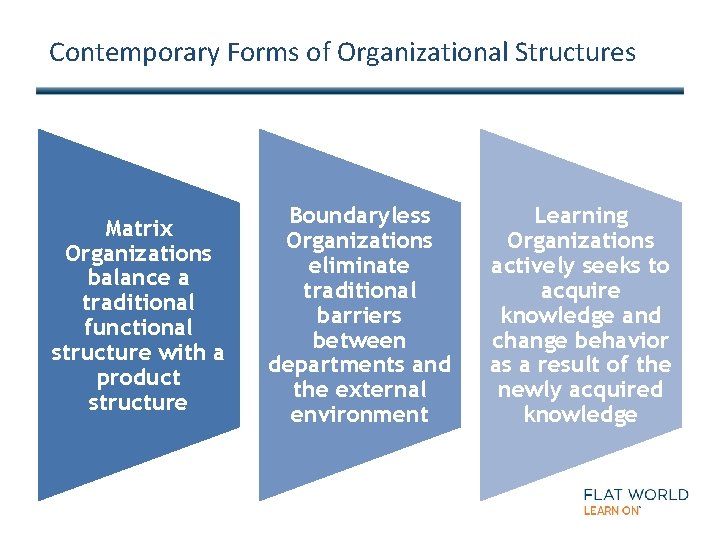
Contemporary Forms of Organizational Structures Matrix Organizations balance a traditional functional structure with a product structure Boundaryless Organizations eliminate traditional barriers between departments and the external environment Learning Organizations actively seeks to acquire knowledge and change behavior as a result of the newly acquired knowledge
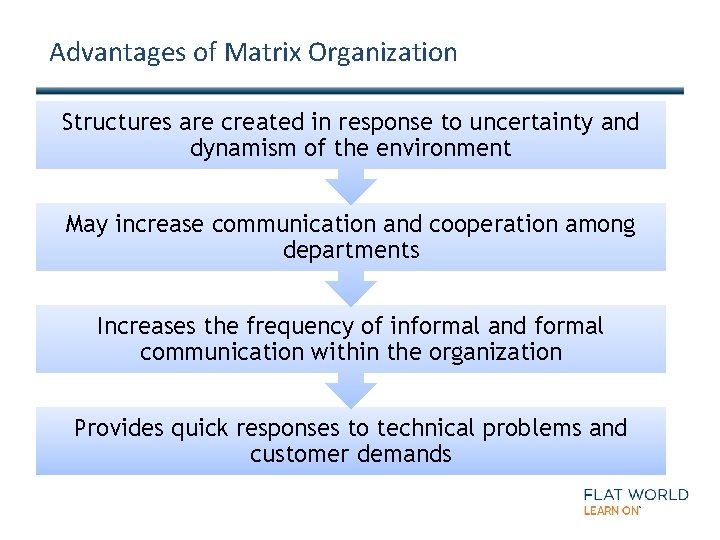
Advantages of Matrix Organization Structures are created in response to uncertainty and dynamism of the environment May increase communication and cooperation among departments Increases the frequency of informal and formal communication within the organization Provides quick responses to technical problems and customer demands
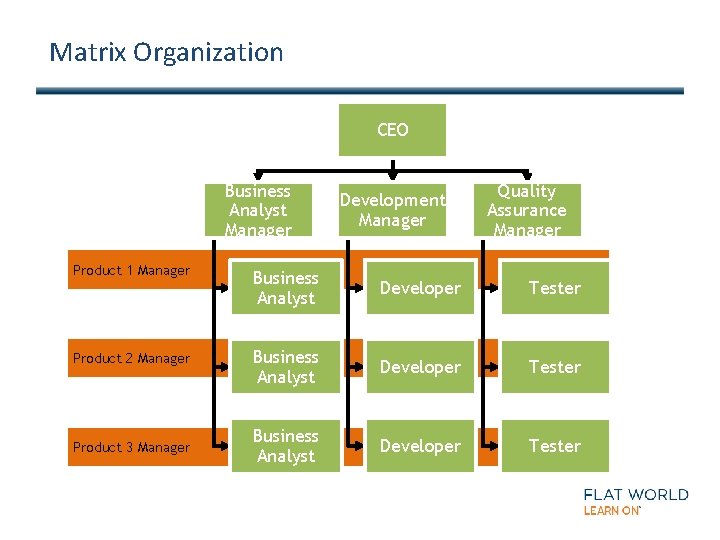
Matrix Organization CEO Business Analyst Manager Development Manager Quality Assurance Manager Product 1 Manager Business Analyst Developer Tester Product 2 Manager Business Analyst Developer Tester Product 3 Manager
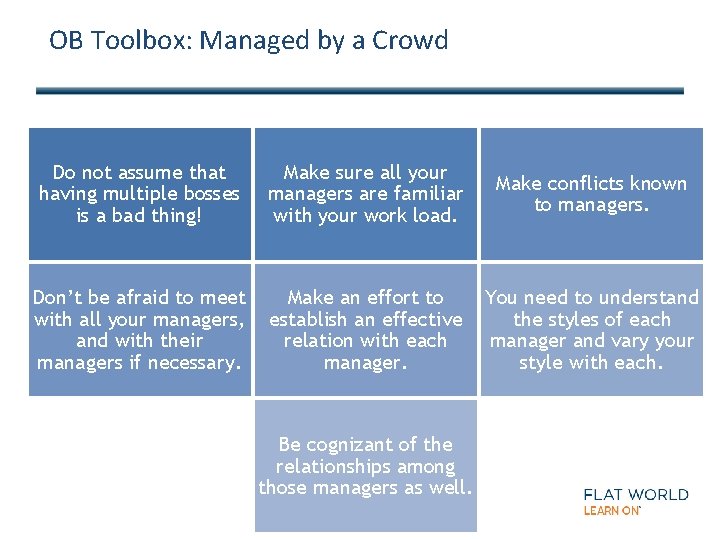
OB Toolbox: Managed by a Crowd Do not assume that having multiple bosses is a bad thing! Make sure all your managers are familiar with your work load. Make conflicts known to managers. Don’t be afraid to meet with all your managers, and with their managers if necessary. Make an effort to establish an effective relation with each manager. You need to understand the styles of each manager and vary your style with each. Be cognizant of the relationships among those managers as well.
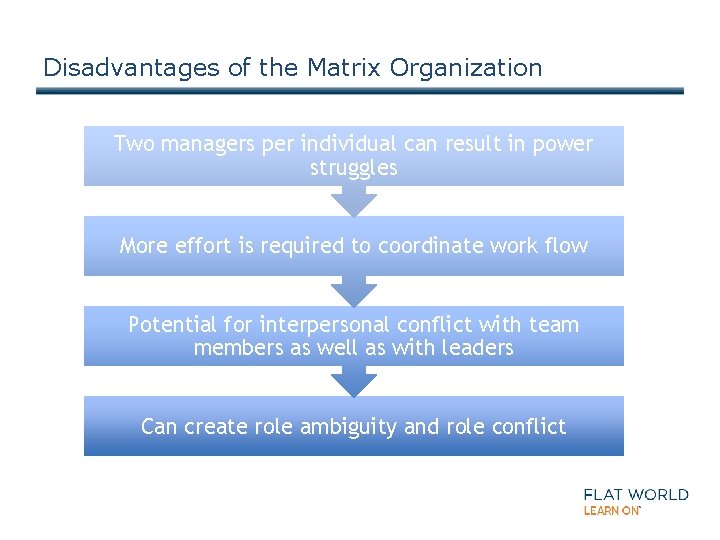
Disadvantages of the Matrix Organization Two managers per individual can result in power struggles More effort is required to coordinate work flow Potential for interpersonal conflict with team members as well as with leaders Can create role ambiguity and role conflict
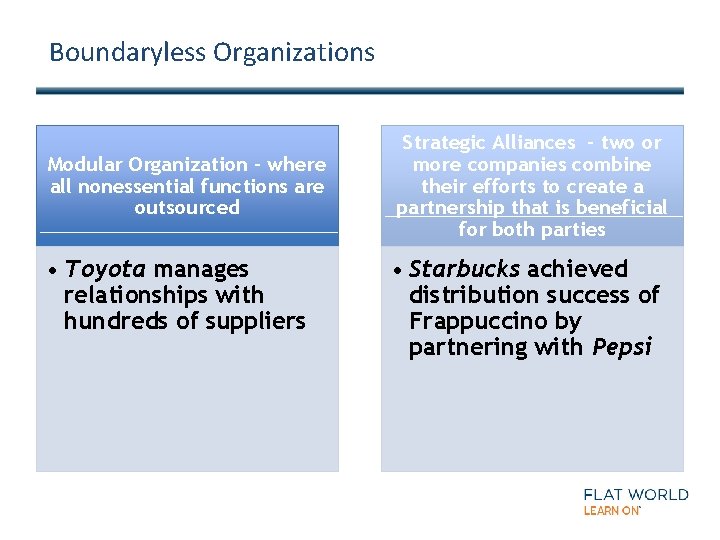
Boundaryless Organizations Modular Organization – where all nonessential functions are outsourced • Toyota manages relationships with hundreds of suppliers Strategic Alliances - two or more companies combine their efforts to create a partnership that is beneficial for both parties • Starbucks achieved distribution success of Frappuccino by partnering with Pepsi
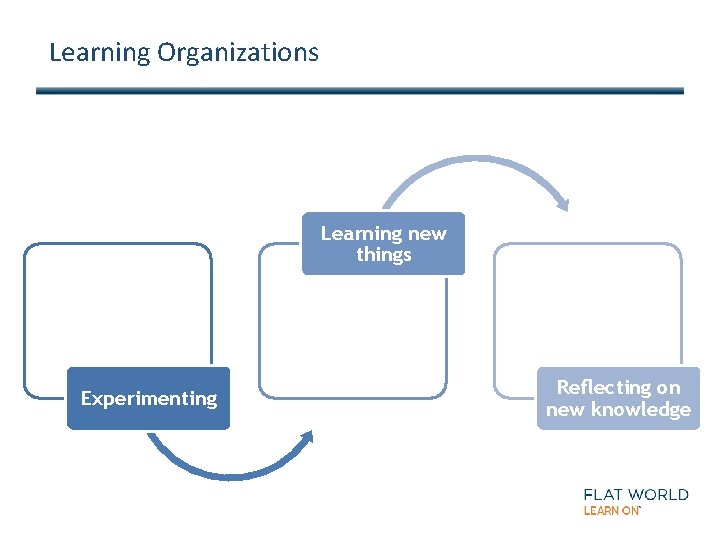
Learning Organizations Learning new things Experimenting Reflecting on new knowledge
Discussion • What are the advantages and disadvantages of decentralization? • All else being equal, would you prefer to work in a flat organization? Why? • What are the advantages of departmentalization by product? • Have you ever reported to more than one manager? What were the challenges of such a situation? • What do you think are the advantages and disadvantages of being employed by a boundaryless organization? • What can organizations do to institutionalize organizational learning? What practices and policies would aid in knowledge acquisition and retention?
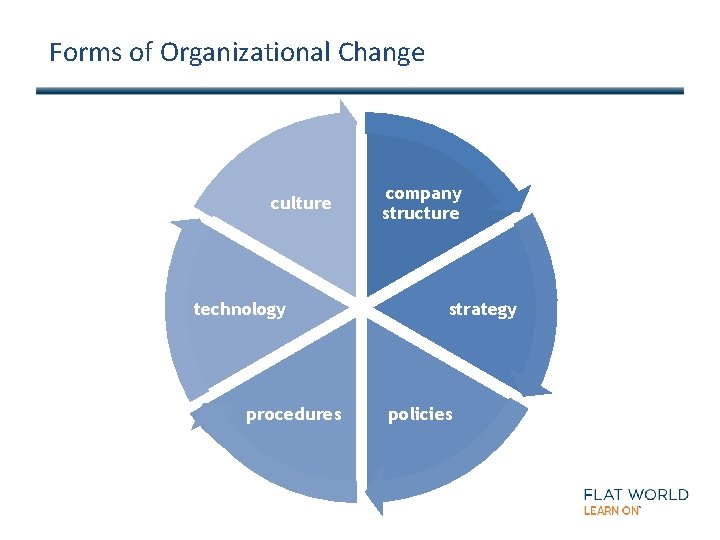
Forms of Organizational Change culture technology procedures company structure strategy policies
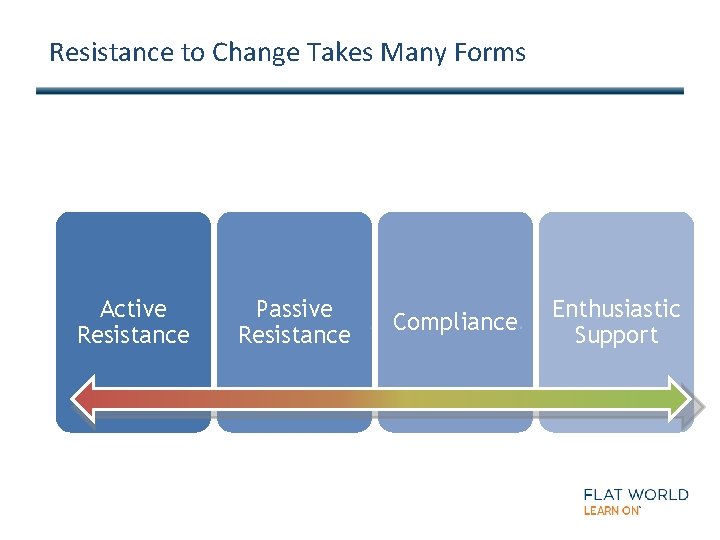
Resistance to Change Takes Many Forms Active Resistance Passive Resistance Compliance Enthusiastic Support
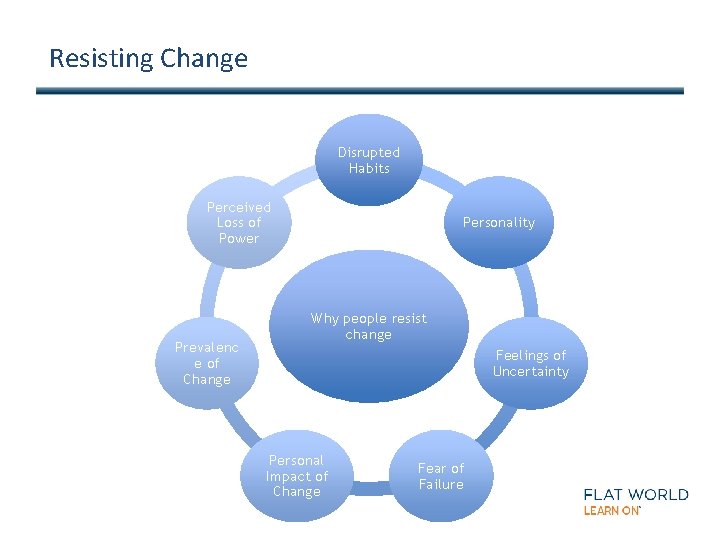
Resisting Change Disrupted Habits Perceived Loss of Power Prevalenc e of Change Personality Why people resist change Feelings of Uncertainty Personal Impact of Change Fear of Failure
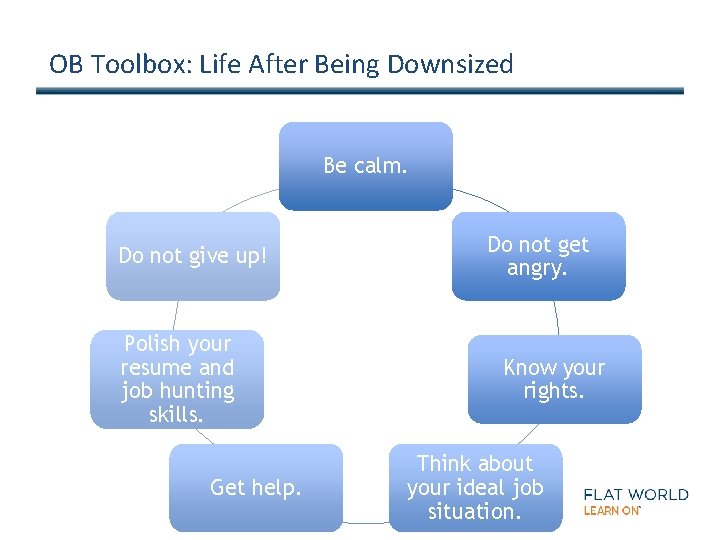
OB Toolbox: Life After Being Downsized Be calm. Do not give up! Polish your resume and job hunting skills. Get help. Do not get angry. Know your rights. Think about your ideal job situation.
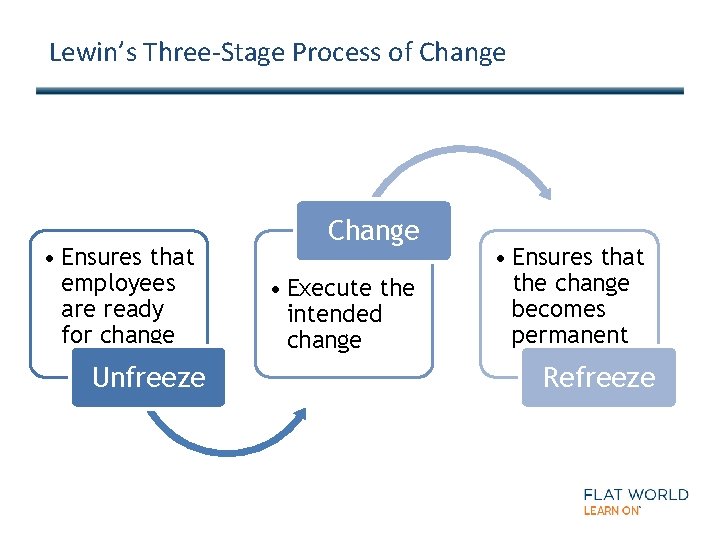
Lewin’s Three-Stage Process of Change • Ensures that employees are ready for change Unfreeze Change • Execute the intended change • Ensures that the change becomes permanent Refreeze
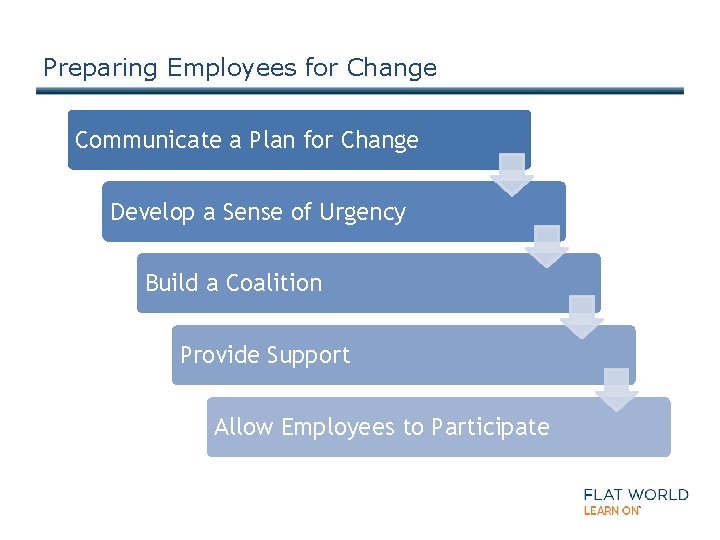
Preparing Employees for Change Communicate a Plan for Change Develop a Sense of Urgency Build a Coalition Provide Support Allow Employees to Participate
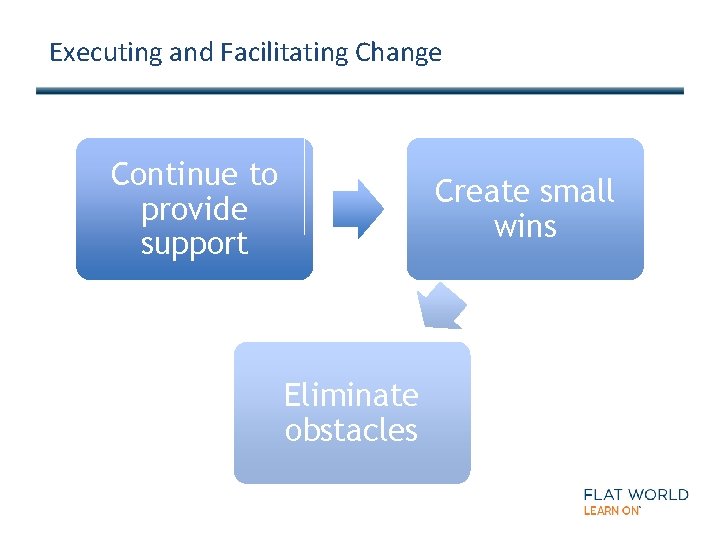
Executing and Facilitating Change Continue to provide support Create small wins Eliminate obstacles
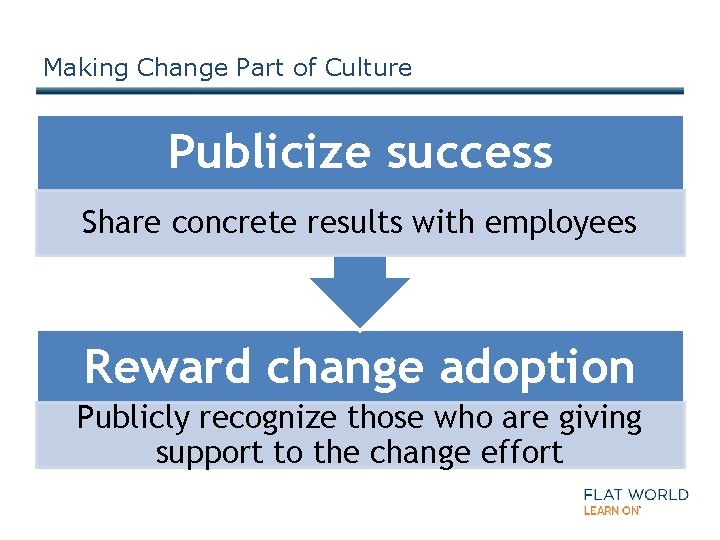
Making Change Part of Culture Publicize success Share concrete results with employees Reward change adoption Publicly recognize those who are giving support to the change effort
Discussion • Can you think of an organizational or personal change that you had to go through? Have you encountered any resistance to this change? What were the reasons? • How would you deal with employees who are resisting change because their habits are threatened? How would you deal with them if they are resisting because of a fear of failure? • What are the benefits of employee participation in change management? • Imagine that you are introducing a new system to college students where they would have to use a special ID number you create for them for activities such as logging on to campus computers or using library resources. How would you plan and implement the change? Explain using Lewin’s three step framework. • Why are successful companies less likely to change? What should companies do in order to make organizational change part of their culture?
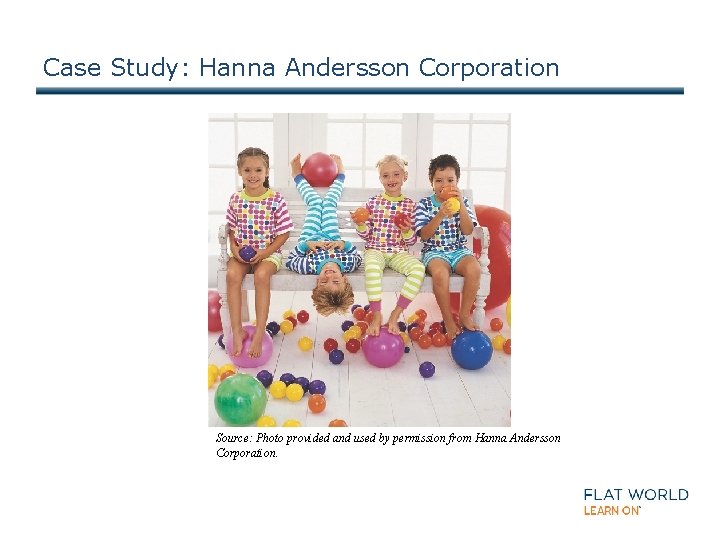
Case Study: Hanna Andersson Corporation Source: Photo provided and used by permission from Hanna Andersson Corporation.
Case Discussion Questions 1. How did company leaders like Iosca, Petersen, and Stone help facilitate change within the company? Did they follow the steps to successful change? 2. What were the reasons for organizational change within Hanna Andersson, both internally and externally? 3. How can a company anticipate change? How can the company effectively prepare for it? 4. What unique challenges do family-owned and -operated businesses face?
OB Toolbox: Overcome Resistance to Your Proposals Listen to naysayers Is your change revolutionary? Involve those around you in planning the change Do you have credibility? Present data to your audience Appeal to your audience’s ideals Understand the reasons for resistance
Discussion • What is an ethical way of conducting layoffs? • Do you believe that it is an organization’s ethical obligation to share all information about the planned changes with employees? Why or why not? • What is the relationship between organizational change and national culture?
- Slides: 34