
Organizational Behavior MGT502 Lecture5 Summary of Lecture4 Understanding
Organizational Behavior (MGT-502) Lecture-5
Summary of Lecture-4
Understanding the Basics of Human Behavior
Variables Influencing Individual Behavior
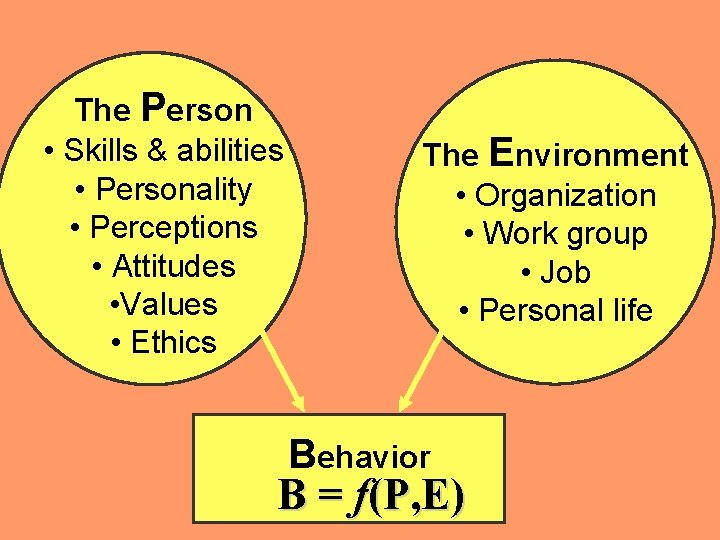
The Person • Skills & abilities • Personality • Perceptions • Attitudes • Values • Ethics The Environment • Organization • Work group • Job • Personal life Behavior B = f(P, E)
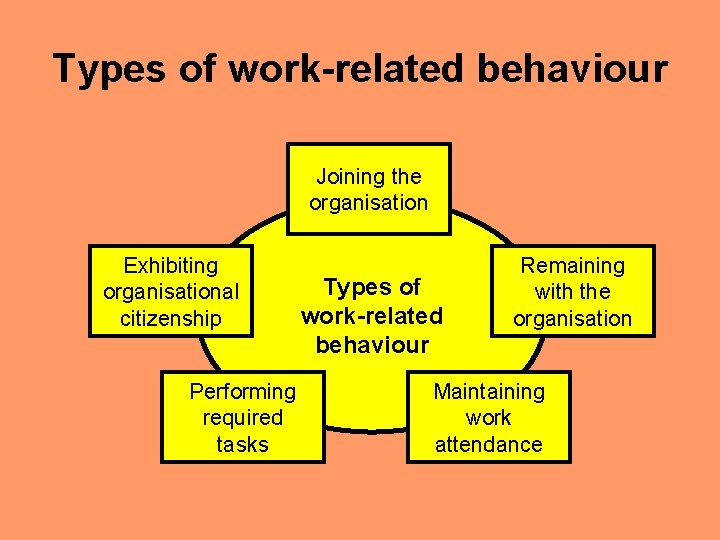
Types of work-related behaviour Joining the organisation Exhibiting organisational citizenship Performing required tasks Types of work-related behaviour Remaining with the organisation Maintaining work attendance

Today’s Topics
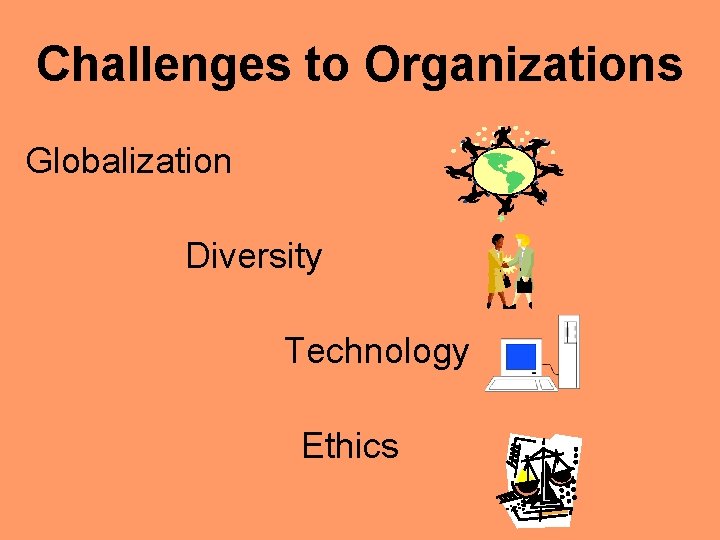
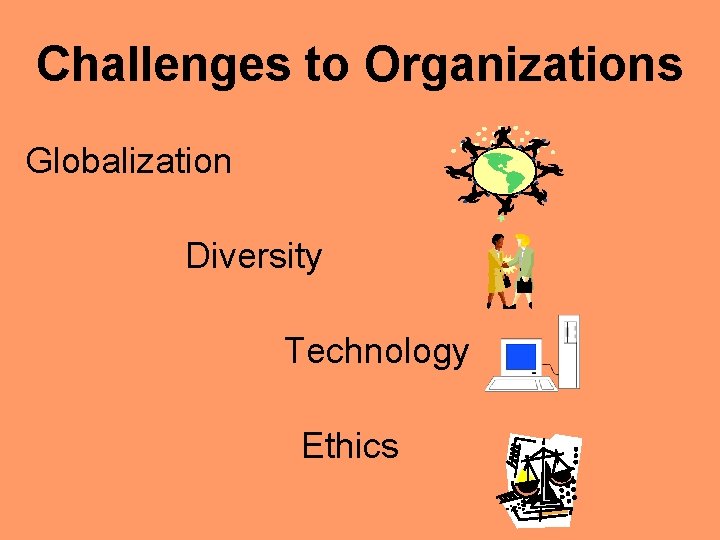
Challenges to Organizations Globalization Diversity Technology Ethics
Globalization
Implications of globalization: –New organizational structures –Different forms of communication –More competition, change, mergers, downsizing, stress –Need more sensitivity to cultural differences
Diversity • Increasing Diversity in today’s organizations – Changing workforce demographics – Competitive pressures – Rapid growth in International business
Diversity • More women in workforce and professions • Diversity has advantages, but firms need to adjust through: –cultural awareness –family-friendly –empowerment
Technology • The impact on work and jobs • Flattening and downsizing of organizations • Paperless organizations
Trends: Information Technology • Affects how employees interact – Virtual teams – Telecommuting • Affects how organizations are configured – Network structures -- alliance of several organizations
Ethics • Moral principles/values -determines whether actions are right/wrong and outcomes are good/bad Ethical behavior. – “Good” and “right” as opposed to “bad” or “wrong” in a particular setting.
• Ethical dilemmas occur in relationships with: – Superiors. – Subordinates. – Customers. – Competitors. – Suppliers. – Regulators.
ØOrganizational social responsibility. – The obligation of organizations to behave in ethical and moral ways as institutions of the broader society. – Managers should commit organizations to: • Pursuit of high productivity. • Corporate social responsibility.
Performance
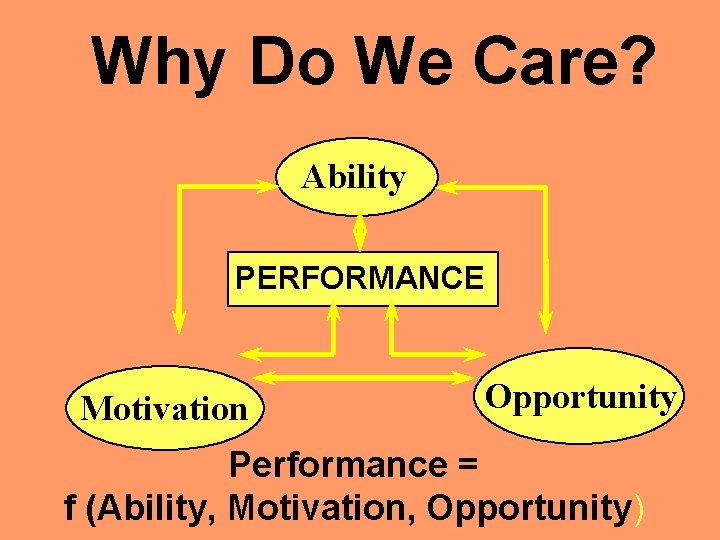
Why Do We Care? Ability PERFORMANCE Motivation Opportunity Performance = f (Ability, Motivation, Opportunity)
Ability • Mental and physical capabilities to perform various tasks.
Intellectual Abilities • The capacity to do mental activities
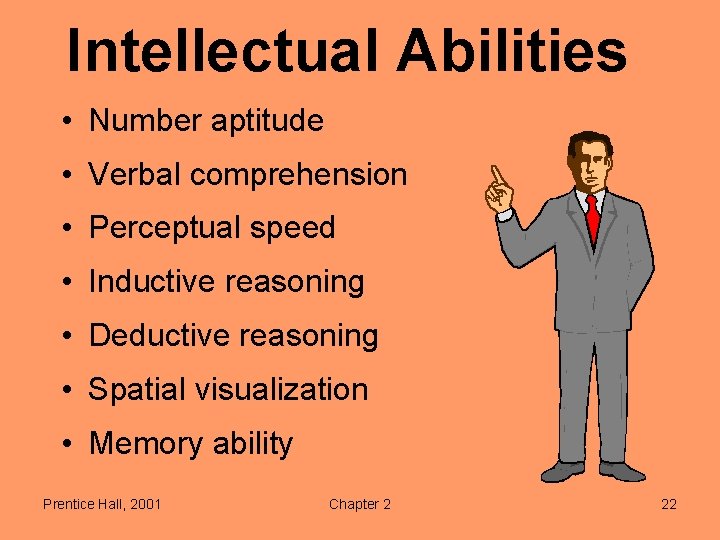
Intellectual Abilities • Number aptitude • Verbal comprehension • Perceptual speed • Inductive reasoning • Deductive reasoning • Spatial visualization • Memory ability Prentice Hall, 2001 Chapter 2 22
Physical Ability • The capacity to do tasks demanding stamina, strength and similar characteristics.
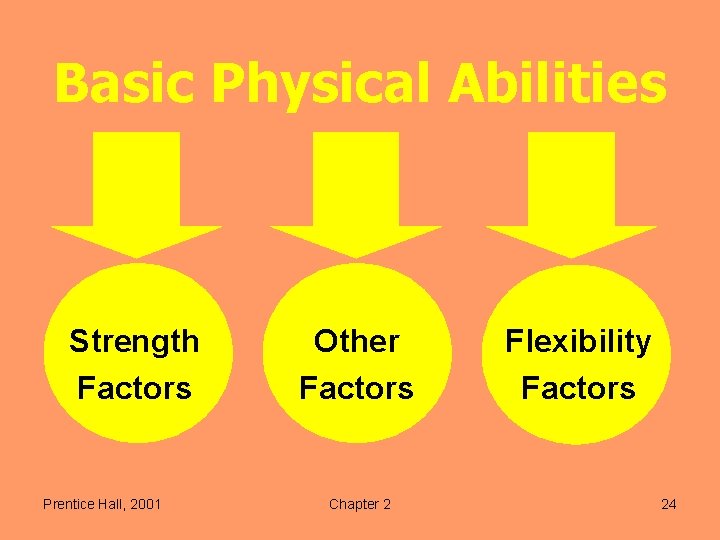
Basic Physical Abilities Strength Factors Prentice Hall, 2001 Other Factors Chapter 2 Flexibility Factors 24
Emotional Intelligence Involves: • The ability to understand individuals to act wisely in human relations • EI abilities in five areas: • Self-awareness • Managing emotions • Motivating oneself • Empathy • Handling relationships 25
The Ability-Job Fit • Abilities of the employee • Requirements of the job Prentice Hall, 2001 Chapter 2 26
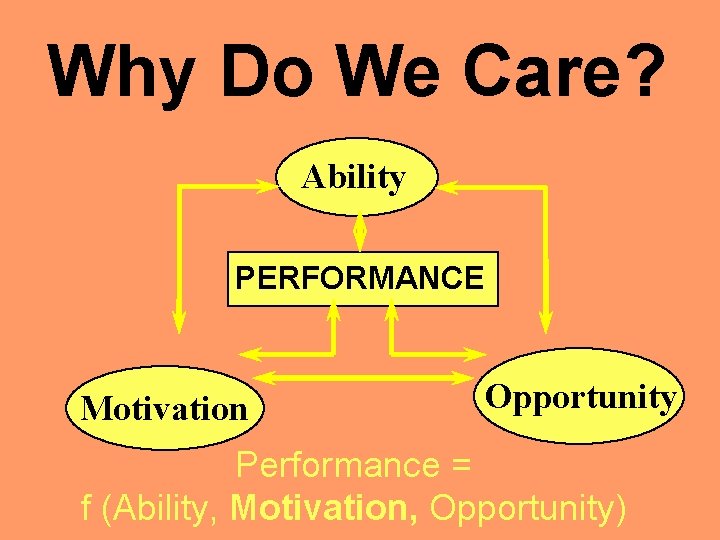
Why Do We Care? Ability PERFORMANCE Motivation Opportunity Performance = f (Ability, Motivation, Opportunity)
Learning • A relatively permanent change in the behavior occurring as a result of experience.
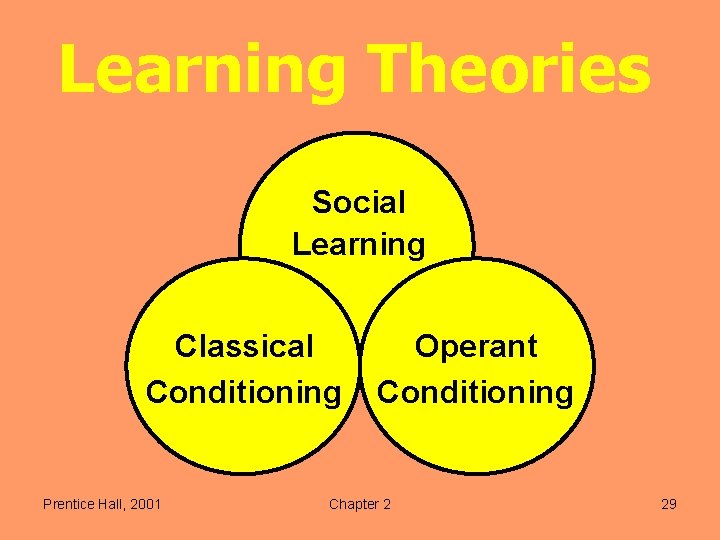
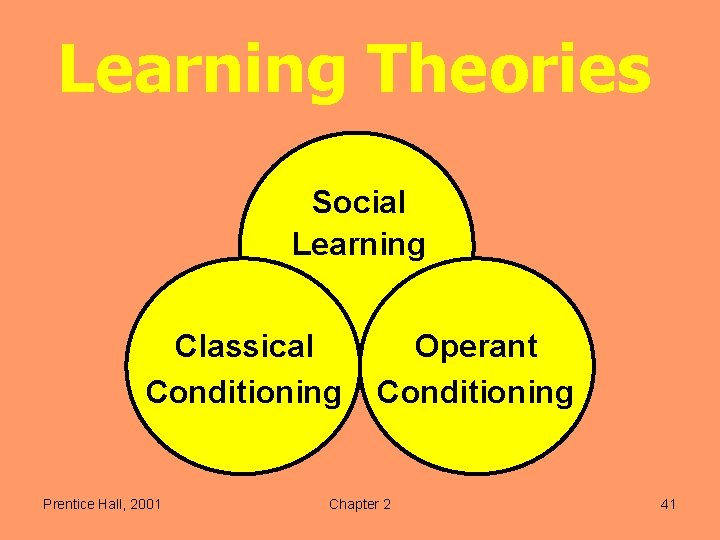
Learning Theories Social Learning Classical Conditioning Prentice Hall, 2001 Operant Conditioning Chapter 2 29
Classical Conditioning • In classical conditioning, an individual responds to some stimulus that would not ordinarily produce such a response. • This theory grew out of Pavlov’s experiments • Classical conditioning is passive. Something happens, and we react in a specific way. As such, it can explain simple, reflexive behaviors.
Operant Conditioning • In operant conditioning, desired voluntary behavior leads to a reward or stops a punishment. This theory argues that behavior is a function of consequences. Operant behavior is learned or voluntary, not reflexive or unlearned. • Law of Effect, Reinforcement
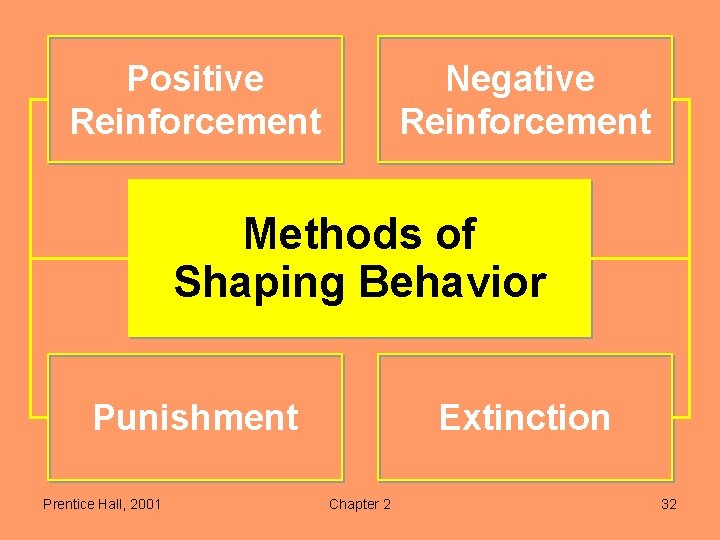
Positive Reinforcement Negative Reinforcement Methods of Shaping Behavior Punishment Prentice Hall, 2001 Extinction Chapter 2 32
Social Learning • People can learn through observation and direct experience.
Shaping Behavior: A Managerial Tool
Organizational Applications • Well Pay versus Sick Pay • Employee Discipline • Developing Training Programs • Mentoring Programs • Self Management
p o t s s ’ e t r e e L it h
Summary
Challenges to Organizations Globalization Diversity Technology Ethics
Ability • Mental and physical capabilities to perform various tasks.
Learning • A relatively permanent change in the behavior occurring as a result of experience.
Learning Theories Social Learning Classical Conditioning Prentice Hall, 2001 Operant Conditioning Chapter 2 41

Next….
• Values • Attitudes
Organizational Behavior (MGT-502) Lecture-5
- Slides: 44