
Organizational Behavior MGT502 Lecture4 Summary of Lecture3 Organization
Organizational Behavior (MGT-502) Lecture-4
Summary of Lecture-3

Organization A systematic arrangement of people to accomplish some specific purpose. VU Govt. Agencies Glossary Store Steel Mills Hospitals United Nations

Organizations as Systems Task environment: Competitors Unions Regulatory agencies Clients Inputs: Material Capital Human Structure Task Technology People (Actors) Organizational Boundary Outputs: Products Services
How does an Organization Create Value?
Management and Myths What Managers can do and what Managers can’t do when managing people, organizations and society.
Today’s Topics
Managerial Perspectives on Organizational Behavior Organizational behavior is not a designated function or area. Rather, it is a perspective or set of tools that all managers can use to carry out their jobs more effectively.
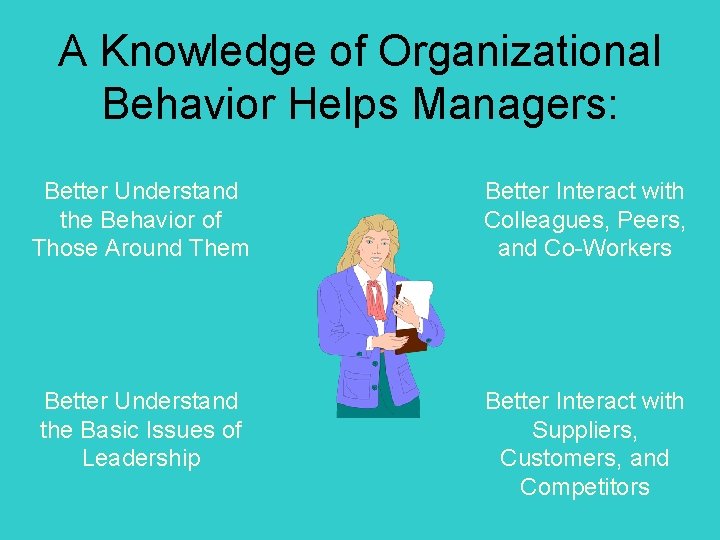
A Knowledge of Organizational Behavior Helps Managers: Better Understand the Behavior of Those Around Them Better Interact with Colleagues, Peers, and Co-Workers Better Understand the Basic Issues of Leadership Better Interact with Suppliers, Customers, and Competitors
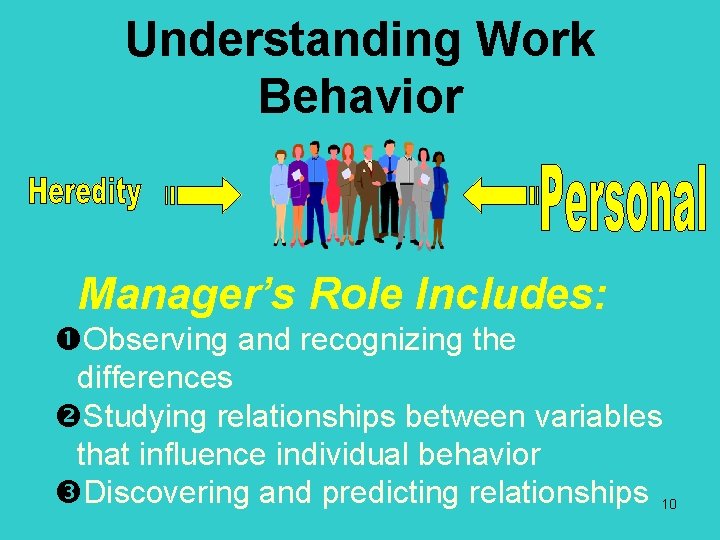
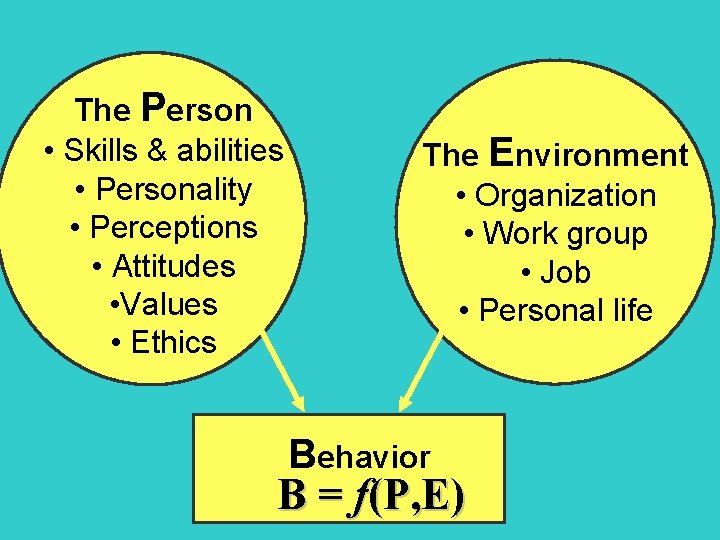
Understanding Work Behavior Manager’s Role Includes: Observing and recognizing the differences Studying relationships between variables that influence individual behavior Discovering and predicting relationships 10
Part-I The Individual • Ability & Learning • Values, Attitudes and Job Satisfaction • Personality & Emotions • Perception & Individual Decision Making • Basic Motivation Concepts • Motivation and its Applications
Understanding the Basics of Human Behavior
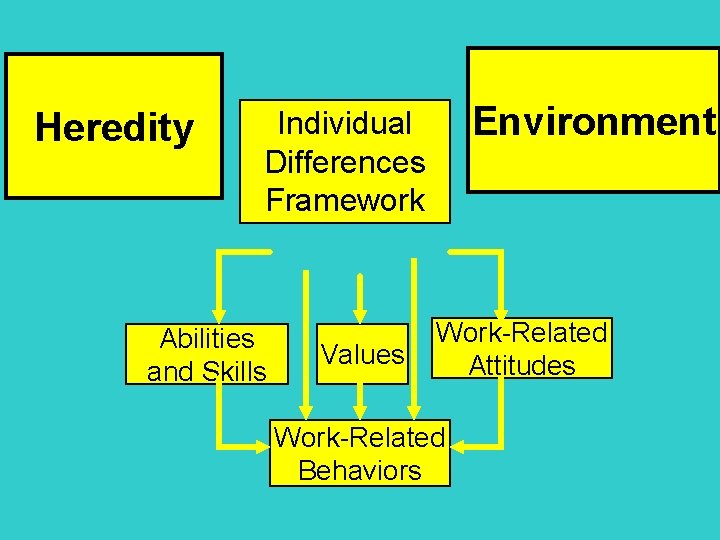
Heredity Environment Individual Differences Framework Abilities and Skills Values Work-Related Attitudes Work-Related Behaviors
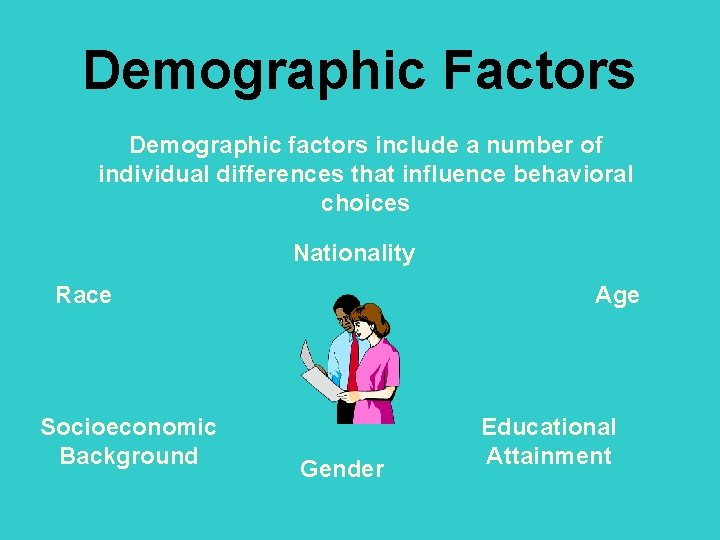
Demographic Factors Demographic factors include a number of individual differences that influence behavioral choices Nationality Race Socioeconomic Background Age Gender Educational Attainment
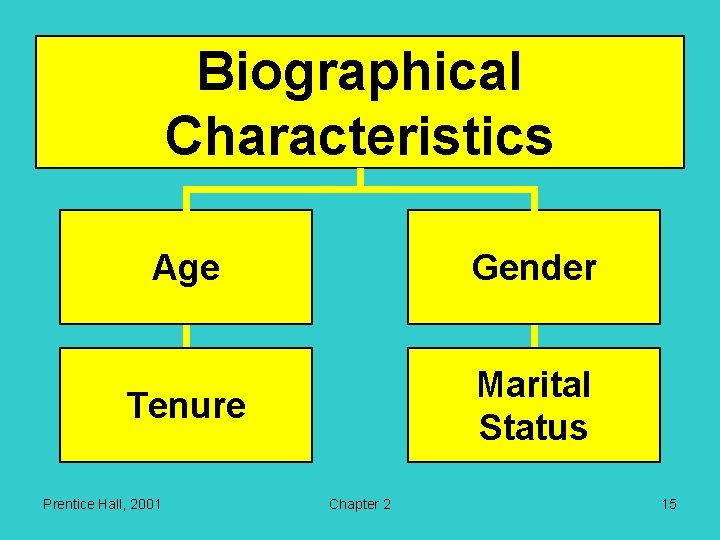
Biographical Characteristics Age Gender Tenure Marital Status Prentice Hall, 2001 Chapter 2 15
Variables Influencing Individual Behavior
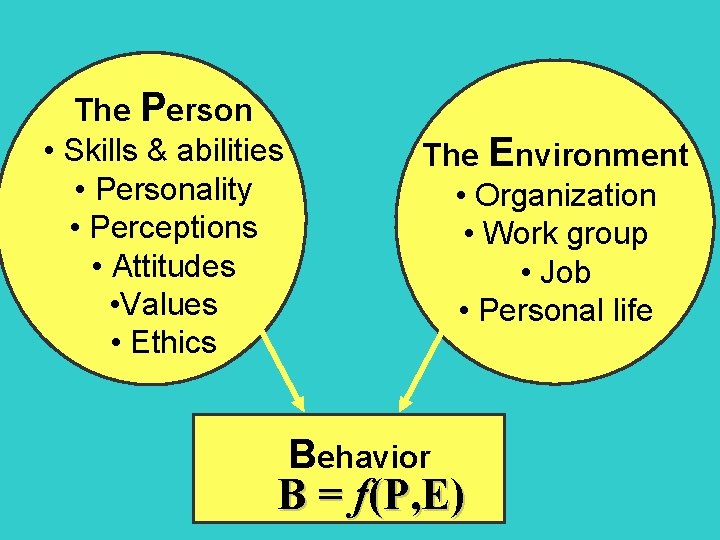
The Person • Skills & abilities • Personality • Perceptions • Attitudes • Values • Ethics The Environment • Organization • Work group • Job • Personal life Behavior B = f(P, E)
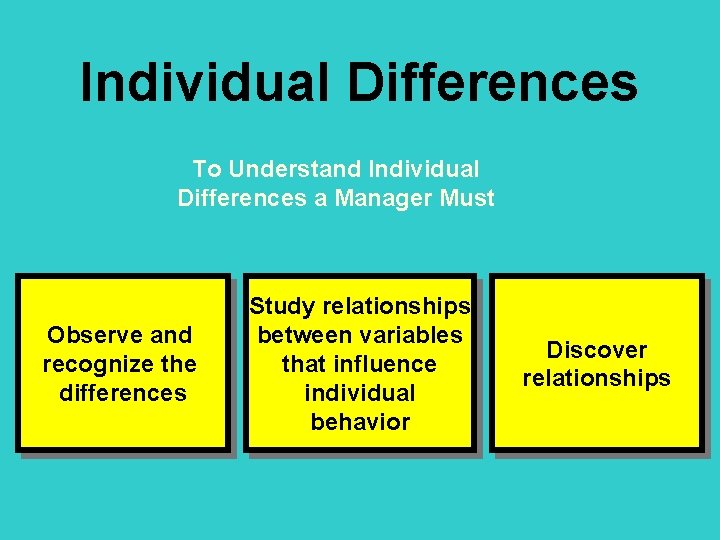
Individual Differences To Understand Individual Differences a Manager Must Observe and recognize the differences Study relationships between variables that influence individual behavior Discover relationships
Why focus on individuals?
A lot of athletes say they want to be part of a cohesive team —but they also want their name printed on the back of their jerseys in 6 -inch-high block letters. -S. P. Robbins
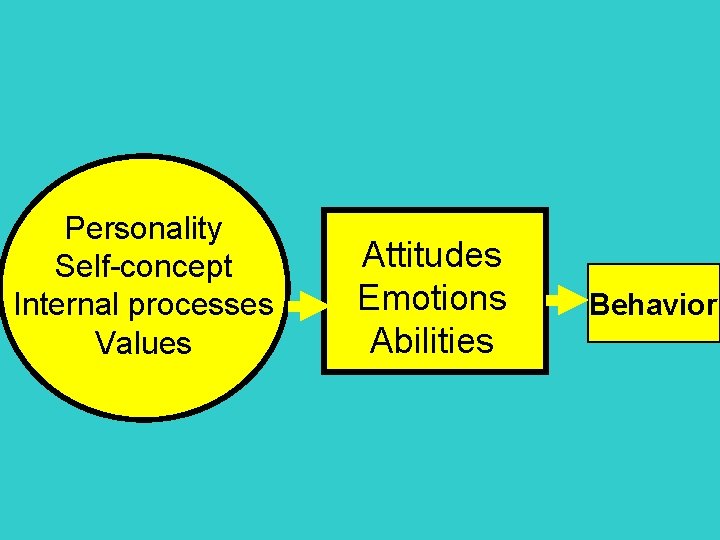
Personality Self-concept Internal processes Values Attitudes Emotions Abilities Behavior
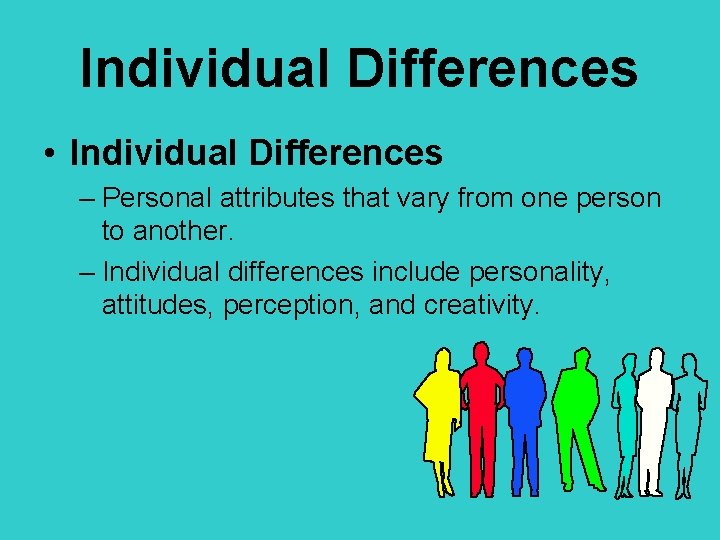
Individual Differences • Individual Differences – Personal attributes that vary from one person to another. – Individual differences include personality, attitudes, perception, and creativity.
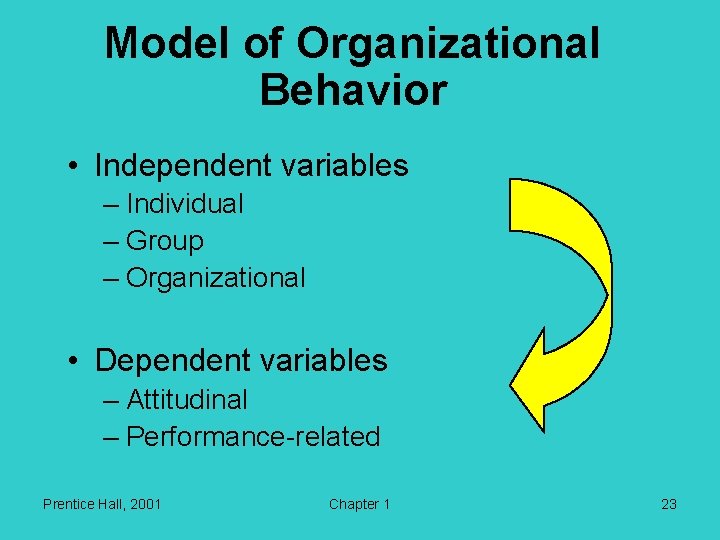
Model of Organizational Behavior • Independent variables – Individual – Group – Organizational • Dependent variables – Attitudinal – Performance-related Prentice Hall, 2001 Chapter 1 23
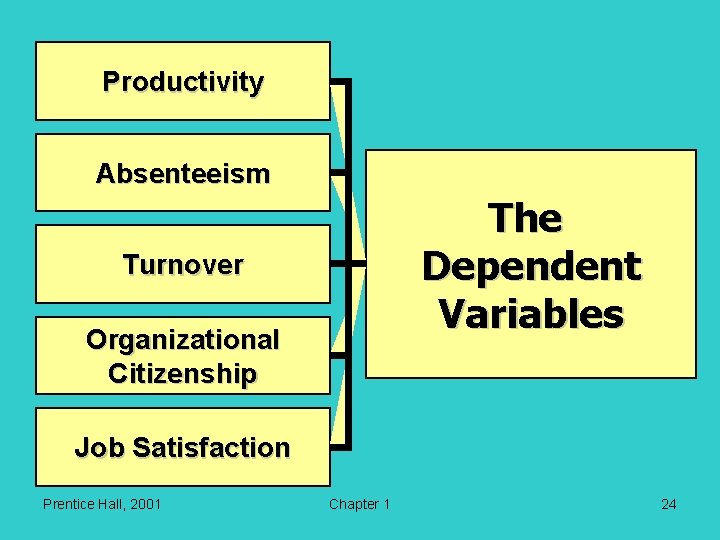
Productivity Absenteeism The Dependent Variables Turnover Organizational Citizenship Job Satisfaction Prentice Hall, 2001 Chapter 1 24
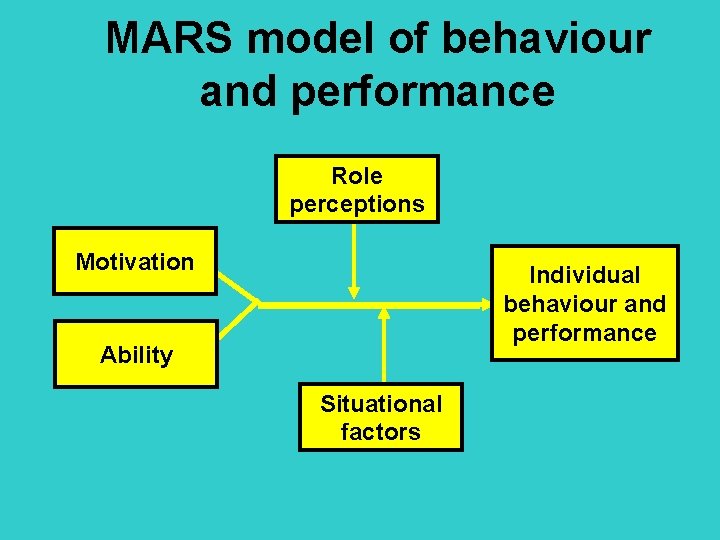
MARS model of behaviour and performance Role perceptions Motivation Individual behaviour and performance Ability Situational factors
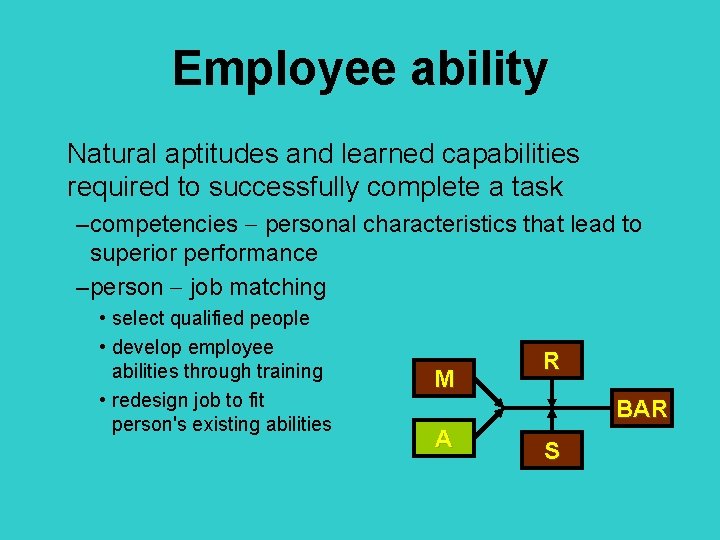
Employee ability Natural aptitudes and learned capabilities required to successfully complete a task –competencies personal characteristics that lead to superior performance –person job matching • select qualified people • develop employee abilities through training • redesign job to fit person's existing abilities M R BAR A S
Employee role perceptions Beliefs about what behaviour is required to achieve the desired results: – understanding what tasks to perform – understanding relative importance of tasks – understanding preferred behaviours to accomplish tasks
Situational factors Environmental conditions beyond the individual’s short-term control that constrain or facilitate behaviour – time – people – budget – work facilities
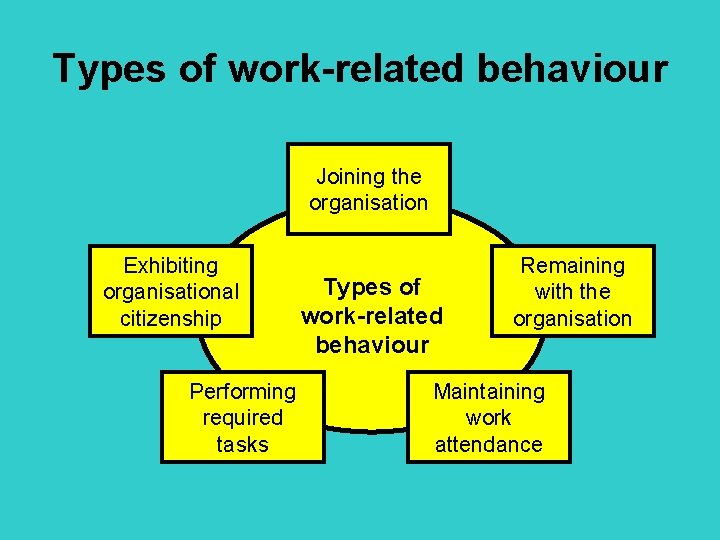
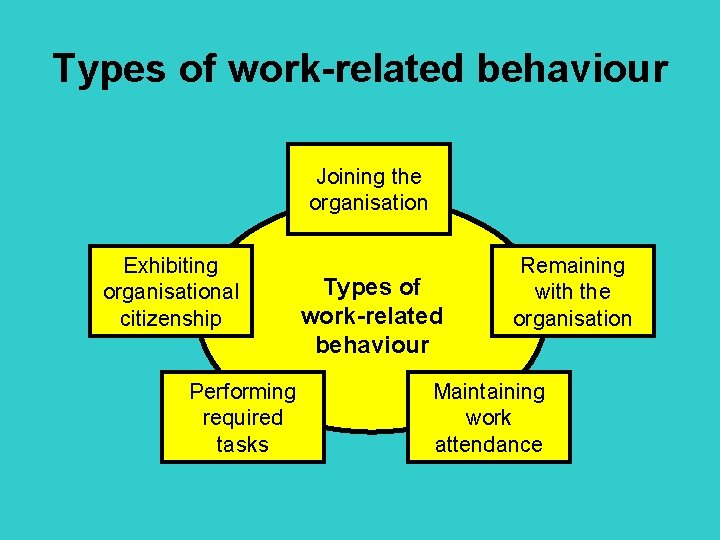
Types of work-related behaviour Joining the organisation Exhibiting organisational citizenship Performing required tasks Types of work-related behaviour Remaining with the organisation Maintaining work attendance
Performance
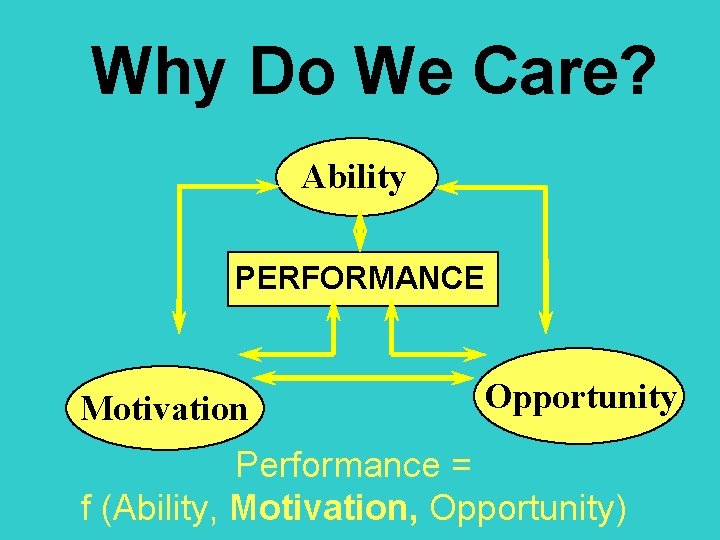
Why Do We Care? Ability PERFORMANCE Motivation Opportunity Performance = f (Ability, Motivation, Opportunity)
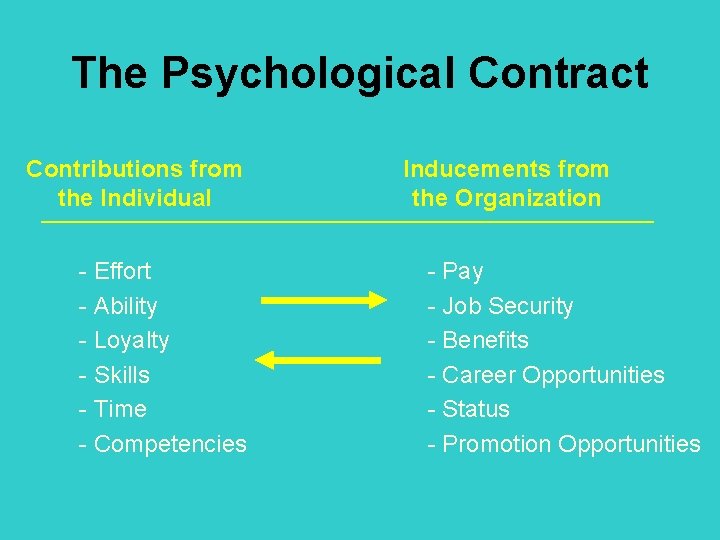
The Psychological Contract Contributions from the Individual - Effort - Ability - Loyalty - Skills - Time - Competencies Inducements from the Organization - Pay - Job Security - Benefits - Career Opportunities - Status - Promotion Opportunities

The Person-Job Fit • Person-Job Fit – The extent to which the contributions made by the individual match the inducements offered by the organization.
p o t s s ’ e t r e e L it h
Summary
Understanding the Basics of Human Behavior
Variables Influencing Individual Behavior
The Person • Skills & abilities • Personality • Perceptions • Attitudes • Values • Ethics The Environment • Organization • Work group • Job • Personal life Behavior B = f(P, E)
Types of work-related behaviour Joining the organisation Exhibiting organisational citizenship Performing required tasks Types of work-related behaviour Remaining with the organisation Maintaining work attendance

Next….
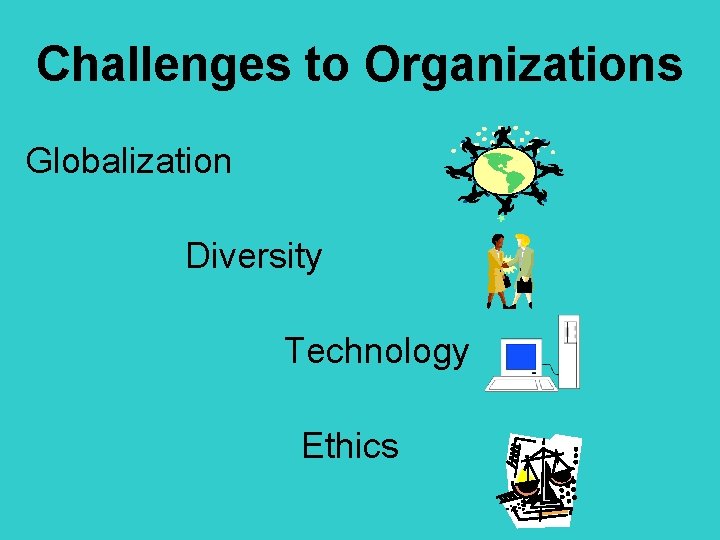
Challenges to Organizations Globalization Diversity Technology Ethics
Organizational Behavior (MGT-502) Lecture-4
- Slides: 42