
Organizational Behavior MGT502 Lecture3 Summary of Lecture2 Basic
Organizational Behavior (MGT-502) Lecture-3
Summary of Lecture-2

Basic OB Model Organization systems level Group level Individual level
What Managers Do? § Gets things done through other people § Make decisions, allocate resources, and direct the activities of others to attain goals § Do their work in an organization
New Managerial Functions To provide leadership and direction Total Quality Continuous Management Improvement

Today’s Topics
Organizations: The Important Component
Where do managers work? in organizations!
What is an Organization?
A consciously coordinated social unit, composed of two or more people, that functions on a relatively continuous basis to achieve a common goal or set of goals.
What are organizations? • Social entities • Goal oriented • Deliberately structured • Linked to the external environment
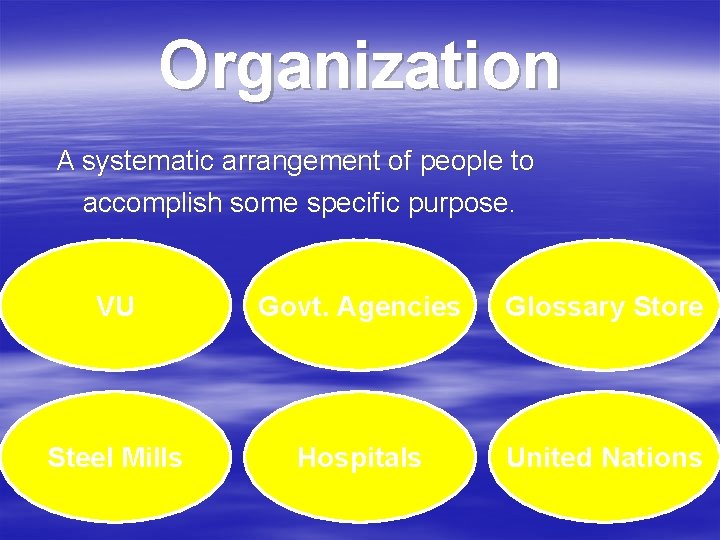
Organization A systematic arrangement of people to accomplish some specific purpose. VU Steel Mills Govt. Agencies Glossary Store Hospitals United Nations
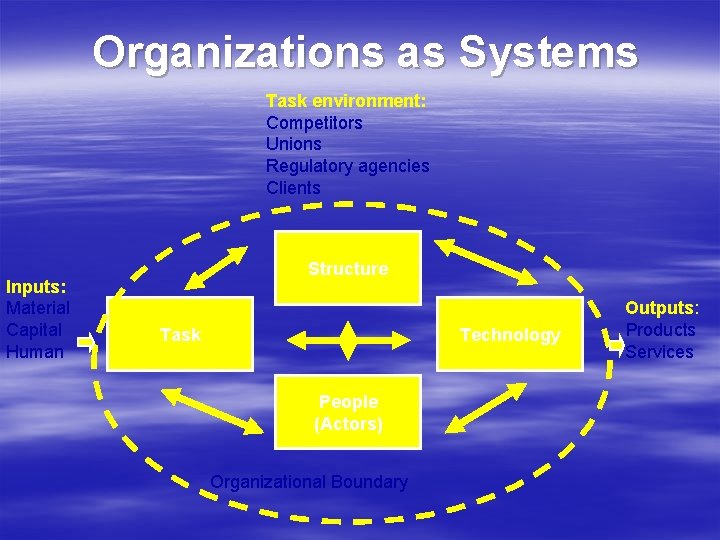
Components of an Organization Task - an organization’s mission, purpose, or goal for existing People - the human resources of the organization Structure - the manner in which an organization’s work is designed at the micro level; how departments, divisions, & the overall organization are designed at the macro level Technology - the intellectual and mechanical processes used by an organization to transform inputs into products or services that meet organizational goals
Formal vs Informal Organization § Formal Organization - the part of the organization that has legitimacy and official recognition § Informal Organization - the unofficial part of the organization

Basic Systems View of Organization Environment INPUTS Human, physical, financial, and information resources TRANSFORMATION PROCESS Feedback loops OUTPUTS Products and Services
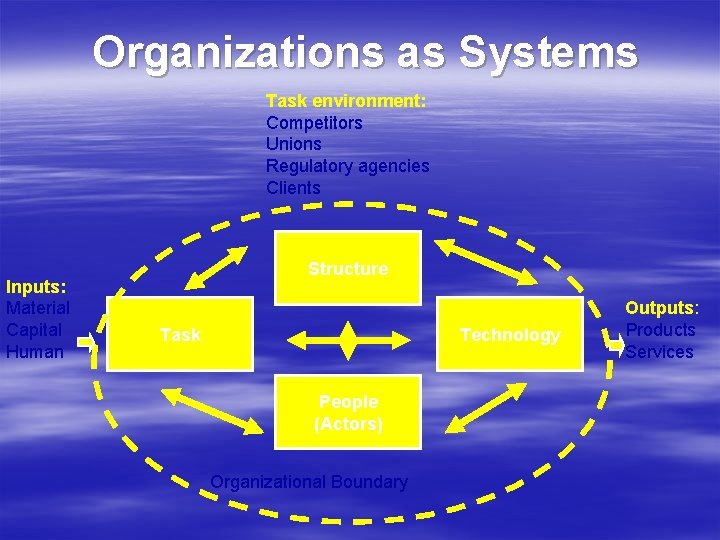
Organizations as Systems Task environment: Competitors Unions Regulatory agencies Clients Inputs: Material Capital Human Structure Task Technology People (Actors) Organizational Boundary Outputs: Products Services
Why do we have Organizations? They are more efficient than individuals acting independently
How does an Organization Create Value?
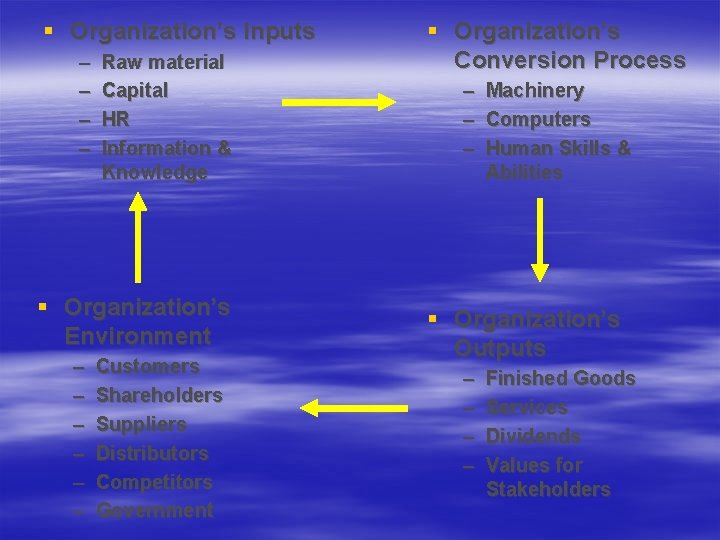
§ Organization’s Inputs – – Raw material Capital HR Information & Knowledge § Organization’s Environment – – – Customers Shareholders Suppliers Distributors Competitors Government § Organization’s Conversion Process – Machinery – Computers – Human Skills & Abilities § Organization’s Outputs – – Finished Goods Services Dividends Values for Stakeholders
Why do Organizations Exist? § To increase specialization and division of labor § Use large-scale technology § Manage the external environment § Economize on transaction costs § Exert power and control
Organizational Stakeholders § Inside – Shareholders – Workforce § Outside – Customers – Suppliers – Government – General Public
Organizational Effectiveness Satisfying Stakeholders Goals and Interests
How do Managers Measure Organizational Effectiveness?
§ The external resource approach----Control – Evaluates the ability to secure, manage, and control scare and valued skills and resources § § § Low costs of inputs Obtain high-quality inputs of raw material and employees Increase market share § The internal system approach----Innovation – Evaluates the organization’s ability to innovate and function quickly and responsively § § § Cut decision making time Increase rate of product innovation Increase coordination and motivation of employees Reduce conflict Reduce time to market
§ Technical approach----Efficiency – Evaluates the organization’s ability to convert skills and resources into goods and services efficiency § Increase product quality § Reduce number of defects § Reduce production costs § Improve customer service § Reduce delivery time to customers
Factors Affecting Organizations § Organizational Environment § Technological Environment § Organizational Process
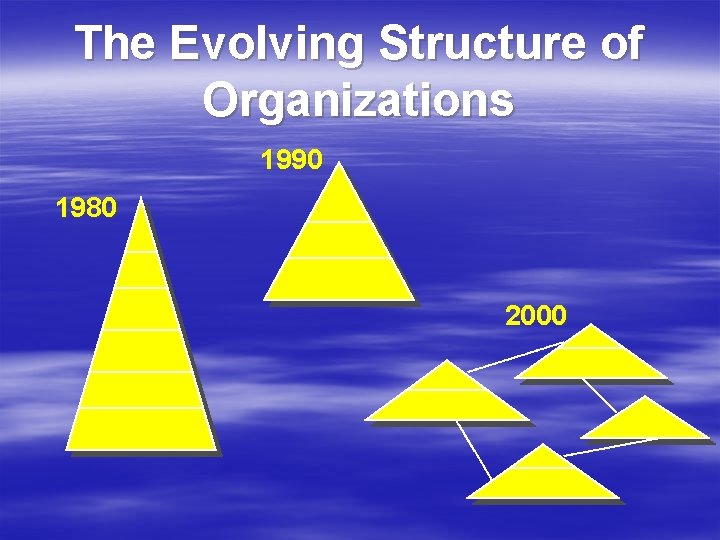
The Evolving Structure of Organizations 1990 1980 2000
Watchwords for Organizations in These Changing Times
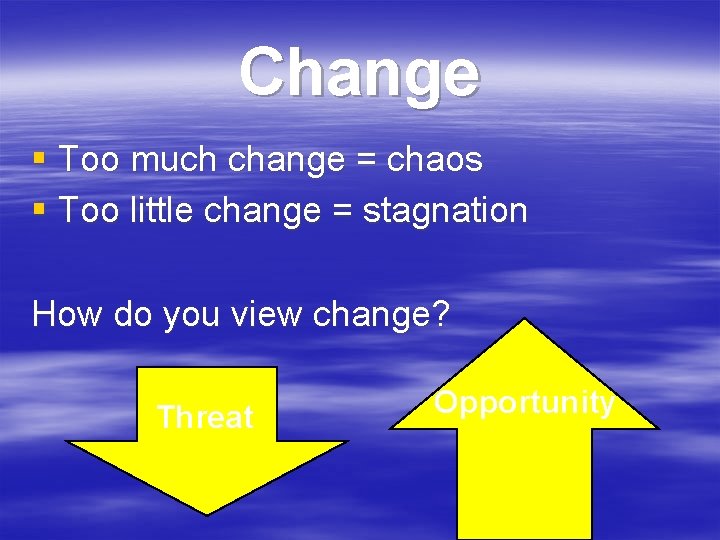
Change § Too much change = chaos § Too little change = stagnation How do you view change? Threat Opportunity
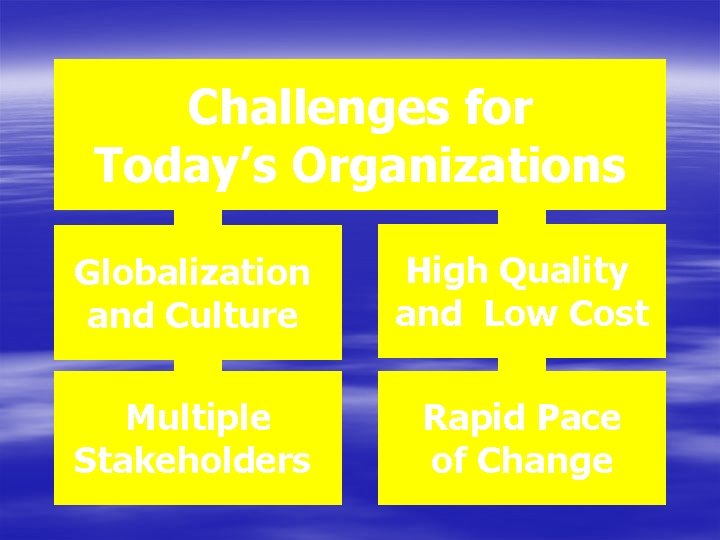
Challenges for Today’s Organizations Globalization and Culture High Quality and Low Cost Multiple Stakeholders Rapid Pace of Change
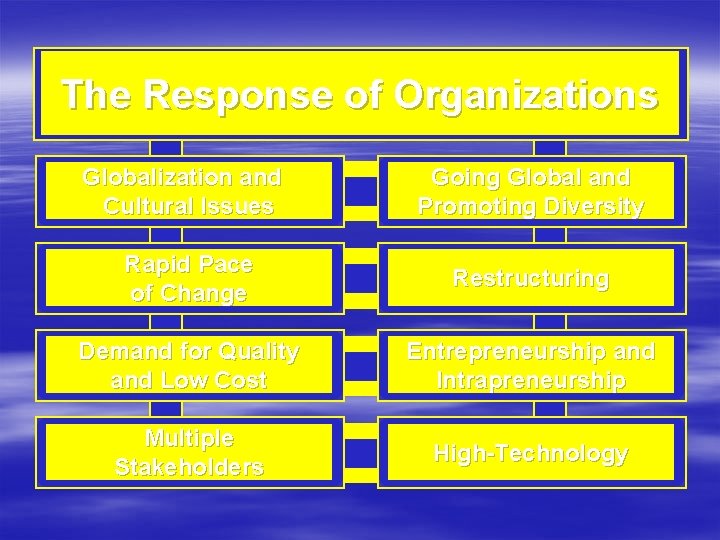
The Response of Organizations Globalization and Cultural Issues Going Global and Promoting Diversity Rapid Pace of Change Restructuring Demand for Quality and Low Cost Entrepreneurship and Intrapreneurship Multiple Stakeholders High-Technology
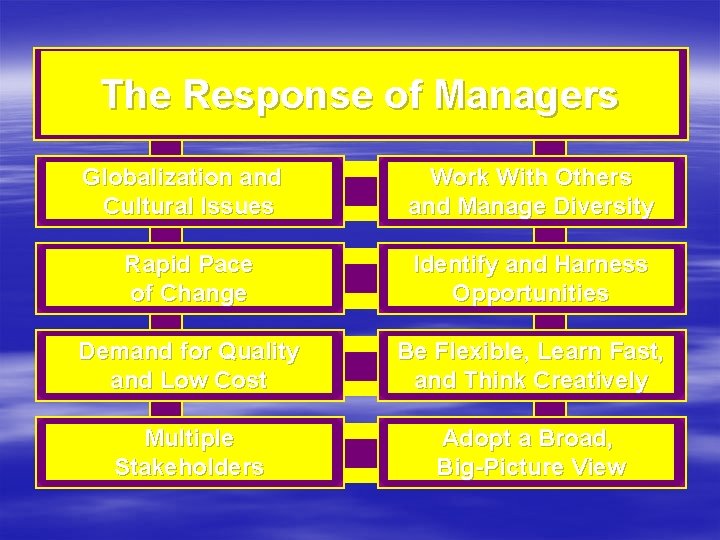
The Response of Managers Globalization and Cultural Issues Work With Others and Manage Diversity Rapid Pace of Change Identify and Harness Opportunities Demand for Quality and Low Cost Be Flexible, Learn Fast, and Think Creatively Multiple Stakeholders Adopt a Broad, Big-Picture View
Management and Myths What Managers can do and what Managers can’t do when managing people, organizations and society.
p o t s s ’ e t r e e L it h
Summary
Organization A systematic arrangement of people to accomplish some specific purpose. VU Govt. Agencies Glossary Store Steel Mills Hospitals United Nations
Organizations as Systems Task environment: Competitors Unions Regulatory agencies Clients Inputs: Material Capital Human Structure Task Technology People (Actors) Organizational Boundary Outputs: Products Services
How does an Organization Create Value?
Management and Myths What Managers can do and what Managers can’t do when managing people, organizations and society.

Next….
Understanding the Basics of Human Behavior
Organizational Behavior (MGT-502) Lecture-3
- Slides: 42