
Organizational Behavior MGT502 Lecture27 Summary of Lecture26 Definition
Organizational Behavior (MGT-502) Lecture-27

Summary of Lecture-26
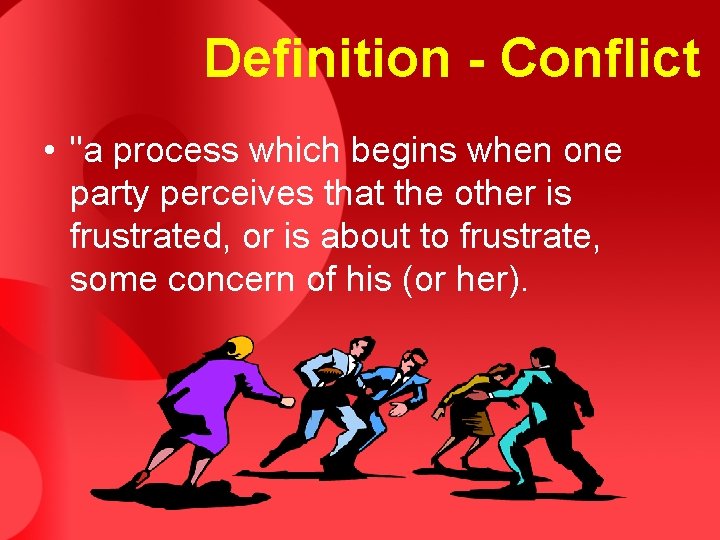
Definition - Conflict • "a process which begins when one party perceives that the other is frustrated, or is about to frustrate, some concern of his (or her).
Definition of Conflict • Perceived by the parties • Parties are in opposition to one another • At least one party is blocking the goal attainment of the other party • Goals can be tangible or psychological – Money – Task Achievement – Happiness
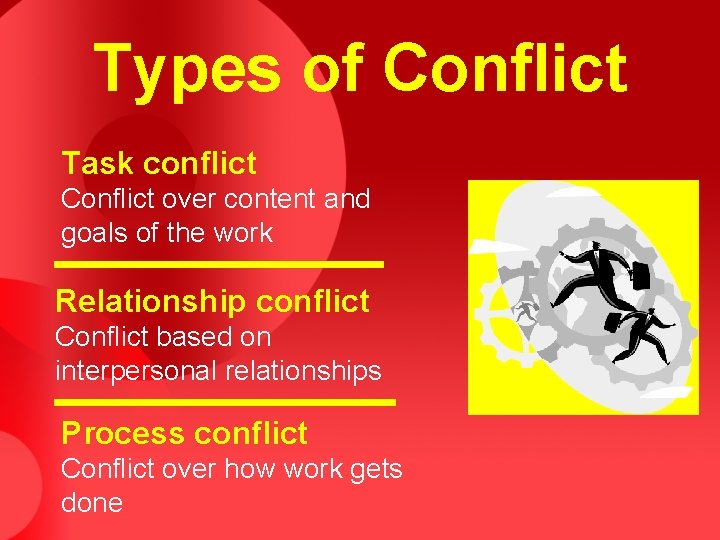
Types of Conflict Task conflict Conflict over content and goals of the work Relationship conflict Conflict based on interpersonal relationships Process conflict Conflict over how work gets done
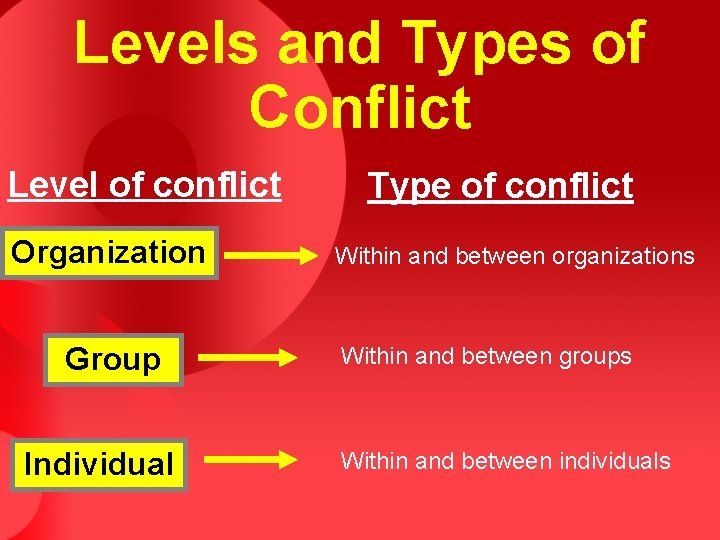
Levels and Types of Conflict Level of conflict Organization Group Individual Type of conflict Within and between organizations Within and between groups Within and between individuals
Sources of conflict • Organizational hierarchy • Competition for scarce resources • Self-image & stereotypical views of others • Differing goals & objectives • Failures & resultant blame fixing • Poor coordination of activities
Is Conflict Bad? • Traditional View • Human Relations • Interactionist

Today’s Topics
Conflict Management Conflict at Work
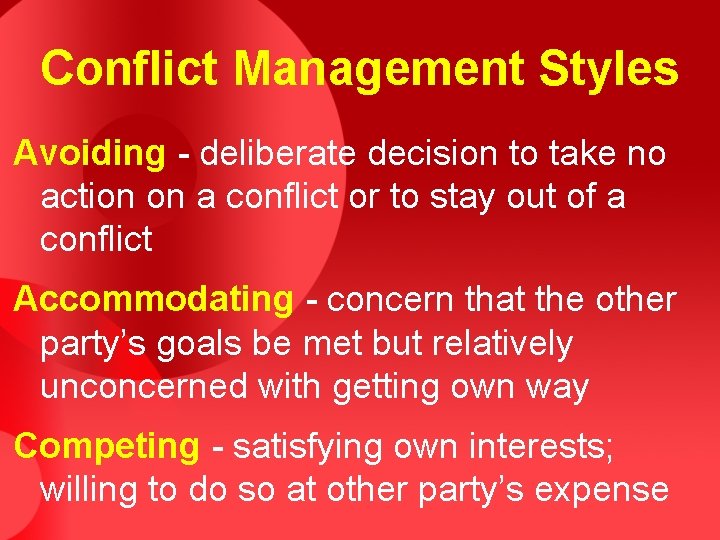
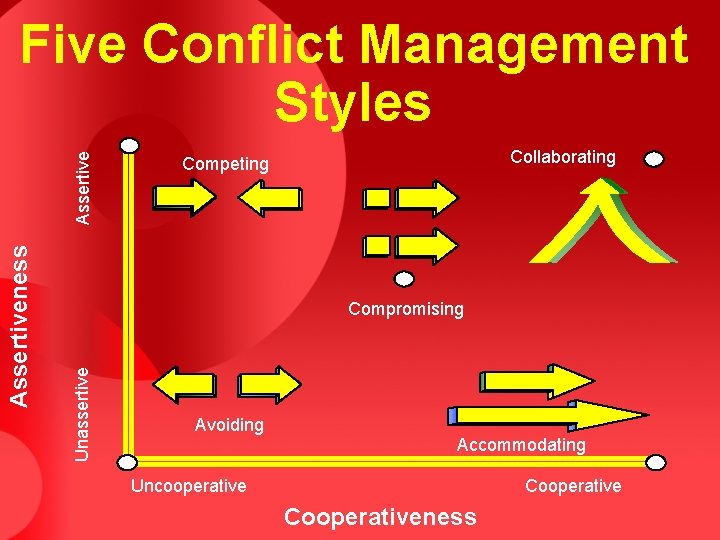
Conflict Management Styles Avoiding - deliberate decision to take no action on a conflict or to stay out of a conflict Accommodating - concern that the other party’s goals be met but relatively unconcerned with getting own way Competing - satisfying own interests; willing to do so at other party’s expense
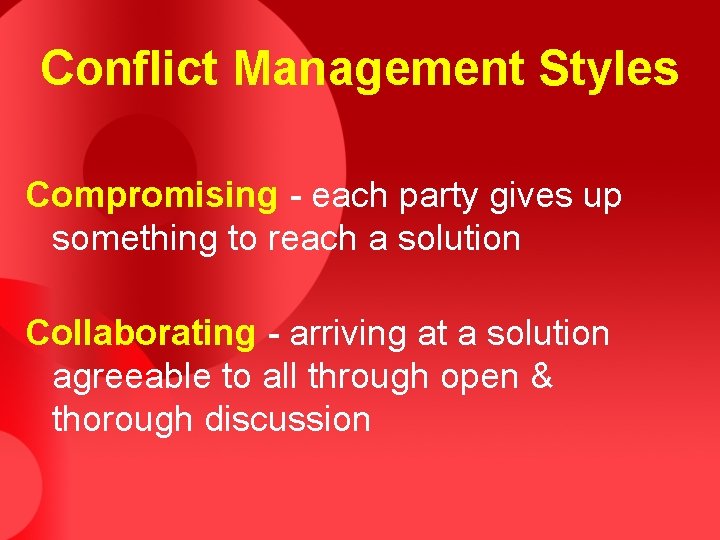
Conflict Management Styles Compromising - each party gives up something to reach a solution Collaborating - arriving at a solution agreeable to all through open & thorough discussion
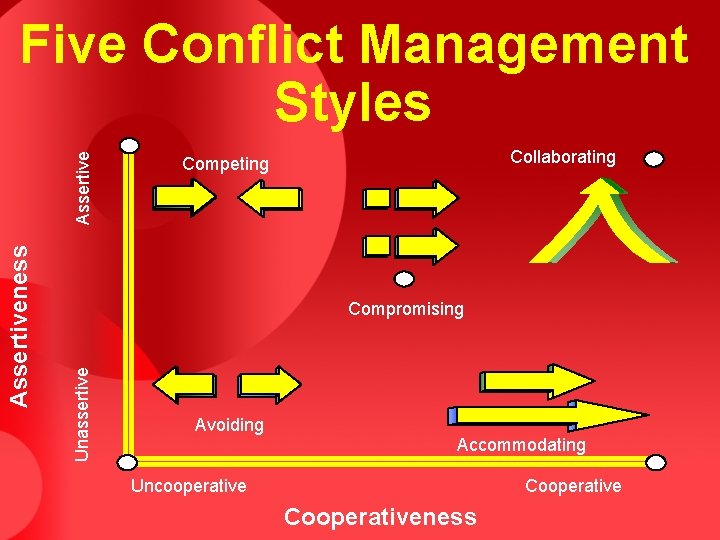
Collaborating Competing Compromising Unassertive Assertiveness Assertive Five Conflict Management Styles Avoiding Accommodating Uncooperative Cooperativeness
Avoidance Is Appropriate When. . . • You have no chance of satisfying your concerns • let people cool down
Accommodation Is Appropriate When. . . • You realize you are wrong • Issue is much more important to other party • To build up credit for later negotiations • To preserve harmony
Competition Is Appropriate When. . . • No long term relationship • To protect yourself against untrustworthy parties • Unpopular courses of action need implementation • Issues are vital to your welfare
Collaboration Is Appropriate When. . . • Both parties’ concerns are too important to be compromised • To gain commitment • Time is not an issue
Compromising Is Appropriate When. . . • Goals are less important to you than collaboration • Mutually exclusive goals • To achieve temporary settlements • Under intense time pressure
Negotiation Skills
What is negotiation? ØNegotiation. –The process of making joint decisions when the parties involved have different preferences.
Negotiation - a joint process of finding a mutually acceptable solution to a complex conflict Useful under these conditions – Two or more parties – Conflict of interest between the parties – Parties are willing to negotiate – Parties prefer to work together rather than to fight openly, give in, break off contact, or take the dispute to a higher authority
Approaches to Negotiation Distributive Bargaining – the goals of the parties are in conflict, and each party seeks to maximize its resources
Approaches to Negotiation Integrative Negotiation – focuses on the merits of the issues and seeks a win-win solution
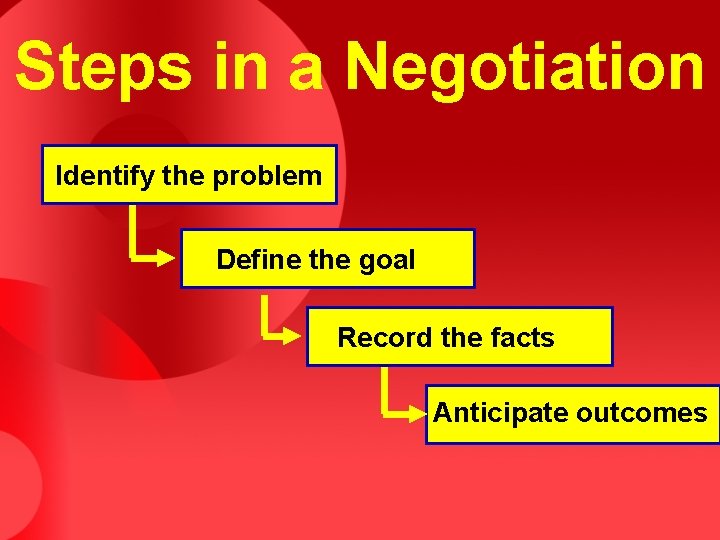
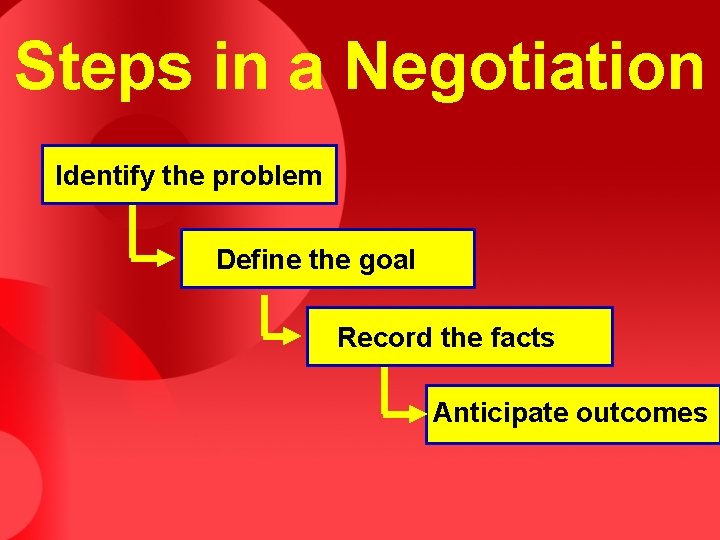
Steps in a Negotiation Identify the problem Define the goal Record the facts Anticipate outcomes
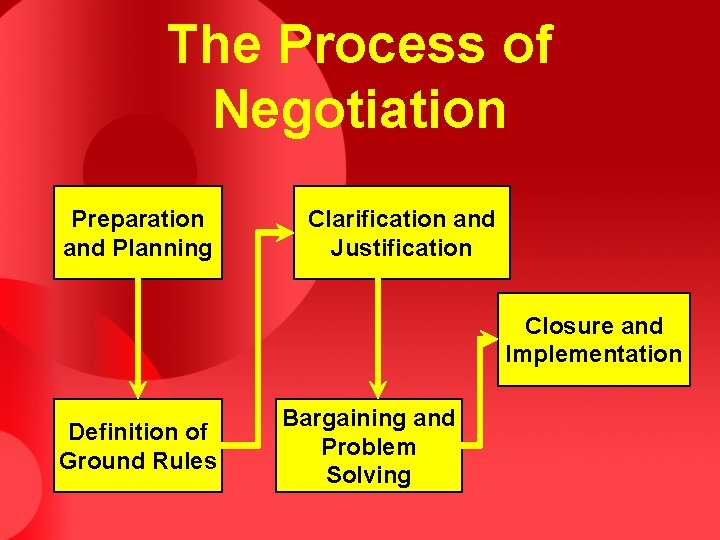
The Process of Negotiation Preparation and Planning Clarification and Justification Closure and Implementation Definition of Ground Rules Bargaining and Problem Solving
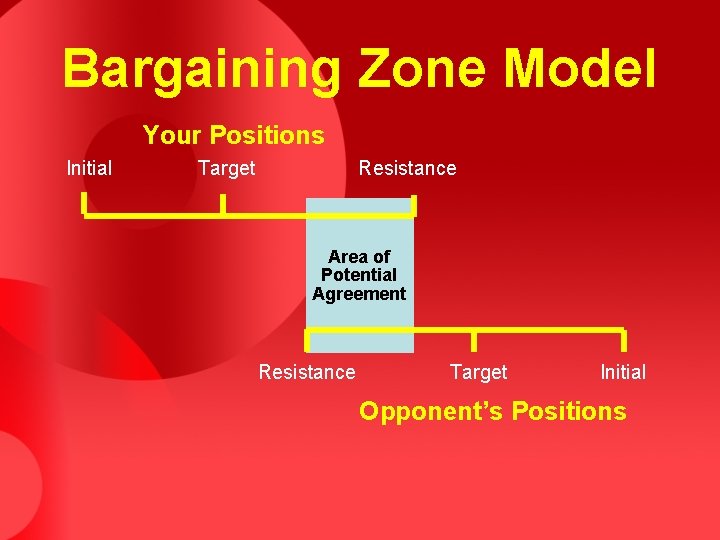
Bargaining Zone Model Your Positions Initial Target Resistance Area of Potential Agreement Resistance Target Initial Opponent’s Positions
Essential skills are • Planning and preparing thoroughly before a negotiation • Using appropriate techniques during the negotiation • Following up effectively • Evaluating the effectiveness of a negotiation
Mapping the Negotiation • Describe the problem of the negotiation • Identify the people involved • Use empathy to analyze the situation • Record participants’ needs and fears about the problem
Anticipate possible outcomes Consider and evaluate a wide range of likely outcomes before the negotiation starts
Determine the Negotiation Outcome • Win/lose • Lose/lose • Win/win
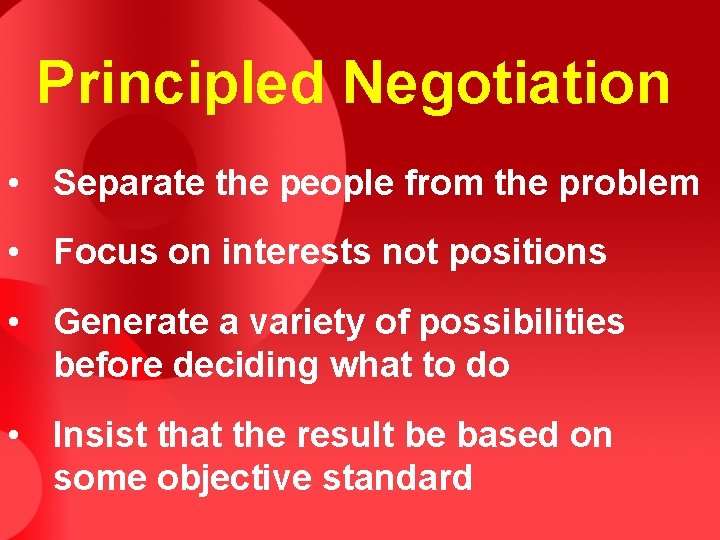
Principled Negotiation • Separate the people from the problem • Focus on interests not positions • Generate a variety of possibilities before deciding what to do • Insist that the result be based on some objective standard
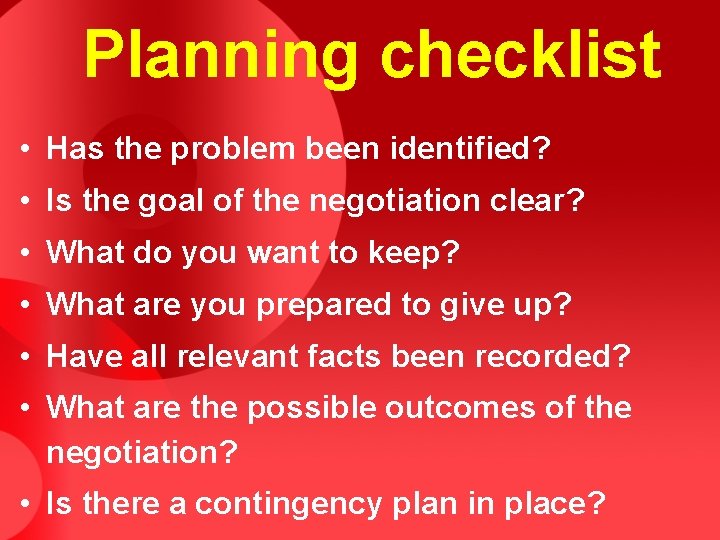
Planning checklist • Has the problem been identified? • Is the goal of the negotiation clear? • What do you want to keep? • What are you prepared to give up? • Have all relevant facts been recorded? • What are the possible outcomes of the negotiation? • Is there a contingency plan in place?
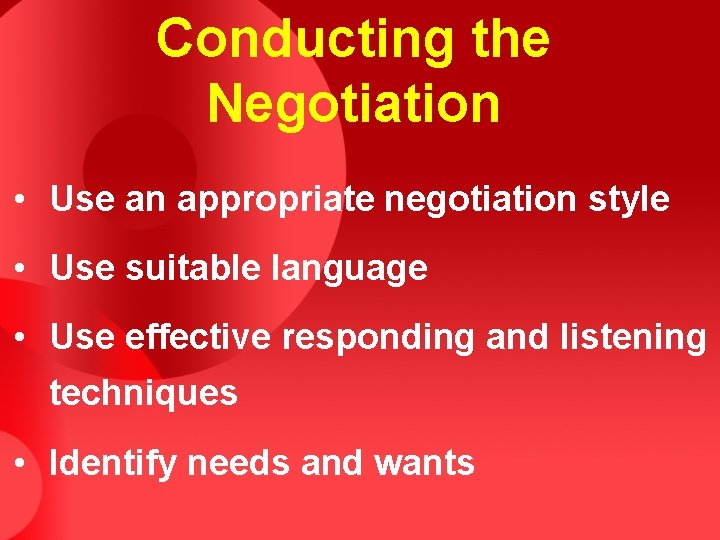
Conducting the Negotiation • Use an appropriate negotiation style • Use suitable language • Use effective responding and listening techniques • Identify needs and wants
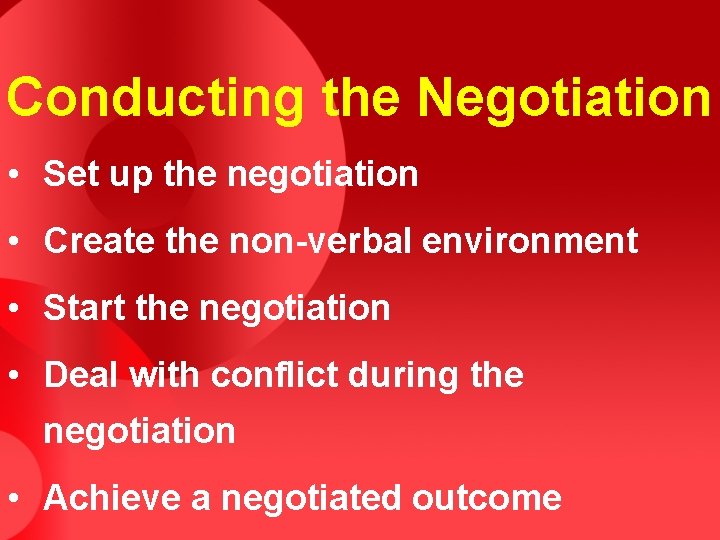
Conducting the Negotiation • Set up the negotiation • Create the non-verbal environment • Start the negotiation • Deal with conflict during the negotiation • Achieve a negotiated outcome
Setting up the Negotiation • Time • Location • Furniture and seating • Team members
Evaluate the Negotiation • Identify action to be taken • Write down each step • Record decisions for future reference • Identify who is responsible for each step of the implementation process

Third-Party Negotiations
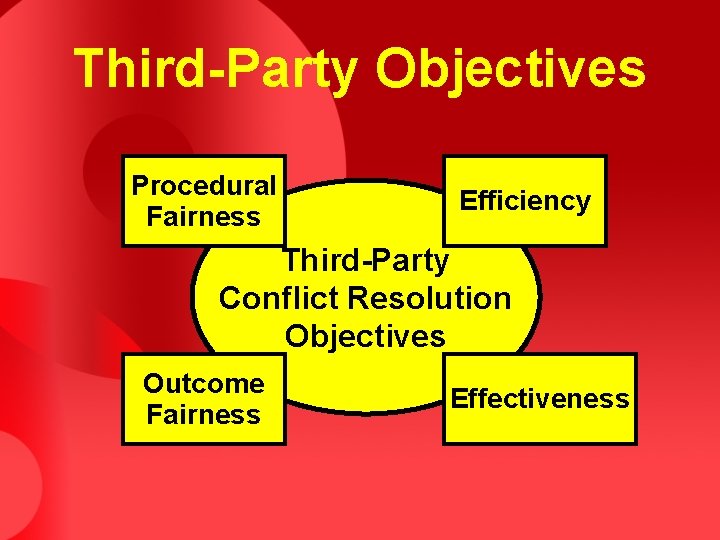
Third-Party Objectives Procedural Fairness Efficiency Third-Party Conflict Resolution Objectives Outcome Fairness Effectiveness
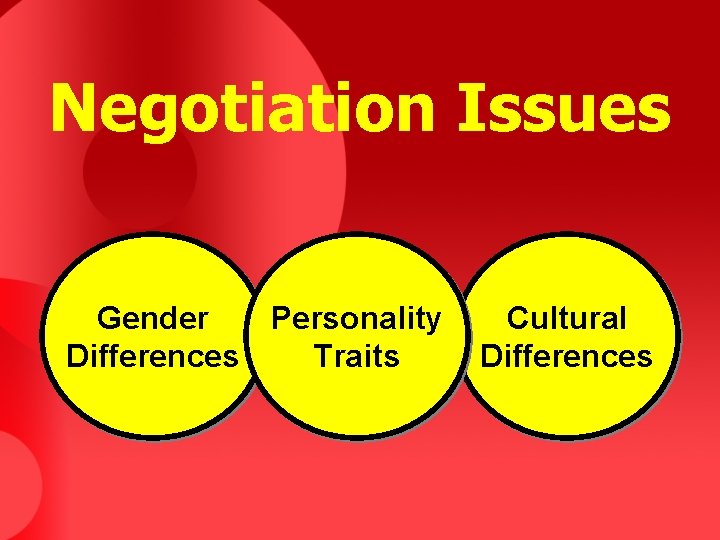
Negotiation Issues Gender Personality Differences Traits Cultural Differences
Issues in Negotiation • The Role of Personality Traits in Negotiation – Traits do not appear to have a significantly direct effect on the outcomes of either bargaining or negotiating processes. • Gender Differences in Negotiations – Women negotiate no differently from men, although men apparently negotiate slightly better outcomes. – Men and women with similar power bases use the same negotiating styles. – Women’s attitudes toward negotiation and their success as negotiators are less favorable than men’s.
ØCulture and negotiation. – Differences in negotiation approaches and practices are influenced by cultural differences in: • Time orientation. • Individualism-collectivism. • Power distance.
Effective Negotiator Behaviours • Plan and Set Goals • Gather Information • Communicate Effectively • Make Appropriate Concessions
Ethical aspects of negotiation. • To maintain good working relationships, negotiating parties should strive for high ethical standards. • The negotiating parties should avoid being side tracked by self-interests, thereby being tempted to pursue unethical actions.
p o t s s ’ e t r e e L it h

Summary
Conflict Management Conflict at Work
Collaborating Competing Compromising Unassertive Assertiveness Assertive Five Conflict Management Styles Avoiding Accommodating Uncooperative Cooperativeness
Negotiation Skills
Steps in a Negotiation Identify the problem Define the goal Record the facts Anticipate outcomes
Third-Party Negotiations
Ethical aspects of negotiation. • To maintain good working relationships, negotiating parties should strive for high ethical standards. • The negotiating parties should avoid being side tracked by self-interests, thereby being tempted to pursue unethical actions.

Next….
Organizational Behavior (MGT-502) Lecture-27
- Slides: 53