
Organizational Behavior MGT502 Lecture24 Summary of Lecture23 Leadership
Organizational Behavior (MGT-502) Lecture-24
Summary of Lecture-23
Leadership
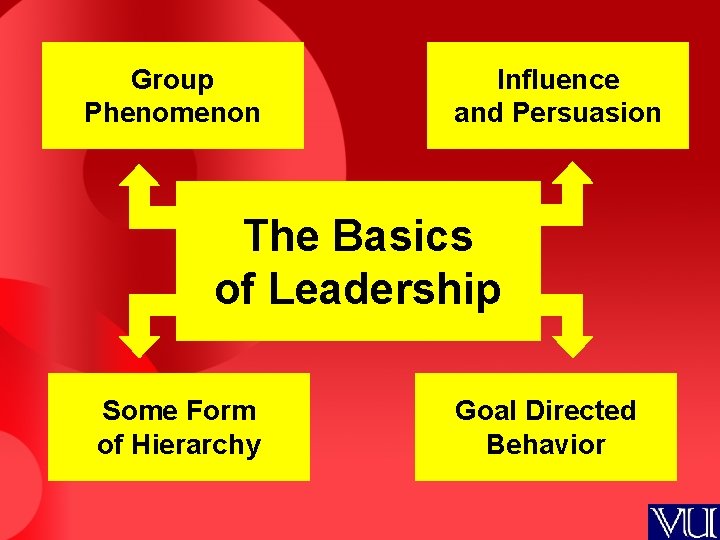
Group Phenomenon Influence and Persuasion The Basics of Leadership Some Form of Hierarchy Goal Directed Behavior
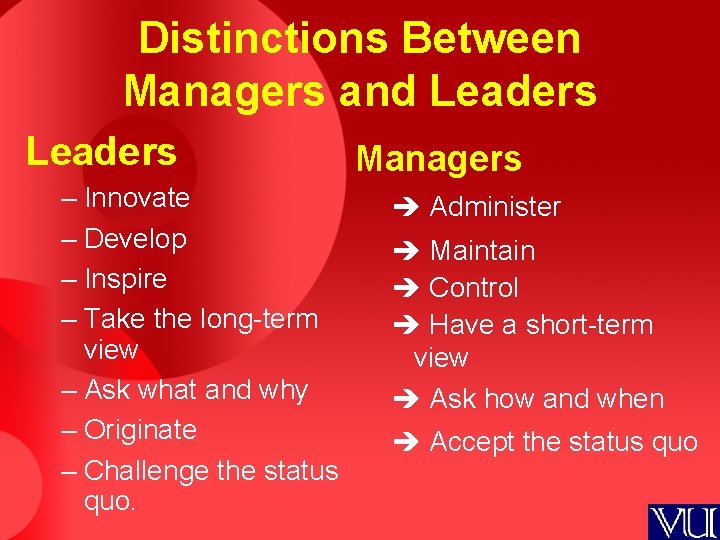
Distinctions Between Managers and Leaders – Innovate – Develop – Inspire – Take the long-term view – Ask what and why – Originate – Challenge the status quo. Managers è Administer è Maintain è Control è Have a short-term view è Ask how and when è Accept the status quo
What Makes a Good Leader? Theories fall into 3 categories: A. Trait theories – look for the major characteristic common to all effective leaders B. Behavioral theories – examine the actual behavior of effective leaders to determine what kinds of behaviors lead to success C. Contingency theories – leader effectiveness depends (or is contingent) upon the interaction of leader behavior and the situation
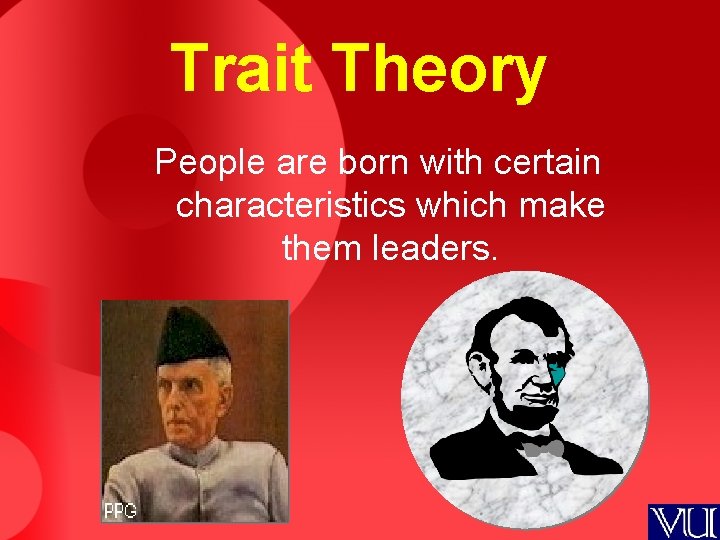
Trait Theory People are born with certain characteristics which make them leaders.
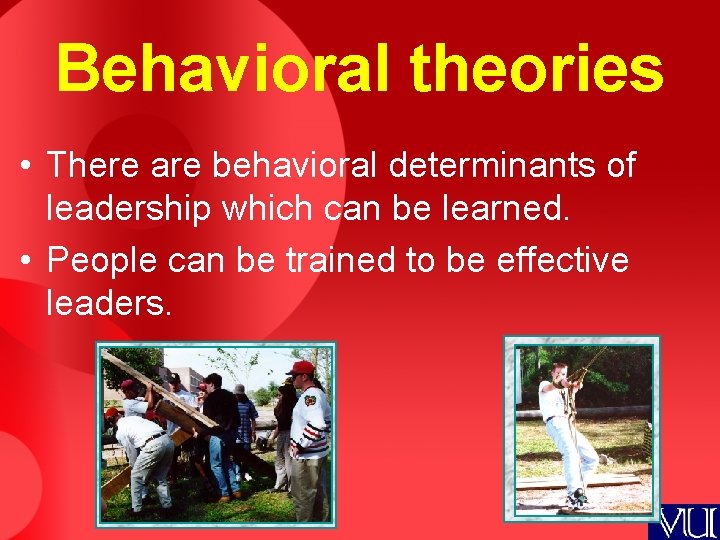
Behavioral theories • There are behavioral determinants of leadership which can be learned. • People can be trained to be effective leaders.
Contingency Theories
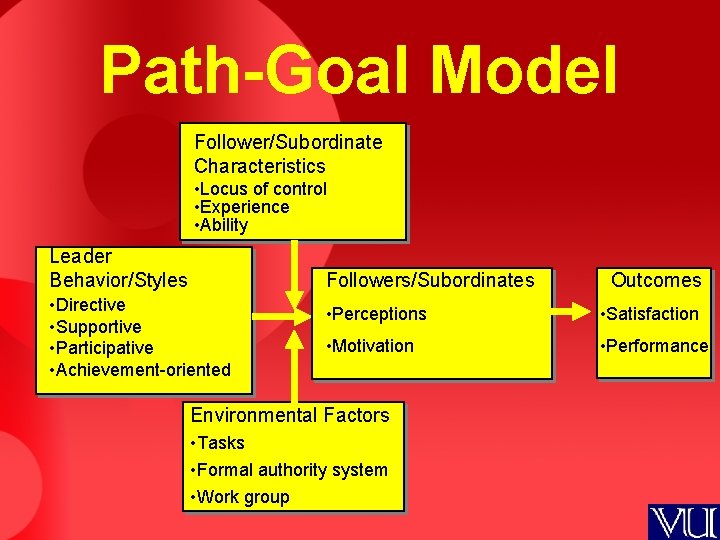
Path-Goal Model Follower/Subordinate Characteristics • Locus of control • Experience • Ability Leader Behavior/Styles Followers/Subordinates • Directive • Supportive • Participative • Achievement-oriented Outcomes • Perceptions • Satisfaction • Motivation • Performance Environmental Factors • Tasks • Formal authority system • Work group
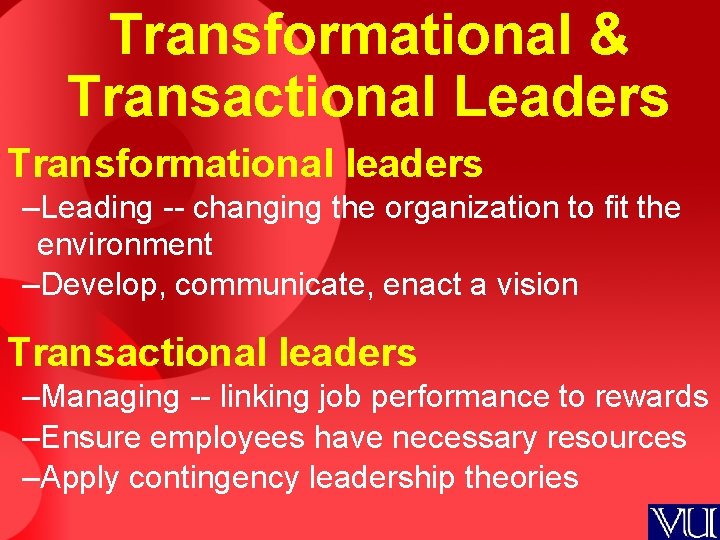
Transformational & Transactional Leaders Transformational leaders –Leading -- changing the organization to fit the environment –Develop, communicate, enact a vision Transactional leaders –Managing -- linking job performance to rewards –Ensure employees have necessary resources –Apply contingency leadership theories
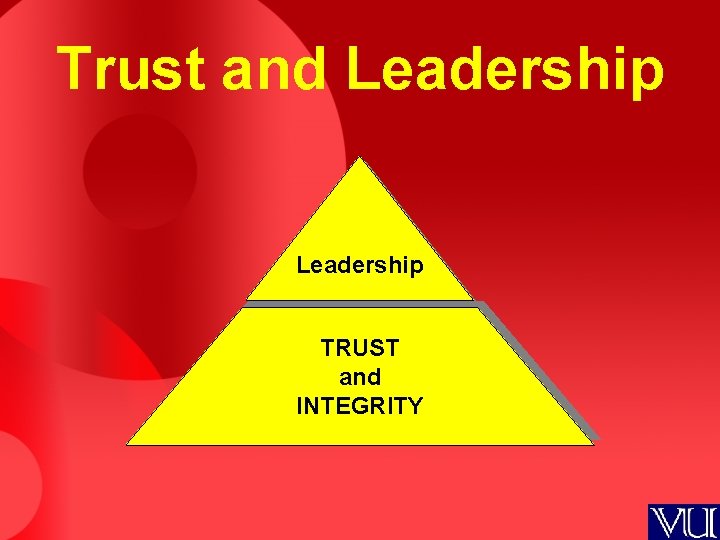
Trust and Leadership TRUST and INTEGRITY

Today’s Topics
Power • What is it? • Do you have any? • Do you want some? • How can you get some?
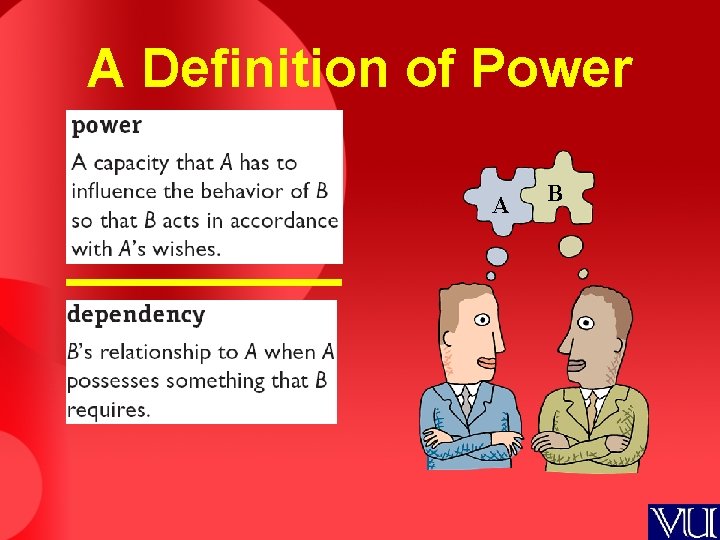
A Definition of Power A B
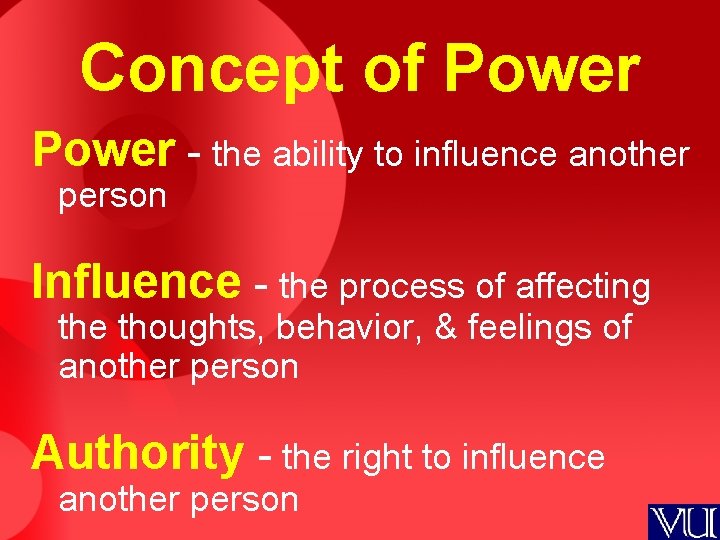
Concept of Power - the ability to influence another person Influence - the process of affecting the thoughts, behavior, & feelings of another person Authority - the right to influence another person
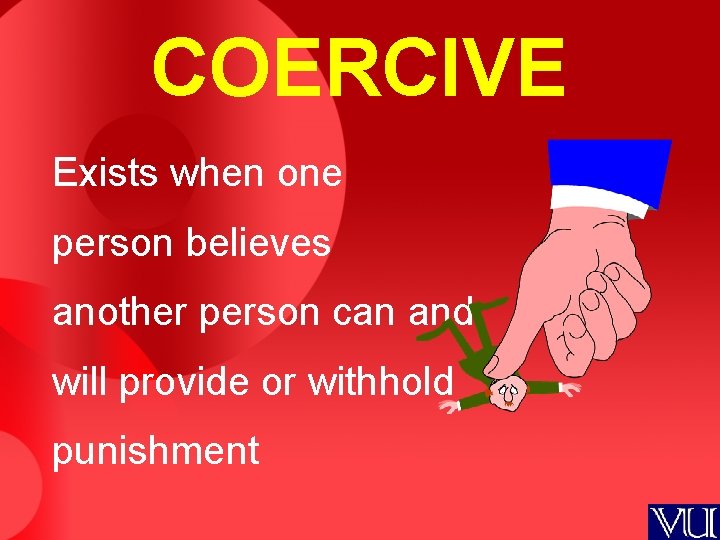
COERCIVE Exists when one person believes another person can and will provide or withhold punishment
REWARD Exists when one person believes another person can and will provide or withhold rewards
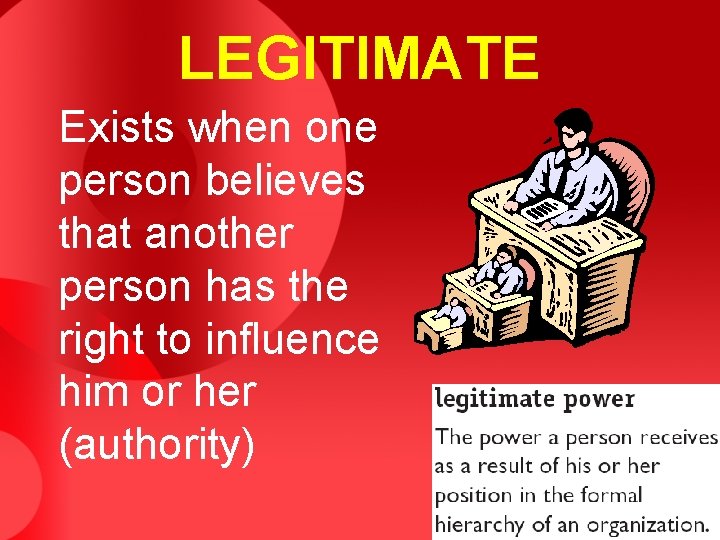
LEGITIMATE Exists when one person believes that another person has the right to influence him or her (authority)
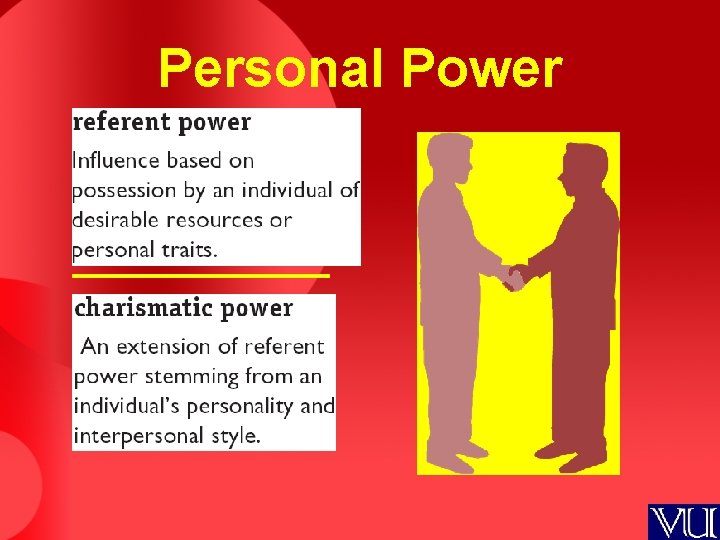
REFERENT (CHARISMATIC) Exists when one person finds another personally attractive and wants to be associated with or affiliated with that person
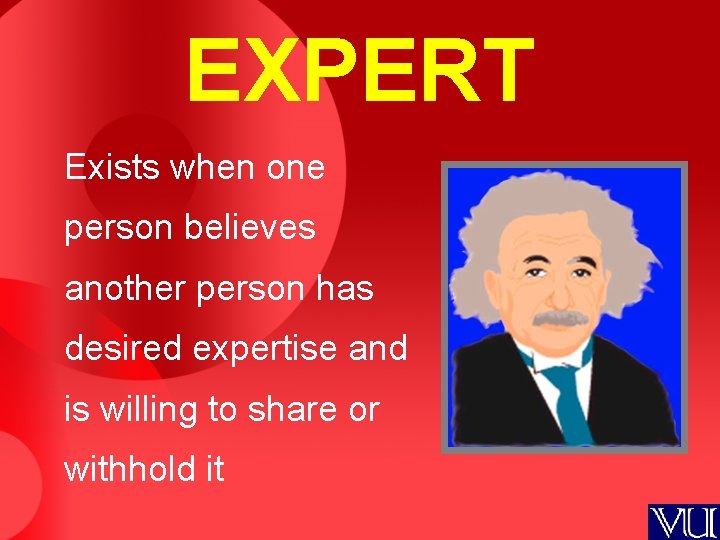
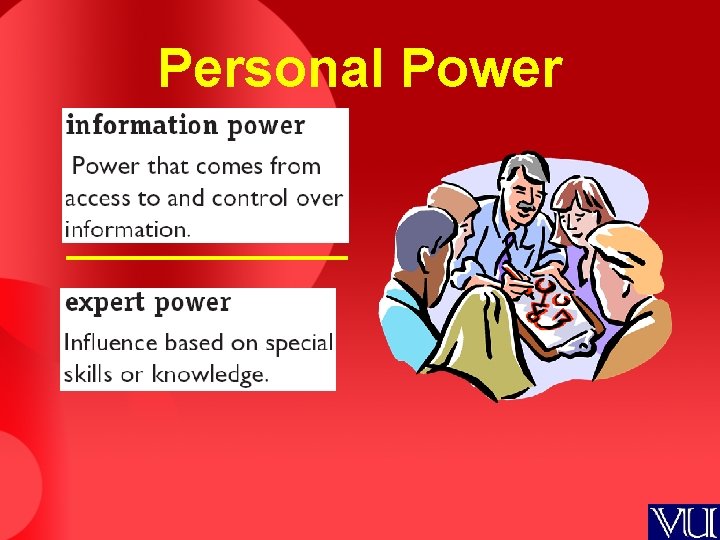
EXPERT Exists when one person believes another person has desired expertise and is willing to share or withhold it
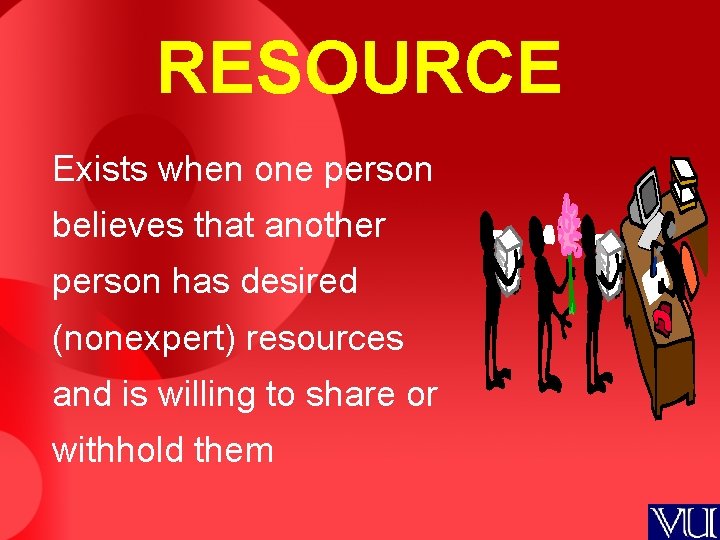
RESOURCE Exists when one person believes that another person has desired (nonexpert) resources and is willing to share or withhold them
PRINCIPLES OF POWER • Power is perceived • Power is relative • Power bases must be coordinated • Power is a double-edged sword (used and abused)
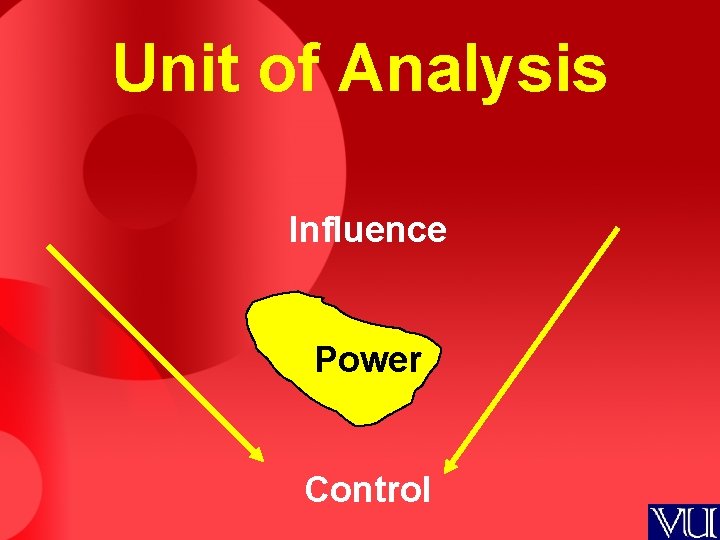
Unit of Analysis Influence Power Control
INTERPERSONAL POWER The ability to influence others and maintain control over your own fate
Sources of Organizational Power: Interpersonal Reward Power - agent’s ability to control the rewards that the target wants Coercive Power - agent’s ability to cause an unpleasant experience for a target Legitimate Power - agent and target agree that agent has influential rights, based on position and mutual agreement Referent Power-based on interpersonal attraction Expert Power - agent has knowledge target needs
Personal Power
Personal Power
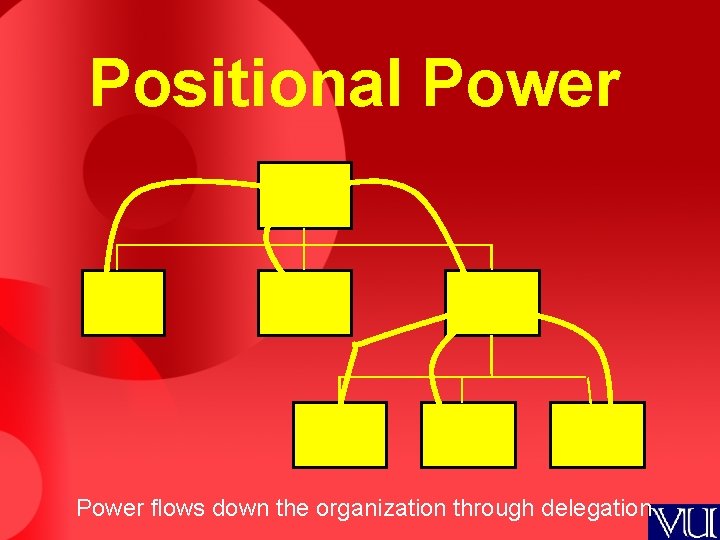
Positional Power flows down the organization through delegation
Which Power is Most Effective? Expert Power! • Strong relationship to performance & satisfaction • Transfers vital skills, abilities, and knowledge within the organization • Employees internalize what they observe & learn from managers they consider “experts”
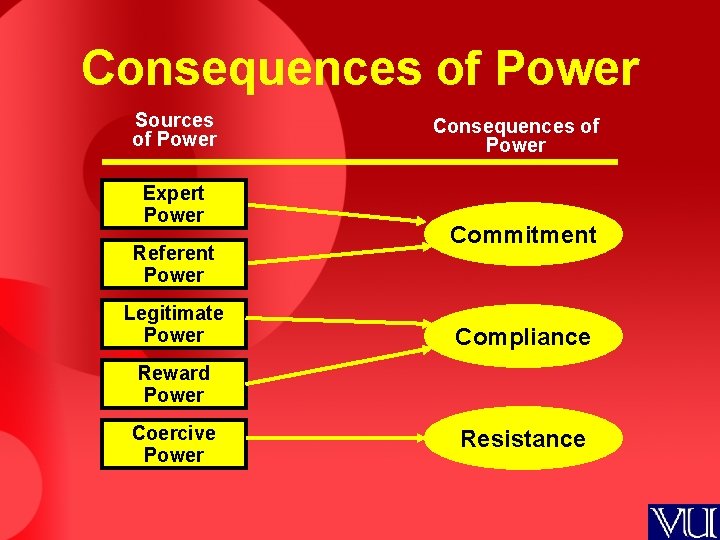
Consequences of Power Sources of Power Expert Power Referent Power Legitimate Power Consequences of Power Commitment Compliance Reward Power Coercive Power Resistance
What is the Relationship between Power and Leadership?
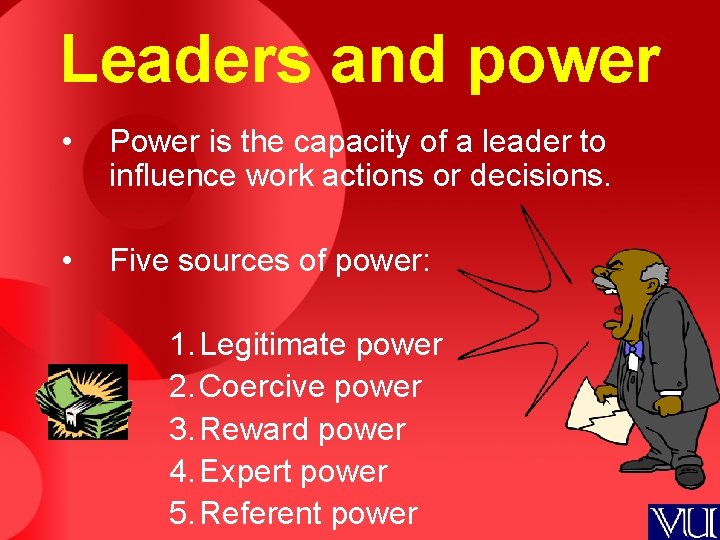
Leaders and power • Power is the capacity of a leader to influence work actions or decisions. • Five sources of power: 1. Legitimate power 2. Coercive power 3. Reward power 4. Expert power 5. Referent power
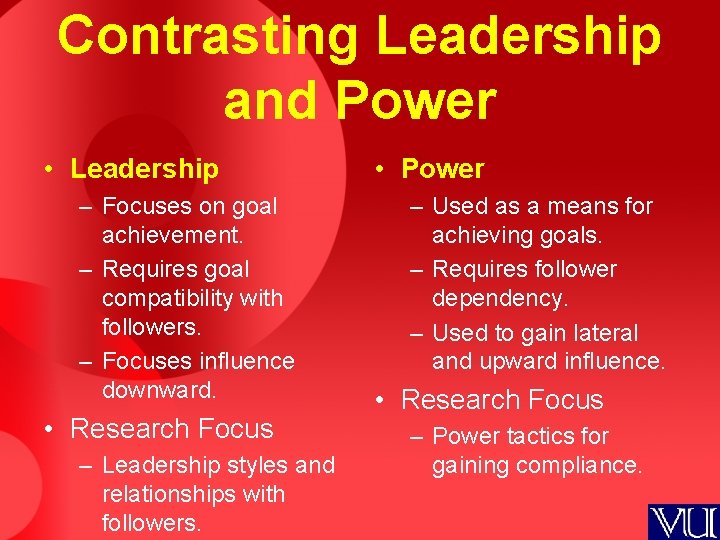
Contrasting Leadership and Power • Leadership – Focuses on goal achievement. – Requires goal compatibility with followers. – Focuses influence downward. • Research Focus – Leadership styles and relationships with followers. • Power – Used as a means for achieving goals. – Requires follower dependency. – Used to gain lateral and upward influence. • Research Focus – Power tactics for gaining compliance.
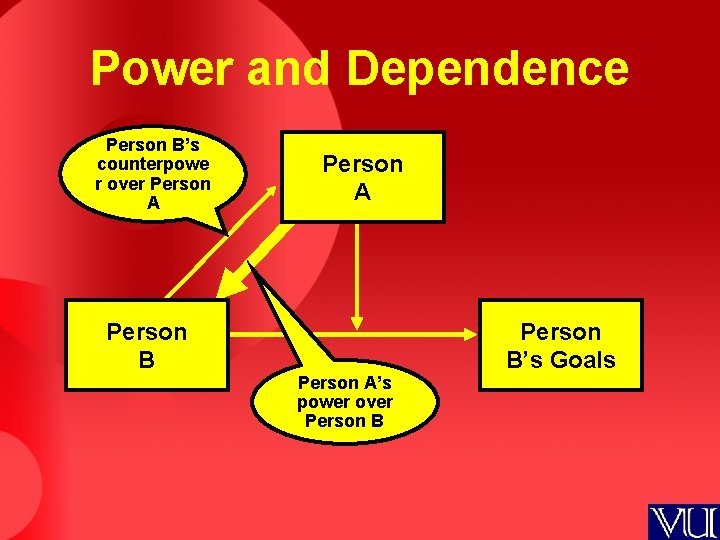
Power and Dependence Person B’s counterpowe r over Person A Person B Person A’s power over Person B’s Goals
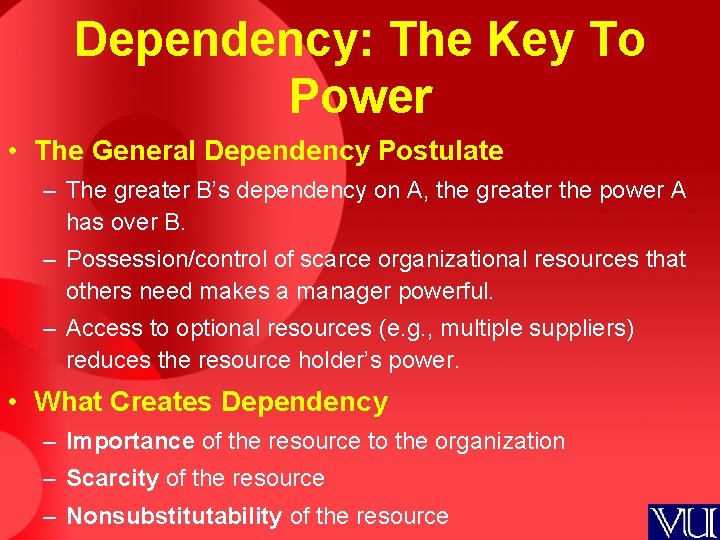
Dependency: The Key To Power • The General Dependency Postulate – The greater B’s dependency on A, the greater the power A has over B. – Possession/control of scarce organizational resources that others need makes a manager powerful. – Access to optional resources (e. g. , multiple suppliers) reduces the resource holder’s power. • What Creates Dependency – Importance of the resource to the organization – Scarcity of the resource – Nonsubstitutability of the resource
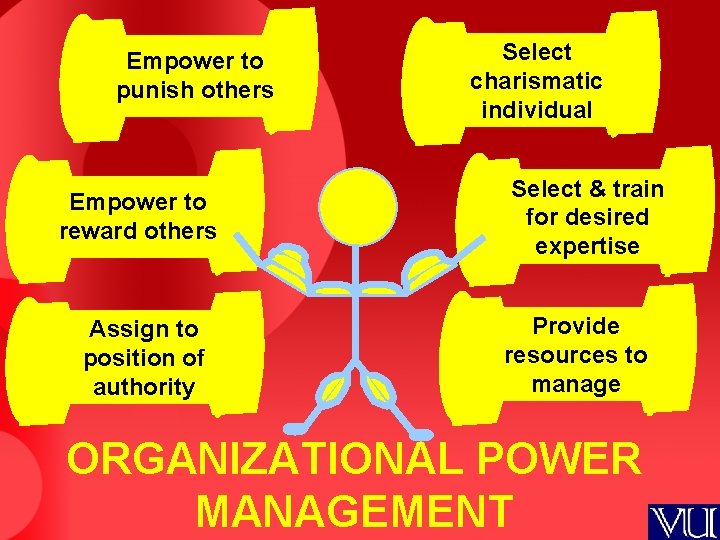
Empower to punish others Empower to reward others Assign to position of authority Select charismatic individual Select & train for desired expertise Provide resources to manage ORGANIZATIONAL POWER MANAGEMENT
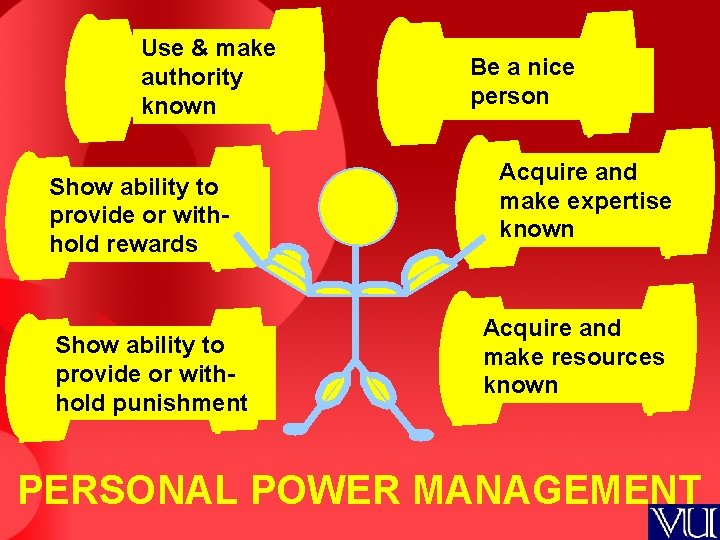
Use & make authority known Show ability to provide or withhold rewards Show ability to provide or withhold punishment Be a nice person Acquire and make expertise known Acquire and make resources known PERSONAL POWER MANAGEMENT
Using Power Ethically • Does the behavior produce a good outcome for people both inside and outside the organization? • Does the behavior respect the rights of all parties? • Does the behavior treat all parties equitably and fairly?
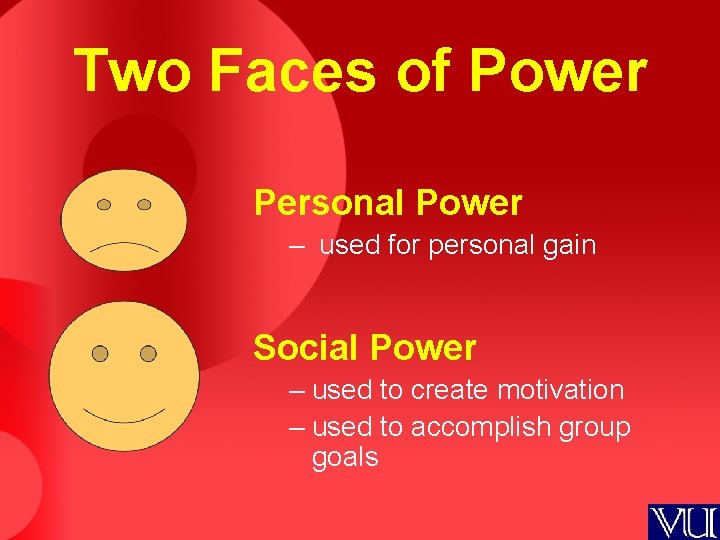
Two Faces of Power Personal Power – used for personal gain Social Power – used to create motivation – used to accomplish group goals
Political Behavior in Organizations Organizational Politics - the use of power and influence in organizations Political Behavior - actions not officially sanctioned by an organization that are taken to influence others in order to meet one’s personal goals
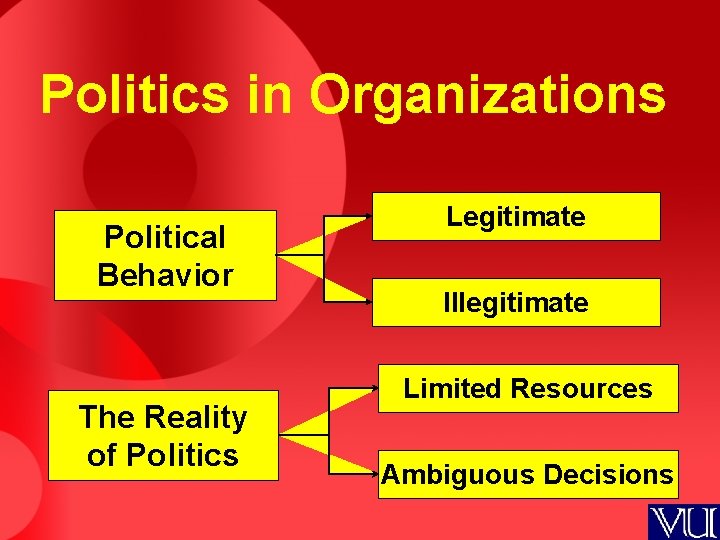
Politics in Organizations Political Behavior The Reality of Politics Legitimate Illegitimate Limited Resources Ambiguous Decisions
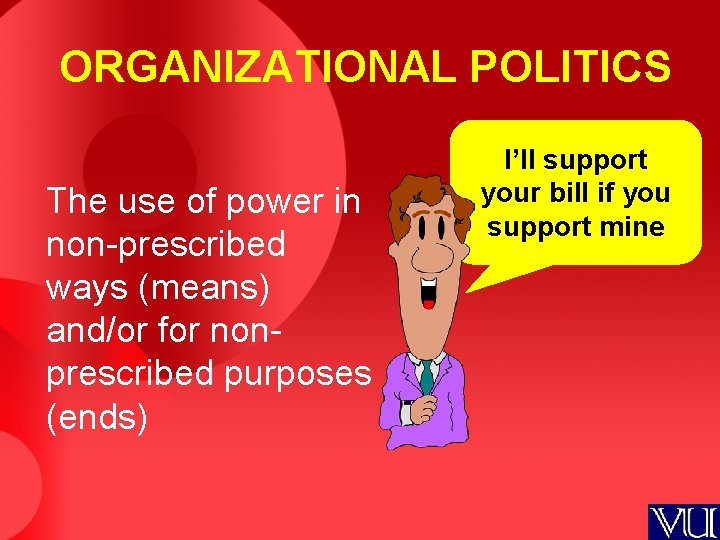
ORGANIZATIONAL POLITICS The use of power in non-prescribed ways (means) and/or for nonprescribed purposes (ends) I’ll support your bill if you support mine
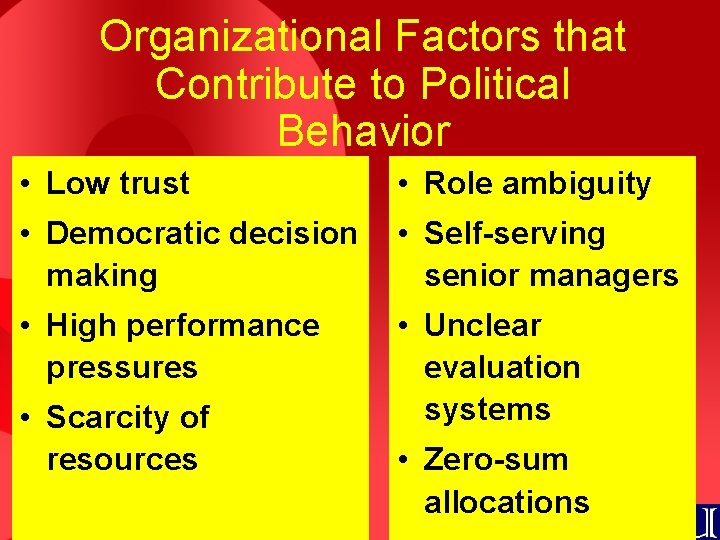
Organizational Factors that Contribute to Political Behavior • Low trust • Role ambiguity • Democratic decision making • Self-serving senior managers • High performance pressures • Unclear evaluation systems • Scarcity of resources • Zero-sum allocations

Types of Organizational Politics Managing impressions Creating obligations Attacking and blaming Types of Organizational Politics Cultivating networks Controlling information Forming coalitions
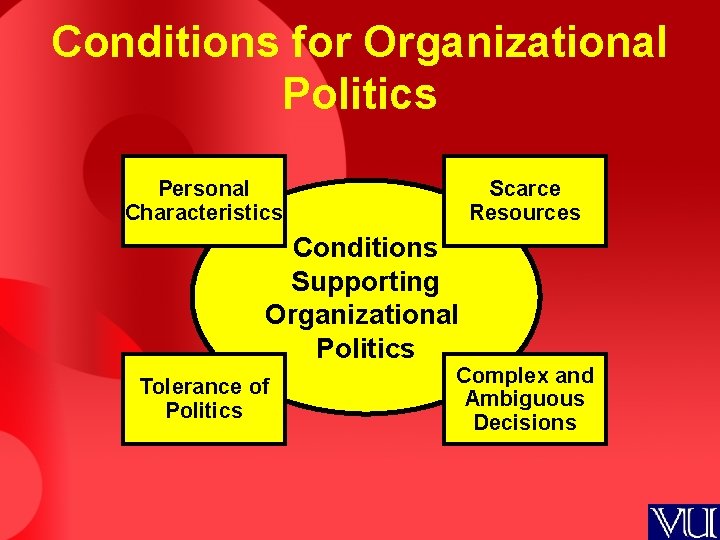
Conditions for Organizational Politics Personal Characteristics Scarce Resources Conditions Supporting Organizational Politics Tolerance of Politics Complex and Ambiguous Decisions
Information and Power • Control over information flow – Based on legitimate power – Relates to formal communication network – Common in centralized structures (wheel pattern) • Coping with uncertainty – Those who know how to cope with organizational uncertainties gain power • Prevention • Forecasting • Absorption
Managing Political Behavior • • Maintain open communication Clarify performance expectations Use participative management Encourage cooperation among work groups • Manage scarce resources well • Provide a supportive organizational climate
p o t s s ’ e t r e e L it h

Summary

Next….
Organizational Behavior (MGT-502) Lecture-24
- Slides: 53