
Organizational Behavior MGT502 Lecture13 Summary of Lecture12 Perception
Organizational Behavior (MGT-502) Lecture-13
Summary of Lecture-12
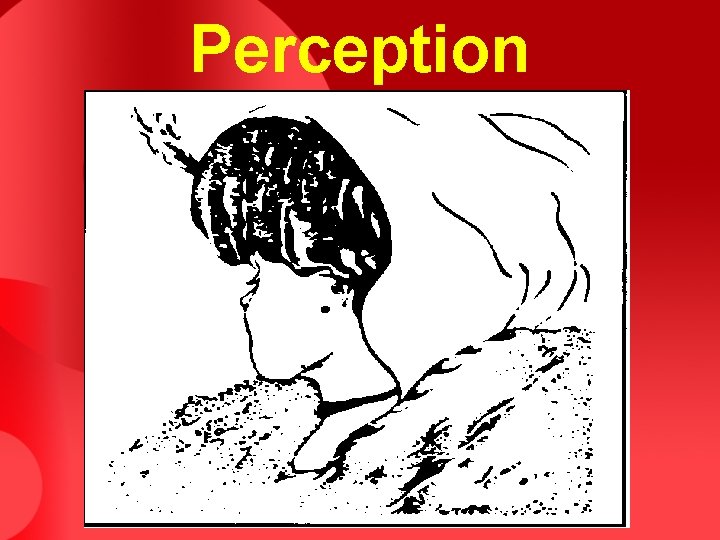
Perception
Factors Influencing Perception • The Perceiver • The Target • The Situation
Attribution The Process through which individuals attempt to determine the causes of others behavior
Fundamental Attribution Error The tendency to attribute others’ actions to internal causes (e. g their traits) while largely ignoring external factors that also may have influenced their behavior.
Impression Management Self-presentation Is the process by which people attempt to manage or control the perceptions other form of them.
Perception & Decision Making
Rational Decision-Making Model A decision-making model that describes how individuals should behave in order to maximize some outcomes.
Alternatives to Rational Decision- Making • Bounded Rationality • Intuitive Decision-making • Decision-Making by Objection • The Garbage Can Model
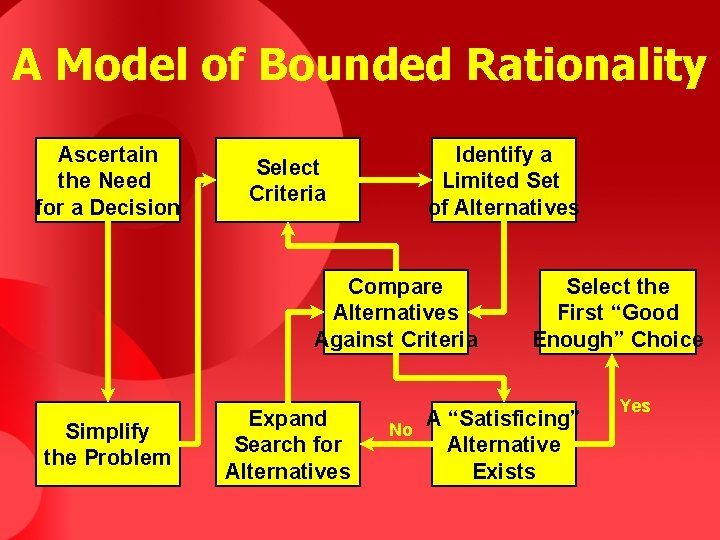
A Model of Bounded Rationality Ascertain the Need for a Decision Select Criteria Identify a Limited Set of Alternatives Compare Alternatives Against Criteria Simplify the Problem Expand Search for Alternatives Select the First “Good Enough” Choice A “Satisficing” No Alternative Exists Yes
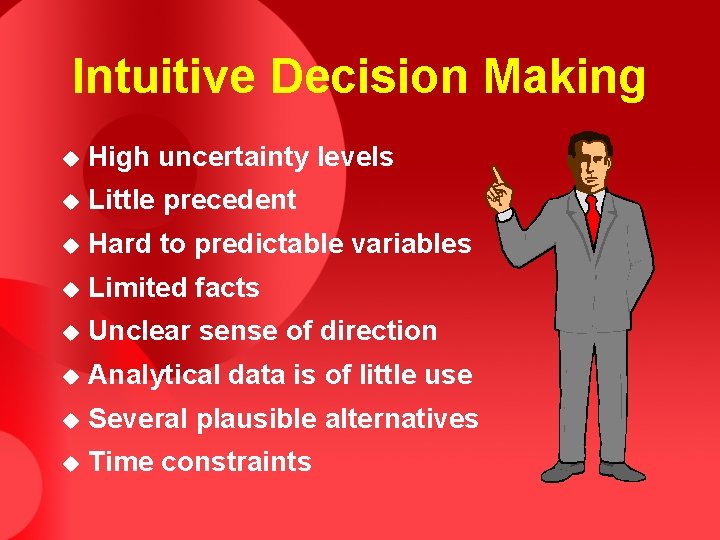
Intuitive Decision Making u High uncertainty levels u Little precedent u Hard to predictable variables u Limited facts u Unclear sense of direction u Analytical data is of little use u Several plausible alternatives u Time constraints
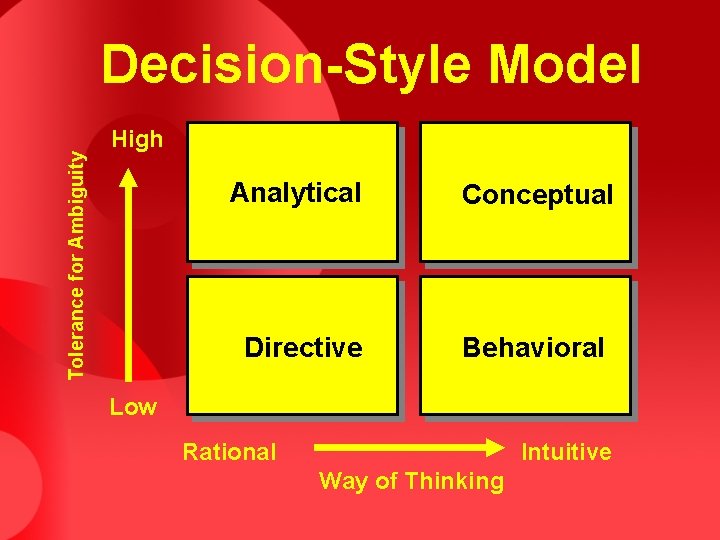
Tolerance for Ambiguity Decision-Style Model High Analytical Conceptual Directive Behavioral Low Rational Intuitive Way of Thinking
Criteria of Decision Effectiveness • • Quality Timeliness Acceptance Ethical Appropriateness
Types of Managerial Decisions • Programmed vs. Nonprogrammed • Strategic vs. Operational • Top-Down vs. Worker-Empowered
Methods of Improving Decision Making in Organizations • Human-based Methods • Computer-based Methods • Brainstorming • Nominal Group Technique • Delphi Method

Today’s Topics
Motivation A state of mind, desire, energy or interest that translates into action.
• Motivation –The inner drive that directs a person’s behavior toward goals.
Defining Motivation The processes that account for an individual’s intensity, direction and persistence of effort toward attaining a goal. Key Elements 1. Intensity: how hard a person tries 2. Direction: toward beneficial goal 3. Persistence: how long a person tries
• Intensity is concerned with how hard a person tries. This is the element most of us focus on when we talk about motivation. • Direction is the orientation that benefits the organization. • Persistence is a measure of how long a person can maintain his/her effort. Motivated individuals stay with a task long enough to achieve their goal.
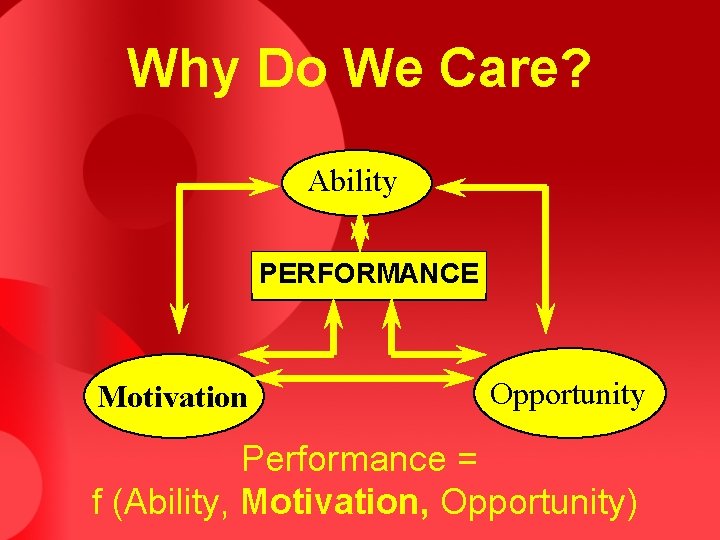
Why Do We Care? Ability PERFORMANCE Motivation Opportunity Performance = f (Ability, Motivation, Opportunity)
The Motivation Process
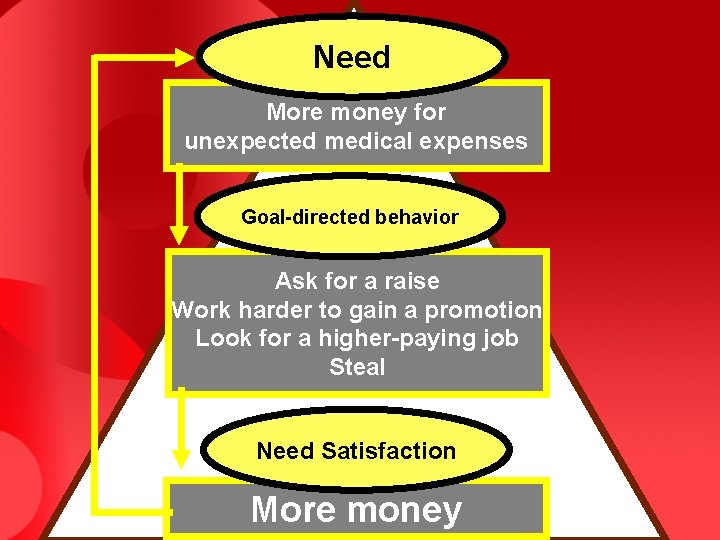
Need More money for unexpected medical expenses Goal-directed behavior Ask for a raise Work harder to gain a promotion Look for a higher-paying job Steal Need Satisfaction More money
Core Phases of the Motivational Process
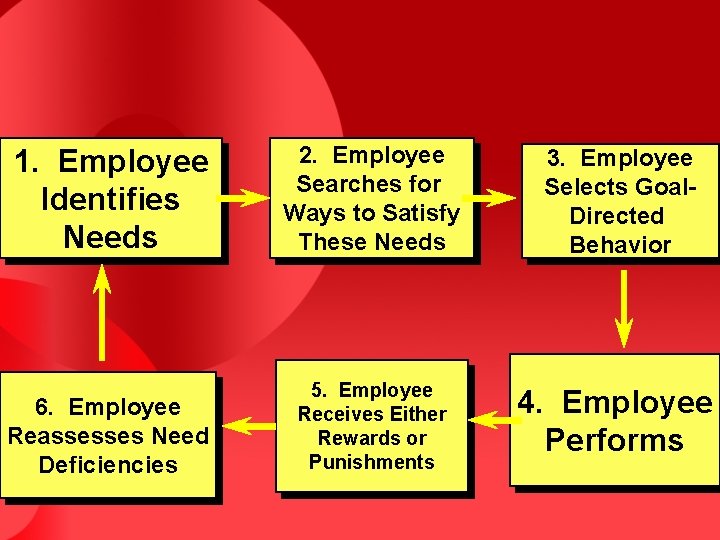
1. Employee Identifies Needs 2. Employee Searches for Ways to Satisfy These Needs 3. Employee Selects Goal. Directed Behavior 6. Employee Reassesses Need Deficiencies 5. Employee Receives Either Rewards or Punishments 4. Employee Performs

Motivational Theories
Maslow’s Hierarchy of Needs
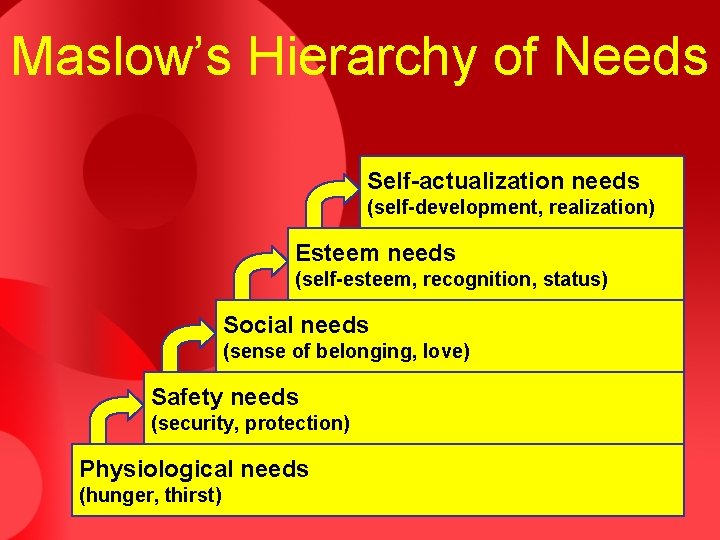
Maslow’s Hierarchy of Needs Self-actualization needs (self-development, realization) Esteem needs (self-esteem, recognition, status) Social needs (sense of belonging, love) Safety needs (security, protection) Physiological needs (hunger, thirst)
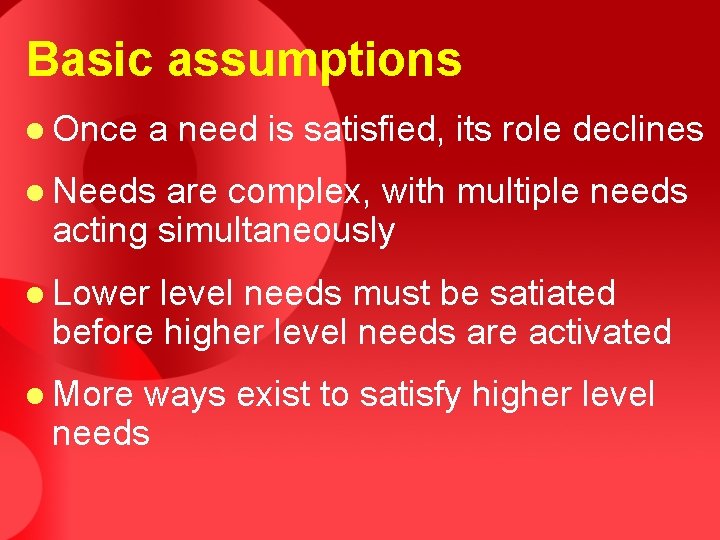
Basic assumptions l Once a need is satisfied, its role declines l Needs are complex, with multiple needs acting simultaneously l Lower level needs must be satiated before higher level needs are activated l More ways exist to satisfy higher level needs
l Individual and environment influence employee behavior l Individuals decide behavior, although environment can place constraints l Individuals have different needs/goals l Decide among alternatives based on perception of behavior leading to desired outcome
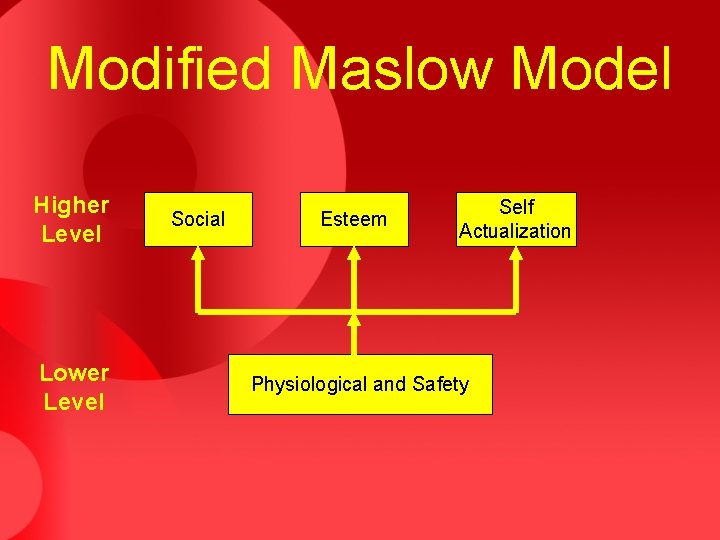
Modified Maslow Model Higher Level Lower Level Social Esteem Self Actualization Physiological and Safety
Alderfer’s ERG Theory A three-level hierarchical need theory of motivation that allows for movement up and down the hierarchy. • Existence Needs • Relatedness Needs • Growth Needs
Alderfer’s ERG Model • Individuals have 3 basic needs – Existence – Relatedness – Growth • Needs correspond to Maslow’s Hierarchy • Models differ in how needs are satisfied
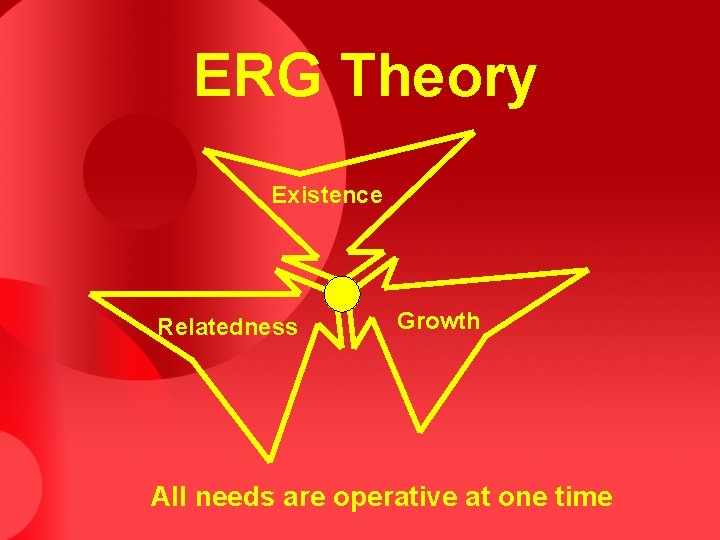
ERG Theory Existence Relatedness Growth All needs are operative at one time
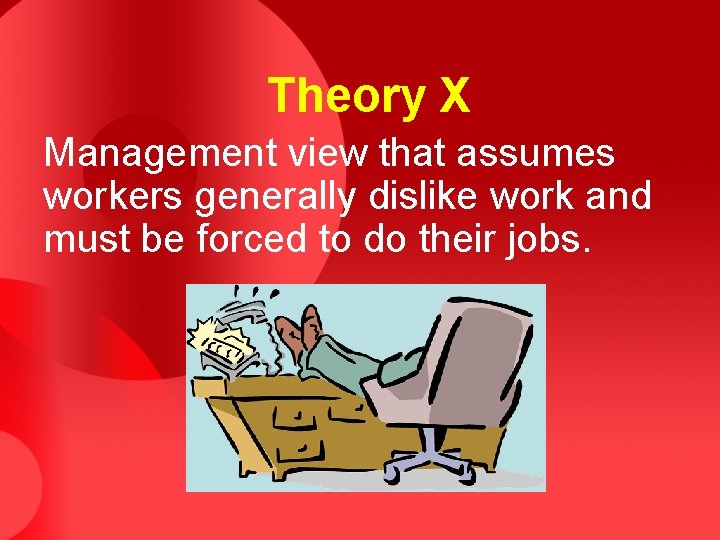
Theory X Management view that assumes workers generally dislike work and must be forced to do their jobs.
Under Theory X, the four assumptions held by managers are: • Employees inherently dislike work and, whenever possible, will attempt to avoid it. • Since employees dislike work, they must be coerced, controlled, or threatened with punishment to achieve goals. • Employee will avoid responsibilities and seek formal direction whenever possible.
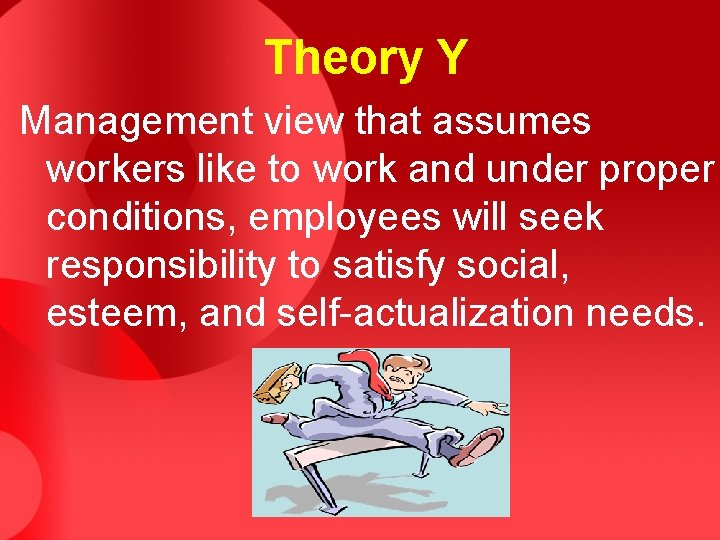
Theory Y Management view that assumes workers like to work and under proper conditions, employees will seek responsibility to satisfy social, esteem, and self-actualization needs.
Under Theory Y, the assumptions: • Employees can view work as being as natural as rest or play. • People will exercise self-direction and selfcontrol if they are committed to the objectives. • The average person can learn to accept, even seek, responsibility. • The ability to make innovative decisions is widely spread throughout the population and is not necessarily the sole responsibility of those in management positions.
Theory Z • A management philosophy that stresses employee participation in all aspects of company decision making.
Motivational Process • Forces acting on/within person that cause specific, goal-directed behavior • Work motivation ] productivity • Management’s job is to channel employee energy to achieve organizational goals
Motivation • What is so difficult? • Motivation is the set of forces that causes people to engage in one behavior rather than some alternative behavior.
What “energizes” us? • Unsatisfied needs = deficiencies that a person experiences at any given time • “Energizers” – create tensions ] feelings of unrest ] make effort to reduce tensions • Goal – directed efforts – provide focus for energy release
p o t s s ’ e t r e e L it h

Summary
Motivation A state of mind, desire, energy or interest that translates into action.
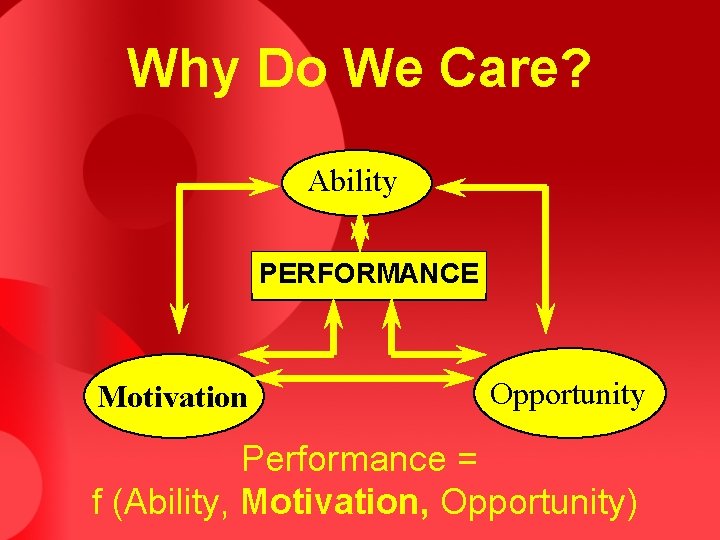
Why Do We Care? Ability PERFORMANCE Motivation Opportunity Performance = f (Ability, Motivation, Opportunity)

Motivational Theories
Maslow’s Hierarchy of Needs
Alderfer’s ERG Theory A three-level hierarchical need theory of motivation that allows for movement up and down the hierarchy. • Existence Needs • Relatedness Needs • Growth Needs
Theory X Management view that assumes workers generally dislike work and must be forced to do their jobs.
Theory Y Management view that assumes workers like to work and under proper conditions, employees will seek responsibility to satisfy social, esteem, and self-actualization needs.
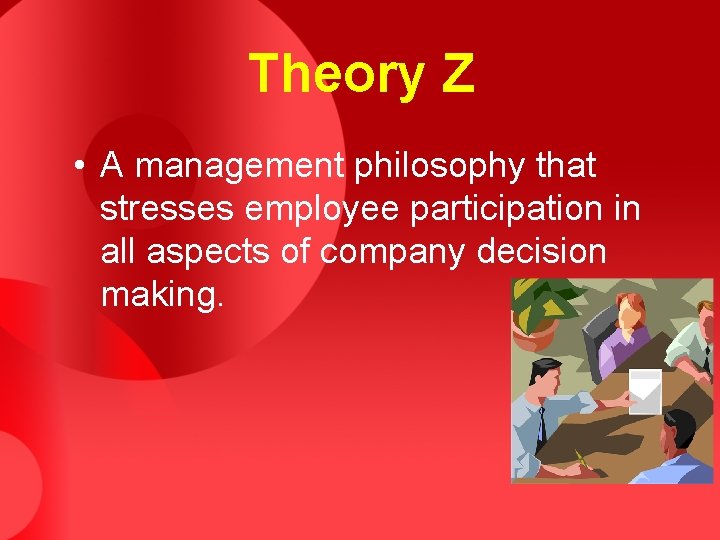
Theory Z • A management philosophy that stresses employee participation in all aspects of company decision making.

Next….
Organizational Behavior (MGT-502) Lecture-13
- Slides: 55