
Organizational Behavior Lecture 29 Dr Amna Yousaf Ph
Organizational Behavior Lecture 29 Dr. Amna Yousaf Ph. D (HRM) University of Twente, the Netherlands
Foundations of Organizational Structure Lecture 29
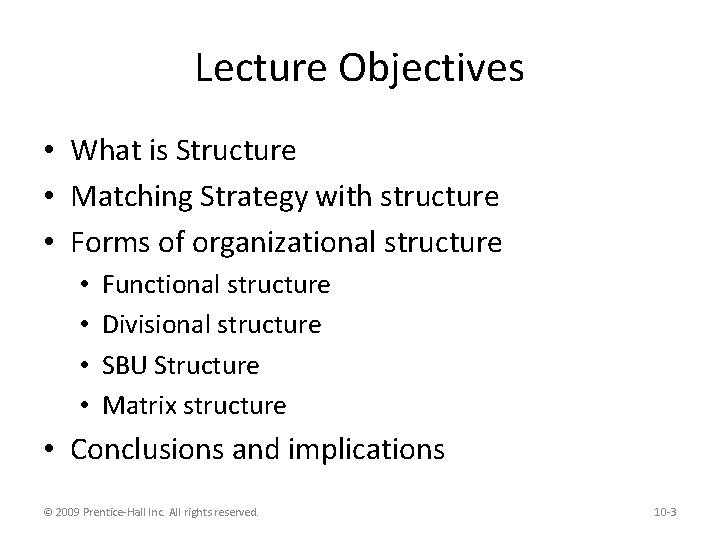
Lecture Objectives • What is Structure • Matching Strategy with structure • Forms of organizational structure • • Functional structure Divisional structure SBU Structure Matrix structure • Conclusions and implications © 2009 Prentice-Hall Inc. All rights reserved. 10 -3
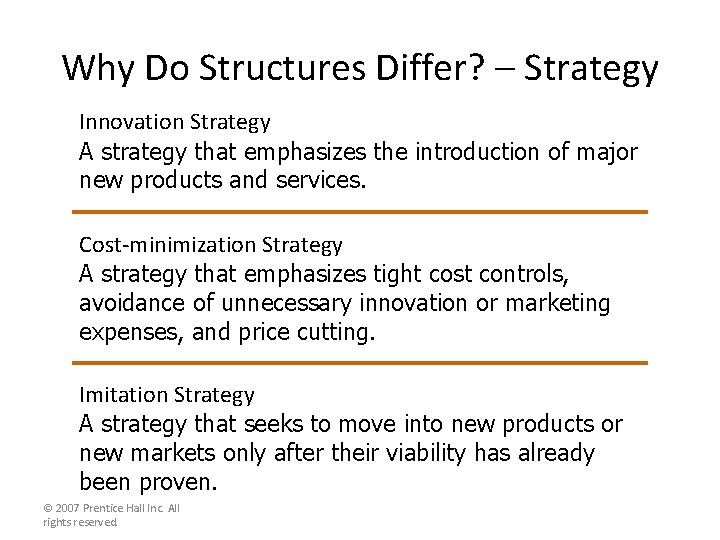
Why Do Structures Differ? – Strategy Innovation Strategy A strategy that emphasizes the introduction of major new products and services. Cost-minimization Strategy A strategy that emphasizes tight cost controls, avoidance of unnecessary innovation or marketing expenses, and price cutting. Imitation Strategy A strategy that seeks to move into new products or new markets only after their viability has already been proven. © 2007 Prentice Hall Inc. All rights reserved.
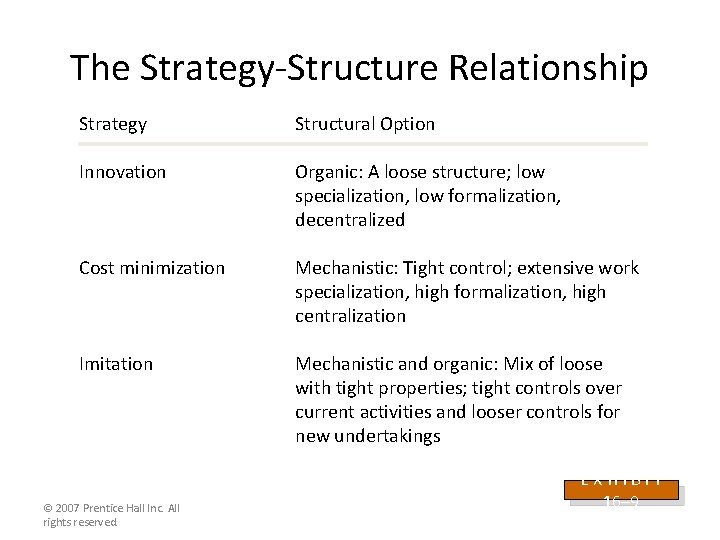
The Strategy-Structure Relationship Strategy Structural Option Innovation Organic: A loose structure; low specialization, low formalization, decentralized Cost minimization Mechanistic: Tight control; extensive work specialization, high formalization, high centralization Imitation Mechanistic and organic: Mix of loose with tight properties; tight controls over current activities and looser controls for new undertakings © 2007 Prentice Hall Inc. All rights reserved. EXHIBIT 16– 9
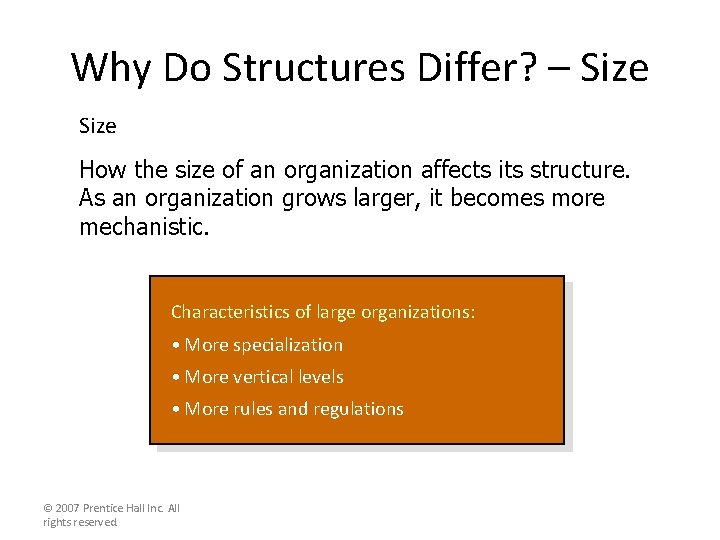
Why Do Structures Differ? – Size How the size of an organization affects its structure. As an organization grows larger, it becomes more mechanistic. Characteristics of large organizations: • More specialization • More vertical levels • More rules and regulations © 2007 Prentice Hall Inc. All rights reserved.
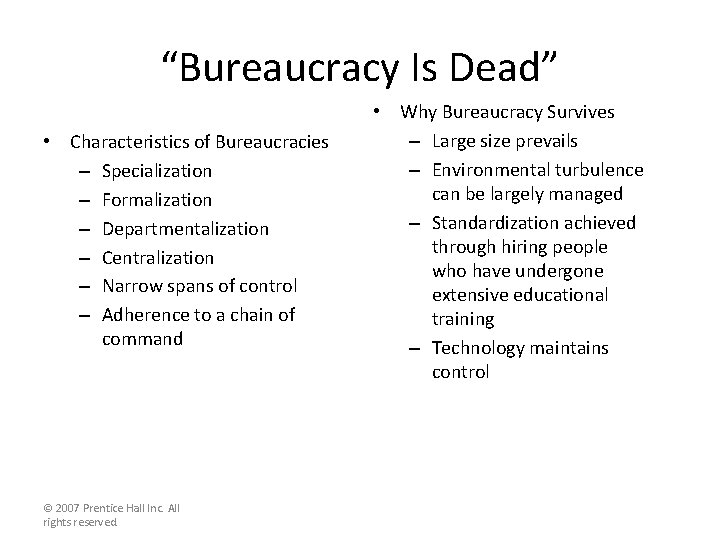
“Bureaucracy Is Dead” • Characteristics of Bureaucracies – Specialization – Formalization – Departmentalization – Centralization – Narrow spans of control – Adherence to a chain of command © 2007 Prentice Hall Inc. All rights reserved. • Why Bureaucracy Survives – Large size prevails – Environmental turbulence can be largely managed – Standardization achieved through hiring people who have undergone extensive educational training – Technology maintains control
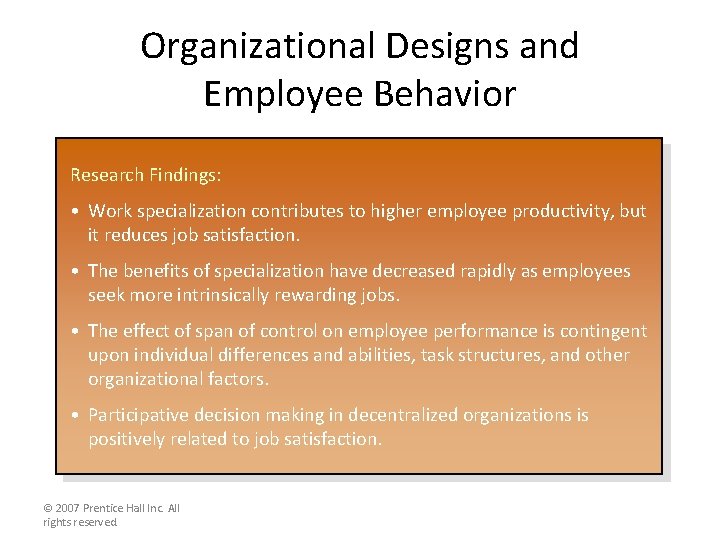
Organizational Designs and Employee Behavior Research Findings: • Work specialization contributes to higher employee productivity, but it reduces job satisfaction. • The benefits of specialization have decreased rapidly as employees seek more intrinsically rewarding jobs. • The effect of span of control on employee performance is contingent upon individual differences and abilities, task structures, and other organizational factors. • Participative decision making in decentralized organizations is positively related to job satisfaction. © 2007 Prentice Hall Inc. All rights reserved.
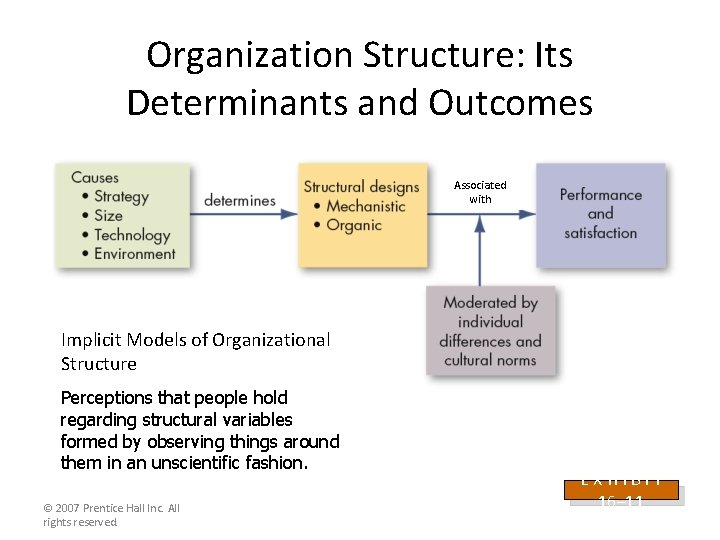
Organization Structure: Its Determinants and Outcomes Associated with Implicit Models of Organizational Structure Perceptions that people hold regarding structural variables formed by observing things around them in an unscientific fashion. © 2007 Prentice Hall Inc. All rights reserved. EXHIBIT 16– 11
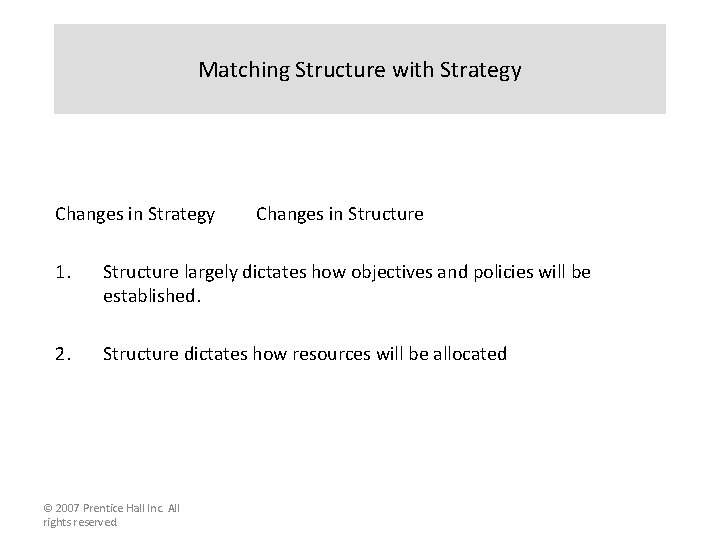
Matching Structure with Strategy Changes in Structure 1. Structure largely dictates how objectives and policies will be established. 2. Structure dictates how resources will be allocated © 2007 Prentice Hall Inc. All rights reserved.
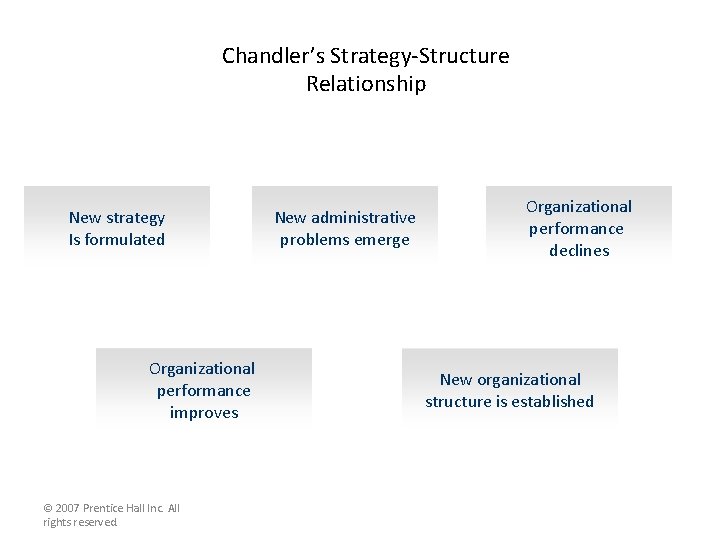
Chandler’s Strategy-Structure Relationship New strategy Is formulated Organizational performance improves © 2007 Prentice Hall Inc. All rights reserved. New administrative problems emerge Organizational performance declines New organizational structure is established
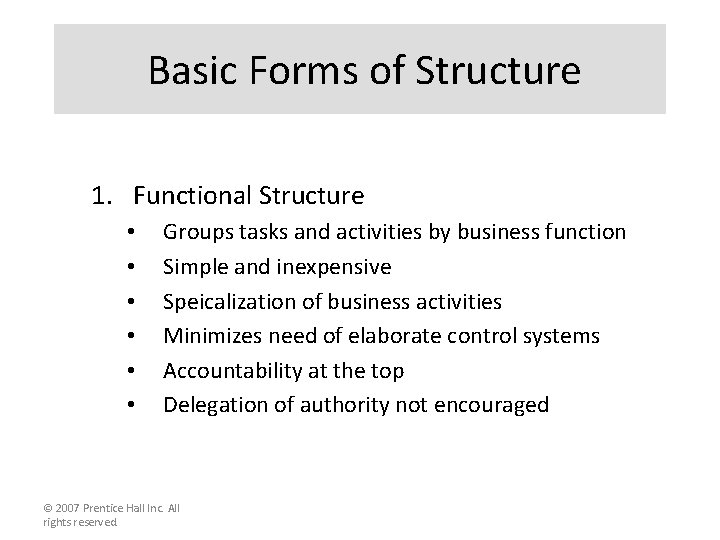
Basic Forms of Structure 1. Functional Structure • • • Groups tasks and activities by business function Simple and inexpensive Speicalization of business activities Minimizes need of elaborate control systems Accountability at the top Delegation of authority not encouraged © 2007 Prentice Hall Inc. All rights reserved.
Basic Forms of Structure 1. Functional Structure • • • Low employee morale Inadequate planning of products and markets Leads to short term and narrow thinking Lack of integration and communication Centralized R & D may strive to overdesign products while manufacturing may favor low frills products that are mass produced. Speicailization, economies of scale, standarized products such as manufacturing. Sharp – consumer electronics firm as an examaple © 2007 Prentice Hall Inc. All rights reserved.

Thank You
- Slides: 14