
ORGANIZATIONAL BEHAVIOR Lecture 1 What is Organizational Behavior
ORGANIZATIONAL BEHAVIOR Lecture 1 What is Organizational Behavior?
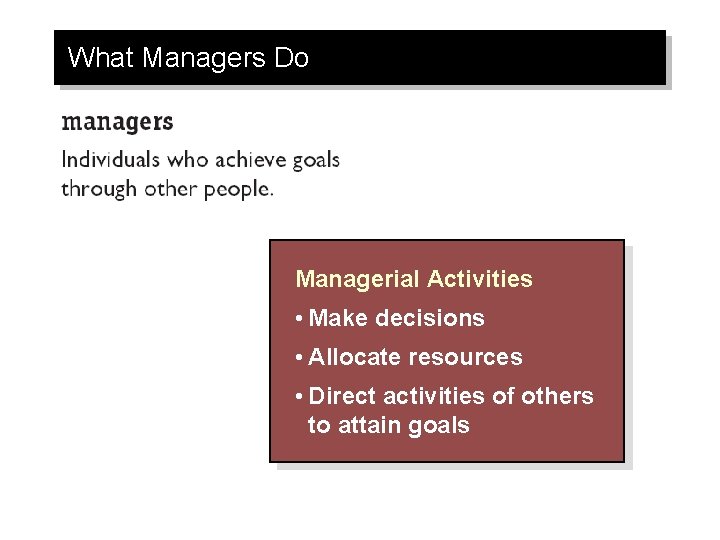
What Managers Do Managerial Activities • Make decisions • Allocate resources • Direct activities of others to attain goals
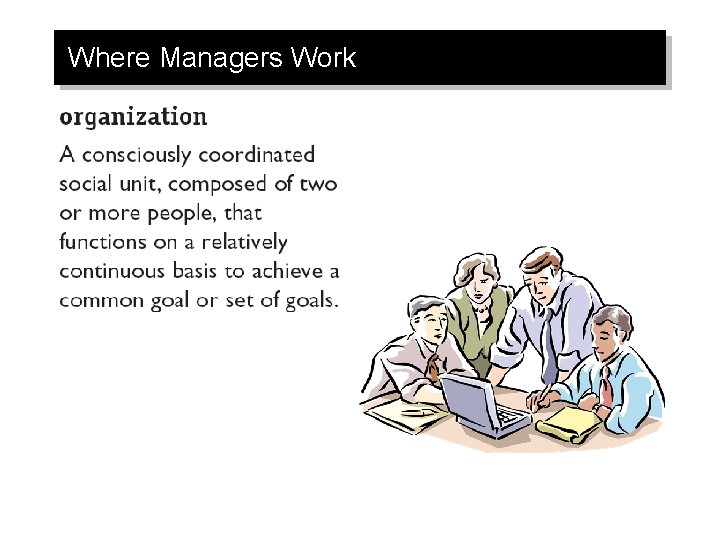
Where Managers Work
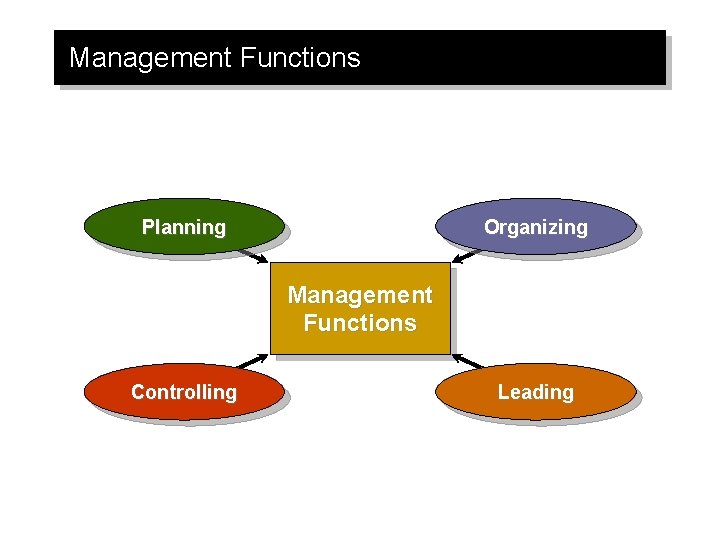
Management Functions Planning Organizing Management Functions Controlling Leading
Management Functions (cont’d)
Management Functions (cont’d)
Management Functions (cont’d)
Management Functions (cont’d)
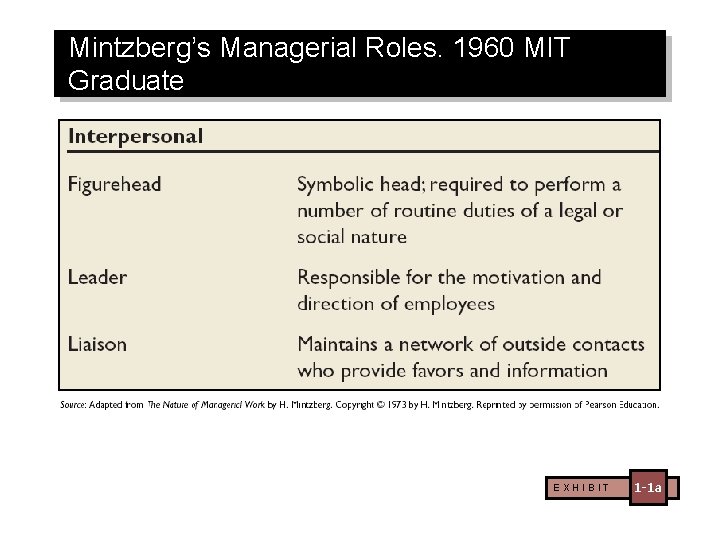
Mintzberg’s Managerial Roles. 1960 MIT Graduate EXHIBIT 1 -1 a
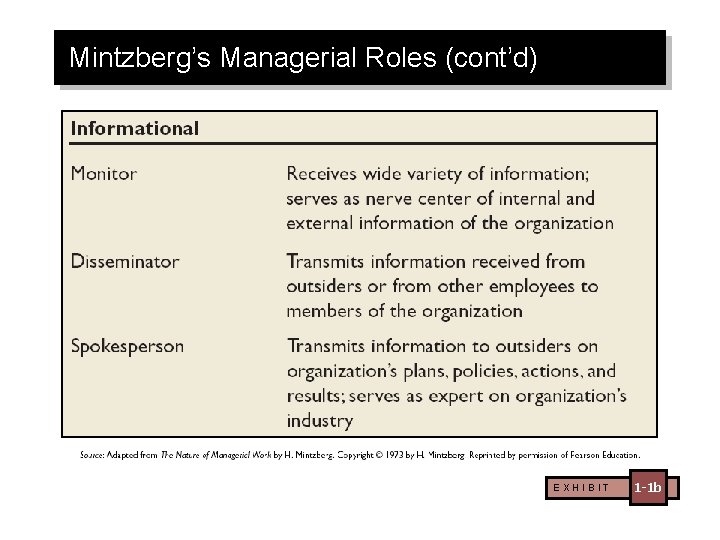
Mintzberg’s Managerial Roles (cont’d) EXHIBIT 1 -1 b
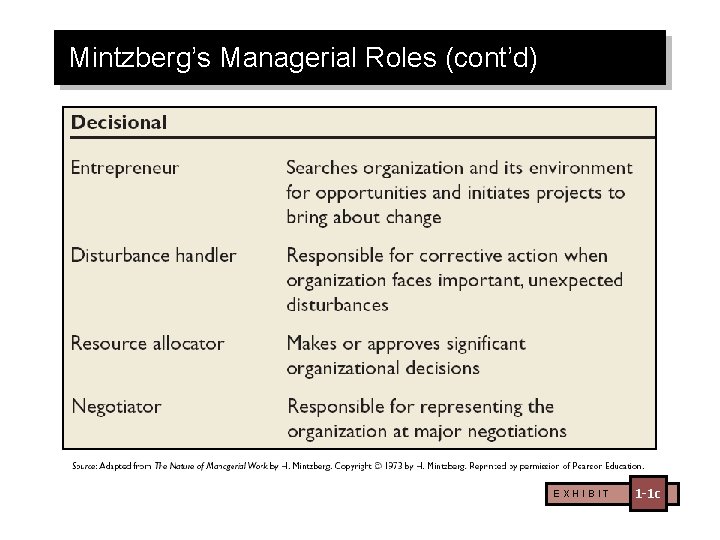
Mintzberg’s Managerial Roles (cont’d) EXHIBIT 1 -1 c
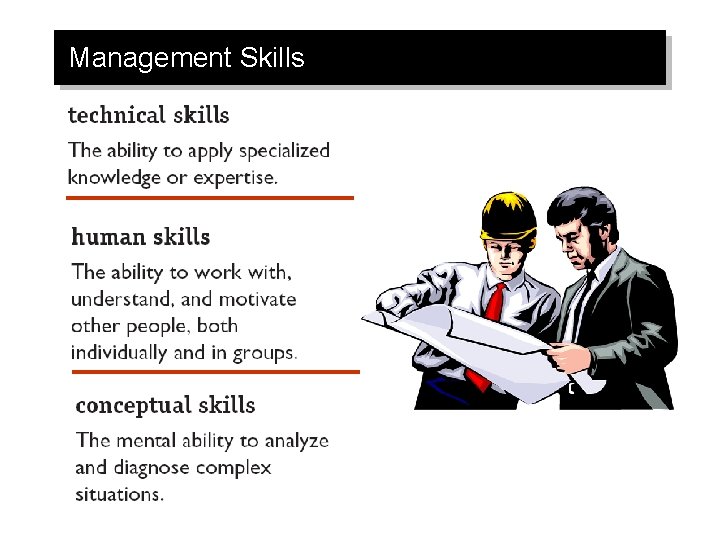
Management Skills
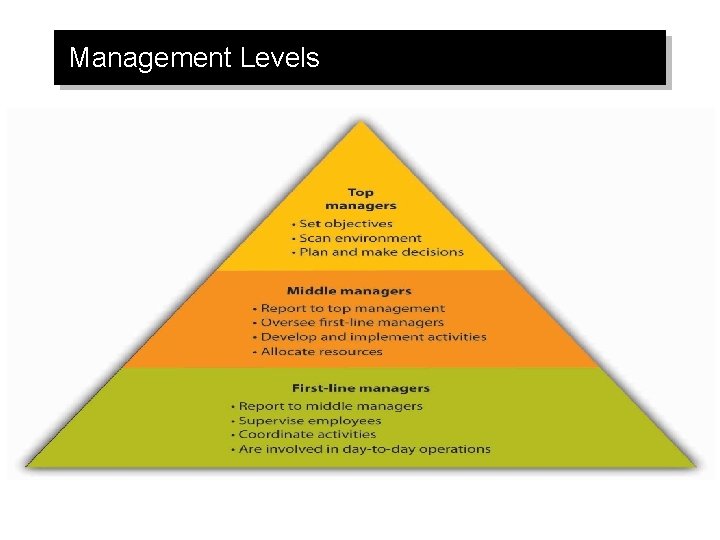
Management Levels
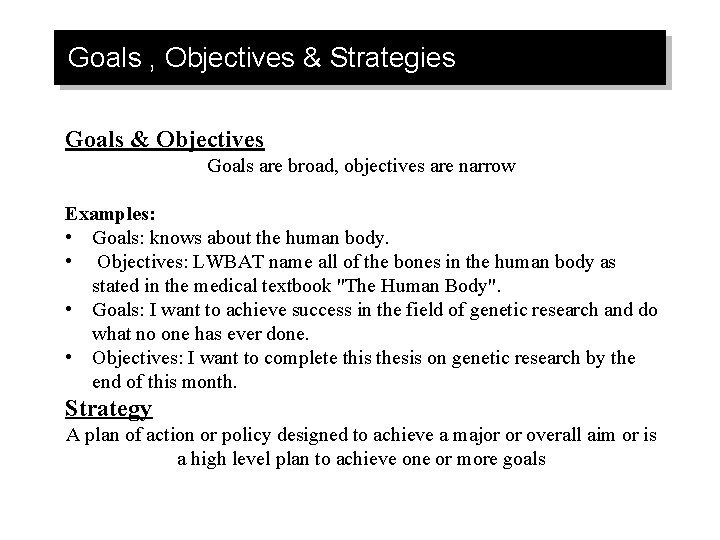
Goals , Objectives & Strategies Goals & Objectives Goals are broad, objectives are narrow Examples: • Goals: knows about the human body. • Objectives: LWBAT name all of the bones in the human body as stated in the medical textbook "The Human Body". • Goals: I want to achieve success in the field of genetic research and do what no one has ever done. • Objectives: I want to complete this thesis on genetic research by the end of this month. Strategy A plan of action or policy designed to achieve a major or overall aim or is a high level plan to achieve one or more goals
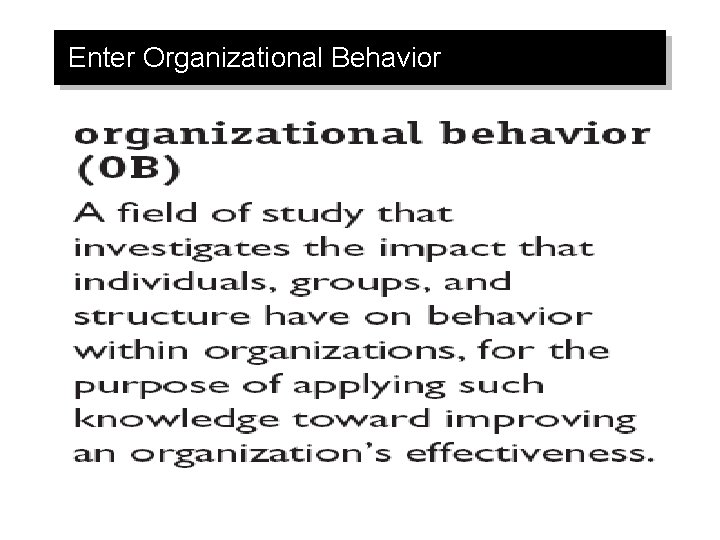
Enter Organizational Behavior
Organizational Behavior (OB) can be defined as the understanding, prediction and management of human behavior both individually or in a group that occur within an organization.
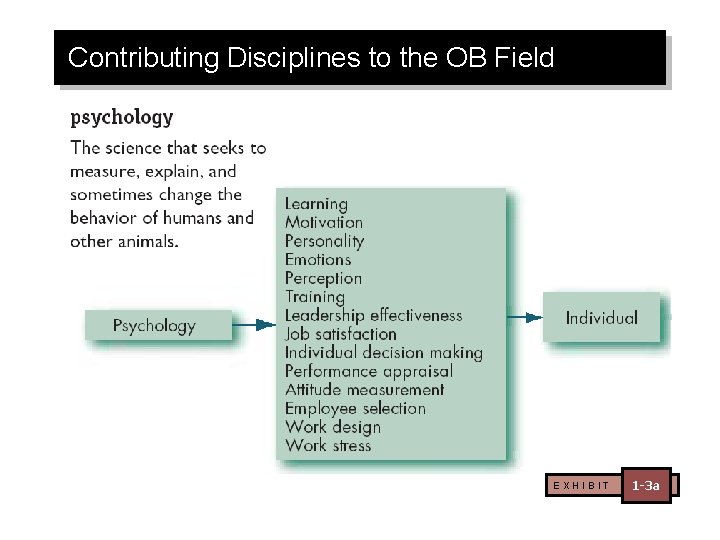
Contributing Disciplines to the OB Field EXHIBIT 1 -3 a
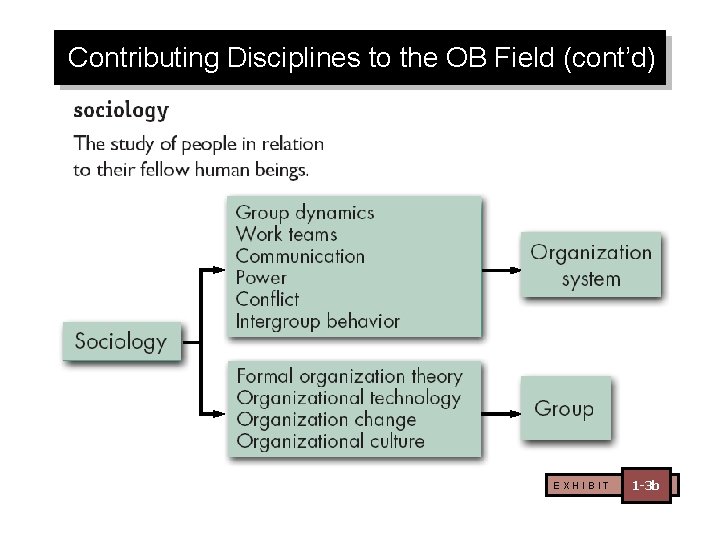
Contributing Disciplines to the OB Field (cont’d) EXHIBIT 1 -3 b
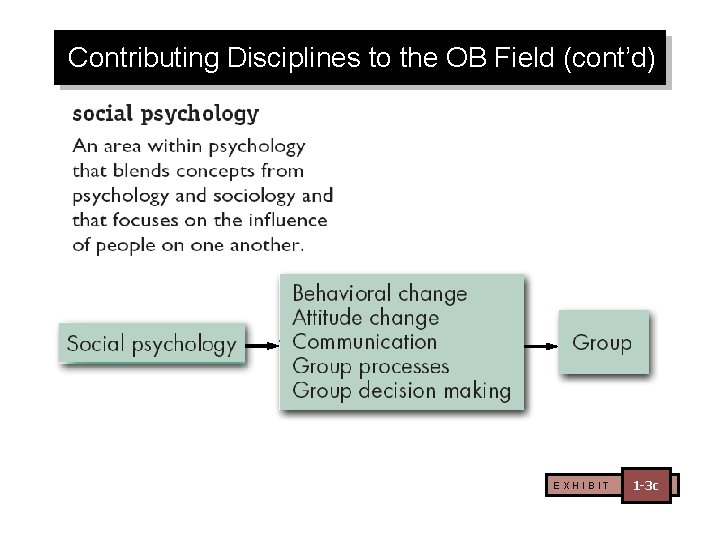
Contributing Disciplines to the OB Field (cont’d) EXHIBIT 1 -3 c
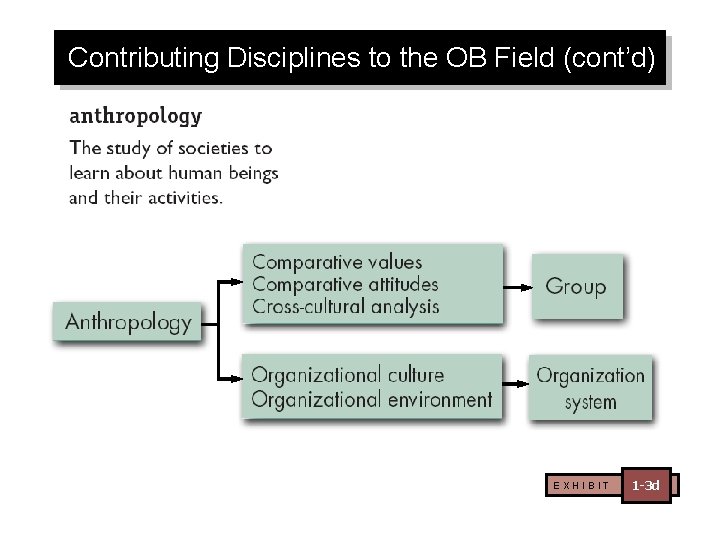
Contributing Disciplines to the OB Field (cont’d) EXHIBIT 1 -3 d
Challenges and Opportunity for OB 1. Responding to Globalization: • Increased foreign assignments • Working with people from different cultures. No beef burger in India 2. Managing workforce diversity: • Gender, race, national origin, age, disability, • Changing demographics Workforce diversity can increase creativity and (Canada) innovation in organizations as well as improve decision making by providing different perspective on problem.
3. Improving customer services: Today’s managers understand that success of any effort at improving services must include their employees. 4. Improving people skills: We’ll present relevant concepts and theories that can help you explain and predict the behavior of people at work. • Learn a ways to motivate people • How to be a better communicator • How to create more effective teams
• Stimulating innovation and change Today’s successful organizations must foster innovation and master the art of change or they’ll become candidate for extinction. An organization’s employees can be the impetus for innovation and change or they can be a majors stumbling block. The challenge for managers is to stimulate their employees’ creativity and tolerance for change.
• Coping with “temporariness”: Managing today would be more accurately described as long periods of ongoing change, interrupted occasionally by short periods of stability! The actual jobs that workers perform are in a permanent state of flux. So workers need to continually update their knowledge and skills to perform new job requirements.
• Helping employees balance work/life conflicts: A number of forces have contributed to blurring the lines between employee work and personal lives. First, the creation of global organizations means their world never sleeps. Second, communication technology allows employee to do their work at home, in their car, or on the beach in Tahiti. Third, organizations are asking employees to put in longer hours. Finally, fewer families have only a single breadwinner
• Improving ethical behavior: Members of organizations are increasingly finding themselves facing ethical dilemmas, situations in which they are required to define right and wrong conduct. In recent years, the line differentiating right from wrong has become even more unclear. Managers and their organizations are writing and distributing codes of ethics to guide employees through ethical dilemmas.
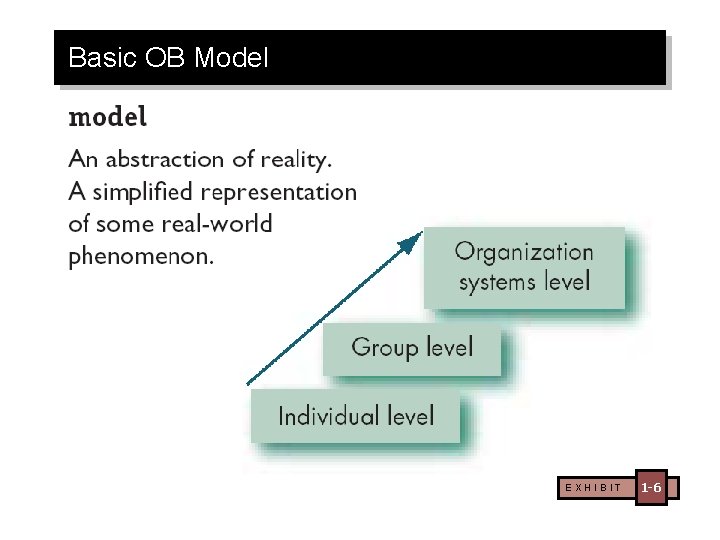
Basic OB Model EXHIBIT 1 -6
1. Individual behavior • values, attitudes, perception, and learning • the role of personality and emotions • motivation issues 2. Group behavior • Group behavior model • Ways to make teams more effective • Communication issues and group decision making Leadership, trust, power, politics, conflict and negotiation 3. Organizational behaviors • Culture, structure, ….
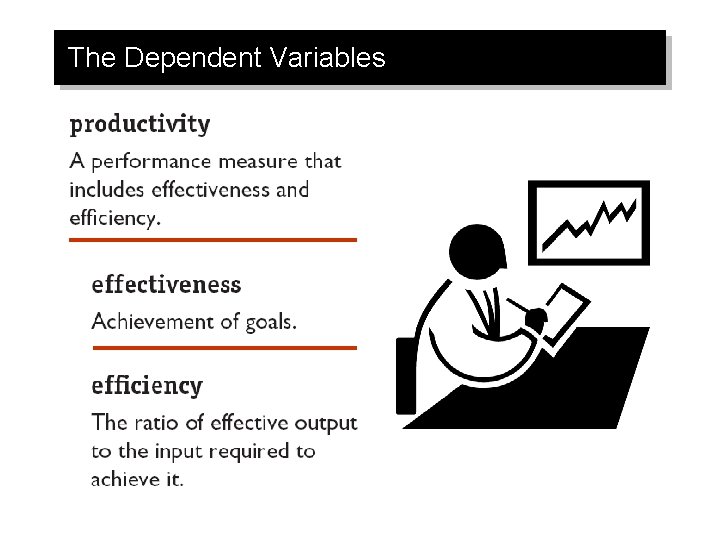
The Dependent Variables
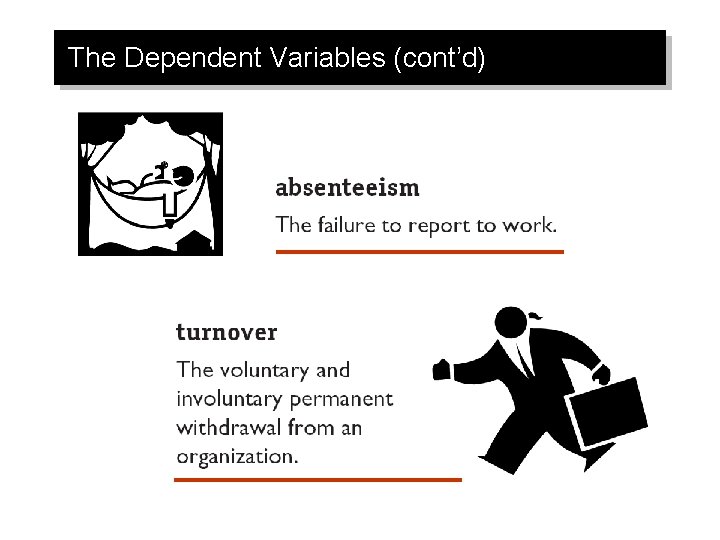
The Dependent Variables (cont’d)
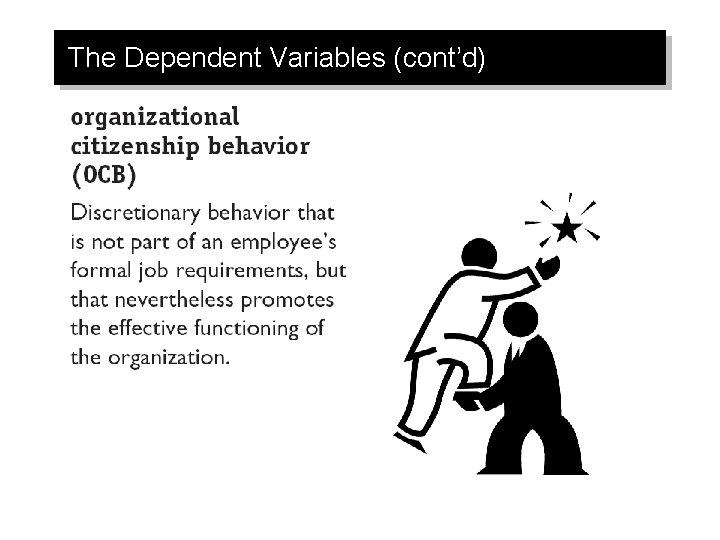
The Dependent Variables (cont’d)
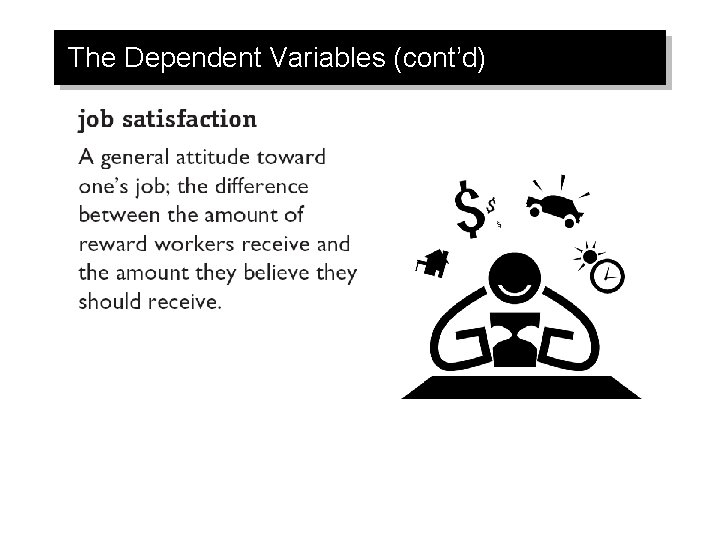
The Dependent Variables (cont’d)
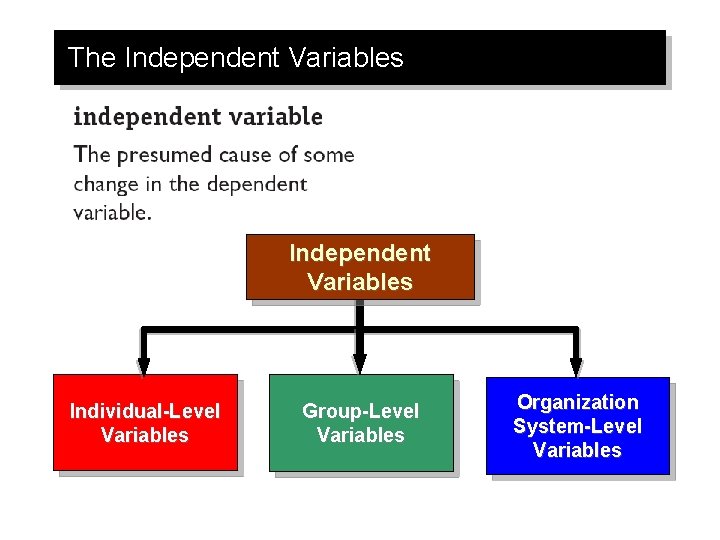
The Independent Variables Individual-Level Variables Group-Level Variables Organization System-Level Variables
- Slides: 33