
Organizational and Managerial Communication Strategic Dialogue and Mutual
- Slides: 24
Organizational and Managerial Communication Strategic Dialogue and Mutual Learning in Practice Chapters 8 and 9 Peggy Simcic Brønn
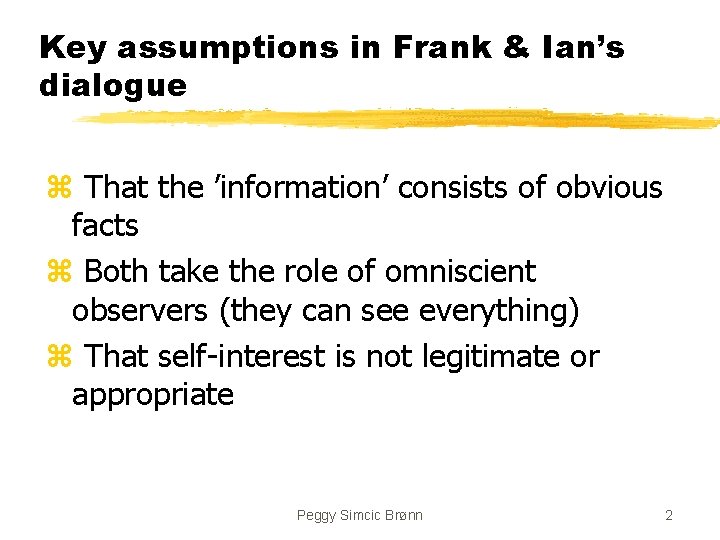
Key assumptions in Frank & Ian’s dialogue z That the ’information’ consists of obvious facts z Both take the role of omniscient observers (they can see everything) z That self-interest is not legitimate or appropriate Peggy Simcic Brønn 2
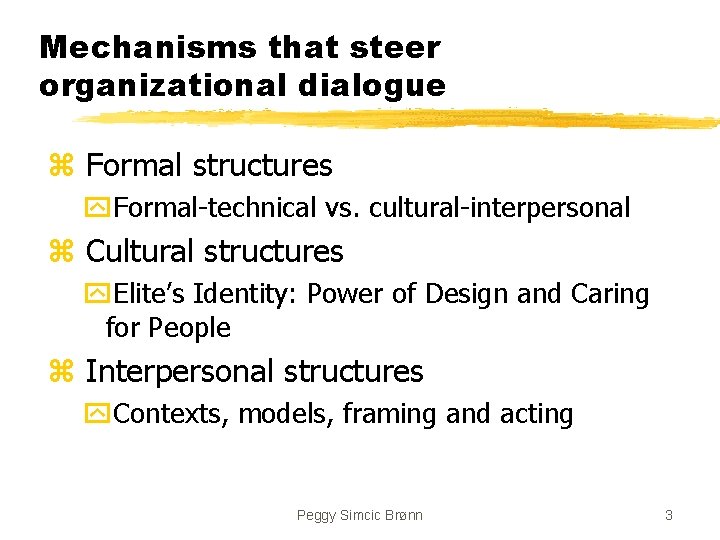
Mechanisms that steer organizational dialogue z Formal structures y. Formal-technical vs. cultural-interpersonal z Cultural structures y. Elite’s Identity: Power of Design and Caring for People z Interpersonal structures y. Contexts, models, framing and acting Peggy Simcic Brønn 3
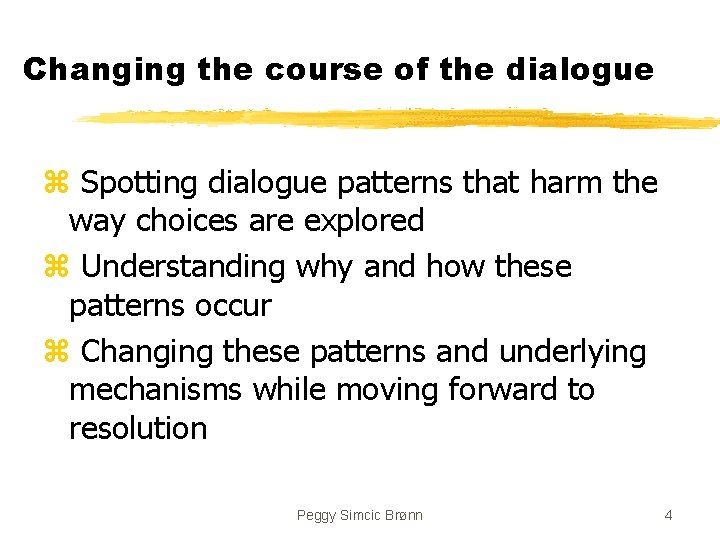
Changing the course of the dialogue z Spotting dialogue patterns that harm the way choices are explored z Understanding why and how these patterns occur z Changing these patterns and underlying mechanisms while moving forward to resolution Peggy Simcic Brønn 4
Intervention options z Bypassing z Naming z Engaging Peggy Simcic Brønn 5
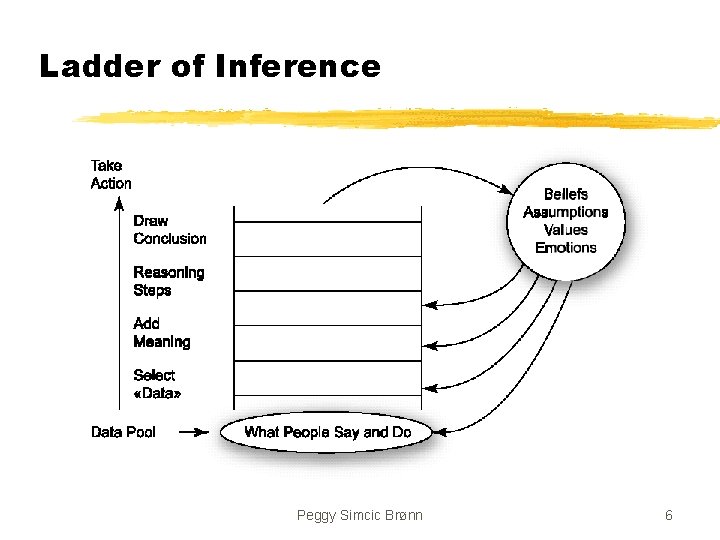
Ladder of Inference Peggy Simcic Brønn 6
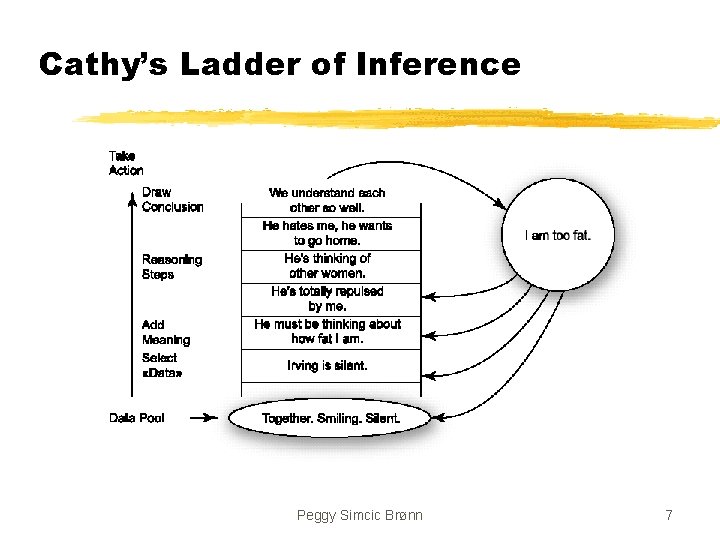
Cathy’s Ladder of Inference Peggy Simcic Brønn 7
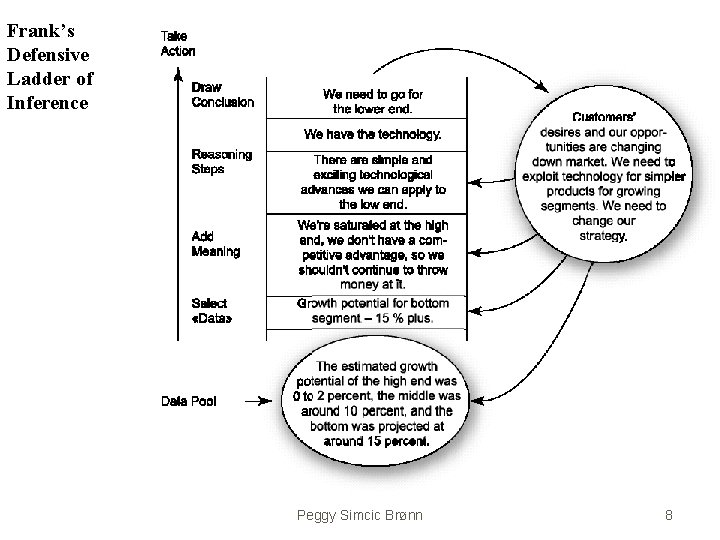
Frank’s Defensive Ladder of Inference Peggy Simcic Brønn 8
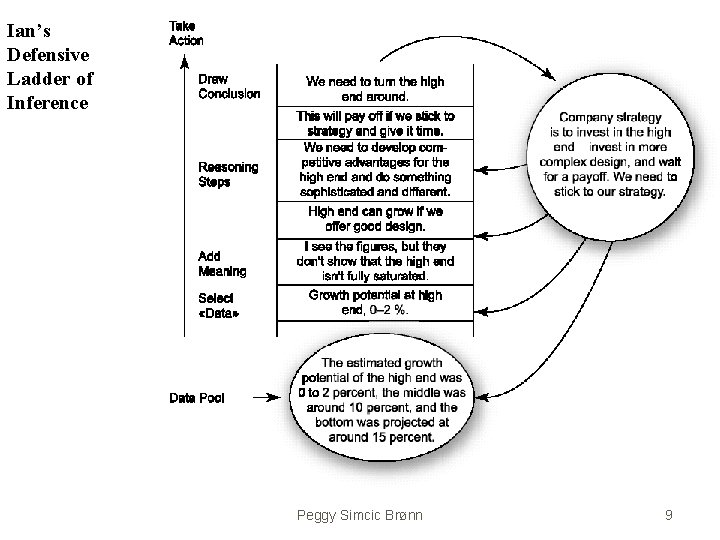
Ian’s Defensive Ladder of Inference Peggy Simcic Brønn 9
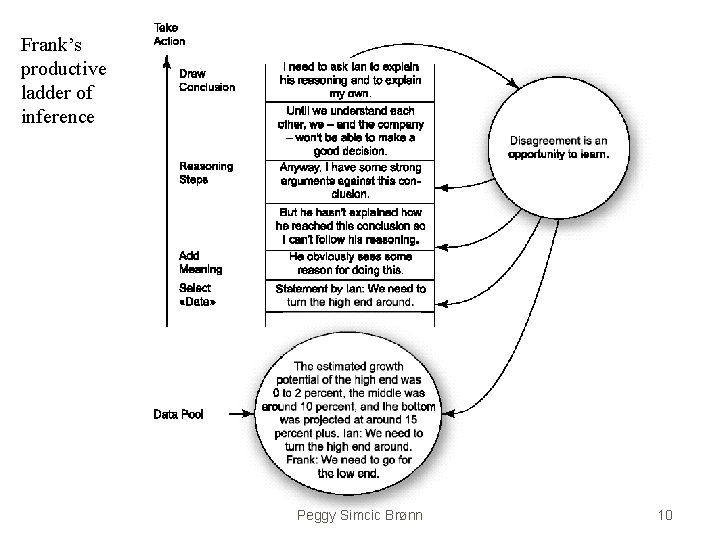
Frank’s productive ladder of inference Peggy Simcic Brønn 10
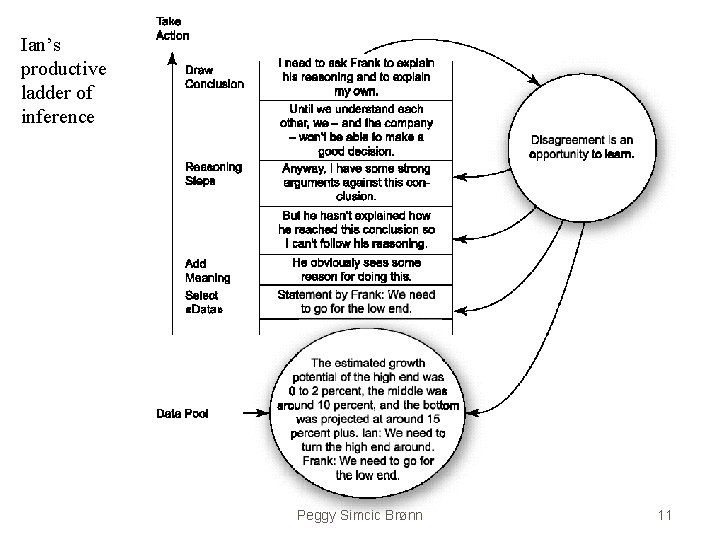
Ian’s productive ladder of inference Peggy Simcic Brønn 11
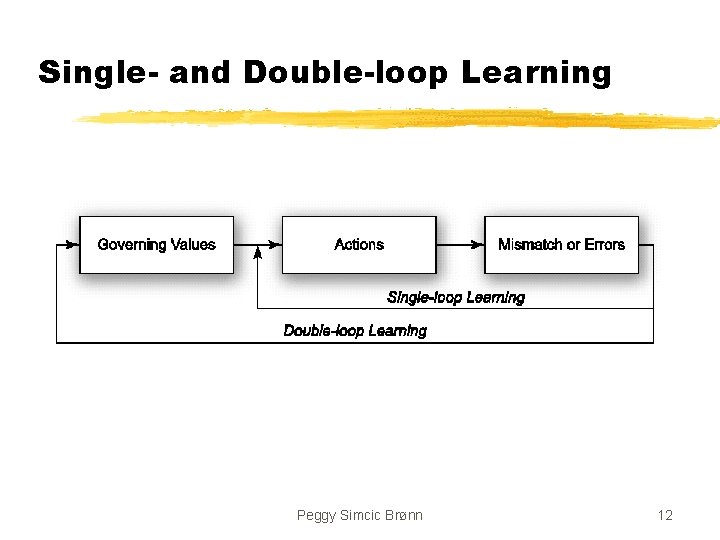
Single- and Double-loop Learning Peggy Simcic Brønn 12
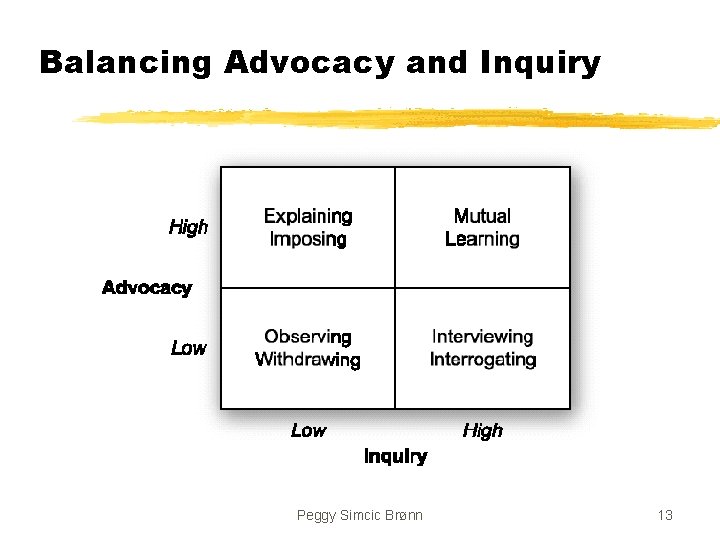
Balancing Advocacy and Inquiry Peggy Simcic Brønn 13
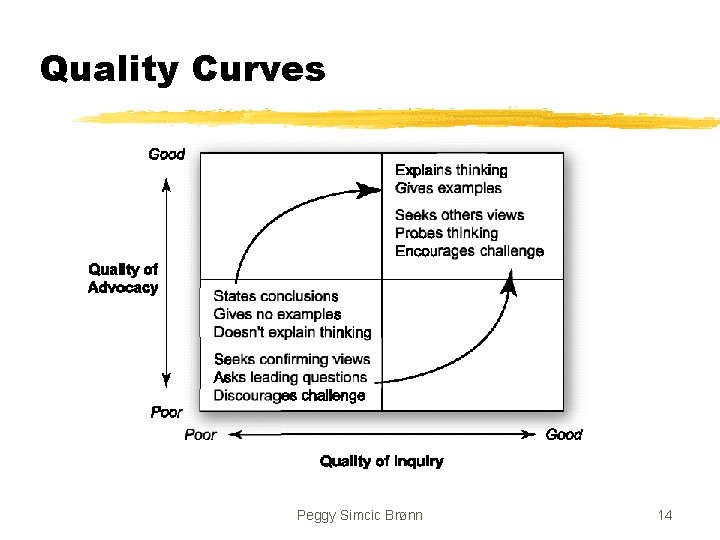
Quality Curves Peggy Simcic Brønn 14
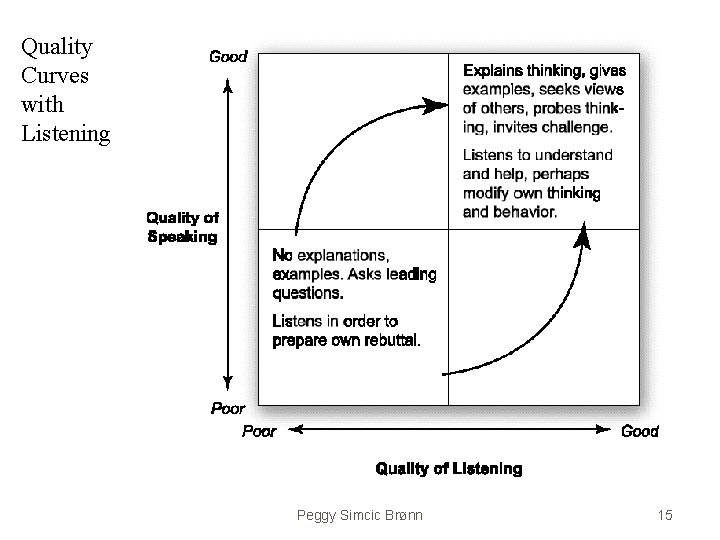
Quality Curves with Listening Peggy Simcic Brønn 15
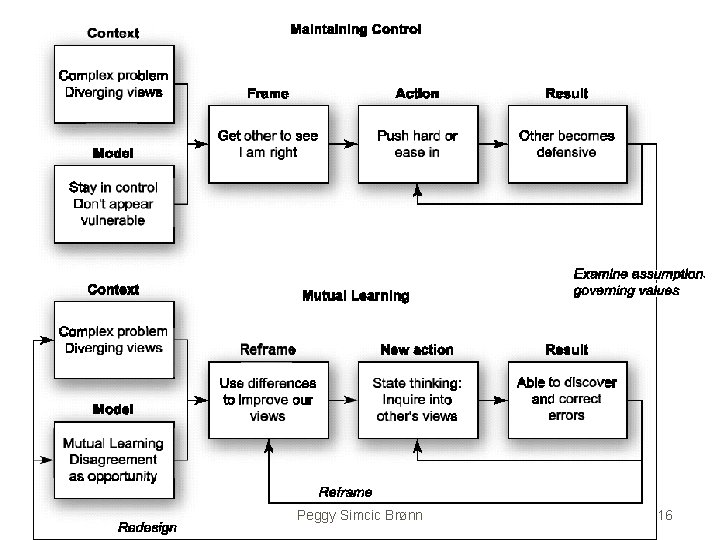
Peggy Simcic Brønn 16
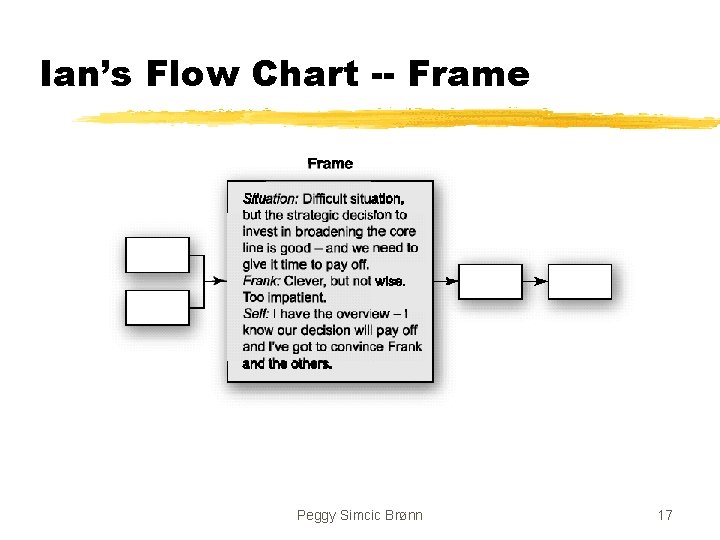
Ian’s Flow Chart -- Frame Peggy Simcic Brønn 17
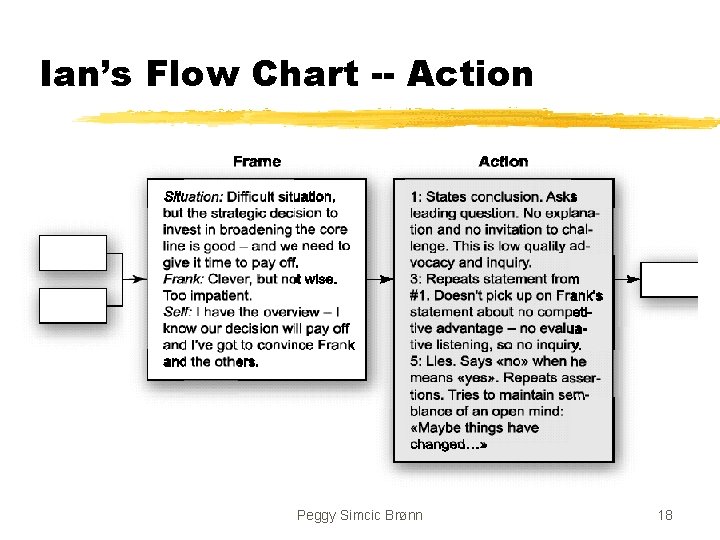
Ian’s Flow Chart -- Action Peggy Simcic Brønn 18
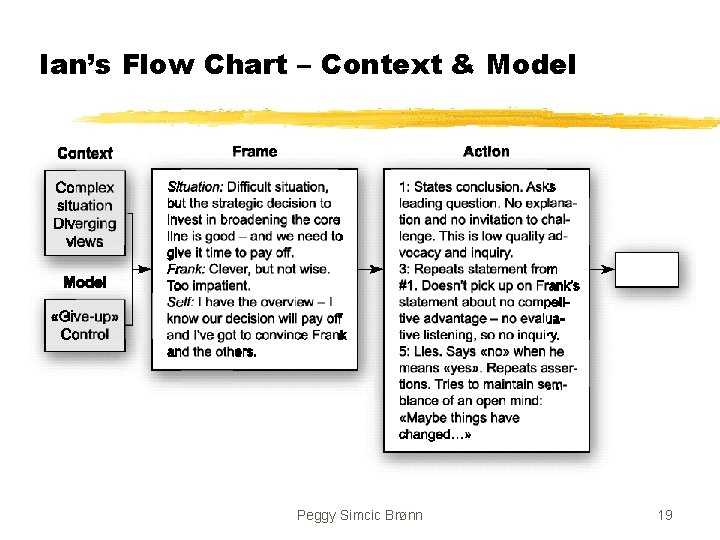
Ian’s Flow Chart – Context & Model Peggy Simcic Brønn 19
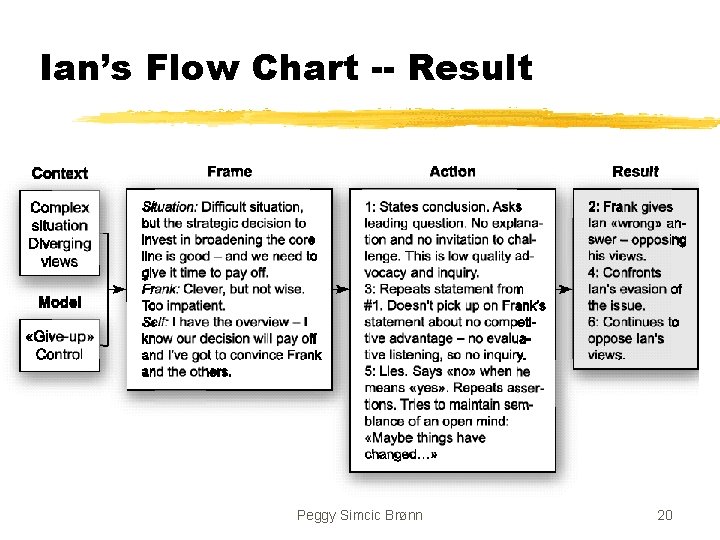
Ian’s Flow Chart -- Result Peggy Simcic Brønn 20
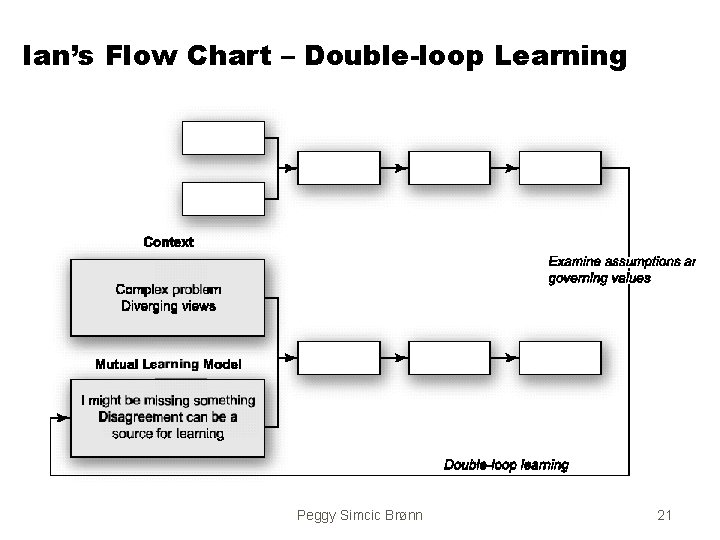
Ian’s Flow Chart – Double-loop Learning Peggy Simcic Brønn 21
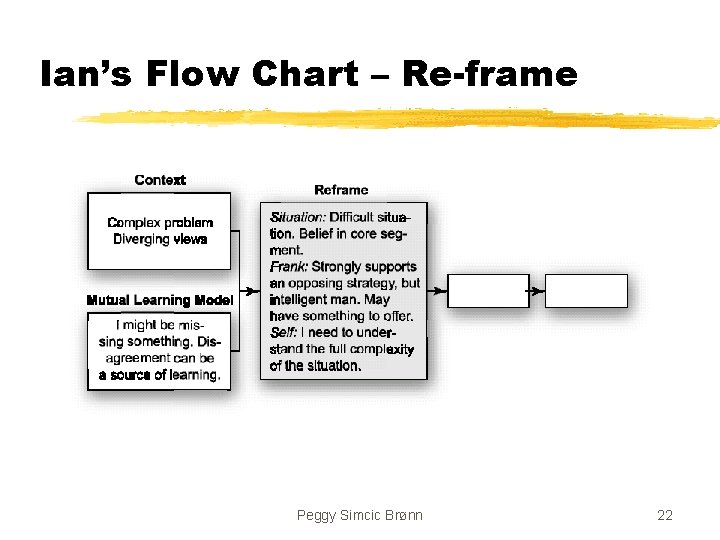
Ian’s Flow Chart – Re-frame Peggy Simcic Brønn 22
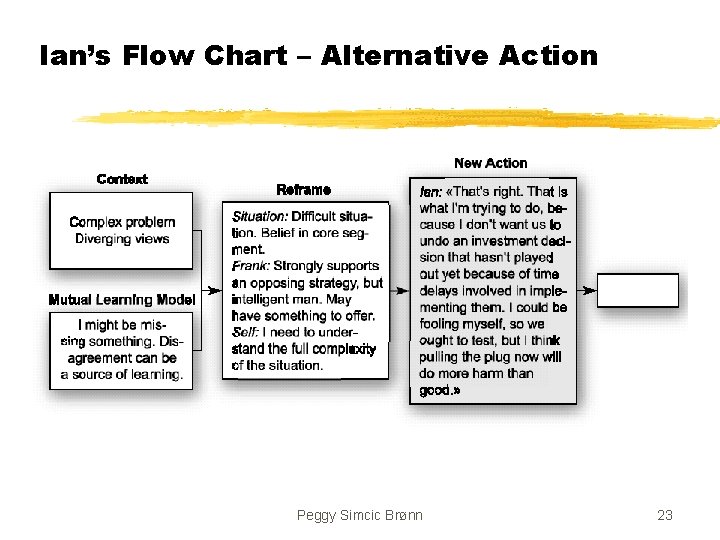
Ian’s Flow Chart – Alternative Action Peggy Simcic Brønn 23
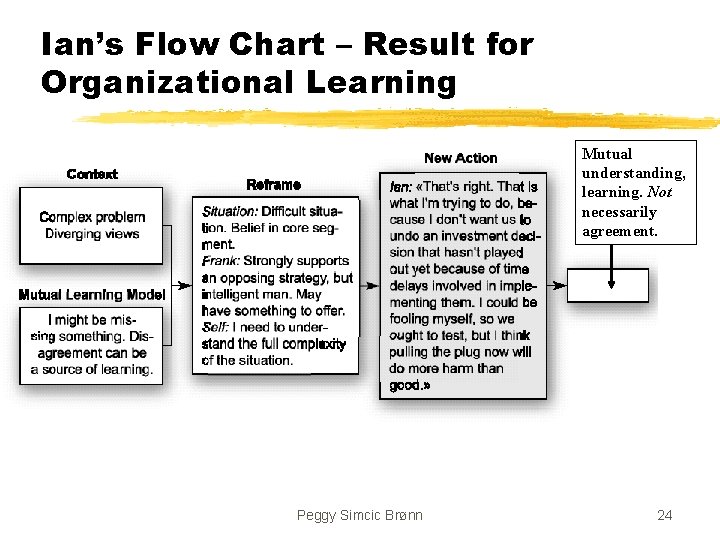
Ian’s Flow Chart – Result for Organizational Learning Mutual understanding, learning. Not necessarily agreement. Peggy Simcic Brønn 24