
Organization of the Cell Cell Theory Cells are
- Slides: 160
Organization of the Cell
Cell Theory Cells are the basic living units of organization and function in all organisms and all cells come from other cells
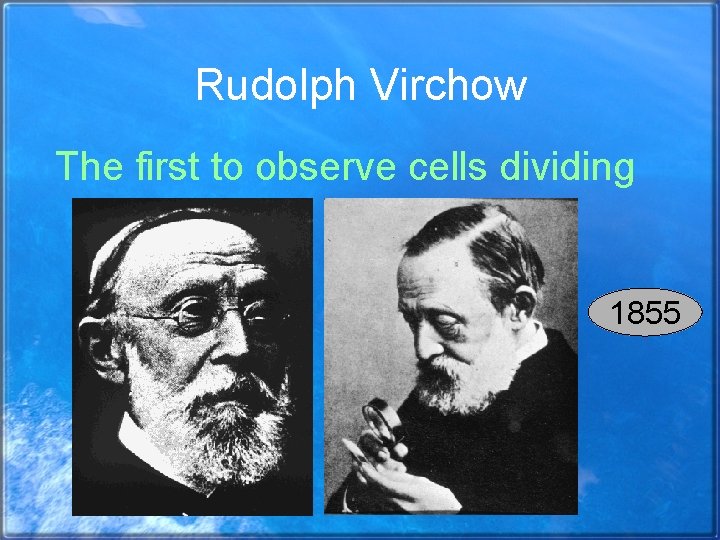
Cell Theory The players: Matthias Schleiden- German botanist (1838) Theodor Schwann- German zoologist (1839) Rudolph Virchow- German professor of pathology (1855)
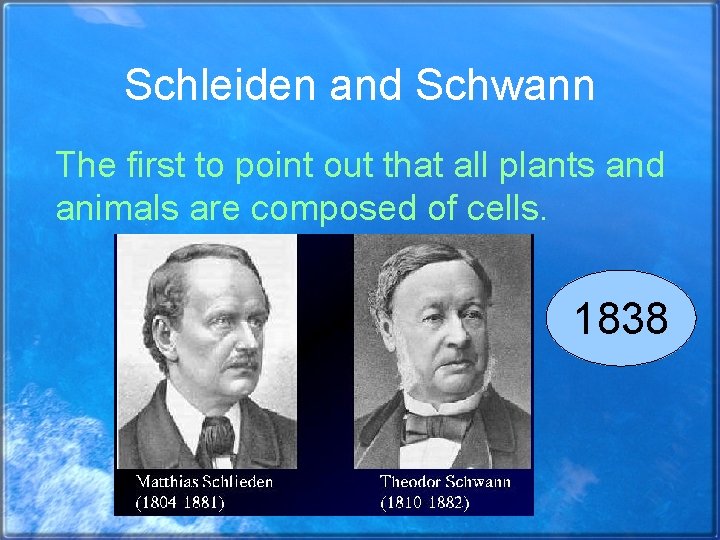
Schleiden and Schwann The first to point out that all plants and animals are composed of cells. 1838
Rudolph Virchow The first to observe cells dividing 1855
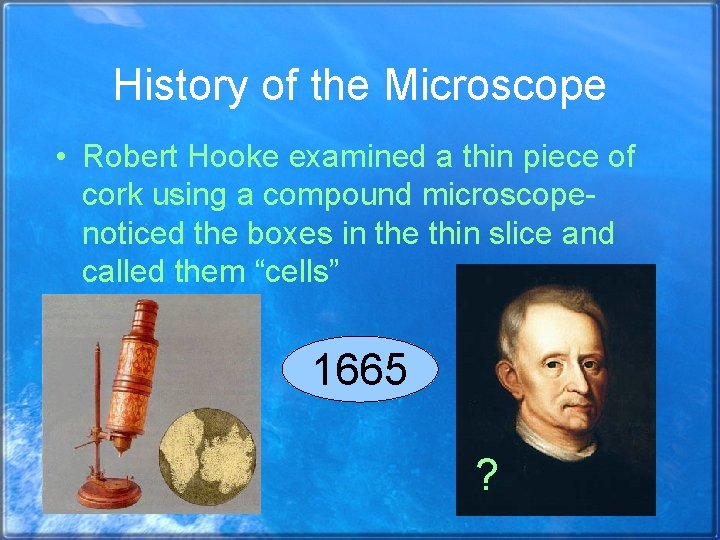
History of the Microscope • Robert Hooke examined a thin piece of cork using a compound microscope- noticed the boxes in the thin slice and called them “cells” 1665 ?
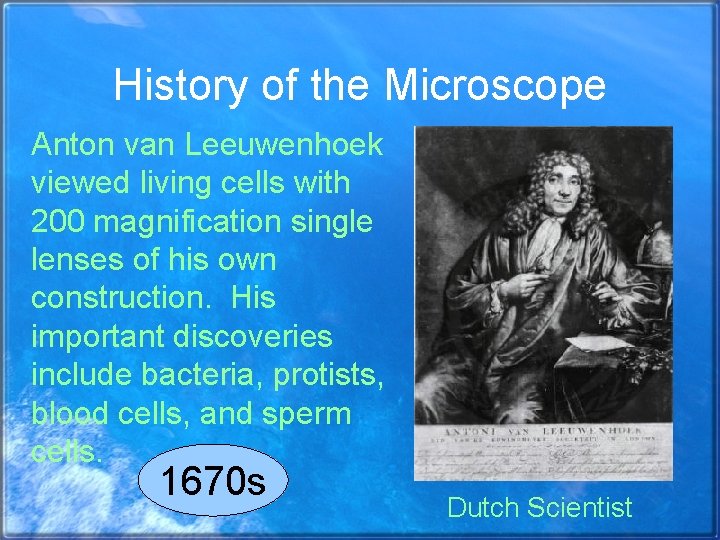
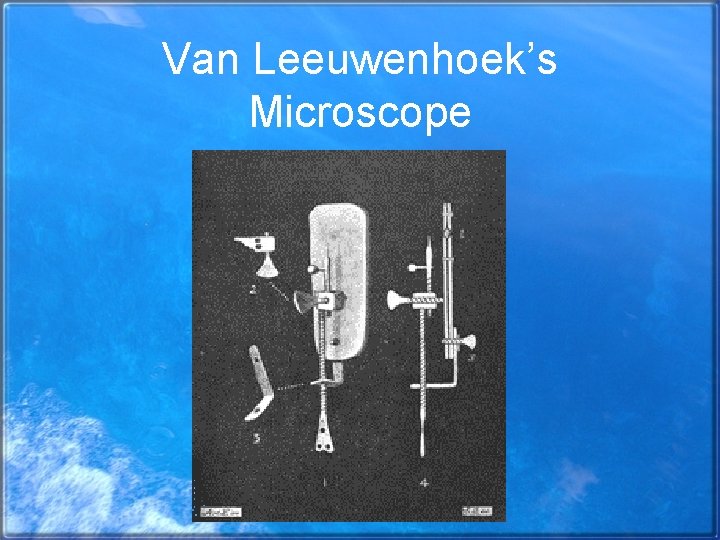
History of the Microscope Anton van Leeuwenhoek viewed living cells with 200 magnification single lenses of his own construction. His important discoveries include bacteria, protists, blood cells, and sperm cells. 1670 s Dutch Scientist
Van Leeuwenhoek’s Microscope
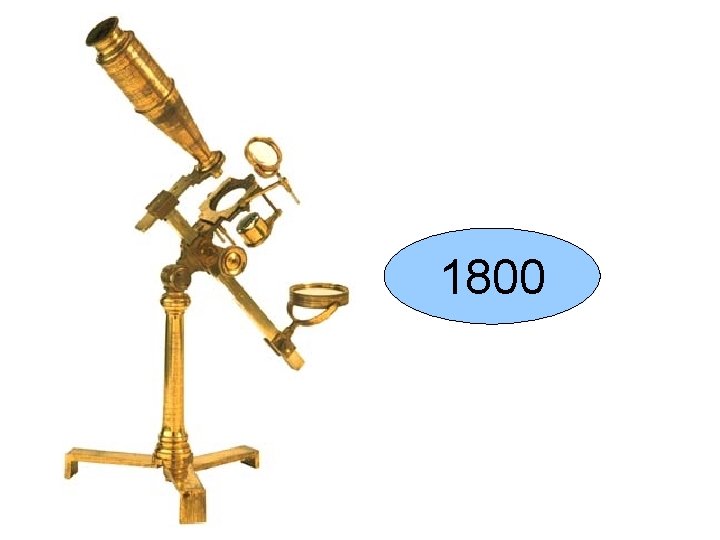
1800
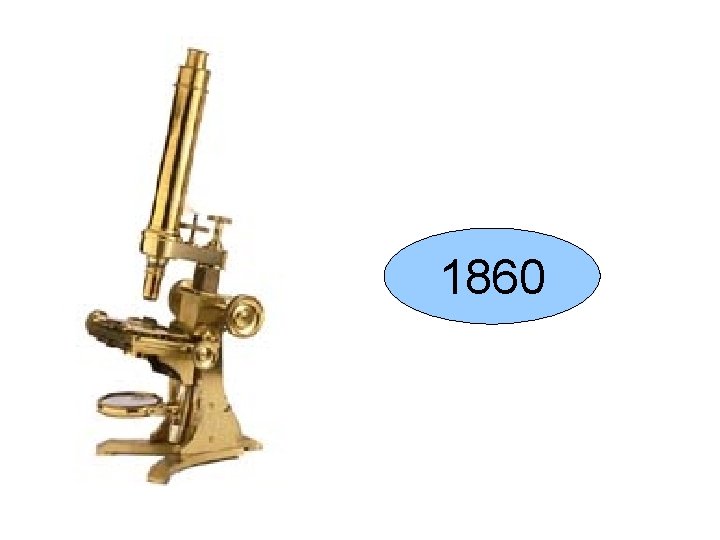
1860
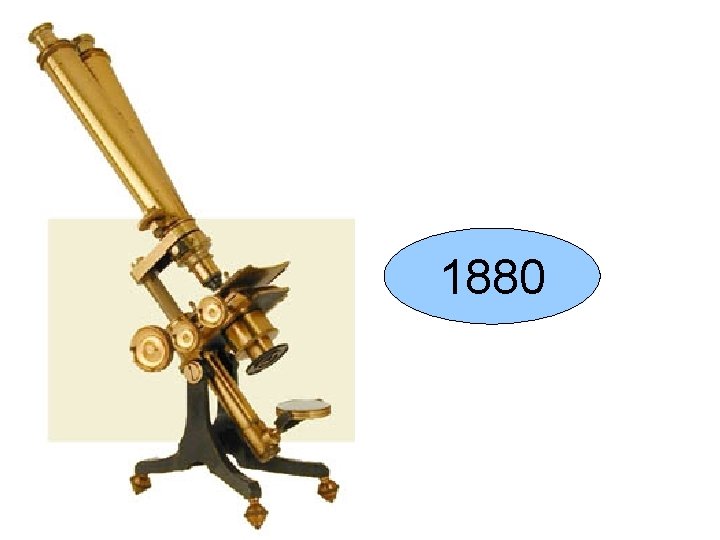
1880
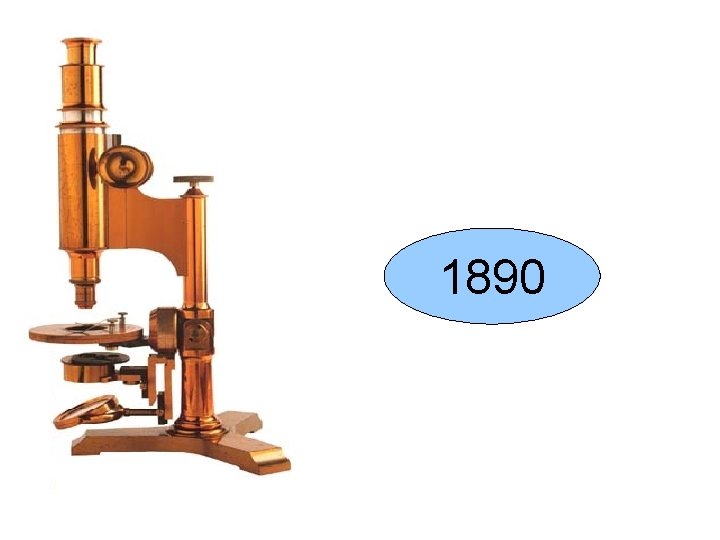
1890
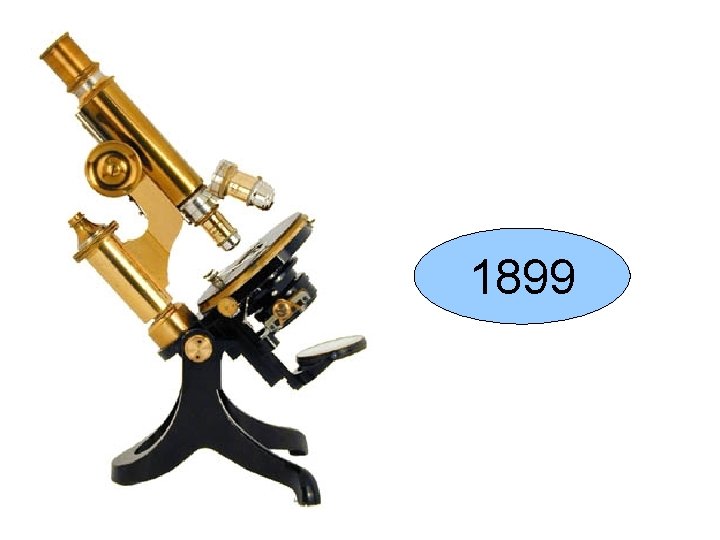
1899
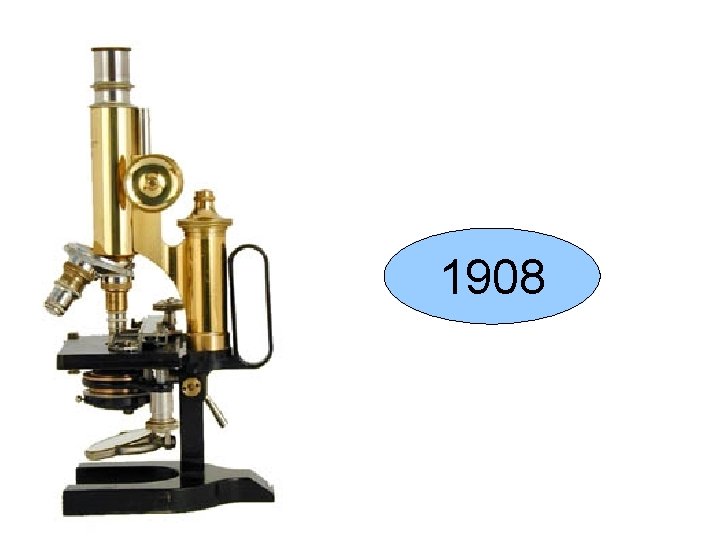
1908
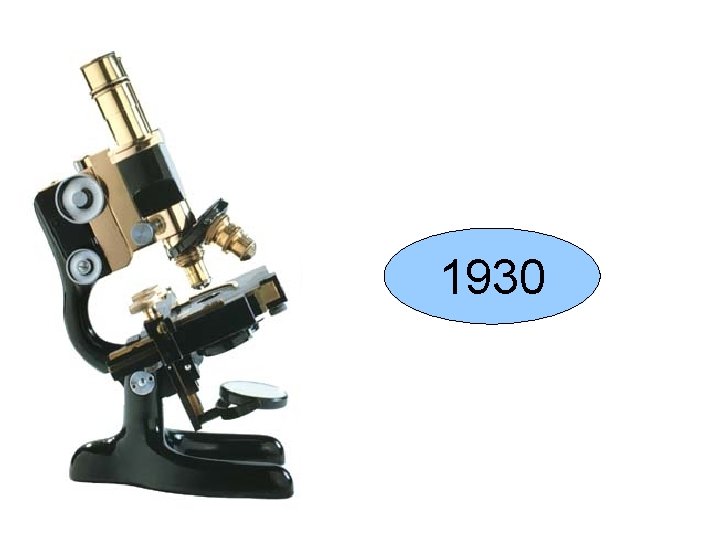
1930
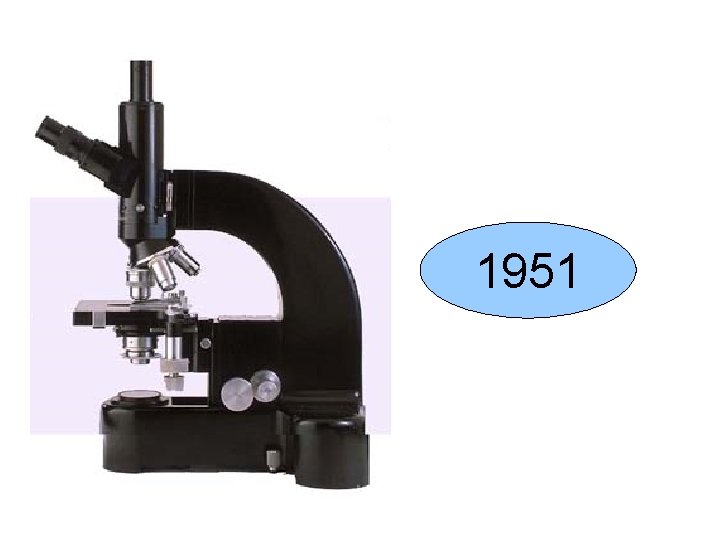
1951
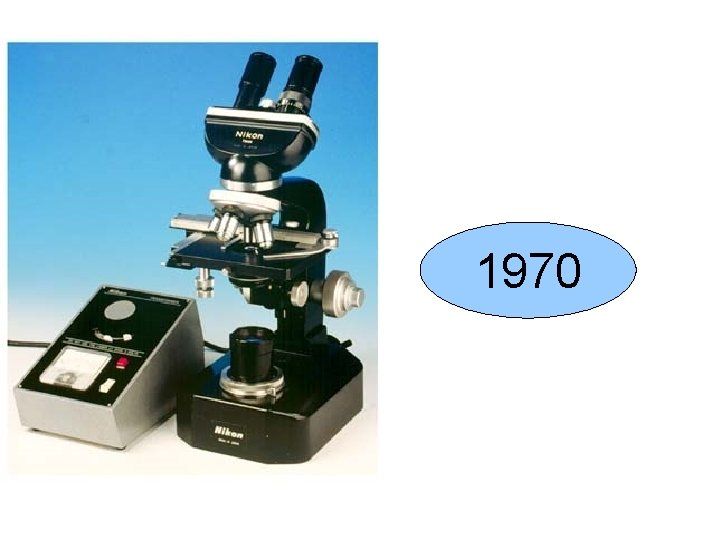
1970
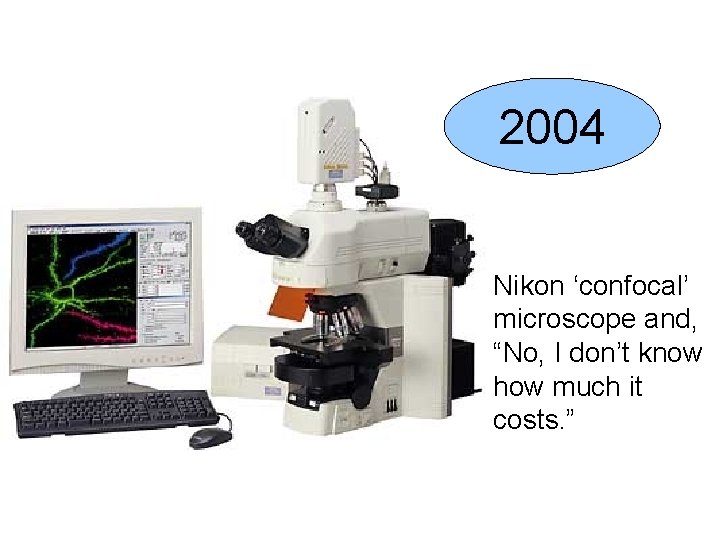
2004 Nikon ‘confocal’ microscope and, “No, I don’t know how much it costs. ”
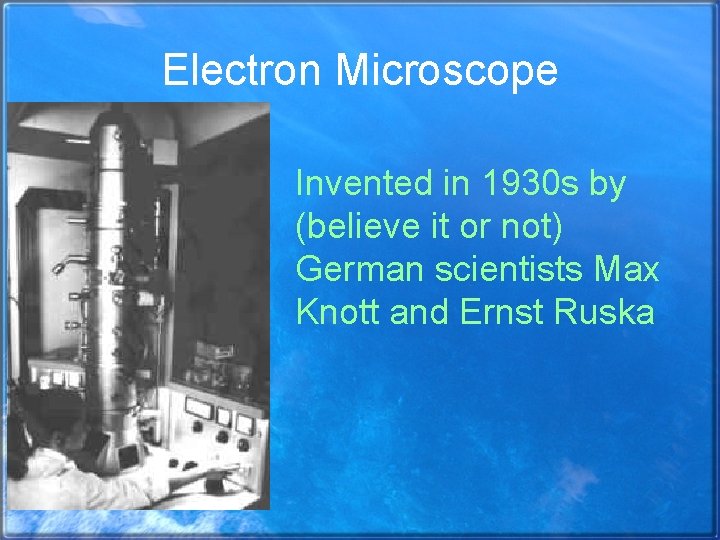
Electron Microscope Invented in 1930 s by (believe it or not) German scientists Max Knott and Ernst Ruska
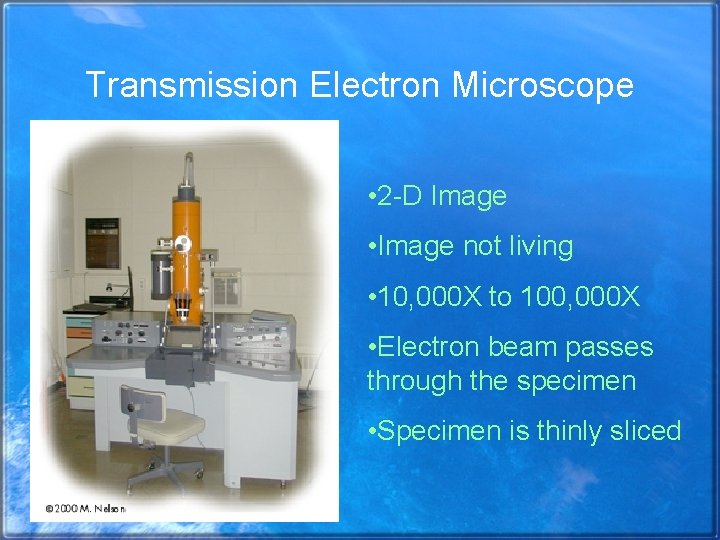
Transmission Electron Microscope • 2 -D Image • Image not living • 10, 000 X to 100, 000 X • Electron beam passes through the specimen • Specimen is thinly sliced
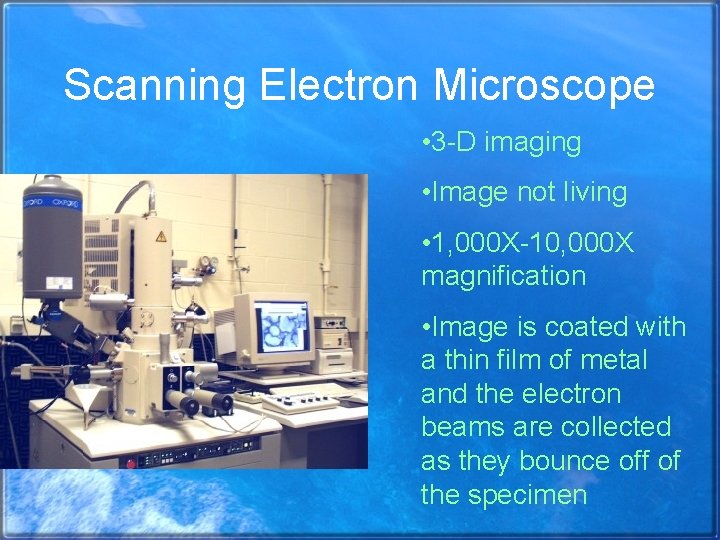
Scanning Electron Microscope • 3 -D imaging • Image not living • 1, 000 X-10, 000 X magnification • Image is coated with a thin film of metal and the electron beams are collected as they bounce off of the specimen
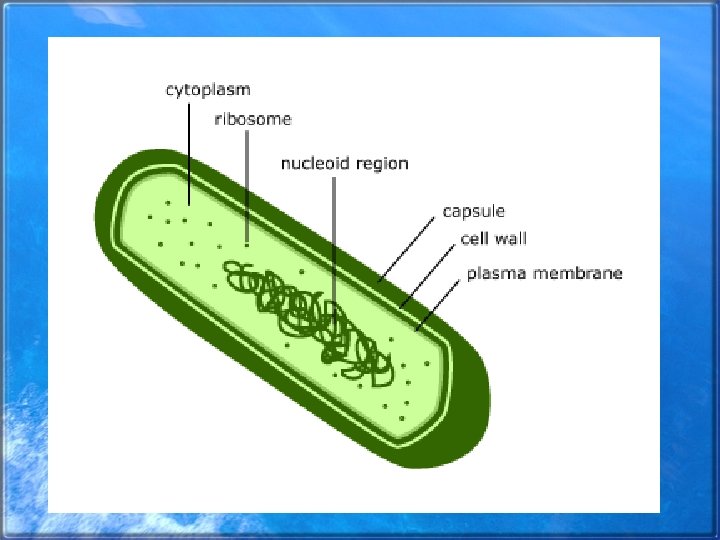
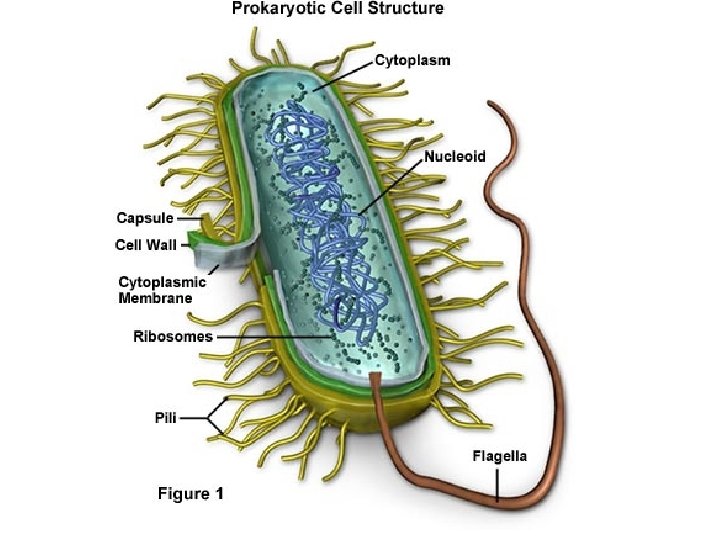
Prokaryotic Cells Bacteria are prokaryotic cells. All other known organisms consist of …. . Eukaryotic Cells
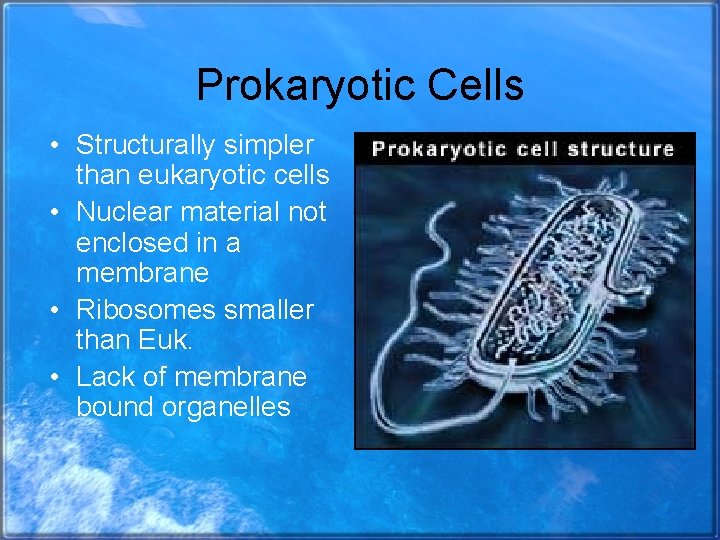
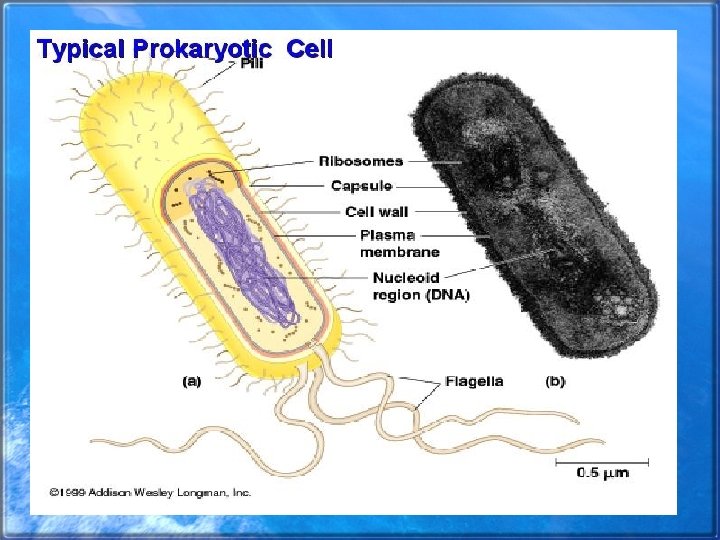
Prokaryotic Cells • Structurally simpler than eukaryotic cells • Nuclear material not enclosed in a membrane • Ribosomes smaller than Euk. • Lack of membrane bound organelles
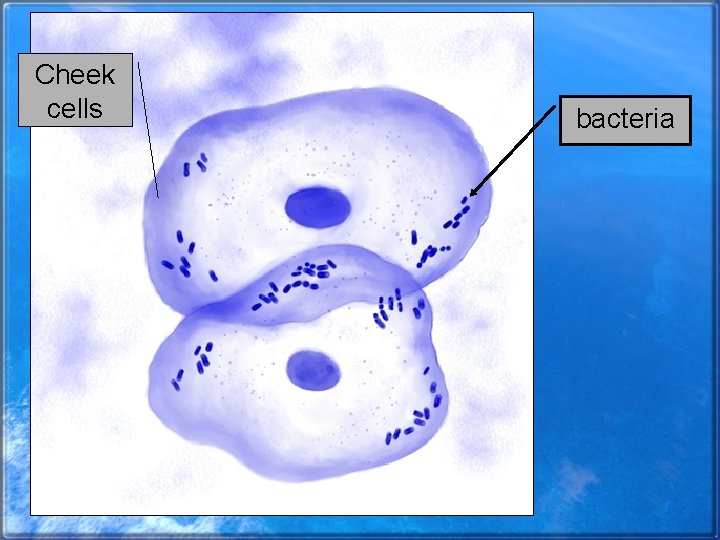
Cheek cells bacteria
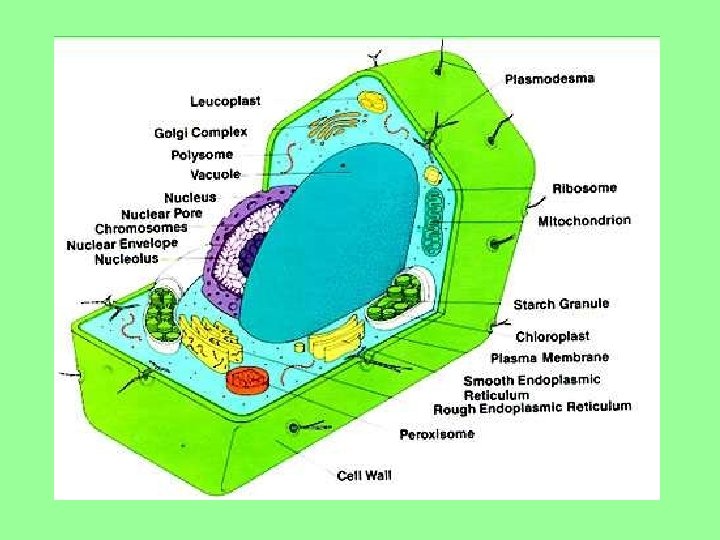
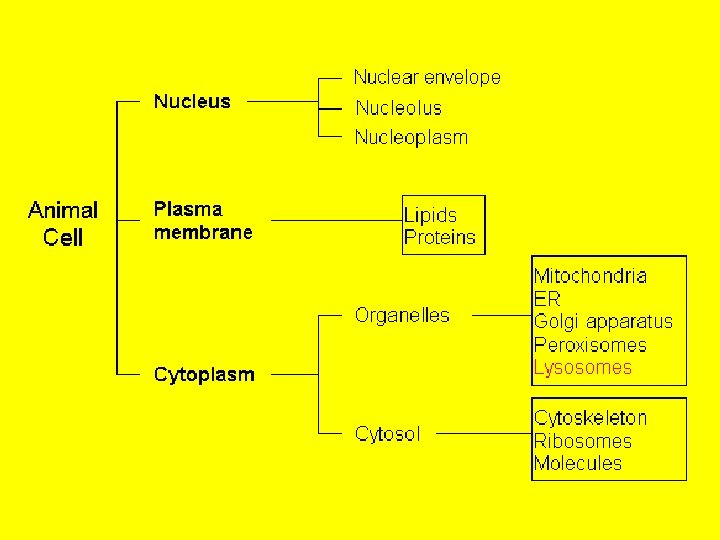
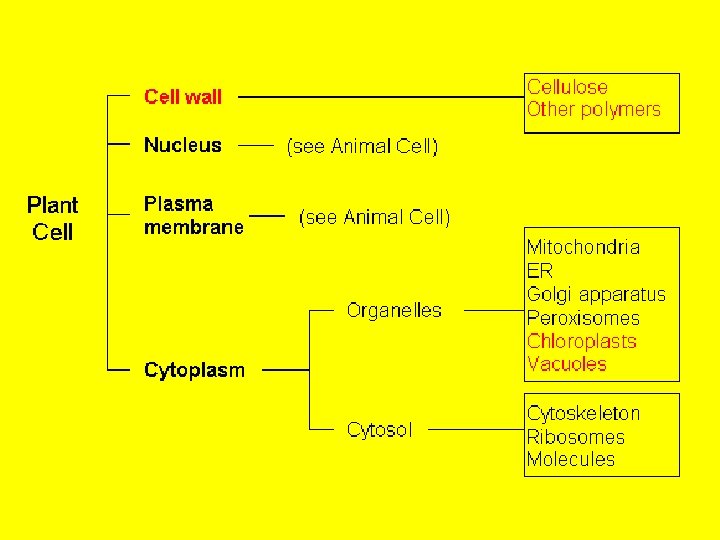
Eukaryotic Cells • • • Membrane bound organelles Cell Nucleus Ribosomes Endoplasmic reticulum Golgi complex Lysosomes Peroxisomes Vacuoles Mitochondria Chloroplasts
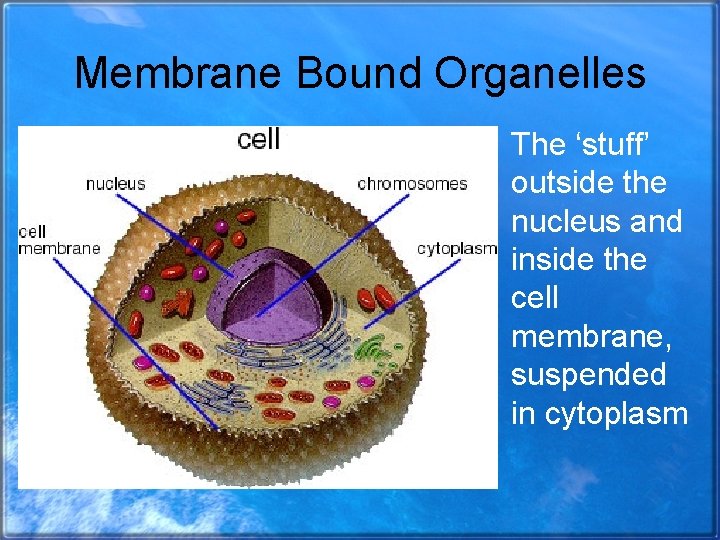
Membrane Bound Organelles The ‘stuff’ outside the nucleus and inside the cell membrane, suspended in cytoplasm
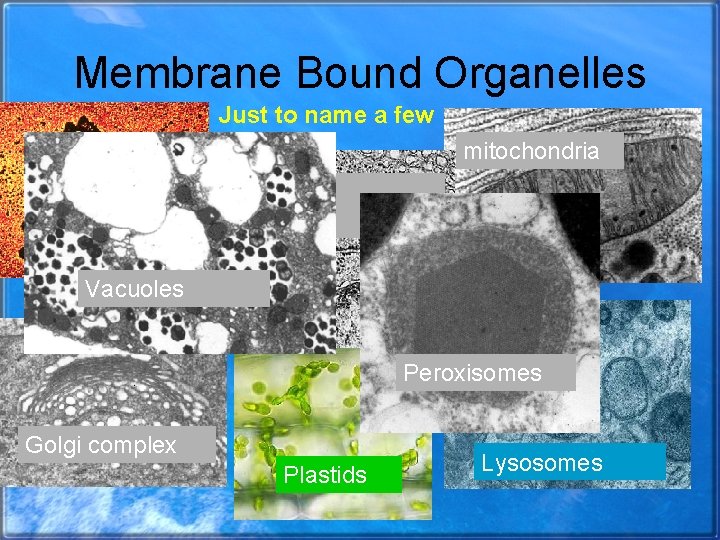
Membrane Bound Organelles Just to name a few ribosomes mitochondria Endoplasmic reticulum Vacuoles Peroxisomes Golgi complex Plastids Lysosomes
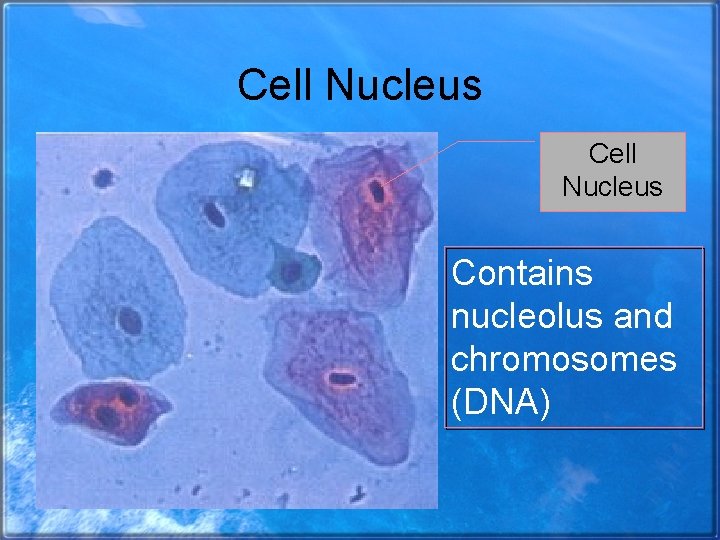
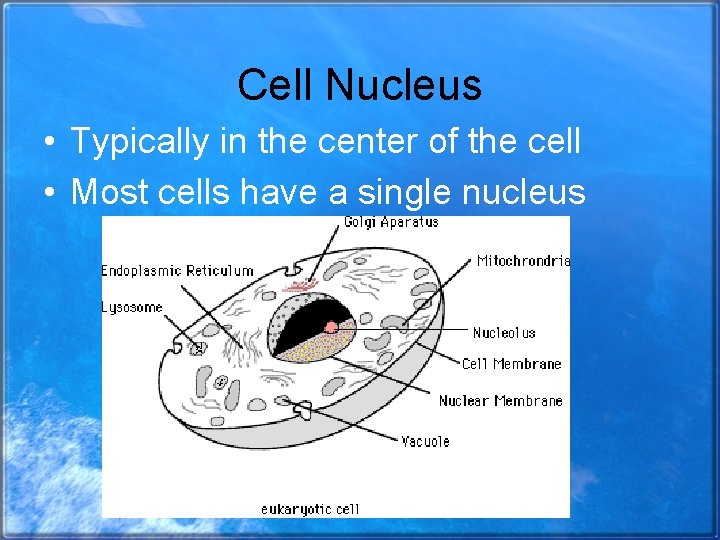
Cell Nucleus Contains nucleolus and chromosomes (DNA)
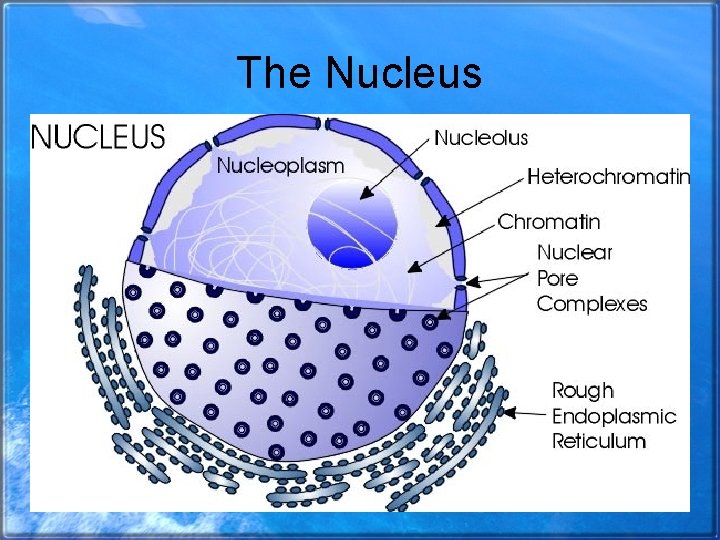
The Nucleus
Cell Nucleus • Typically in the center of the cell • Most cells have a single nucleus
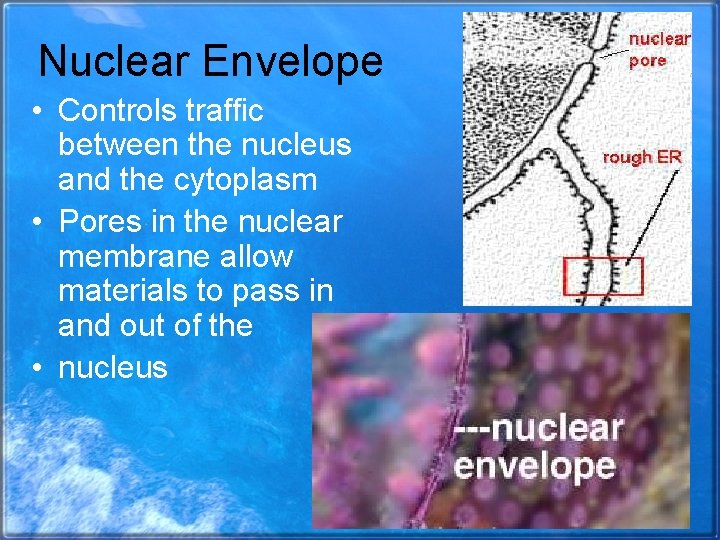
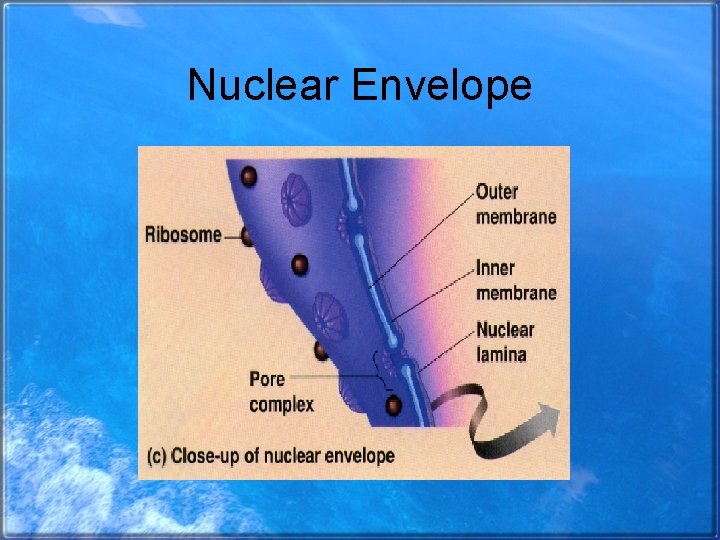
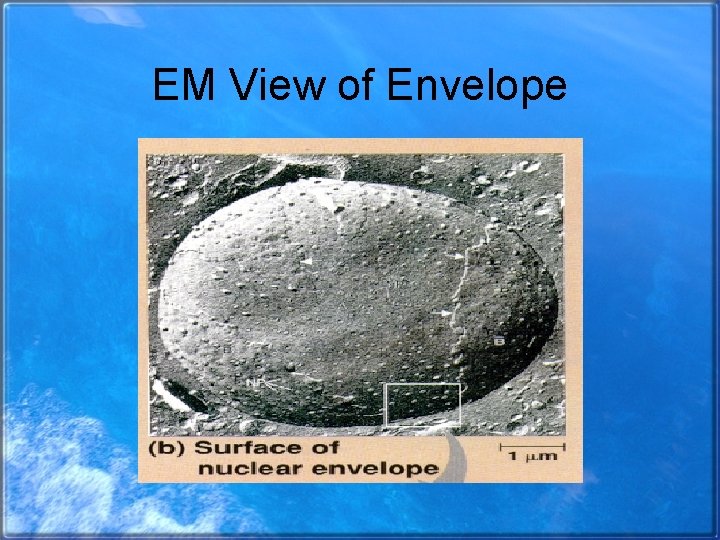
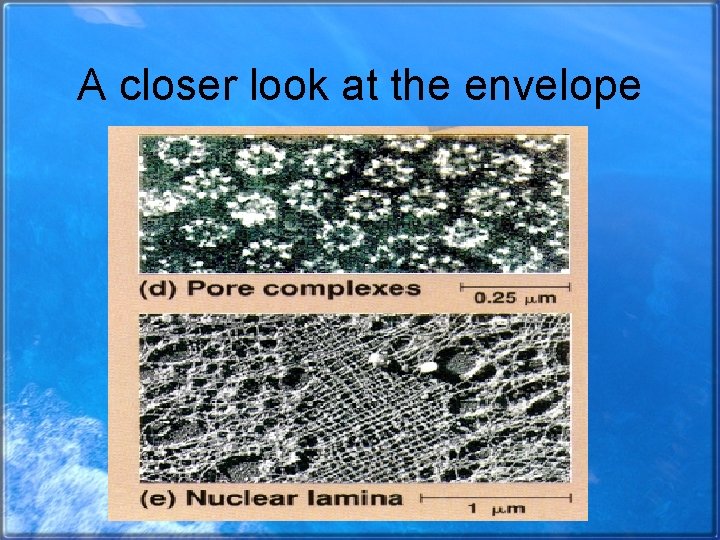
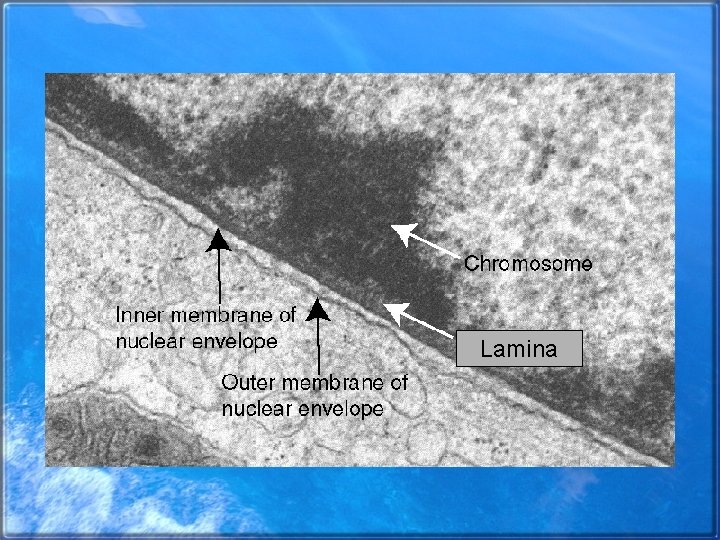
Nuclear Envelope • Controls traffic between the nucleus and the cytoplasm • Pores in the nuclear membrane allow materials to pass in and out of the • nucleus
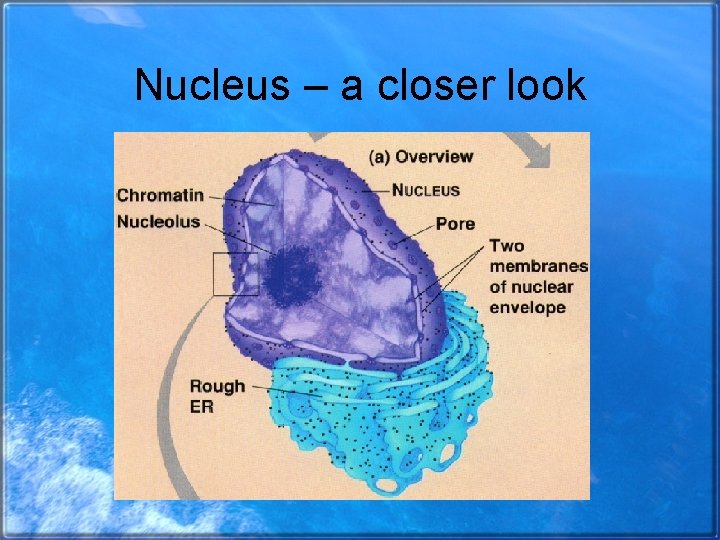
Nucleus – a closer look
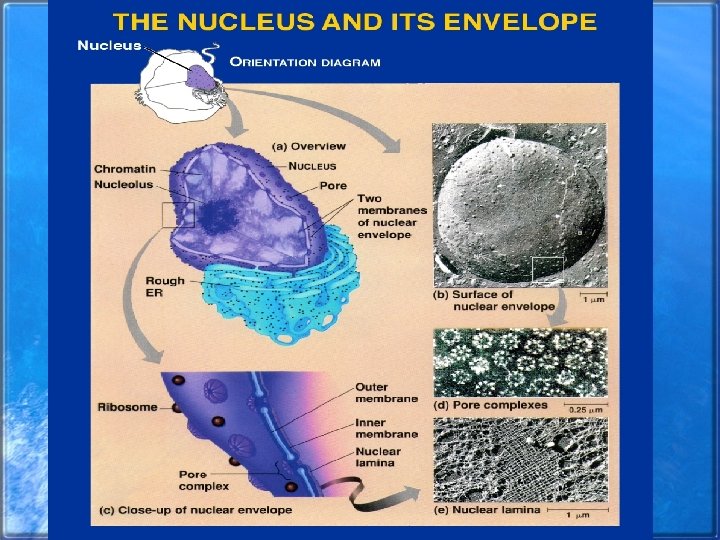
Nuclear Envelope
EM View of Envelope
A closer look at the envelope
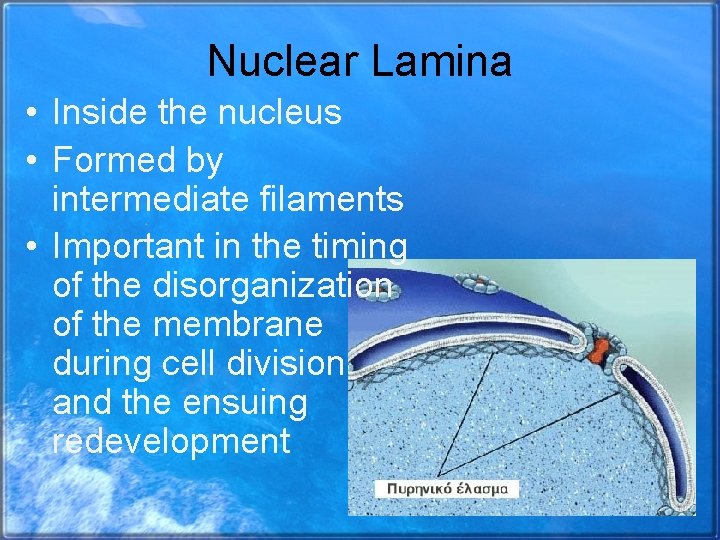
Nuclear Lamina • Inside the nucleus • Formed by intermediate filaments • Important in the timing of the disorganization of the membrane during cell division and the ensuing redevelopment
Lamina
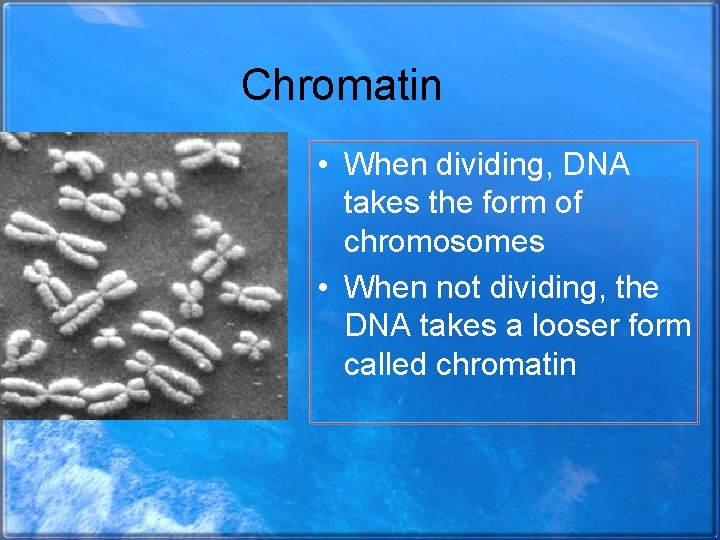
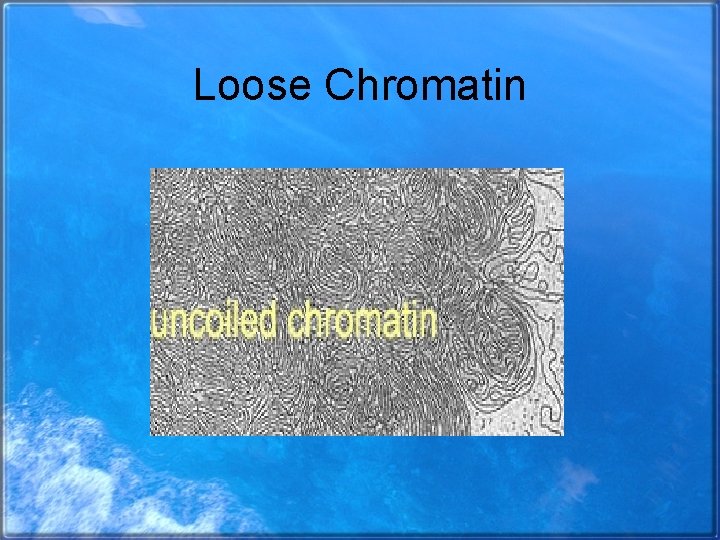
Chromatin • When dividing, DNA takes the form of chromosomes • When not dividing, the DNA takes a looser form called chromatin
Loose Chromatin
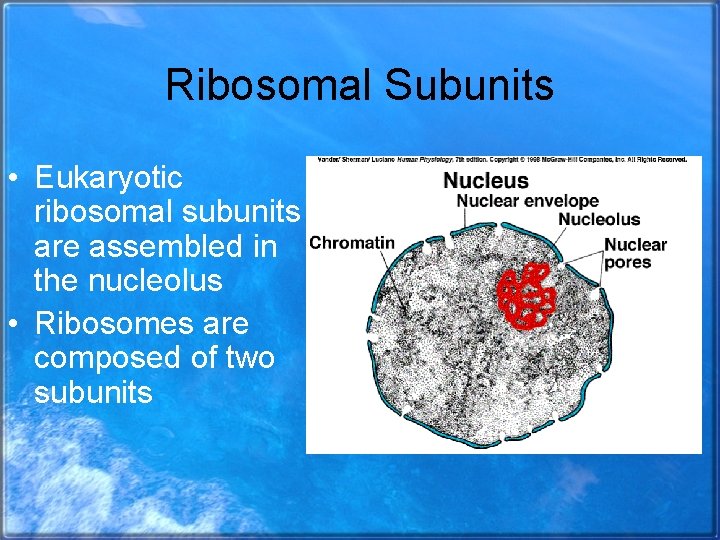
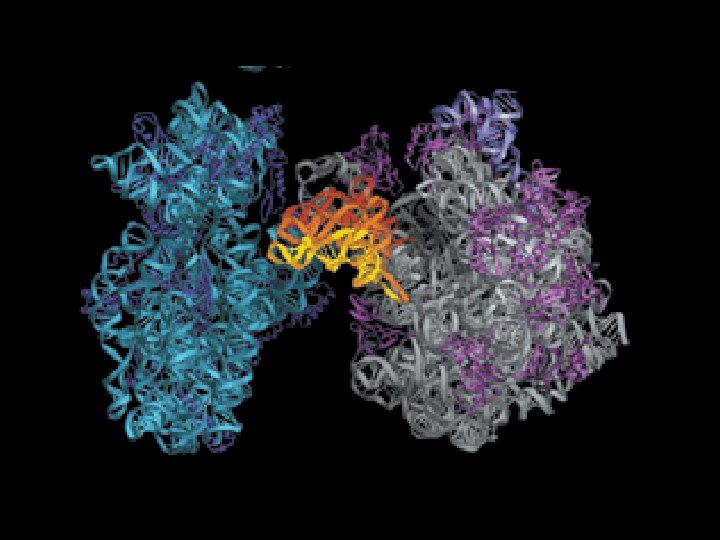
Ribosomal Subunits • Eukaryotic ribosomal subunits are assembled in the nucleolus • Ribosomes are composed of two subunits
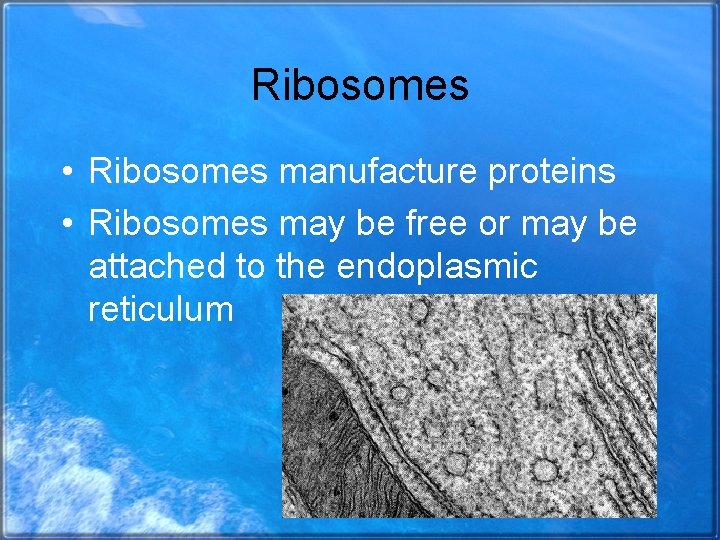
Ribosomes • Ribosomes manufacture proteins • Ribosomes may be free or may be attached to the endoplasmic reticulum
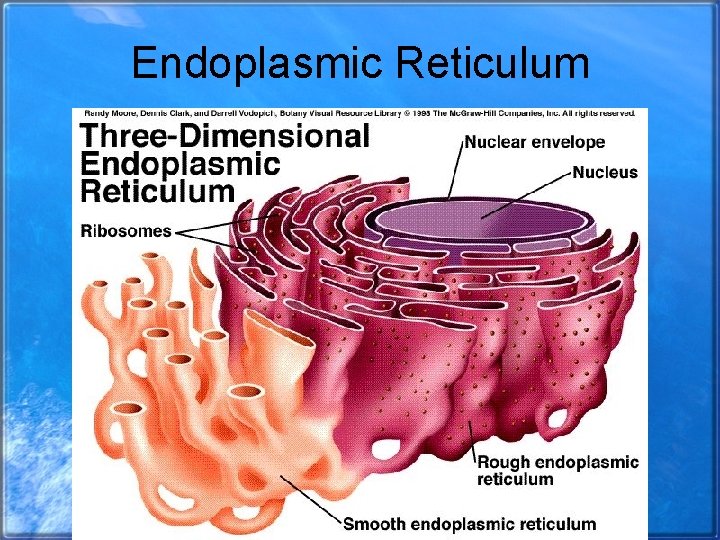
Endoplasmic Reticulum
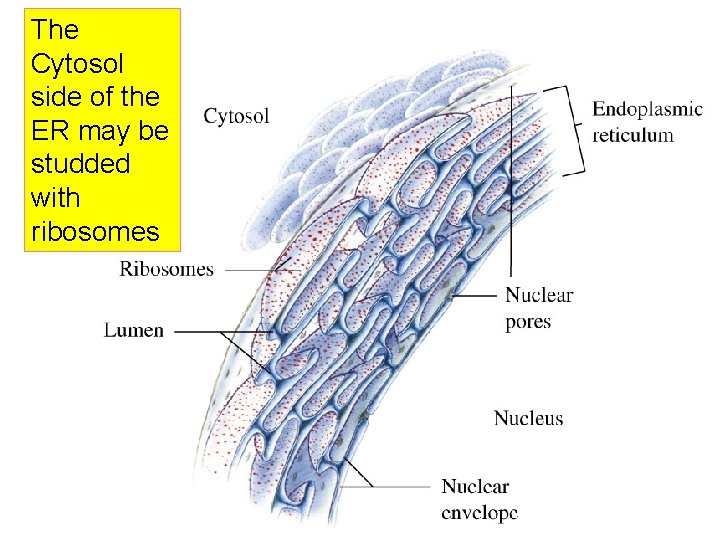
Endoplasmic Reticulum • Major manufacturing center- proteins • Extends from the nuclear membrane into the cytoplasm • Lumen- the space enclosed by the ER- typical intracellular membrane
The Cytosol side of the ER may be studded with ribosomes
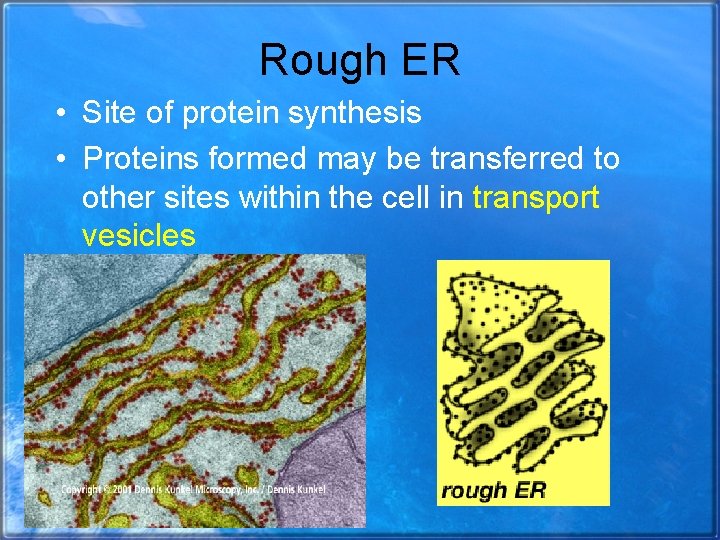
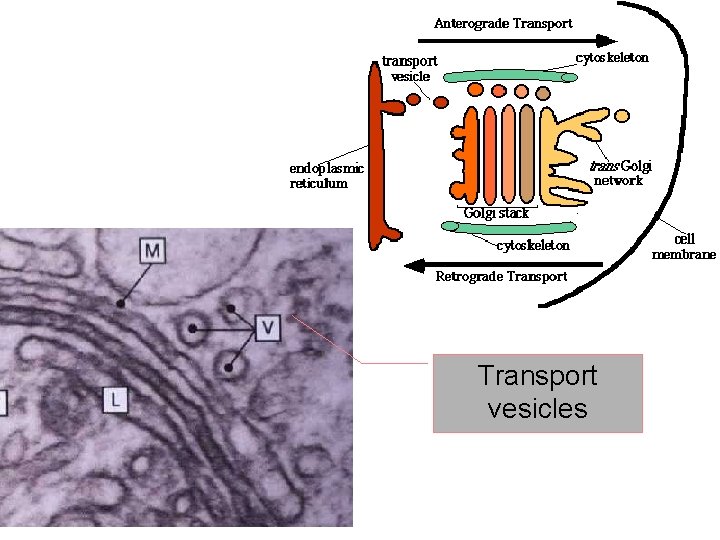
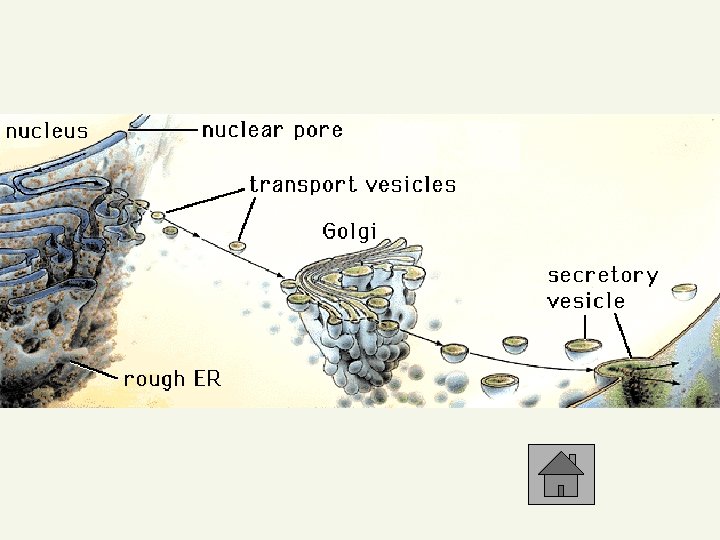
Rough ER • Site of protein synthesis • Proteins formed may be transferred to other sites within the cell in transport vesicles
Transport vesicles
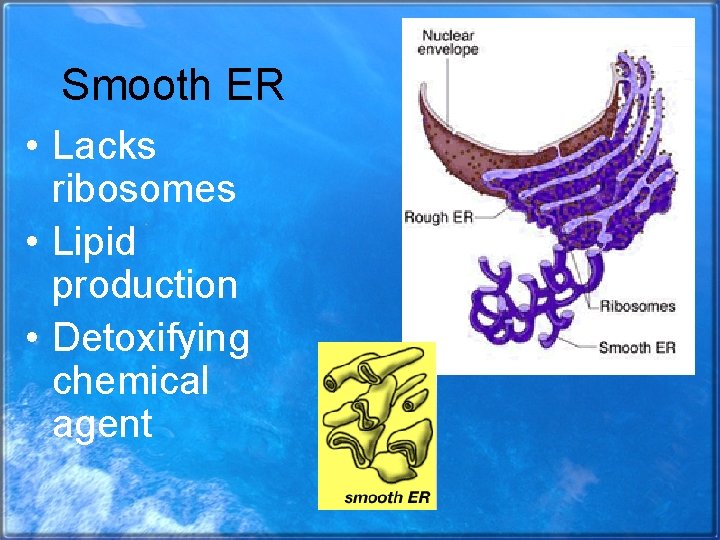
Smooth ER • Lacks ribosomes • Lipid production • Detoxifying chemical agent
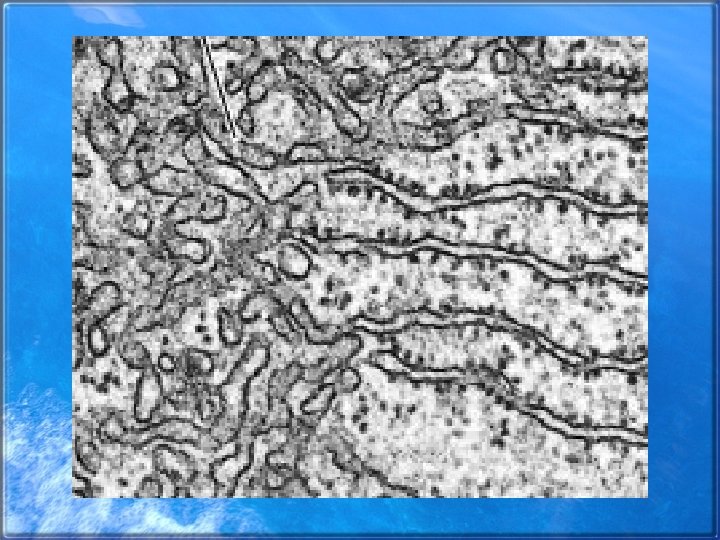
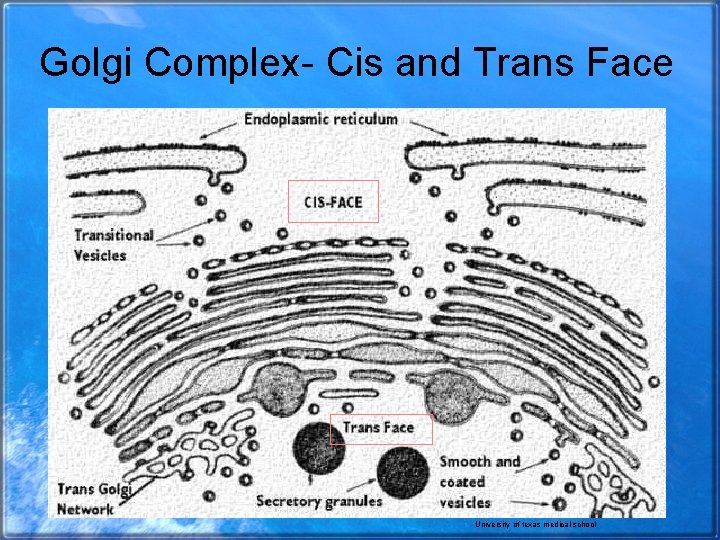
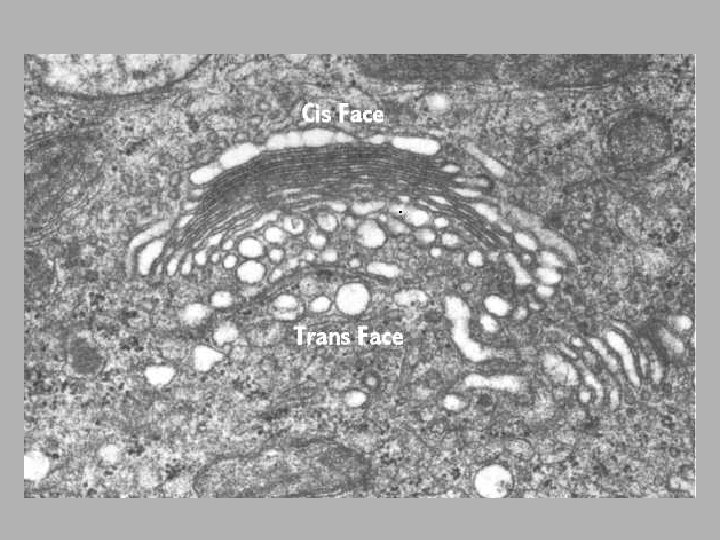
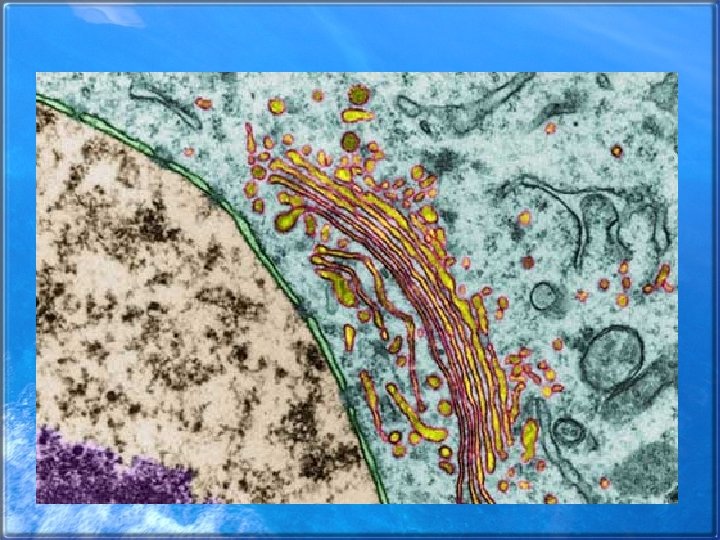
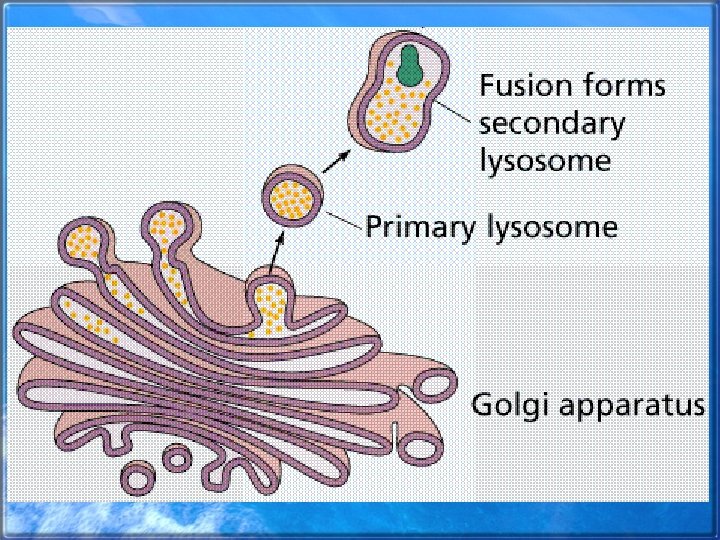
Golgi Complex • Cis face functions in receiving materials • The Trans face is directed toward the plasma membrane • Function: processing, sorting and modifying proteins • The process product is then passed to other organelles or to the plasma membrane • Manufactures lysosomes
Golgi Complex- Cis and Trans Face University of texas medical school
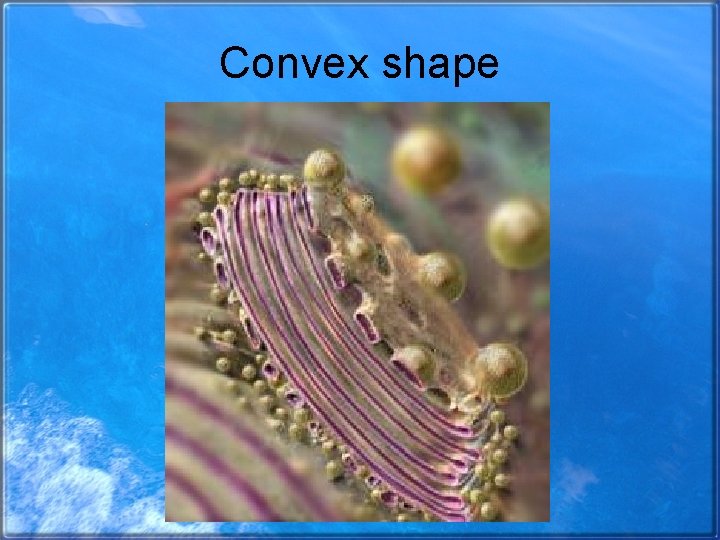
Convex shape
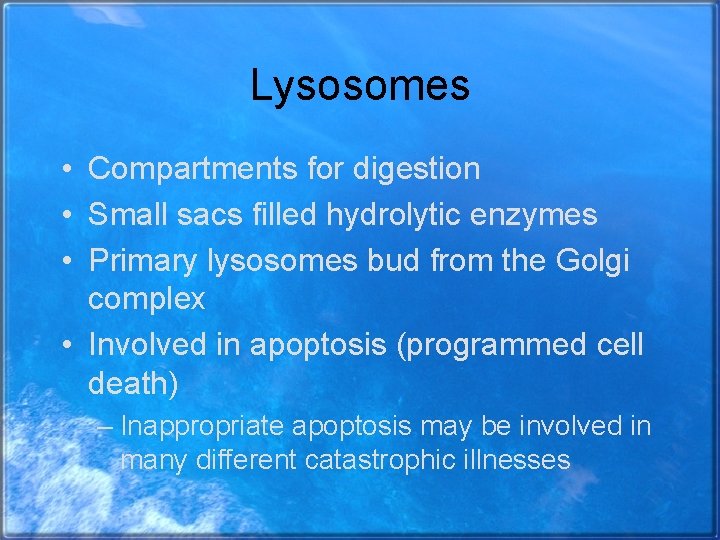
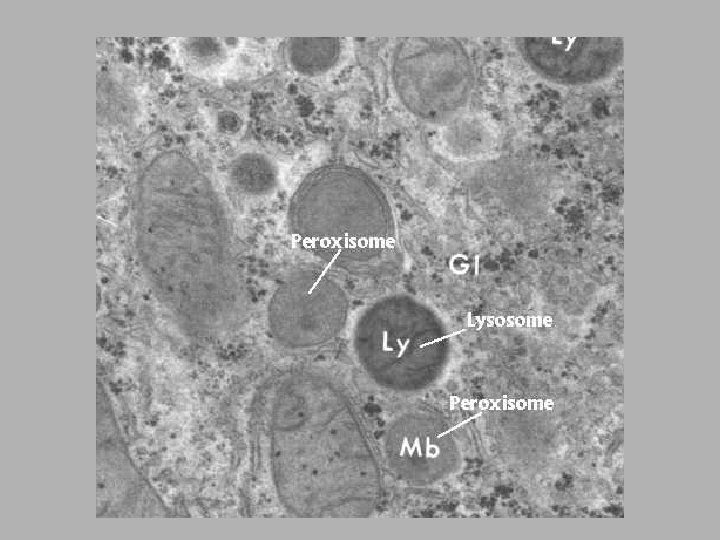
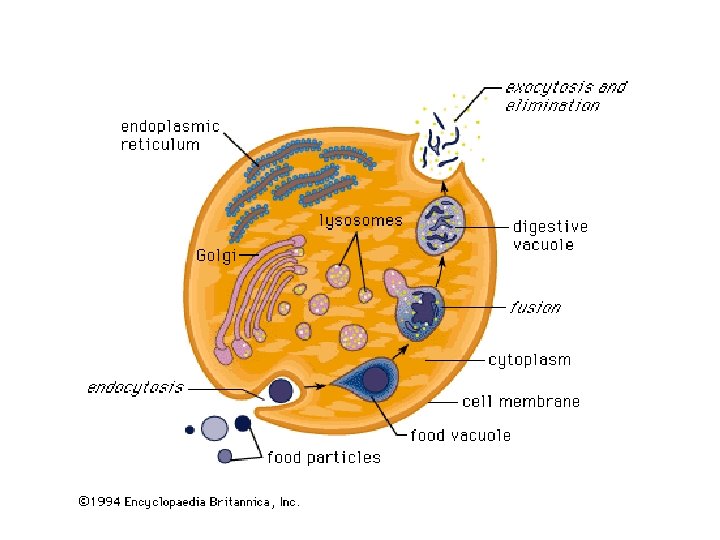
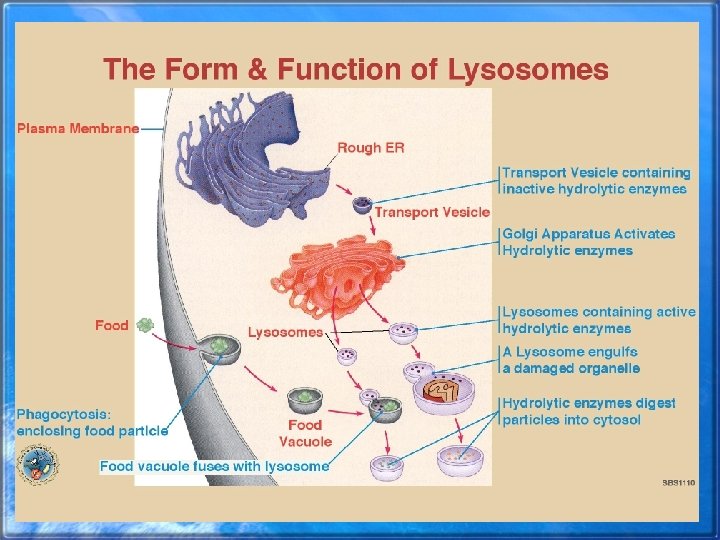
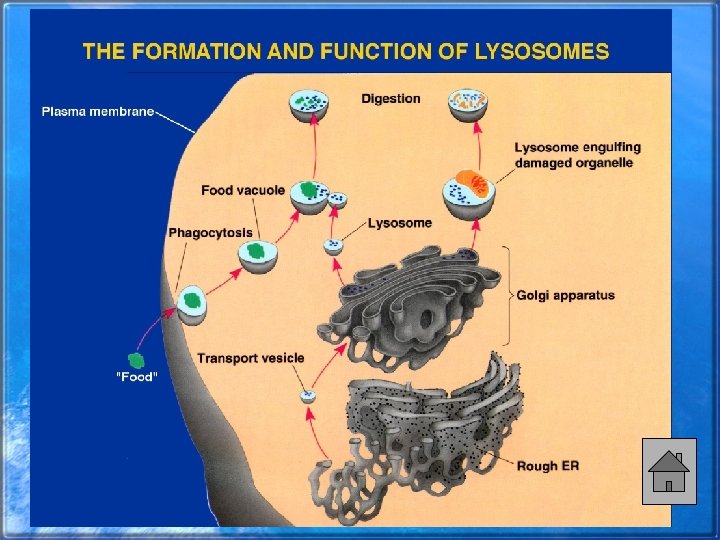
Lysosomes • Compartments for digestion • Small sacs filled hydrolytic enzymes • Primary lysosomes bud from the Golgi complex • Involved in apoptosis (programmed cell death) – Inappropriate apoptosis may be involved in many different catastrophic illnesses
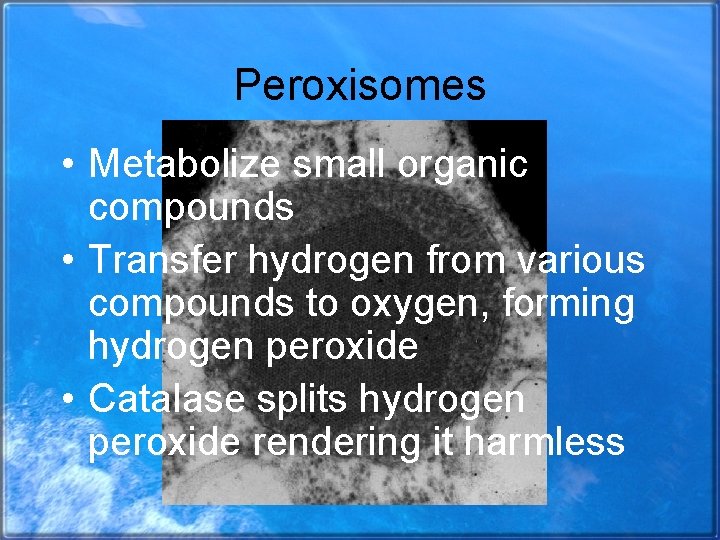
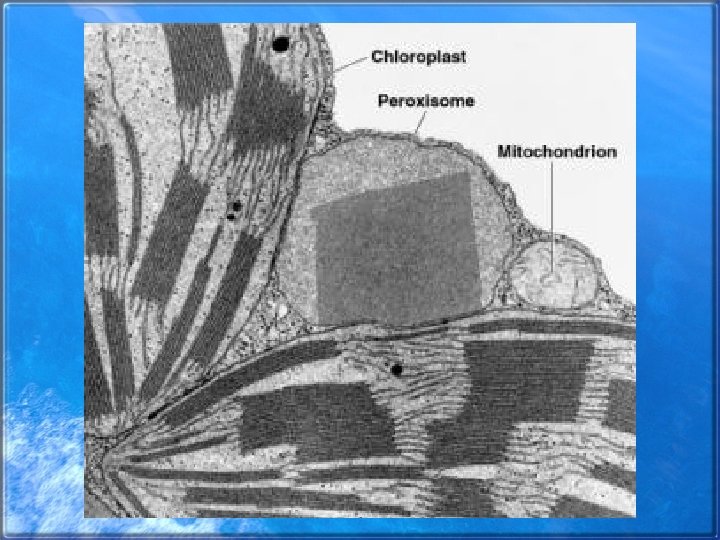
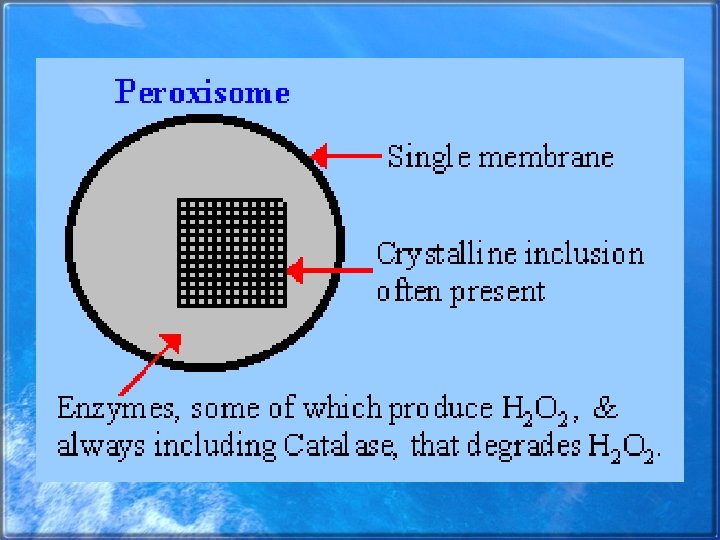
Peroxisomes • Metabolize small organic compounds • Transfer hydrogen from various compounds to oxygen, forming hydrogen peroxide • Catalase splits hydrogen peroxide rendering it harmless
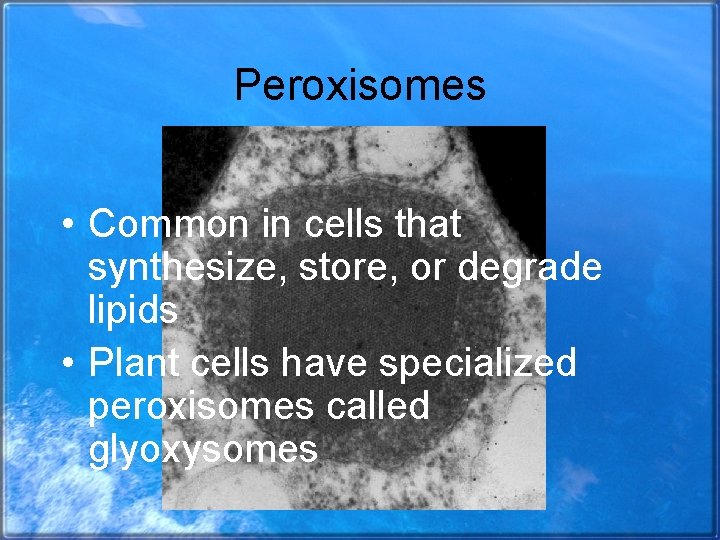
Peroxisomes • Common in cells that synthesize, store, or degrade lipids • Plant cells have specialized peroxisomes called glyoxysomes
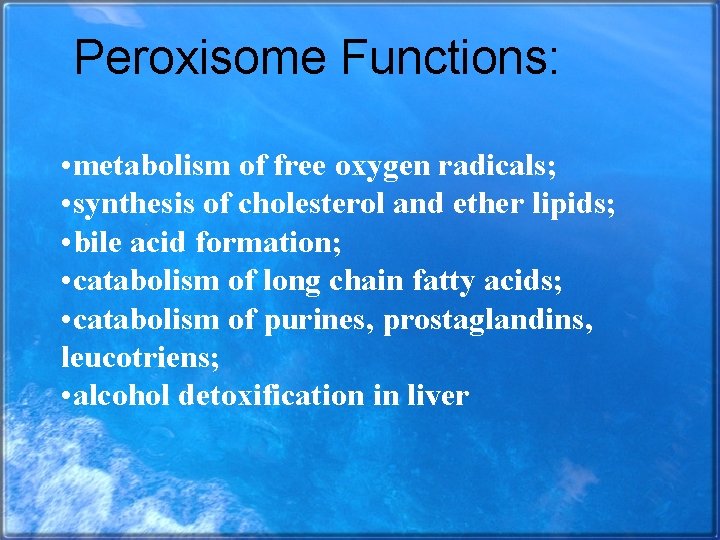
Peroxisome Functions: • metabolism of free oxygen radicals; • synthesis of cholesterol and ether lipids; • bile acid formation; • catabolism of long chain fatty acids; • catabolism of purines, prostaglandins, leucotriens; • alcohol detoxification in liver
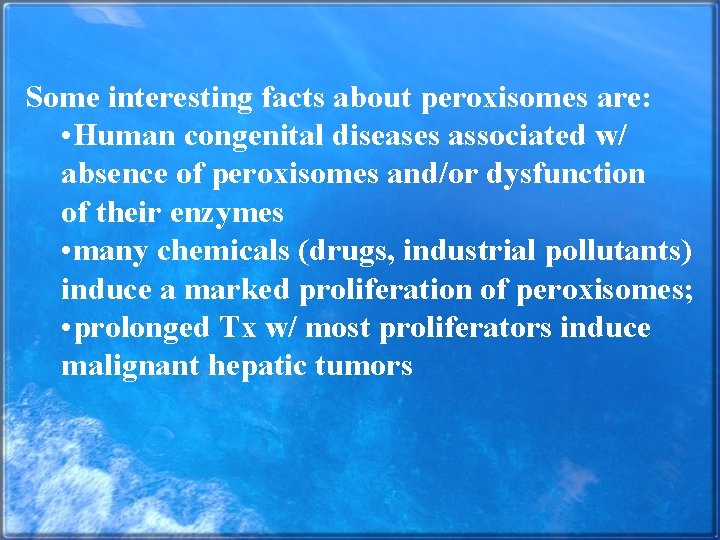
Some interesting facts about peroxisomes are: • Human congenital diseases associated w/ absence of peroxisomes and/or dysfunction of their enzymes • many chemicals (drugs, industrial pollutants) induce a marked proliferation of peroxisomes; • prolonged Tx w/ most proliferators induce malignant hepatic tumors
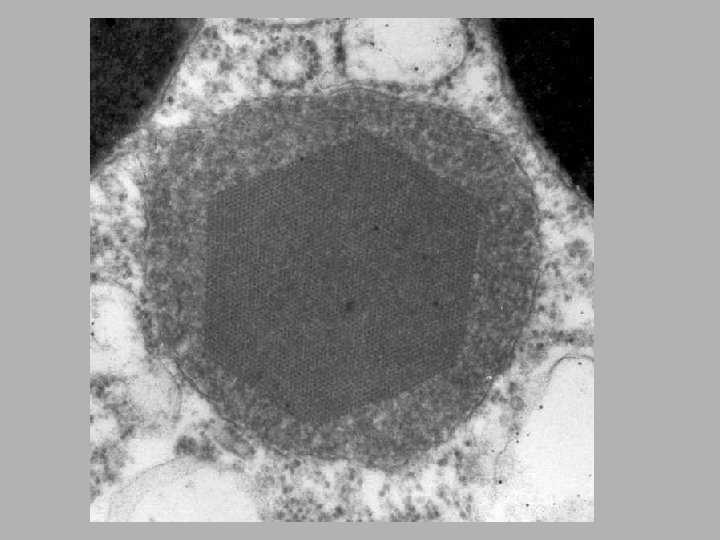
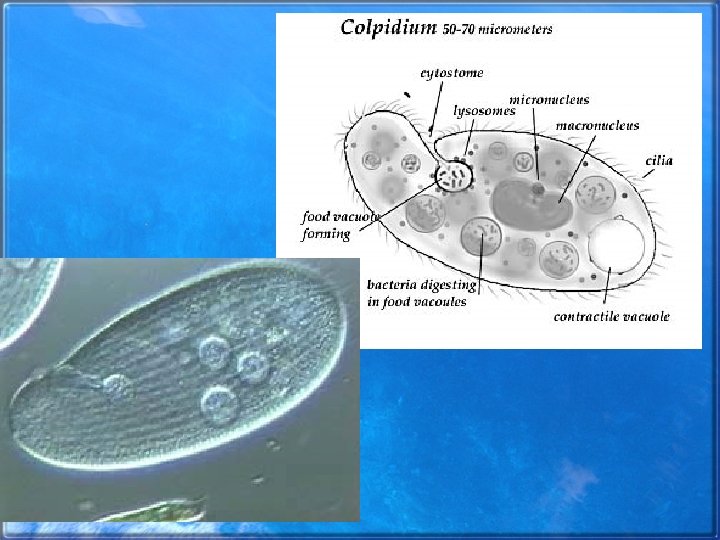
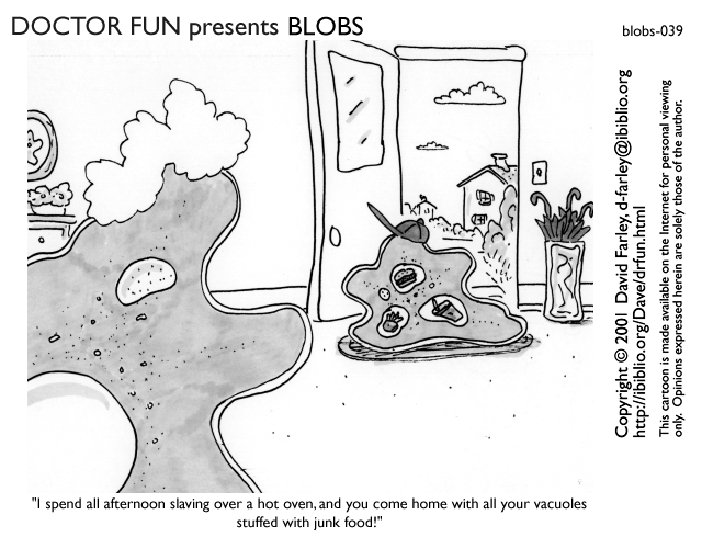
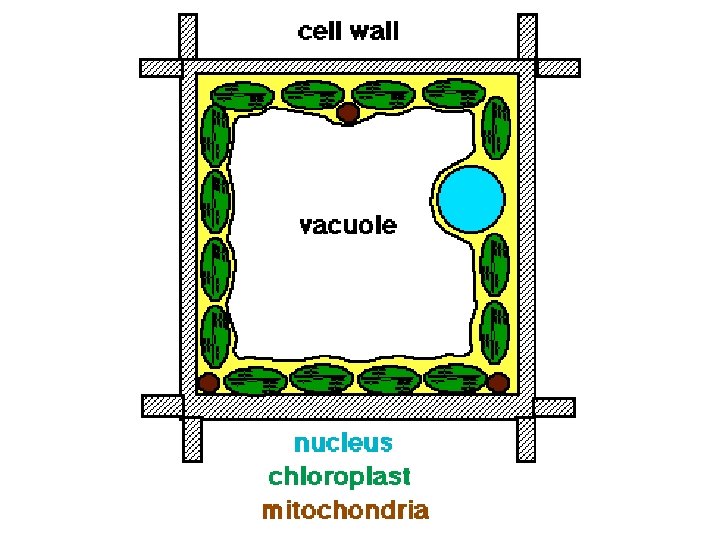
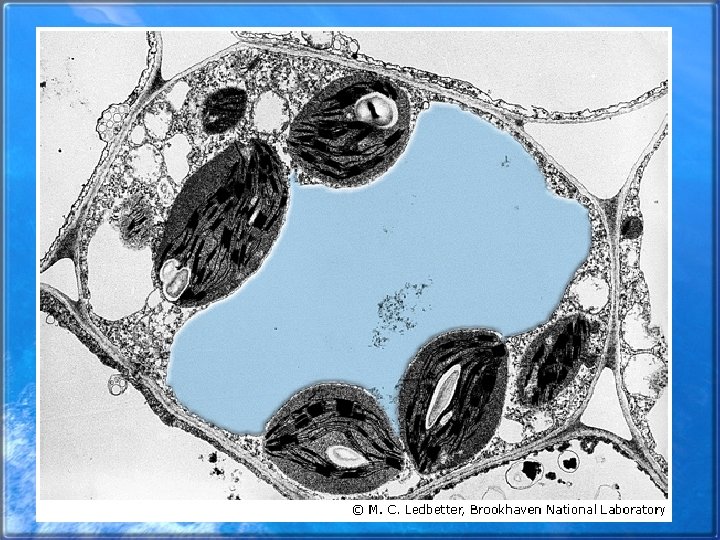
Vacuoles • Large, fluid filled sacs • Carry out variety of functions – In plants & fungi, vacuoles carry out many of the functions of the lysosome – Allow plants to increase in size • Bound by a membranous tonoplast • May store toxins or pigments • Protists have vacuoles that are involved in digestions and secretion
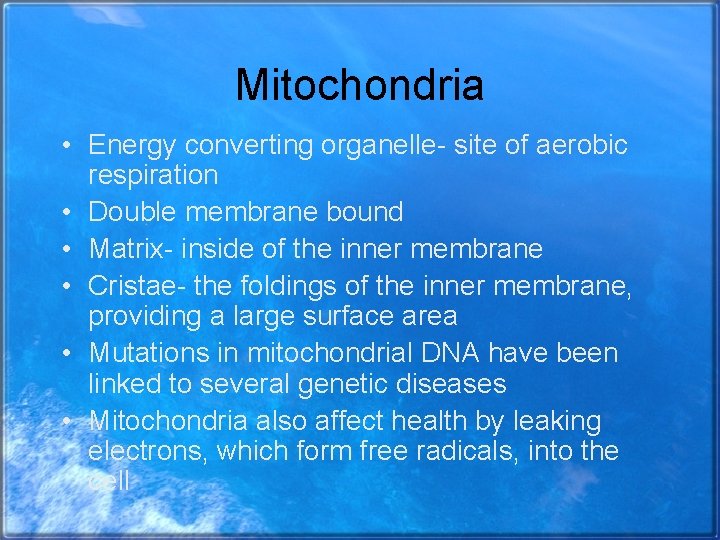
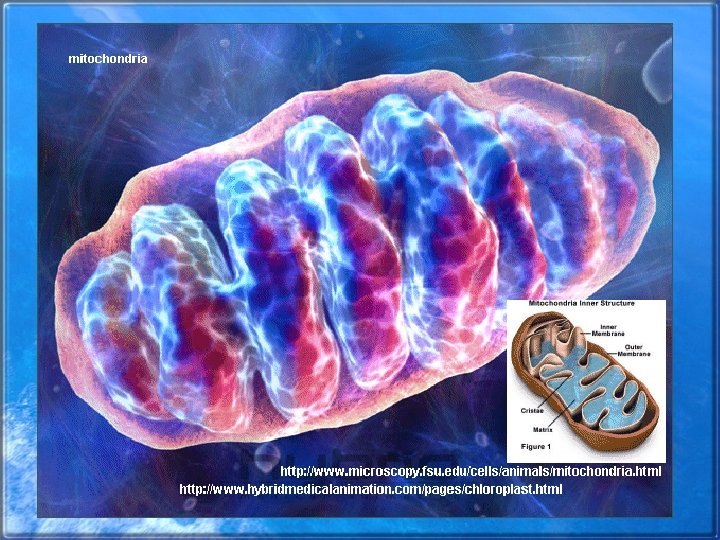
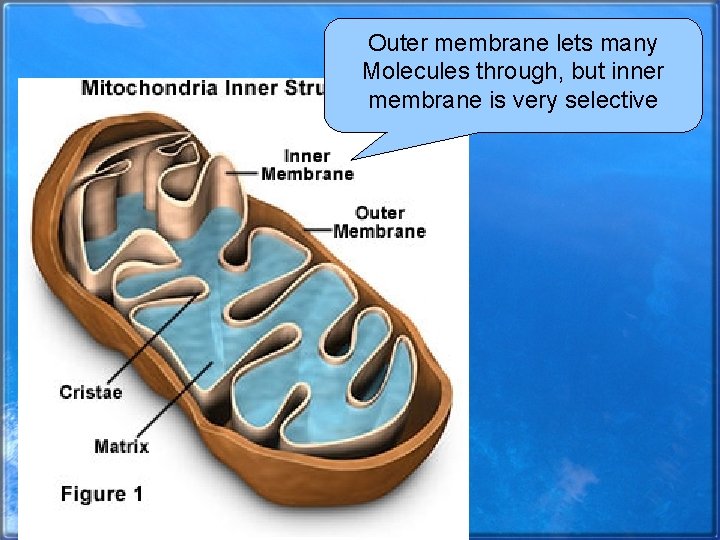
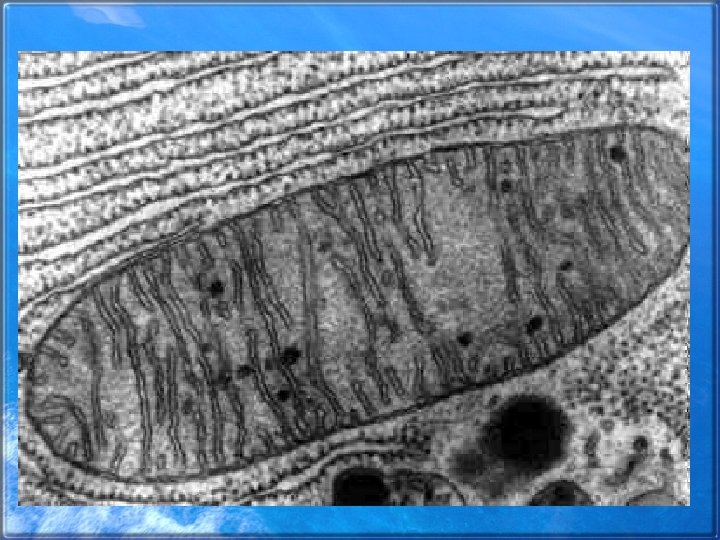
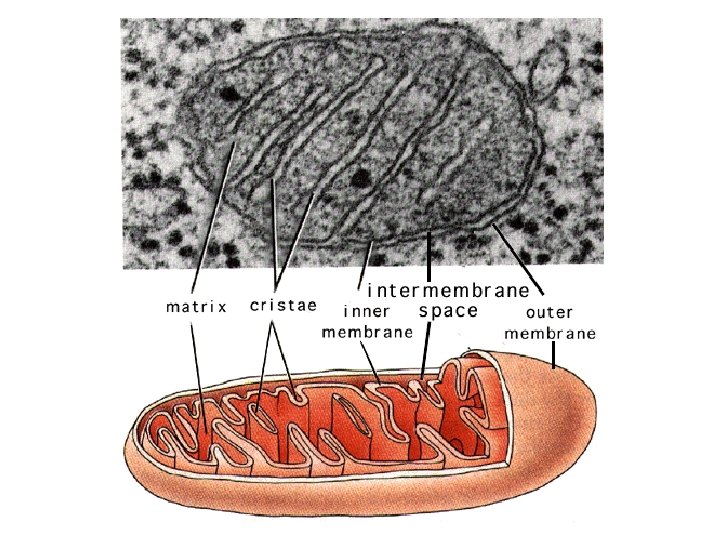
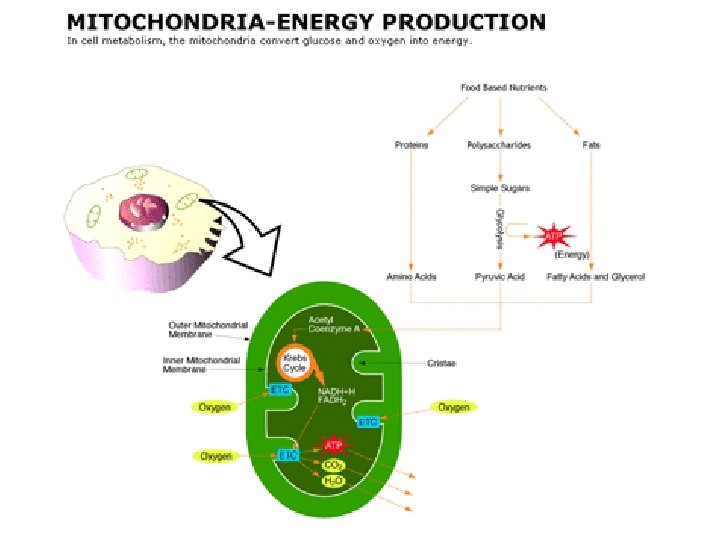
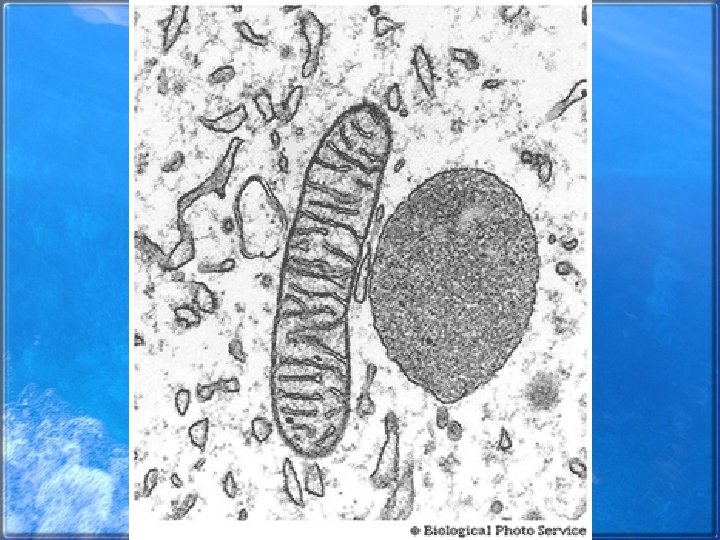
Mitochondria • Energy converting organelle- site of aerobic respiration • Double membrane bound • Matrix- inside of the inner membrane • Cristae- the foldings of the inner membrane, providing a large surface area • Mutations in mitochondrial DNA have been linked to several genetic diseases • Mitochondria also affect health by leaking electrons, which form free radicals, into the cell
Outer membrane lets many Molecules through, but inner membrane is very selective
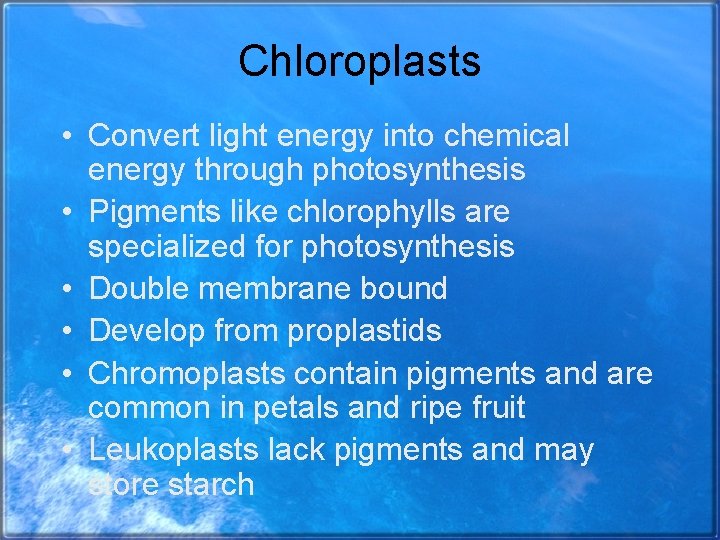
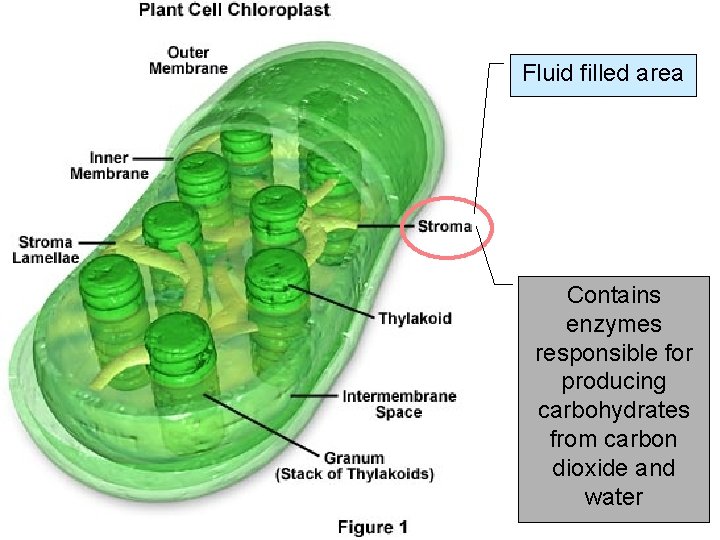
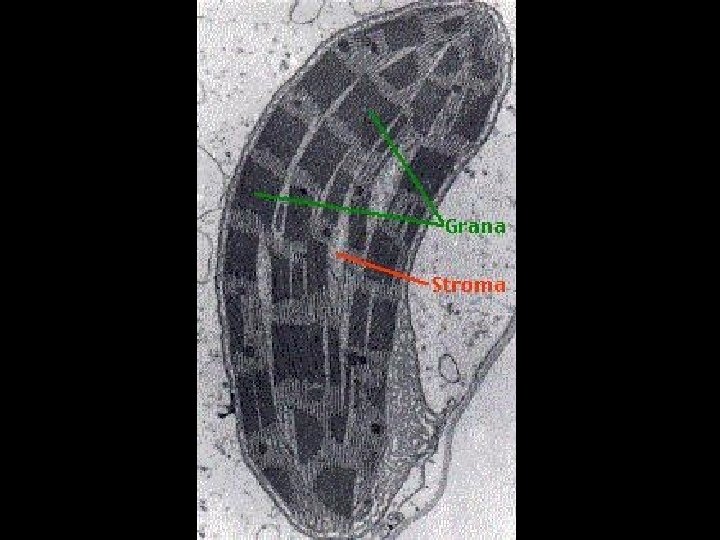
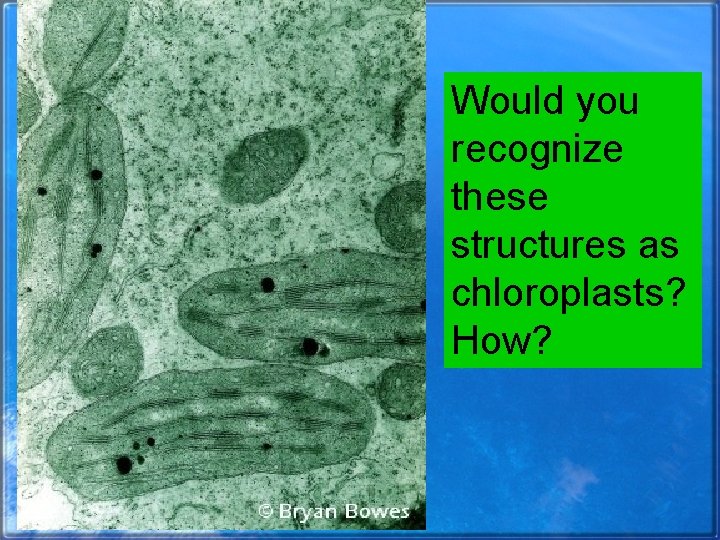
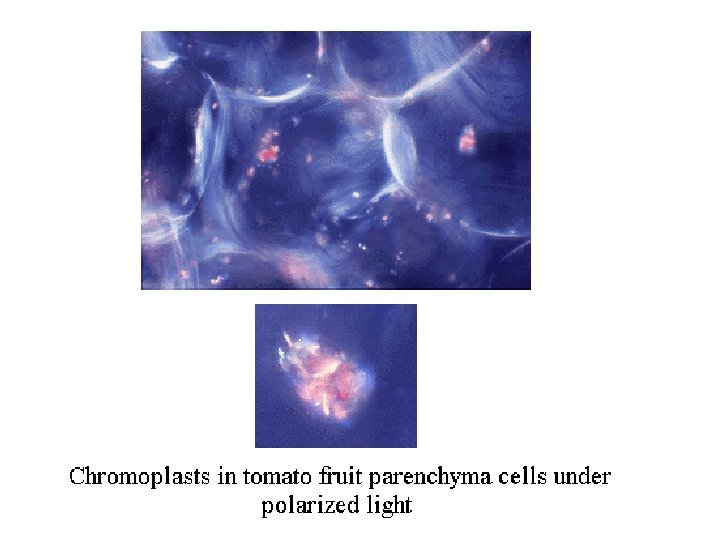
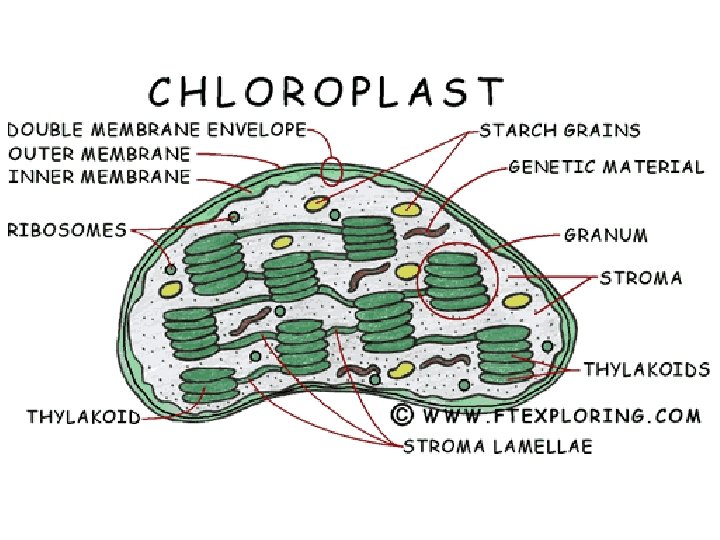
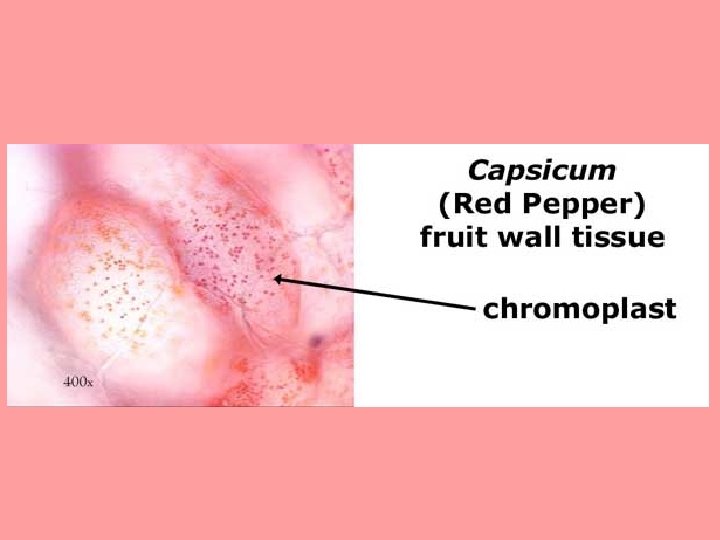
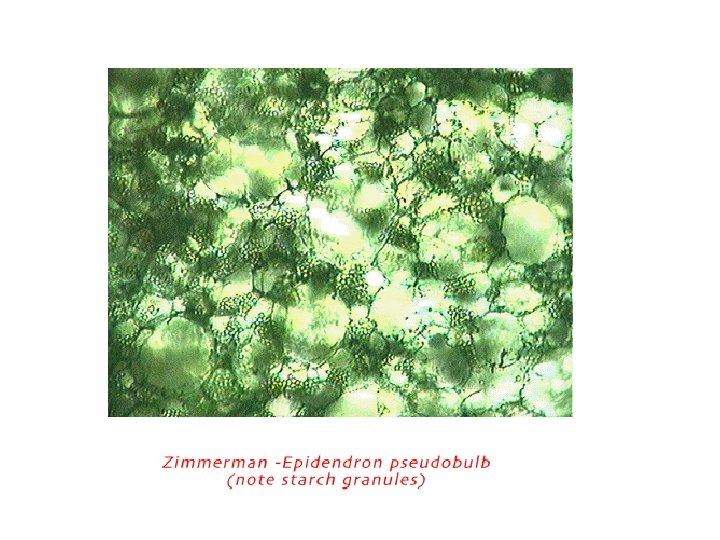
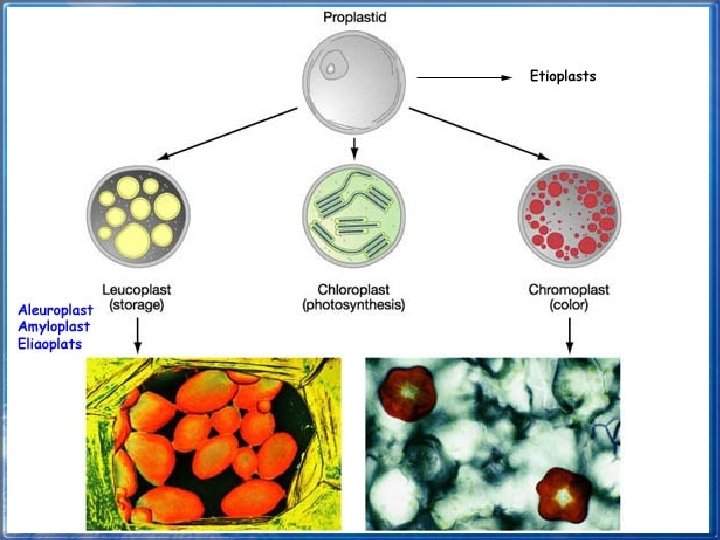
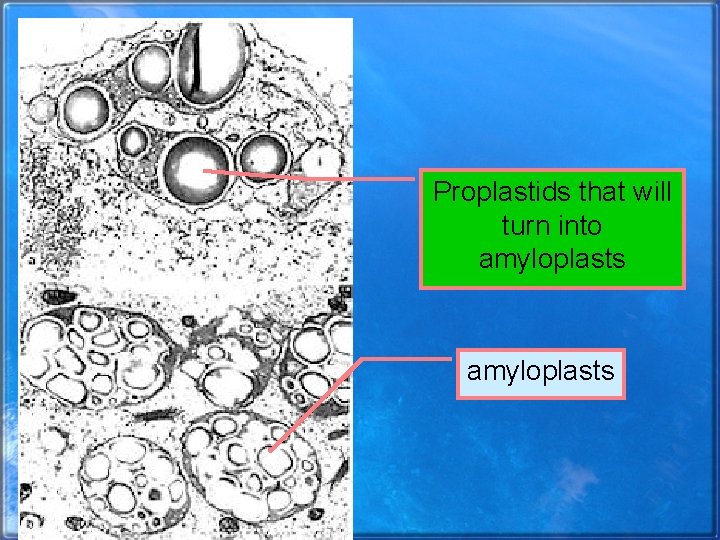
Chloroplasts • Convert light energy into chemical energy through photosynthesis • Pigments like chlorophylls are specialized for photosynthesis • Double membrane bound • Develop from proplastids • Chromoplasts contain pigments and are common in petals and ripe fruit • Leukoplasts lack pigments and may store starch
Fluid filled area Contains enzymes responsible for producing carbohydrates from carbon dioxide and water
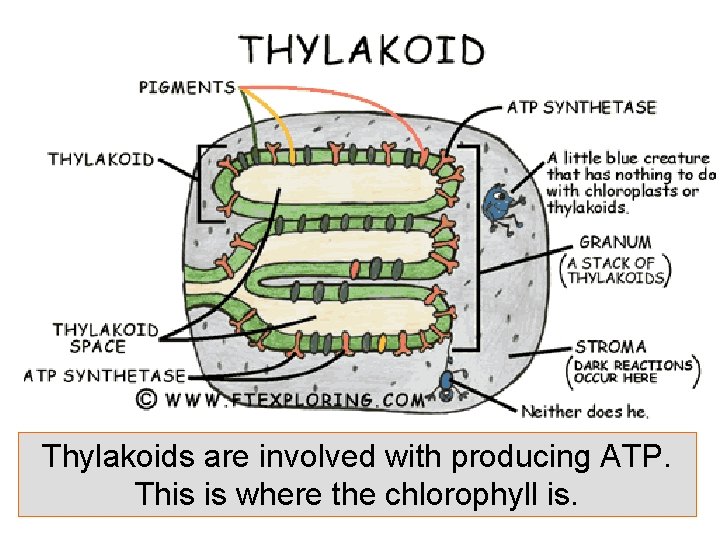
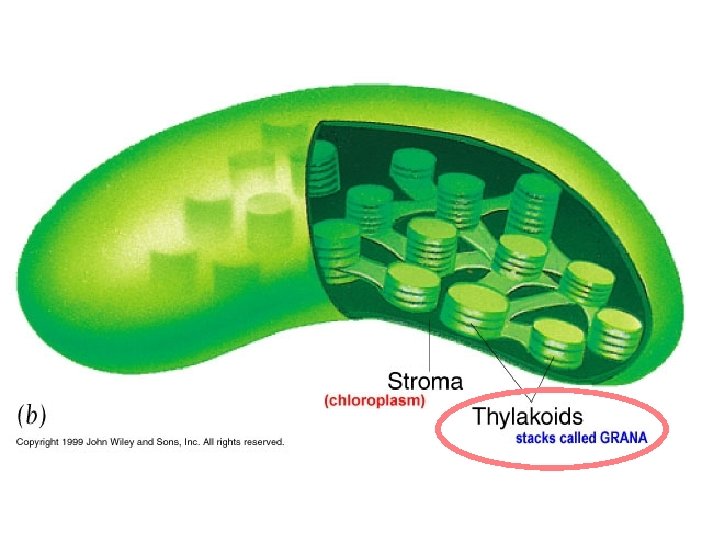
Thylakoids are involved with producing ATP. This is where the chlorophyll is.
Would you recognize these structures as chloroplasts? How?
Proplastids that will turn into amyloplasts
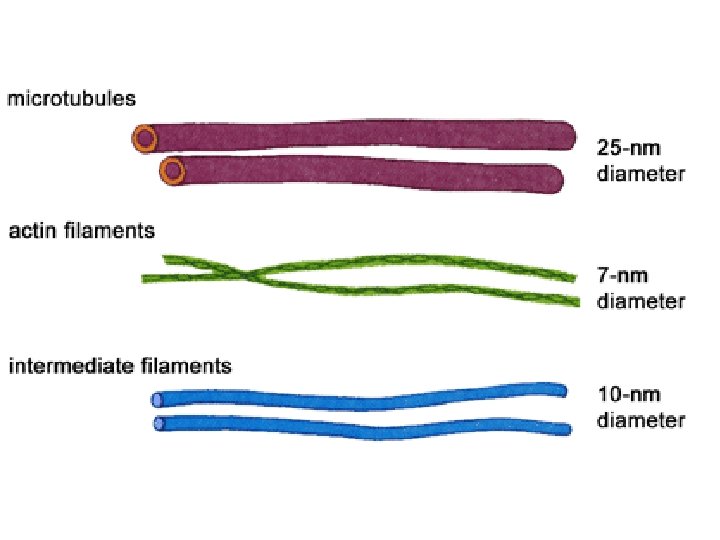
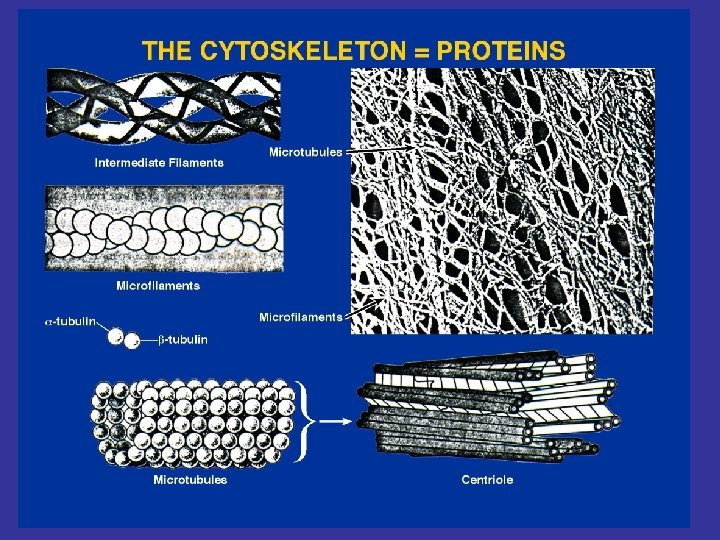
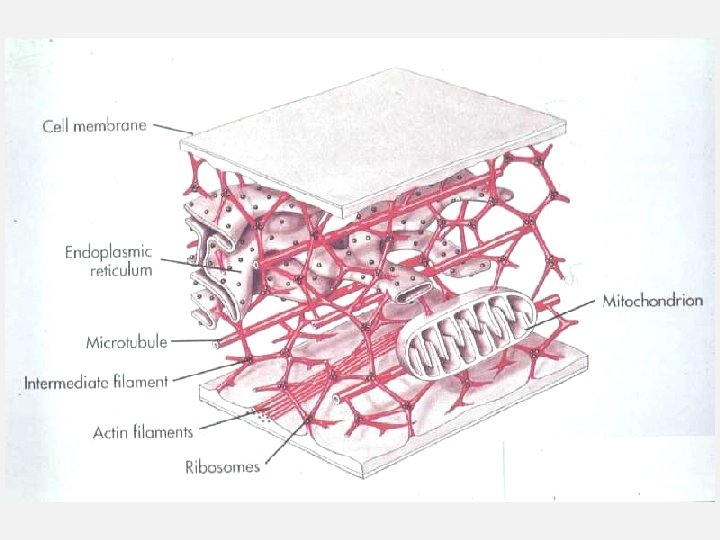
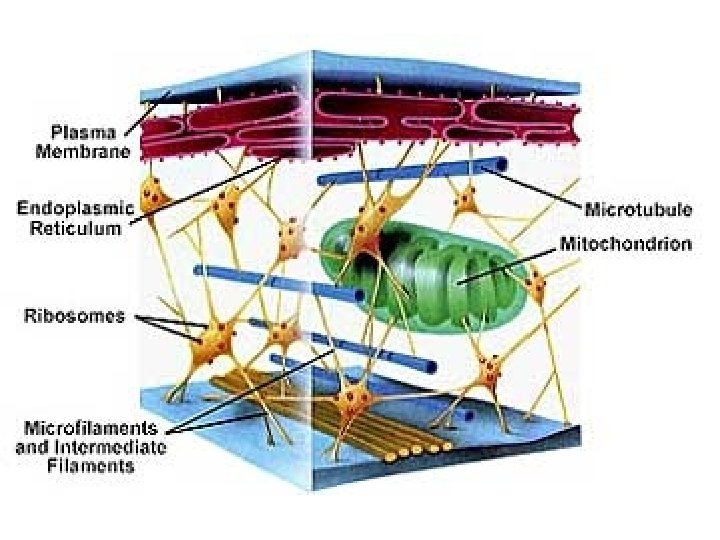
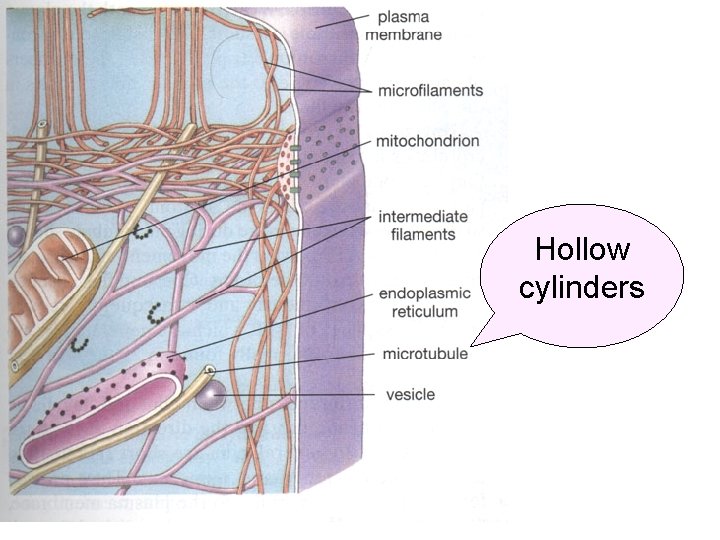
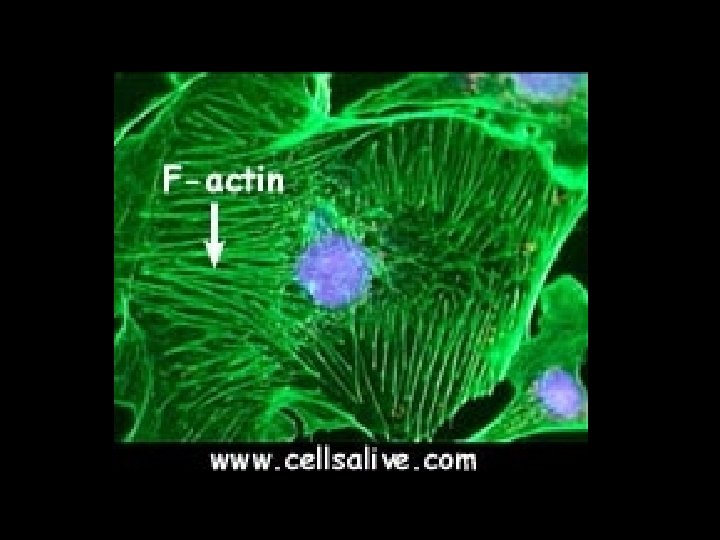
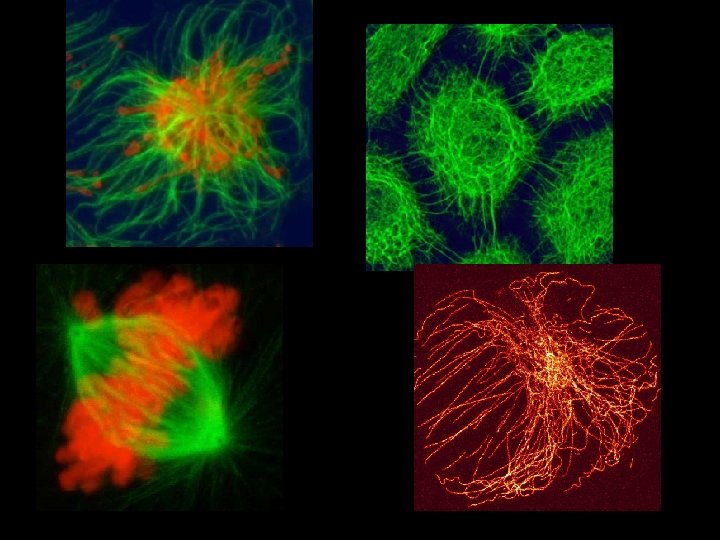
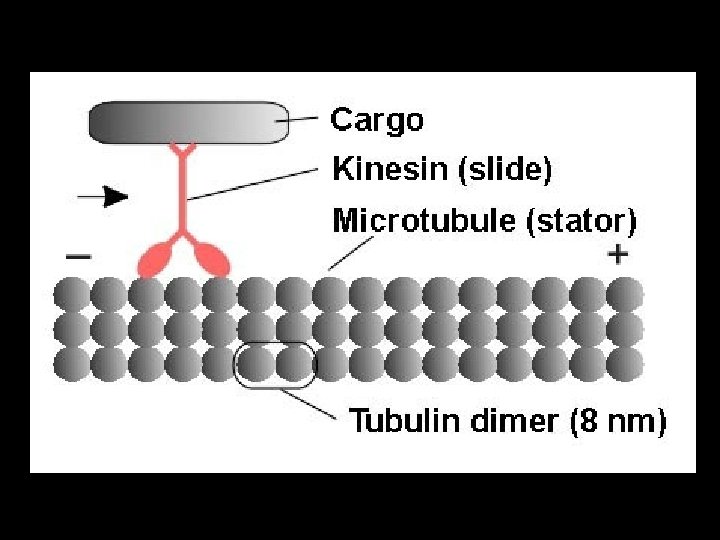
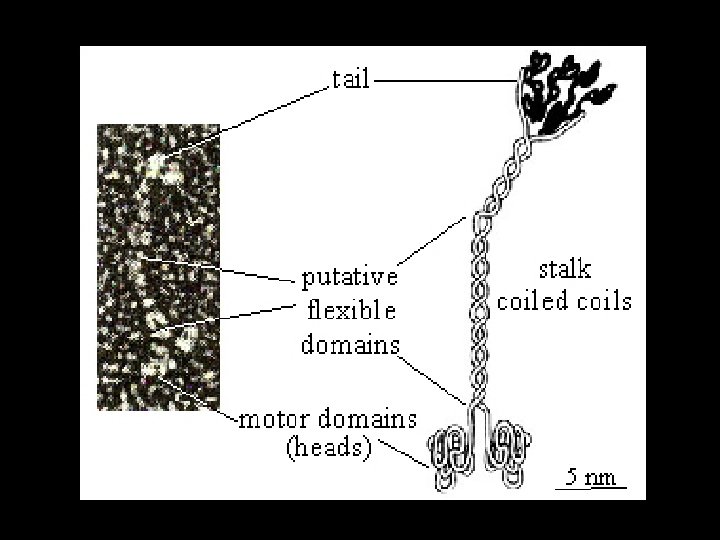
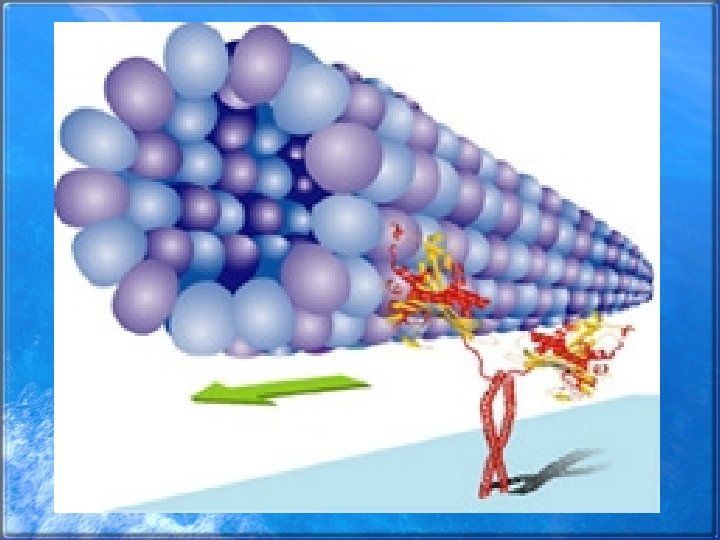
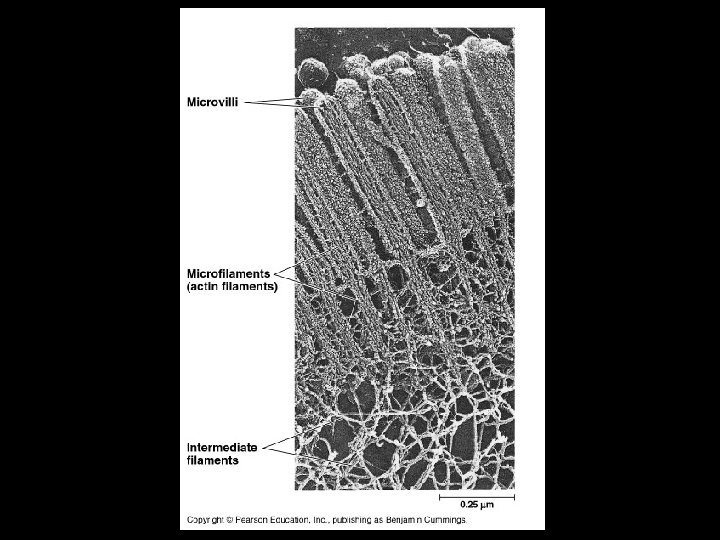
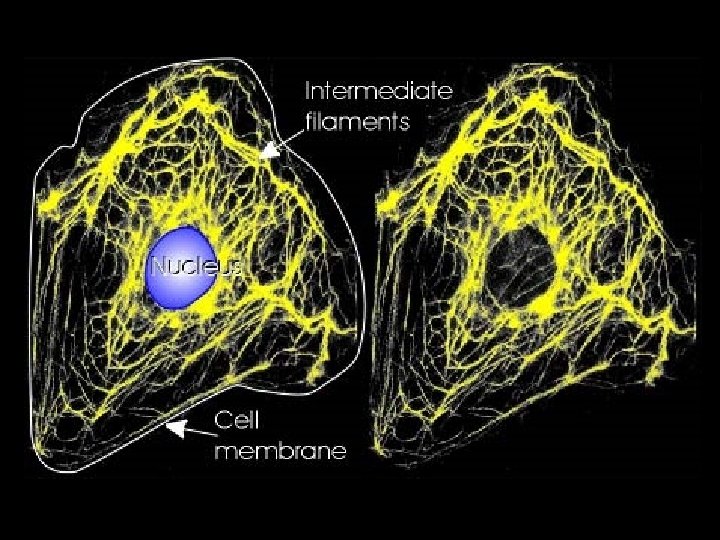
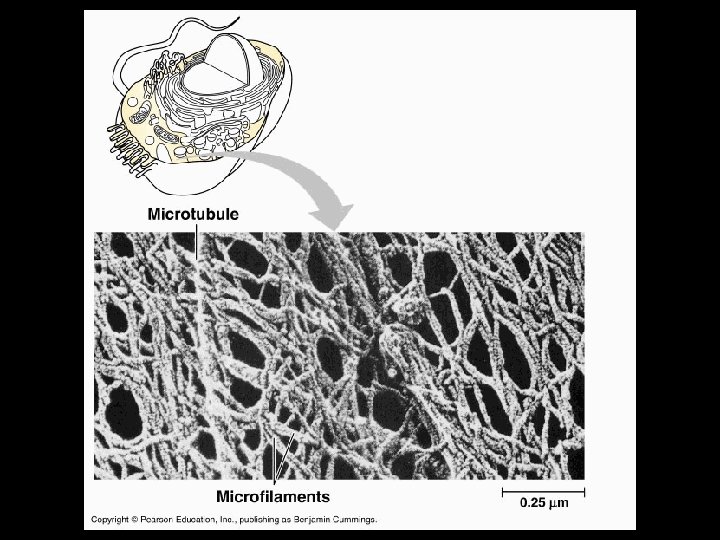
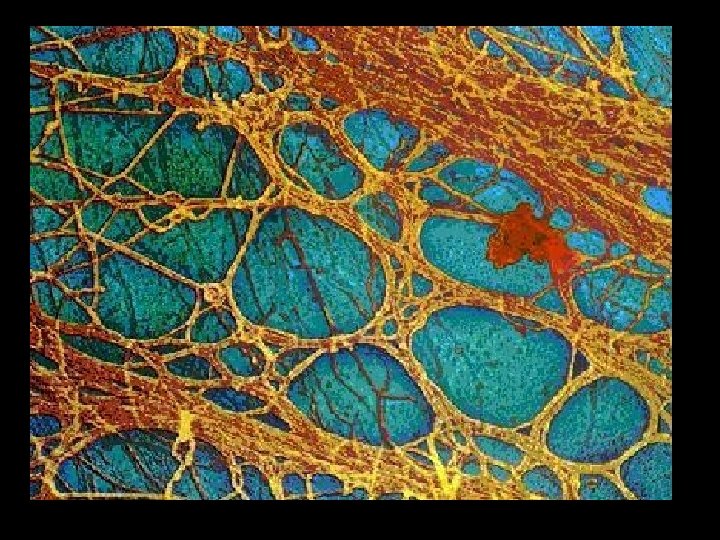
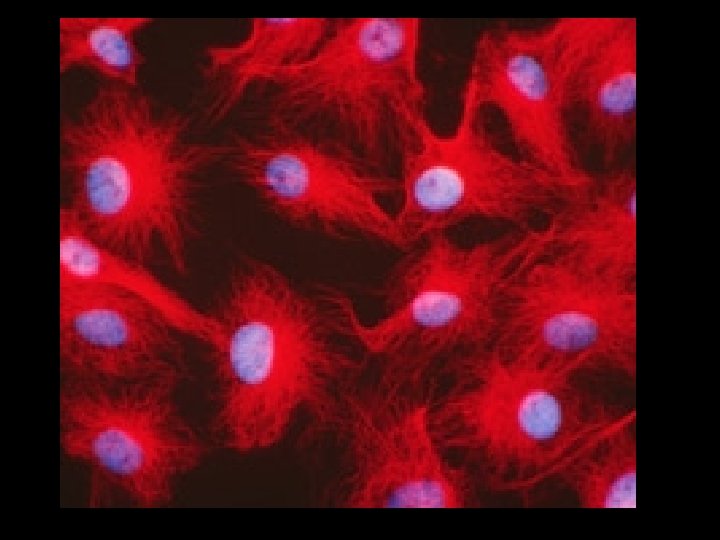
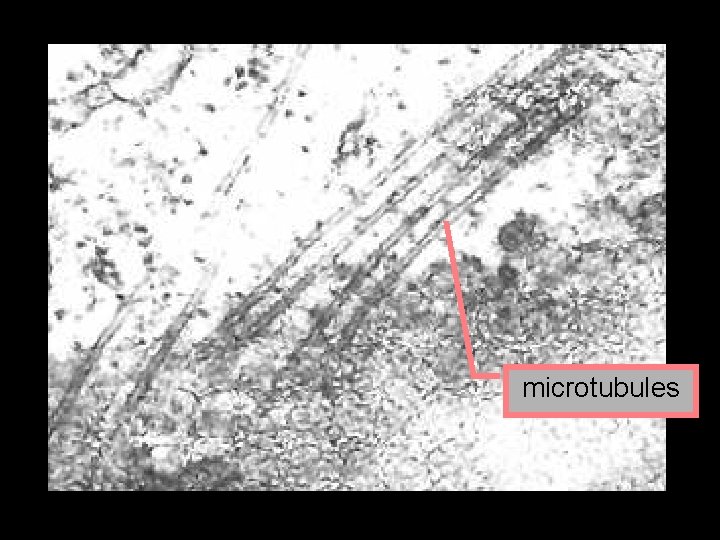
Cytoskeleton • Provides for cell shape and allows movement • Classifying elements of cytoskeleton by size – Microfilaments- smallest – Intermediate filaments – Microtubules- largest
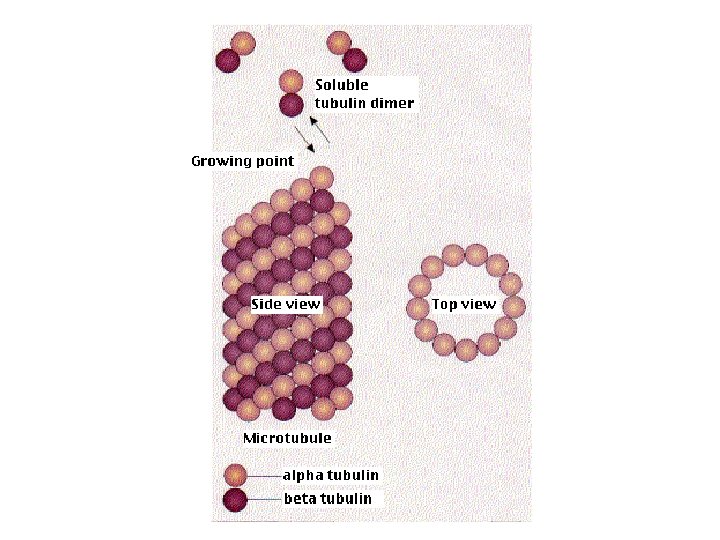
Hollow cylinders
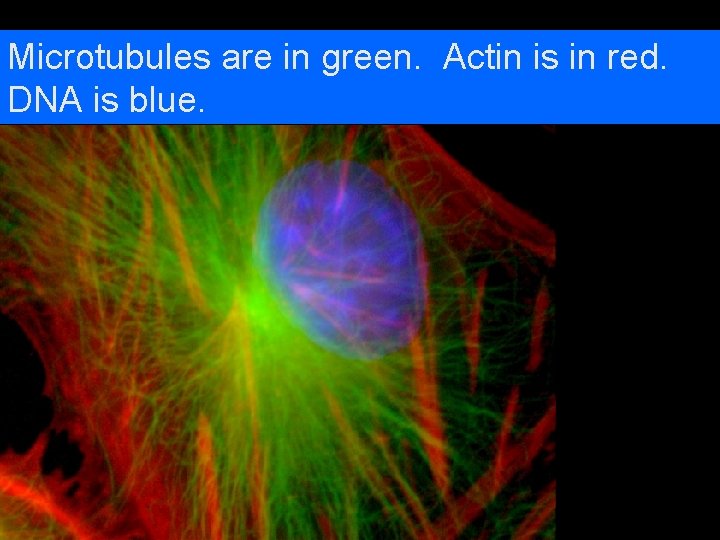
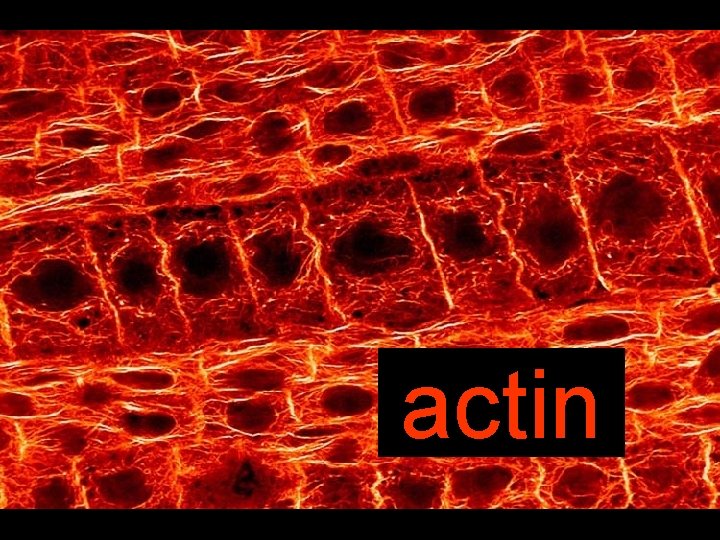
Microtubules are in green. Actin is in red. DNA is blue.
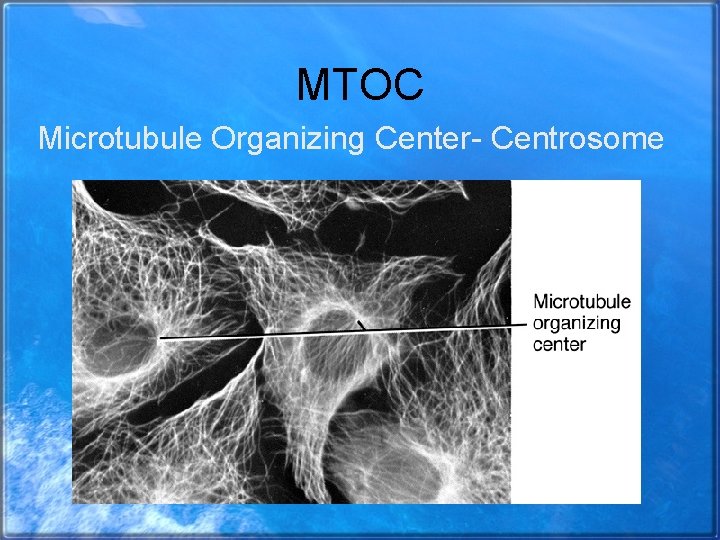
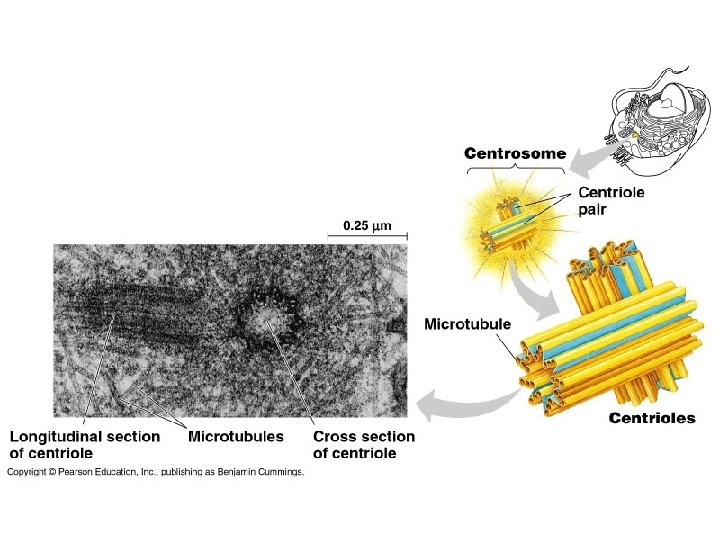
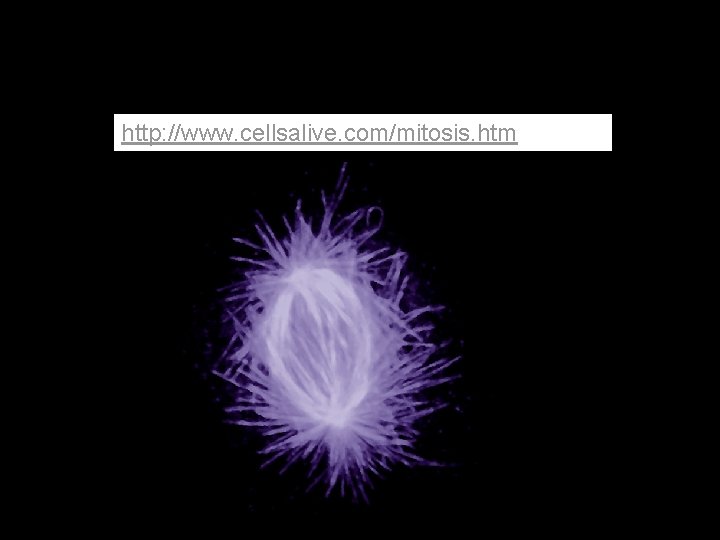
MTOC Microtubule Organizing Center- Centrosome
http: //www. cellsalive. com/mitosis. htm
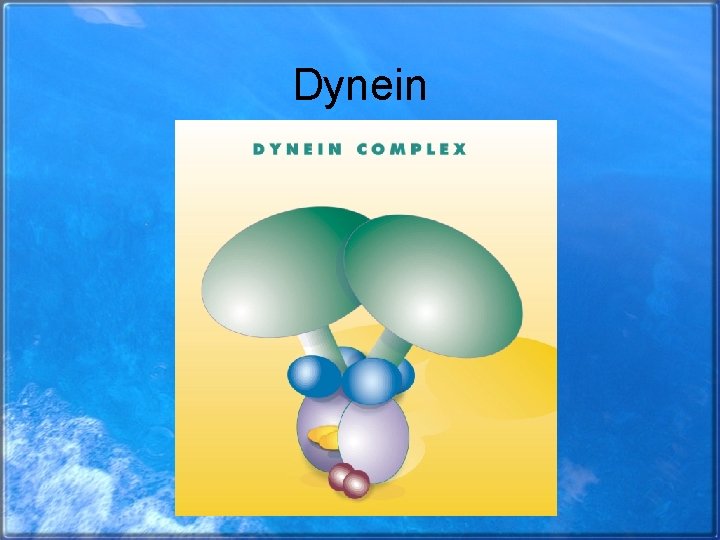
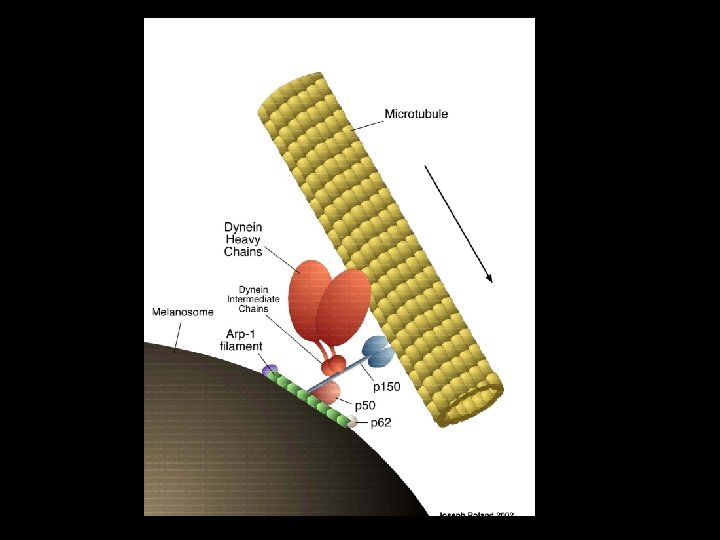
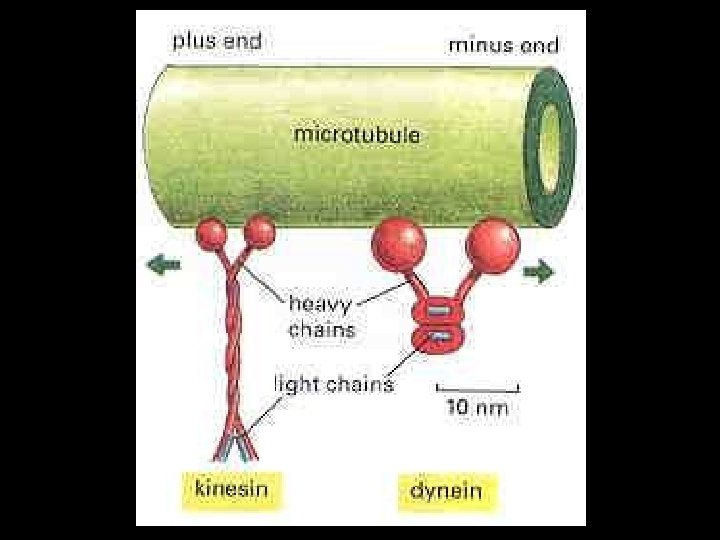
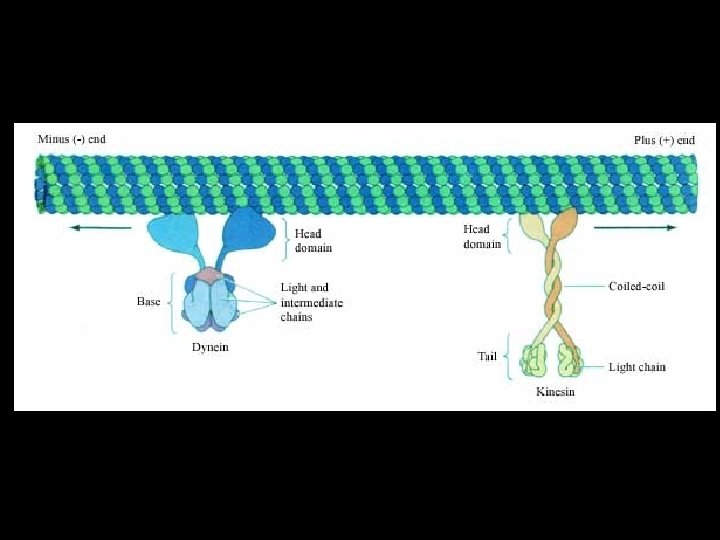
Dynein
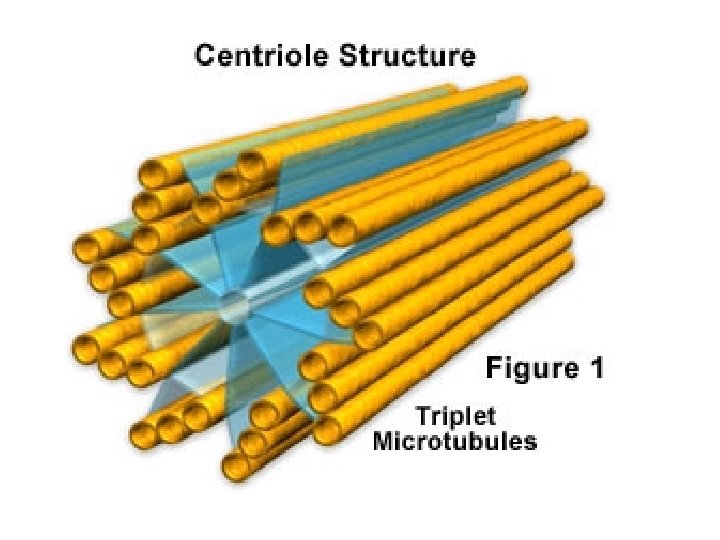
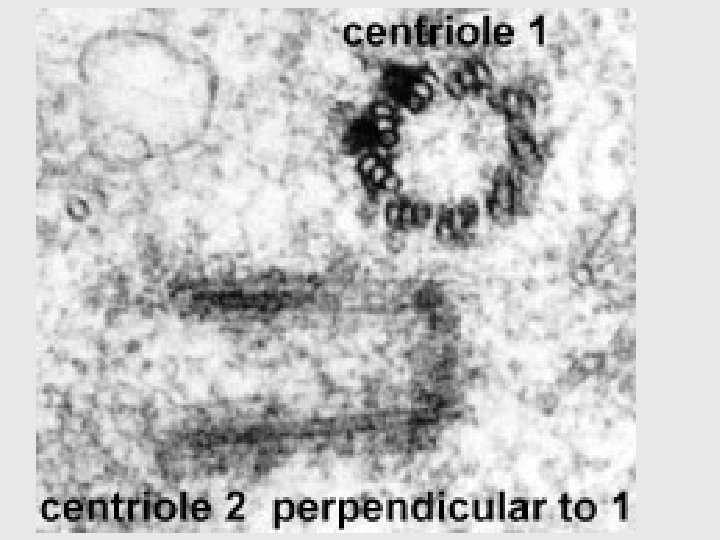
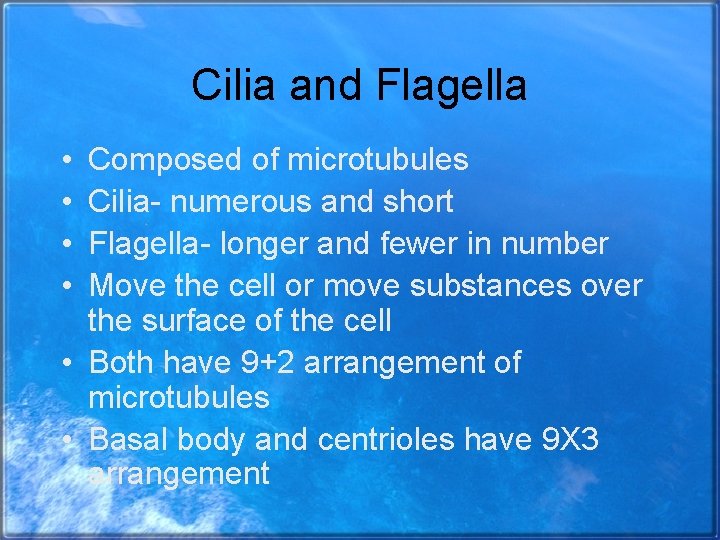
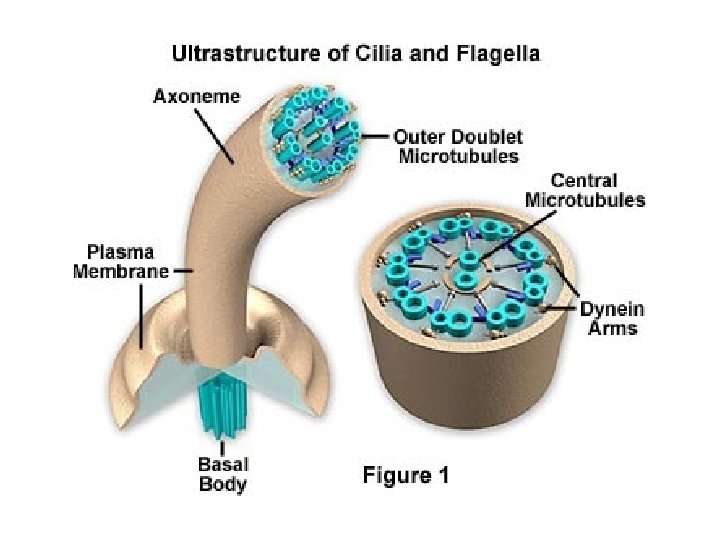
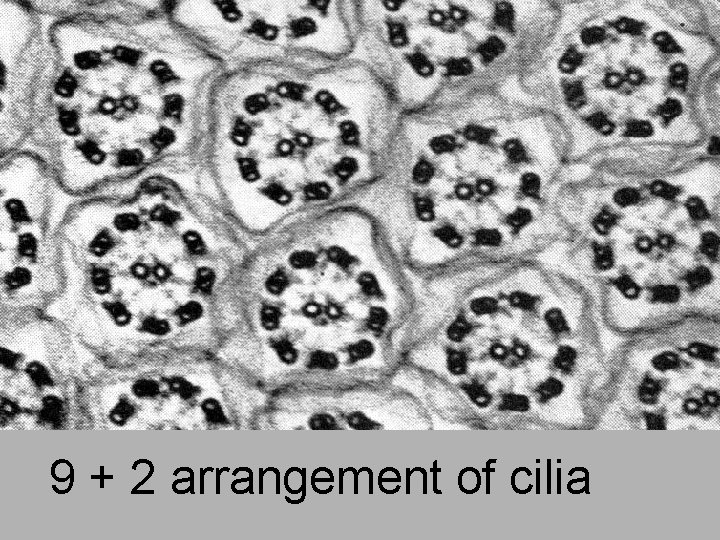
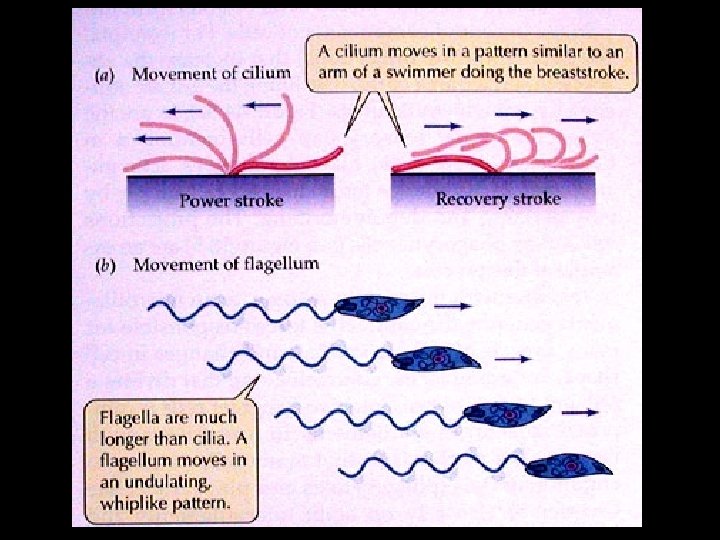
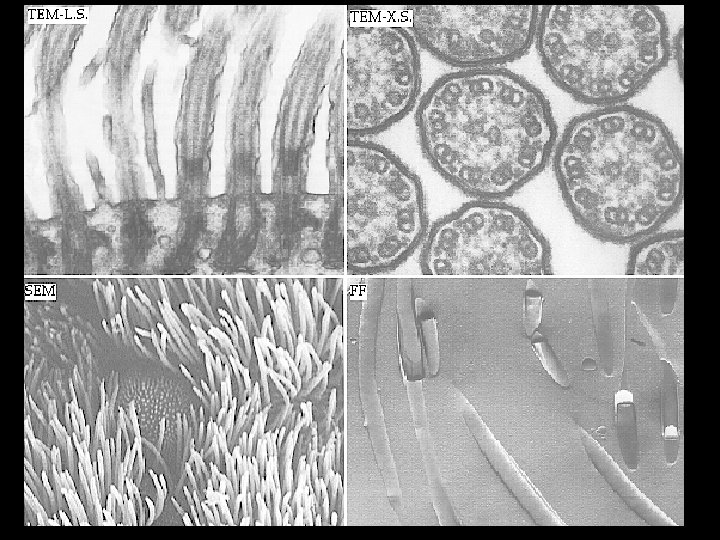
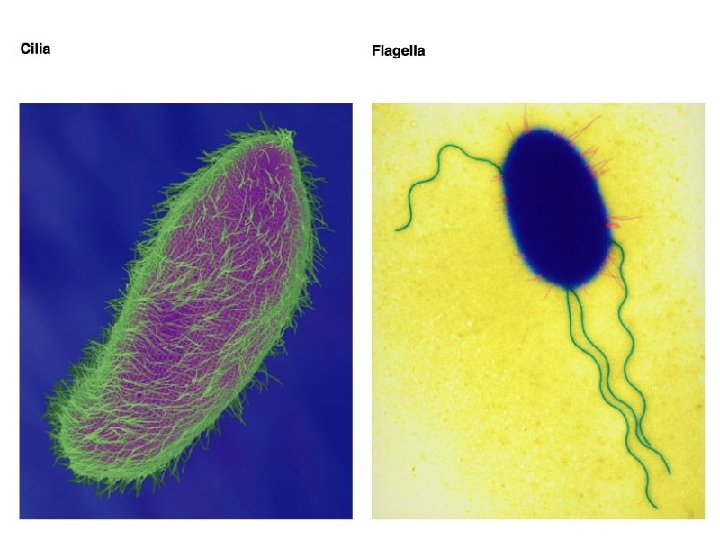
Cilia and Flagella • • Composed of microtubules Cilia- numerous and short Flagella- longer and fewer in number Move the cell or move substances over the surface of the cell • Both have 9+2 arrangement of microtubules • Basal body and centrioles have 9 X 3 arrangement
9 + 2 arrangement of cilia
Microfilaments
microtubules
actin
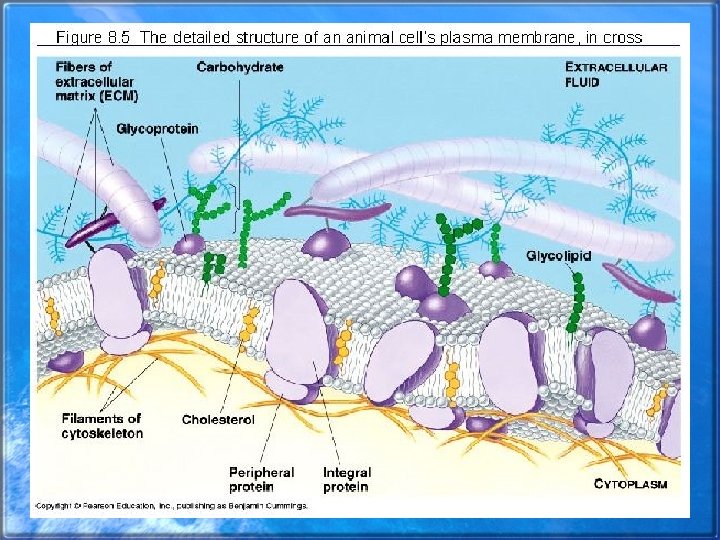
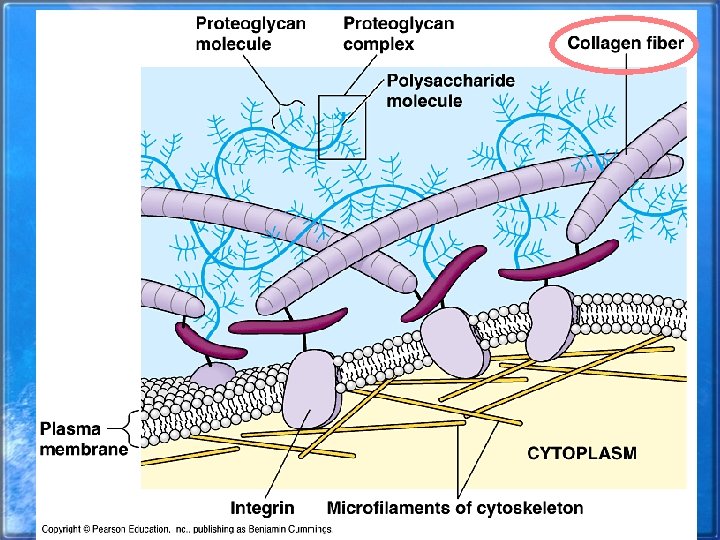
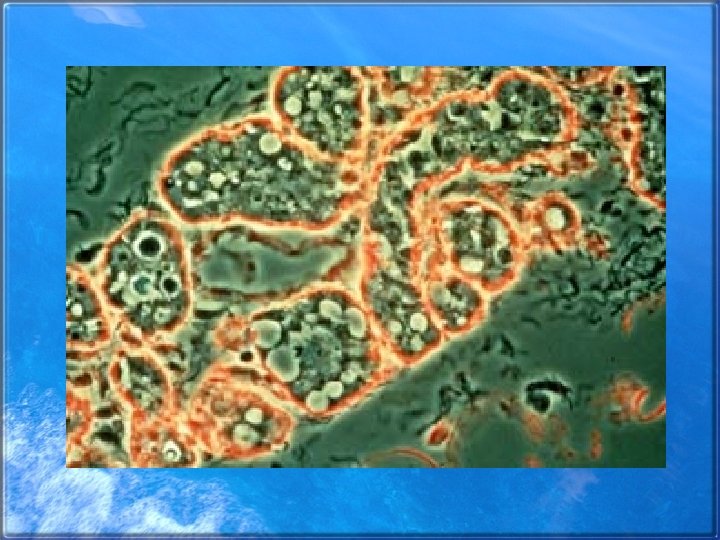
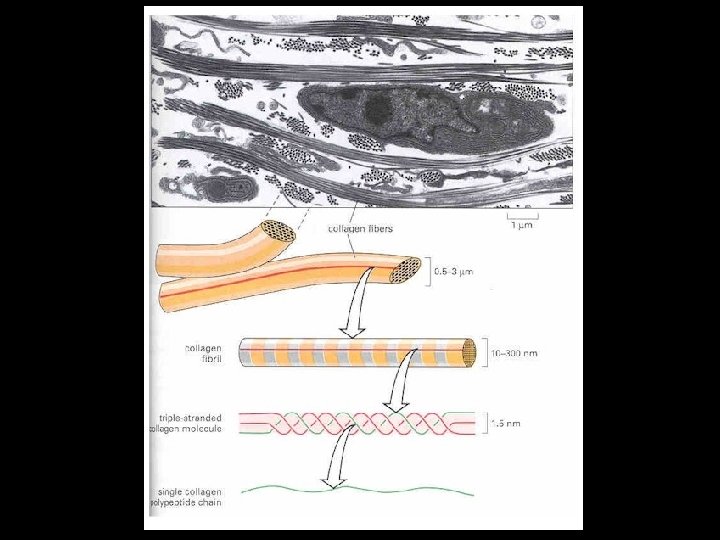
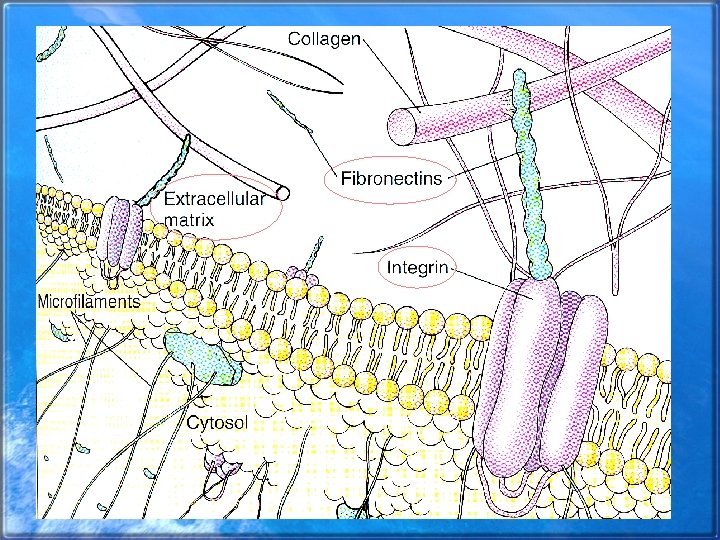
Extracellular Matrix • ECM • Secreted gel surrounding cell • Composed of collagen which forms very tough fibers • Integrins- main membrane receptors for the ECM • Help the cell signaling pathways and help regulate various functions of the cell
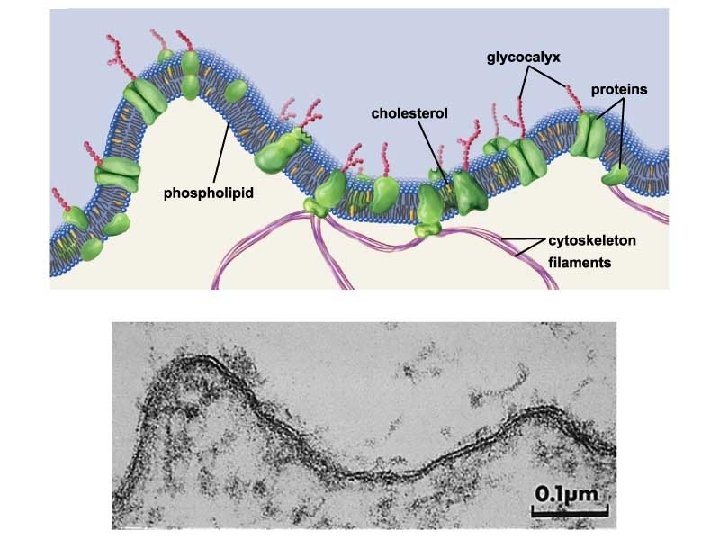
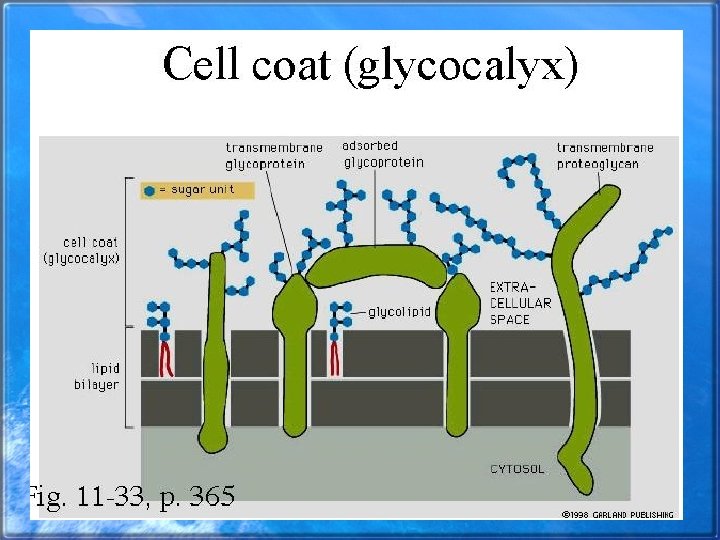
Glycocalyx- Cell Coat • Surround most eukaryotic cells • Formed by polysaccharide side chains • May act as recognition sites
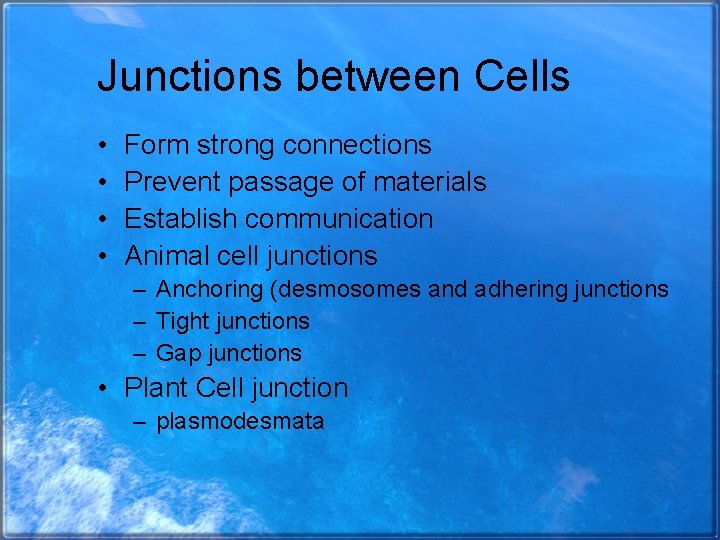
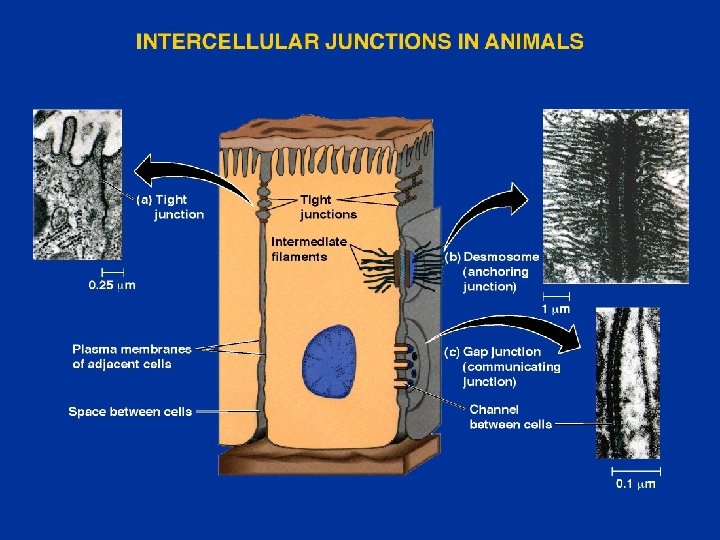
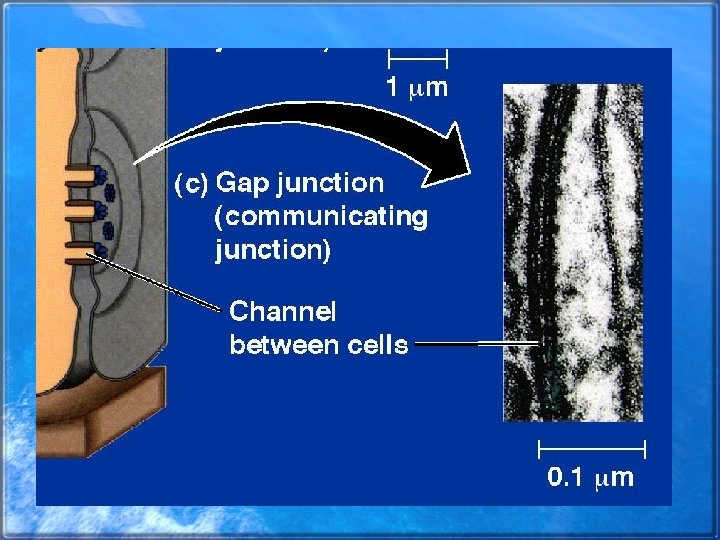
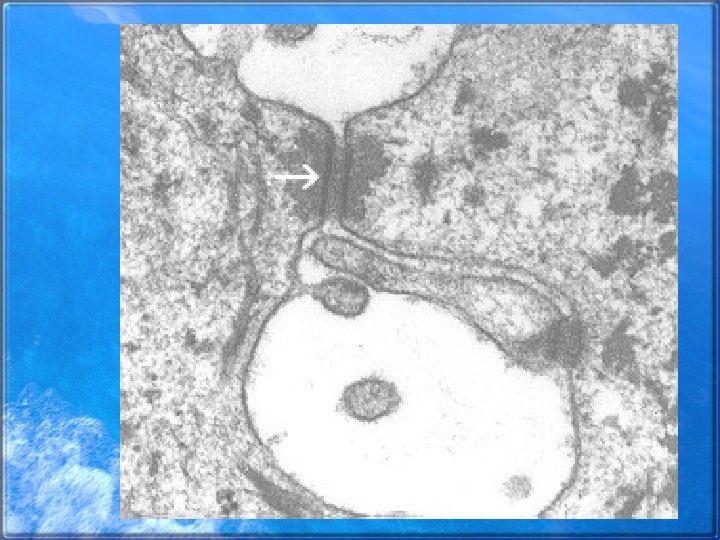
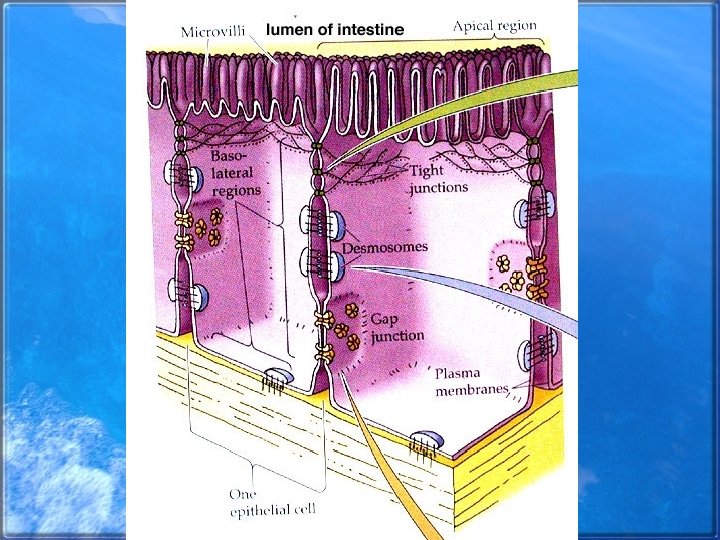
Junctions between Cells • • Form strong connections Prevent passage of materials Establish communication Animal cell junctions – Anchoring (desmosomes and adhering junctions – Tight junctions – Gap junctions • Plant Cell junction – plasmodesmata
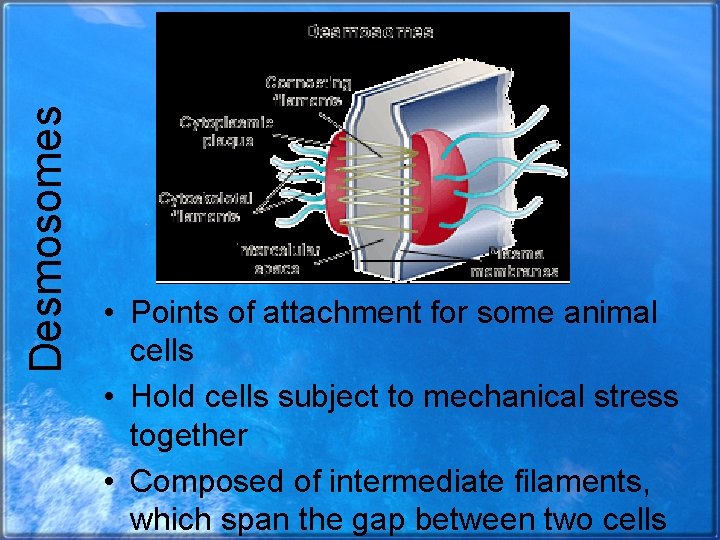
Desmosomes • Points of attachment for some animal cells • Hold cells subject to mechanical stress together • Composed of intermediate filaments, which span the gap between two cells
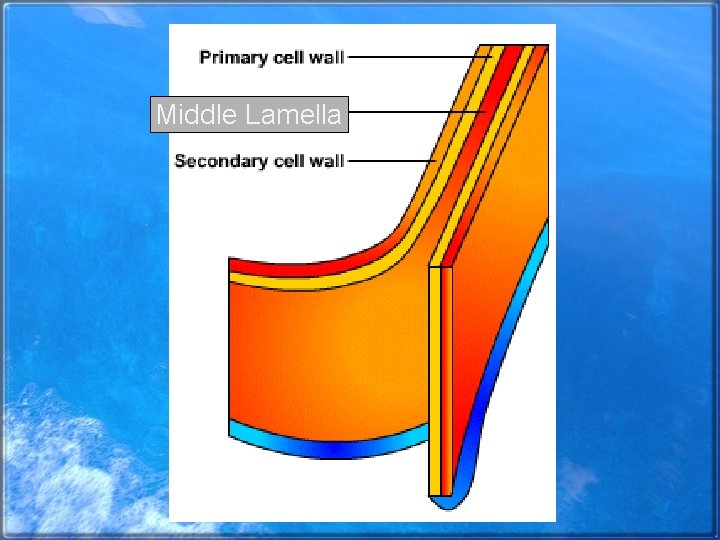
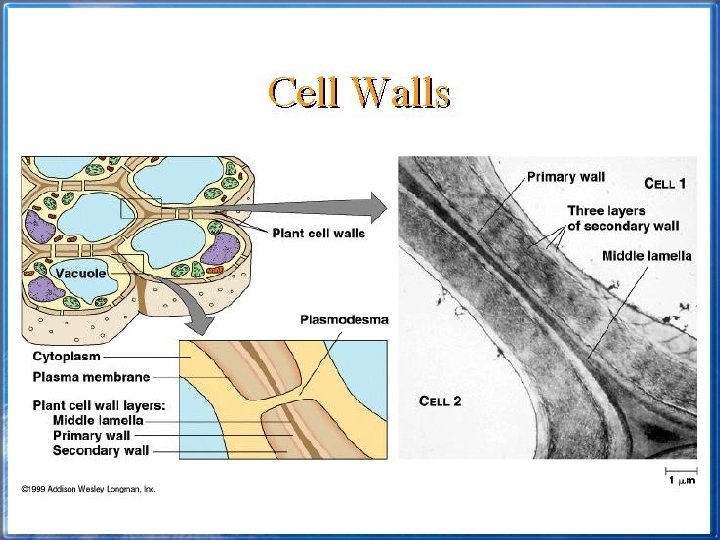
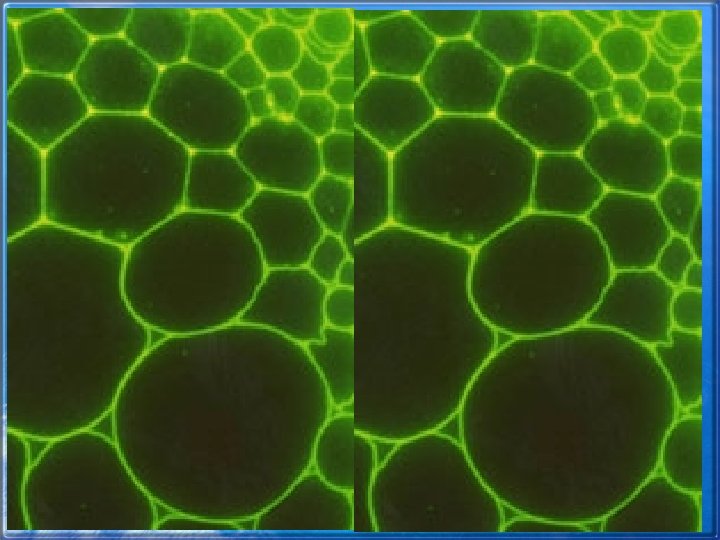
Cell Walls • Surround plant, fungal, and bacterial cells • Primary cell wall can expand as the cell grows • Secondary cell wall forms between the primary cell wall and the cell membrane • Middle lamella glues adjacent plant cells together
Middle Lamella