
ORGANIZATION OF MULTICELLULAR ORGANISMS How do different structures
- Slides: 7
ORGANIZATION OF MULTICELLULAR ORGANISMS How do different structures carry out the functions of life?
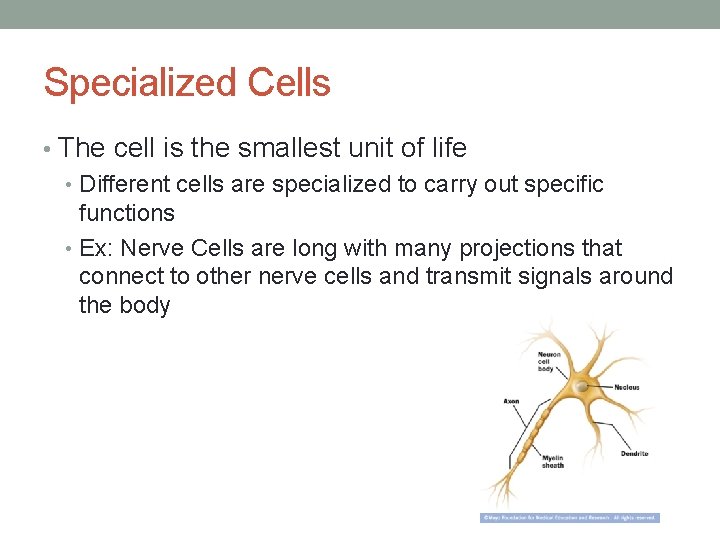
Specialized Cells • The cell is the smallest unit of life • Different cells are specialized to carry out specific functions • Ex: Nerve Cells are long with many projections that connect to other nerve cells and transmit signals around the body
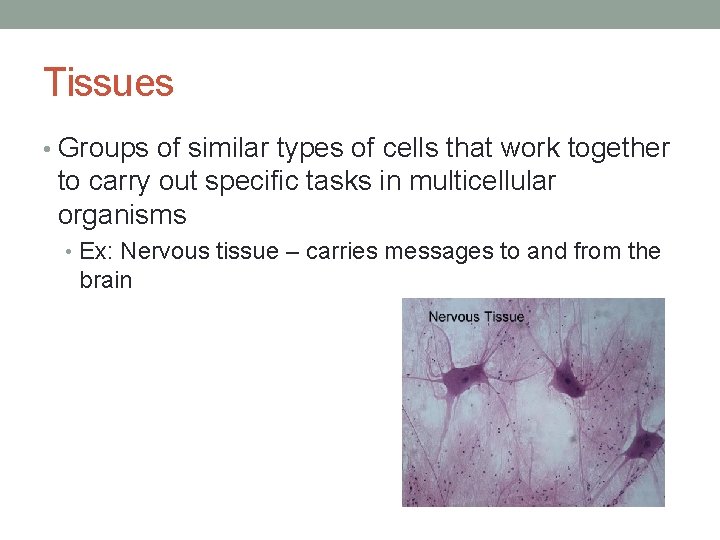
Tissues • Groups of similar types of cells that work together to carry out specific tasks in multicellular organisms • Ex: Nervous tissue – carries messages to and from the brain
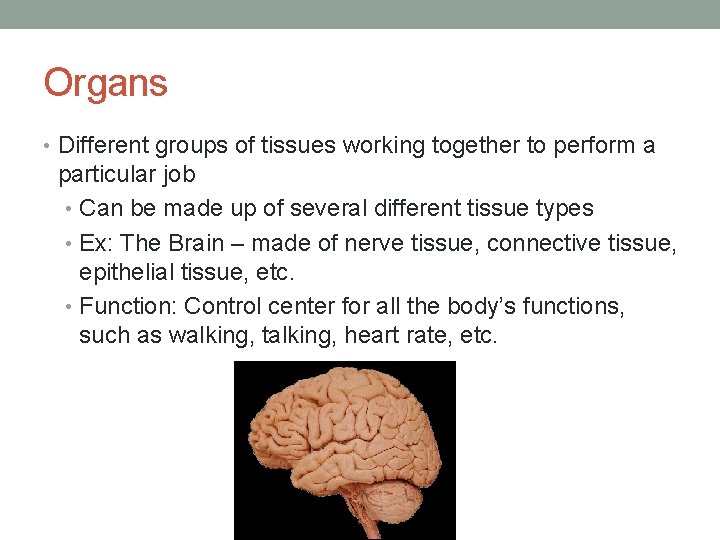
Organs • Different groups of tissues working together to perform a particular job • Can be made up of several different tissue types • Ex: The Brain – made of nerve tissue, connective tissue, epithelial tissue, etc. • Function: Control center for all the body’s functions, such as walking, talking, heart rate, etc.
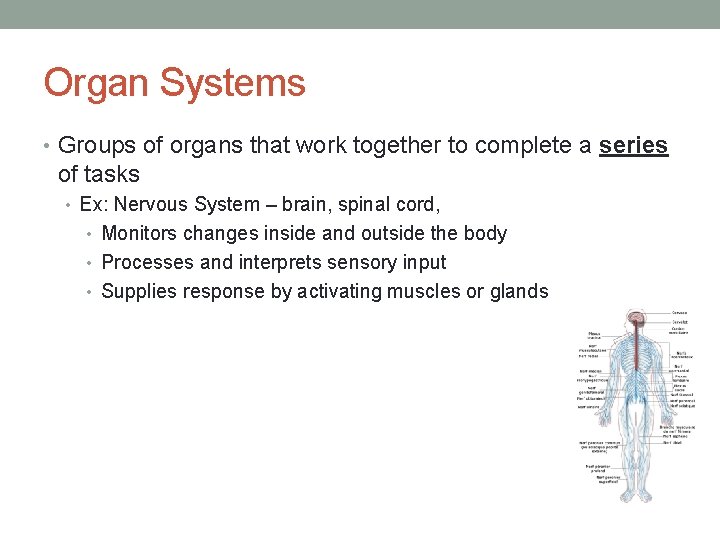
Organ Systems • Groups of organs that work together to complete a series of tasks • Ex: Nervous System – brain, spinal cord, • Monitors changes inside and outside the body • Processes and interprets sensory input • Supplies response by activating muscles or glands
Other Organ Systems • Digestive: breaks down food and absorbs nutrients • Excretory: removes solid, liquid and gas waste from the body • Respiratory: exchanges gases between the body and the environment • Circulatory: transports nutrients, gases, wastes and other substances through the body • Muscular: allows movement • Skeletal: protects internal organs, provides support, helps the body move and stores minerals
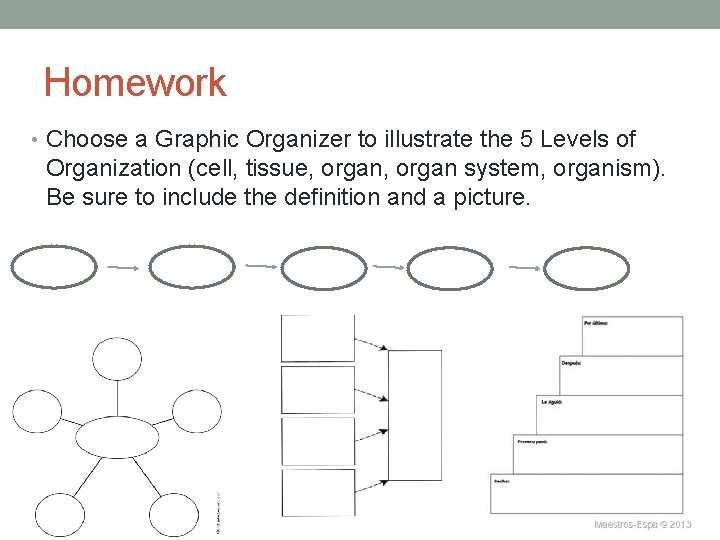
Homework • Choose a Graphic Organizer to illustrate the 5 Levels of Organization (cell, tissue, organ system, organism). Be sure to include the definition and a picture.