
Organization and Implementation of a National Regulatory Program

- Slides: 45
Organization and Implementation of a National Regulatory Program for the Control of Radiation Sources Module 3. 4 Transport
Organization and Implementation of a National Regulatory Program for the Control of Radiation Sources Module 3. 4 Objective To ensure compliance with local and / or international regulations for the transport of radioactive sources.
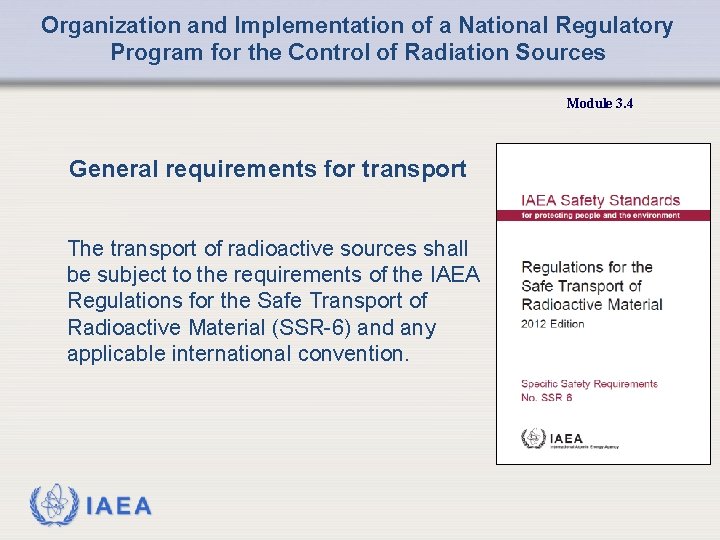
Organization and Implementation of a National Regulatory Program for the Control of Radiation Sources Module 3. 4 General requirements for transport The transport of radioactive sources shall be subject to the requirements of the IAEA Regulations for the Safe Transport of Radioactive Material (SSR-6) and any applicable international convention.
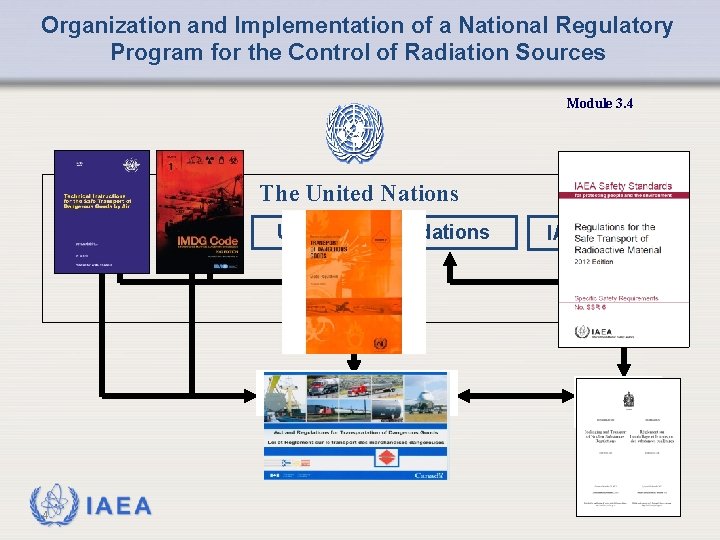
Organization and Implementation of a National Regulatory Program for the Control of Radiation Sources Module 3. 4 The United Nations Air Sea UN Recommendations Transport Canada 4 IAEA TS-R-1 CNSC
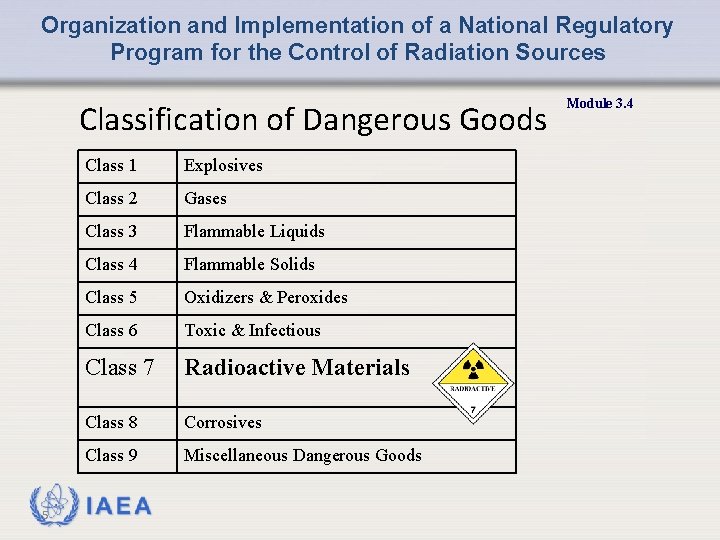
Organization and Implementation of a National Regulatory Program for the Control of Radiation Sources Classification of Dangerous Goods 5 Class 1 Explosives Class 2 Gases Class 3 Flammable Liquids Class 4 Flammable Solids Class 5 Oxidizers & Peroxides Class 6 Toxic & Infectious Class 7 Radioactive Materials Class 8 Corrosives Class 9 Miscellaneous Dangerous Goods Module 3. 4
Organization and Implementation of a National Regulatory Program for the Control of Radiation Sources Module 3. 4 • Objectives of the Transport Regulations is to protect the health and safety of persons and the environment – emphasis on package safety • Use graded approach in limiting radioactive contents based on types of package – the greater the radioactivity = the more robust is the package 6
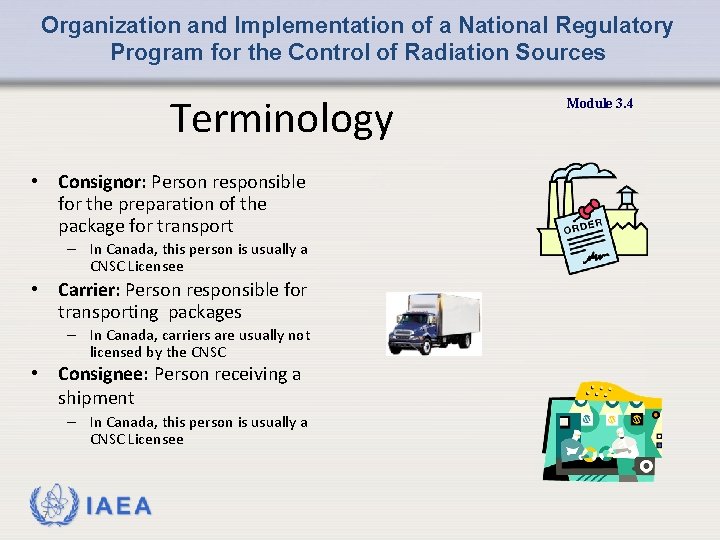
Organization and Implementation of a National Regulatory Program for the Control of Radiation Sources Terminology • Consignor: Person responsible for the preparation of the package for transport – In Canada, this person is usually a CNSC Licensee • Carrier: Person responsible for transporting packages – In Canada, carriers are usually not licensed by the CNSC • Consignee: Person receiving a shipment – In Canada, this person is usually a CNSC Licensee 7 Module 3. 4
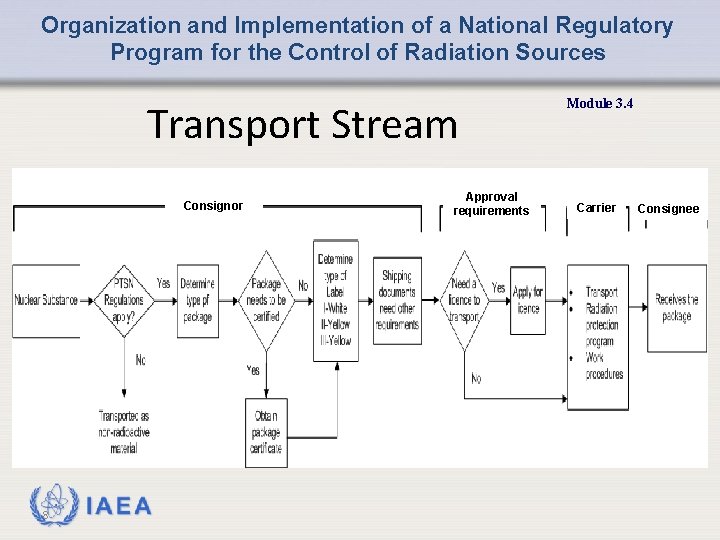
Organization and Implementation of a National Regulatory Program for the Control of Radiation Sources Transport Stream Consignor 8 Approval requirements Module 3. 4 Carrier Consignee
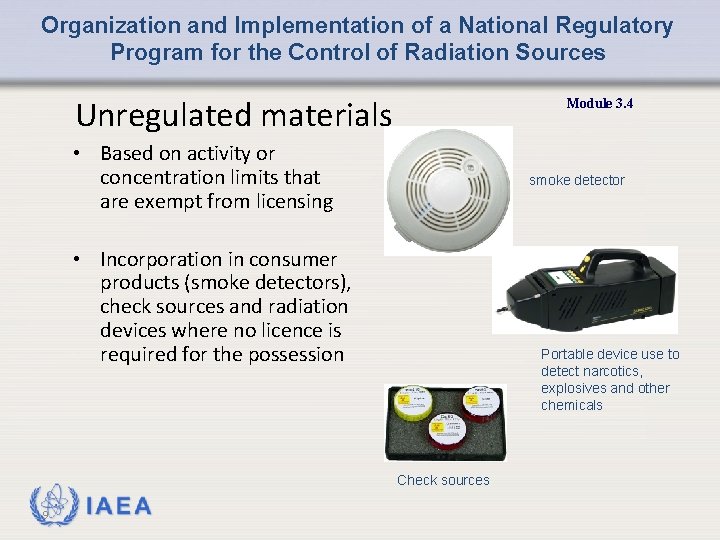
Organization and Implementation of a National Regulatory Program for the Control of Radiation Sources Unregulated materials Module 3. 4 • Based on activity or concentration limits that are exempt from licensing smoke detector • Incorporation in consumer products (smoke detectors), check sources and radiation devices where no licence is required for the possession Portable device use to detect narcotics, explosives and other chemicals Check sources 9
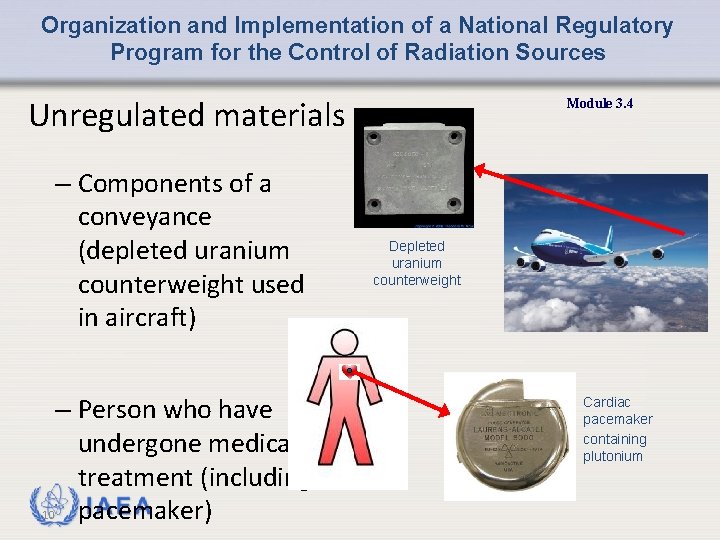
Organization and Implementation of a National Regulatory Program for the Control of Radiation Sources Unregulated materials – Components of a conveyance (depleted uranium counterweight used in aircraft) – Person who have undergone medical treatment (including 10 pacemaker) Module 3. 4 Depleted uranium counterweight Cardiac pacemaker containing plutonium
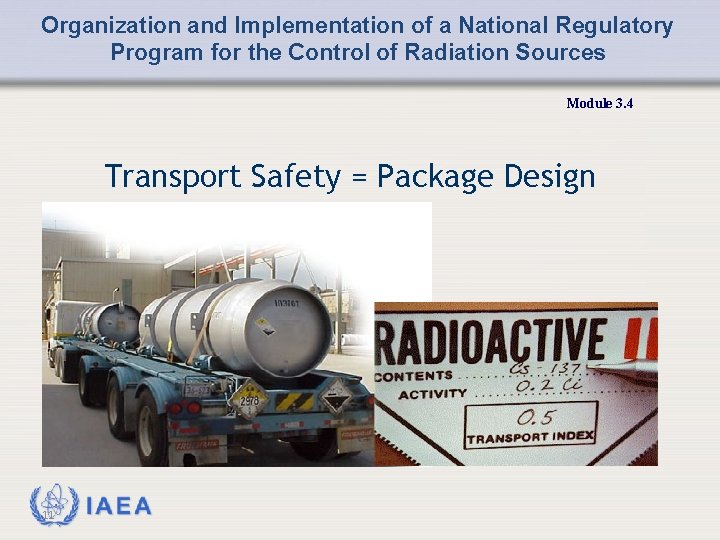
Organization and Implementation of a National Regulatory Program for the Control of Radiation Sources Module 3. 4 Transport Safety = Package Design 11
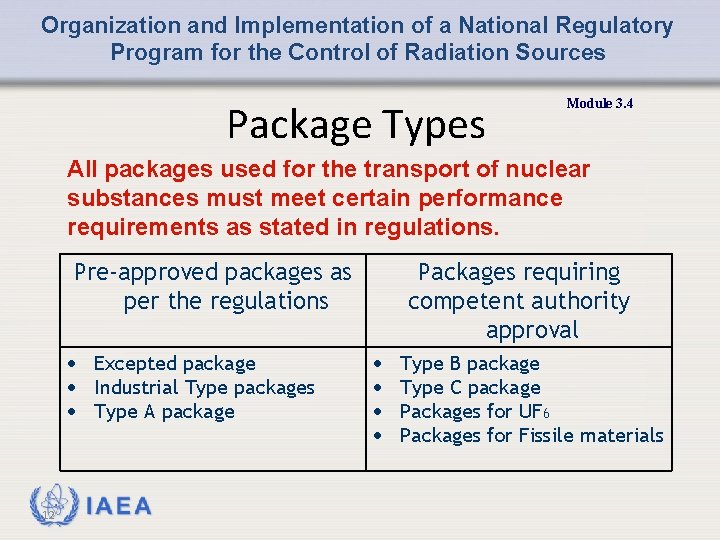
Organization and Implementation of a National Regulatory Program for the Control of Radiation Sources Package Types Module 3. 4 All packages used for the transport of nuclear substances must meet certain performance requirements as stated in regulations. Pre-approved packages as per the regulations Excepted package Industrial Type packages Type A package 12 Packages requiring competent authority approval Type B package Type C package Packages for UF 6 Packages for Fissile materials
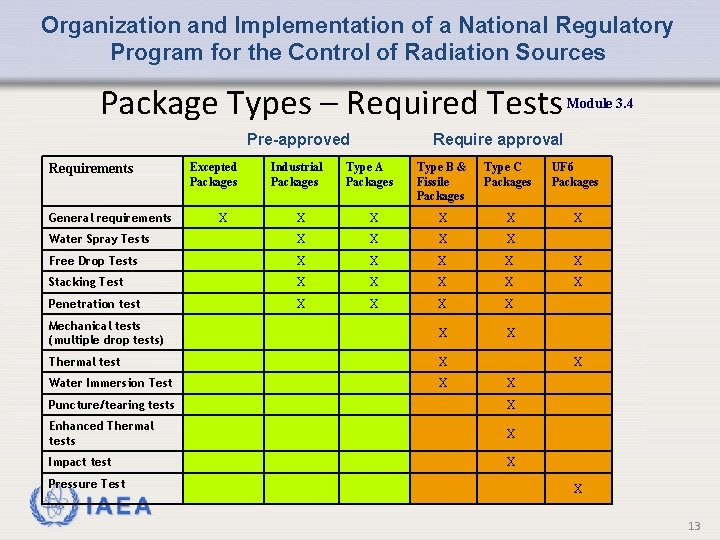
Organization and Implementation of a National Regulatory Program for the Control of Radiation Sources Package Types – Required Tests Pre-approved Requirements Excepted Packages Industrial Packages Module 3. 4 Require approval Type A Packages Type B & Fissile Packages Type C Packages UF 6 Packages General requirements X X X Water Spray Tests X X Free Drop Tests X X X X X Stacking Test X X X X X Penetration test X X X X Mechanical tests (multiple drop tests) X X Thermal test X X Water Immersion Test X X Puncture/tearing tests X Enhanced Thermal tests X Impact test X Pressure Test X 13
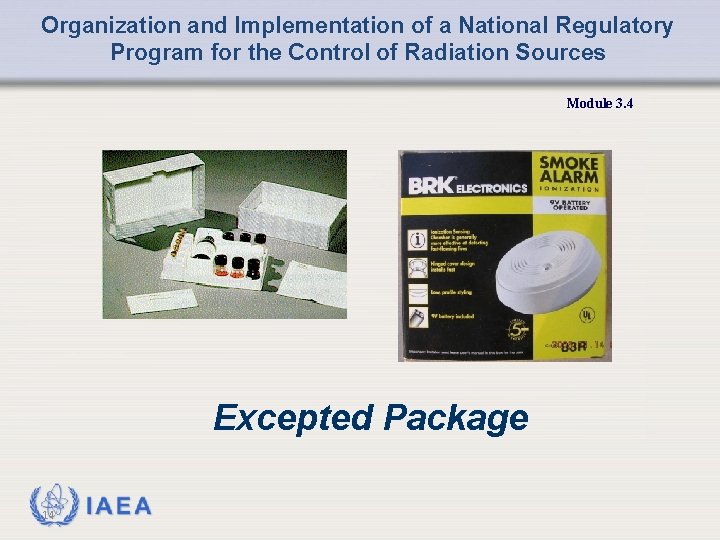
Organization and Implementation of a National Regulatory Program for the Control of Radiation Sources Module 3. 4 Excepted Package 14
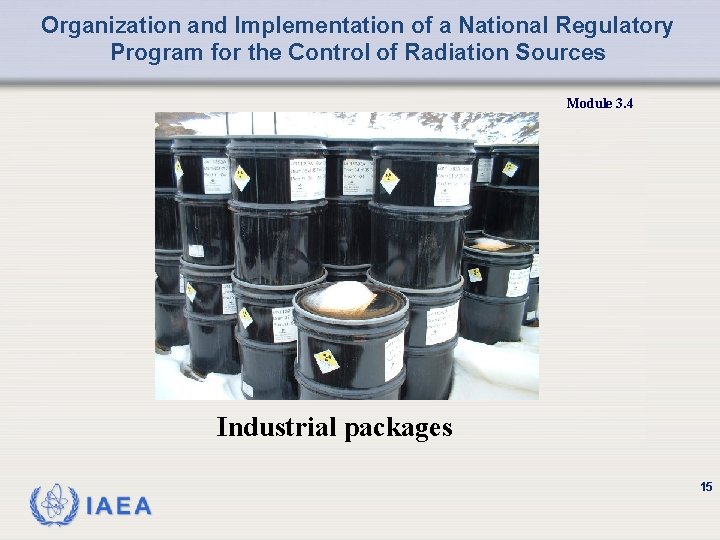
Organization and Implementation of a National Regulatory Program for the Control of Radiation Sources Module 3. 4 Industrial packages 15
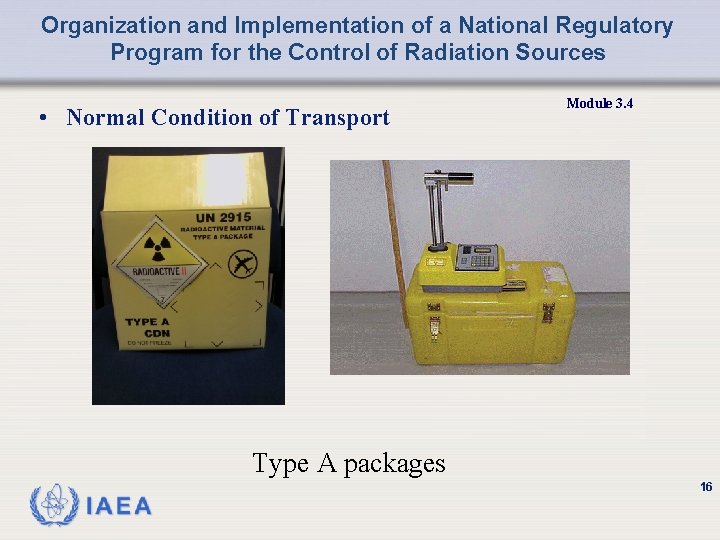
Organization and Implementation of a National Regulatory Program for the Control of Radiation Sources • Normal Condition of Transport Module 3. 4 Type A packages 16
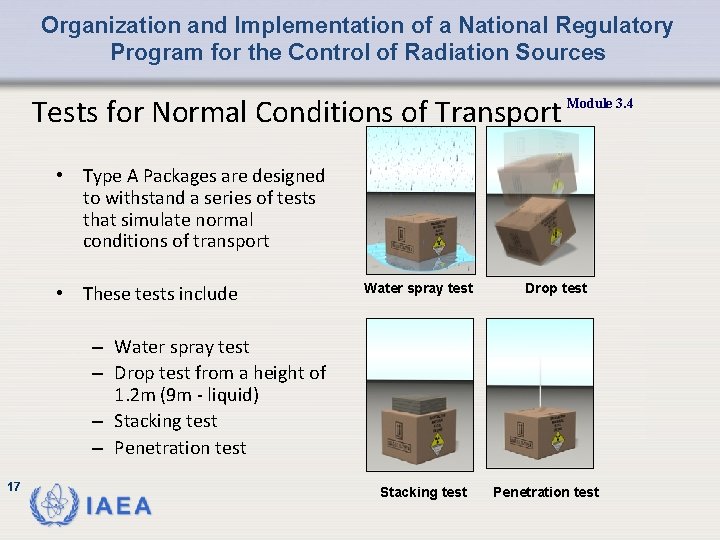
Organization and Implementation of a National Regulatory Program for the Control of Radiation Sources Tests for Normal Conditions of Transport Module 3. 4 • Type A Packages are designed to withstand a series of tests that simulate normal conditions of transport • These tests include Water spray test Drop test – Water spray test – Drop test from a height of 1. 2 m (9 m - liquid) – Stacking test – Penetration test 17 Stacking test Penetration test
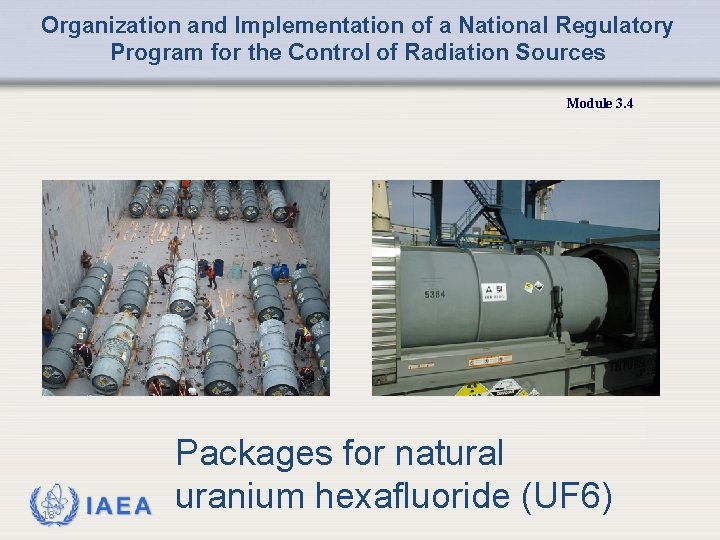
Organization and Implementation of a National Regulatory Program for the Control of Radiation Sources Module 3. 4 18 Packages for natural uranium hexafluoride (UF 6)
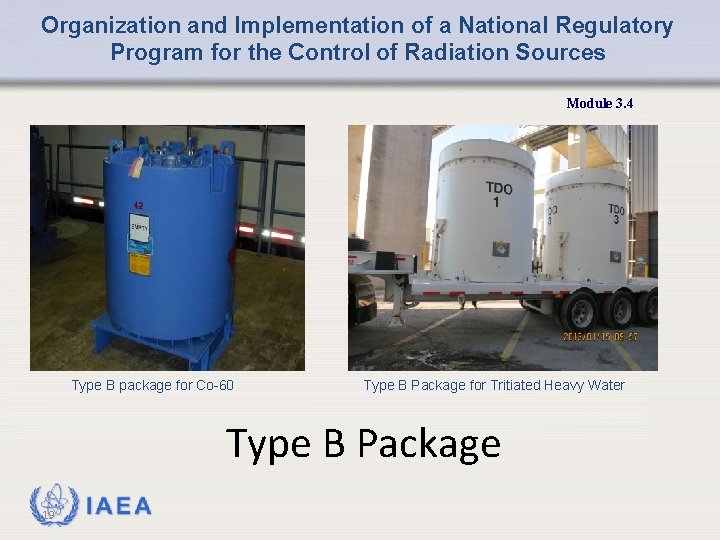
Organization and Implementation of a National Regulatory Program for the Control of Radiation Sources Module 3. 4 Type B package for Co-60 Type B Package for Tritiated Heavy Water Type B Package 19
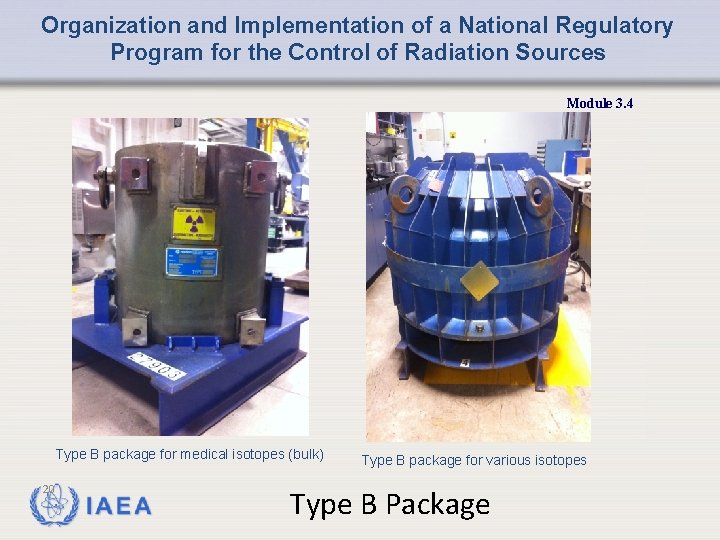
Organization and Implementation of a National Regulatory Program for the Control of Radiation Sources Module 3. 4 Type B package for medical isotopes (bulk) 20 Type B package for various isotopes Type B Package
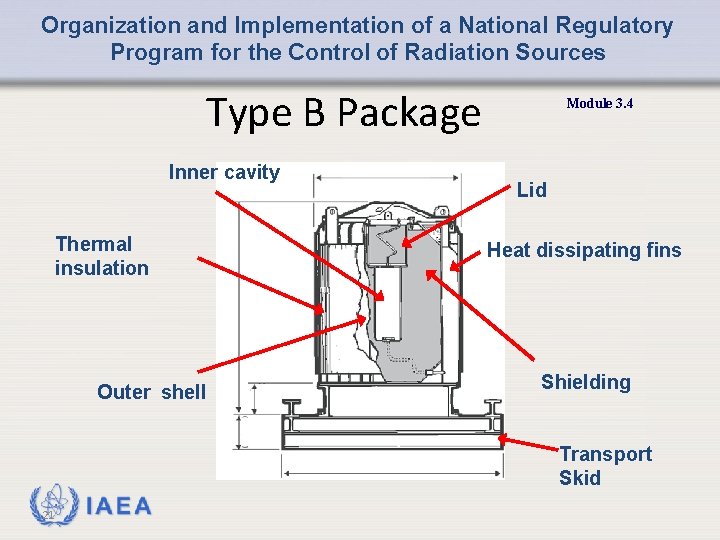
Organization and Implementation of a National Regulatory Program for the Control of Radiation Sources Type B Package Inner cavity Thermal insulation Outer shell Module 3. 4 Lid Heat dissipating fins Shielding Transport Skid 21
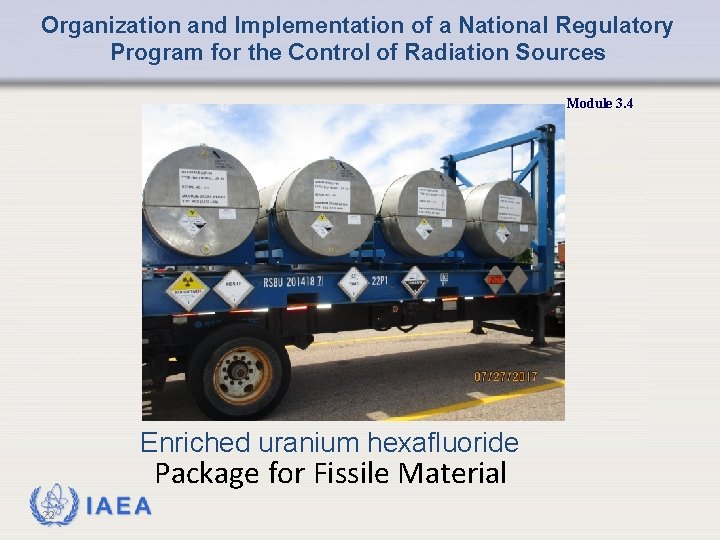
Organization and Implementation of a National Regulatory Program for the Control of Radiation Sources Module 3. 4 Enriched uranium hexafluoride Package for Fissile Material 22
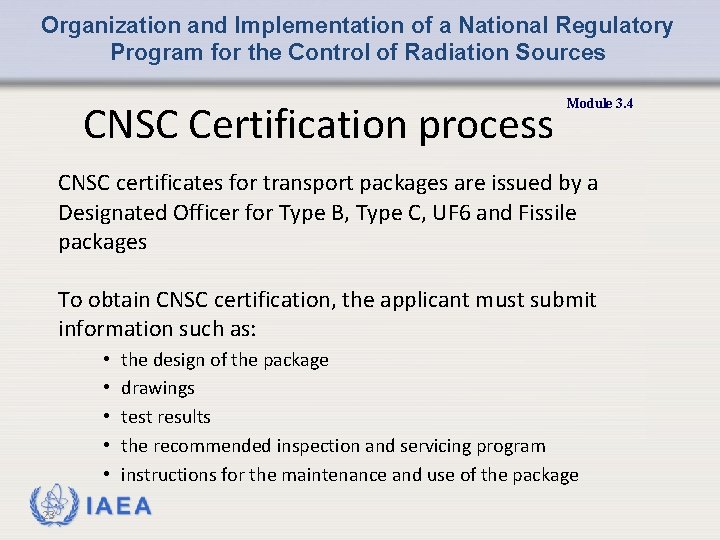
Organization and Implementation of a National Regulatory Program for the Control of Radiation Sources CNSC Certification process Module 3. 4 CNSC certificates for transport packages are issued by a Designated Officer for Type B, Type C, UF 6 and Fissile packages To obtain CNSC certification, the applicant must submit information such as: • • • 23 the design of the package drawings test results the recommended inspection and servicing program instructions for the maintenance and use of the package
Organization and Implementation of a National Regulatory Program for the Control of Radiation Sources Module 3. 4 • CNSC Transport Specialists are accredited as Professional Engineers • CNSC Transport Specialists review the information and ensure that it meets the regulatory requirements • A quality assurance program is in place in the form of a peer review 24
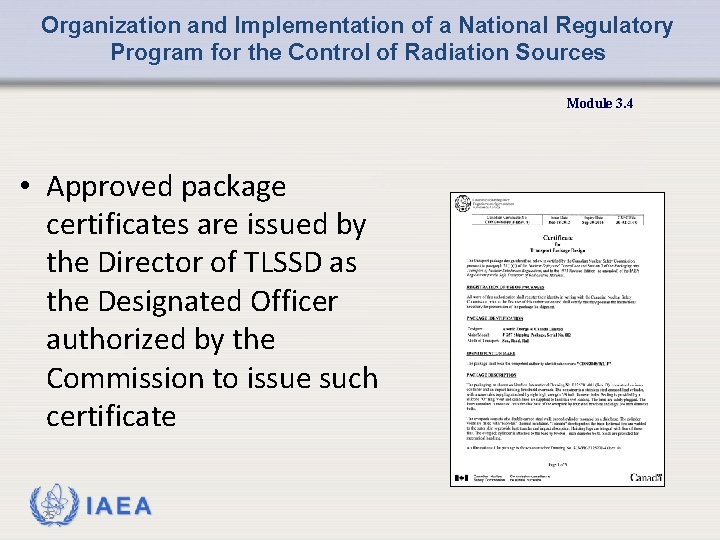
Organization and Implementation of a National Regulatory Program for the Control of Radiation Sources Module 3. 4 • Approved package certificates are issued by the Director of TLSSD as the Designated Officer authorized by the Commission to issue such certificate 25
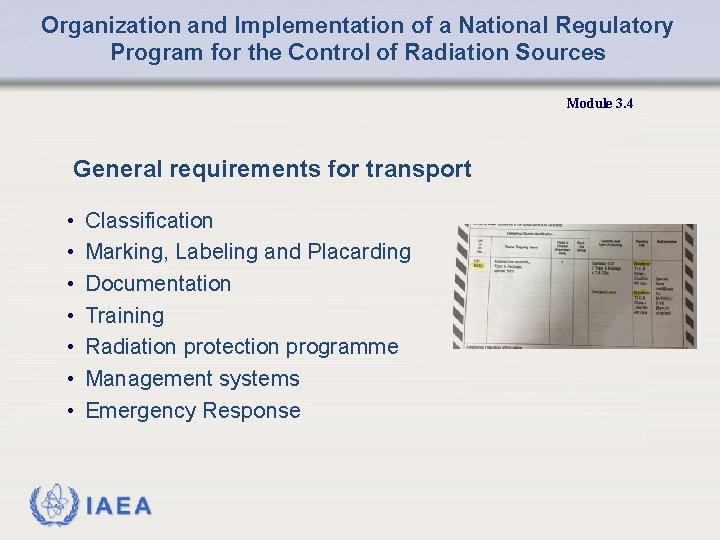
Organization and Implementation of a National Regulatory Program for the Control of Radiation Sources Module 3. 4 General requirements for transport • • Classification Marking, Labeling and Placarding Documentation Training Radiation protection programme Management systems Emergency Response
Organization and Implementation of a National Regulatory Program for the Control of Radiation Sources Module 3. 4 Classification – (UN Numbers, Proper Shipping Names, Class) Examples (see Table 1 of SSR-6 for complete list) • UN 2910, RADIOACTIVE MATERIAL, EXCEPTED PACKAGE, LIMITED QUANTITY OF MATERIAL, Class 7 • UN 3332, RADIOACTIVE MATERIAL, TYPE A PACKAGE, SPECIAL FORM, non-fissile, Class 7 • UN 3328, RADIOACTIVE MATERIAL, TYPE B(U) PACKAGE, FISSILE, Class 7
Organization and Implementation of a National Regulatory Program for the Control of Radiation Sources Module 3. 4 Package Markings Excepted packages • Identification of consignor or consignee • UN number Type A and Industrial Packages • Proper Shipping Name, ‘TYPE A’ or ‘IP-1’, ‘IP-2’ or ‘IP-3’ Type B packages • ‘TYPE B (U) or (M)’, mark of competent authority, specific serial number and embossed radiation trefoil
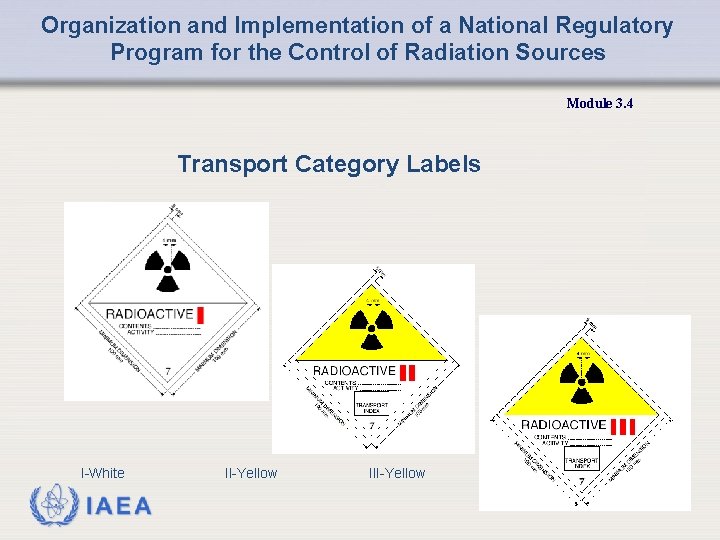
Organization and Implementation of a National Regulatory Program for the Control of Radiation Sources Module 3. 4 Transport Category Labels I-White II-Yellow III-Yellow
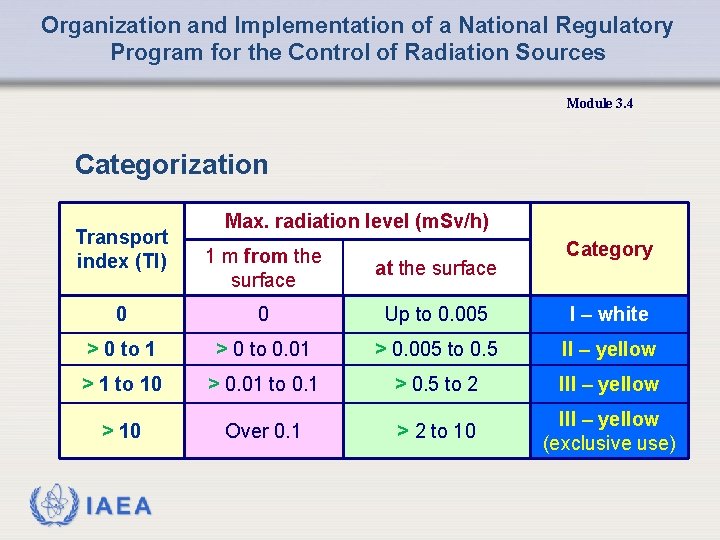
Organization and Implementation of a National Regulatory Program for the Control of Radiation Sources Module 3. 4 Categorization Transport index (TI) Max. radiation level (m. Sv/h) Category 1 m from the surface at the surface 0 0 Up to 0. 005 I – white > 0 to 1 > 0 to 0. 01 > 0. 005 to 0. 5 II – yellow > 1 to 10 > 0. 01 to 0. 1 > 0. 5 to 2 III – yellow > 10 Over 0. 1 > 2 to 10 III – yellow (exclusive use)
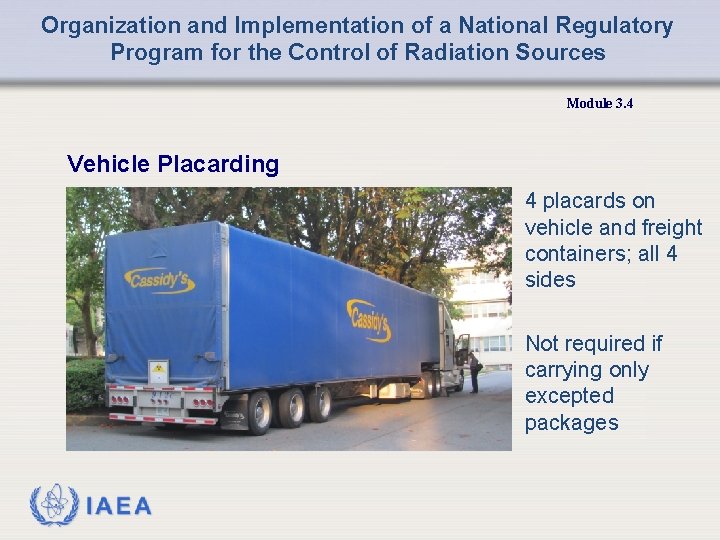
Organization and Implementation of a National Regulatory Program for the Control of Radiation Sources Module 3. 4 Vehicle Placarding 4 placards on vehicle and freight containers; all 4 sides Not required if carrying only excepted packages
Organization and Implementation of a National Regulatory Program for the Control of Radiation Sources Module 3. 4 Documentation Requirements • Transport Document – Must include name and address of consignor and consignee and details of the packages and their contents. Paragraphs 546 (particulars of consignment) and 547(consignor’s declaration) of SSR-6
Organization and Implementation of a National Regulatory Program for the Control of Radiation Sources Module 3. 4 Training Requirements All those involved in transport of radioactive material must receive appropriate training, commensurate with their responsibilities Training should cover: hazards involved, necessary precautions, requirements of the regulations, actions in emergency, etc Training should be given prior to starting work and refreshed periodically
Organization and Implementation of a National Regulatory Program for the Control of Radiation Sources Module 3. 4 Radiation Protection Program – Systematic arrangements aimed at keeping doses to those involved in the transport of radioactive material as low as reasonably achievable, established for assessed effective dose. Management System (Quality Assurance) – A management system based on standards acceptable to the competent authority shall be established and implemented for the design, manufacture, testing, documentation, use, maintenance and inspection of all special form material, low dispersible material, packages and transport operations.
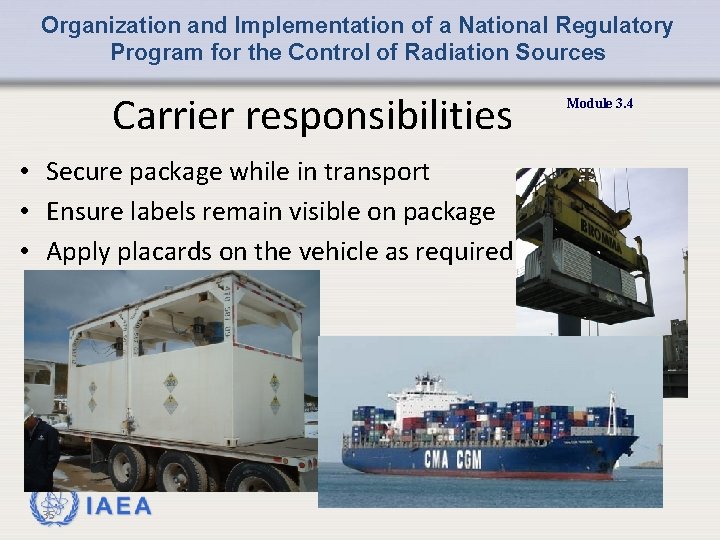
Organization and Implementation of a National Regulatory Program for the Control of Radiation Sources Carrier responsibilities • Secure package while in transport • Ensure labels remain visible on package • Apply placards on the vehicle as required 35 Module 3. 4
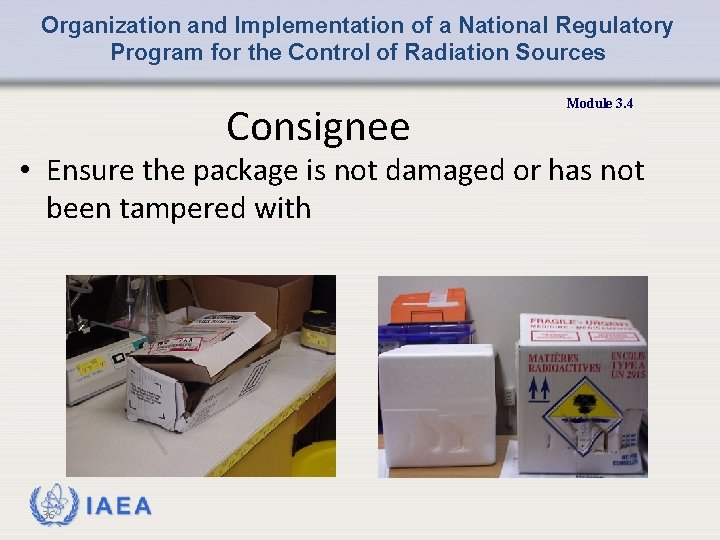
Organization and Implementation of a National Regulatory Program for the Control of Radiation Sources Consignee Module 3. 4 • Ensure the package is not damaged or has not been tampered with 36
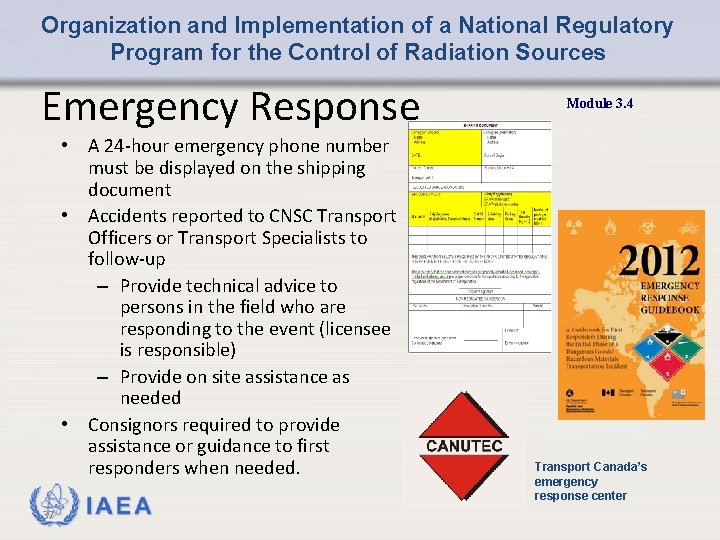
Organization and Implementation of a National Regulatory Program for the Control of Radiation Sources Emergency Response • A 24 -hour emergency phone number must be displayed on the shipping document • Accidents reported to CNSC Transport Officers or Transport Specialists to follow-up – Provide technical advice to persons in the field who are responding to the event (licensee is responsible) – Provide on site assistance as needed • Consignors required to provide assistance or guidance to first responders when needed. 37 Module 3. 4 Transport Canada’s emergency response center
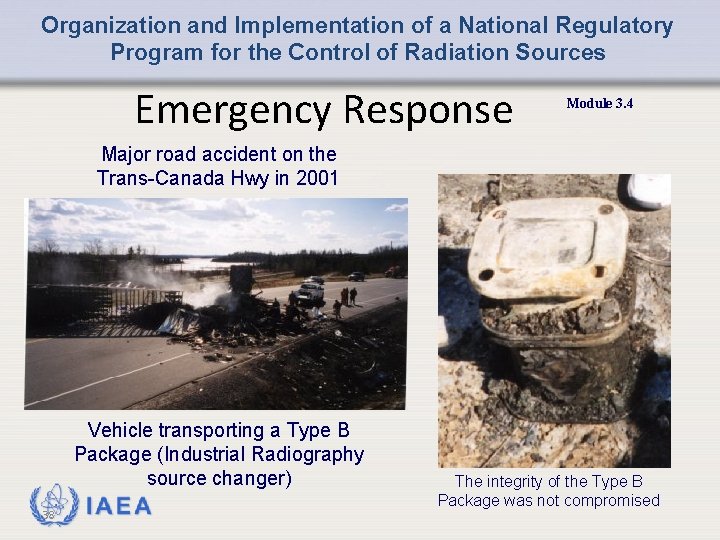
Organization and Implementation of a National Regulatory Program for the Control of Radiation Sources Emergency Response Module 3. 4 Major road accident on the Trans-Canada Hwy in 2001 Vehicle transporting a Type B Package (Industrial Radiography source changer) 38 The integrity of the Type B Package was not compromised
Organization and Implementation of a National Regulatory Program for the Control of Radiation Sources Module 3. 4 Canada
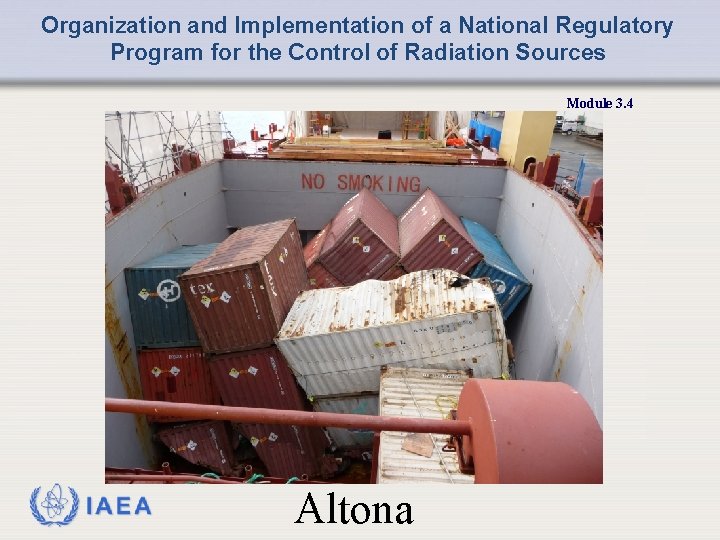
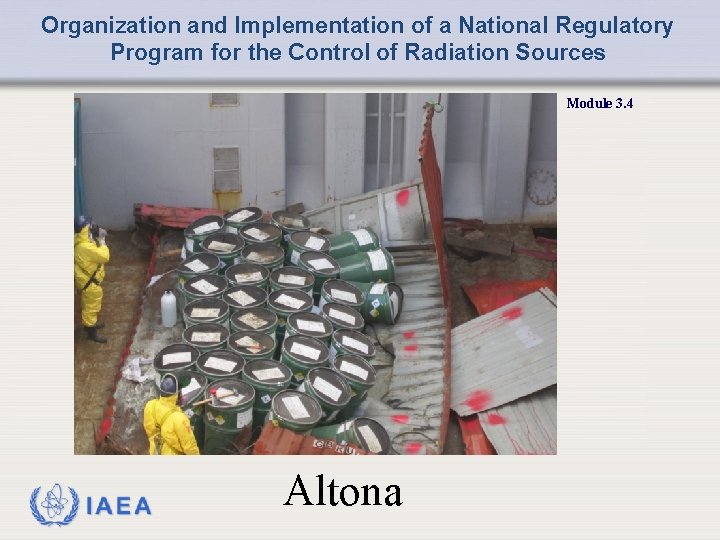
Organization and Implementation of a National Regulatory Program for the Control of Radiation Sources Module 3. 4 Altona
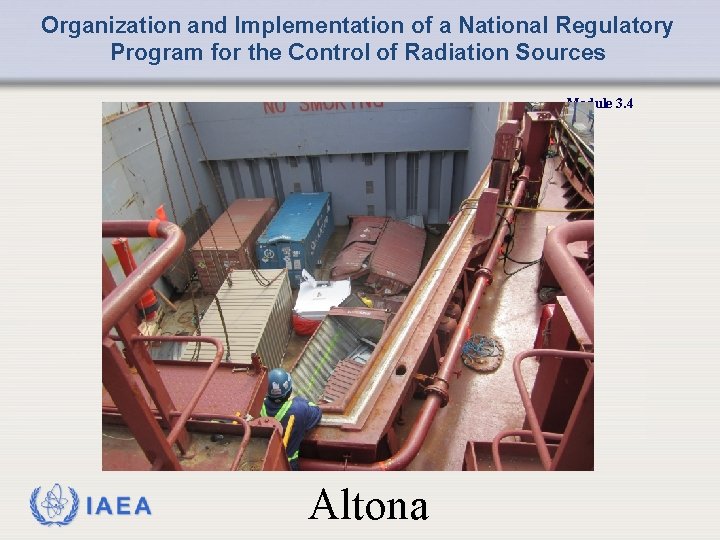
Organization and Implementation of a National Regulatory Program for the Control of Radiation Sources Module 3. 4 Altona
Organization and Implementation of a National Regulatory Program for the Control of Radiation Sources Module 3. 4 Altona
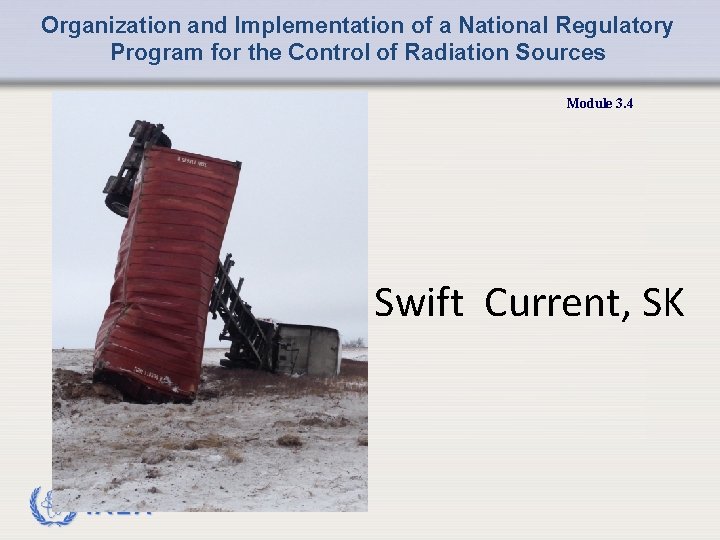
Organization and Implementation of a National Regulatory Program for the Control of Radiation Sources Module 3. 4 Swift Current, SK
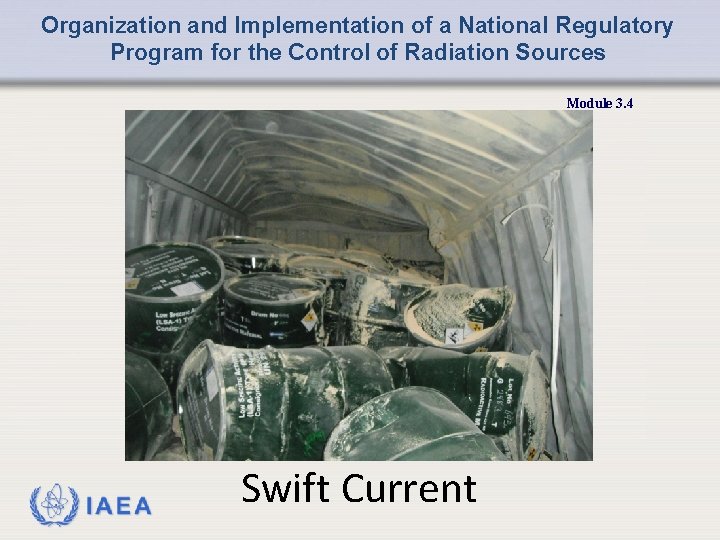
Organization and Implementation of a National Regulatory Program for the Control of Radiation Sources Module 3. 4 Swift Current
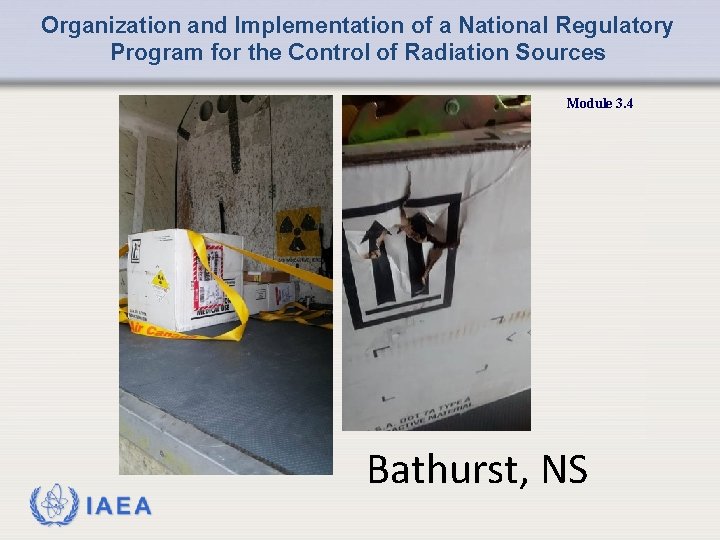
Organization and Implementation of a National Regulatory Program for the Control of Radiation Sources Module 3. 4 Bathurst, NS