
organism reproductive strategies Frogs hydra Hydra leopard frogs
- Slides: 6
organism reproductive strategies: Frogs & hydra
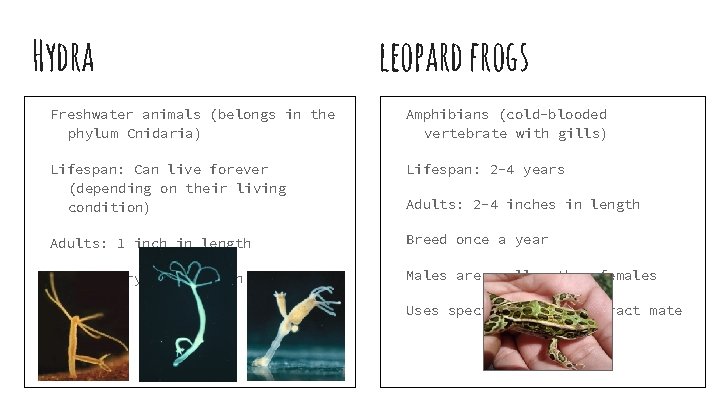
Hydra leopard frogs Freshwater animals (belongs in the phylum Cnidaria) Amphibians (cold-blooded vertebrate with gills) Lifespan: Can live forever (depending on their living condition) Lifespan: 2 -4 years Adults: 1 inch in length Breed once a year Breed every two days on average Males are smaller than females Adults: 2 -4 inches in length Uses special call to attract mate
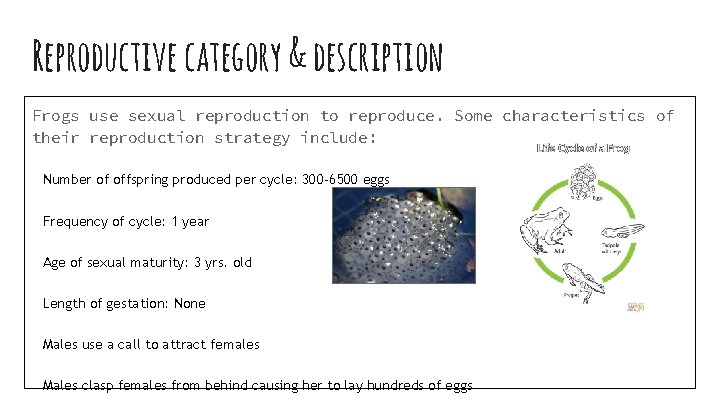
Reproductive category & description Frogs use sexual reproduction to reproduce. Some characteristics of their reproduction strategy include: Number of offspring produced per cycle: 300 -6500 eggs Frequency of cycle: 1 year Age of sexual maturity: 3 yrs. old Length of gestation: None Males use a call to attract females Males clasp females from behind causing her to lay hundreds of eggs
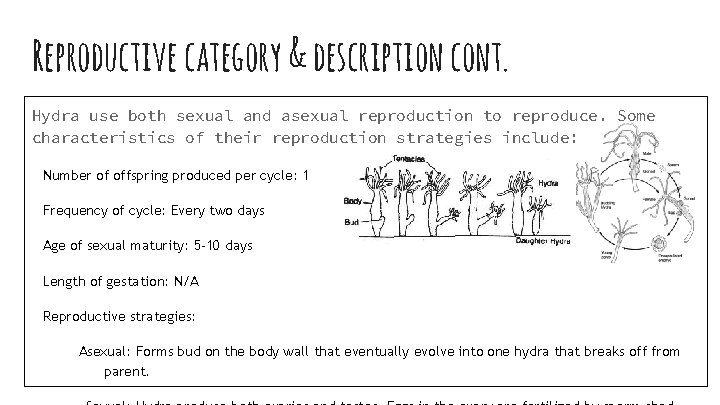
Reproductive category & description cont. Hydra use both sexual and asexual reproduction to reproduce. Some characteristics of their reproduction strategies include: Number of offspring produced per cycle: 1 Frequency of cycle: Every two days Age of sexual maturity: 5 -10 days Length of gestation: N/A Reproductive strategies: Asexual: Forms bud on the body wall that eventually evolve into one hydra that breaks off from parent.
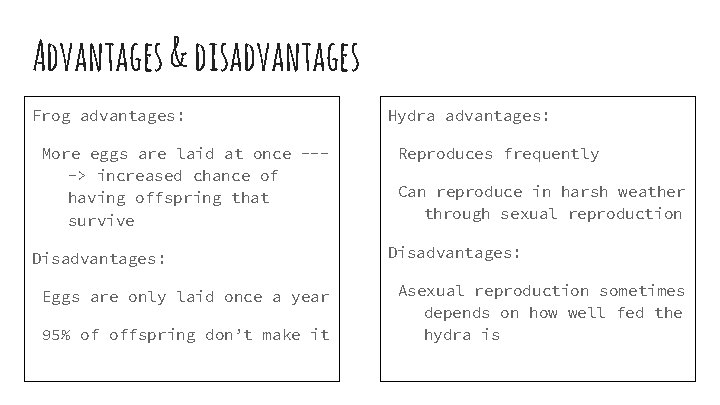
Advantages & disadvantages Frog advantages: More eggs are laid at once ---> increased chance of having offspring that survive Disadvantages: Eggs are only laid once a year 95% of offspring don’t make it Hydra advantages: Reproduces frequently Can reproduce in harsh weather through sexual reproduction Disadvantages: Asexual reproduction sometimes depends on how well fed the hydra is
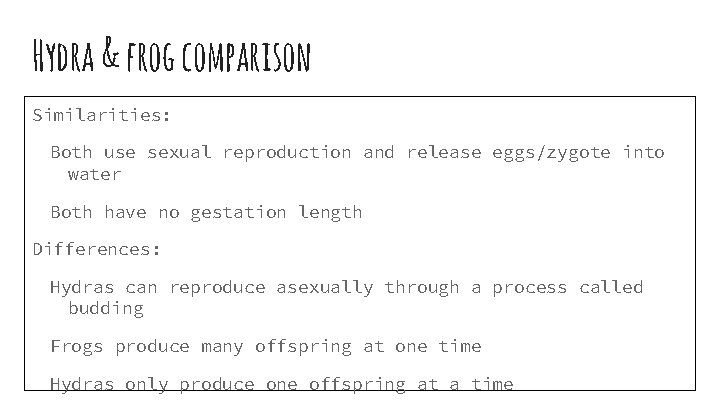
Hydra & frog comparison Similarities: Both use sexual reproduction and release eggs/zygote into water Both have no gestation length Differences: Hydras can reproduce asexually through a process called budding Frogs produce many offspring at one time Hydras only produce one offspring at a time