
Organism Relationships Presented by Kesler Science Essential Questions
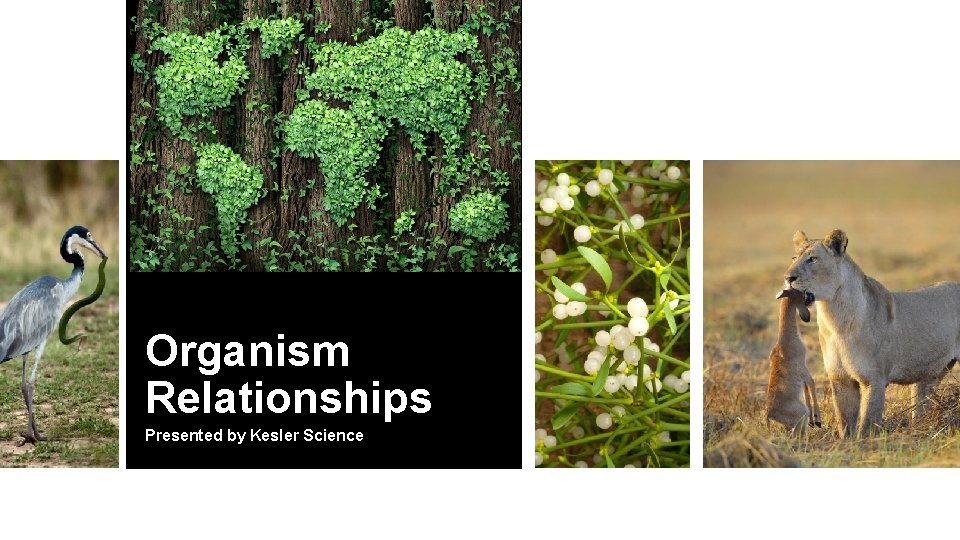
Organism Relationships Presented by Kesler Science
Essential Questions: How can you describe an organism’s relationship in a food web as they occur in these ecosystems: marine, freshwater, and terrestrial?
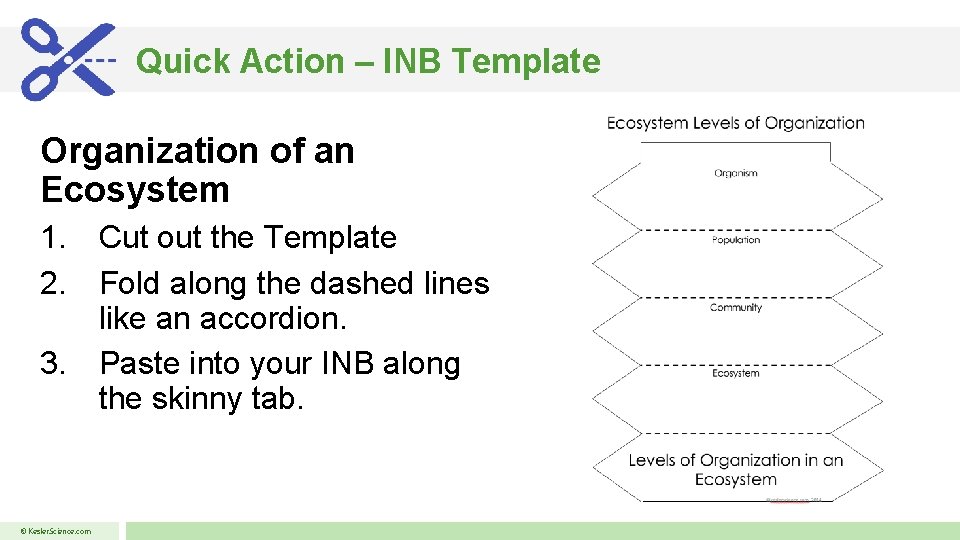
Quick Action – INB Template Organization of an Ecosystem 1. Cut out the Template 2. Fold along the dashed lines like an accordion. 3. Paste into your INB along the skinny tab. © Kesler. Science. com
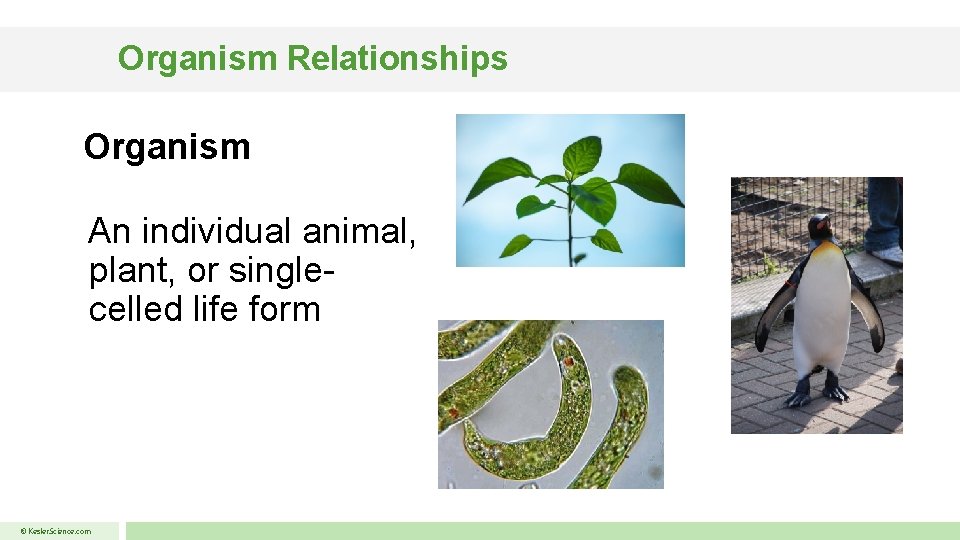
Organism Relationships Organism An individual animal, plant, or singlecelled life form © Kesler. Science. com
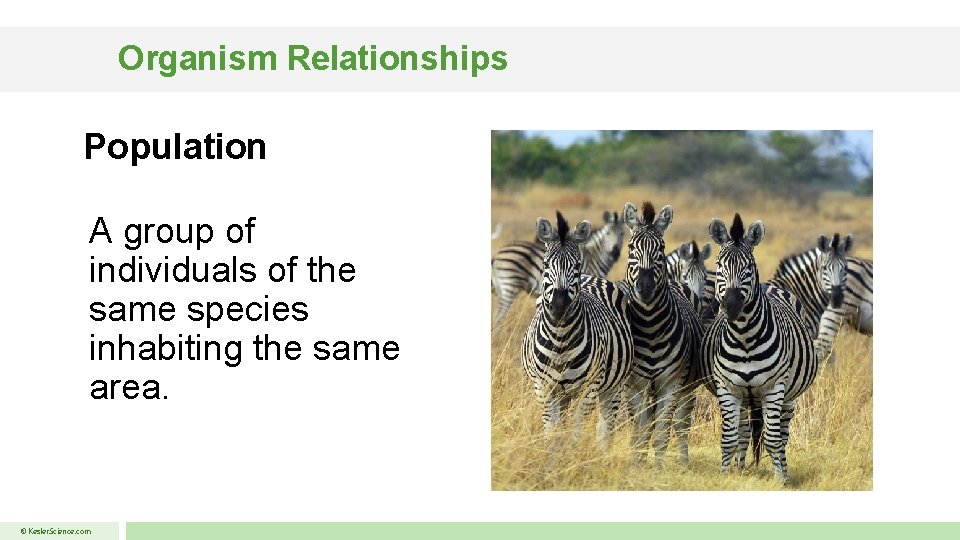
Organism Relationships Population A group of individuals of the same species inhabiting the same area. © Kesler. Science. com
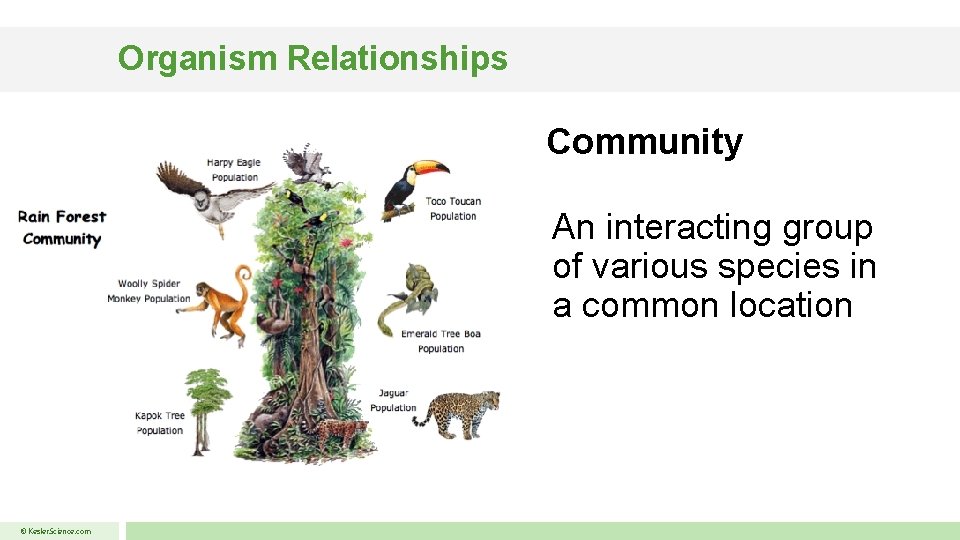
Organism Relationships Community An interacting group of various species in a common location © Kesler. Science. com
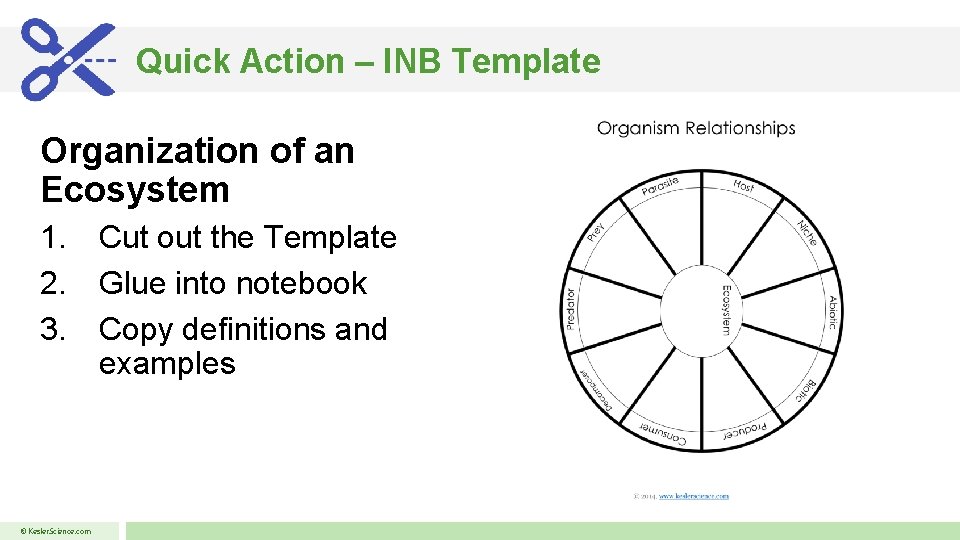
Quick Action – INB Template Organization of an Ecosystem 1. Cut out the Template 2. Glue into notebook 3. Copy definitions and examples © Kesler. Science. com
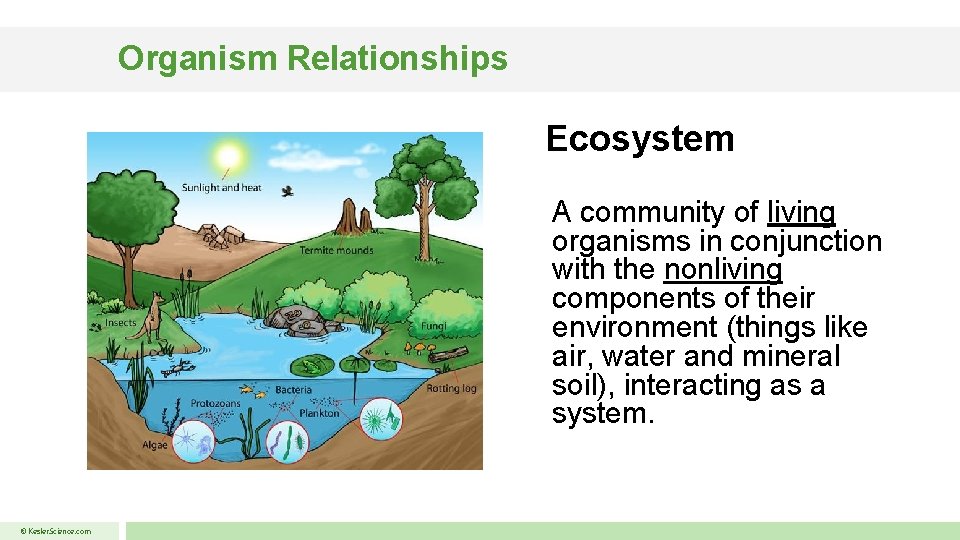
Organism Relationships Ecosystem A community of living organisms in conjunction with the nonliving components of their environment (things like air, water and mineral soil), interacting as a system. © Kesler. Science. com
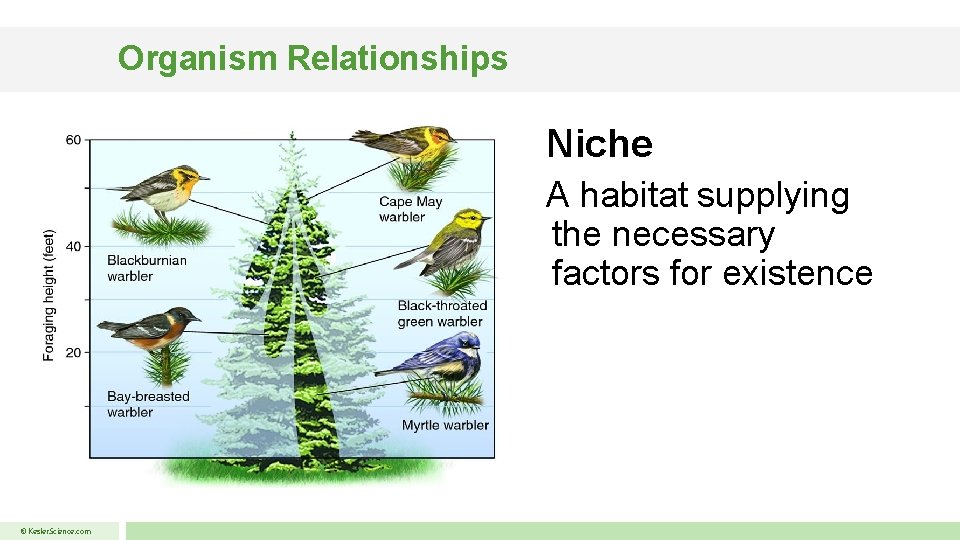
Organism Relationships Niche A habitat supplying the necessary factors for existence © Kesler. Science. com
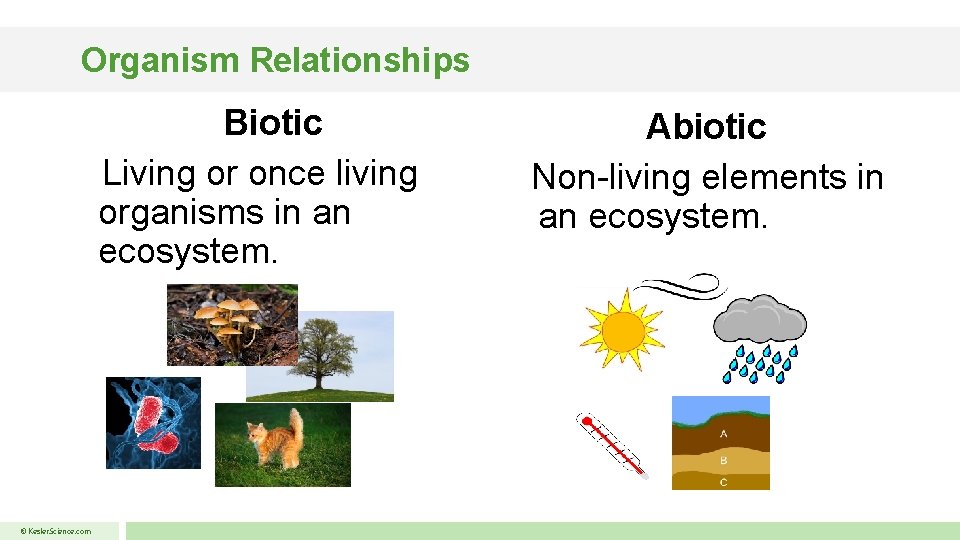
Organism Relationships Biotic Living or once living organisms in an ecosystem. © Kesler. Science. com Abiotic Non-living elements in an ecosystem.
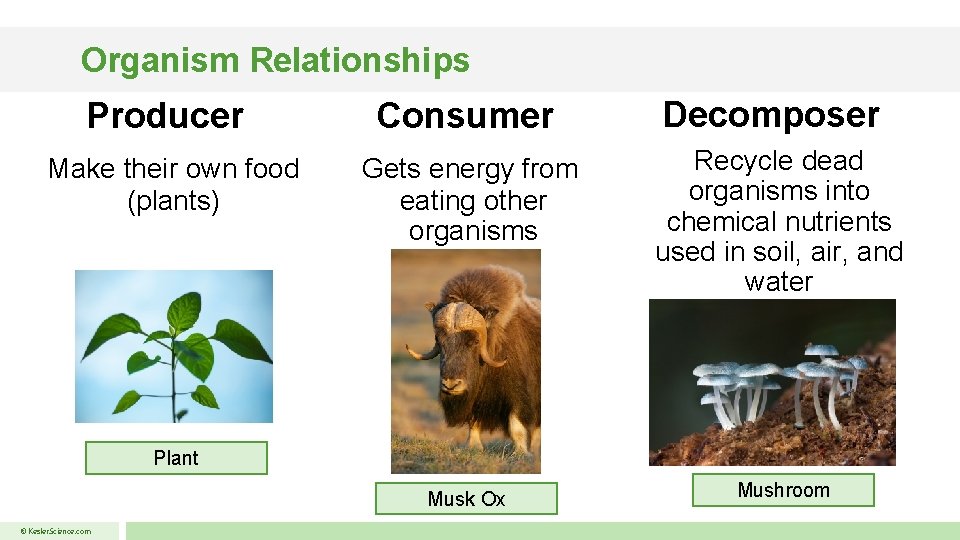
Organism Relationships Producer Consumer Decomposer Make their own food (plants) Gets energy from eating other organisms Recycle dead organisms into chemical nutrients used in soil, air, and water Musk Ox Mushroom Plant © Kesler. Science. com
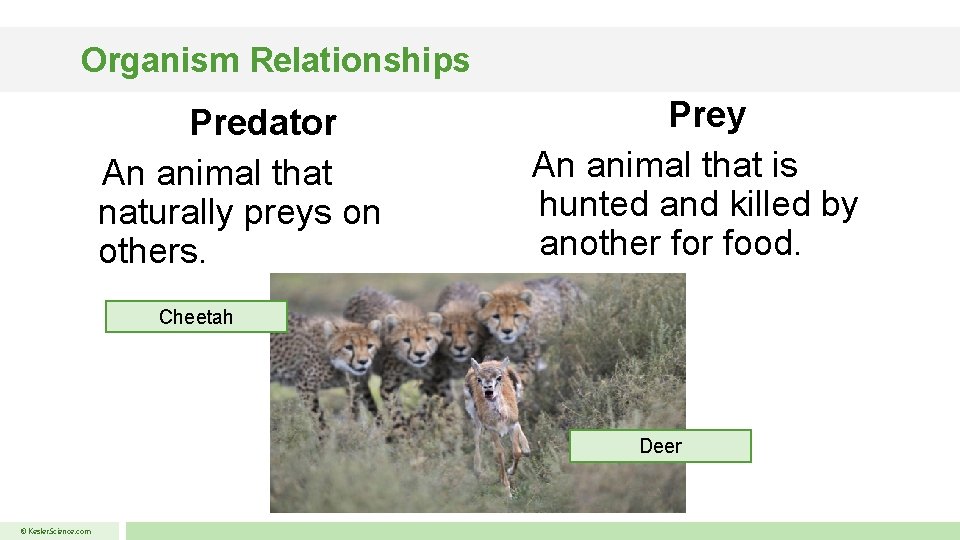
Organism Relationships Predator An animal that naturally preys on others. Prey An animal that is hunted and killed by another food. Cheetah Deer © Kesler. Science. com
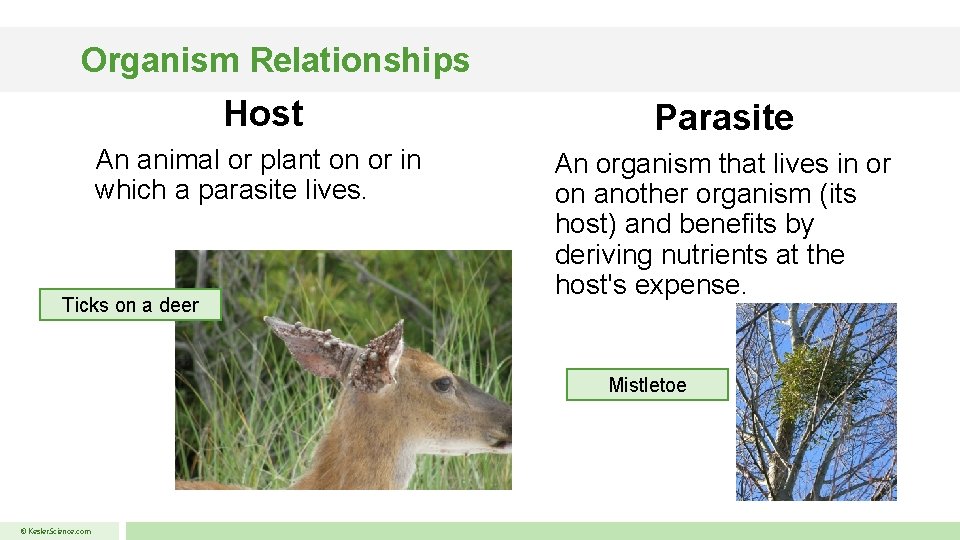
Organism Relationships Host Parasite An animal or plant on or in which a parasite lives. An organism that lives in or on another organism (its host) and benefits by deriving nutrients at the host's expense. Ticks on a deer Mistletoe © Kesler. Science. com
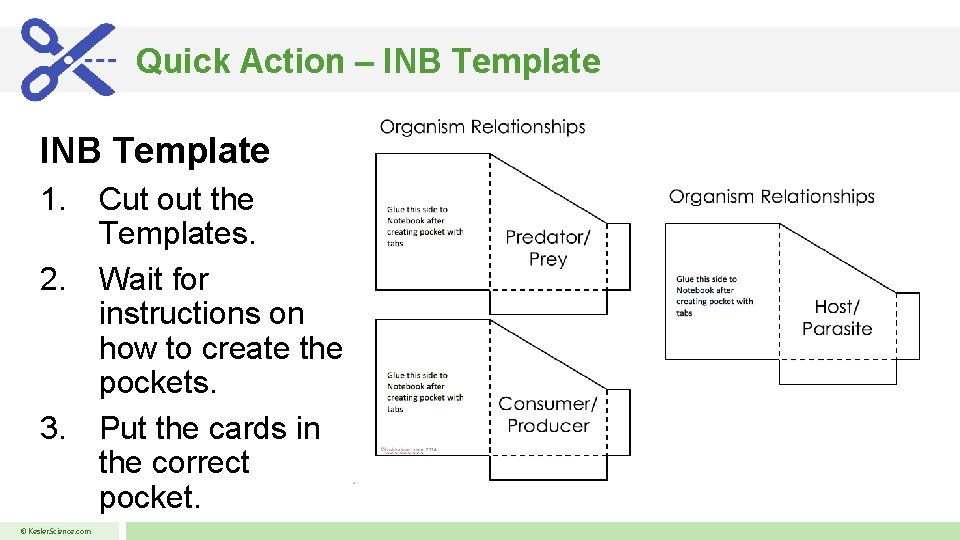
Quick Action – INB Template 1. Cut out the Templates. 2. Wait for instructions on how to create the pockets. 3. Put the cards in the correct pocket. © Kesler. Science. com
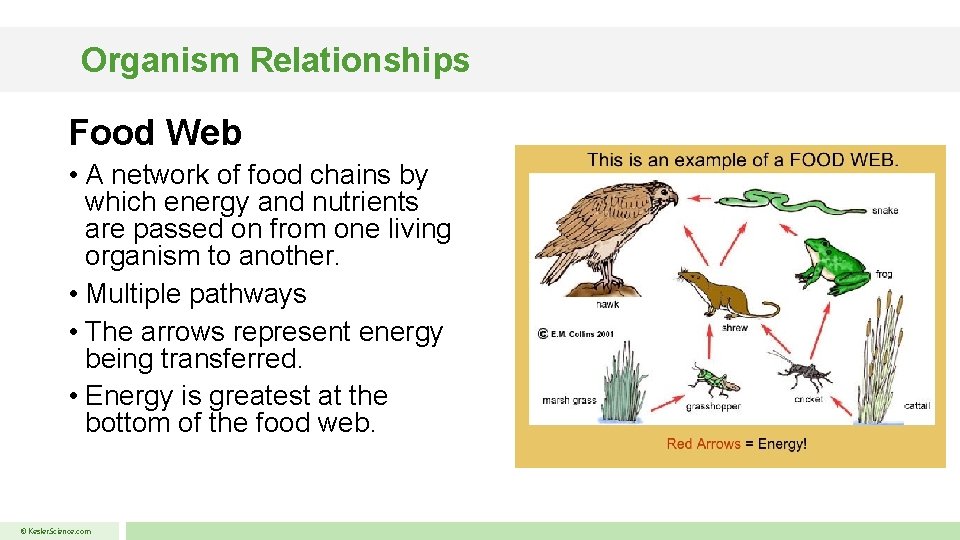
Organism Relationships Food Web • A network of food chains by which energy and nutrients are passed on from one living organism to another. • Multiple pathways • The arrows represent energy being transferred. • Energy is greatest at the bottom of the food web. © Kesler. Science. com
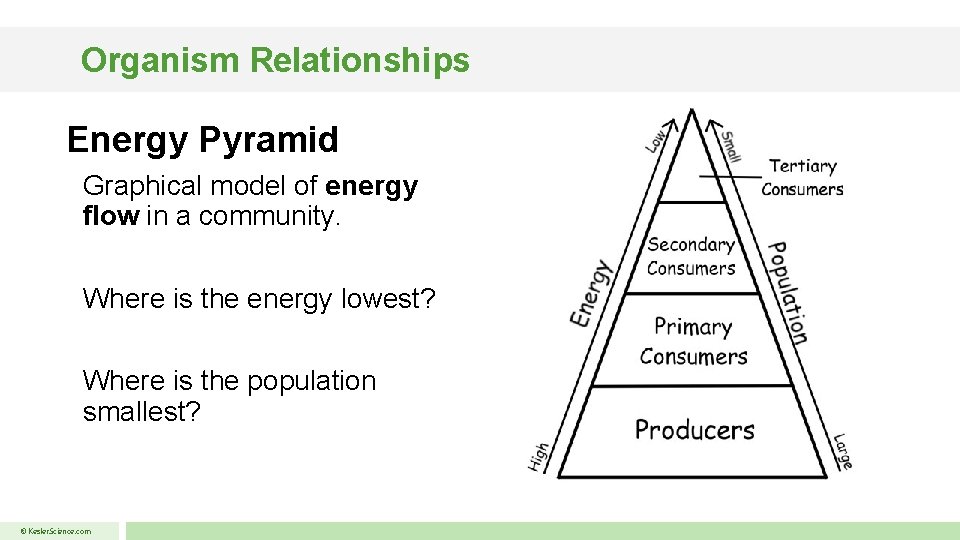
Organism Relationships Energy Pyramid Graphical model of energy flow in a community. Where is the energy lowest? Where is the population smallest? © Kesler. Science. com
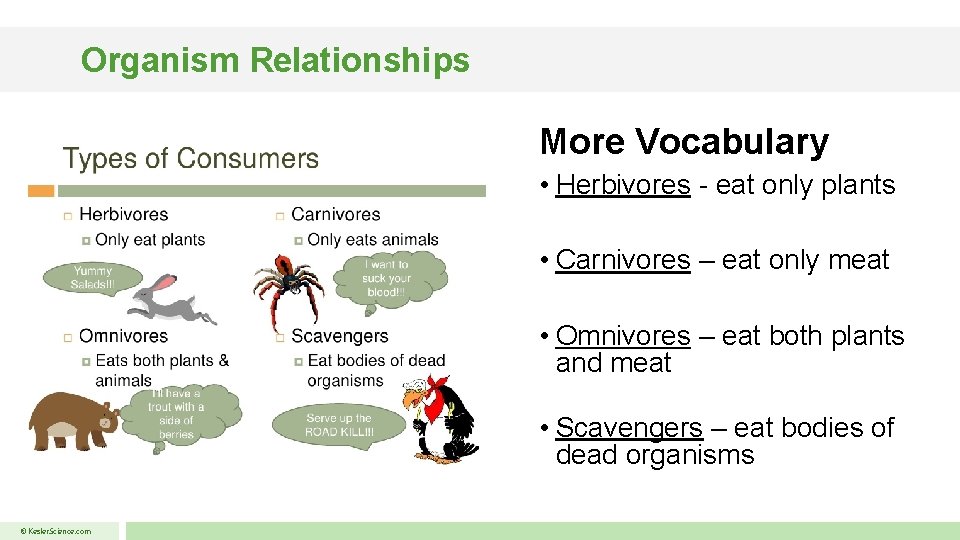
Organism Relationships More Vocabulary • Herbivores - eat only plants • Carnivores – eat only meat • Omnivores – eat both plants and meat • Scavengers – eat bodies of dead organisms © Kesler. Science. com
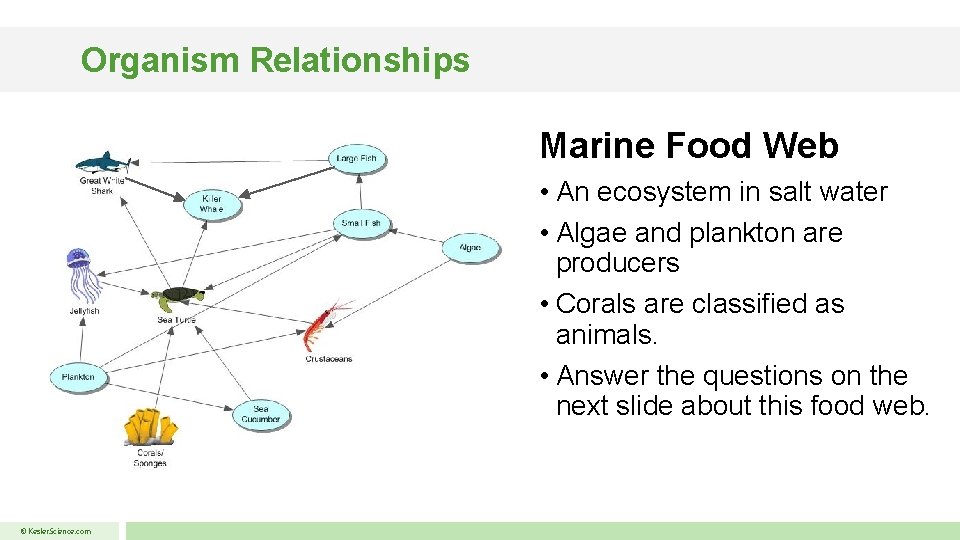
Organism Relationships Marine Food Web • An ecosystem in salt water • Algae and plankton are producers • Corals are classified as animals. • Answer the questions on the next slide about this food web. © Kesler. Science. com
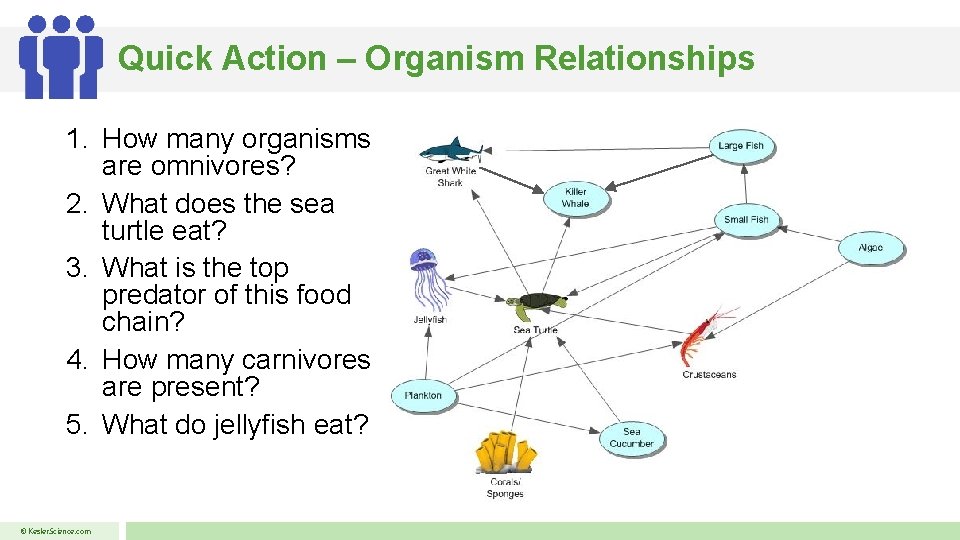
Quick Action – Organism Relationships 1. How many organisms are omnivores? 2. What does the sea turtle eat? 3. What is the top predator of this food chain? 4. How many carnivores are present? 5. What do jellyfish eat? © Kesler. Science. com
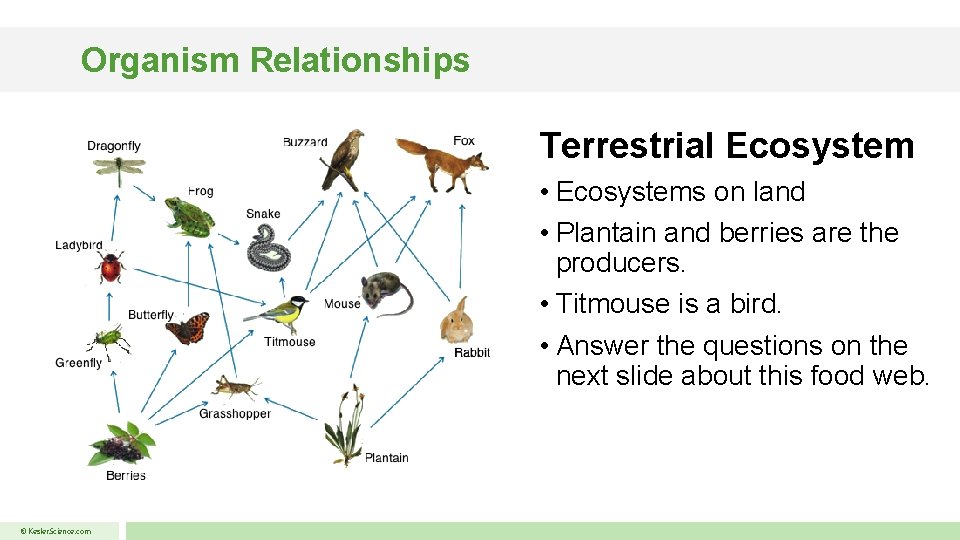
Organism Relationships Terrestrial Ecosystem • Ecosystems on land • Plantain and berries are the producers. • Titmouse is a bird. • Answer the questions on the next slide about this food web. © Kesler. Science. com
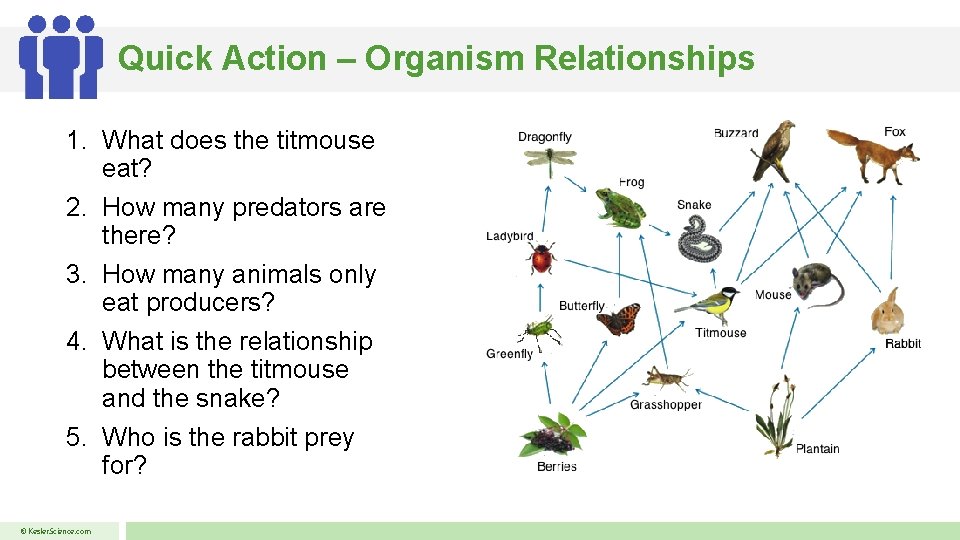
Quick Action – Organism Relationships 1. What does the titmouse eat? 2. How many predators are there? 3. How many animals only eat producers? 4. What is the relationship between the titmouse and the snake? 5. Who is the rabbit prey for? © Kesler. Science. com
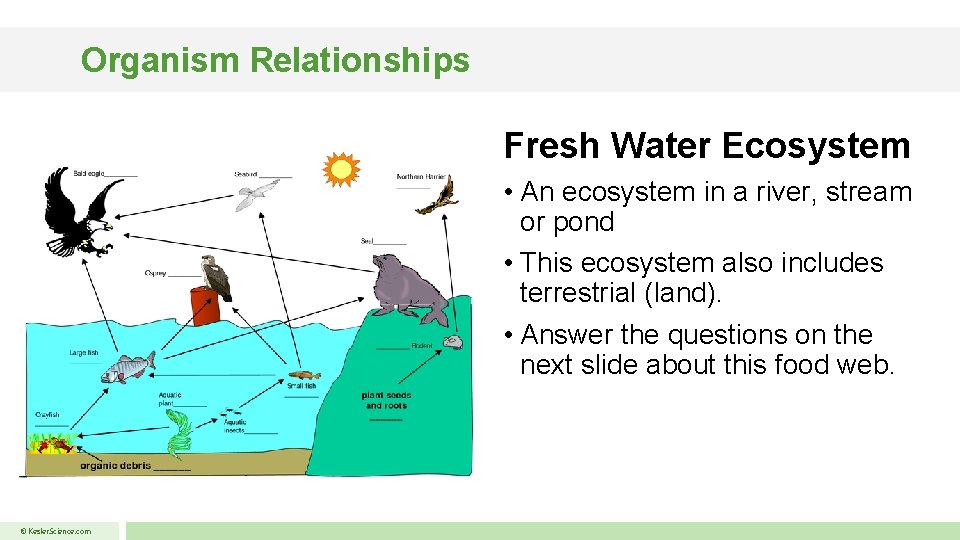
Organism Relationships Fresh Water Ecosystem • An ecosystem in a river, stream or pond • This ecosystem also includes terrestrial (land). • Answer the questions on the next slide about this food web. © Kesler. Science. com
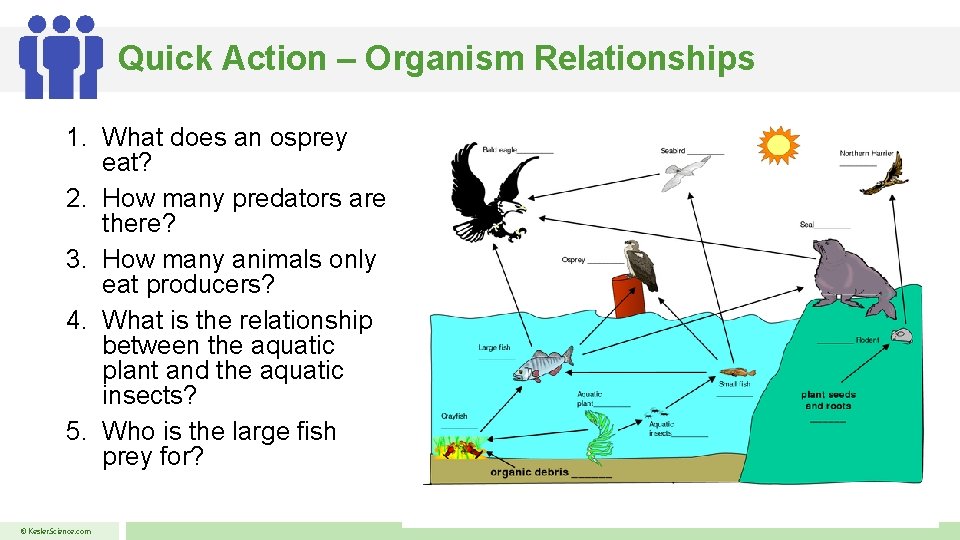
Quick Action – Organism Relationships 1. What does an osprey eat? 2. How many predators are there? 3. How many animals only eat producers? 4. What is the relationship between the aquatic plant and the aquatic insects? 5. Who is the large fish prey for? © Kesler. Science. com
Check for Understanding Can you… 1. Describe organisms’ relationships in food web, including: predator/prey, consumer/producer and parasite/host? 2. Describe organism relationships in marine, freshwater, and terrestrial ecosystems. © Kesler. Science. com
- Slides: 24