
organism population community ecosystem biosphere Population Ecology Ch
organism population community ecosystem biosphere Population Ecology (Ch. 5)
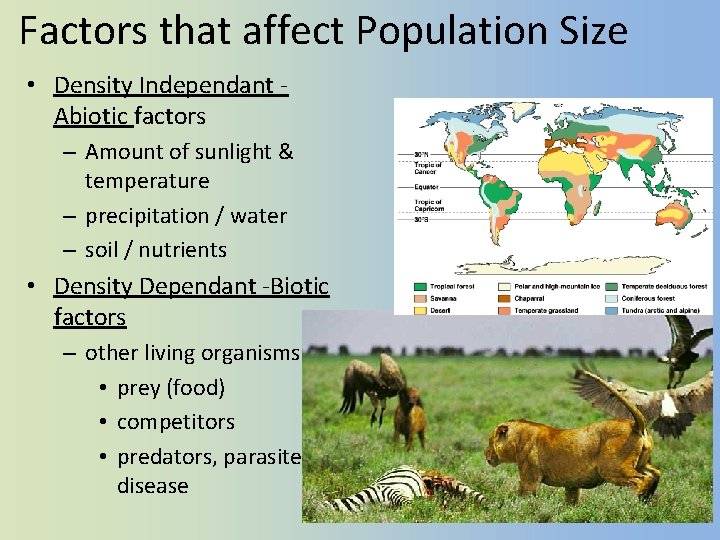
Factors that affect Population Size • Density Independant Abiotic factors – Amount of sunlight & temperature – precipitation / water – soil / nutrients • Density Dependant -Biotic factors – other living organisms • prey (food) • competitors • predators, parasites, disease
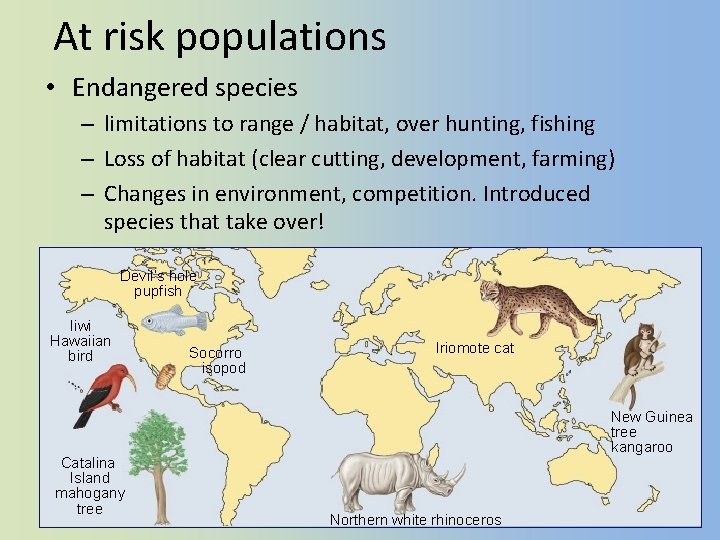
At risk populations • Endangered species – limitations to range / habitat, over hunting, fishing – Loss of habitat (clear cutting, development, farming) – Changes in environment, competition. Introduced species that take over! Devil’s hole pupfish Iiwi Hawaiian bird Catalina Island mahogany tree Socorro isopod Iriomote cat New Guinea tree kangaroo Northern white rhinoceros
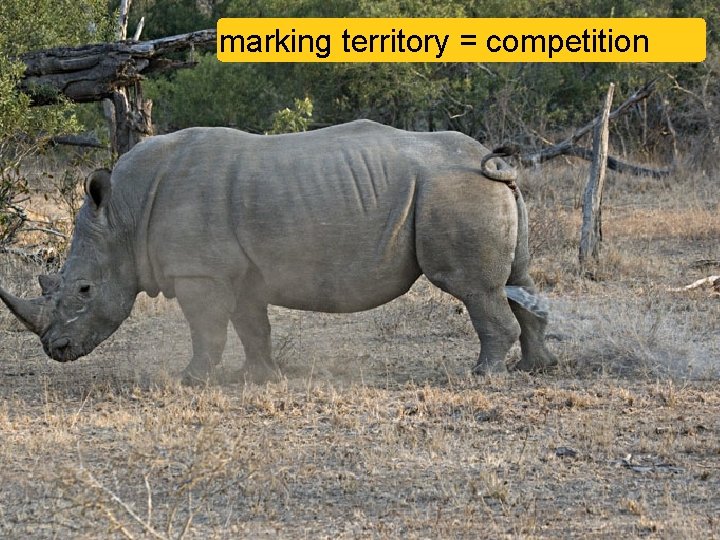
marking territory = competition
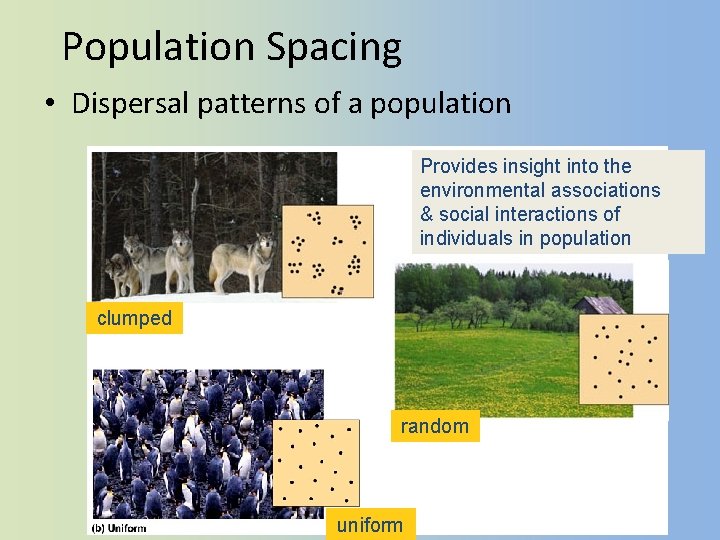
Population Spacing • Dispersal patterns of a population Provides insight into the environmental associations & social interactions of individuals in population clumped random uniform
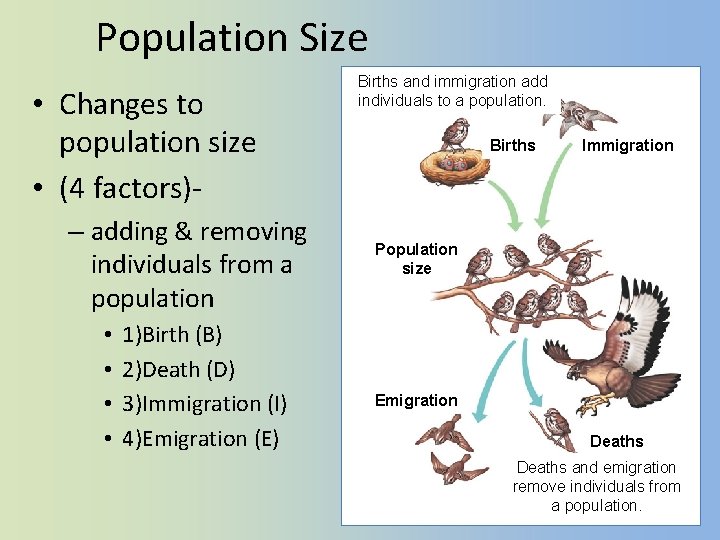
Population Size • Changes to population size • (4 factors)– adding & removing individuals from a population • • 1)Birth (B) 2)Death (D) 3)Immigration (I) 4)Emigration (E) Births and immigration add individuals to a population. Births Immigration Popu. Iation size Emigration Deaths and emigration remove individuals from a population.
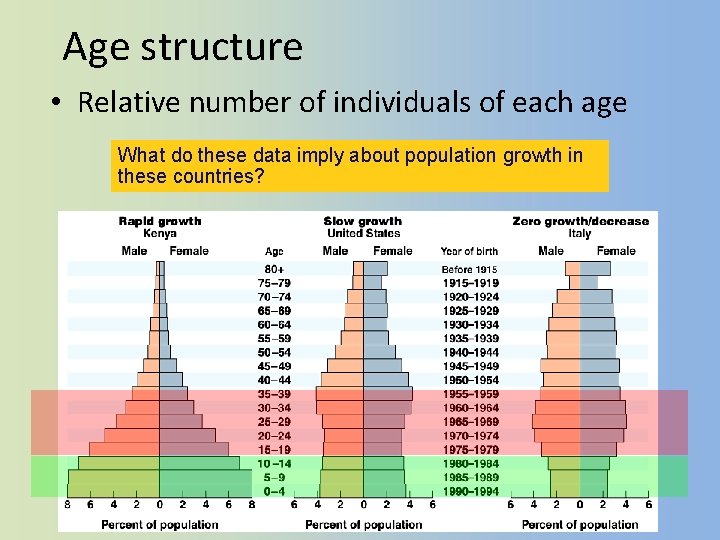
Age structure • Relative number of individuals of each age What do these data imply about population growth in these countries?
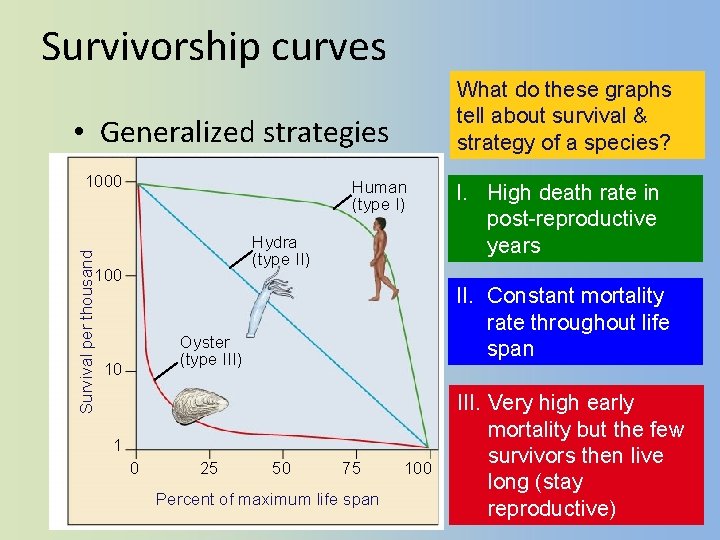
Survivorship curves What do these graphs tell about survival & strategy of a species? • Generalized strategies Survival per thousand 1000 Human (type I) Hydra (type II) 100 II. Constant mortality rate throughout life span Oyster (type III) 10 1 0 25 I. High death rate in post-reproductive years 50 75 Percent of maximum life span 100 III. Very high early mortality but the few survivors then live long (stay reproductive)

Reproductive strategies • K-selected – late reproduction – few offspring – invest a lot in raising offspring • Primates (us) • Big mammals K-selected r-selected – early reproduction – many offspring – little parental care • insects • many plants r-selected
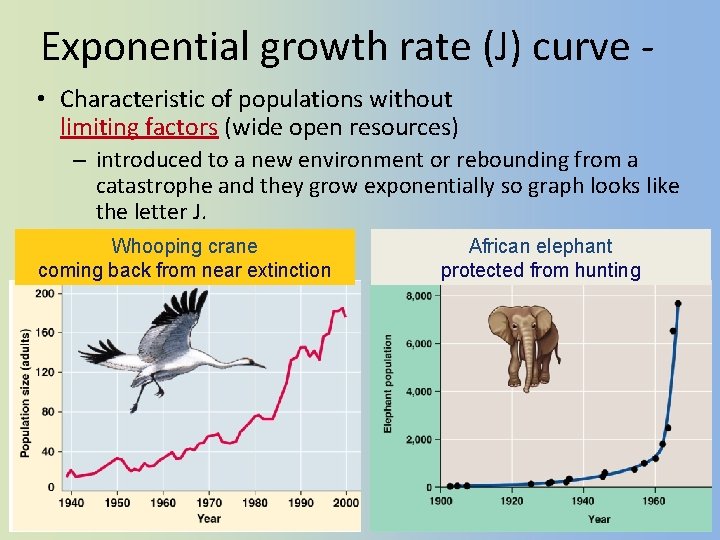
Exponential growth rate (J) curve • Characteristic of populations without limiting factors (wide open resources) – introduced to a new environment or rebounding from a catastrophe and they grow exponentially so graph looks like the letter J. Whooping crane coming back from near extinction African elephant protected from hunting
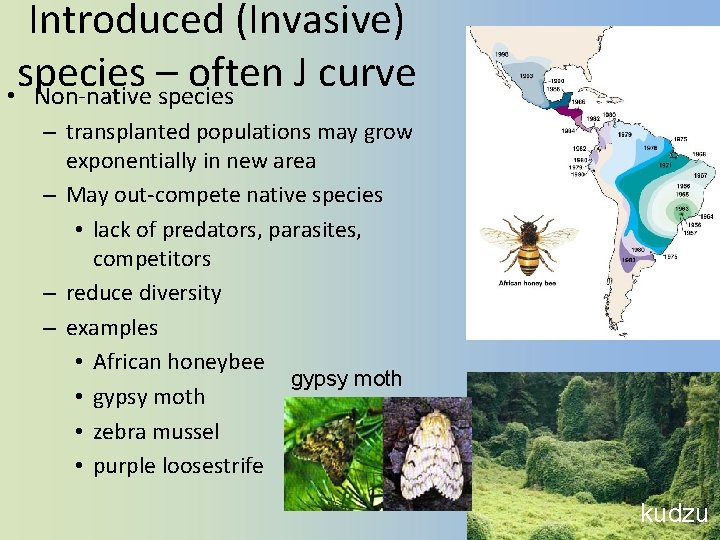
Introduced (Invasive) species – often J curve • Non-native species – transplanted populations may grow exponentially in new area – May out-compete native species • lack of predators, parasites, competitors – reduce diversity – examples • African honeybee gypsy moth • zebra mussel • purple loosestrife kudzu
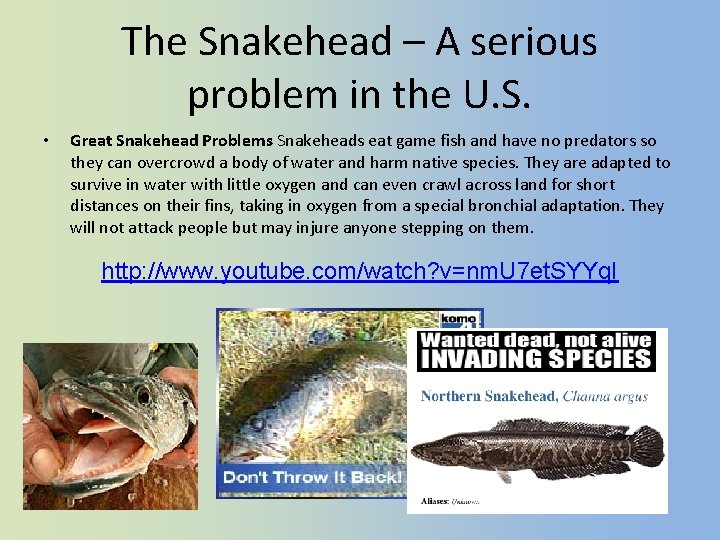
The Snakehead – A serious problem in the U. S. • Great Snakehead Problems Snakeheads eat game fish and have no predators so they can overcrowd a body of water and harm native species. They are adapted to survive in water with little oxygen and can even crawl across land for short distances on their fins, taking in oxygen from a special bronchial adaptation. They will not attack people but may injure anyone stepping on them. http: //www. youtube. com/watch? v=nm. U 7 et. SYYq. I
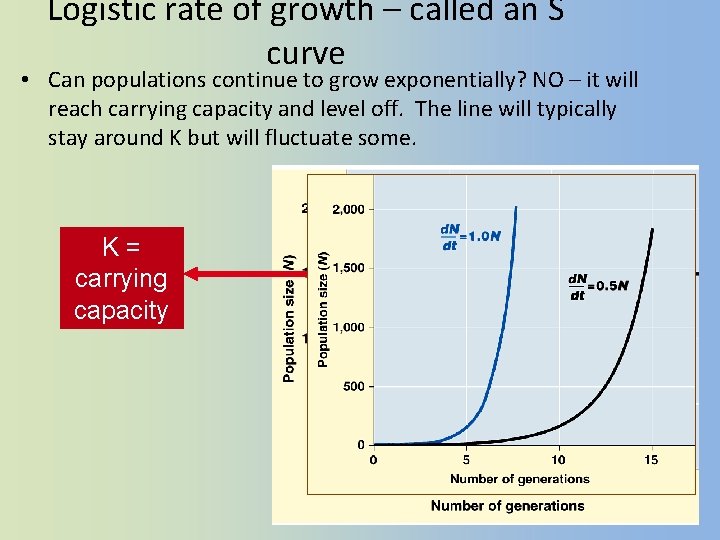
Logistic rate of growth – called an S curve • Can populations continue to grow exponentially? NO – it will reach carrying capacity and level off. The line will typically stay around K but will fluctuate some. K= carrying capacity
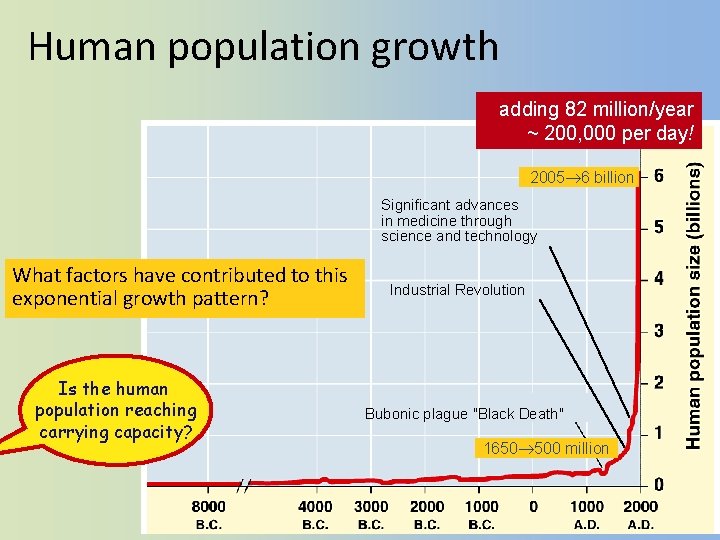
Human population growth adding 82 million/year ~ 200, 000 per day! 2005 6 billion Significant advances in medicine through science and technology What factors have contributed to this exponential growth pattern? Is the human population reaching carrying capacity? Industrial Revolution Bubonic plague "Black Death" 1650 500 million
- Slides: 14