
organism population community ecosystem biosphere Population Ecology AP
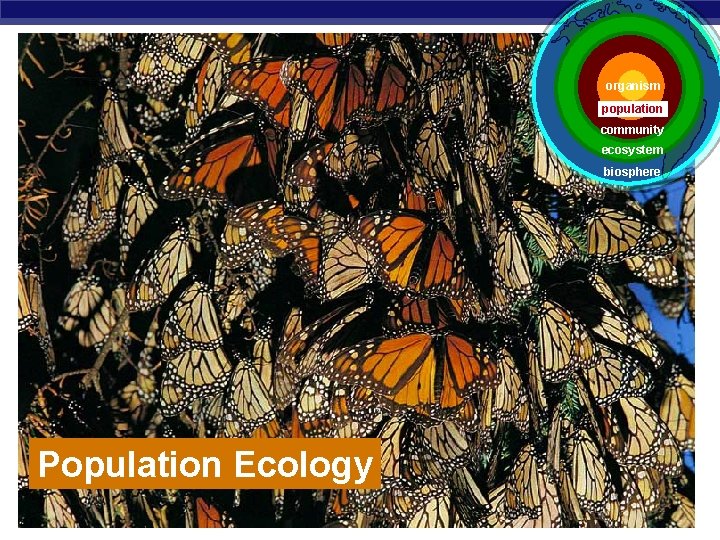
organism population community ecosystem biosphere Population Ecology AP Biology
Why Population Ecology? § Scientific goal u understanding the factors that influence the size of populations § general principles § specific cases § Practical goal u management of populations § increase population size w endangered species § decrease population size w pests § maintain population size w fisheries management n AP Biology maintain & maximize sustained yield
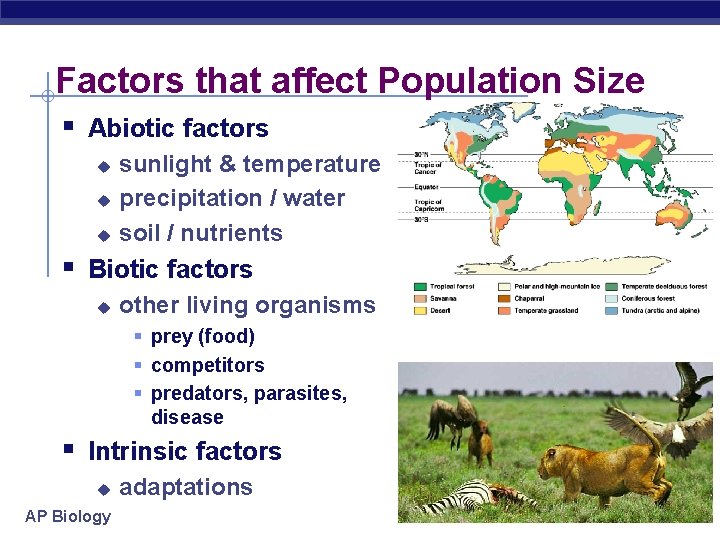
Factors that affect Population Size § Abiotic factors u u u sunlight & temperature precipitation / water soil / nutrients § Biotic factors u other living organisms § prey (food) § competitors § predators, parasites, disease § Intrinsic factors u AP Biology adaptations
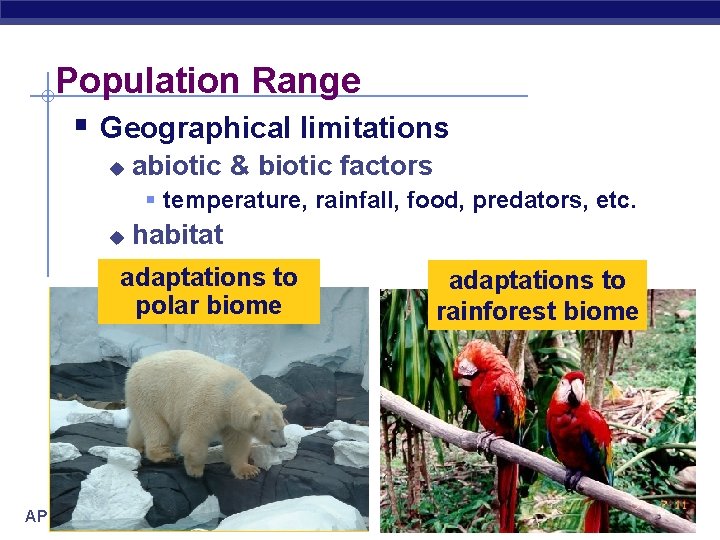
Population Range § Geographical limitations u abiotic & biotic factors § temperature, rainfall, food, predators, etc. u habitat adaptations to polar biome AP Biology adaptations to rainforest biome
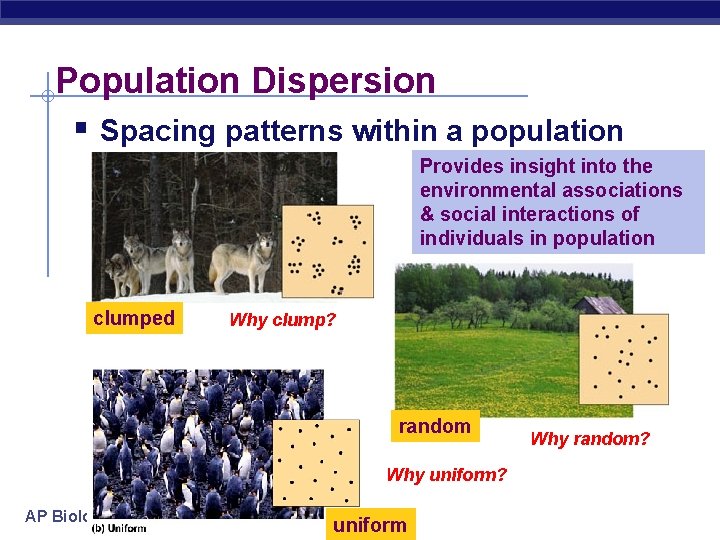
Population Dispersion § Spacing patterns within a population Provides insight into the environmental associations & social interactions of individuals in population clumped Why clump? random Why uniform? AP Biology uniform Why random?
Population Growth Rates § Factors affecting population growth rate u sex ratio § how many females vs. males? u generation time § at what age do females reproduce? u age structure § #females at reproductive age in cohort? AP Biology
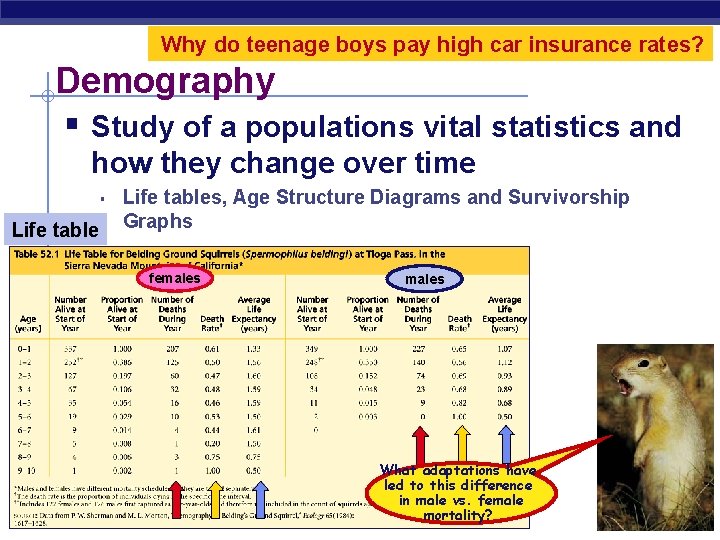
Why do teenage boys pay high car insurance rates? Demography § Study of a populations vital statistics and how they change over time § Life tables, Age Structure Diagrams and Survivorship Graphs females AP Biology males What adaptations have led to this difference in male vs. female mortality?
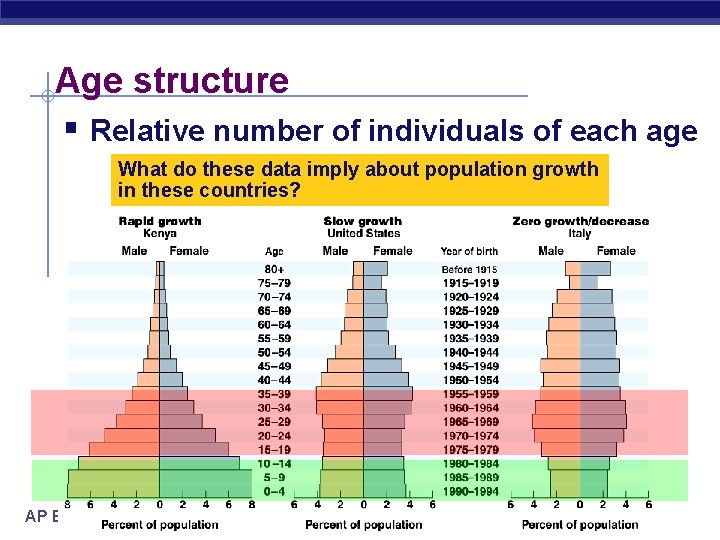
Age structure § Relative number of individuals of each age What do these data imply about population growth in these countries? AP Biology
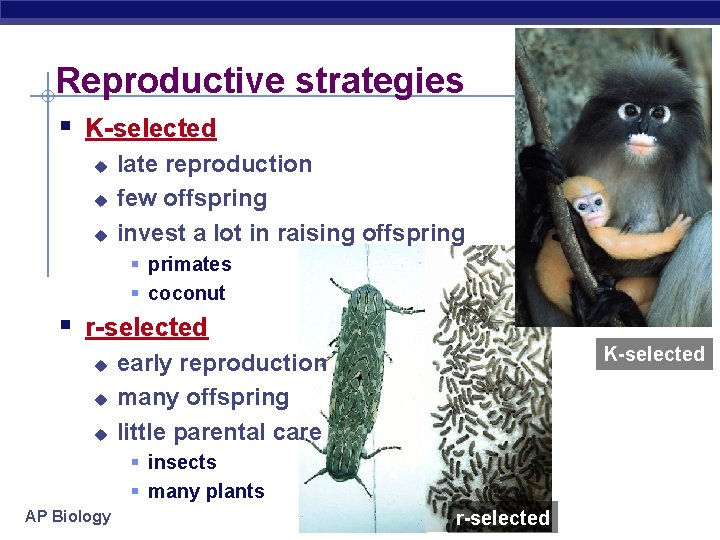
Reproductive strategies § K-selected u u u late reproduction few offspring invest a lot in raising offspring § primates § coconut § r-selected u u u K-selected early reproduction many offspring little parental care § insects § many plants AP Biology r-selected
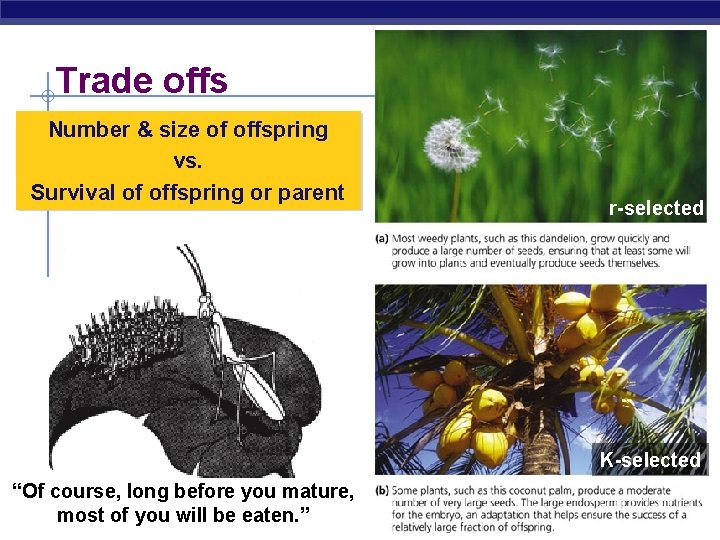
Trade offs Number & size of offspring vs. Survival of offspring or parent r-selected K-selected “Of course, long before you mature, AP Biology most of you will be eaten. ”
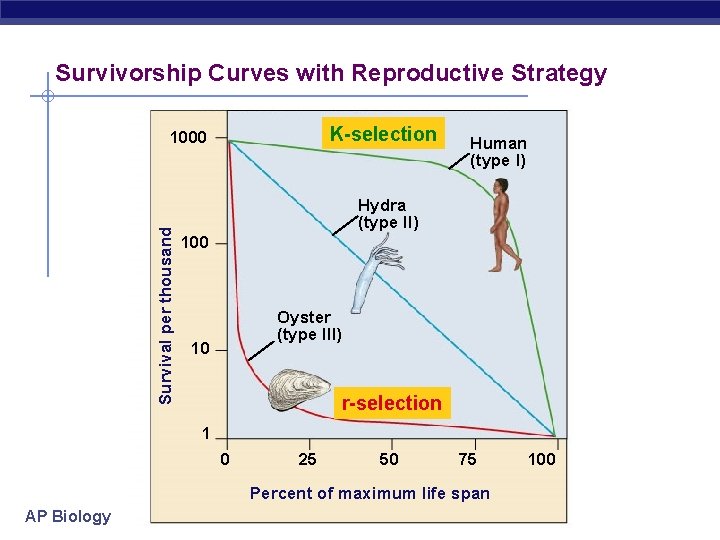
Survivorship Curves with Reproductive Strategy K-selection Survival per thousand 1000 Human (type I) Hydra (type II) 100 Oyster (type III) 10 r-selection 1 0 25 50 75 Percent of maximum life span AP Biology 100

Population Growth Rate Models § Exponential growth Rapid growth u No constraints u § Logistic growth Environmental constraints u Limited growth u AP Biology
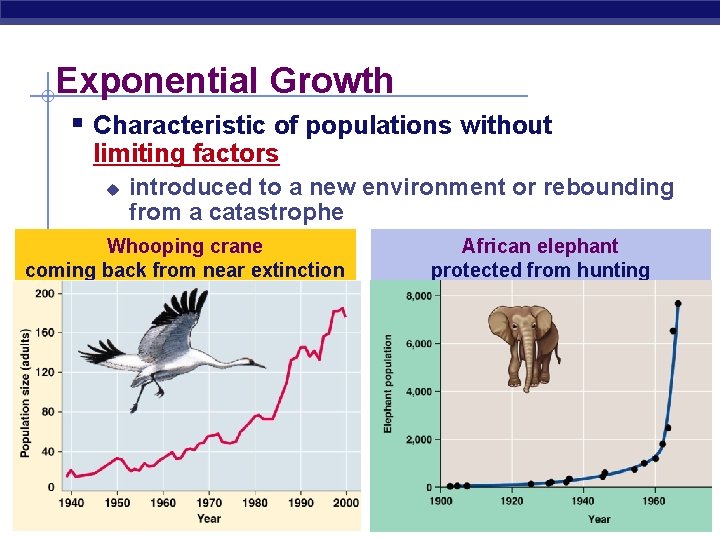
Exponential Growth § Characteristic of populations without limiting factors u introduced to a new environment or rebounding from a catastrophe Whooping crane coming back from near extinction AP Biology African elephant protected from hunting
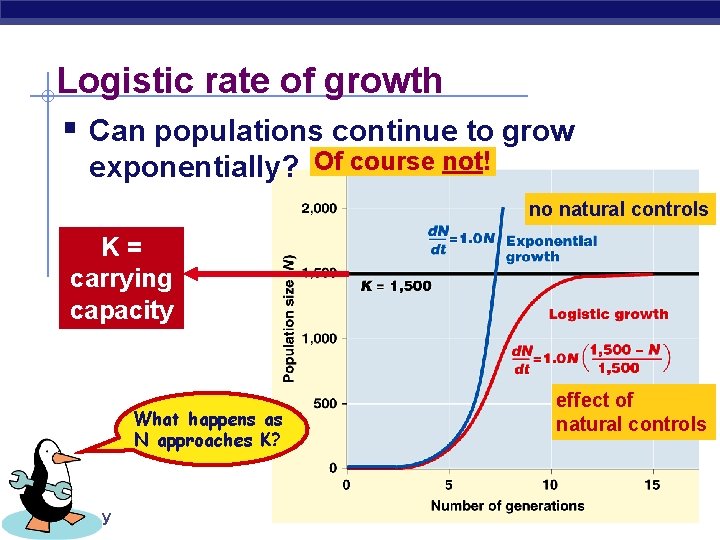
Logistic rate of growth § Can populations continue to grow exponentially? Of course not! no natural controls K= carrying capacity What happens as N approaches K? AP Biology effect of natural controls
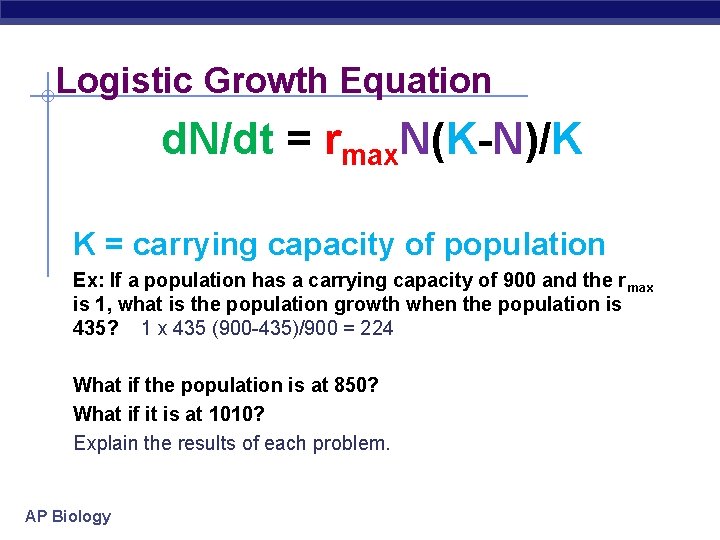
Logistic Growth Equation d. N/dt = rmax. N(K-N)/K K = carrying capacity of population Ex: If a population has a carrying capacity of 900 and the r max is 1, what is the population growth when the population is 435? 1 x 435 (900 -435)/900 = 224 What if the population is at 850? What if it is at 1010? Explain the results of each problem. AP Biology
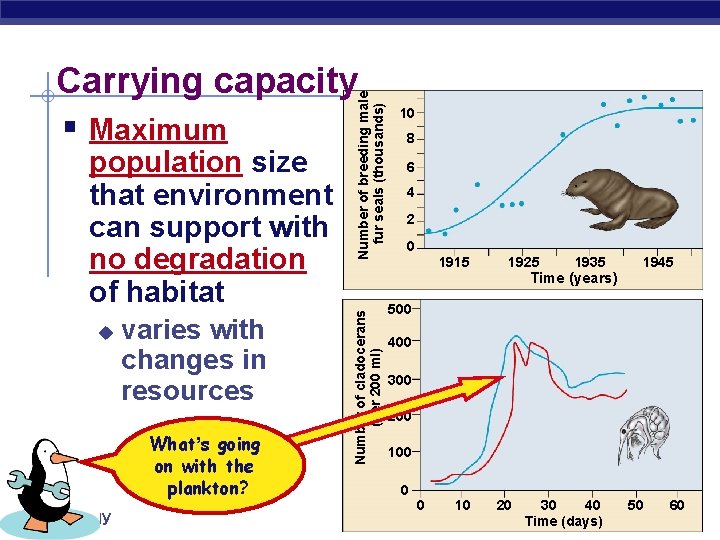
u varies with changes in resources What’s going on with the plankton? AP Biology Number of cladocerans (per 200 ml) population size that environment can support with no degradation of habitat Number of breeding male fur seals (thousands) Carrying capacity § Maximum 10 8 6 4 2 0 1915 1925 1935 Time (years) 1945 500 400 300 200 100 0 0 10 20 30 40 Time (days) 50 60
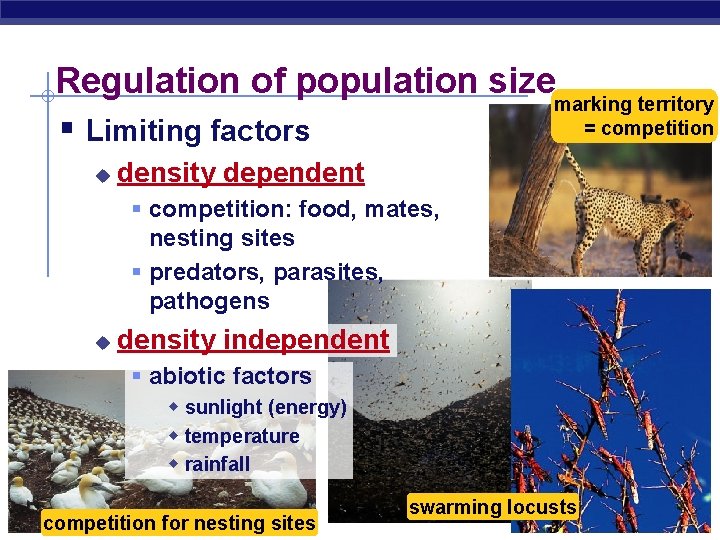
Regulation of population size marking territory = competition § Limiting factors u density dependent § competition: food, mates, nesting sites § predators, parasites, pathogens u density independent § abiotic factors w sunlight (energy) w temperature w rainfall APcompetition Biology for nesting sites swarming locusts
- Slides: 17